

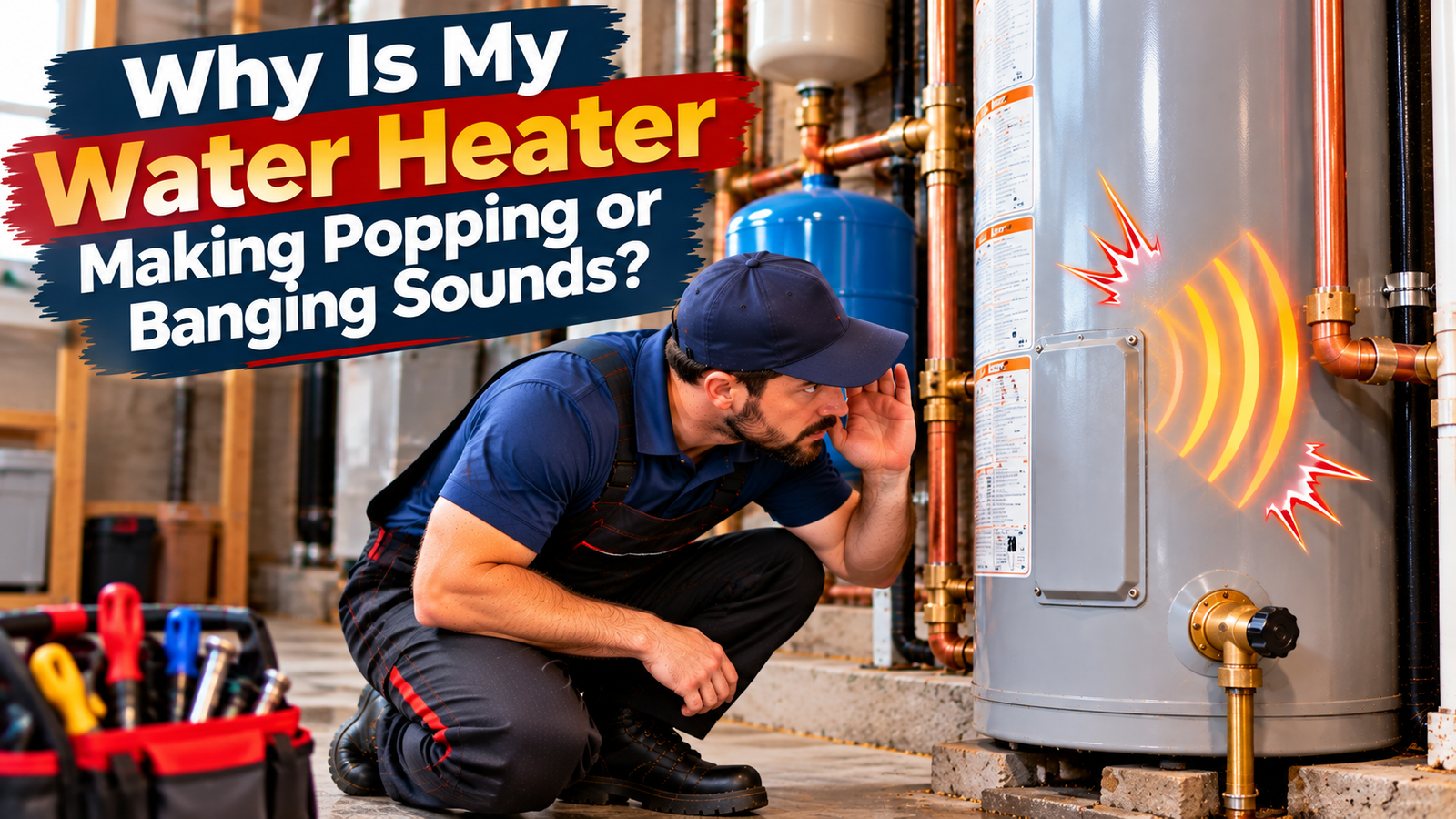
Why Is My Water Heater Making Popping or Banging Sounds? If your hot water tank suddenly starts rumbling, crackling, or producing sharp knocks, it is natural to wonder whether something is wrong. These sounds can occur during normal heating cycles, but persistent or increasingly loud noises may indicate maintenance or repair needs.
For homeowners in Southeast Calgary communities such as Mahogany, Auburn Bay, Cranston, and Seton, identifying the source of unusual water heater sounds can help prevent unnecessary repairs. Professional water heater inspection and plumbing services in Calgary can determine whether the issue involves mineral sediment, connected piping, or equipment components.
Some noises develop gradually as deposits accumulate inside the tank. Others originate from sudden water pressure changes or metal expanding during heating. Understanding these differences helps homeowners recognize warning signs, make safer decisions, and determine when professional maintenance or replacement may be appropriate.
Water heaters commonly make popping or rumbling sounds when mineral sediment accumulates at the bottom of the tank and traps heated water. Banging may also result from thermal expansion, moving pipes, or water hammer. Persistent noise should be assessed, especially when accompanied by leaks or performance problems.
What Causes a Water Heater to Make Popping or Banging Sounds?
Several conditions can cause a water heater to produce unusual sounds. The most common explanations include sediment accumulation, thermal expansion, water hammer, and movement in connected plumbing. Understanding when the sound occurs is often more helpful than judging its volume alone.
How Does Sediment Buildup Cause Popping Noises?
Water contains naturally occurring dissolved minerals. When water is heated repeatedly, some of these minerals can settle inside a storage tank and form deposits along the bottom.
As sediment accumulates, small pockets of water may become trapped beneath the deposits. During heating, these pockets can form bubbles that escape through the mineral layer, producing popping, crackling, or rumbling sounds.
The process can become more noticeable as deposits accumulate, although the loudness of the sound does not reliably indicate how much sediment is present.
Why Calgary’s Hard Water Can Contribute to Sediment
Calgary’s municipal water contains naturally occurring hardness minerals, including calcium and magnesium. The precise mineral content varies with the water source and treatment conditions.
Over time, these minerals may contribute to scale formation inside water heating equipment. This makes sediment buildup a relevant consideration for homeowners in communities such as Copperfield, New Brighton, and Douglasdale.
However, not every noisy water heater has a sediment problem, and water hardness alone does not establish that a tank requires replacement.
Why Does My Water Heater Make Noise Only When Heating?
Heating cycles change the temperature of the water and surrounding metal components. If sediment is present, bubbling beneath the deposits may occur primarily while the heater is actively warming water.
Metal components and nearby pipes can also expand as their temperature rises, creating occasional ticking or knocking noises.
A consistent relationship between the heating cycle and the sound can help a technician narrow down the possible causes.
Can Thermal Expansion Cause Clicking or Knocking?
Yes. Metal expands slightly when heated and contracts as it cools. This natural movement can create clicking, ticking, or occasional knocking sounds.
Connected plumbing may produce additional noise where pipes touch framing or pass through tight openings.
Minor expansion sounds are not automatically signs of failure, but unusually loud or worsening noises should be evaluated.