
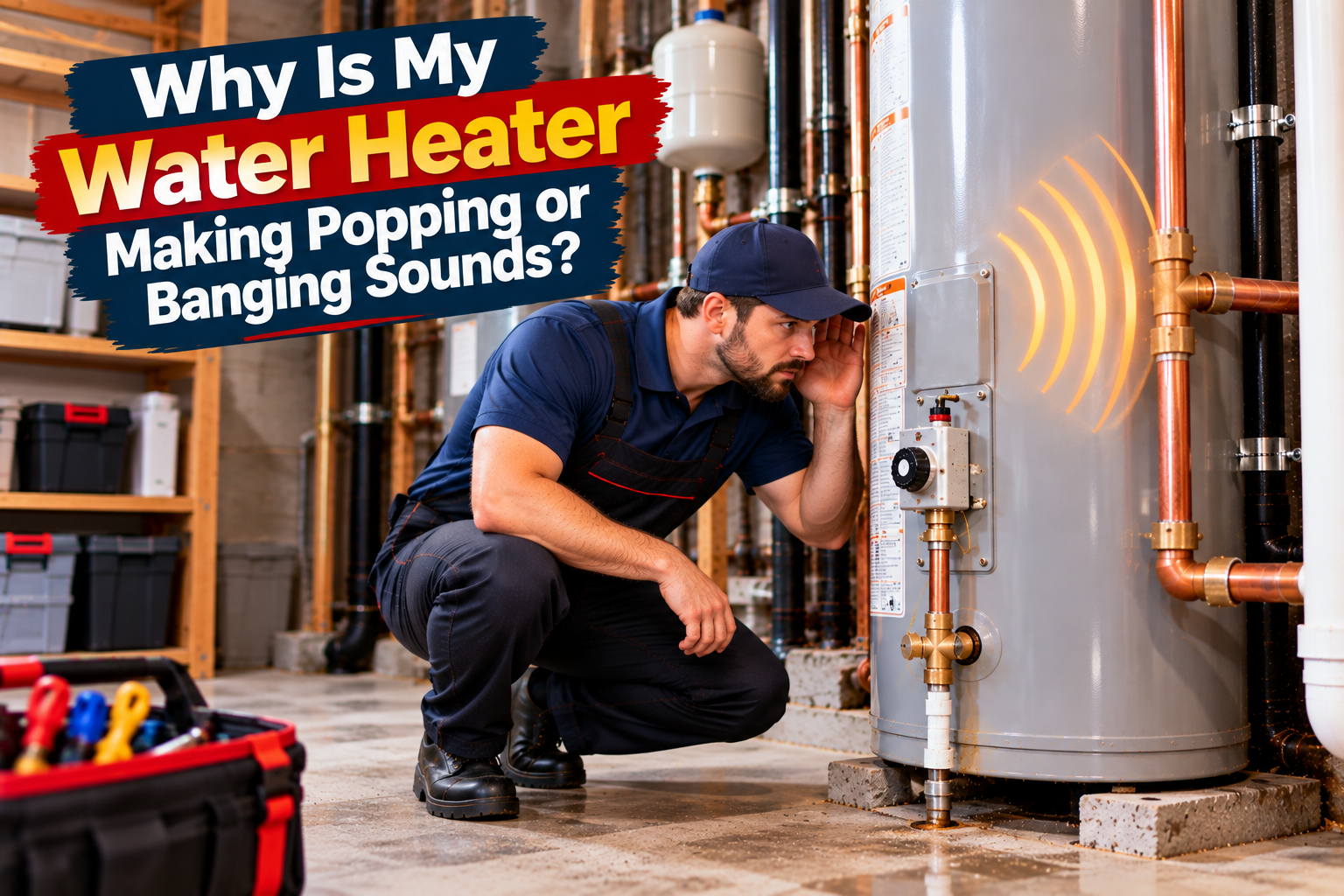
Why Is My Water Heater Making Popping or Banging Sounds? It is a common concern when a normally quiet hot water tank suddenly starts rumbling, crackling, or making sharp knocking noises during a heating cycle. For Calgary homeowners, unfamiliar sounds can raise questions about equipment condition, energy efficiency, and whether the heater needs professional attention.
Whether your home is in Mahogany, Cranston, Auburn Bay, or McKenzie Towne, understanding where the noise originates is important. Professional water heater inspection and plumbing services in Calgary can help distinguish normal operating sounds from sediment accumulation, plumbing movement, or a developing equipment problem.
Not every noise means the heater is about to fail. Some sounds occur as metal components expand during heating, while others indicate mineral deposits or conditions requiring repair. This guide explains common causes, warning signs, safe observations, maintenance considerations, and when replacement may be worth discussing.
Water heaters often make popping or banging sounds when sediment collects at the bottom of the tank and traps water that heats beneath the deposits. Other causes include thermal expansion, moving pipes, or pressure-related problems. Persistent or worsening noises should be professionally assessed.
What Causes a Water Heater to Make Popping or Banging Sounds?
A noisy water heater can have several explanations, ranging from ordinary expansion of metal components to accumulated mineral deposits or plumbing pressure problems. The sound itself offers useful clues, but it does not provide a complete diagnosis.
How Does Sediment Buildup Create Popping Noises?
Water naturally contains dissolved minerals. When water is repeatedly heated inside a storage tank, some minerals can settle and form deposits along the bottom.
As sediment accumulates, small amounts of water can become trapped beneath or within the deposits. Heating may cause that trapped water to form bubbles that escape through the sediment, creating popping, crackling, or rumbling sounds.
The process is often compared to water bubbling beneath a layer of material. However, the intensity of the sound does not reliably indicate how much sediment is present.
Why Calgary Water Conditions Matter
Calgary’s municipal water commonly contains naturally occurring hardness minerals, including calcium and magnesium. Mineral content can vary with water source and treatment conditions.
Over time, these minerals may contribute to scale formation in water heating equipment. This does not mean every Calgary water heater will develop serious sediment problems, but mineral accumulation is a reasonable possibility when a storage tank begins rumbling during heating.
Why Does the Heater Make Noise Only While Heating?
Heating cycles cause changes in water temperature and expansion of metal components. If sediment is present, bubbling beneath the deposits may become more noticeable while the heating element or burner is operating.
A sound that consistently begins during heating may therefore point toward sediment or normal thermal movement rather than a problem elsewhere in the plumbing system.
Can Metal Expansion Cause Clicking or Knocking?
Yes. Water heaters and their connected pipes expand slightly as they warm and contract as they cool.
This movement can create ticking, clicking, or occasional knocking noises, particularly where piping passes through tight openings or contacts surrounding materials.
Minor expansion sounds are not necessarily signs of equipment failure. Loud, new, or increasingly frequent noises deserve closer assessment.
Why Does the Noise Sometimes Come From Nearby Pipes?
Sound travels through plumbing connections and building materials. A bang heard beside the water heater may originate from a pipe rather than the storage tank.
Loose pipe supports, sudden changes in water flow, or contact between piping and framing can produce sounds that appear to come from the appliance.
Identifying the actual location is important before scheduling tank maintenance or replacement.
Do Gas and Electric Water Heaters Make Different Sounds?
Both gas and electric storage heaters can develop sediment-related noise. Their heating systems differ, however, and certain mechanical or operational sounds may be specific to the equipment design.
Gas heaters may produce ordinary burner and venting sounds, while electric models can make noises associated with their heating cycles.
Unfamiliar or unusually loud sounds should be assessed according to the appliance manufacturer’s guidance.
Key takeaway: Popping and rumbling during heating often suggest sediment, while sharp knocking may come from expanding pipes or sudden changes in water flow. A professional inspection can distinguish these causes before unnecessary repairs are undertaken.
Homeowners looking for local service information can consult the Calgary Electrical and Plumbing Google Maps listing.
Are Popping and Banging Water Heater Noises Dangerous?
Not every unusual water heater sound indicates an immediate danger. Nevertheless, new or worsening noises should be considered alongside other symptoms, including leakage, pressure relief discharge, poor hot water performance, and equipment condition.
Is Occasional Popping Normal?
Occasional clicking or mild expansion sounds may occur during normal operation. Repeated popping or rumbling can indicate mineral deposits that warrant maintenance.
Although sediment noise is not automatically an emergency, allowing substantial deposits to remain may reduce heating performance or contribute to additional maintenance concerns.
What Warning Signs Suggest a Serious Water Heater Problem?
Noise becomes more concerning when accompanied by other changes in the appliance or surrounding plumbing.
- Water pooling around the heater or dripping from its connections.
- Sudden, unusually loud banging that continues or intensifies.
- Persistent water discharge from the temperature-and-pressure relief pipe.
- Unexpectedly hot water or signs of overheating.
- Visible corrosion, rust staining, or deterioration of the tank.
- A noticeable decline in hot water performance.
- Suspected gas leakage or moisture near electrical equipment.
Can Sediment Affect Water Heater Efficiency?
Mineral deposits may interfere with efficient heat transfer, depending on the water heater’s design and the location of the accumulation.
In some storage systems, sediment can contribute to longer heating cycles or reduced usable hot water capacity.
However, a higher utility bill alone does not establish that sediment is responsible. Household demand, thermostat settings, and equipment condition also influence energy use.
Does Loud Banging Mean the Tank Will Burst?
No. Banging sounds do not automatically mean a water heater is about to rupture. Many noises arise from sediment or movement within the connected plumbing.
Nevertheless, pressure and temperature safety concerns should never be dismissed. Storage heaters rely on properly functioning safety devices and appropriate operating conditions.
If noise occurs alongside uncontrolled hot water discharge, suspected overheating, or other serious warning signs, keep clear and seek qualified assistance.
Can Water Pressure or Thermal Expansion Cause Banging?
Yes. Sudden changes in water flow can create pressure waves within plumbing, commonly called water hammer. These may cause sharp knocking sounds when fixtures or appliances stop water flow abruptly.
Thermal expansion can also create movement in piping as heated water and metal components change temperature.
These conditions differ from sediment bubbling inside the tank, so the appropriate corrective measures also differ.
What If the Pressure Relief Valve Is Discharging?
A temperature-and-pressure relief valve is designed to help protect the water heater against unsafe operating conditions.
Persistent discharge can indicate a valve problem, excessive pressure, thermal expansion, or another condition requiring investigation.
Never cap or block the discharge pipe. Interfering with this safety component can create serious hazards.
When Is Water Heater Noise an Emergency?
Noise alone is not necessarily an emergency. However, unusual sounds accompanied by rapidly spreading water, suspected gas leakage, wet electrical equipment, or uncontrolled hot water discharge require urgent attention.
For a closer explanation of leak-related warning signs, read Is a Leaking Water Heater an Emergency?
Important safety warning: Do not open electrical compartments, alter gas connections, obstruct relief valves, or dismantle a pressurized water heater to investigate noises. If you suspect gas leakage, leave the area and contact the gas utility’s emergency service from a safe location.
Can Noise Indicate a Problem Outside the Water Heater?
Yes. Plumbing noises may travel through walls, floors, and pipework. A nearby washing machine, dishwasher, or fast-closing fixture can produce a bang that seems to originate from the heater.
Recording when the sound occurs can help distinguish water hammer from noise produced during a heating cycle.
Practical distinction: Repeated rumbling during heating suggests a different problem from a single sharp bang when a tap closes. Accurate diagnosis helps target the underlying cause rather than replacing equipment unnecessarily.
Additional company location details are available through this Calgary plumbing service map reference.
Request a noisy water heater inspection and repair estimate in Calgary in just a few clicks.
Get My Free Estimate
How Can You Safely Address a Noisy Water Heater?
Dealing with a noisy water heater begins with identifying the sound pattern and checking for visible warning signs without opening or modifying the appliance. The correct response depends on whether the noise comes from sediment, pipe movement, or an operating fault.
What Can Calgary Homeowners Check Without Opening the Heater?
Listen from a safe location and note whether the sound occurs during heating, when a fixture is used, or when water flow stops.
Look for visible moisture or corrosion around the appliance without touching hot piping, electrical components, or gas equipment.
These observations can help a plumber identify the likely source without requiring homeowners to dismantle the heater.
Keep a Record of the Noise
Consider noting the time, frequency, and character of the sound. A short recording made from a safe location may also be useful.
For example, a low rumble during heating may suggest sediment, while a sharp bang after closing a tap may point toward plumbing pressure changes.
Patterns can provide valuable information during an inspection.
Can Flushing the Tank Reduce Popping Sounds?
Professional sediment removal or flushing may help reduce noise when mineral deposits are responsible.
However, the suitability of flushing depends on the heater’s age, condition, design, and manufacturer instructions.
Draining hot water or handling pressurized components can create scalding and equipment hazards. Homeowners unfamiliar with the procedure should arrange qualified service rather than attempting it themselves.
Why Professional Maintenance Is Important
A plumber can assess whether sediment buildup is likely, inspect accessible plumbing components, and recommend maintenance appropriate to the appliance.
Professional evaluation may also reveal that the sound originates from nearby pipes rather than the tank.
This can prevent unnecessary cleaning, component replacement, or premature equipment upgrades.
Should You Adjust the Water Heater Temperature?
Unusual noises should not be addressed by randomly changing thermostat settings.
Water temperature affects comfort, energy use, scalding risk, and sanitation considerations. The appropriate setting depends on equipment design and applicable guidance.
Consult a qualified professional if you suspect overheating or an operating temperature problem.
Can Pipe Supports Help With Knocking Sounds?
In some cases, pipes that move against framing or surrounding materials can produce knocking noises.
Appropriate pipe support or plumbing modifications may reduce movement, but the cause should be confirmed first.
Pressure-related banging may require a different solution from thermal expansion noise.
What If the Heater Is Making Noise and Leaking?
Noise accompanied by water leakage deserves prompt attention because the two symptoms may indicate separate problems or a common underlying condition.
Keep clear of wet electrical equipment and avoid operating damaged controls.
If water is spreading rapidly or a serious safety hazard is suspected, seek urgent assistance.
Should You Ignore a Noise That Stops on Its Own?
Not necessarily. Some noises occur only during specific heating cycles or plumbing activities.
An intermittent sound may still indicate sediment accumulation, thermal movement, or pressure changes.
If the sound is new, recurring, or becoming louder, professional assessment is reasonable even when the heater continues providing hot water.
What Information Should You Give the Plumber?
- Whether the heater is gas, electric, or another type.
- The approximate age and model, if known.
- Whether the noise sounds like popping, rumbling, clicking, or banging.
- When the noise occurs and how long it lasts.
- Whether hot water performance has changed.
- Whether leaks, corrosion, or relief valve discharge are visible.
- Whether nearby fixtures trigger the sound.
How Often Should a Water Heater Be Inspected?
Maintenance schedules vary by manufacturer, water conditions, appliance type, and usage.
Some equipment benefits from periodic professional inspection of accessible components and sediment-related conditions.
The owner’s manual and a qualified service provider can help establish a suitable maintenance plan.
Safe approach: Observe the sound pattern, check for visible warning signs from a safe location, and arrange professional assessment when noises persist. Avoid dismantling the heater, draining hot water without appropriate expertise, or modifying pressure and safety controls.
For additional business information, see the Calgary Electrical and Plumbing shared Google listing.
Should You Repair or Replace a Water Heater That Makes Banging Sounds?
A noisy water heater does not automatically require replacement. Many causes, including sediment accumulation and certain plumbing issues, may be addressed through appropriate maintenance or repair. Replacement becomes more relevant when the appliance has significant deterioration, repeated failures, or an uneconomical repair.
When Is Maintenance Likely to Be Enough?
If a technician confirms sediment buildup and the tank remains structurally sound, manufacturer-appropriate maintenance may be a reasonable first step.
Likewise, noise caused by pipe movement or water hammer may be corrected through plumbing work rather than replacing the heater.
The solution should address the verified source of the sound.
When Should Replacement Be Considered?
Replacement may be appropriate when the tank has developed a structural leak, serious corrosion, repeated major failures, or substantial performance problems.
An older appliance with multiple repair needs may also be less economical to maintain than a suitable replacement.
However, noise alone is not sufficient evidence that a tank must be replaced.
Does Water Heater Age Matter?
Many conventional storage water heaters have service lives measured in roughly a decade, although actual longevity varies considerably.
Water quality, maintenance history, installation conditions, and usage patterns all influence equipment life.
A relatively new heater may need maintenance, while an older heater may still function safely if it remains in good condition.
How Much Does Noisy Water Heater Repair Cost in Calgary?
Costs depend on the cause of the noise, equipment type, service requirements, and accessibility.
A straightforward inspection may cost less than extensive plumbing modifications or replacement.
The following figures are illustrative planning ranges rather than verified current Calgary market prices.
| Service | Illustrative Cost (CAD) | Main Cost Factors |
|---|---|---|
| Water heater noise inspection | $100–$250+ | Assessment scope and accessibility |
| Professional tank flushing or sediment service | $150–$350+ | Equipment condition and maintenance requirements |
| Pipe support or minor plumbing repair | $175–$500+ | Access, materials, and labour |
| Pressure-related plumbing corrections | $250–$800+ | Diagnosis and required components |
| Conventional storage water heater replacement | $1,500–$3,500+ | Equipment, installation, and removal |
Pricing disclaimer: These are illustrative, nonbinding CAD ranges, not confirmed current Calgary averages or Calgary Electrical and Plumbing quotations. Actual pricing may be higher or lower. Taxes, permits, equipment selection, and installation modifications can affect the final cost.
Can Sediment Damage a Water Heater Over Time?
Heavy sediment accumulation may interfere with heating performance and contribute to maintenance concerns.
However, the presence of popping sounds does not prove that permanent damage has occurred.
A professional can assess the equipment condition and determine whether maintenance is appropriate.
Will a New Water Heater Be Quieter?
A replacement heater may operate more quietly if the previous appliance had significant sediment accumulation or deteriorated components.
However, some operational sounds are normal, and a new heater will not necessarily eliminate noises caused by the home’s plumbing system.
Diagnosing the sound source before replacement helps avoid disappointment.
What About Tankless Water Heaters?
Tankless systems heat water on demand and do not store large volumes of heated water in a conventional tank.
They have different maintenance requirements and can still experience mineral scaling, particularly in areas with harder water.
They are not automatically silent or maintenance-free, so equipment selection should reflect household needs rather than noise concerns alone.
How Does Calgary’s Climate Affect Replacement Decisions?
Calgary’s colder incoming water temperatures can influence water heater sizing, particularly for tankless equipment.
Homes with several simultaneous hot water demands may require greater heating capacity than smaller households.
A replacement should be selected using actual household requirements and manufacturer performance specifications.
Can Regular Maintenance Prevent Popping Sounds?
Appropriate maintenance may reduce sediment-related noise and help identify developing equipment concerns.
Nevertheless, maintenance cannot guarantee that all sounds will disappear or that a storage tank will never fail.
Manufacturer recommendations and professional assessment should guide the maintenance schedule.
What Should You Ask Before Approving a Repair?
- Has the actual source of the noise been confirmed?
- Is sediment accumulation present?
- Are the connected pipes contributing to the sound?
- Is the storage tank structurally sound?
- Would maintenance reasonably address the problem?
- What is included in the repair estimate?
- Would replacement offer a meaningful practical benefit?
Repair-versus-replacement guidance: Sediment noise and plumbing movement often warrant diagnosis and maintenance before replacement is considered. A leaking or seriously deteriorated tank is different and may require a new appliance.
Why a Proper Diagnosis Saves Money
Replacing a heater because of a banging sound may not solve the problem if the noise actually comes from water hammer or loose piping.
Likewise, repeatedly servicing a tank with significant structural deterioration may not be economical.
A clear diagnosis allows homeowners to compare appropriate solutions and make a more informed decision.
For additional company updates and service-related content, visit Calgary Electrical and Plumbing on Pinterest.
Request a noisy water heater inspection and repair estimate in Calgary in just a few clicks.
Get My Free Estimate
Get to the Bottom of Unusual Water Heater Noises
Popping, rumbling, and banging sounds can arise from sediment buildup, normal thermal expansion, pipe movement, or pressure-related plumbing problems. Understanding the source is essential because not every noise requires the same repair.
A local calgary plumber can assess the appliance and recommend appropriate maintenance, repair, or replacement. Call Calgary Electrical and Plumbing at (403) 421-1991 to discuss persistent water heater noises.
Frequently Asked Questions about Noisy Water Heaters
Why does my water heater make popping noises when heating?
Popping during heating often results from mineral sediment collecting at the bottom of a storage tank. Water trapped beneath the deposits heats and forms bubbles that escape through the sediment. Other causes are possible, so persistent noise should be professionally assessed.
Is it safe to use a water heater that makes banging sounds?
Some banging sounds come from pipe movement or thermal expansion and do not automatically indicate an emergency. However, loud or worsening noise accompanied by leakage, relief valve discharge, overheating, or other hazards requires prompt professional attention. Avoid modifying the equipment yourself.
Will flushing a water heater stop popping sounds?
Professional flushing may reduce popping when sediment accumulation is the confirmed cause. Results depend on the tank’s condition and the nature of the deposits. Flushing is not appropriate for every appliance, and it will not correct noises caused by water hammer or pipe movement.
Can Calgary’s hard water make a hot water tank noisy?
Calgary water contains naturally occurring hardness minerals that can contribute to scale and sediment formation over time. Accumulated deposits may create rumbling or popping during heating. The amount of buildup varies by equipment, usage, water conditions, and maintenance history.
Should I replace my water heater if it makes loud noises?
Noise alone does not mean replacement is necessary. Sediment-related sounds or plumbing movement may be addressed through appropriate maintenance or repair. Replacement becomes more relevant when the tank is leaking, seriously deteriorated, or uneconomical to repair after professional assessment.
Don’t wait for the problem to get worse.
Call (403) 421-1991 Now
Contact Our Calgary Plumbing Team