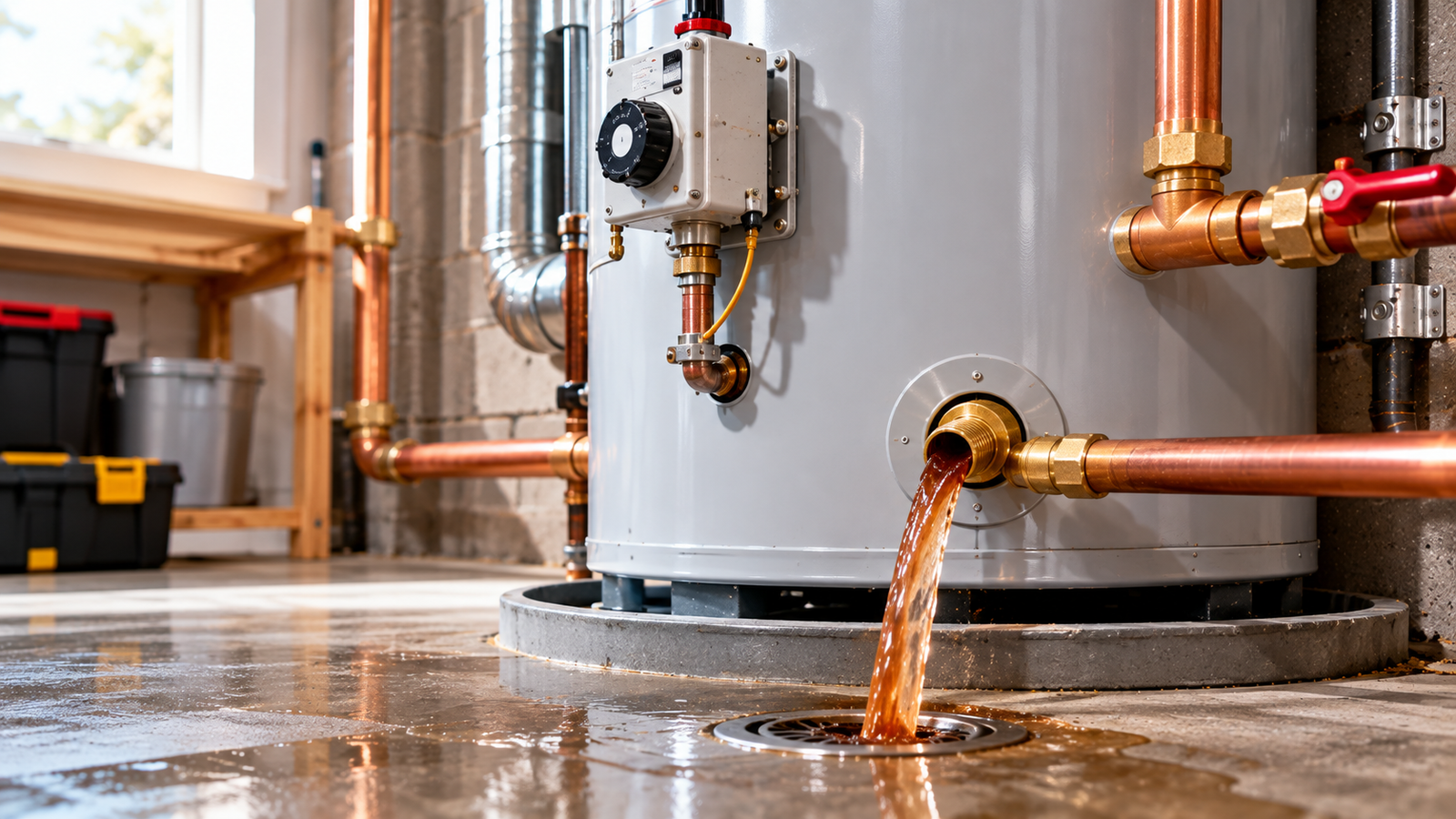


What Does Rust-Coloured Hot Water Mean? Imagine turning on your kitchen tap and seeing orange or reddish-brown water instead of the clear hot water you expect. This change can be unsettling, particularly when the discolouration appears suddenly or continues after the tap has been running.
For homeowners in Mahogany, Auburn Bay, Cranston, and other Southeast Calgary communities, determining whether the problem affects only hot water or both hot and cold water is an important first clue. Professional plumbing and water heater services in Calgary can help identify whether the source is a deteriorating tank, corroded piping, accumulated sediment, or the incoming water supply.
Rust-coloured water does not always mean your water heater needs replacing. The timing, affected fixtures, and condition of your plumbing all matter. This guide explains what causes the discolouration, how to recognize concerning symptoms, what homeowners can safely observe, and when professional inspection becomes necessary.
Rust-coloured hot water often indicates iron-containing sediment or corrosion within a water heater or connected plumbing. If only hot water is affected, the hot water system is a likely source. If both hot and cold water are discoloured, the incoming supply or household pipes may be involved.
What Causes Rust-Coloured Hot Water in Calgary Homes?
Rust-coloured water usually contains suspended particles or dissolved substances that give it a yellow, orange, reddish, or brown appearance. Iron-containing corrosion products are one possible cause, but colour alone cannot identify the exact material or confirm that the water is safe.
Can a Rusting Water Heater Turn Hot Water Brown?
Yes. Conventional storage water heaters commonly have a steel tank protected by an internal lining and corrosion-control components. When that protection deteriorates, corrosion may develop on exposed metal surfaces.
Iron-containing particles can enter the stored water and create a rusty appearance at hot water fixtures. However, discolouration does not automatically prove that the tank itself is corroding.
Rusty supply piping, accumulated deposits, and disturbances elsewhere in the plumbing system can produce similar symptoms.
How Does the Anode Rod Help Protect a Water Heater?
Many storage water heaters contain a sacrificial anode rod designed to help protect the steel tank from corrosion. The rod gradually deteriorates as part of its protective function.
When an anode is depleted, the tank may become more vulnerable to corrosion. Its condition is not reliably determined by water colour alone.
A qualified technician can assess whether anode inspection or replacement is appropriate for the particular model.
Can Sediment Cause Orange or Brown Hot Water?
Sediment can collect inside a water heater over time. Depending on the source and composition of the deposits, disturbed sediment may contribute to cloudy or discoloured water.
Mineral scale itself is not necessarily rust-coloured. Brown or reddish particles may indicate iron-containing deposits or corrosion products.
For homeowners experiencing both discolouration and unusual tank noises, the two symptoms may warrant investigation together.
Our related article, Why Is My Water Heater Making Popping or Banging Sounds?, explains how sediment accumulation can affect a water heater’s operation.
Could Older Household Pipes Be Responsible?
Yes. Some older homes have plumbing components that are more susceptible to internal corrosion. Iron or steel piping can release corrosion particles that discolour water.
If only one fixture produces brown water, a localized pipe or fixture component may be involved. If several fixtures are affected, the source may be farther upstream.
The age of the home provides context but does not establish the condition of its plumbing. Renovations may have replaced some pipes while leaving others unchanged.
Can Calgary Water Supply Changes Affect Water Colour?
Water main maintenance, changes in flow, or disturbances in the distribution system can sometimes mobilize deposits and temporarily affect water appearance.
When both hot and cold water change colour around the same time, the incoming supply becomes a more relevant possibility.
Homeowners should check current municipal water advisories or service information when a broader supply issue is suspected.
Why Does the Colour Appear After Water Has Been Sitting?
Water that remains in pipes or a storage tank for an extended period has more contact time with the surrounding plumbing materials.
If corrosion is occurring, the first water drawn after an extended period of inactivity may contain more visible particles.
However, a temporary improvement after water has flowed does not confirm that the underlying problem has been resolved.
Key takeaway: Rust-coloured hot water can originate from a corroding water heater, iron-containing sediment, older plumbing, or the incoming water supply. Comparing affected fixtures and water temperatures helps narrow the possibilities, but a professional assessment may be necessary.
For local business location information, consult the Calgary Electrical and Plumbing Google Maps listing.
Is Rust-Coloured Hot Water Safe to Use?
Discoloured water should not automatically be considered safe or unsafe based on appearance alone. Although iron-related staining may be primarily an aesthetic issue in some circumstances, brown water can also reflect plumbing deterioration or a water quality concern requiring investigation.
Is Rust-Coloured Hot Water Safe to Drink?
Hot tap water is not recommended for drinking or food preparation, even when it looks clear. Heated water can dissolve certain substances from plumbing materials more readily than cold water.
If hot water is visibly discoloured, avoid using it for drinking, cooking, or preparing beverages until the cause has been identified.
Use an appropriate safe cold-water source and follow any applicable municipal water advisories.
Can You Bathe or Shower in Brown Hot Water?
Whether discoloured water is suitable for bathing depends on the cause and any official water quality guidance.
Rust-coloured water may stain surfaces and fabrics, but its appearance cannot establish whether other contaminants are present.
When the source is unknown, avoid unnecessary exposure and seek advice from the water utility or a qualified professional, particularly if the water has an unusual odour or contains visible debris.
What If Only Hot Water Is Rust-Coloured?
When cold water appears clear but hot water is consistently brown or orange, the hot water system becomes a leading area of investigation.
Possible sources include the storage tank, hot water piping, or components connected to the heater.
However, clear-looking cold water does not rule out every supply-related issue. Water testing or professional assessment may still be needed.
What If Both Hot and Cold Water Are Brown?
When both temperatures are affected at multiple fixtures, the issue may involve the incoming water supply or common household plumbing.
Water main work, disturbed deposits, or corrosion in shared piping can contribute to discolouration.
Check for current utility notices and contact the water provider when a distribution-system problem is suspected.
| Water Appearance | Possible Source | Recommended Response |
|---|---|---|
| Only hot water is rusty at several taps | Water heater or hot water piping | Arrange a plumbing and water heater assessment |
| Hot and cold water are discoloured | Incoming supply or shared plumbing | Check utility notices and investigate the supply |
| Only one fixture is affected | Localized pipe, fitting, or fixture | Have the affected branch or fixture inspected |
| Discolouration occurs after long periods of inactivity | Stagnant water interacting with plumbing materials | Investigate recurring corrosion or deposits |
| Rusty water appears with leakage | Possible equipment or connection deterioration | Seek prompt professional attention |
These patterns are diagnostic clues, not definitive tests of water quality or equipment condition.
Which Warning Signs Suggest Serious Water Heater Corrosion?
Rust-coloured water becomes more concerning when accompanied by other evidence of deterioration.
- Visible rust staining or corrosion around the tank.
- Water collecting beneath the heater.
- Repeated discolouration at several hot water fixtures.
- A noticeable decline in hot water performance.
- Unusual popping, rumbling, or banging noises.
- Water escaping from connections or safety discharge piping.
- An older tank with repeated repair problems.
None of these signs alone proves that the tank must be replaced, but they justify closer assessment.
Can Rusty Water Damage Laundry or Plumbing Fixtures?
Iron-containing particles may leave orange or brown stains on clothing, sinks, bathtubs, and other surfaces.
Deposits can also collect in fixture screens and affect water flow.
Until the source is understood, avoid washing valuable or light-coloured fabrics with discoloured water.
Water safety warning: Do not assume brown water is safe because it resembles ordinary rust. Colour cannot rule out other water quality concerns. Avoid drinking or cooking with discoloured water and follow official advisories where applicable.
When Should You Contact the Water Utility?
If discolouration affects both hot and cold water at multiple fixtures, particularly after nearby water main work, contacting the municipal water utility is a sensible step.
For issues isolated to the hot water system, a qualified plumber can investigate the heater and connected piping.
Calgary homeowner tip: Note whether neighbouring homes have experienced similar water changes. This may help distinguish a broader supply disturbance from a problem limited to your property.
Another company location reference is available through this Calgary plumbing service map.
Request a rust-coloured hot water inspection and repair estimate in Calgary in just a few clicks.
Get My Free Estimate

What Should You Do When Hot Water Turns Rust-Coloured?
The most useful first step is to determine how widespread the discolouration is without opening or dismantling the water heater. A few careful observations can help identify whether the issue is localized, limited to hot water, or affecting the entire property.
How Can You Identify the Source Without Opening the Heater?
Observe the water’s appearance at different fixtures, keeping a safe distance from very hot water and avoiding contact with exposed equipment.
Note whether the colour occurs only with hot water, only at one tap, or throughout the home.
These observations can provide useful information for a plumber without requiring homeowners to handle pressurized or heated components.
Document When the Discolouration Started
Consider whether the problem appeared suddenly or developed gradually. Also note whether it follows a period of low water use, nearby utility work, or recent plumbing maintenance.
Taking a photograph of the discoloured water may help communicate the severity and appearance of the issue.
Keep in mind that colour can vary with lighting and container material.
Check for Visible Leaks Around the Heater
From a safe location, look for water pooling, rust staining, or moisture around the tank and nearby connections.
Do not touch wet electrical components, hot pipes, gas fittings, or pressure relief equipment.
If active leakage is present, seek prompt professional assistance rather than attempting to dismantle the system.
Should You Flush a Water Heater Producing Rusty Water?
Flushing may help remove certain loose deposits, but it does not repair a corroding tank or damaged piping.
Whether flushing is appropriate depends on the heater’s condition, age, and manufacturer instructions.
Draining hot water or working with pressurized equipment can create hazards. A qualified technician should assess the system before maintenance is attempted.
Can Replacing the Anode Rod Solve the Problem?
Anode replacement may be useful when the rod is depleted but the tank remains structurally sound.
However, installing a new anode cannot reverse advanced corrosion or repair a leaking steel tank.
A professional should evaluate the appliance before recommending this service.
Could a Single Rusty Tap Indicate a Fixture Problem?
Yes. If discolouration is isolated to one fixture, the problem may involve a localized pipe section, fitting, or fixture component.
That pattern makes a whole-house supply problem less likely, although it does not establish the exact source.
A plumber can inspect the affected branch before recommending broader work.
Should You Install a Water Filter?
Filtration may address certain water quality issues when the contaminant has been correctly identified and an appropriate treatment system is selected.
However, a filter does not repair corroded plumbing or a deteriorating water heater.
Testing and diagnosis should come before investing in treatment equipment.
What If Rust-Coloured Water Appears After a Vacation?
Water that has remained unused in plumbing for an extended period may interact with pipe materials or accumulate suspended particles.
Discolouration after inactivity can provide a useful clue, but it should not automatically be dismissed as harmless.
If the issue recurs or persists, have the system investigated.
What Should You Tell a Calgary Plumber?
- Whether the discolouration affects hot water, cold water, or both.
- How many fixtures are affected.
- When the colour change first appeared.
- Whether the water has visible particles or an unusual odour.
- The approximate age and type of water heater.
- Whether leaks, rust staining, or unusual noises are present.
- Whether recent water main or plumbing work occurred nearby.
When Is Professional Water Testing Appropriate?
Water testing may be appropriate when the source of discolouration is uncertain, the problem persists, or there are concerns about water quality.
The relevant tests depend on the suspected cause and whether the property uses municipal water or a private supply.
A qualified water quality professional or the appropriate utility can advise on suitable testing.
Recommended approach: Determine which fixtures and water temperatures are affected, document the change, avoid using discoloured water for consumption, and arrange professional assessment if the problem persists or accompanies signs of equipment deterioration.
For further business information, see the Calgary Electrical and Plumbing shared Google listing.
Should You Repair or Replace a Water Heater Producing Rusty Water?
The decision depends on where the discolouration originates and whether the tank remains in good condition. Rust-coloured water may result from a repairable plumbing issue, but significant tank corrosion or leakage can make replacement the more appropriate option.
When Might a Repair Be Enough?
If the cause is a corroded fitting, localized pipe section, or serviceable component, targeted repair may resolve the issue.
Maintenance may also be appropriate when deposits are present but the storage tank remains structurally sound.
Correctly identifying the source is essential before approving repairs.
When Does a Rusty Water Heater Need Replacement?
Replacement becomes more relevant when the storage tank itself has developed a structural leak, significant corrosion, or repeated major failures.
Advanced tank deterioration generally cannot be reversed through flushing or anode replacement.
A professional assessment can determine whether the appliance remains suitable for service.
Does the Age of the Hot Water Tank Matter?
Many conventional storage water heaters have service lives measured in roughly a decade, although actual longevity varies.
Maintenance, water quality, usage, and installation conditions all influence service life.
An older heater with persistent discolouration and visible corrosion may warrant closer evaluation than a newer unit with an isolated plumbing issue.
How Much Does Rusty Hot Water Repair Cost in Calgary?
Costs depend on whether the issue involves the tank, connected piping, a replaceable component, or the incoming water supply.
Minor plumbing repairs may be less expensive than replacing a deteriorated storage heater.
The figures below are illustrative planning ranges, not verified current Calgary prices or company quotations.
| Service | Illustrative Cost (CAD) | Main Cost Factors |
|---|---|---|
| Water heater and plumbing inspection | $100–$250+ | Diagnostic scope and accessibility |
| Professional sediment service | $150–$350+ | Tank condition and service requirements |
| Anode rod replacement | $200–$500+ | Part compatibility and access |
| Localized corroded pipe repair | $200–$800+ | Pipe material, access, and repair extent |
| Conventional storage water heater replacement | $1,500–$3,500+ | Equipment, installation, and removal |
Pricing disclaimer: These figures are illustrative, nonbinding CAD ranges and are not confirmed Calgary market averages. Actual estimates may be higher or lower depending on labour, equipment, permits, taxes, and installation requirements.
Can Flushing Restore a Corroded Water Heater?
Flushing may remove certain loose deposits but cannot restore damaged tank lining or reverse significant corrosion.
If the tank is structurally compromised, maintenance will not make it sound again.
That distinction is important when comparing short-term servicing with replacement.
Would a New Water Heater Prevent Rusty Water?
A replacement may resolve discolouration if the original storage tank was the confirmed source.
However, replacing the heater will not correct rusty supply piping or a problem affecting incoming water.
Diagnosis before replacement helps ensure the work addresses the actual cause.
Are Tankless Water Heaters Immune to Corrosion?
No. Tankless water heaters do not store large volumes of hot water in a conventional steel tank, but they still contain water-contact components.
They can experience mineral scaling, component deterioration, and other maintenance concerns.
Equipment selection should reflect household needs, water conditions, and manufacturer requirements.
Do Calgary Plumbing Repairs Require Permits?
Permit requirements depend on the type and scope of plumbing work. Certain installations and alterations may require permits or qualified tradespeople.
Homeowners can consult the City of Calgary’s official trades and permit information when planning water heater replacement or significant plumbing changes.
A qualified contractor can also explain which requirements apply to the proposed work.
Can Routine Maintenance Help Prevent Discolouration?
Manufacturer-appropriate maintenance may help identify sediment buildup, depleted corrosion-protection components, and developing equipment concerns.
However, maintenance cannot guarantee that a water heater will never corrode or that discolouration will not recur.
The appropriate service schedule depends on the appliance and local operating conditions.
Questions to Ask Before Approving Water Heater Work
- Has the source of the rust-coloured water been identified?
- Is the tank itself corroding, or is another component responsible?
- Is the storage tank structurally sound?
- Would maintenance or a localized repair resolve the problem?
- Is water quality testing recommended?
- What is included in the written estimate?
- Would replacement provide a practical long-term benefit?
Repair-versus-replacement guidance: A localized pipe problem or serviceable component may justify repair. Significant storage tank corrosion or structural leakage often makes replacement more appropriate. The water’s colour alone is not enough to decide.
Why Accurate Diagnosis Protects Your Investment
Replacing a water heater without confirming the source may leave the problem unresolved if corrosion originates in household piping.
Likewise, repeatedly servicing a severely deteriorated tank may not be economical.
Professional diagnosis helps homeowners choose repairs based on evidence rather than assumptions.
For additional company updates and service information, visit Calgary Electrical and Plumbing on Instagram.
Request a rust-coloured hot water inspection and repair estimate in Calgary in just a few clicks.
Get My Free Estimate
Clear Water Starts With Finding the Right Cause
Rust-coloured hot water can indicate iron-containing sediment, corroded plumbing, water heater deterioration, or changes affecting the incoming supply. Identifying whether the discolouration affects hot water alone or multiple fixtures helps guide the investigation.
A local calgary plumber can evaluate your water heater and plumbing system before recommending repair or replacement. Call Calgary Electrical and Plumbing at (403) 421-1991 to discuss persistent hot water discolouration.
Frequently Asked Questions about Rust-Coloured Hot Water
Why is only my hot water rust-coloured?
When cold water looks clear but hot water is consistently brown or orange, the water heater or connected hot water piping may be responsible. Possible causes include corrosion and iron-containing sediment. A plumber can assess the system before recommending maintenance or replacement.
Is rust-coloured hot water safe to drink?
Hot tap water is not recommended for drinking or cooking, particularly when it is visibly discoloured. Brown water may contain iron-related particles or indicate another water quality concern. Use an appropriate safe cold-water source and investigate the cause before resuming normal use.
Does brown hot water mean my water heater is failing?
Not necessarily. Brown hot water can result from sediment, corroded piping, or a deteriorating tank. Water colour alone cannot confirm equipment failure. Persistent discolouration accompanied by leaks, visible corrosion, or declining performance makes a professional water heater inspection particularly important.
Can flushing a hot water tank remove rusty water?
Professional flushing may remove some loose deposits when sediment is responsible for the discolouration. However, flushing cannot repair a corroded tank or damaged plumbing. The heater’s age, condition, and manufacturer instructions should be considered before any draining or maintenance work.
When should Calgary homeowners call a plumber about rusty hot water?
Arrange a plumbing assessment when rust-coloured hot water persists, returns repeatedly, affects several fixtures, or appears alongside leakage, unusual noises, or visible corrosion. If both hot and cold water are affected, checking municipal water notices may also help identify a broader supply issue.
Don’t wait for the problem to get worse.
Call (403) 421-1991 Now
Contact Our Calgary Plumbing Team