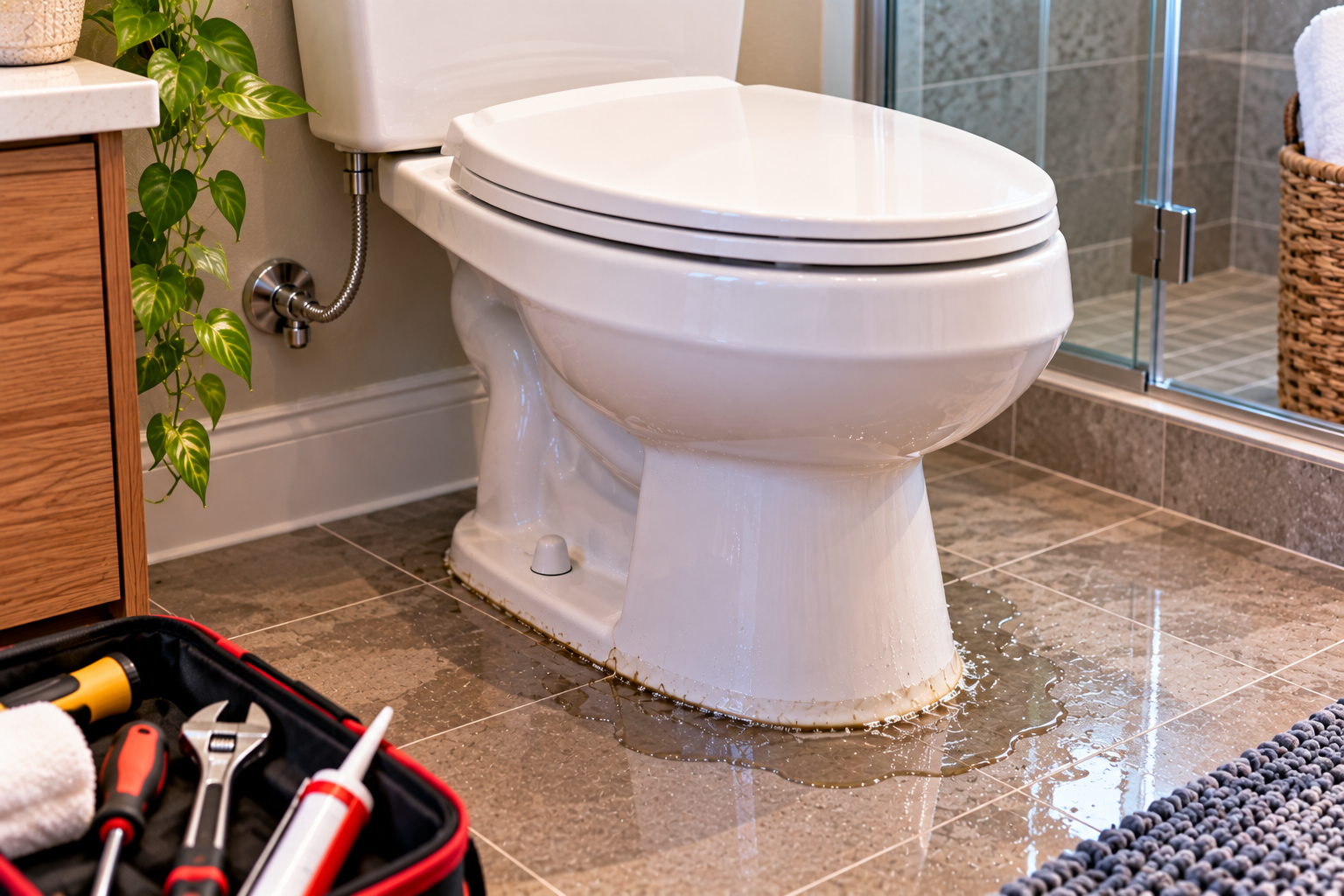

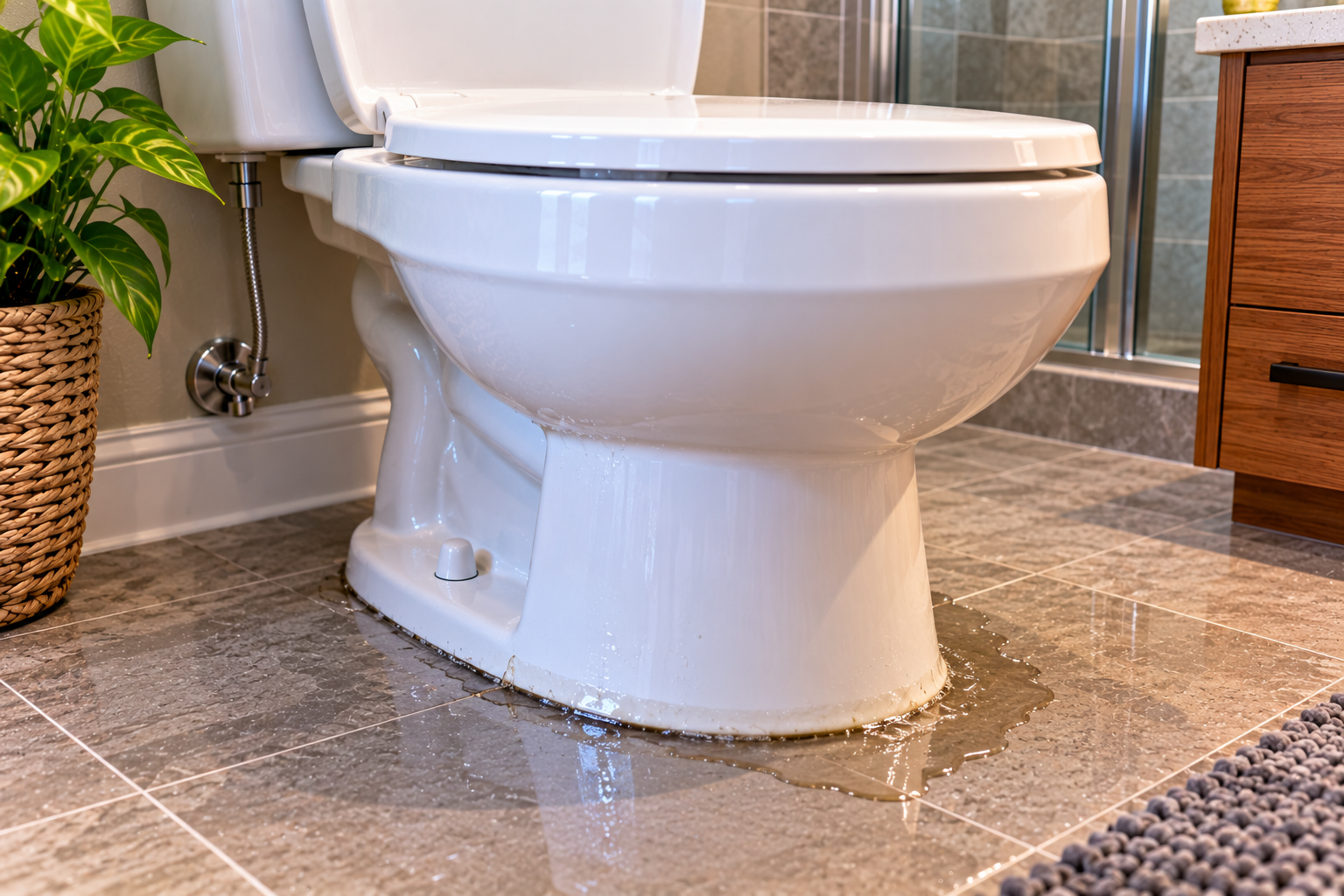
Why Is My Toilet Leaking Around the Base? If you notice a wet line around the bottom of the bowl after flushing, damp flooring beside the toilet or an unexplained bathroom smell, it is worth finding the source quickly rather than repeatedly drying the floor.
A leak near the floor does not automatically mean the toilet itself is cracked. Homeowners looking for Calgary toilet leak diagnosis and plumbing service may be dealing with a failed wax ring, loose toilet mounting, a damaged flange, a tank connection leak or water travelling down from the supply line.
In Southeast Calgary homes from Mahogany and Auburn Bay to Cranston, Copperfield, New Brighton and Riverbend, the timing of the leak provides an important clue. Water that appears mainly after flushing suggests a different problem from water that develops while the toilet is sitting unused.
A toilet leaking around its base often has a failed wax ring or sealing problem, but loose mounting, flange damage, tank leaks, supply connections, condensation or cracked porcelain can also send water to the floor. The true source should be identified before the toilet is resealed.
What Causes Water to Leak Around the Bottom of a Toilet?
The toilet-to-drain connection is hidden beneath the fixture, so homeowners cannot normally see the seal that prevents wastewater from escaping during a flush. When that connection loses its seal, moisture may emerge around the toilet base.
However, water naturally travels downward. A leak beginning several inches above the floor can run along the porcelain and collect around the base, making the source appear lower than it really is.
1. The wax ring or toilet seal has failed
A wax ring or compatible toilet seal sits between the toilet outlet and the drain flange. Its job is to maintain a watertight connection while wastewater moves from the toilet into the drainage system.
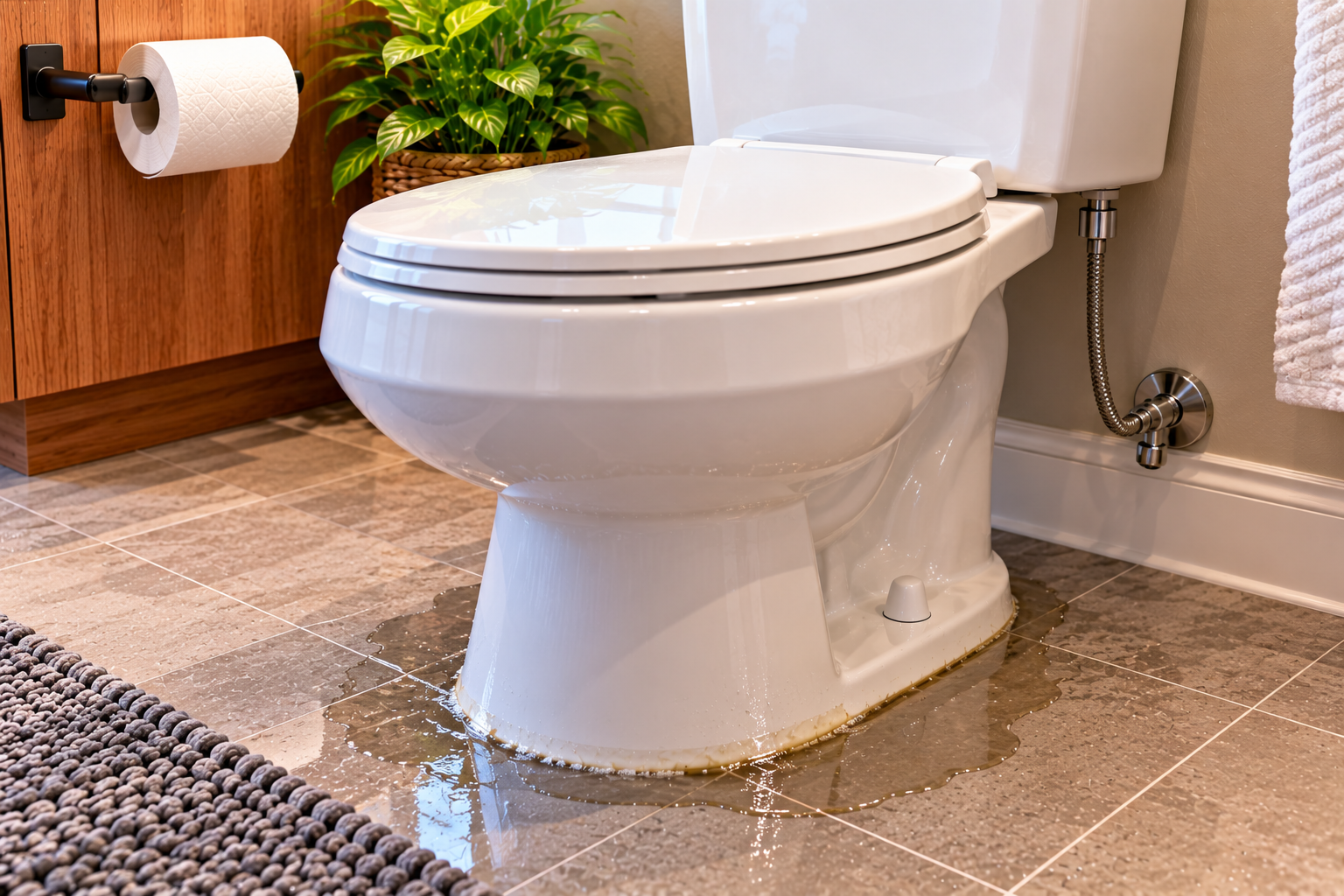
Once that seal is compromised, water can escape beneath the fixture during flushing. You may see moisture at one side of the toilet, staining near the base or water that reappears shortly after the floor is dried.
2. The toilet is rocking or moving
A properly installed toilet should feel stable. If the bowl rocks when someone sits down or shifts slightly under pressure, movement can place stress on the seal beneath it.
Replacing the wax ring without correcting the reason for the movement can allow the new seal to fail again. Uneven flooring, loose mounting hardware or flange-related problems may need attention as part of the repair.
3. The toilet flange may be damaged
The flange connects the toilet to the drainage system and provides an anchoring point for the fixture. If it is cracked, corroded, loose or positioned poorly relative to the finished floor, creating a stable seal may become difficult.
A flange issue is often discovered only after the toilet has been removed. This is one reason a base-leak repair sometimes becomes more involved than simply installing a new wax ring.
4. Water may be coming from the tank
On a two-piece toilet, leaks can develop at the connection between the tank and bowl or around tank mounting hardware. Water can then travel down the outside of the bowl and collect on the floor.
Because the puddle ends up near the toilet base, it can easily be mistaken for a failed floor seal.
5. The supply line or shutoff connection may be leaking
The toilet supply line carries pressurized water from the shutoff valve to the tank. A slow leak at either connection can produce moisture even when nobody has recently flushed.
Following the water upward with a dry paper towel can sometimes reveal that the base is simply where the water is collecting rather than where the leak begins.
6. Condensation can mimic a plumbing leak
Under certain bathroom conditions, condensation can form on the outside of a cold toilet tank or bowl. The moisture can run downward and leave the floor wet.
Condensation usually behaves differently from a failed wax seal because it is associated with surface moisture rather than water emerging specifically after a flush.
7. Porcelain may be cracked
A cracked tank or bowl can also leak. Visible cracks deserve careful attention because porcelain is a structural part of the fixture, and some damage makes replacement more appropriate than attempting a minor repair.
Homeowners researching local service coverage can view this Calgary plumbing location reference while considering professional diagnosis for an active toilet leak.
How Can You Tell Where a Toilet Base Leak Is Coming From?
The most useful first step is to determine exactly when the water appears. A toilet that leaks only during flushing points toward a different group of causes than one that remains wet continuously.
Drying the fixture and surrounding floor completely before observing it again can make the pattern easier to identify.
Leaks after flushing
A failed toilet-to-flange seal becomes more likely when water emerges at floor level shortly after a flush.
Leaks while unused
Check the supply line, shutoff valve, tank connections and exterior surfaces when moisture develops between flushes.
Toilet rocks
Movement can compromise the seal and may indicate mounting, flooring or flange conditions that need correction.
Several symptoms occur
Slow flushing, unusual bowl levels or repeated clogging can mean the leak should be assessed together with toilet drainage performance.
Dry the floor and toilet completely
Before trying to identify the leak, remove existing moisture from the floor, supply line, shutoff valve, tank and exterior of the bowl. Starting with dry surfaces makes fresh water easier to trace.
If water appears immediately after a flush and begins directly at floor level, the hidden base connection deserves attention.
Check the supply line first
Look and feel around both ends of the toilet supply line. A very small pressurized leak can create enough water to reach the floor without producing an obvious spray.
The shutoff valve connection should also be checked. Water from this area can follow the pipe or floor edge and appear beside the toilet.
Look underneath the tank
Inspect the area where the tank joins the bowl on a two-piece toilet. Moisture from tank hardware or the tank-to-bowl connection may travel down the rear of the fixture.
This can be difficult to see from the front, which is why assuming every puddle means a bad wax ring can lead to the wrong repair.
Check whether the toilet moves
A toilet should not noticeably rock. Movement can indicate that the fixture is not sitting securely against the floor or that the anchoring system beneath it has a problem.
Do not treat excessive tightening of the visible bolts as an automatic solution. Porcelain can be damaged by improper force, and the underlying cause of movement may be below the toilet.
Observe what happens during a flush
If everything remains dry until the toilet is flushed and then water appears at the base, the toilet-to-drain seal moves higher on the list of likely causes.
If the toilet also drains slowly, the leak and flushing problem may deserve a combined inspection. The related guide on causes of a slow-flushing toilet explains how partial restrictions and weak flushing can present.
Scenario: water after every flush in Mahogany
The bathroom floor remains dry overnight, but a small amount of water appears beside the bowl after the toilet is flushed. The supply line and tank remain dry.
This timing makes the hidden floor connection more suspicious than a constant pressurized supply leak.
Scenario: a puddle appears overnight in Cranston
A homeowner dries the toilet before bed without using it again. By morning, moisture has returned near the rear of the fixture.
Because no flush occurred, the investigation should include components that remain under water pressure, particularly the supply connection and tank-related sources.
Scenario: a rocking toilet in Copperfield
Water occasionally appears at the base, and the toilet shifts slightly when weight is placed on it. The leak disappears for several days and then returns.
In this situation, replacing the seal without stabilizing the toilet and checking the flange could leave the reason for repeated seal failure unresolved.
Homeowners can also browse the Calgary Electrical and Plumbing video library and this featured plumbing service video for additional company and service information.
Request a toilet leak repair estimate in Calgary in just a few clicks.
Get My Free Estimate
How Is a Toilet Leaking at the Base Repaired?
The repair depends on what is actually leaking. If the toilet-to-drain seal has failed, the fixture normally needs to be removed so the hidden connection and surrounding components can be inspected.
If the water is coming from the supply system or tank, removing the entire toilet may be unnecessary. Accurate diagnosis therefore matters before work begins.
Replacing a failed toilet seal
When the wax ring or compatible seal is the confirmed problem, the toilet is removed from the flange. The old sealing material can then be cleared away and the flange inspected before a new seal is installed.
The toilet must be positioned correctly when reset. A new seal should not be expected to compensate for an unstable fixture or a significantly damaged mounting surface.
Correcting toilet movement
If the toilet rocks, the reason for that movement should be addressed during the repair. A stable installation helps protect the new seal and reduces stress on the connection.
Floor condition, toilet contact points, mounting hardware and the flange can all influence stability.
Repairing a damaged flange
A damaged or poorly positioned flange can make sealing and securing the toilet difficult. The appropriate repair depends on the flange material, condition and relationship to the finished floor.
This additional work can increase the cost compared with a straightforward seal replacement.
Repairing tank or supply leaks
If tracing the moisture reveals a leaking supply line, shutoff connection or tank component, the repair should target that source instead of unnecessarily disturbing the toilet’s floor seal.
This is why checking the fixture from top to bottom is valuable before concluding that the wax ring has failed.
What does toilet base leak repair cost in Calgary?
| Possible Repair | Typical Situation | Broad Calgary Planning Range |
|---|---|---|
| Leak diagnosis / minor adjustment | Source tracing or straightforward connection issue | $150–$250 |
| Supply line or minor toilet connection | Leak originates above the base | $150–$300+ |
| Wax ring / toilet seal replacement | Toilet removal, new seal and resetting | $250–$450+ |
| Flange-related repair | Damaged, loose or problematic toilet flange | $300–$650+ |
| Toilet reset with added correction | Movement, mounting or installation complications | $300–$600+ |
| Toilet replacement | Cracked, deteriorated or uneconomical fixture | $350–$800+ depending on fixture and installation |
These figures are broad Canadian-dollar planning ranges rather than fixed quotes. The final cost can change with accessibility, toilet design, flange condition, flooring, hidden damage, parts and the amount of work required after the fixture is lifted.
Can you just caulk around a leaking toilet?
Caulk is not a substitute for repairing a failed toilet-to-drain seal. Covering the edge of an active leak can conceal moisture rather than stop its source.
If wastewater is escaping beneath the toilet, the underlying sealing or mounting problem needs to be corrected. Cosmetic sealing around the fixture should not be used to hide an unresolved leak.
Should you tighten the toilet bolts?
Loose mounting can contribute to movement, but blindly tightening toilet hardware is not a complete diagnostic method. The toilet may be moving because of flange damage, floor conditions or installation issues.
Excessive tightening can also place damaging stress on porcelain. The goal is a stable, correctly mounted toilet rather than simply applying more force to the bolts.
Should an old leaking toilet be replaced?
A failed base seal does not automatically mean the entire toilet needs replacement. A sound fixture can often be reset after the sealing and mounting issues are corrected.
Replacement may make more sense when the bowl or tank is cracked, the toilet has recurring performance problems, major components are deteriorating or repair costs are becoming difficult to justify.
For homeowners researching general installation considerations, this supplied plumbing code guideline resource provides additional background. Local work should still be assessed according to the requirements applicable to the specific installation.
Company updates and service information are also available through the Calgary Electrical and Plumbing Facebook page.
Why You Should Not Ignore Water Around a Toilet Base
A small amount of water can make a toilet leak look less urgent than a burst pipe, but repeated moisture around the fixture can affect materials that are largely hidden from view.
Finding and correcting the source early is usually easier than waiting until flooring, subflooring or nearby finishes begin showing obvious deterioration.
Moisture can reach the flooring and subfloor
Water escaping underneath the toilet can spread beyond the visible edge of the fixture. Depending on the floor construction and duration of the leak, surrounding materials can remain damp even after the visible puddle is wiped away.
Softness, staining, lifting flooring or persistent odours deserve attention because they can indicate that the leak has been present longer than expected.
A failed seal may allow unpleasant odours
The toilet connection is designed to separate the bathroom from the drainage system. If the connection is compromised, the problem may involve more than visible water.
Persistent odours around a toilet, particularly when combined with rocking or floor moisture, are another reason to have the installation inspected.
Repeated movement can make the problem worse
A rocking toilet can continue stressing its seal each time it is used. Waiting while the fixture remains unstable may turn an occasional leak into a recurring one.
The underlying mounting or flange condition should be corrected rather than treating repeated seal failure as an isolated event.
Water can originate somewhere unexpected
One of the biggest reasons not to guess is that a puddle beside the toilet can have several sources. Replacing the wax ring will not correct a leaking tank bolt, supply connection or cracked component.
A top-to-bottom inspection avoids spending money on the wrong repair while the actual leak continues.
If water escapes onto the floor with each flush, the toilet rocks significantly, the flooring feels soft or you suspect wastewater is leaking from beneath the fixture, limiting use until the problem is assessed can help reduce additional moisture exposure.
Scenario: recurring moisture in Auburn Bay
A homeowner notices a small damp area at the front of the toilet every few days. It is cleaned repeatedly, but the water always returns after normal bathroom use.
Drying the entire fixture and watching the next flush reveals that moisture begins at floor level, making the toilet-to-drain connection a logical area for further inspection.
Scenario: water behind the toilet in McKenzie Towne
The floor looks wet around the rear of the base even though the toilet does not leak every time it is flushed. A closer inspection finds moisture higher on the supply connection.
This example shows why the location of the puddle alone cannot confirm a failed wax ring.
Scenario: loose toilet in New Brighton
A toilet moves slightly from side to side and has begun producing intermittent moisture around one edge. Simply replacing the seal could provide only a temporary solution if the fixture remains unstable.
Checking the flange, mounting and floor contact helps address the cause rather than only the symptom.
Scenario: older fixture in Acadia
An older toilet has a suspected base leak along with recurring flushing problems and worn internal components. In this situation, it can be sensible to compare the cost of resetting and repairing the fixture with installing a replacement.
The best decision depends on the toilet’s overall condition rather than the base leak alone.
Water appearing only after flushing can point toward the toilet-to-drain seal. Moisture that develops while the toilet is unused suggests checking pressurized supply connections, the tank and other sources. A rocking toilet adds concern about the seal, mounting or flange.
What information helps when arranging toilet leak service?
It helps to note when the leak appears, how much water is present, if the toilet rocks, if the bowl is draining normally and if the supply line or tank appears wet.
Also mention any recent toilet installation, flooring work or previous seal replacement. These details can help narrow down likely causes before the fixture is removed.
For more local company information, homeowners can review the Calgary Electrical and Plumbing X updates, this additional Calgary service map reference, and the supplied shared Calgary Electrical and Plumbing profile.
Request a toilet leak repair estimate in Calgary in just a few clicks.
Get My Free Estimate
Stop the Toilet Leak Before Hidden Moisture Spreads
Water around a toilet base deserves more than a quick wipe or a bead of caulk. Identifying if the source is the wax ring, flange, tank, supply connection, unstable mounting or damaged fixture allows the correct repair to be made.
If the leak keeps returning, a local calgary plumber can inspect the toilet and the hidden floor connection before additional moisture spreads. Call (403) 421-1991 for local toilet leak assistance in Calgary.
Frequently Asked Questions about Toilet Base Leaks
Why does my toilet leak around the base only when I flush?
If water appears at floor level mainly after flushing, the toilet-to-drain seal may have failed. A worn wax ring, unstable toilet or flange problem can allow water to escape. Tank leaks should still be ruled out because water can travel down the porcelain.
Does water around the toilet base always mean the wax ring is bad?
No. A leaking supply line, shutoff connection, tank hardware, condensation or cracked fixture can send water toward the floor and imitate a failed wax ring. Calgary homeowners should trace the moisture from top to bottom before assuming the hidden base seal is responsible.
Can I caulk around the bottom of a leaking toilet?
Caulk should not be used to hide an active plumbing leak. If the toilet-to-drain seal has failed, sealing the visible edge does not repair the connection beneath the fixture. The source should be diagnosed and corrected before cosmetic sealing is considered.
Why does my toilet rock and leak around the base?
A rocking toilet can stress the seal between the fixture and drain. Loose mounting, an uneven installation or flange problems may be involved. Replacing the wax ring without correcting the movement can allow the leak to return after the toilet is reset.
When should I call a Calgary plumber for a toilet leaking at the base?
Arrange service when water repeatedly appears after flushing, the toilet rocks, the floor feels soft, odours develop or you cannot identify the source. Early diagnosis can determine if the problem involves the toilet seal, flange, supply connection, tank or surrounding installation.
Don’t wait for hidden moisture to cause more damage.
Call (403) 421-1991 Now
Local Help Available 24/7 in Calgary