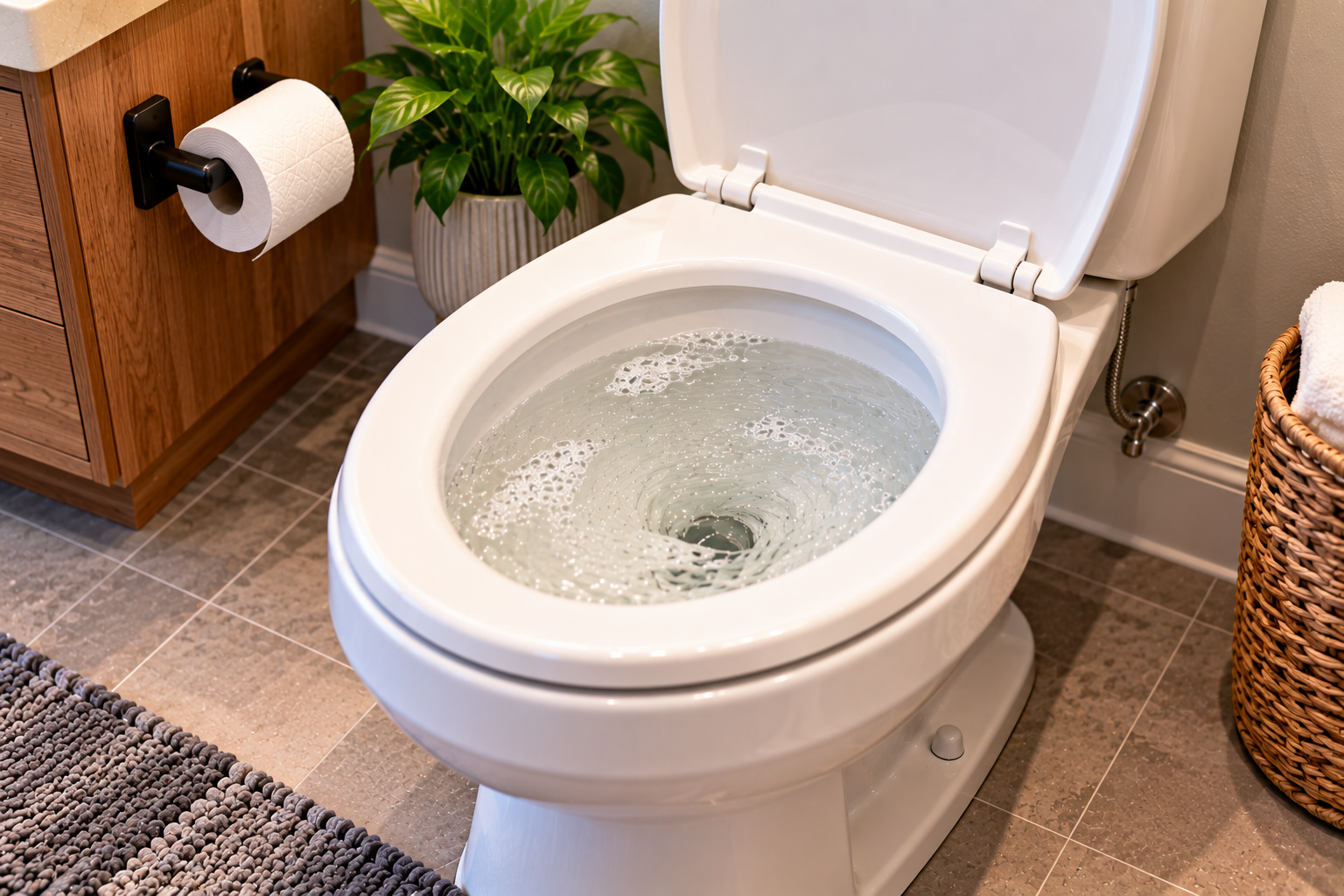

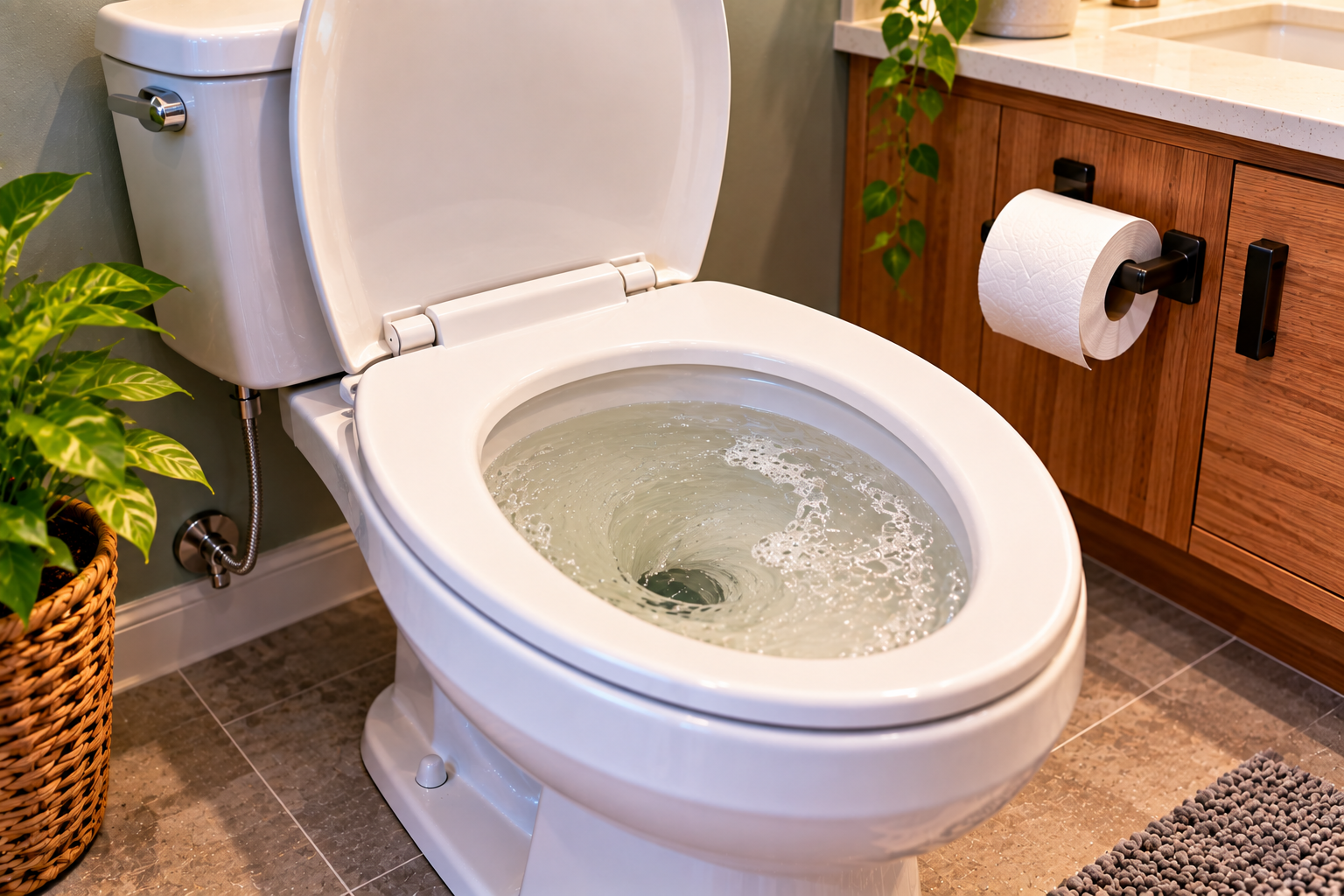
Why Does My Toilet Flush Slowly? If you press the handle and the bowl seems to swirl weakly, takes too long to clear or needs a second flush, the change can be frustrating and may leave you wondering if a complete blockage is developing.
A slow flush can come from several different parts of the toilet and drainage system. Homeowners looking for Calgary toilet plumbing and repair support should pay attention to both sides of the flush: how strongly water enters the bowl and how freely that water leaves through the drain.
Across Southeast Calgary communities such as Mahogany, Auburn Bay, Cranston, Copperfield, New Brighton and McKenzie Towne, common causes include partial clogs, low tank water, restricted rim jets, fill-valve problems, worn flush components and drain-line restrictions. The exact pattern usually provides important clues.
A slow-flushing toilet can result from a partial clog, low tank water, restricted rim or siphon jets, worn tank components or a drainage problem. Identifying if the weakness begins with water entering the bowl or leaving it helps narrow down the cause.
What Causes a Toilet to Flush Slowly?
A healthy toilet needs two things to happen quickly. First, enough water must leave the tank and enter the bowl with sufficient force. Second, the bowl contents must have a clear path through the trapway and drainage piping.
A problem on either side can make the toilet feel slow. This is why replacing one tank component does not automatically solve every weak flush, and clearing the drain does not help if insufficient water is entering the bowl.
1. A partial clog is slowing the toilet
A toilet can be partially blocked while still allowing water and waste to pass. Instead of producing an obvious complete clog, the restriction reduces how quickly material moves through the trapway.
You may notice a long swirling flush, water that clears reluctantly or a toilet that sometimes needs a second flush. The problem may gradually become more noticeable as additional material catches around the restriction.
2. The tank water level may be too low
The tank stores the water needed to create flushing force. If it refills below the intended level, the toilet releases less water during each flush and may struggle to clear the bowl effectively.
Low tank water can be related to fill-valve adjustment, a malfunctioning refill system or another internal tank issue. The flush may sound short and weak rather than slow because of a drain obstruction.
3. Rim holes or the siphon jet may be restricted
Many toilets direct water into the bowl through openings beneath the rim and, depending on the design, through a larger siphon jet. These passages help create the movement required for a strong flush.
Mineral deposits and buildup can gradually restrict those openings. Instead of water entering the bowl quickly and evenly, the flow becomes weaker, which can reduce flushing performance even when the drain itself is open.
4. The flapper may close too quickly
When the toilet is flushed, the flapper or flush-valve seal must remain open long enough for the intended volume of tank water to enter the bowl.
If it drops too early, the toilet may receive only part of the water required for a complete flush. A chain that is incorrectly adjusted or a worn component can contribute to this behaviour.
5. The drain line may be restricted
A slow toilet can also be a drainage symptom. If water enters the bowl strongly but the contents leave slowly, the problem may be within the toilet trapway or farther along the branch drain.
This possibility becomes more important when the bowl rises unusually high, gurgles or takes a long time to return to its normal water level.
6. The toilet may simply be aging poorly
Older toilets can develop several small performance problems at the same time. Worn tank components, mineral buildup and repeated clogging can combine to make flushing progressively less effective.
Age alone does not mean replacement is necessary, but an older fixture that repeatedly needs repairs and still performs poorly deserves a broader repair-versus-replacement assessment.
Homeowners confirming service-area information can review this Calgary plumbing location reference while researching local toilet service options.
How to Identify What Is Making Your Toilet Flush Slowly
The way a toilet behaves during the first few seconds of the flush can reveal a great deal. Instead of focusing only on the final result, watch how water enters the bowl, how the bowl level changes and how long the complete flush cycle takes.
These observations help separate a weak-water problem from a restricted-drain problem.
Weak movement from the start
Low tank water, restricted jets or a flush mechanism that closes too soon may be limiting the water delivered to the bowl.
Strong start but slow finish
A partial trapway or drain restriction becomes more likely when plenty of water enters but the bowl clears reluctantly.
Water rises before draining
This pattern commonly deserves investigation for restricted flow through the toilet or drainage system.
Repeated second flushes
A toilet that regularly needs two flushes may have inadequate flush volume, restricted passages or an obstruction.
Check the tank water level
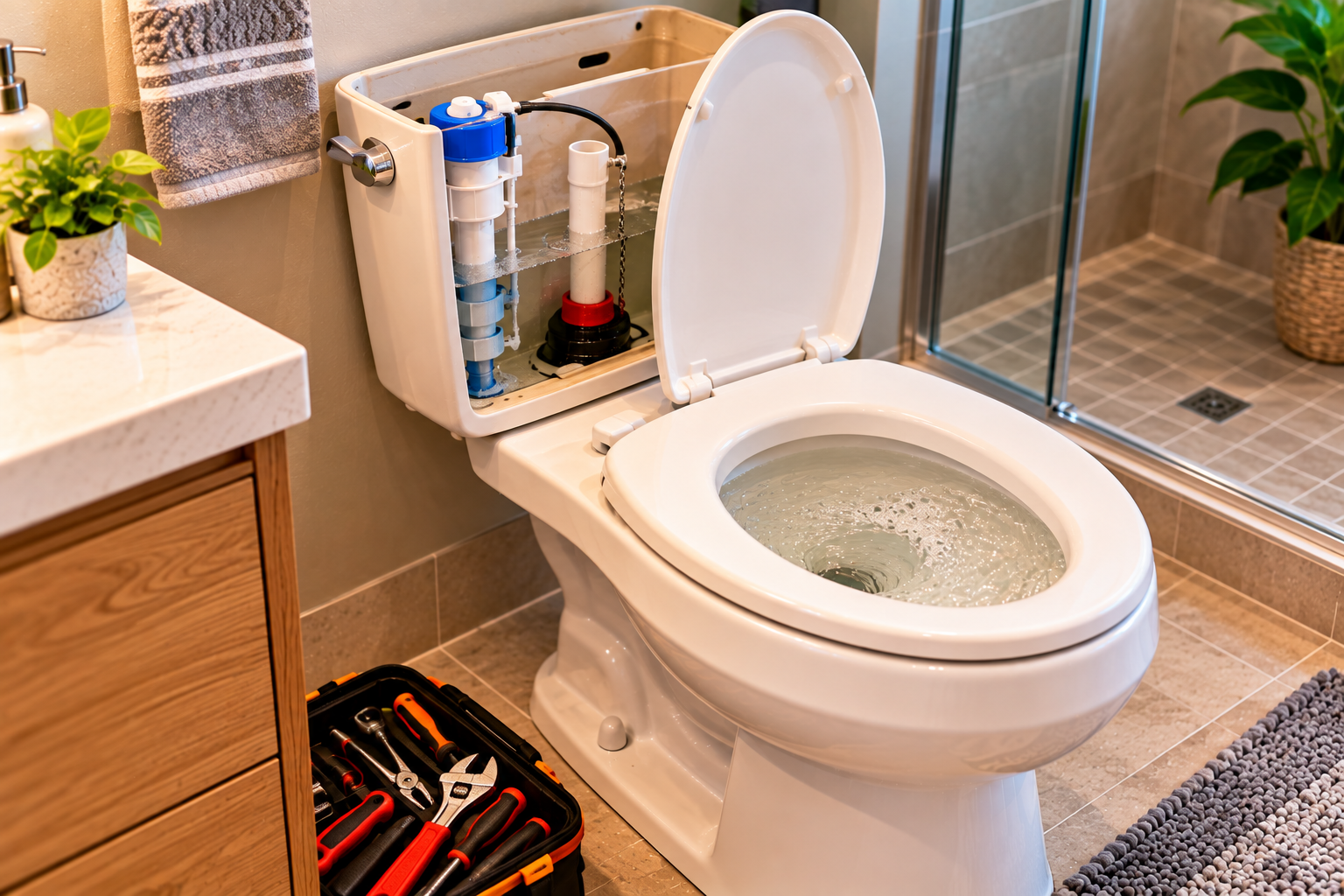
After the toilet finishes refilling, the tank should contain enough water for the fixture’s intended flush. A noticeably low level can weaken the entire flush cycle.
If the toilet also makes ongoing refill noises, the slow-flush problem may overlap with an internal tank issue. Our related guide explains why a toilet may keep hissing after the flush cycle and what tank components can be involved.
Observe how water enters the bowl
A healthy flush normally creates purposeful movement rather than a weak trickle around one part of the rim. Uneven flow can suggest restricted bowl passages.
This distinction matters because a toilet with restricted jets can look like it is clogged even though the drain path remains relatively clear.
Notice the bowl level during the flush
If the water climbs substantially before it finally goes down, a drainage restriction becomes more likely. If the water barely moves and the flush lacks energy from the beginning, investigate the tank and water-delivery side as well.
A toilet that alternates between these patterns can have more than one contributing problem.
Compare the toilet with other fixtures
Check the bathroom sink, shower or tub. If they drain normally and only one toilet is slow, the issue is more likely localized to that toilet or its nearby branch.
If several fixtures are slowing down, gurgling or reacting to one another, the investigation may need to move farther into the drainage system.
Scenario: weak flush in Mahogany
A homeowner notices that the toilet no longer produces the strong bowl movement it once did. The bowl does not rise dangerously high, and the sink and shower drain normally.
Checking the tank reveals that it is refilling to a lower level than expected. This pattern points toward the water-delivery side rather than immediately suggesting a blocked main drain.
Scenario: long swirling flush in Cranston
The tank empties strongly, but the bowl swirls for an extended period before finally clearing. Some flushes require a second attempt.
Because water enters strongly but leaves slowly, a partial trapway or drain restriction becomes a stronger possibility.
Scenario: several fixtures changing in Copperfield
A slow toilet appears around the same time that the shower starts draining more slowly. The toilet also makes an occasional gurgling sound.
Multiple drainage symptoms suggest that diagnosing only the toilet may miss a restriction farther along the shared drainage path.
Homeowners who prefer visual service information can browse the Calgary Electrical and Plumbing video channel or view this featured local plumbing video.
Request a toilet repair estimate in Calgary in just a few clicks.
Get My Free Estimate
What Does Slow Toilet Repair Cost in Calgary?
The cost of correcting a slow toilet depends on the underlying cause. Adjusting or replacing an internal tank component is a different job from clearing a difficult obstruction or investigating a recurring branch-drain problem.
The toilet’s age, condition, accessibility and parts availability can also influence the final service cost.
| Possible Service | Typical Slow-Flush Problem | Broad Calgary Planning Range |
|---|---|---|
| Minor toilet adjustment | Chain, tank level or straightforward flush adjustment | $150–$225 |
| Fill valve or flapper repair | Incorrect tank refill or incomplete water release | $150–$275 |
| Basic toilet clog clearing | Accessible restriction in or near the toilet | $150–$300 |
| More difficult toilet blockage | Persistent or deeper obstruction requiring additional work | $200–$400+ |
| Branch drain service | Slow flushing connected to a downstream restriction | $250–$500+ |
| Toilet replacement | Aging or damaged toilet no longer worth repeated repairs | $350–$800+ depending on fixture and installation |
These are broad Canadian-dollar planning ranges rather than fixed quotes. Actual pricing varies with diagnosis, access, fixture design, parts, the location of any blockage and additional plumbing conditions discovered during service.
When is a simple toilet adjustment enough?
If the toilet drains freely but receives too little water from the tank, a relatively straightforward internal adjustment or component repair may restore flushing strength.
This can be more economical than treating the fixture as a drainage blockage when the problem actually begins inside the tank.
When does slow flushing point toward drain clearing?
Drain clearing becomes more relevant when the tank releases water strongly but the bowl struggles to empty, rises unusually high or repeatedly requires several flushes.
A recurring problem after temporary clearing can indicate that the obstruction was not fully removed or that another drainage condition is contributing.
Can mineral buildup make a toilet flush slowly?
Yes. Mineral deposits can accumulate around water-delivery openings and reduce the flow entering the bowl. The result may be a sluggish flush even though the drain itself is not completely blocked.
This is one reason it is useful to observe the strength and distribution of water entering the bowl before assuming every slow toilet needs drain clearing.
Could the fill valve cause slow flushing?
Indirectly, yes. A fill valve controls how the tank refills. If the tank consistently stops filling below the appropriate level, the next flush may have insufficient water volume.
A fill-valve issue may also produce unusual refill sounds or an extended filling cycle, giving homeowners another clue that the problem is inside the tank.
Could the flapper cause a weak flush?
A flapper that closes prematurely can reduce the volume of water released from the tank. Instead of a full, forceful flush, the toilet receives only part of its intended water supply.
This can lead to incomplete bowl clearing even if the trapway itself is open.
Does a slow toilet always need replacement?
No. Many slow toilets can be repaired by correcting the actual cause. Replacement becomes more attractive when the fixture is aging, repeatedly clogs, has damaged components, requires frequent repairs or continues performing poorly after reasonable service.
Evaluating the complete fixture helps avoid replacing a toilet for a simple tank problem or repeatedly repairing a toilet that has reached the end of its practical service life.
For broader municipal information, homeowners can review this supplied City of Airdrie public service resource. Company information and updates are also available through the Calgary Electrical and Plumbing Facebook profile.
When Is a Slow Toilet a Warning of a Bigger Plumbing Problem?
A single weak flush is not always an emergency. The concern increases when the problem repeats, becomes progressively slower or begins appearing alongside symptoms at other fixtures.
The broader pattern around the home can help distinguish an aging toilet from a developing drainage problem.
The toilet is becoming slower over time
A gradual decline often means something is changing rather than the toilet simply having an unusual flush design. Buildup, component wear or a developing restriction can become more noticeable over weeks or months.
Progressive symptoms are worth addressing before the fixture becomes unreliable.
The bowl rises unusually high during every flush
If the bowl repeatedly fills much higher than its normal level before slowly draining, the problem may involve restricted outflow rather than only weak tank performance.
A bowl approaching the rim also creates an overflow risk. Repeatedly flushing to test it can make the situation worse.
The toilet gurgles
Gurgling can accompany abnormal air movement through the drainage system. When it appears together with slow drainage or reactions from nearby fixtures, the plumbing beyond the toilet deserves closer attention.
The sound itself does not identify one exact cause, so it should be interpreted with the other symptoms.
Several drains are slowing down
If the toilet, tub and sink all begin draining slowly, the chance of three unrelated fixture problems appearing simultaneously is lower than the possibility of a shared drainage restriction.
This is especially important if using one fixture causes another to bubble, gurgle or change water level.
The toilet needs two flushes almost every time
Repeated double flushing wastes water and indicates that the toilet is not consistently completing its job on the first cycle.
The cause could be low flush volume, restricted jets, a worn internal mechanism, a partial clog or poor overall fixture performance.
The problem returns shortly after clearing
A toilet that improves temporarily and then becomes slow again may have a persistent obstruction or another condition that has not been fully corrected.
Recurring problems deserve diagnosis rather than an endless cycle of temporary clearing.
If a slow toilet suddenly rises close to the rim, stop repeatedly flushing it. A partial blockage can become a complete blockage, and adding another tank of water may cause wastewater to overflow onto the bathroom floor.
Scenario: weak flushing in Auburn Bay
The toilet drains without the bowl rising, but each flush feels weaker than it did several months ago. Other bathroom fixtures work normally.
Because the issue appears to involve flushing force rather than slow outflow, tank water level, internal components and bowl water passages become logical areas to inspect.
Scenario: slow clearing in New Brighton
The tank releases water normally, but the bowl swirls for a long time and occasionally rises before finally emptying. Plunging helps for several days.
The temporary improvement increases suspicion of a partial restriction rather than a simple fill-valve problem.
Scenario: toilet and tub symptoms in Riverbend
The toilet has become slow, and the bathtub now takes longer to drain. A faint gurgle sometimes comes from the tub after the toilet is flushed.
With multiple fixtures involved, the shared drainage system becomes more important than treating the toilet as an isolated problem.
Scenario: an older toilet in Lake Bonavista
An older toilet has already received several internal repairs and still requires frequent second flushes. There is no evidence of a broader drain blockage.
At this stage, comparing another repair with replacement may make more sense than continuing to change individual components without improving overall performance.
A weak flush from the beginning often points toward tank water or bowl-delivery problems. A strong rush of water followed by slow bowl clearing points more strongly toward restricted drainage. Multiple slow fixtures can indicate that the problem extends beyond the toilet.
When should you arrange professional toilet service?
Professional diagnosis is useful when slow flushing becomes persistent, the bowl approaches overflowing, internal adjustments do not restore performance, a suspected object is lodged in the toilet or several fixtures show drainage symptoms.
It is also sensible when an older toilet repeatedly needs attention and you want to compare repair with replacement rather than continuing to spend on short-term fixes.
Additional company information can be found through the Calgary Electrical and Plumbing X profile and this additional Calgary service map listing.
This supplied Calgary Electrical and Plumbing shared company reference provides another online resource for homeowners researching local plumbing service information.
Request a toilet repair estimate in Calgary in just a few clicks.
Get My Free Estimate
Restore a Strong, Consistent Toilet Flush
A toilet that suddenly becomes slow is giving you useful information. The problem may be as straightforward as insufficient tank water or a worn internal component, or it may be an early warning of a partial clog or drainage restriction.
If slow flushing keeps returning or the bowl is beginning to rise unusually high, a local calgary plumber can help identify the cause before the fixture becomes completely blocked. Call (403) 421-1991 for local toilet plumbing assistance.
Frequently Asked Questions about Slow-Flushing Toilets
Why has my toilet suddenly started flushing slowly?
A sudden slow flush can result from a partial clog, low tank water, a flapper closing too early or restricted water passages in the bowl. If the toilet previously flushed normally, the change is worth investigating, especially if the problem becomes more frequent.
Can a toilet be clogged even if it still flushes?
Yes. A partial clog can leave enough space for water and waste to pass while making the flush noticeably slower. Calgary homeowners may notice prolonged swirling, occasional high bowl water or repeated second flushes before a partial restriction develops into a complete blockage.
Can low water in the toilet tank cause a weak flush?
Yes. The tank needs sufficient water to create an effective flush. If a fill valve or adjustment leaves the tank water too low, the bowl may receive insufficient volume and flushing force. The toilet may clear slowly even when the drain itself is open.
Why is my toilet slow when the shower or sink is also draining slowly?
When several fixtures become slow around the same time, the problem may extend beyond the toilet. A shared branch or larger drainage restriction can affect multiple fixtures. Gurgling or water-level changes between fixtures are additional reasons to have the drainage system assessed.
When should I call a Calgary plumber for a slow-flushing toilet?
Arrange plumbing service if the toilet remains slow, repeatedly needs two flushes, rises close to overflowing, keeps clogging or develops symptoms alongside other drains. Persistent problems can indicate a worn toilet component, partial obstruction or drainage restriction that requires a more complete diagnosis.
Don’t wait for a slow flush to become a complete blockage.
Call (403) 421-1991 Now
Local Help Available 24/7 in Calgary