

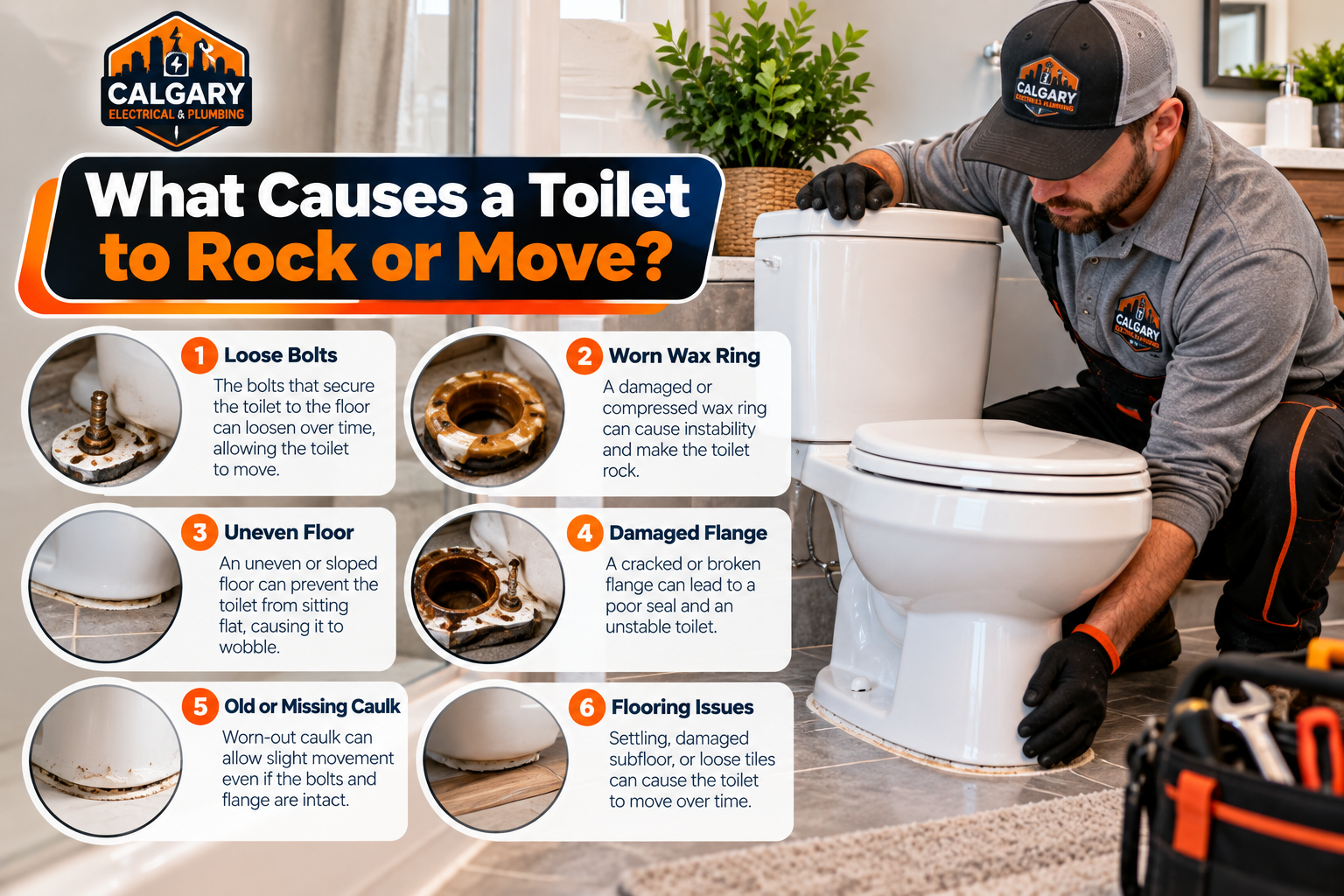
an uneven floor, or a damaged connection beneath the fixture.
What Causes a Toilet to Rock or Move? If your toilet shifts when you sit down, makes a small clicking sound, or moves slightly when you clean around it, something may be wrong with the way it is secured to the bathroom floor. Even a little movement deserves attention because the toilet connects directly to a sealed drainage opening beneath its base.
In homes across Mahogany, Auburn Bay, Cranston, and other Southeast Calgary communities, a rocking toilet can develop gradually as mounting hardware loosens, flooring changes, or an older seal deteriorates. Understanding how residential plumbing systems in Calgary are installed and maintained helps homeowners recognize when a minor adjustment may be enough and when a more involved repair is necessary.
A toilet should feel stable during everyday use. Movement does not automatically mean the fixture must be replaced, but ignoring it can lead to water escaping beneath the bowl, damage to nearby flooring, and more expensive repairs. The important first step is identifying what is actually allowing the toilet to move.
A toilet usually rocks because of loose mounting bolts, an uneven floor, an incorrectly installed flange, or damaged flooring beneath the fixture. Movement can also weaken the toilet’s watertight seal. A plumber can identify the cause, stabilize the toilet, and repair any damaged components.
What Are the Most Common Causes of a Rocking Toilet?
A toilet is designed to remain firmly positioned over its drain connection. It is generally secured through a mounting flange attached to the floor structure, while a seal between the toilet outlet and flange helps prevent wastewater from escaping.
When one part of this arrangement becomes loose, uneven, or damaged, the toilet can begin shifting from side to side. Several conditions can create similar symptoms, so the amount of movement alone does not identify the exact problem.
1. Loose Toilet Mounting Bolts
One of the simplest explanations is that the mounting bolts holding the toilet to its flange have become loose. These bolts are normally concealed beneath small caps near the bottom of the bowl.
Over time, movement, installation issues, or deterioration of the hardware may reduce the stability of the fixture. You might notice a small amount of side-to-side movement when sitting down or standing up.
However, tightening the bolts is not always the correct repair. If the flange underneath is broken, the bolts may have nothing solid to grip. Excessive tightening can also crack porcelain, creating a much larger problem.
2. An Uneven Bathroom Floor
Bathroom floors are not always perfectly level. A slight variation in tile height, grout thickness, or the finished flooring surface can leave a gap beneath part of the toilet base.
This is especially noticeable after a bathroom renovation. A new tile installation may look smooth, but the toilet can still sit on a few high points rather than resting evenly.
For example, a homeowner in Copperfield might notice that a recently reinstalled toilet rocks even though its bolts appear secure. The actual cause may be an uneven surface that requires appropriate support beneath the fixture.
3. A Broken or Improperly Positioned Toilet Flange
The toilet flange is the fitting that connects the toilet mounting arrangement to the drainage system. It must be securely anchored and positioned correctly relative to the finished floor.
If the flange cracks, corrodes, shifts, or is installed at an unsuitable height, the toilet may not remain stable. Older installations can sometimes have damaged bolt slots that allow the mounting bolts to move.
A flange problem is more involved than a loose bolt because the toilet often needs to be removed before the connection can be inspected properly.
Important distinction: A toilet flange and a wax ring perform different jobs. The flange provides the mounting connection, while the wax ring or approved alternative creates the seal. Replacing the seal alone will not repair a broken mounting flange.
4. Deteriorated Flooring or Subfloor
Water exposure can weaken the material supporting a toilet. If moisture has repeatedly reached the flooring or subfloor, the surface may become soft, swollen, or less capable of holding the fixture securely.
This can happen around an older toilet that has experienced an unnoticed leak. The toilet may initially move only slightly, then become increasingly unstable as the underlying material deteriorates.
In a main-floor bathroom in Riverbend, for instance, a rocking toilet accompanied by discoloured flooring or a persistent musty smell could indicate a problem extending beyond the visible plumbing fixture.
5. Incorrect Installation or Missing Support
A toilet can also move because it was not properly seated during installation. Uneven support, poorly aligned mounting hardware, or an incorrectly selected seal may prevent the fixture from sitting securely.
Installing a toilet on a new finished floor without addressing the existing flange height can create problems. Similarly, attempting to correct significant unevenness by simply tightening the bolts can place stress on the porcelain.
The appropriate solution depends on the actual floor condition, flange position, and mounting system rather than a universal adjustment.
May indicate loose hardware, an uneven surface, or a damaged flange.
Could indicate a compromised drain seal or a separate tank or supply leak.
May be associated with flooring changes, flange height, or installation.
Raises concern about moisture damage or inadequate structural support.
For homeowners looking for service information and local business details, the company’s Calgary plumbing location listing provides another way to identify the business serving the area.
How Can You Identify Why Your Toilet Is Moving?
Before considering a repair, it helps to observe when the toilet moves and what other symptoms appear. A simple visual inspection can reveal useful clues without dismantling the fixture.
The goal is not to force the toilet into position or repeatedly test its movement. Instead, look for evidence that helps distinguish a surface-level stability issue from a damaged mounting connection or possible leak.
Check for Visible Movement at the Base
Look at the point where the toilet meets the floor. Uneven gaps, displaced caulking, cracked grout, or a mounting cap that sits unusually high can suggest the fixture has shifted.
If movement is already obvious during normal use, avoid deliberately rocking the toilet. Repeated movement may place additional stress on the seal and flange.
Also inspect the surrounding floor for lifted tiles, damaged vinyl, or changes in the surface that could affect how the fixture is supported.
Look for Water Around the Toilet
A dry floor does not guarantee that the drain seal is intact, but visible water makes the situation more urgent. Moisture may appear after flushing, following extended use, or without an obvious pattern.
Not every puddle near the base comes from underneath the toilet. Water can travel down from a leaking tank connection, supply line, or shutoff valve and collect around the floor.
For a closer explanation of these possibilities, read our guide to identifying water leaks around a toilet base. The distinction matters because a seal replacement will not correct a leak originating from the tank or supply connection.
Notice When the Movement Started
The timing of the problem often provides useful context. A toilet that begins rocking immediately after replacement may have an installation or floor-level issue. A fixture that becomes unstable after years of use may have worn hardware or hidden deterioration.
Consider three common Calgary household situations:
- New Brighton: A toilet starts moving after new bathroom tiles are installed, suggesting an uneven seating surface or altered flange height.
- Douglasdale: An older toilet develops movement and an occasional odour, raising concern about the mounting connection and seal.
- Seton: A toilet shifts after repeated use, but the surrounding floor remains dry, making hardware and support conditions important to inspect.
Watch for Odours and Floor Damage
An unpleasant odour near a moving toilet can indicate that the drain seal is no longer functioning properly. However, odours may have other plumbing causes, so they should be considered alongside movement, moisture, and fixture condition.
Soft flooring, staining, swelling, or a damp ceiling below an upstairs bathroom can suggest water has travelled beyond the immediate toilet area.
These symptoms deserve professional assessment because the repair may involve both plumbing components and the surrounding building materials.
Stop using the toilet if wastewater is escaping. Avoid flushing a toilet with visible leakage, severe movement, or damaged flooring. Keep the area dry where practical and arrange an inspection before further use.
When a Professional Inspection Is the Better Choice
If the cause is not obvious, a plumber can assess the toilet, mounting hardware, flange condition, and surrounding flooring. In some cases, removing the toilet is necessary to see the underlying problem.
Residents who want to learn more about plumbing maintenance can browse the company’s plumbing service video channel or view a related service video for additional general information.
These resources can help homeowners understand common plumbing concerns, but they do not replace an inspection of a specific toilet installation.
Request a rocking toilet repair estimate in Calgary in just a few clicks.
Get My Free Estimate
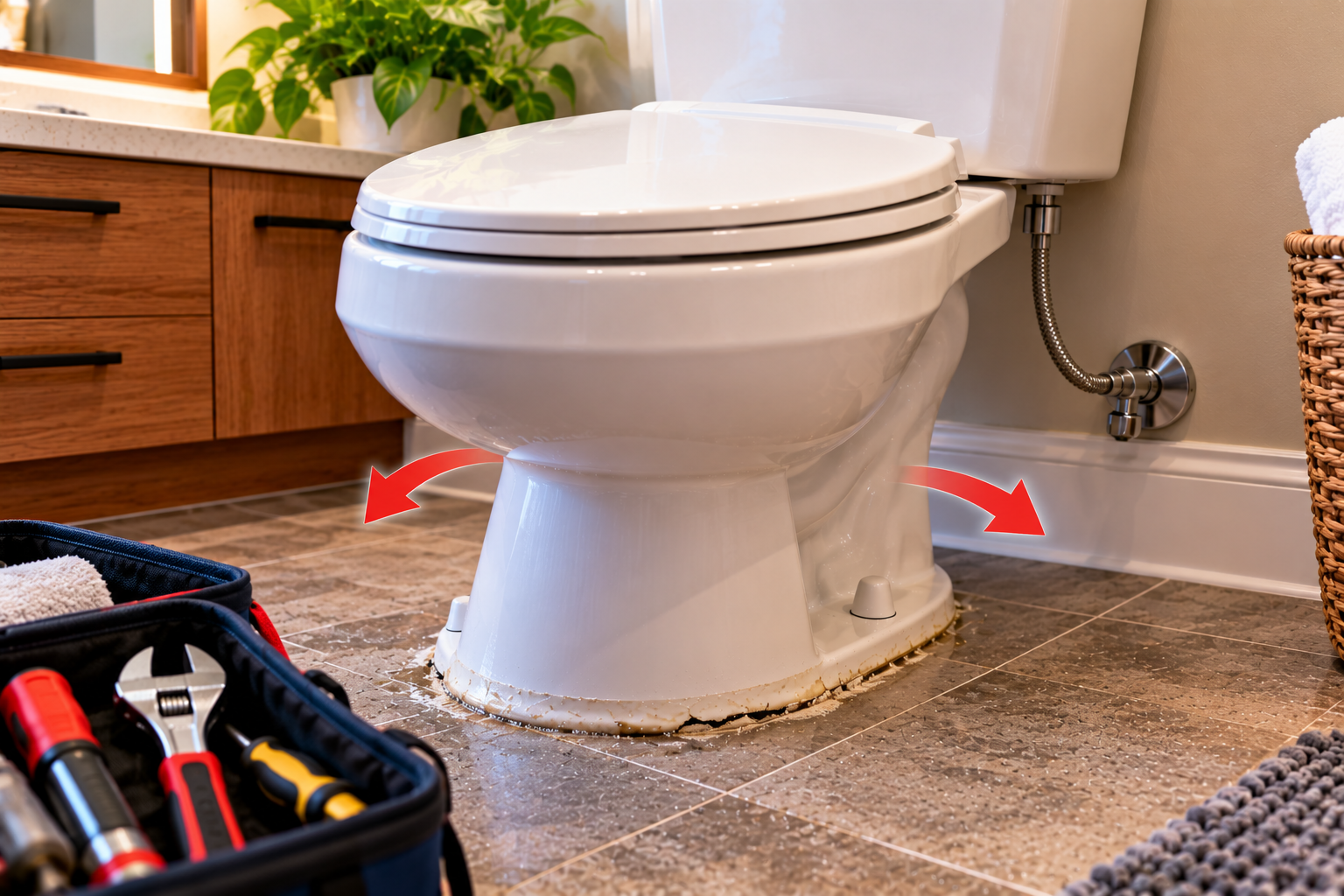
suitable floor support, and a correctly installed seal.
How Do Plumbers Fix a Loose or Wobbly Toilet?
The correct repair depends on the condition of the toilet and the parts beneath it. A simple adjustment may be sufficient for a fixture with sound hardware, while a damaged flange or deteriorated floor can require more extensive work.
A professional assessment helps prevent an ineffective repair, such as replacing a wax ring when the real problem is a broken flange or an uneven support surface.
Securing or Replacing Mounting Hardware
If the flange is intact and the toilet is properly seated, the plumber may be able to correct loose mounting hardware. This involves checking the bolts, washers, and the way the fixture sits against the floor.
Hardware that is corroded, bent, or unable to hold securely may need replacement. The plumber must also confirm that the porcelain is not cracked around the mounting points.
Toilets should not be secured by applying excessive force. Porcelain is rigid but can fracture when mounting bolts are overtightened.
Correcting an Uneven Toilet Base
Where the floor is uneven, suitable noncompressible toilet shims may be used to support the base. The goal is to eliminate movement without forcing the porcelain to conform to an irregular surface.
After the fixture is stabilized, the mounting arrangement and drain seal must be evaluated. If the toilet has been moving for some time, the existing seal may no longer be suitable for reuse.
A neat finish around the base can improve appearance, but caulking is not a substitute for proper mechanical support or a watertight drain connection.
Repairing a Damaged Toilet Flange
A broken flange may require an approved repair component or replacement of the damaged fitting. The appropriate method depends on the flange material, condition, pipe connection, and surrounding floor.
Some repairs can be completed without major changes to the drainage pipe. Others require more extensive access if the flange or connected piping has deteriorated.
Because the flange supports the mounting system, it should be properly secured before the toilet is reinstalled.
Replacing the Toilet Seal
A toilet that has rocked repeatedly may have compressed or disturbed its wax seal. If the fixture is removed, the old wax ring is normally discarded and a new suitable seal installed during reassembly.
Different toilet and flange arrangements may require different sealing products. Selecting the correct seal is important, particularly when the finished floor height has changed.
Once the toilet is reinstalled, the plumber checks its stability and tests the fixture for leaks.
Addressing Damaged Flooring
If the supporting floor is weakened, securing the toilet alone may not solve the problem. Water-damaged materials may need to be repaired or replaced before the fixture can be installed safely.
For an upstairs bathroom in Lake Bonavista, for example, a loose toilet combined with staining on the ceiling below may require investigation of the floor assembly as well as the plumbing connection.
The scope of work should be determined after the affected materials are assessed rather than assuming that all floor damage is visible from above.
How Much Does Rocking Toilet Repair Cost in Calgary?
Costs vary with the cause of the movement, accessibility, toilet condition, and the extent of any hidden damage. A simple hardware adjustment is generally less involved than a flange replacement or subfloor repair.
The following figures are illustrative planning ranges in Canadian dollars, not verified local quotes or guaranteed service prices.
| Potential Repair | Illustrative CAD Range | What May Affect the Cost |
|---|---|---|
| Inspection and minor adjustment | $100–$220 | Access, hardware condition, service minimum |
| Toilet removal, reseating and new seal | $180–$400 | Toilet design, seal selection, mounting condition |
| Flange repair or replacement | $250–$650+ | Flange material, pipe connection, floor access |
| Floor or subfloor restoration | Quoted after assessment | Moisture damage, materials, extent of restoration |
These amounts are broad examples for budgeting only. Actual Calgary pricing may differ, and restoration work may involve separate trades. Request an assessment for a job-specific estimate.
Can a rocking toilet be repaired without replacement? Often, yes. If the porcelain is intact and the underlying mounting and floor conditions can be corrected, the existing toilet may be reusable. Replacement becomes more appropriate when the fixture itself is cracked, severely damaged, or unsuitable for secure reinstallation.
Why Installation Requirements Matter
Toilet repairs must account for the drain connection, appropriate sealing, secure mounting, and applicable plumbing requirements. A quick cosmetic fix should not conceal a damaged fitting or ongoing wastewater leak.
Homeowners interested in municipal plumbing and property information can consult the City of Airdrie municipal information resource. Requirements should always be confirmed with the appropriate authority for the property’s location, as Airdrie guidance does not automatically govern work in Calgary.
For company updates and additional information, Calgary residents can also visit the business’s Facebook community page.
What Happens If You Ignore a Toilet That Rocks?
A rocking toilet may seem like a small inconvenience, especially when it still flushes normally. However, continued movement can affect the mounting connection and the seal beneath the fixture.
The longer a problem remains unresolved, the greater the possibility that an otherwise straightforward repair will become more complicated. This does not mean every loose toilet has caused hidden damage, but it does make early assessment worthwhile.
The Drain Seal May Become Compromised
The seal beneath the toilet is intended to maintain a watertight connection during normal use. Repeated rocking can disturb that connection, especially if the toilet is no longer properly supported.
Once the seal is compromised, wastewater may escape beneath the base during flushing. Some leaks are visible immediately, while others may remain hidden beneath the finished flooring.
A homeowner in McKenzie Towne might first notice movement, then discover damp grout or staining near the toilet several weeks later. That progression is one reason to address stability before leakage develops.
Moisture Can Damage Surrounding Materials
Water trapped around a toilet can affect flooring, baseboards, and the materials underneath. Wood-based subflooring is particularly vulnerable to repeated moisture exposure.
Over time, affected materials may swell, soften, or lose their ability to support the fixture. Moisture can also create conditions that encourage microbial growth if the area remains damp.
Even if the visible floor dries after each incident, hidden areas may retain moisture longer. The extent of damage cannot always be determined from the surface.
Mounting Hardware and Porcelain May Be Stressed
Movement places repeated force on the bolts and flange that hold the toilet in position. If the mounting arrangement is already weakened, additional movement may enlarge the problem.
The porcelain around the base may also experience uneven stress. A cracked toilet fixture generally requires a different response from a toilet that simply needs support or hardware repairs.
Attempting to compensate by tightening one side more than the other can worsen the imbalance and should be avoided.
Unpleasant Odours Can Develop
A compromised drain seal may allow odours to become noticeable around the toilet. However, bathroom odours can also arise from other plumbing or ventilation problems.
If a rocking toilet is accompanied by an unexplained sewage smell, the drain connection should be evaluated rather than simply covering gaps around the base with caulk.
Small Problems Can Become Larger Repairs
Consider a bathroom in Cranston where a toilet begins shifting after years of normal use. If the cause is minor mounting wear, addressing it early may involve limited work.
If the toilet continues moving and water reaches the subfloor, the eventual repair could include seal replacement, flange work, and flooring restoration. The exact outcome varies, but waiting can introduce avoidable complications.
In an Auburn Bay household with multiple bathrooms, temporarily using another toilet may help limit further damage until the affected fixture can be assessed.
Practical homeowner tip: Do not assume that a bead of caulk will stabilize a loose toilet. Caulk may be part of the finished installation, but it cannot replace secure mounting hardware, a sound flange, or suitable floor support.
When Should You Arrange Toilet Repair?
Arrange an inspection when the toilet moves during normal use, the mounting bolts repeatedly loosen, or the floor around the fixture shows signs of damage.
More urgent attention is appropriate when movement occurs alongside wastewater leakage, a visibly cracked fixture, or a floor that feels soft or unstable.
If you want to review business information before making contact, you can consult an additional Calgary Electrical and Plumbing business reference, follow company service updates on X, or check the additional Calgary location listing.
The best repair is one that addresses the underlying cause rather than simply making the toilet feel stable for a short period.
Request a rocking toilet repair estimate in Calgary in just a few clicks.
Get My Free Estimate
Keep Your Toilet Stable and Your Bathroom Protected
A toilet that rocks or moves is telling you that something in its mounting or supporting structure needs attention. Loose bolts, uneven flooring, flange damage, and weakened subflooring are all possible causes. Identifying the source early helps protect the drain connection and surrounding bathroom materials.
If your toilet is unstable, speak with a local calgary plumber about an appropriate inspection and repair. Call Calgary Electrical and Plumbing at (403) 421-1991 to discuss the problem and arrange assistance.
Frequently Asked Questions about Rocking Toilets
Why does my toilet rock even though the bolts are tight?
A toilet can still rock when the floor is uneven, the flange is damaged, or the mounting hardware is not properly secured beneath the fixture. Tight bolts do not guarantee stable support. A Calgary plumber can inspect the connection and identify the underlying cause.
Can a rocking toilet cause a leak underneath the base?
Yes. Repeated movement can disturb the seal between the toilet outlet and the drain flange. Wastewater may then escape during flushing, sometimes without an obvious puddle. If your Calgary bathroom toilet rocks and shows moisture nearby, avoid using it until the connection is assessed.
Is it safe to tighten the bolts on a loose toilet myself?
Overtightening toilet bolts can crack porcelain, and tightening will not repair a broken flange or damaged floor. If the toilet moves noticeably or the bolts do not hold securely, a professional inspection is safer than applying additional force to the fixture.
Does a rocking toilet always need to be replaced?
No. Many rocking toilets can be stabilized by correcting the mounting hardware, floor support, flange, or seal. Replacement may be necessary if the porcelain is cracked or the fixture is otherwise damaged. The appropriate choice depends on the condition of the toilet and its installation.
How quickly should I repair a wobbly toilet in Calgary?
Arrange an inspection as soon as practical because continued movement can affect the drain seal and mounting connection. If wastewater is leaking, the floor feels soft, or the toilet is severely unstable, stop using it and seek plumbing assistance before further damage occurs.
Don’t wait for the problem to get worse.
Call (403) 421-1991 Now
Local Help Available 24/7 in Calgary
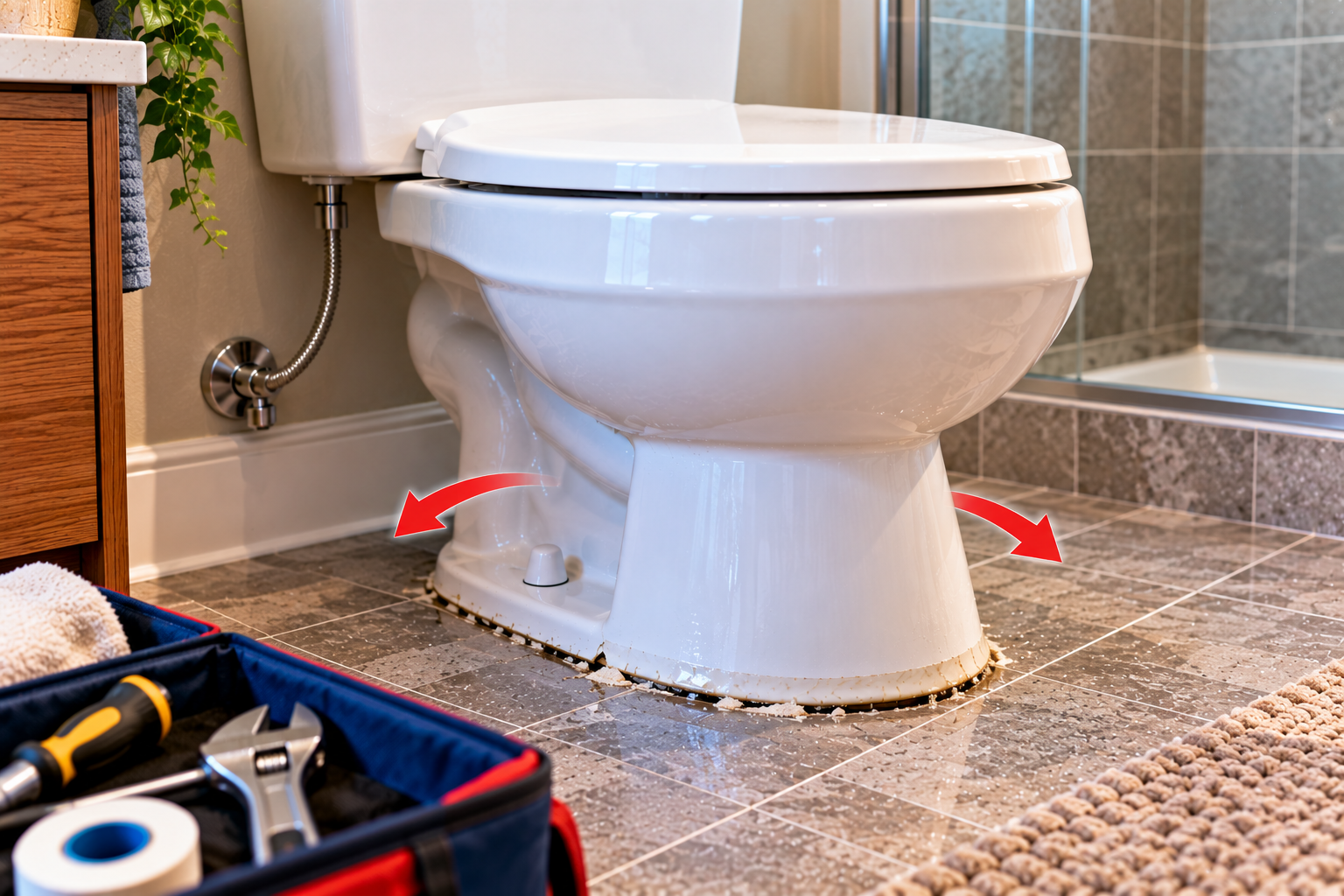
with a secure drain connection and no unexplained movement.