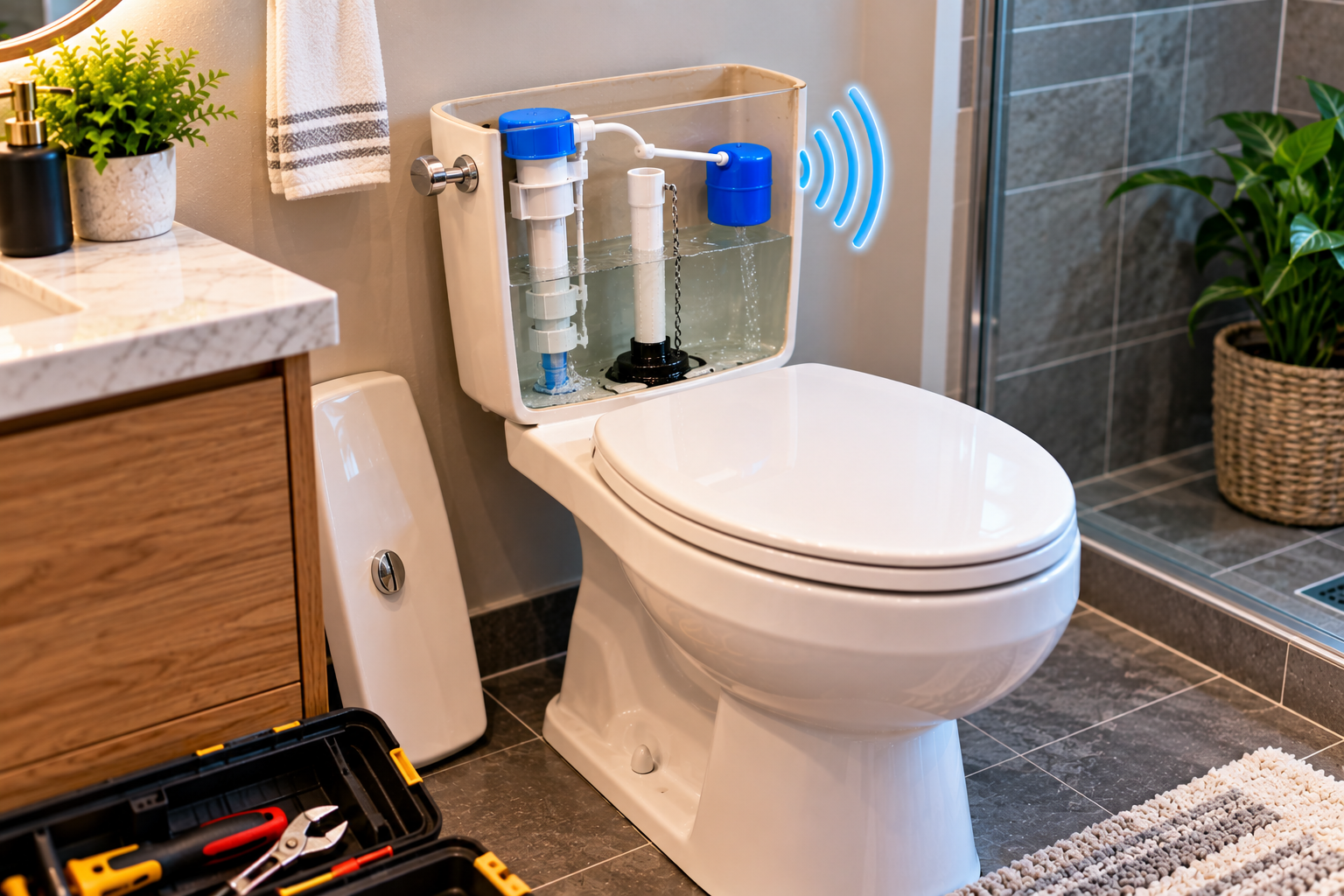

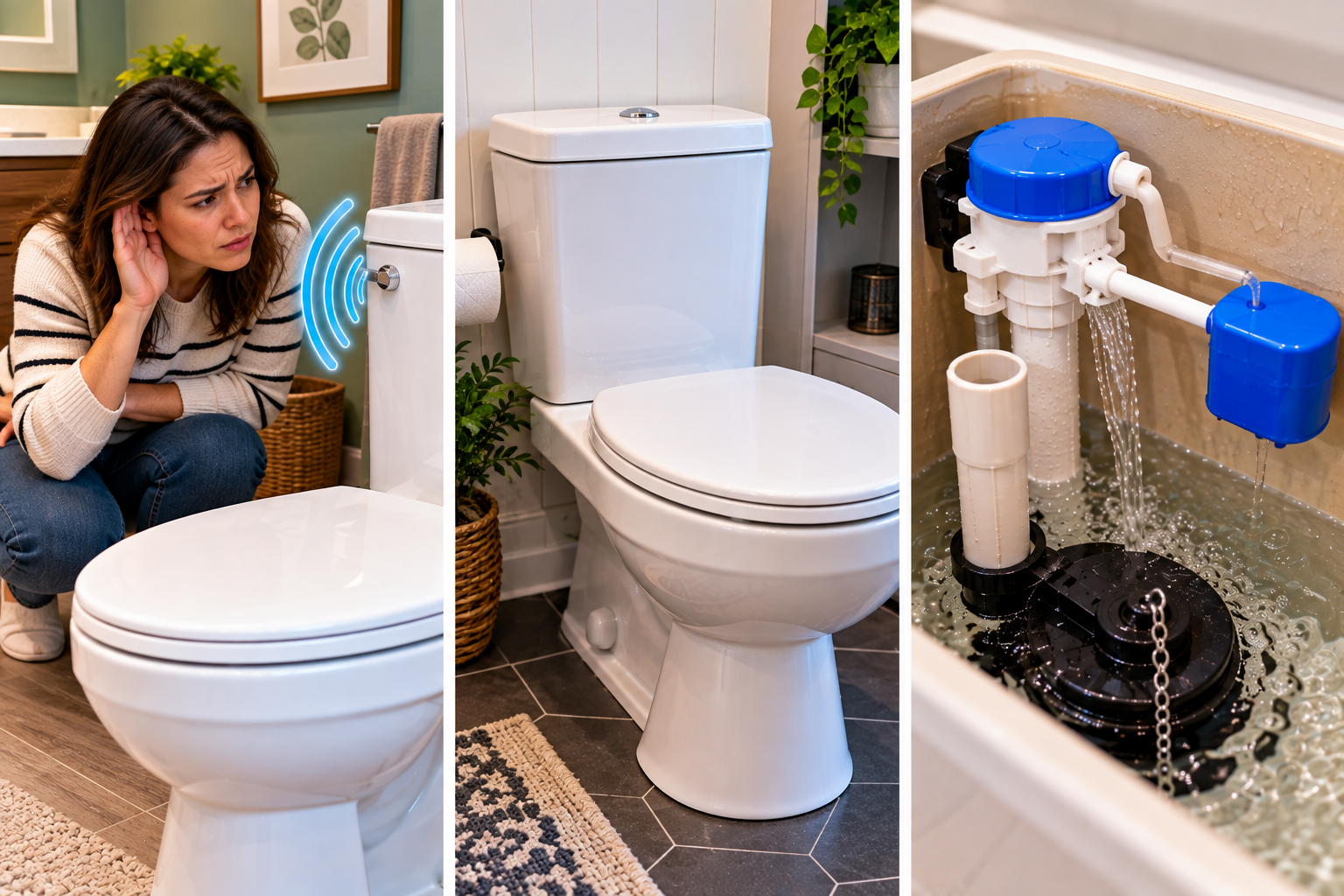
Why Does My Toilet Keep Hissing? If that faint air-like sound continues long after you flush, becomes noticeable late at night, or suddenly starts in a normally quiet bathroom, your toilet may still be allowing water through its filling or sealing system.
The sound can seem minor because the toilet may continue flushing normally, but homeowners seeking Calgary toilet plumbing and repair information should pay attention to when the hiss starts, how long it lasts and what the tank water is doing at the same time.
In Southeast Calgary homes from Mahogany and Auburn Bay to Cranston, Copperfield, New Brighton and McKenzie Towne, a hissing toilet can result from a worn fill valve, incorrect float level, leaking flapper, refill-tube problem or restricted water flow. The timing of the sound is often the best first diagnostic clue.
A toilet usually hisses because water continues moving through the fill valve or tank after filling should stop. Common causes include a worn fill valve, high float setting, leaking flapper, improperly positioned refill tube, restricted supply flow or slow tank-to-bowl leakage.
What Does a Hissing Toilet Usually Mean?
A brief water sound immediately after flushing is normal. The tank has emptied and the fill valve opens so fresh water can restore the correct level. As the float rises, the valve should gradually close and the sound should stop.
A problem becomes more likely when the hiss continues after the tank appears full, returns when nobody has flushed, or lasts far longer than the normal refill cycle.
1. A worn fill valve is not shutting off completely
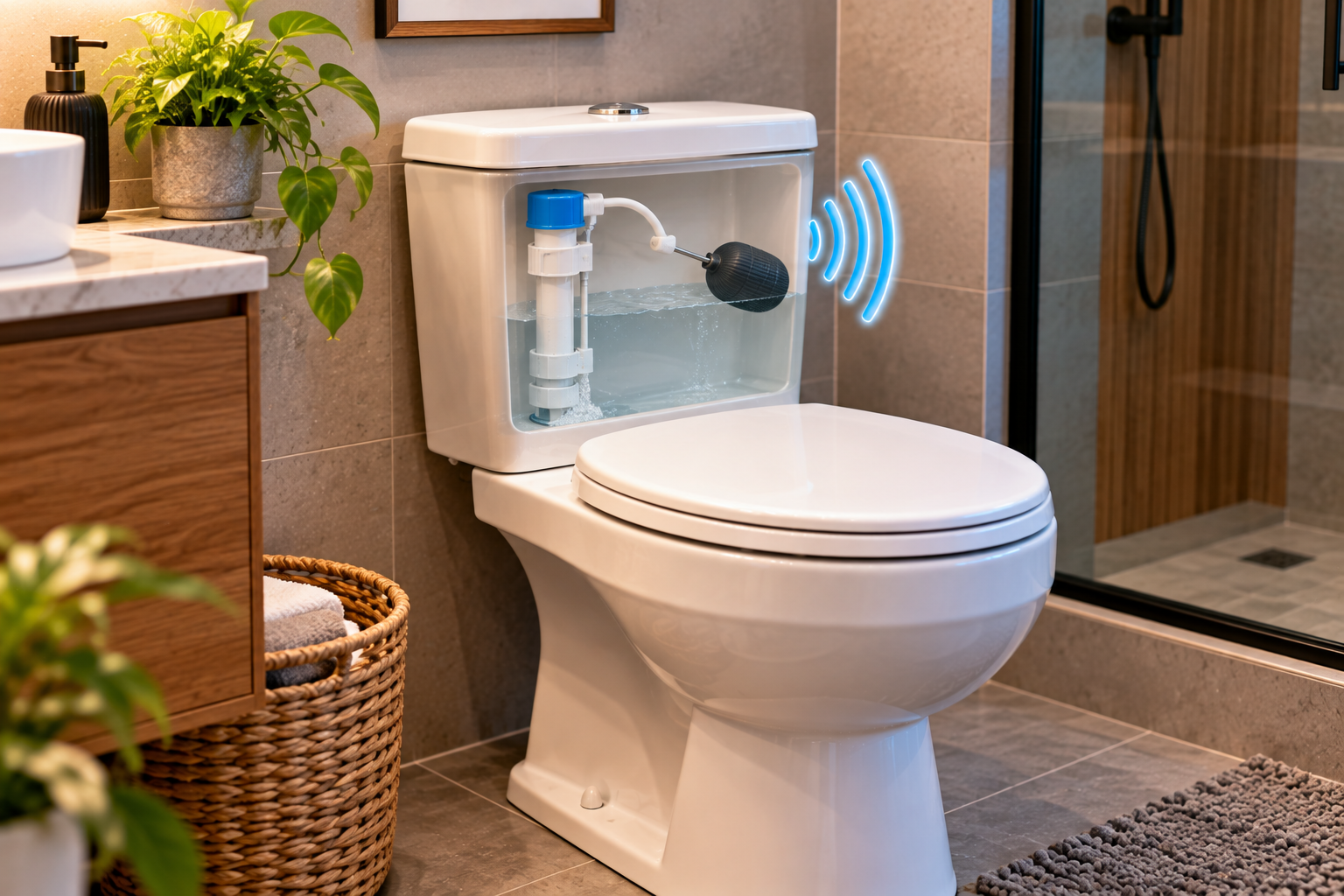
The fill valve is one of the first components to inspect when a toilet produces a steady hiss. Its job is to allow water into the tank after a flush and stop the flow when the correct level is reached.
Internal wear, deposits or deterioration can prevent the valve from closing completely. A narrow stream of water passing through the valve can produce a surprisingly noticeable hissing sound.
2. The float is set too high
The float controls when the fill valve closes. If its setting allows the tank water to rise too far, water can reach the overflow tube before the fill valve receives the signal to shut off.
The result can be a continuous hiss as incoming water flows into the overflow system instead of remaining at a stable tank level.
3. The flapper is leaking slowly
A hissing toilet does not always have a fill-valve problem. A worn, warped or poorly seated flapper can allow tank water to leak slowly into the bowl.
As the tank level drops, the fill valve opens slightly to replace the lost water. The homeowner hears the fill valve hissing, even though the underlying problem is actually at the bottom of the tank.
4. The refill tube is positioned incorrectly
The small refill tube directs water toward the overflow tube so the bowl receives the correct refill after flushing. Its position matters.
If the tube is inserted too deeply into the overflow pipe rather than being positioned correctly above it, unwanted siphoning or continued water movement may occur in some toilet configurations.
5. Water is flowing into the overflow tube
Remove the tank lid carefully and look at the water level. If you can see water continuously spilling over the top of the overflow tube, the hiss has an important visible explanation.
The fill valve, float adjustment or related filling mechanism should then receive attention before assuming the flapper is responsible.
6. The toilet supply valve may be contributing to the sound
Sometimes a hissing or whistling sound comes from the water supply path rather than the tank mechanism itself. A partially open or deteriorating shut-off valve can create noisy restricted flow while the toilet fills.
The sound may appear strongest near the wall or supply line instead of at the top of the fill valve.
7. Debris or deposits may restrict the fill valve
Small particles or mineral deposits can interfere with the narrow internal passages of a fill valve. Restricted water moving through a small opening can create a hiss even before the valve fails completely.
A professional diagnosis can determine if the valve can be serviced appropriately or if replacement is the better approach.
Homeowners confirming local service details can view this Calgary plumbing location reference for additional business information.
How the Timing of the Hissing Helps Identify the Problem
Two toilets can make almost the same sound while suffering from different problems. The most useful question is not simply “Is it hissing?” but “Exactly when does it hiss?”
Watching one complete flush cycle can reveal more than replacing parts based only on the noise.
Hisses only while refilling
A brief, consistent sound may simply be normal refill noise. Excessively loud or unusually slow filling can point toward the valve or supply path.
Hisses after the tank is full
The fill valve may not be closing completely, or water may be continuing into the overflow tube.
Hiss returns later
The tank may be slowly losing water through a flapper or flush seal, causing the fill valve to reopen.
Hissing near the wall
The shut-off valve or supply connection may be creating restricted or noisy water flow.
Hissing for a short time immediately after flushing
Some sound during tank refill is expected. The key question is how quickly the tank reaches its normal water level and shuts off.
If the sound stops consistently once the tank fills and there are no other symptoms, you may simply be hearing the normal operation of the fill valve.
Hissing that continues after the tank looks full
This deserves closer attention. Observe whether the water is entering the overflow tube and whether the float has reached its normal shut-off position.
If the valve remains partially open even at the correct level, internal fill-valve wear becomes a stronger possibility.
Hissing that disappears and returns every few minutes
This pattern often means the fill valve is reacting to another leak. Water slowly escapes from the tank, the float drops, and the valve briefly opens to restore the level.
The toilet may sound like it has a faulty fill valve even when the flapper or flush-valve seal is the component that started the cycle.
Hissing accompanied by water entering the overflow tube
This provides a direct clue. The tank is receiving more water than it can retain at its intended level.
The float may require adjustment, or the fill valve may no longer respond correctly when the float reaches its shut-off position.
Hissing plus a weak or slow tank refill
A toilet that takes unusually long to refill while producing a narrow hissing sound may have restricted water flow. The restriction could occur at the fill valve or elsewhere along the supply path.
Identifying where the sound is loudest can help narrow the inspection.
| Hissing Pattern | Likely Area to Inspect | Additional Clue | Possible Direction |
|---|---|---|---|
| Constant hiss after filling | Fill valve | Valve never becomes fully quiet | Adjustment or valve service |
| Hiss with water over overflow | Float / fill valve | Tank water level is too high | Correct level or repair valve |
| Hissing returns periodically | Flapper / flush seal | Tank slowly loses water | Inspect tank-to-bowl sealing |
| Hiss during very slow refill | Fill valve / supply path | Restricted incoming flow | Check valve and supply |
| Hissing near shut-off valve | Supply valve | Noise strongest near wall | Inspect supply-side component |
Scenario: constant hiss in Mahogany
A homeowner hears a quiet hiss for hours after every flush. Inside the tank, the water level is visibly reaching the overflow tube and continuing to move.
That observation directs attention toward the float setting and fill valve rather than immediately replacing the flapper.
Scenario: short bursts of hissing in Copperfield
The toilet becomes quiet after filling but hisses again fifteen minutes later. The tank level has dropped slightly even though nobody used the bathroom.
Here, a leaking flapper or flush-valve seal becomes a stronger suspect because the fill valve may simply be replacing water that escaped.
Scenario: loud hiss during a slow refill in Auburn Bay
The toilet takes much longer than normal to refill, and the noise is strongest around the fill-valve area. This pattern suggests restricted incoming flow or deterioration within the filling mechanism.
That is different from a toilet that reaches the correct water level quickly but continues hissing afterward.
Homeowners who prefer visual plumbing information can browse the Calgary plumbing video channel and this featured local plumbing video for additional company resources.
Request a hissing toilet repair estimate in Calgary in just a few clicks.
Get My Free Estimate
How Much Can Hissing Toilet Repair Cost in Calgary?
The repair cost depends on what produces the noise. Correcting a simple float or refill-tube issue is different from replacing a worn fill valve, servicing a leaking flush system or repairing an aging shut-off valve.
A useful diagnosis can prevent replacing a fill valve when the actual cause is a leaking flapper—or replacing a flapper when water is really entering the overflow tube because of the fill mechanism.
| Possible Problem | Typical Work | Broad Calgary Planning Range |
|---|---|---|
| Minor adjustment | Float, chain or refill-tube correction | $150–$225 |
| Flapper / basic tank seal | Inspection and replacement of failed sealing part | $150–$250 |
| Fill valve | Fill-valve replacement and water-level setup | $175–$300 |
| Several tank components | Multiple worn internal parts repaired together | $225–$400+ |
| Flush-valve assembly | More involved tank disassembly and sealing repair | $250–$450+ |
| Supply shut-off valve issue | Inspection or replacement depending on condition | $200–$450+ |
These figures are broad Canadian-dollar planning ranges rather than quotes. Toilet design, accessibility, component condition, required parts and additional plumbing problems can change the actual repair cost.
Is a hissing toilet wasting water?
It can be. If the hiss is caused by continuous flow through the fill valve, water entering the overflow tube or repeated refilling caused by a tank leak, the toilet may be using water between normal flushes.
A brief normal refill sound is different. The concern is a hiss that continues or repeatedly returns after the expected refill cycle.
Why can a flapper cause fill-valve noise?
The two components work as part of the same system. If the flapper allows water to escape, the tank level falls. The float detects that drop and tells the fill valve to supply more water.
The fill valve therefore makes the sound, but replacing it may not solve the underlying loss of water.
What if the toilet was recently repaired?
A recently installed part does not automatically rule out an adjustment or compatibility issue. A new fill valve may have an incorrect float setting, while a replacement flapper may not match the flush-valve opening correctly.
The refill tube can also be positioned incorrectly after tank components have been changed.
Can the hissing disappear on its own?
The sound may temporarily stop if a valve happens to seat correctly or a flapper settles into a better position. That does not necessarily mean the cause has disappeared.
If the hiss repeatedly returns, the toilet should be evaluated based on the recurring pattern rather than one quiet cycle.
Can the shut-off valve cause a toilet to hiss?
A restricted or deteriorating shut-off valve can contribute to noisy water flow, especially if the sound is strongest near the supply connection and the tank fills slowly.
An old valve that is difficult to operate should not be forced. It may need separate attention from the toilet’s internal tank components.
Does a hissing toilet always need replacement?
No. Many hissing problems involve serviceable components such as the fill valve, flapper or float adjustment. Replacing an otherwise sound toilet solely because of a worn tank component may be unnecessary.
Replacement becomes more relevant when the fixture also has structural damage, chronic clogging, several deteriorated components or a history of repeated repairs.
A steady hiss after the tank is full, a periodic hiss every few minutes and a loud hiss only during slow refilling can point toward different causes. The sound pattern should be combined with what you can see happening inside the tank.
For regional water-related information, homeowners can consult the supplied Airdrie municipal water reference document. Company service updates and plumbing-related posts are also available through the Calgary Electrical and Plumbing Facebook profile.
What Should You Check When Your Toilet Keeps Hissing?
Start by listening to the toilet before removing or adjusting anything. Determine if the hiss begins only after a flush, continues indefinitely, returns later or appears to come from the supply valve near the wall.
Then carefully remove the tank lid and observe one complete flush-and-refill cycle.
Watch the fill valve from start to finish
The valve should open after flushing, refill the tank and shut off once the float reaches the intended level. If it never becomes fully quiet, the valve or its adjustment deserves closer inspection.
Look for continued movement of water even after the tank appears full.
Check the water level against the overflow tube
If water continuously enters the overflow tube, the tank is filling beyond its intended operating level. The float may be set too high, or the fill valve may not be shutting off properly.
This visible clue can prevent unnecessary flapper replacement.
Look at the flapper after the flush
The flapper should settle evenly over the flush-valve opening. A chain that is too tight, a warped seal or deposits around the sealing surface can leave a small opening.
If water leaks through that opening, the fill valve may periodically hiss as it restores the lost tank water.
Inspect the refill tube position
The refill tube should be positioned according to the toilet and fill-valve design. It should not be pushed unnecessarily deep into the overflow pipe.
An incorrect arrangement can contribute to unwanted water movement and confusing refill symptoms.
Listen near the shut-off valve
If the hissing is noticeably louder near the wall, supply line or shut-off valve, the source may be outside the tank mechanism.
This is especially relevant when the toilet also refills unusually slowly.
Check whether the toilet refills without being flushed
After the tank becomes quiet, wait several minutes. If the fill valve suddenly activates again, the tank may be losing water.
This is the same broader symptom homeowners may notice when a toilet repeatedly runs or refills after flushing.
Scenario: a quiet bathroom suddenly hisses in McKenzie Towne
The toilet has not been used for half an hour, yet a five-second hiss suddenly comes from the tank. Afterward, everything becomes quiet again.
This intermittent behaviour suggests that the tank lost enough water to activate the fill valve, making the flapper and flush seal important inspection points.
Scenario: nonstop hiss in New Brighton
A homeowner removes the tank lid and sees a thin stream of water entering the overflow tube. The float has risen, but the fill valve does not fully stop the incoming water.
The visible overflow makes the filling mechanism a stronger suspect than a hidden tank leak.
Scenario: slow refill and high-pitched hiss in Douglasdale
Another toilet needs several minutes to refill, and the noise is strongest near the water-supply side. This calls for inspection of the fill valve and supply path for restriction or deterioration.
Replacing a flapper without checking the refill behaviour would not address the main symptom.
When should a plumber inspect the toilet?
Professional diagnosis makes sense when the toilet hisses continuously, repeatedly refills by itself, sends water into the overflow tube, has already received unsuccessful replacement parts or has a supply valve that is difficult to operate.
External leakage, corrosion or several aging components also justify a broader inspection rather than focusing only on the sound.
- The hiss continues long after the tank should be full.
- Water is visibly entering the overflow tube.
- The toilet hisses again without being flushed.
- The tank refills unusually slowly.
- The fill valve never shuts off completely.
- A new flapper or fill valve has not solved the problem.
- The shut-off valve is noisy, seized or difficult to operate.
- Water is leaking outside the toilet.
Additional local company information is available through the Calgary plumbing Instagram profile, the Calgary Electrical and Plumbing Reddit page and this additional Calgary Maps business reference.
You can also access this supplied shared Calgary Electrical and Plumbing reference for another company resource.
Request a hissing toilet repair estimate in Calgary in just a few clicks.
Get My Free Estimate
Do Not Ignore a Toilet That Keeps Hissing
A hissing toilet is often the sound of water moving when it should not be. Identifying if the source is the fill valve, float, flapper, overflow tube, refill tube or supply path allows the actual problem to be repaired instead of guessing at replacement parts.
If the sound continues or repeatedly returns, call a local calgary plumber at (403) 421-1991 for help diagnosing and repairing the toilet.
Frequently Asked Questions about Hissing Toilets
Why does my toilet keep hissing after the tank is full?
A toilet that keeps hissing after the tank is full may have a fill valve that is not closing completely or a float set too high. Check whether water is continuing into the overflow tube, as that can help identify the filling-system problem.
Can a leaking toilet flapper cause a hissing sound?
Yes. A leaking flapper can let tank water escape slowly into the bowl. As the water level falls, the fill valve opens to replace it, producing a hiss. In Calgary homes, intermittent hissing can therefore indicate a sealing problem rather than a failed fill valve.
Is it normal for a toilet to hiss immediately after flushing?
A brief water sound while the toilet tank refills can be normal. The concern is hissing that remains after the tank reaches its normal level, becomes unusually loud, continues for a long time or returns later without another flush.
Can a hissing toilet waste water in Calgary?
It can if the noise comes from continuous filling, water entering the overflow tube or repeated refilling caused by a tank leak. The amount varies with the fault, so persistent hissing should be investigated instead of being treated only as an annoying sound.
When should I call a Calgary plumber for a hissing toilet?
Call a Calgary plumber when hissing continues after filling, the toilet repeatedly refills by itself, water constantly enters the overflow tube, earlier repairs have not solved the problem, or the shut-off valve is difficult to operate. External leaks also need professional attention.
Don’t let a small toilet noise turn into ongoing water loss.
Call (403) 421-1991 Now
Local Help Available 24/7 in Calgary