

Why is dirty water suddenly coming up through the basement floor drain? What Causes Basement Floor Drains to Back Up? is a question many Calgary homeowners face when wastewater appears around a floor drain, the laundry area starts flooding, or unpleasant sewer odours develop downstairs. The cause may be a blocked sewer line, a drainage system malfunction, or water entering the system faster than it can discharge.
In Southeast Calgary communities such as Riverbend, Lake Bonavista, McKenzie Towne, and Cranston, basement drainage systems can vary considerably between properties. Understanding when to arrange professional basement drain cleaning and sewer inspection services in Calgary can help homeowners distinguish a minor local obstruction from a more serious wastewater backup.
Not every wet basement is caused by sewage, and not every slow floor drain indicates a damaged main sewer. The location of the water, its appearance, recent plumbing use, and whether other fixtures are affected all provide clues. Identifying the actual cause is essential before selecting a cleaning or repair method.
Basement floor drains commonly back up because of blocked main sewer lines, grease or debris buildup, tree roots, damaged sewer pipes, municipal sewer surcharging, or drainage system malfunctions. Stop using connected plumbing during an active wastewater backup and arrange professional assessment to identify the source.
Why Does Water Back Up Through a Basement Floor Drain?
Basement floor drains are typically located near the lowest level of a home’s drainage system. Their purpose is to collect certain types of water from the basement floor and direct it into an appropriate drainage connection.
When a connected drain or sewer cannot carry water away, the lowest available opening may become the point where wastewater emerges. The exact behaviour depends on how the home’s drainage system is configured.
Blocked Main Sewer Line
A main sewer blockage is one of the most important causes to investigate when wastewater rises through a basement floor drain.
The obstruction may prevent water from leaving the property at its normal rate. When toilets, sinks, showers, or washing machines discharge water, pressure and water levels can increase upstream of the blockage.
Because basement drains are often lower than other fixtures, wastewater may emerge there first.
Grease, Sludge, and Household Debris
Cooking grease, soap residue, food particles, and other materials can accumulate inside drainage pipes.
Over time, these deposits may reduce the available opening for wastewater. Additional debris can then become trapped, causing the restriction to worsen.
Grease-related restrictions may develop gradually, with occasional slow drainage before a more serious backup occurs.
Tree Roots Growing Inside Sewer Pipes
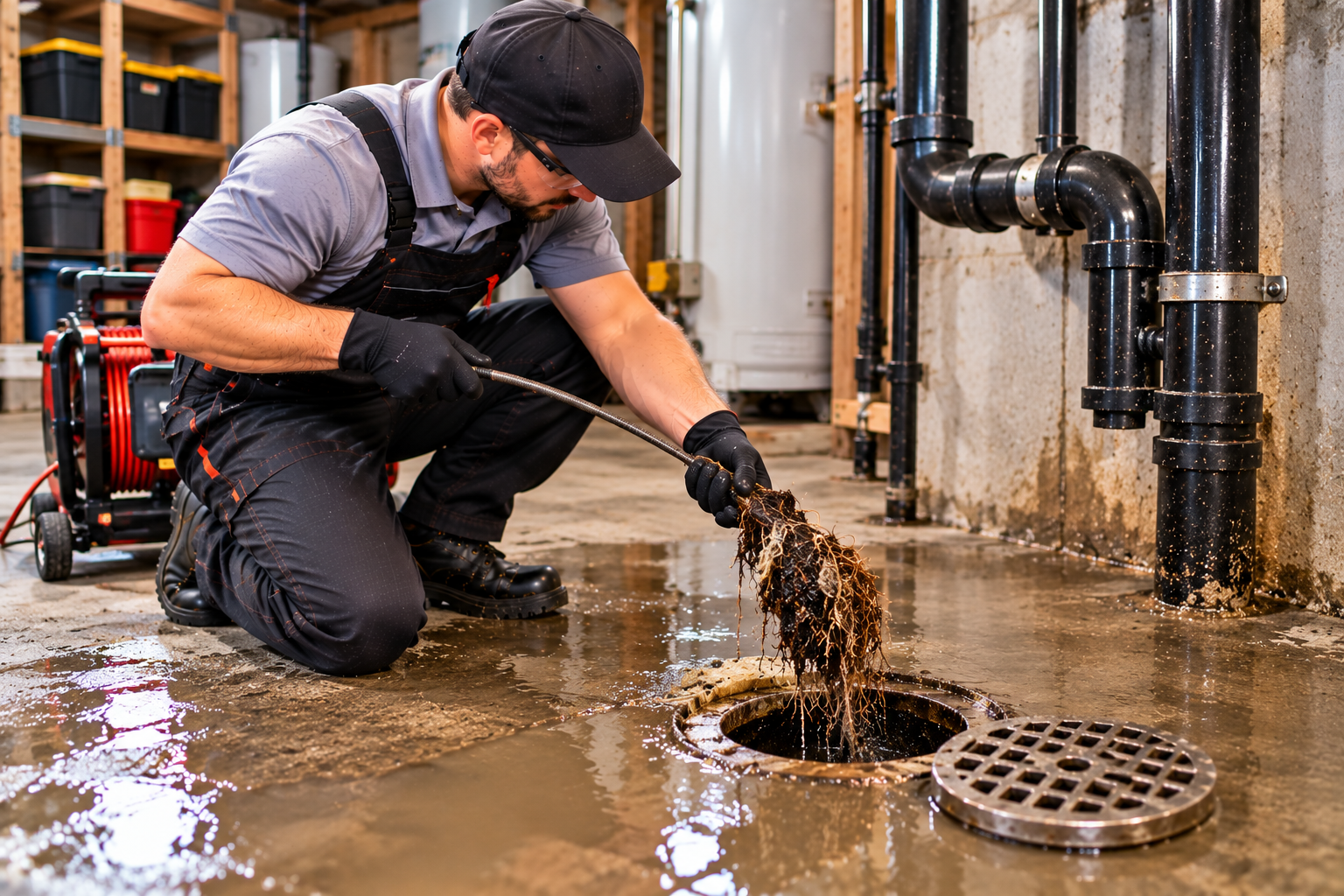
Tree roots may enter underground sewer pipes through cracks, damaged joints, or other openings.
Once inside, roots can obstruct wastewater flow and trap toilet paper or other debris. Cleaning may restore flow temporarily, but the problem can return if the pipe defect remains.
Root intrusion is worth considering when recurring blockages affect a property’s main sewer line, particularly where established landscaping is close to underground services.
Cracked, Sagging, or Collapsed Sewer Pipes
Structural sewer defects can create restrictions that ordinary cleaning cannot permanently correct.
A sagging pipe section may collect wastewater and debris, while a displaced joint can interrupt normal flow. Severe deterioration or collapse may substantially reduce the pipe opening.
These problems require inspection because repeated cleaning may not resolve the underlying defect.
Municipal Sewer Surcharging
Sometimes the restriction or excess water is outside the home’s private sewer piping.
During certain conditions, municipal sewer systems may experience elevated water levels. If wastewater flows backward toward a property and adequate protection is absent or ineffective, basement fixtures may be affected.
Not every backup during rainfall is municipal in origin. The property’s own drainage connections and sewer condition must also be considered.
Heavy Rainfall and Rapid Snowmelt
Calgary weather can create periods of increased drainage demand, particularly during heavy rainfall or spring thaw.
Depending on the drainage system, excess water may reveal an existing obstruction, drainage defect, or backflow problem.
However, groundwater entering a basement is different from sewage backing up through a sanitary floor drain. Correctly identifying the water source matters.
Blocked or Malfunctioning Backwater Valve
Some homes have a backwater valve designed to reduce reverse wastewater flow under certain conditions.
A valve may not function properly if it is obstructed, damaged, incorrectly installed, or not maintained according to its design.
Backwater valves are not a guarantee against every type of basement flooding, and their suitability depends on the plumbing arrangement.
Failed Sewage Ejector Pump
Some basements have plumbing fixtures that discharge into a sewage ejector system rather than draining entirely by gravity.
If the pump, controls, or discharge arrangement fails, wastewater may accumulate in connected fixtures or equipment.
A sewage ejector problem is different from a conventional gravity sewer blockage and requires assessment of the actual system.
Immediate safety warning: If sewage or potentially contaminated wastewater is emerging from a basement drain, stop using connected plumbing fixtures. Keep children and pets away, avoid contact with the water, and do not enter standing water where electrical hazards may exist. Arrange qualified assistance.
Homeowners looking for company information can consult the Calgary Electrical and Plumbing Google Maps listing for a local business reference.
What Warning Signs Reveal a Basement Sewer Drain Backup?
Basement drain backups do not always begin with visible flooding. Many properties experience smaller drainage changes before wastewater appears on the floor.
Recognizing these patterns can help homeowners describe the problem accurately and determine when professional assessment is necessary.
Water Rises When the Washing Machine Runs
Washing machines discharge substantial amounts of water over a relatively short period.
If the connected drainage system is restricted, the discharge may cause water to rise through a nearby basement floor drain.
This pattern may indicate a shared branch restriction or a problem farther downstream.
The Floor Drain Bubbles When a Toilet Flushes
Bubbling or gurgling can occur when airflow and wastewater movement are disrupted.
If a basement floor drain reacts when an upstairs toilet flushes, a shared drainage restriction may be involved.
However, venting problems can also produce unusual drainage sounds, so bubbling alone does not confirm a sewer blockage.
Several Household Fixtures Drain Slowly
A single slow sink often points toward a localized restriction.
When multiple toilets, showers, and sinks drain poorly, the problem may involve a shared branch or the main sewer line.
This distinction is useful because treating one fixture may not resolve a restriction affecting the entire house.
Dirty Water Appears Around the Basement Drain
Discoloured water, debris, or sewage-like odours around a floor drain can indicate wastewater backing up from connected piping.
However, appearance alone does not identify the exact source or contamination level.
Potentially contaminated water should be treated cautiously until the source is confirmed.
Basement Drain Odours Become Persistent
Unpleasant odours can accompany wastewater restrictions, but they may also result from a dry trap or another plumbing problem.
A dry trap can allow sewer gases to enter the room even when no blockage exists.
Persistent odours combined with gurgling, slow drains, or wastewater backups deserve closer investigation.
Water Appears Only During Heavy Rain
A backup that occurs during heavy rainfall may suggest a relationship with increased drainage demand, sewer surcharging, or another weather-related condition.
However, water entering through foundation cracks or window wells can resemble a plumbing-related flood.
Determining whether the water actually emerges from the floor drain is an important first step.
The Backup Happens Repeatedly
Recurring backups often indicate that the underlying problem has not been fully corrected.
For example, cleaning may temporarily remove debris while a damaged pipe joint continues to trap new material.
Repeated symptoms justify a more complete investigation rather than relying on the same temporary treatment.
How Can You Tell a Sewer Backup From Groundwater Flooding?
Both problems can produce standing water in a basement, but their sources and solutions differ.
| Observation | Possible Explanation | Recommended Response |
|---|---|---|
| Water rises from floor drain when toilet flushes | Shared drain or sewer restriction | Stop using connected fixtures and arrange plumbing assessment |
| Water enters near foundation wall | Groundwater or exterior water intrusion | Investigate foundation drainage and water entry points |
| Backup occurs during heavy rainfall | Possible sewer surcharging or drainage problem | Determine the water source and evaluate sewer protection |
| Multiple fixtures drain slowly | Possible shared sewer restriction | Consider professional drain or sewer inspection |
| Persistent sewer odour without visible water | Dry trap, venting issue, or drainage defect | Assess trap and drainage system condition |
What About Basement Suites and Additional Plumbing Fixtures?
Basement suites may include bathrooms, kitchens, and laundry facilities that increase the number of fixtures connected to the property’s drainage system.
The installation and design of these connections matter, particularly where below-grade wastewater must be pumped.
Homeowners considering secondary-suite work can review this overview of basement suite rules and regulations as background reading. Current municipal requirements and plumbing approvals should be verified with the appropriate authorities.
Can a Basement Drain Backup Affect the Entire Home?
A main sewer restriction can interfere with drainage from multiple fixtures.
Even when wastewater appears only in the basement, the obstruction may be downstream of several household plumbing connections.
Continuing to use upstairs fixtures during an active backup can increase the amount of wastewater entering the affected system.
Warning-sign takeaway: Water emerging from a basement drain when other fixtures operate, recurring backups, and multiple slow drains are strong reasons to investigate a shared sewer restriction. Rain-related flooding and groundwater intrusion require separate consideration.
Additional local business information is available through this Calgary plumbing location reference and the shared Google business profile reference.
Request a basement floor drain backup inspection and sewer cleaning estimate in Calgary in just a few clicks.
Get My Free Estimate
How Do Plumbers Fix Basement Floor Drain Backups in Calgary?
Effective repair begins with identifying the source of the water and locating the restriction or malfunction.
Clearing a blockage may restore flow, but a permanent solution can require additional work when damaged piping or faulty equipment is involved.
Step 1: Determine Whether the Water Is Sewage
The first priority is establishing whether the basement is affected by wastewater, groundwater, or another source.
This distinction matters because contaminated wastewater requires different precautions and remediation than a clean-water leak.
Homeowners should avoid direct contact with unidentified standing water.
Step 2: Stop Additional Wastewater Discharge
During an active sewer backup, using connected toilets, showers, sinks, or laundry equipment may add more wastewater to the restricted system.
Stopping fixture use helps limit further discharge while the problem is assessed.
If electrical equipment or outlets may be affected, keep clear and seek qualified assistance rather than entering the flooded area.
Step 3: Identify the Affected Drainage Branch
The plumber may ask which fixtures trigger the backup and whether other drains are slow.
These observations help narrow the likely location of the restriction.
A problem isolated to one floor drain may require a different approach from a blockage affecting the main sewer line.
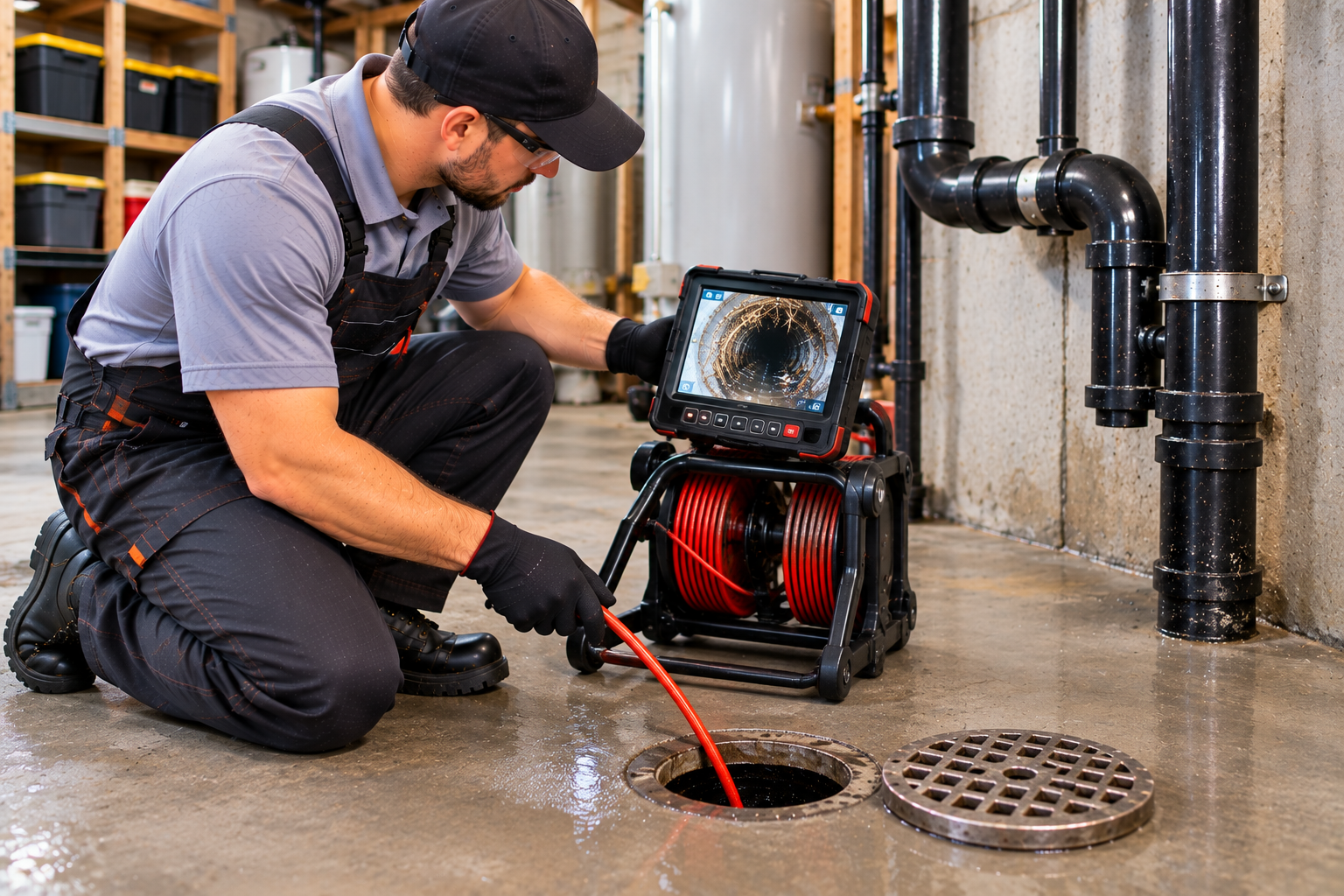
Step 4: Inspect the Sewer Line With a Camera
A sewer camera can help identify visible roots, cracks, displaced joints, and accumulated debris.
Inspection may also help determine whether the problem is suitable for cleaning or requires repair.
Heavy debris or standing water can limit visibility, so some cleaning may be necessary before the inspection is complete.
Step 5: Remove the Obstruction
Depending on the blockage and pipe condition, a plumber may use mechanical drain cleaning or another appropriate method.
Grease deposits, root masses, and foreign objects do not always respond to the same equipment.
Cleaning should be selected according to the actual obstruction rather than assuming every backup needs aggressive treatment.
Can Hydro Jetting Clear a Basement Sewer Backup?
Hydro jetting may help remove certain deposits in structurally suitable piping.
However, high-pressure water cleaning is not appropriate for every sewer line, especially when severe deterioration or collapse is suspected.
For more information, read Can Hydro Jetting Damage Old Pipes? before assuming that pressure cleaning is the best solution.
Step 6: Check for Damaged Sewer Pipes
After a blockage is reduced, a follow-up inspection may reveal cracks, sagging sections, or damaged connections.
These defects can cause recurring problems even after wastewater flow improves.
Localized repair or broader replacement may be necessary depending on the condition and location of the damage.
Step 7: Evaluate Backwater Valve Operation
Where a backwater valve is installed, its condition and accessibility may need to be reviewed.
Obstructions or mechanical problems can affect its operation.
Backwater valve servicing should follow the device manufacturer’s requirements and applicable plumbing rules.
What If the Problem Comes From the Municipal Sewer?
If the available evidence suggests a public sewer issue, the homeowner may need to contact the appropriate municipal service provider.
Private-property and municipal responsibilities depend on the location and nature of the problem.
A plumbing assessment may help document observations, but it does not replace an official municipal investigation.
How Much Does Basement Floor Drain Backup Repair Cost?
The cost depends on whether the problem involves a simple obstruction, a main sewer restriction, a defective valve, or damaged underground piping.
| Service | Illustrative CAD Range | Typical Purpose |
|---|---|---|
| Initial drainage assessment | $100–$300+ | Reviewing symptoms and accessible drainage components |
| Basic drain cleaning | $150–$400+ | Clearing suitable localized obstructions |
| Main sewer cleaning | $250–$650+ | Addressing certain shared sewer restrictions |
| Sewer camera inspection | $200–$500+ | Examining visible sewer conditions |
| Backwater valve service or repair | Scope-dependent | Assessing and correcting applicable valve problems |
| Sewer pipe repair or replacement | Scope-dependent | Correcting confirmed structural defects |
Pricing disclaimer: These are illustrative planning ranges, not verified Calgary averages or published Calgary Electrical and Plumbing rates. Actual costs depend on access, equipment, severity, property conditions, and repair requirements. Taxes, emergency service charges, and remediation work may increase the total.
Does Clearing the Drain Solve the Flood Damage?
No. Restoring drainage and cleaning a contaminated basement are separate tasks.
Wastewater may affect flooring, drywall, stored belongings, and other porous materials.
Appropriate cleanup and drying may require qualified restoration services, especially where sewage contamination is involved.
Can a Backup Return After Professional Cleaning?
Yes, particularly when a damaged pipe or recurring source of debris remains.
For example, tree roots may re-enter through an unrepaired joint, while a sagging pipe may continue collecting solids.
Repeated backups should prompt evaluation of the underlying cause rather than relying only on temporary cleaning.
Repair takeaway: Basement drain backup repair may involve sewer cleaning, camera inspection, backwater valve assessment, pump servicing, or pipe repair. The correct solution depends on the source of the water and the condition of the connected drainage system.
Calgary homeowners can also follow the Calgary Electrical and Plumbing Reddit profile for company-related community content.
How Can Calgary Homeowners Prevent Basement Drain Backups?
Preventing basement drain backups requires attention to household drainage habits, sewer condition, and appropriate flood protection.
No maintenance plan can eliminate every risk, particularly when problems originate outside the property.
However, practical precautions can reduce avoidable blockages and help homeowners identify developing problems sooner.
Keep Cooking Grease Out of Kitchen Drains
Grease can cool and accumulate inside drainage piping, creating restrictions that trap other materials.
Dispose of fats and oils appropriately instead of washing them down the sink.
Even when hot water appears to move grease through the kitchen drain, deposits may collect farther downstream.
Avoid Flushing Wipes and Other Debris
Toilets should not be used to dispose of wipes, paper towels, hygiene products, or other unsuitable materials.
These items can contribute to blockages in private sewers and municipal drainage infrastructure.
Keeping inappropriate materials out of the system helps reduce avoidable restrictions.
Investigate Repeated Slow Drains
Recurring drainage problems may indicate a restriction that is gradually worsening.
If several fixtures become slow or a basement drain reacts when other fixtures operate, professional assessment may be appropriate.
Early investigation can help identify whether cleaning or structural repair is needed.
Maintain Backwater Valves Where Installed
Some properties have backwater valves intended to reduce reverse sewer flow.
These devices may require inspection or maintenance according to their design and manufacturer instructions.
Homeowners should not assume that a valve is present, functioning, or suitable without verification.
Understand the Role of Sump Pumps
A sump pump typically manages certain groundwater or foundation drainage conditions rather than ordinary household sewage.
A sewage ejector pump serves a different purpose where below-grade plumbing fixtures require pumped discharge.
Knowing which system is installed helps homeowners identify the correct maintenance needs.
Keep Exterior Water Away From the Foundation
Downspouts, grading, and exterior drainage conditions can affect the amount of water reaching a basement foundation.
Managing surface water may reduce certain groundwater-related flooding risks.
However, these measures do not directly clear a blocked sanitary sewer line.
Consider Sewer Inspection After Recurring Backups
Properties with repeated main sewer restrictions may benefit from camera inspection.
The findings can help identify roots, damaged joints, or other visible defects.
Routine camera inspection is not automatically required for every home, but recurring symptoms justify more detailed investigation.
Keep Drainage Records for Future Repairs
Save reports from sewer cleaning, camera inspections, and pipe repairs.
These records can help identify recurring problem locations and show which methods have already been attempted.
Documentation is particularly useful when a backup returns after previous cleaning.
Are Older Southeast Calgary Homes at Greater Risk?
Established communities such as Riverbend, Lake Bonavista, and Douglasdale may have older underground drainage components or mature landscaping.
However, the condition of each property’s sewer system is more important than neighbourhood age alone.
Newer communities such as Mahogany, Auburn Bay, Seton, and New Brighton can also experience drainage defects or blockages.
Should Basement Suites Have Additional Drainage Assessment?
Basement suites may include below-grade bathrooms, kitchens, or laundry fixtures.
Where additional plumbing is installed, the drainage system must be appropriately designed for the fixtures and local requirements.
Professional planning is important because some below-grade fixtures may require specialized discharge arrangements.
What Should You Do During an Active Basement Backup?
Use the following practical checklist:
- Stop using toilets, sinks, showers, and laundry equipment connected to the affected sewer.
- Keep children and pets away from potentially contaminated water.
- Avoid contact with standing water, particularly where electrical hazards may exist.
- Do not pour chemical drain cleaners into a backed-up sewer.
- Note which fixtures were operating when the backup began, if this can be done safely.
- Arrange qualified plumbing assessment to identify the cause.
- Seek appropriate cleanup assistance if sewage has contaminated the basement.
Can Insurance Cover Basement Sewer Backups?
Coverage depends on the insurance policy, endorsements, exclusions, and cause of the loss.
Some policies offer optional sewer backup protection, but coverage should never be assumed.
Homeowners should review their policy and contact their insurer for guidance about documentation and claims.
When Is Professional Basement Drain Assessment Necessary?
Professional assessment is important when wastewater emerges from a floor drain, multiple fixtures are affected, or backups repeatedly return.
These symptoms may involve a main sewer restriction, damaged piping, or another drainage system malfunction.
Identifying the source is the most reliable starting point for choosing a solution.
Long-term prevention: Good disposal habits, attention to recurring symptoms, appropriate sewer maintenance, and correctly maintained flood-protection devices can help reduce basement backup risks. Prevention should be tailored to the property’s actual drainage system.
Final takeaway: Basement floor drains can back up because of blocked sewers, structural pipe defects, drainage equipment failures, or external sewer conditions. Professional diagnosis is essential because cleaning alone cannot resolve every cause.
Request a basement floor drain backup inspection and sewer cleaning estimate in Calgary in just a few clicks.
Get My Free Estimate
Protect Your Calgary Basement From Recurring Drain Backups
A basement floor drain backup may begin with a simple obstruction or reveal a more serious problem involving the main sewer, damaged piping, or drainage equipment. Identifying the source of the water and correcting the underlying cause can help reduce repeated flooding and unnecessary repairs.
If your basement drain is overflowing or repeatedly backing up, a local calgary plumber can assess the drainage system and explain suitable next steps. Call Calgary Electrical and Plumbing at (403) 421-1991 to discuss your plumbing concerns.
Frequently Asked Questions about Basement Floor Drain Backups
Why does my basement floor drain back up when I flush the toilet?
A basement floor drain may back up when a toilet flushes because the connected drainage system is restricted. Wastewater cannot move downstream normally and may rise through a lower opening. A plumber can investigate whether the obstruction affects a shared branch or main sewer line.
Can heavy rain cause basement floor drains to overflow in Calgary?
Heavy rainfall may contribute to basement drainage problems through sewer surcharging, excess drainage demand, or other site conditions. However, groundwater entering through a foundation is different from sewage backing up through a floor drain. Identifying the actual water source is essential.
Should I use chemical drain cleaner when my basement floor drain backs up?
No. Chemical drain cleaners may create additional hazards when wastewater is already backed up, and they may not resolve a main sewer obstruction or structural defect. Stop using connected fixtures and arrange professional assessment instead of adding chemicals to the affected drain.
How much does it cost to fix a basement floor drain backup in Calgary?
Costs depend on the cause, access, and required work. An illustrative planning range for basic drain cleaning is CAD $150–$400 or more, while main sewer cleaning may cost more. These are not verified Calgary averages or binding quotes; inspections and repairs can add costs.
Will a backwater valve prevent every basement sewer backup?
No. A properly selected and maintained backwater valve may reduce certain reverse sewer flow risks, but it cannot prevent every basement flooding scenario. Internal sewer blockages, groundwater intrusion, and equipment malfunctions may still cause problems. Suitability depends on the property’s drainage configuration.
Don’t wait for the problem to get worse.
Call (403) 421-1991 Now
Contact Our Calgary Plumbing Team