

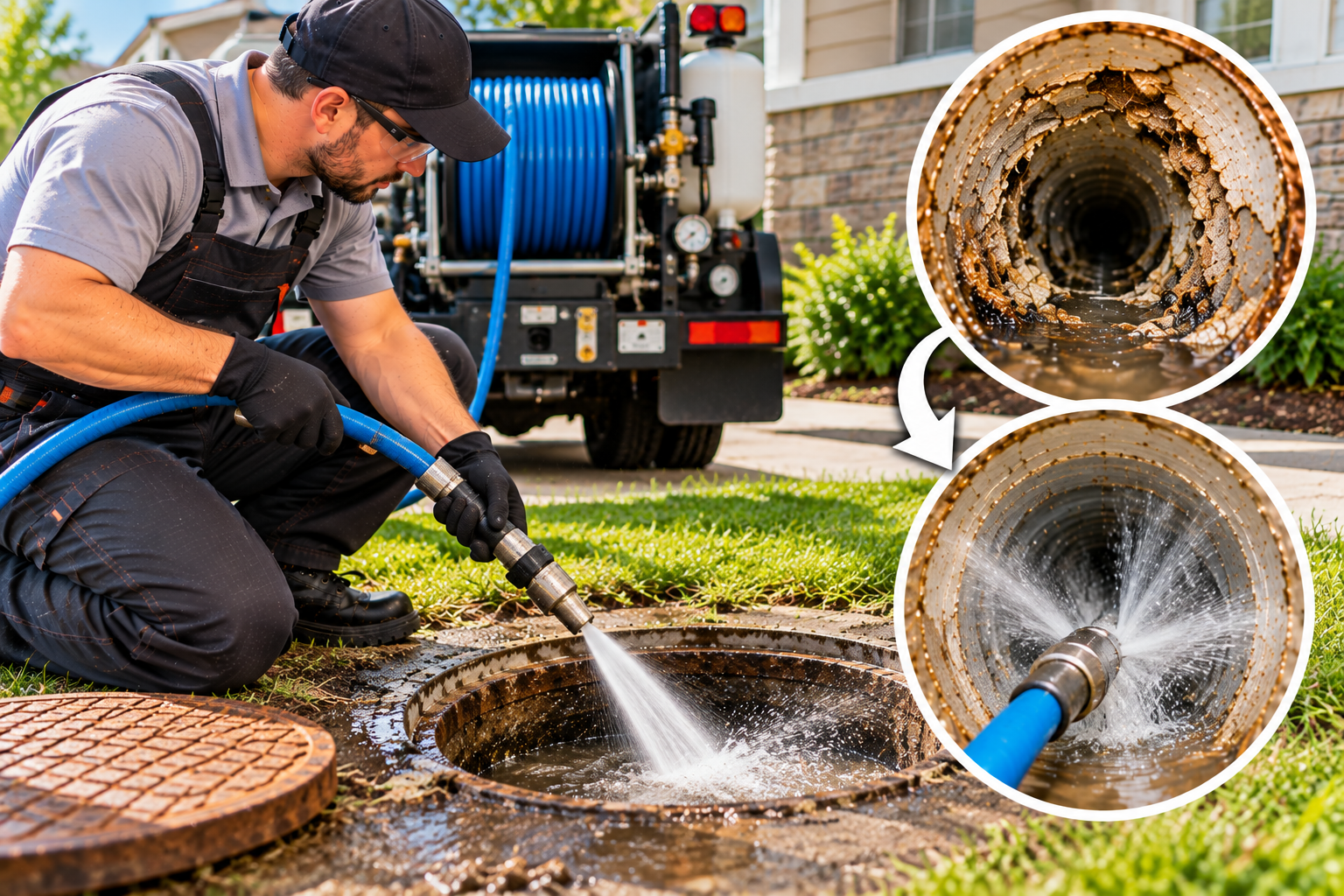
Can hydro jetting damage old pipes in a Calgary home? The answer depends on the condition of the plumbing, not simply its age. High-pressure water cleaning can remove stubborn grease, sludge, and certain sewer obstructions, but applying excessive pressure to weakened piping may worsen existing cracks, damaged joints, or other structural problems.
Homeowners in established Southeast Calgary neighbourhoods such as Riverbend, Lake Bonavista, and Douglasdale may encounter older drainage systems with different pipe materials and maintenance histories. Understanding when to arrange professional drain cleaning and plumbing inspections in Calgary can help determine whether hydro jetting is suitable or whether another approach would be safer.
Hydro jetting is not automatically dangerous for older plumbing, nor is it appropriate for every blocked drain. Pipe material, corrosion, joint condition, access, and the type of obstruction all influence the decision. A proper assessment helps avoid unnecessary damage while identifying the most effective cleaning method.
Yes, hydro jetting can damage old pipes if they are cracked, severely corroded, weakened, or poorly connected. However, some older pipes can be cleaned safely after inspection. A qualified plumber should evaluate pipe condition, select suitable equipment, and determine whether mechanical cleaning or repair is preferable.
Can Hydro Jetting Damage Old or Fragile Sewer Pipes?
Hydro jetting uses specialized equipment to direct pressurized water through drainage piping. The water can loosen accumulated grease, sludge, and certain debris that restrict wastewater flow.
Unlike ordinary household rinsing, professional jetting equipment delivers concentrated water streams through specialized nozzles. These forces must be matched to the pipe’s condition and the obstruction being treated.
How Hydro Jetting Cleans Sewer Lines
A professional hydro jetting system uses a pump, pressure-rated hose, and cleaning nozzle to direct water into the drainage system.
Different nozzle designs can direct water backward, forward, or in other patterns to loosen deposits and move debris through the pipe.
The equipment must be selected for the pipe diameter, material, accessibility, and cleaning objective.
Why Pipe Condition Matters More Than Age
A sewer pipe installed decades ago may remain serviceable if its walls and joints are sound.
Conversely, a relatively new pipe with a damaged connection or installation defect may be unsuitable for aggressive cleaning.
Age provides useful background, but it does not establish the actual strength or integrity of the drainage system.
Important distinction: Old does not automatically mean unsafe. The more relevant questions are whether the pipe is structurally sound, properly connected, and suitable for the proposed cleaning equipment.
Can High Water Pressure Worsen Existing Cracks?
Yes. High-pressure cleaning may aggravate an already damaged pipe if equipment is used without considering its condition.
Cracked walls, deteriorated joints, or weakened sections may be unable to tolerate aggressive cleaning forces.
However, discovering a crack after cleaning does not automatically prove that jetting caused it. The defect may have existed beforehand.
Can Hydro Jetting Damage Pipe Joints?
Pipe joints connect separate drainage sections and may become vulnerable through deterioration, movement, or improper installation.
If a joint is displaced or poorly sealed, concentrated water flow may contribute to further disturbance.
A professional assessment should consider joint condition before deciding whether hydro jetting is appropriate.
Can Hydro Jetting Cause a Sewer Leak?
Hydro jetting may expose or worsen leakage associated with an existing pipe defect.
For example, heavy internal deposits can sometimes conceal damage that becomes more apparent once the obstruction is removed.
That does not mean the cleaning process created every leak subsequently discovered.
Inspection findings and pipe condition are necessary to evaluate what occurred.
What Happens When a Sewer Pipe Is Already Collapsing?
A partially collapsed or severely deformed sewer line may be unsuitable for hydro jetting.
Cleaning cannot restore the original structure of a collapsed pipe.
Attempting to force equipment through a damaged section may create additional problems, including equipment becoming lodged.
Safety warning: If a sewer camera reveals severe cracks, displaced sections, or collapse, the appropriate response may be pipe repair rather than high-pressure cleaning. Avoid attempting to force wastewater or cleaning equipment through a structurally compromised line.
Does Higher Pressure Always Mean Better Cleaning?
No. More pressure is not automatically more effective or safer.
Cleaning performance depends on the combination of pressure, water flow, nozzle design, equipment movement, and the type of material being removed.
Appropriate equipment selection is more important than using the highest available pressure.
What Are the Warning Signs of Fragile Drainage Pipes?
Homeowners may notice recurring clogs, previous sewer repairs, unexplained leaks, or repeated drainage backups.
These symptoms do not prove that the pipe is structurally weak, but they may justify further assessment.
Camera inspection can reveal some visible defects, while other testing may be needed when structural concerns remain unclear.
Can Hydro Jetting Be Used for Routine Maintenance?
Hydro jetting may be useful for certain recurring deposits in suitable piping.
However, routine high-pressure cleaning is not necessary for every home.
Maintenance should be based on known drainage conditions, previous blockages, and the results of appropriate inspection.
For local service information, homeowners can consult the Calgary Electrical and Plumbing Google Maps listing or watch the company’s plumbing services video.
Which Older Pipe Materials Are Most Vulnerable to Hydro Jetting?
Different drainage materials respond differently to age, corrosion, underground movement, and cleaning methods.
However, pipe material alone does not determine whether hydro jetting is safe.
A professional assessment should consider both the material and its present condition.
Cast Iron Drainage Pipes
Cast iron has been used extensively in residential drainage systems.
Over time, some cast iron pipes develop internal corrosion, scaling, and rough surfaces that trap debris.
Severely corroded sections may have reduced wall thickness or structural integrity.
Hydro jetting may be suitable for some sound cast iron piping, but aggressive cleaning of deteriorated sections can be risky.
Clay Sewer Pipes
Vitrified clay sewer pipes may be found in some older underground drainage systems.
Clay is resistant to certain forms of chemical deterioration, but its joints and brittle sections can become vulnerable when damaged or displaced.
Roots may also enter through defective joints.
Inspection is important before choosing a cleaning method for clay piping.
Older Concrete Sewer Pipes
Concrete drainage pipes can deteriorate through chemical exposure, cracking, and other environmental conditions.
Some damaged sections may develop rough surfaces or weakened areas.
High-pressure cleaning should not be assumed safe when substantial deterioration is suspected.
The actual condition of the pipe determines whether cleaning or repair is appropriate.
ABS and PVC Drainage Pipes
ABS and PVC are common plastic drainage materials.
Properly installed, structurally sound plastic pipes may be suitable for appropriately selected professional cleaning equipment.
However, damaged joints, cracks, deformation, or installation defects can still create vulnerabilities.
Plastic does not automatically mean that unlimited pressure is safe.
Orangeburg and Other Deteriorated Legacy Materials
Some older sewer systems may contain legacy pipe materials that can deform or deteriorate over time.
Where a fragile material is identified, aggressive cleaning may be inappropriate.
A plumber should confirm the material and condition before recommending hydro jetting.
Are Older Calgary Homes More Likely to Have Vulnerable Pipes?
Established Southeast Calgary neighbourhoods such as Lake Bonavista and Riverbend may contain homes with older drainage components.
However, the age of a neighbourhood does not confirm which pipe material is installed at a particular property.
Renovations, replacements, and previous repairs can substantially change a home’s plumbing system.
Can Newer Homes Also Have Pipes Unsuitable for Jetting?
Yes. Homes in newer communities such as Mahogany, Auburn Bay, Seton, and Copperfield can experience drainage defects.
Improper connections, construction debris, displaced joints, or other problems may make a section unsuitable for aggressive cleaning.
New construction does not eliminate the need for appropriate assessment.
How Does Pipe Corrosion Affect Cleaning Decisions?
Corrosion can reduce wall thickness and create rough internal surfaces.
Cleaning may remove accumulated deposits, but it cannot reverse material loss.
Where corrosion is severe, the plumber may recommend repair or replacement rather than repeated cleaning.
What About Pipes With Tree Root Intrusion?
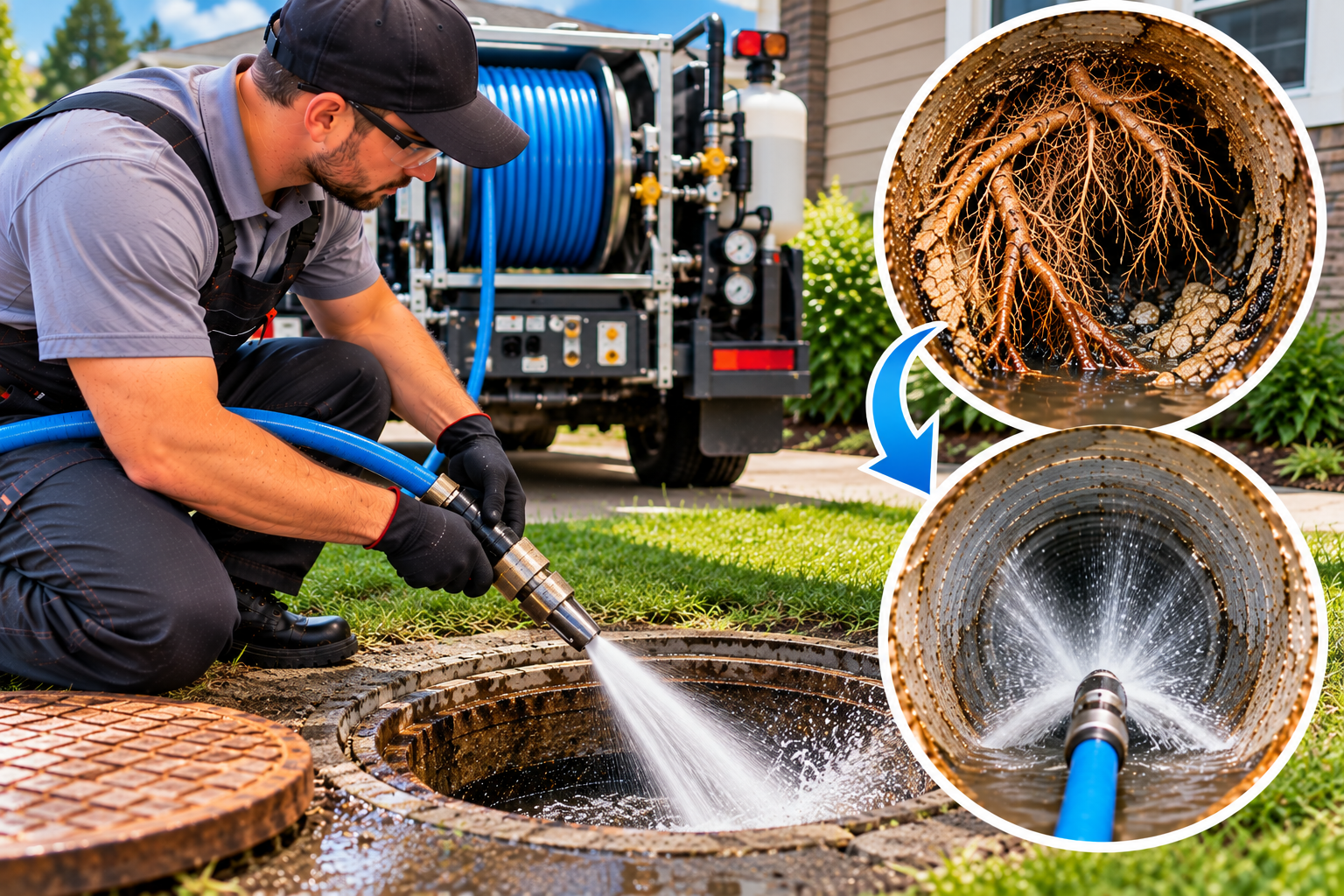
Roots commonly enter sewer pipes through cracks, damaged joints, or other openings.
Cleaning may remove root material and restore wastewater flow, but it does not necessarily repair the entry point.
Read Tree Roots in Sewer Lines: Warning Signs and Solutions for a detailed explanation of root intrusion and repair considerations.
| Pipe Material | Potential Concern | Hydro Jetting Consideration |
|---|---|---|
| Cast iron | Corrosion, scaling, reduced wall thickness | Assess deterioration before selecting cleaning equipment |
| Clay | Cracks, displaced joints, root intrusion | Inspect joints and structural condition |
| Concrete | Cracking and material deterioration | Evaluate weakened sections before cleaning |
| ABS or PVC | Damaged connections, cracks, deformation | Use equipment appropriate to pipe condition and diameter |
| Fragile legacy materials | Deformation and structural weakness | Repair or alternative cleaning may be preferable |
Material assessment: A pipe’s age and material provide useful clues, but they cannot replace inspection. The decision to hydro jet should be based on visible defects, structural concerns, access, and the type of obstruction.
Homeowners can also review this Calgary plumbing location reference and the shared Google business information for Calgary Electrical and Plumbing.
Request a hydro jetting suitability assessment and drain cleaning estimate in Calgary in just a few clicks.
Get My Free Estimate
How Do Calgary Plumbers Determine Whether Hydro Jetting Is Safe?
Professional drain cleaning should begin with understanding the blockage and the condition of the affected plumbing.
Hydro jetting is one available technique, not a universal solution.
A qualified plumber may use several assessment methods before deciding whether high-pressure water cleaning is appropriate.
Step 1: Review the Plumbing History
The plumber may ask about previous sewer repairs, recurring clogs, backups, and known pipe materials.
Past cleaning reports or inspection videos can provide useful information.
However, older records may not reflect the pipe’s current condition.
Step 2: Identify the Type of Blockage
Grease accumulation, sludge, tree roots, foreign objects, and structural defects require different approaches.
For example, a grease restriction in sound piping may be suitable for water cleaning.
A collapsed pipe requires structural attention rather than simply increasing cleaning pressure.
Step 3: Inspect the Drain With a Camera
A sewer camera can reveal visible cracks, roots, corrosion, displaced joints, and other internal conditions.
Inspection may help determine whether a pipe appears suitable for cleaning.
However, cameras do not directly measure remaining wall thickness or prove structural strength.
Additional assessment may be needed when the pipe condition remains uncertain.
Step 4: Evaluate Access and Pipe Diameter
Cleaning equipment must be compatible with the pipe diameter and available access points.
Restricted access can make certain methods unsuitable.
The plumber should also consider bends, fittings, and the possibility of equipment becoming lodged in damaged piping.
Step 5: Select Suitable Cleaning Equipment
Professional hydro jetting equipment varies in pressure, water flow, nozzle design, and intended application.
The correct combination depends on the pipe and obstruction.
Using more pressure than necessary is not a substitute for selecting an appropriate cleaning method.
Does Hydro Jetting Pressure Have a Universal Safe Limit?
No single pressure setting is safe for every residential sewer pipe.
Equipment suitability depends on several factors, including pipe material, condition, nozzle configuration, and operating technique.
Specific settings should be determined by trained professionals using the equipment manufacturer’s guidance and site assessment.
Can a Camera Inspection Guarantee Hydro Jetting Safety?
No. A camera can provide useful visual evidence, but it cannot guarantee that hidden weaknesses are absent.
Some defects may be obscured by deposits, standing water, or poor visibility.
Professional judgment and other appropriate assessments remain important.
What Happens If the Pipe Is Too Damaged?
If significant deterioration or collapse is identified, the plumber may recommend an alternative cleaning method, localized repair, or pipe replacement.
Continuing with aggressive cleaning despite known structural defects can create unnecessary risks.
Repairing the underlying problem may provide a more lasting solution.
Can Hydro Jetting Be Performed After Sewer Repairs?
Possibly, depending on the repaired pipe material, installation, curing requirements, and the manufacturer’s instructions.
Not every repair system is suitable for immediate high-pressure cleaning.
The plumber should verify that the repaired section is ready for the proposed procedure.
What Is the Difference Between Hydro Jetting and a Pump-Jet?
Hydro jetting uses pressurized water delivered through cleaning equipment to remove deposits from drainage pipes.
A pump-jet propulsion system is a different technology used to propel certain watercraft. Despite the similar terminology, it is not a residential sewer cleaning method.
How Much Does Professional Hydro Jetting Cost in Calgary?
Costs depend on access, pipe condition, equipment requirements, and the nature of the blockage.
| Service | Illustrative CAD Range | Purpose |
|---|---|---|
| Initial drainage assessment | $100–$300+ | Reviewing symptoms and accessible plumbing |
| Sewer camera inspection | $200–$500+ | Examining visible pipe condition |
| Mechanical drain cleaning | $200–$500+ | Removing suitable obstructions |
| Professional hydro jetting | $350–$900+ | Cleaning appropriate drainage piping |
| Localized sewer repair | Scope-dependent | Correcting confirmed pipe defects |
| Extensive sewer replacement | Scope-dependent | Addressing severe structural damage |
Pricing disclaimer: These are illustrative planning ranges, not verified Calgary averages or published Calgary Electrical and Plumbing rates. Actual charges depend on inspection findings, equipment, access, obstruction severity, and repair requirements. Taxes and additional work may increase costs.
Is Hydro Jetting More Expensive Than Drain Snaking?
Hydro jetting may cost more than basic mechanical drain cleaning because it can require specialized equipment and additional setup.
However, cost alone should not determine the method.
A suitable mechanical cleaning may be preferable for one obstruction, while water cleaning may be appropriate for another.
Should Every Old Sewer Line Be Camera-Inspected?
Not every minor household drain problem requires a main sewer camera inspection.
However, recurring main-line blockages, known deterioration, and proposed aggressive cleaning of vulnerable piping may justify additional assessment.
The inspection decision should reflect the symptoms and risks.
Professional safety reminder: High-pressure drain cleaning equipment can cause serious injury if mishandled. Homeowners should not attempt professional hydro jetting using improvised equipment or unsuitable pressure-washing attachments. Qualified operators should assess the piping and follow applicable equipment safety requirements.
Assessment takeaway: Safe hydro jetting begins with identifying the obstruction, examining pipe condition, and selecting appropriate equipment. When the sewer is severely deteriorated, repair or another cleaning method may be safer than high-pressure water treatment.
For company updates and plumbing-related audio content, visit the Calgary Electrical and Plumbing SoundCloud profile.
What Are the Safest Drain Cleaning Alternatives for Older Pipes?
When hydro jetting is unsuitable, other methods may help address drainage restrictions.
No cleaning method is automatically safe for every pipe, especially when structural defects are present.
The correct approach depends on the blockage, pipe material, access, and inspection findings.
Mechanical Drain Cleaning
Professional mechanical cleaning equipment can remove or break through certain obstructions.
It may be appropriate for some localized clogs and main sewer restrictions.
However, aggressive cutting equipment can also damage weakened piping if used improperly.
Mechanical cleaning should therefore be selected with the same attention to pipe condition.
Localized Trap and Fixture Cleaning
Some drainage problems originate in an accessible sink trap or fixture connection.
In these situations, localized cleaning may resolve the problem without treating the entire sewer line.
Correctly identifying the blockage location can prevent unnecessary procedures.
Manual Removal of Accessible Debris
Where debris is safely accessible, a plumber may remove it directly.
This approach can be useful for certain fixture-level obstructions.
However, underground main sewer restrictions usually require specialized equipment and appropriate access.
Targeted Sewer Pipe Repair
When recurring clogs result from a displaced joint, cracked section, or collapse, repair may be more effective than repeated cleaning.
A targeted repair may correct the defect responsible for trapping debris.
The repair scope depends on the location and extent of the damage.
Trenchless Sewer Rehabilitation
Some damaged sewer pipes may qualify for trenchless rehabilitation.
However, suitability depends on alignment, structural condition, access, and the repair system being considered.
Trenchless work is not a universal solution and may not be appropriate for collapsed or severely displaced piping.
Full Sewer Pipe Replacement
Severely deteriorated or extensively damaged sewer lines may require replacement.
Although replacement is more involved than cleaning, it can address defects that cleaning cannot correct.
The decision should follow appropriate inspection and consideration of available repair options.
Are Chemical Drain Cleaners Safer for Old Pipes?
Not necessarily. Chemical cleaners can create safety concerns and may be unsuitable for certain plumbing conditions.
They also may not resolve structural defects, root intrusion, or substantial main sewer obstructions.
Homeowners should avoid mixing chemical products or repeatedly treating a blocked sewer without diagnosis.
Can Hot Water Remove Grease From Older Drains?
Hot water may move some grease temporarily, but it does not guarantee that deposits will leave the entire drainage system.
Very hot water may also be unsuitable for certain materials or vulnerable connections.
Repeatedly pouring boiling water into a blocked drain is not a substitute for professional assessment.
How Can Calgary Homeowners Reduce Drain Blockages?
Everyday habits can reduce the amount of debris entering household drainage systems.
- Dispose of cooking grease appropriately rather than pouring it into sinks.
- Use kitchen strainers to catch food particles.
- Install hair catchers in showers and bathtubs.
- Keep wipes, paper towels, and unsuitable materials out of toilets.
- Investigate recurring clogs instead of repeating temporary treatments.
- Maintain records of sewer inspections and previous repairs.
- Arrange professional assessment when multiple drains are affected.
Should Older Calgary Homes Have Routine Sewer Cleaning?
Maintenance needs vary by property.
A home with recurring grease buildup or documented root intrusion may benefit from a tailored maintenance plan.
However, annual hydro jetting is not automatically necessary for every older sewer line.
Maintenance should reflect the actual drainage condition and previous service history.
What If a Basement Drain Is Backing Up?
Wastewater rising through a basement floor drain may indicate a shared sewer restriction.
Stop using connected plumbing fixtures and keep people away from contaminated areas.
Do not attempt to force additional water through the blocked system.
Professional assessment is needed to identify the restriction and determine the appropriate response.
When Should Homeowners Choose Repair Over Cleaning?
Repair becomes important when inspection confirms a structural defect that cleaning cannot correct.
Examples include severe pipe deformation, collapse, significant displacement, or extensive deterioration.
Repeated cleaning may temporarily restore flow without addressing the underlying problem.
Practical recommendation: For older plumbing, the best drain cleaning method is the one matched to the pipe’s actual condition. Mechanical cleaning, hydro jetting, localized repair, and replacement each have appropriate applications.
Does Preventive Maintenance Eliminate All Sewer Problems?
No. Good disposal habits and appropriate cleaning can reduce certain obstructions, but they cannot prevent every structural defect.
Underground movement, deterioration, and damaged connections may still require repair.
Preventive maintenance is most useful when combined with timely attention to recurring symptoms.
Final takeaway: Hydro jetting is not inherently unsafe for every older pipe, but it should never be selected without considering pipe condition. Professional inspection and the appropriate cleaning or repair method help reduce avoidable risks.
Request a hydro jetting suitability assessment and drain cleaning estimate in Calgary in just a few clicks.
Get My Free Estimate
Protect Older Calgary Drainpipes With the Right Cleaning Method
Hydro jetting can be an effective method for removing stubborn sewer deposits, but older pipes with cracks, corrosion, or damaged joints may require a different approach. The safest decision begins with understanding the condition of the plumbing rather than relying on pipe age alone.
If you are concerned about fragile drainage pipes, a local calgary plumber can assess the system and recommend suitable cleaning or repair options. Call Calgary Electrical and Plumbing at (403) 421-1991 to discuss your drainage concerns.
Frequently Asked Questions about Hydro Jetting Old Pipes
Can hydro jetting crack old sewer pipes?
Hydro jetting may worsen existing cracks or damage weakened piping if unsuitable equipment or excessive pressure is used. However, age alone does not determine safety. A qualified plumber should assess pipe condition and choose an appropriate cleaning method before proceeding.
Is hydro jetting safe for old cast iron pipes?
Some structurally sound cast iron pipes may be suitable for carefully selected hydro jetting equipment. Severely corroded or weakened sections may not be appropriate. A professional inspection helps determine whether