
Water is suddenly rising from your basement floor drain, the toilet is overflowing, or dirty wastewater is appearing in the laundry room. Emergency Drain Backup: What Should You Do First? The immediate priority is to stop adding water to the affected drainage system, keep people away from potentially contaminated areas, and determine whether professional emergency plumbing assistance is necessary.
For homeowners in Southeast Calgary communities such as Cranston, Mahogany, Copperfield, and Riverbend, unexpected sewer backups can interrupt everyday activities and damage finished basement spaces. Knowing when to seek professional emergency drain cleaning and plumbing services in Calgary can help prevent an already serious situation from becoming more disruptive.
Not every overflowing drain has the same cause. A localized fixture clog, blocked main sewer, damaged underground pipe, or drainage equipment malfunction can produce different symptoms. The safest first response focuses on controlling additional wastewater, recognizing hazards, and obtaining an accurate diagnosis before attempting repairs.
During an emergency drain backup, stop using connected plumbing fixtures, keep children and pets away from wastewater, and avoid flooded areas with possible electrical hazards. Do not add chemical drain cleaners. Contact a qualified plumber to identify the blockage, assess contamination risks, and recommend safe repairs.
What Should You Do Immediately During an Emergency Drain Backup?
An emergency drain backup requires a different response from an ordinary slow sink. Wastewater may contain contaminants, and continuing to use connected fixtures can cause additional flooding.
The following priorities help protect occupants and limit unnecessary damage while the underlying problem is investigated.
First: Stop Using Toilets, Sinks, Showers, and Laundry Equipment
If wastewater is rising through a basement floor drain or multiple household fixtures are affected, stop using plumbing connected to the suspected blockage.
Flushing a toilet or running a washing machine can introduce additional wastewater into a restricted sewer line.
Even when an upstairs fixture appears to drain normally, the discharged water may emerge from a lower basement opening.
Immediate priority: Stop adding wastewater to the affected drainage system. Do not repeatedly flush toilets or run water to test whether a suspected main sewer blockage has cleared.
Second: Keep People and Pets Away From Wastewater
Water emerging from a sanitary sewer or contaminated drain may contain harmful microorganisms and other substances.
Prevent children and pets from entering the affected area. Avoid touching contaminated water or handling soaked belongings without appropriate protection.
When the water source is uncertain, treat it cautiously until it has been assessed.
Third: Recognize Electrical Hazards
Flooded basements may contain electrical outlets, extension cords, appliances, furnaces, or other energized equipment.
Do not enter standing water where electricity may be present, and never touch submerged electrical equipment.
If power must be isolated, it should be done only from a dry, safely accessible location by someone qualified to do so. Otherwise, contact the appropriate electrical professional or emergency service.
Fourth: Do Not Add Chemical Drain Cleaners
Chemical drain cleaners are not a safe substitute for diagnosing a major sewer backup.
They may remain trapped in the blocked system, create exposure hazards, and complicate professional cleaning.
Do not combine chemical products or attempt repeated treatments while wastewater is overflowing.
Fifth: Determine Whether the Problem Affects One Fixture or Several
Without operating additional plumbing, consider which fixtures were already showing symptoms.
A single blocked sink may involve a localized drain. Multiple slow fixtures, basement floor drain overflow, and toilet gurgling may indicate a shared sewer restriction.
This information can help the plumber decide which part of the system to inspect first.
Sixth: Document Visible Damage From a Safe Location
Photographs of the affected area may help with repair records and insurance communication.
Only document conditions from a safe location. Do not enter contaminated water or move near electrical hazards simply to obtain photographs.
Record when the backup began and whether rainfall, laundry use, or toilet flushing preceded the problem.
Seventh: Contact a Qualified Plumbing Professional
When sewage is actively backing up, multiple drains are affected, or wastewater continues rising, professional assistance is important.
A plumber can assess whether the problem involves a local obstruction, main sewer restriction, damaged pipe, or other drainage malfunction.
The appropriate repair depends on what the investigation reveals.
Should You Shut Off the Main Water Supply?
Turning off the main water supply may help prevent additional water use inside the home, but it does not remove wastewater already present in a sewer line.
It also will not necessarily stop sewage flowing backward from an external source.
If a water supply shutoff is accessible without entering a hazardous area, it may be considered when appropriate. Do not approach a flooded or electrically unsafe location to reach it.
When Does a Drain Backup Become an Emergency?
An overflowing sewer, wastewater entering occupied rooms, multiple affected fixtures, or flooding near electrical equipment requires urgent attention.
Persistent sewage odours accompanied by active backups may also indicate a serious drainage problem.
The presence of contamination and immediate safety risks matters more than the size of the initial puddle.
Emergency response summary: Stop using connected fixtures, isolate the affected area, avoid electrical and contamination hazards, document conditions safely, and arrange professional diagnosis. Do not attempt aggressive drain clearing while sewage is actively overflowing.
Homeowners can locate company information through the Calgary Electrical and Plumbing Google Maps business listing.
What Causes Sudden Sewer and Drain Backups in Calgary Homes?
A sudden backup often results from a restriction that has been developing gradually. Other incidents involve structural damage, drainage equipment failure, or external sewer conditions.
Understanding the possible causes helps explain why different emergencies require different repairs.
Blocked Main Sewer Line
A main sewer blockage can affect several household fixtures at once.
When wastewater cannot leave the property normally, it may rise through a lower fixture or basement floor drain.
Symptoms can include toilet gurgling, slow showers, and wastewater appearing downstairs when other fixtures operate.
Grease and Debris Accumulation
Cooking grease, food particles, soap deposits, and unsuitable flushed materials can contribute to sewer restrictions.
These materials may accumulate until normal wastewater discharge becomes difficult.
A washing machine cycle or repeated toilet use may then reveal the restriction through a sudden backup.
Tree Roots Inside Underground Sewer Pipes
Tree roots can enter underground sewer piping through cracks or damaged joints.
Once established, they may trap debris and reduce wastewater flow.
Cleaning can sometimes restore drainage, but recurring root intrusion may indicate a pipe defect that also needs repair.
Damaged or Collapsed Sewer Pipes
Underground sewer lines can develop cracks, displaced joints, sagging sections, or structural deterioration.
These defects may trap waste or significantly reduce the pipe opening.
When the pipe itself is damaged, cleaning alone may provide only temporary improvement.
Municipal Sewer Surcharging
Under certain conditions, water levels in municipal sewer systems may rise.
If reverse flow reaches a property and effective protection is absent or compromised, basement drainage fixtures may be affected.
However, a backup during heavy rainfall does not automatically mean the municipal sewer is responsible.
Backwater Valve Problems
Some homes contain backwater valves intended to reduce reverse sewer flow.
These devices may require maintenance and can malfunction if obstructed, damaged, or incorrectly installed.
They also cannot prevent every type of sewer blockage or basement flooding.
Sewage Ejector Pump Malfunctions
Some below-grade plumbing fixtures rely on sewage ejector systems to move wastewater into a higher drainage connection.
A pump failure, control malfunction, or discharge restriction can interrupt that process.
These systems require different diagnosis from a conventional gravity sewer blockage.
Heavy Rainfall and Basement Flooding
Calgary rainfall and snowmelt can contribute to certain drainage and basement water problems.
However, water entering through a foundation crack or window well is not the same as wastewater emerging from a sanitary floor drain.
Identifying the source is essential because the repair methods differ.
Can Basement Suites Increase Drainage Demands?
Basement suites may include additional toilets, showers, sinks, and laundry equipment.
Proper drainage design is important when these fixtures are added, particularly where wastewater must be pumped.
For background information, homeowners can review this Calgary basement suite compliance checklist. Applicable municipal and plumbing requirements should be confirmed with the relevant authorities.
How Can You Identify the Most Likely Cause?
The timing and location of the backup provide useful clues, although they cannot replace inspection.
| Observed Symptom | Possible Cause | Professional Assessment |
|---|---|---|
| Basement drain overflows when toilet flushes | Shared sewer restriction | Drainage and main sewer inspection |
| Several fixtures drain slowly | Branch or main sewer blockage | Locate affected drainage section |
| Recurring backups after previous cleaning | Roots, damaged joints, or pipe defects | Sewer camera inspection |
| Backup during heavy rainfall | Possible surcharging or drainage issue | Determine source and evaluate sewer protection |
| Below-grade fixtures stop draining | Possible sewage ejector malfunction | Pump and discharge system assessment |
Why Is Basement Floor Drain Backup Diagnosis Important?
Basement floor drains are often among the lowest drainage openings in a home.
When a downstream sewer restriction develops, wastewater may emerge there before reaching other fixtures.
For a more detailed explanation, read What Causes Basement Floor Drains to Back Up?.
Important distinction: A drain backup may be caused by an obstruction, damaged piping, pump malfunction, or external sewer condition. The correct solution depends on identifying which problem is present.
Additional business references are available through this Calgary plumbing location listing and the Calgary Electrical and Plumbing shared Google business reference.
Request an emergency drain backup inspection and sewer cleaning estimate in Calgary in just a few clicks.
Get My Free Estimate
How Do Emergency Plumbers Diagnose and Repair Drain Backups?
Emergency plumbing work should focus on identifying the cause and restoring drainage safely.
Not every backup requires the same equipment. The correct approach depends on the affected fixtures, location of the restriction, pipe condition, and whether wastewater contamination is present.
Initial Drainage Assessment
A plumber may begin by reviewing which fixtures are affected and when the backup started.
Previous cleaning, sewer repairs, and recurring symptoms can provide useful background.
These details help determine whether the problem is localized or likely involves a shared drainage connection.
Locating the Blockage
The next step is identifying the section of piping that is restricting flow.
Depending on the symptoms and available access, the plumber may inspect fixture drains, branch lines, or the main sewer.
Locating the obstruction reduces the risk of unnecessary work on unaffected sections.
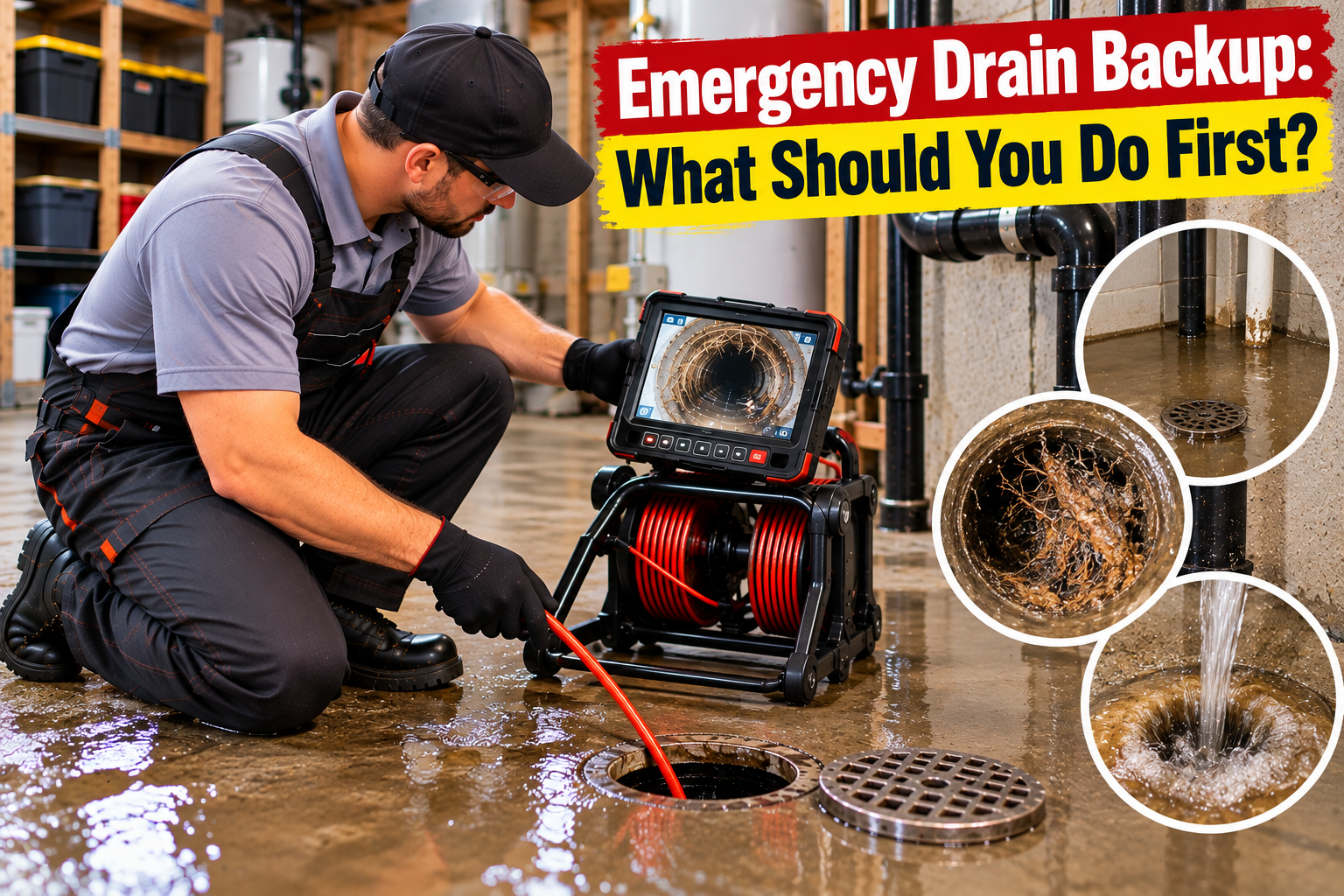
Sewer Camera Inspection
A sewer camera can reveal visible roots, damaged joints, accumulated debris, and some structural defects.
However, standing water or heavy deposits may limit visibility.
Inspection findings help determine whether cleaning is appropriate or whether repair may be necessary.
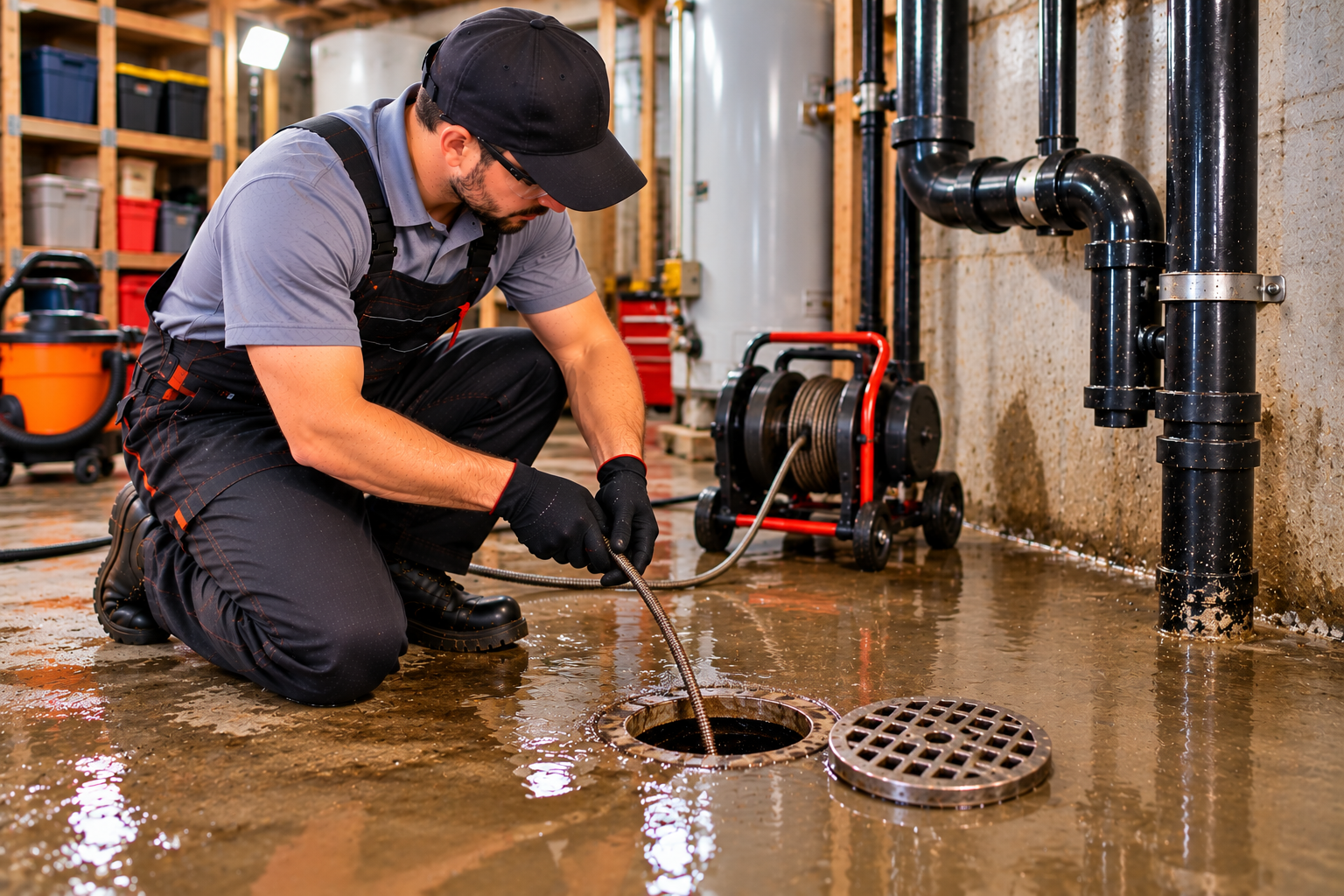
Mechanical Drain Cleaning
Professional mechanical cleaning equipment may remove or break through certain obstructions.
The equipment must be appropriate for the pipe diameter, material, and condition.
Damaged or fragile pipes require particular care because aggressive cleaning can worsen existing defects.
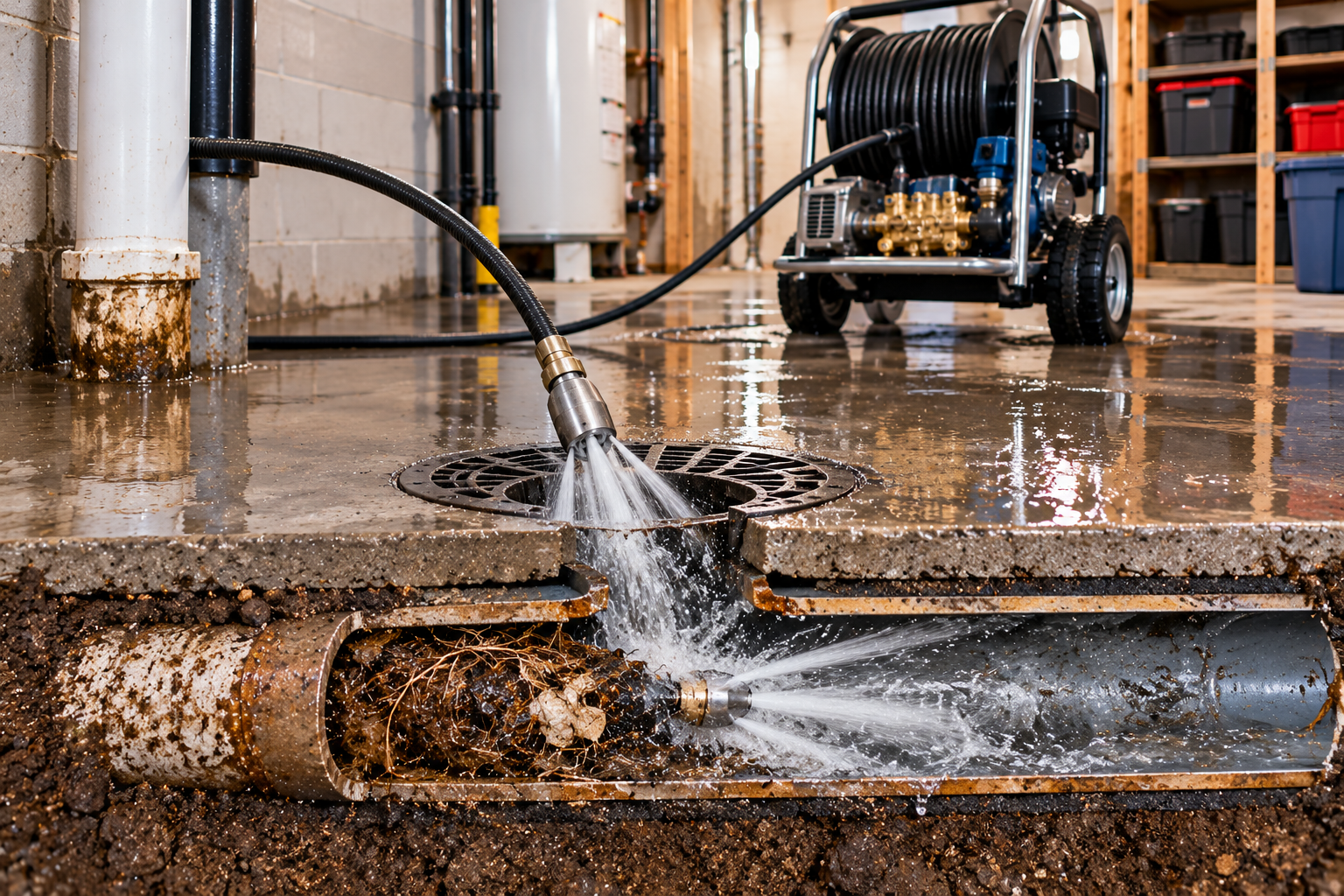
Hydro Jetting for Suitable Sewer Lines
Hydro jetting uses specialized pressurized water equipment to remove certain deposits.
It may be useful for grease and sludge buildup in structurally suitable piping.
However, severely deteriorated or collapsed pipes may require repair rather than high-pressure cleaning.
Backwater Valve Assessment
Where a backwater valve is installed, the plumber may inspect its condition and operation.
Obstructions, mechanical defects, or installation problems can affect performance.
Any maintenance or repair should follow the device manufacturer’s requirements and applicable plumbing standards.
Sewage Ejector Pump Repair
If below-grade fixtures rely on a sewage ejector system, the pump and associated controls may require assessment.
Electrical and mechanical components should be handled by appropriately qualified professionals.
A pump malfunction cannot necessarily be corrected by cleaning an ordinary gravity drain.
Repairing Damaged Sewer Pipes
When inspection reveals a collapsed pipe, displaced joint, or substantial deterioration, repair may be necessary.
Depending on the condition and location, options may include localized repair or replacement of the affected section.
Repeated cleaning is unlikely to permanently resolve a significant structural defect.
What Happens After Drainage Is Restored?
Restoring flow does not automatically make a contaminated basement safe.
Wastewater may have affected flooring, drywall, furniture, and stored belongings.
Appropriate cleanup, drying, and contamination assessment may require qualified restoration professionals.
Should You Call Your Insurance Company?
Homeowners may wish to contact their insurer after significant water damage.
Coverage depends on policy wording, endorsements, exclusions, and the cause of the loss.
Documentation from plumbing and restoration professionals may assist with the claims process, but coverage cannot be assumed.
How Much Does Emergency Drain Backup Repair Cost in Calgary?
Costs vary considerably according to the obstruction, access, equipment, and extent of damage.
Emergency service requirements and additional restoration work may also affect the total.
Because the source and scope are unknown until assessment, a fixed price cannot be determined from symptoms alone.
Why Can Emergency Drain Repairs Take Different Amounts of Time?
A localized blockage may be easier to address than a collapsed underground sewer line.
Inspection access, equipment requirements, and the need for excavation or specialized repairs all influence the duration.
No responsible repair estimate should guarantee completion before the actual problem has been identified.
Safety reminder: Do not attempt professional sewer cleaning with improvised pressure-washing equipment or reach into contaminated drains. High-pressure cleaning equipment, sewage exposure, and flooded electrical areas can create serious hazards.
Can the Problem Return After Drain Cleaning?
Yes. Cleaning may restore wastewater flow without correcting an underlying structural problem.
For example, roots may re-enter through an unrepaired joint, or a sagging sewer section may continue collecting debris.
Recurring backups should prompt investigation of the cause rather than repeated temporary treatment.
Professional repair takeaway: Emergency drain backup solutions may include mechanical cleaning, camera inspection, hydro jetting where appropriate, pump servicing, backwater valve assessment, or sewer pipe repair. The correct method depends on the findings.
For additional company-related discussions and information, visit the Calgary Electrical and Plumbing Quora profile.
How Can You Prevent Another Emergency Drain Backup?
Preventing another backup starts with correcting the cause of the first one.
Good household habits can reduce certain blockages, but damaged sewer pipes, municipal conditions, and equipment failures may require additional protection or repairs.
Keep Grease and Food Waste Out of Drains
Cooking grease can accumulate inside drainage piping and contribute to restrictions.
Dispose of grease appropriately instead of pouring it into the kitchen sink.
Kitchen strainers can also help reduce the amount of food debris entering the system.
Flush Only Appropriate Materials
Wipes, paper towels, hygiene products, and other unsuitable materials can contribute to sewer obstructions.
Even products advertised as flushable may not break down as expected under actual drainage conditions.
Keeping these materials out of toilets reduces avoidable blockage risks.
Address Repeated Slow Drains Early
Recurring slow drainage may indicate a developing restriction.
When several fixtures are affected, professional assessment may help identify a shared sewer problem.
Waiting until wastewater overflows can increase disruption and contamination risks.
Consider Camera Inspection for Recurring Sewer Problems
Properties with repeated main sewer blockages may benefit from camera inspection.
Visible roots, displaced joints, and other defects can help explain why cleaning has not provided lasting results.
The need for inspection should be based on symptoms and previous service history.
Maintain Backwater Valves Where Installed
Backwater valves may help reduce certain reverse-flow risks when properly selected, installed, and maintained.
Homeowners should understand whether their property has such a device and follow applicable maintenance instructions.
A backwater valve does not eliminate every possible source of basement flooding.
Check the Condition of Below-Grade Pumping Systems
Where sewage ejector pumps or sump pumps are installed, maintenance should follow the equipment manufacturer’s recommendations.
These systems serve different purposes, and their condition can affect drainage or groundwater management.
Qualified professionals should assess malfunctioning electrical or mechanical equipment.
Reduce Exterior Water Intrusion
Proper surface drainage, downspout arrangements, and foundation water management can help reduce some basement flooding risks.
However, these measures do not remove obstructions from a sanitary sewer.
Homeowners should distinguish groundwater problems from wastewater backups before selecting repairs.
Keep Records of Drain Cleaning and Sewer Repairs
Inspection reports and previous repair records can help identify recurring problem locations.
They may also show whether a particular section has been repeatedly cleaned without a permanent correction.
These records can support future maintenance planning.
Do Newer Calgary Homes Experience Emergency Drain Backups?
Yes. Newer communities such as Mahogany, Auburn Bay, Seton, and Copperfield can experience drainage restrictions or installation defects.
Newer construction does not eliminate the possibility of blocked pipes, damaged connections, or equipment malfunctions.
Property-specific conditions matter more than neighbourhood age alone.
What About Older Southeast Calgary Neighbourhoods?
Established communities such as Riverbend, Lake Bonavista, and Douglasdale may include homes with older sewer components or mature landscaping.
However, many properties have undergone plumbing upgrades, and neighbourhood age does not confirm the condition of an individual sewer line.
Inspection is more useful than assumptions based on location.
Should You Schedule Routine Drain Cleaning?
Routine cleaning may be appropriate for certain properties with documented recurring deposits or root intrusion.
However, aggressive cleaning is not automatically necessary for every home.
A maintenance plan should reflect the drainage system’s condition, previous blockages, and professional recommendations.
Prepare a Household Drain Backup Response Plan
Knowing what to do before a backup occurs can reduce confusion during an emergency.
- Know where your accessible water shutoff is located.
- Understand which basement areas contain electrical equipment.
- Keep plumbing inspection and repair records available.
- Review insurance coverage for sewer backup and water damage.
- Know whether your home has a backwater valve or sewage ejector system.
- Keep children and pets away from contaminated areas.
- Arrange professional assessment when recurring warning signs appear.
When Should You Request Another Plumbing Inspection?
New gurgling sounds, multiple slow fixtures, recurring sewer odours, and repeated basement drain backups may justify further assessment.
These symptoms do not always indicate a major failure, but they should not be ignored when they persist.
Early investigation can help determine whether cleaning, equipment servicing, or structural repair is needed.
Long-term prevention: The most effective strategy combines responsible drainage habits, attention to recurring symptoms, maintenance of installed protection devices, and timely repair of confirmed sewer defects.
Final takeaway: During an emergency drain backup, immediate safety precautions come first. Long-term prevention depends on identifying the underlying cause and correcting problems that routine drain cleaning cannot resolve.
Request an emergency drain backup inspection and sewer cleaning estimate in Calgary in just a few clicks.
Get My Free Estimate
Respond Safely to Emergency Drain Backups in Calgary
A sudden drain backup can disrupt a household and create contamination risks, especially when wastewater enters a finished basement. Stopping connected water use, avoiding hazards, and obtaining a professional diagnosis are the most important first steps.
Whether the problem involves a blocked sewer, damaged pipe, or malfunctioning drainage equipment, a local calgary plumber can help identify suitable repairs. Call Calgary Electrical and Plumbing at (403) 421-1991 to discuss your emergency drainage concerns.
Frequently Asked Questions about Emergency Drain Backups
What is the first thing I should do when sewage backs up into my basement?
Stop using connected toilets, sinks, showers, and laundry equipment to avoid adding wastewater to the affected system. Keep children and pets away, avoid contaminated water and possible electrical hazards, and contact a qualified plumber to investigate the source of the backup.
Should I turn off the main water supply during a sewer backup?
Turning off the main water supply may help prevent additional household water use, but it does not remove wastewater already in the sewer or necessarily stop external reverse flow. Only access a shutoff when it is safe to do so without entering flooded or electrically hazardous areas.
Can I use a plunger or chemical cleaner during an emergency drain backup?
A localized fixture clog differs from a main sewer backup. When sewage is overflowing or several fixtures are affected, avoid repeated flushing, aggressive plunging, and chemical drain cleaners. These actions may worsen flooding or create exposure hazards. Professional assessment is the safer approach.
Does homeowners insurance cover emergency sewer backups in Calgary?
Coverage depends on the specific insurance policy, optional endorsements, exclusions, and cause of the loss. Sewer backup protection may not be included automatically. Homeowners should review their coverage, document damage safely, and contact their insurer for guidance about potential claims.
How can I prevent another emergency drain backup?
Keep grease, wipes, and unsuitable debris out of drains, investigate recurring slow fixtures, and maintain installed backwater valves or pumping equipment. Properties with repeated sewer restrictions may benefit from camera inspection. Structural pipe defects require appropriate repair rather than repeated temporary cleaning.
Don’t wait for the problem to get worse.
Call (403) 421-1991 Now
Contact Our Calgary Plumbing Team