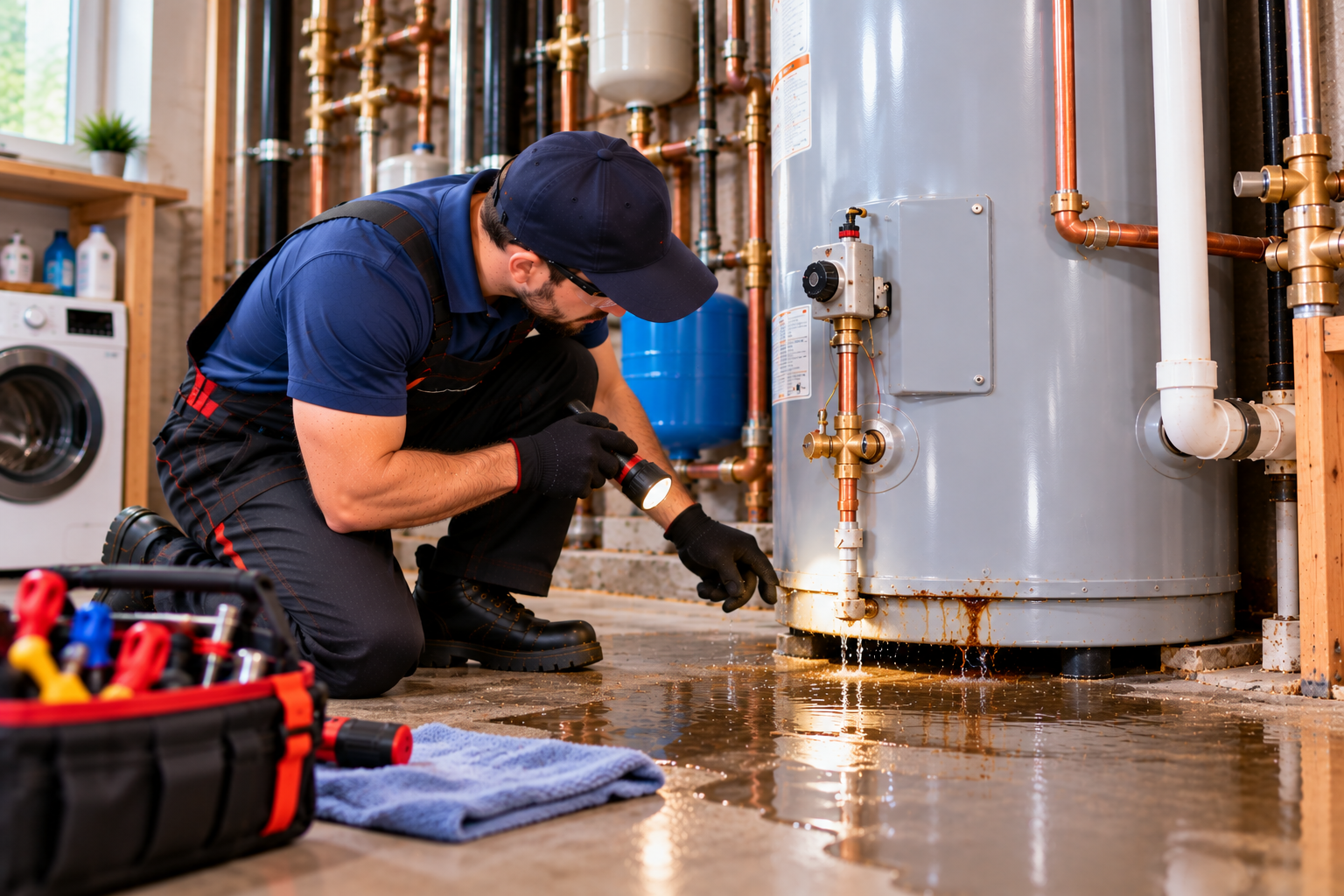

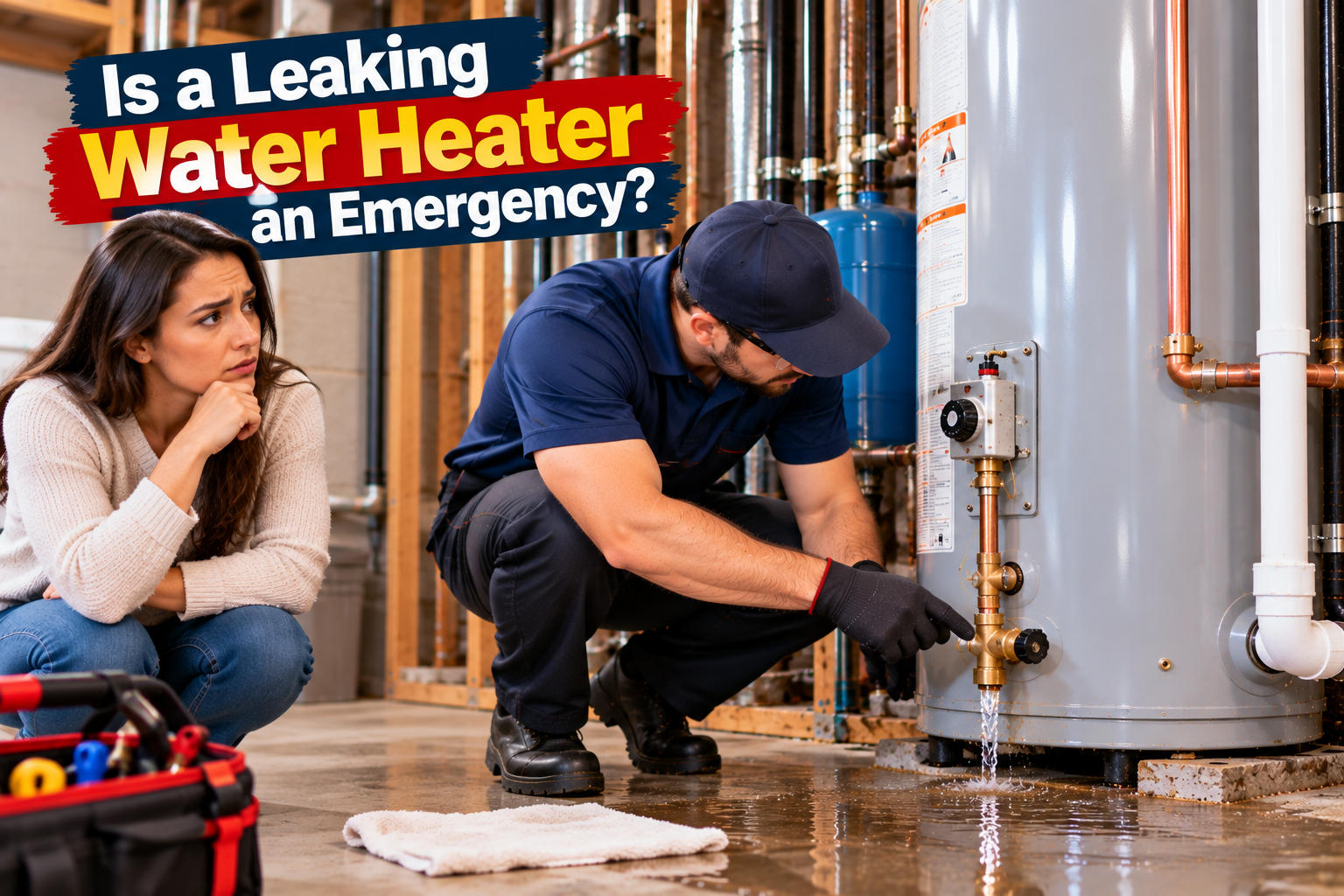
Is a Leaking Water Heater an Emergency? That question becomes especially important when you discover water spreading across your basement floor or notice a steady drip beneath your hot water tank. A small puddle might seem manageable, but the seriousness depends on where the water is coming from and whether the leak is getting worse.
In Calgary homes, water heaters are often installed in basements, mechanical rooms, or utility spaces near other essential equipment. Homeowners in Mahogany, Cranston, Auburn Bay, and Seton can benefit from understanding when to seek professional emergency plumbing and water heater services in Calgary rather than waiting for visible damage to increase.
Not every leak requires the same response. A minor external connection leak differs from a deteriorating storage tank or water reaching electrical equipment. This guide explains the warning signs, safe immediate precautions, likely causes, repair considerations, and situations that call for urgent professional assistance.
A leaking water heater can be an emergency when water is spreading rapidly, the tank is failing, electrical equipment is wet, or a gas-related hazard is suspected. Even small leaks need assessment because they can worsen. Keep clear of hazards and seek qualified help.
When Is a Leaking Water Heater Considered an Emergency?
A water heater leak becomes urgent when it threatens personal safety, causes significant water damage, or indicates failure of an important safety component. The amount of visible water matters, but the location and source of the leak are equally important.
Rapid Water Accumulation
Water spreading quickly across a basement or utility room floor should be treated as an urgent plumbing problem.
An active leak can damage flooring, drywall, insulation, stored belongings, and nearby appliances. Continued water flow can also make the area increasingly difficult to access safely.
Seek professional assistance without waiting to see whether the leak stops on its own.
What Warning Signs Make a Water Heater Leak Urgent?
Several conditions suggest that a leaking heater needs immediate attention rather than a routine appointment.
- Water is accumulating rapidly or spreading beyond the utility room.
- Moisture is reaching outlets, electrical panels, or powered equipment.
- Water is visibly escaping from the tank body.
- The heater shows significant corrosion or structural deterioration.
- Hot water or steam is escaping unexpectedly.
- A temperature-and-pressure relief discharge is persistent or unusually forceful.
- There is any suspicion of a natural gas leak.
Does a Small Water Heater Leak Count as an Emergency?
A small drip is not necessarily an immediate life-safety emergency, but it should not be ignored.
A minor external fitting leak may remain limited temporarily, while a small leak from a corroding tank can worsen without warning.
The safest approach is to arrange assessment promptly and escalate the response if the amount of water increases or hazards appear.
Why Water Near Electrical Equipment Is Especially Concerning
Water can create dangerous conditions when it reaches electrical connections, outlets, wiring, or appliances.
Do not step into standing water near electrical equipment or touch wet switches and controls.
Keep people away from the affected area and seek qualified assistance.
Can a Water Heater Leak Damage a Finished Basement?
Yes. Water can migrate beneath flooring, enter wall cavities, and affect materials beyond the visible puddle.
In finished basements, damage may become apparent only after moisture has spread.
Homes in Southeast Calgary communities such as Cranston, Copperfield, and New Brighton have varied basement layouts, so the potential damage depends on the surrounding construction.
When Is Professional Emergency Assistance Appropriate?
Urgent assistance is appropriate when the leak is uncontrolled, the tank appears to be failing, or there is a possible electrical, gas, pressure, or scalding hazard.
If the leak is small and contained with no apparent hazards, timely professional assessment is still important.
Emergency decision: Treat rapidly spreading water, wet electrical equipment, suspected gas leakage, and uncontrolled hot water discharge as urgent safety concerns. Smaller leaks still require attention because their condition can change.
Local company information is available through the Calgary Electrical and Plumbing Google Maps listing.
What Causes a Water Heater to Leak Suddenly?
Water heater leaks can begin because of a failed component, pressure-related issue, corrosion, or deterioration in nearby plumbing. Some appear suddenly even when the underlying problem has developed gradually.
Loose or Deteriorated Pipe Connections
Connections near the top of a water heater can leak when seals, fittings, or associated plumbing components deteriorate.
Water may run down the outside of the appliance before collecting on the floor, making it appear that the tank is leaking from underneath.
A qualified plumber can identify whether a connection is the actual source.
Leaking Drain Valves
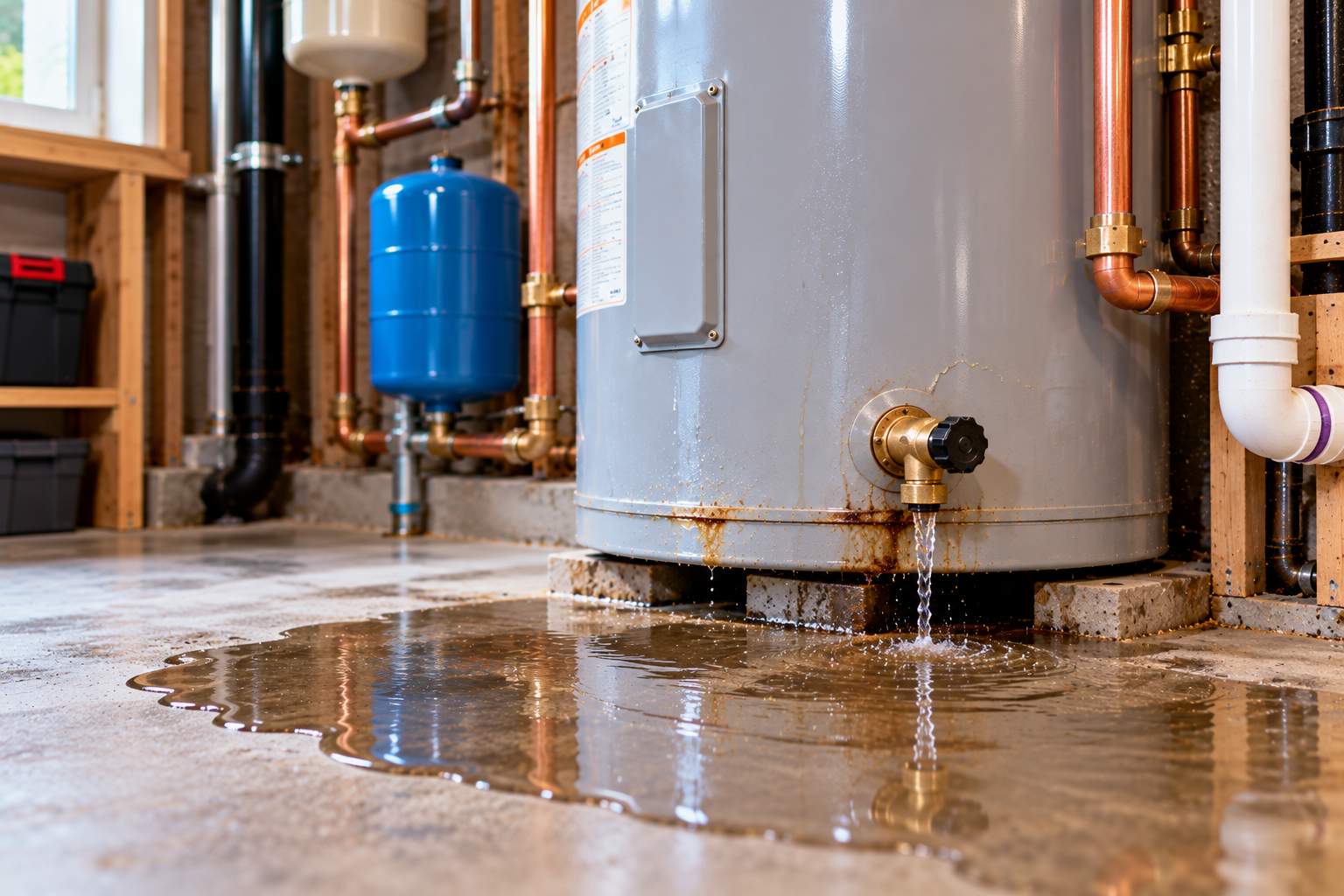
Many conventional storage water heaters have a drain valve near the bottom of the tank.
A deteriorated valve or seal can produce dripping near the base. Depending on the condition of the tank, the valve may be repairable or replaceable.
Do not attempt to force a damaged valve or dismantle pressurized components.
Internal Tank Corrosion
Storage water heaters can deteriorate internally over time. Corrosion may eventually compromise the water-containing vessel.
When the tank body develops a structural leak, external sealants and fitting repairs do not restore its integrity.
Replacement is generally required after a structural tank leak is confirmed.
Why Is the Water Heater Pressure Relief Valve Discharging?
Storage water heaters typically have a temperature-and-pressure relief valve designed to help protect the system against unsafe operating conditions.
Water from its discharge pipe can indicate excessive pressure, thermal expansion, valve malfunction, or another condition requiring assessment.
Never cap, block, or alter the discharge pipe to stop the water.
Can Thermal Expansion Cause Water Heater Leaks?
Water expands when heated. In some plumbing systems, that expansion can increase pressure if it cannot be accommodated properly.
Pressure-related problems may contribute to relief valve discharge or stress on connections.
A qualified professional can assess whether the system requires pressure-control or expansion-related equipment.
What About Condensation?
Condensation can form on certain water heating components under particular conditions.
Small amounts of moisture may resemble a leak, but persistent water accumulation should not automatically be attributed to condensation.
Professional diagnosis can distinguish ordinary moisture from an active plumbing or tank problem.
Could the Leak Be Coming From Another Appliance?
Utility rooms sometimes contain multiple plumbing connections and appliances close together.
Water from a nearby pipe, drain, or other fixture may travel across the floor and collect near the heater.
Correctly identifying the source helps prevent unnecessary replacement of a functioning appliance.
Does Water Heater Age Increase Leak Risk?
Older equipment may be more susceptible to component wear and corrosion, although age alone does not establish that a heater is unsafe.
Maintenance history, water conditions, installation quality, and equipment design all affect longevity.
A newer heater can also leak because of a defective connection or component.
Important distinction: An external valve or fitting leak may be repairable. Leakage from the storage vessel itself generally requires replacement. The visible puddle alone cannot reliably distinguish these conditions.
Homeowners can also consult this Calgary plumbing business map reference for location information.
Request a leaking water heater inspection and repair estimate in Calgary in just a few clicks.
Get My Free Estimate
What Should You Do Immediately When a Water Heater Leaks?
When water appears around a hot water tank, the safest response is to protect people first, avoid hazardous equipment, and seek appropriate help. Do not attempt internal repairs or improvise solutions to a pressurized tank.
What If Water Reaches Electrical or Gas Equipment?
Keep away from standing water near electrical panels, outlets, wiring, and powered appliances.
Do not touch wet electrical controls or enter a flooded utility area to reach equipment.
If you suspect a natural gas leak, leave the affected area and contact the gas utility’s emergency service from a safe location.
What Can Calgary Homeowners Check Safely?
From a dry, safe location, observe where the water is collecting and whether the amount is increasing.
Notice whether moisture appears near an external connection, beneath the tank, or at a visible discharge pipe.
These observations can help a plumber, but they should not involve removing covers or touching hot or energized components.
Keep Children and Pets Away From the Area
A leaking water heater can create slippery surfaces and expose people to hot water or nearby equipment hazards.
Keep children and pets away from the affected space until it has been assessed and made safe.
Do Not Block the Pressure Relief Pipe
A relief valve discharge may be a sign of a pressure or temperature concern.
Blocking its outlet can interfere with a critical safety function.
Leave the valve and discharge arrangement unchanged and request qualified assistance.
Know Where the Main Water Shutoff Is Located
Knowing the location of the household water shutoff can be useful during a plumbing emergency.
However, never cross standing water near electrical equipment or operate damaged or inaccessible controls.
If access is unsafe, leave equipment isolation to trained personnel.
Do Not Attempt to Patch a Leaking Storage Tank
A pressurized storage tank requires structural integrity to operate safely.
Adhesives, sealants, and improvised patches are not suitable substitutes for repairing or replacing a failed pressure-containing vessel.
Have the leak source confirmed before making repair decisions.
Document the Leak If It Is Safe
Photographs of visible moisture, corrosion, and nearby connections may help explain the problem to a service provider.
Record when the leak began and whether it has changed.
Do not move closer to hazardous equipment merely to obtain a better photograph.
Protect Nearby Belongings When Possible
Move accessible belongings away from moisture only when doing so does not require entering an unsafe area.
Avoid touching wet electrical equipment or handling hot piping.
Personal safety is more important than protecting stored items.
What Should You Tell the Plumbing Company?
- Whether water is dripping slowly or spreading rapidly.
- Whether the heater is gas or electric.
- Whether the tank or surrounding piping appears corroded.
- Whether moisture is near electrical equipment.
- Whether hot water is still available.
- Whether the leak appears continuous or intermittent.
- Whether any unusual sounds or visible discharge are present.
Should You Wait Until Morning?
Do not delay seeking emergency assistance when there is rapid flooding, suspected gas leakage, wet electrical equipment, or uncontrolled hot water discharge.
For a small contained leak without obvious hazards, a professional can advise on appropriate urgency based on the circumstances.
Never assume that a leak will remain minor overnight.
Safety warning: Do not dismantle plumbing fittings, open electrical compartments, interfere with gas connections, or obstruct pressure relief equipment. If the area is unsafe, stay clear and contact the appropriate emergency or qualified service provider.
Additional company details are available through the Calgary Electrical and Plumbing shared Google business listing.
Can an Emergency Water Heater Leak Be Repaired or Does It Need Replacement?
Whether a leaking water heater can be repaired depends on the source of the water, the condition of the storage vessel, and the availability of suitable replacement components. A proper diagnosis should come before major work is approved.
When Is Repair a Reasonable Option?
External leaks from certain valves, fittings, or connections may be repairable if the tank itself remains in sound condition.
A technician can determine whether replacing a component will correct the leak without creating additional safety concerns.
Repair costs should be weighed against equipment age and overall condition.
When Does a Water Heater Need Replacement?
A confirmed structural leak in a storage tank generally means the appliance needs replacement.
Significant corrosion, repeated major failures, or an uneconomical repair may also support replacement.
The recommendation should be based on equipment condition rather than age alone.
Can the Water Heater Still Work While Leaking?
Yes. A leaking water heater may continue producing hot water.
However, normal heating does not establish that the appliance is safe or that the leak is minor.
Professional assessment remains important even when the hot water supply appears unaffected.
How Much Can Emergency Water Heater Repair Cost in Calgary?
Costs depend on the fault, equipment type, access, labour, and whether replacement is required.
Urgent or after-hours service may involve additional charges, depending on the provider.
The following figures are broad planning examples rather than verified current local prices.
| Service | Illustrative Cost (CAD) | Possible Cost Factors |
|---|---|---|
| Leak inspection and diagnosis | $100–$250+ | Assessment scope and accessibility |
| Minor valve or fitting repair | $175–$450+ | Parts, labour, and equipment condition |
| More involved plumbing repair | $300–$800+ | Component type and additional work |
| Conventional storage-tank replacement | $1,500–$3,500+ | Equipment, installation, and removal |
| Tankless water heater installation | $3,500–$7,500+ | Equipment and possible utility or venting upgrades |
Pricing disclaimer: These are illustrative, nonbinding CAD ranges, not confirmed current Calgary averages or Calgary Electrical and Plumbing quotations. Actual costs may be higher or lower. Taxes, permits, emergency service charges, and installation modifications may affect the final price.
Does Home Insurance Cover Water Heater Leaks?
Coverage depends on the insurance policy, cause of damage, maintenance history, and applicable exclusions.
Some policies may address certain resulting water damage without covering replacement of the failed appliance itself.
Homeowners should consult their insurer and retain relevant documentation.
How Do You Choose the Right Replacement Heater?
Replacement should consider household hot water demand, equipment capacity, energy source, and installation requirements.
For storage heaters, recovery performance and first-hour delivery can be important.
For tankless equipment, simultaneous flow and Calgary’s colder incoming water temperatures deserve attention.
Why Proper Installation Matters
Water heater replacement may involve plumbing connections, venting, electrical work, gas equipment, and safety components.
Applicable codes, manufacturer instructions, and permit requirements must be considered.
Qualified installation helps ensure the replacement is appropriate for the home and its existing systems.
Can Maintenance Help Prevent Future Leaks?
Manufacturer-recommended maintenance can help identify certain developing problems and support equipment performance.
Depending on the heater, professional service may involve inspecting accessible connections and components designed for periodic maintenance.
Maintenance cannot guarantee that a tank will never fail or reverse existing structural corrosion.
What If the Leak Comes From the Bottom?
Water beneath a tank may originate from an external valve, upper connection, nearby plumbing, or deterioration of the storage vessel.
For a detailed explanation of these possibilities, read Why Is My Water Heater Leaking From the Bottom?
The location of the puddle should not be treated as a diagnosis by itself.
How Can Calgary Homeowners Reduce Future Water Damage?
Regularly observing the utility room for visible moisture can help identify some leaks earlier.
Appropriate leak detection devices and professionally designed drainage arrangements may also be worth discussing, depending on the home’s layout.
These measures supplement maintenance but do not replace safe equipment operation.
What Should You Ask Before Approving a Repair?
- What is the confirmed source of the leak?
- Is the storage tank structurally sound?
- Which components require repair or replacement?
- What is included in the written estimate?
- Are additional installation changes necessary?
- What warranty applies to the proposed work?
- Are permits or inspections required?
Repair or replacement: A serviceable external fitting may justify repair. A leaking storage vessel generally requires replacement. The most economical option is the one that safely resolves the confirmed problem and meets the household’s needs.
For company announcements and additional updates, visit Calgary Electrical and Plumbing on X.
Request a leaking water heater inspection and repair estimate in Calgary in just a few clicks.
Get My Free Estimate
Take Water Heater Leaks Seriously and Protect Your Calgary Home
A leaking water heater is not always an immediate emergency, but uncontrolled water, wet electrical equipment, suspected gas leakage, or a failing storage tank can make the situation urgent. Even a small drip deserves timely assessment because the source and severity may not be obvious.
A local calgary plumber can help identify the cause and explain appropriate repair or replacement options. Call Calgary Electrical and Plumbing at (403) 421-1991 to discuss your leaking water heater.
Frequently Asked Questions about Leaking Water Heater Emergencies
Is a small water heater leak an emergency?
A small leak is not always an immediate safety emergency, but it still requires attention. A minor fitting problem can resemble an early tank failure. Seek prompt professional assessment, especially if water accumulation increases or moisture approaches electrical equipment.
Can a leaking water heater burst?
Water heaters are equipped with safety components intended to control dangerous pressure and temperature conditions. Serious equipment faults can create hazards, although a visible leak does not mean a rupture is imminent. Never obstruct relief valves or attempt to repair a damaged pressurized tank.
Should I turn off a leaking water heater?
A leaking appliance may need to be isolated or shut down, but the safest procedure depends on its type and surrounding conditions. Do not touch wet electrical controls or enter an unsafe area. Contact a qualified professional for guidance specific to the situation.
How quickly should a leaking water heater be repaired in Calgary?
Rapid flooding, suspected gas leakage, wet electrical equipment, or uncontrolled hot water discharge requires urgent attention. Smaller contained leaks should still be assessed promptly. The appropriate timing depends on the leak source, rate, equipment condition, and surrounding hazards.
Will a leaking hot water tank need complete replacement?
Not necessarily. Leaks from certain external valves or fittings may be repairable if the tank remains sound. However, a confirmed structural leak in the storage vessel generally requires replacement. A plumber should identify the source before recommending major work.
Don’t wait for the problem to get worse.
Call (403) 421-1991 Now
Contact Our Calgary Plumbing Team