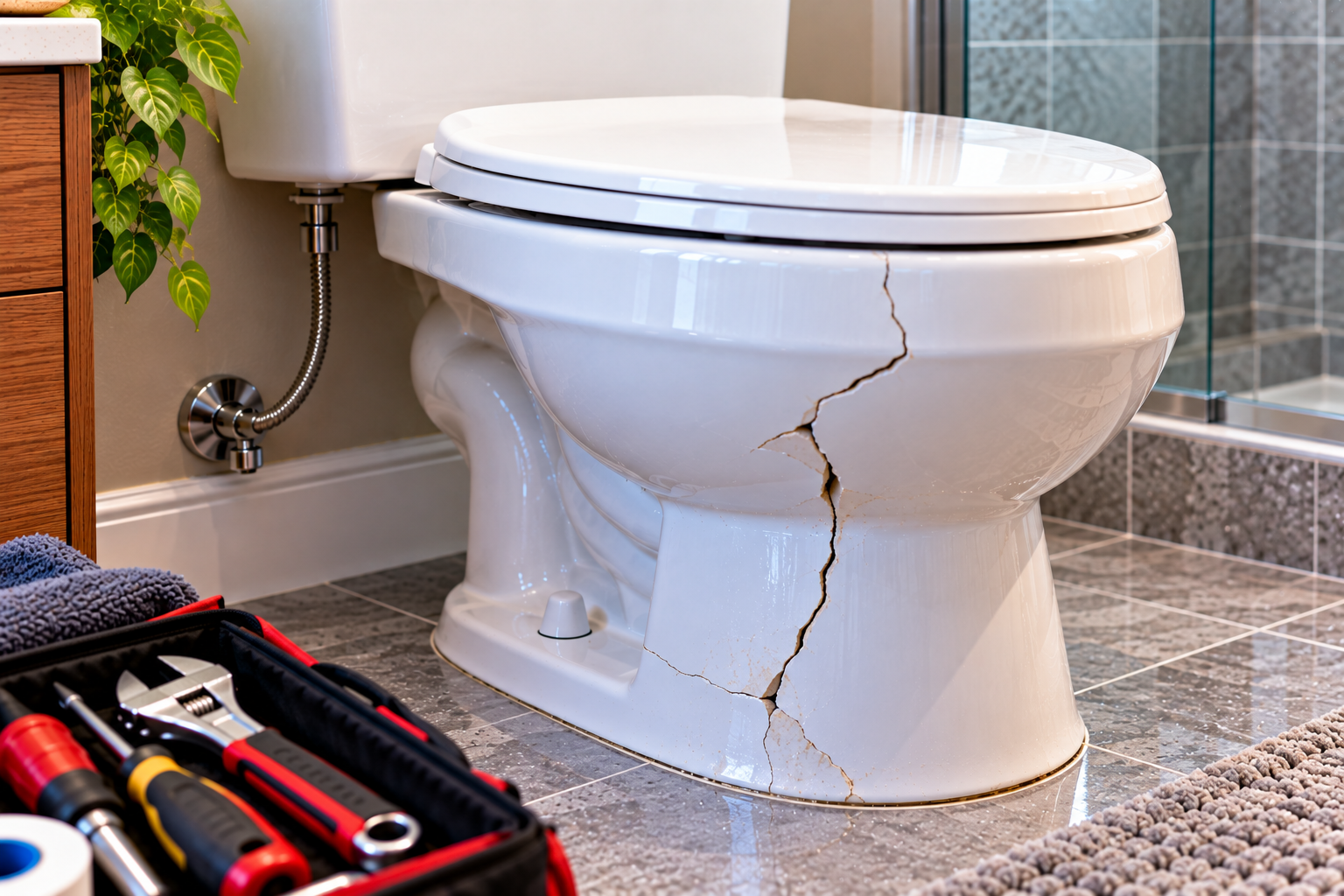


Can a Cracked Toilet Be Repaired Safely? If you notice a fine line across your toilet tank, a crack near the bowl, or moisture collecting around the fixture, it is natural to wonder if a simple repair will solve the problem. The answer depends on where the crack is located, how deep it extends, and whether the porcelain still provides safe structural support.
Homeowners in Mahogany, Auburn Bay, Cranston, and other Southeast Calgary communities sometimes discover toilet cracks while cleaning the bathroom or investigating an unexplained leak. Understanding when to seek professional residential plumbing assistance in Calgary can help prevent an apparently small defect from becoming a more serious problem.
Not every visible line on porcelain is a dangerous fracture. Some marks affect only the glazed finish, while others extend through the fixture itself. Knowing the difference matters because a damaged toilet tank or bowl can release water unexpectedly, and a weakened base may no longer support normal use.
Minor surface crazing may be cosmetic, but cracks through a toilet tank, bowl, or load-bearing base generally make replacement the safer option. Adhesives are not a reliable permanent repair for structurally damaged porcelain. Stop using a leaking or unstable toilet and have it assessed.
What Types of Toilet Cracks Can Occur?
Most residential toilets are made from glazed vitreous china, a ceramic material designed to provide a durable, nonporous surface. Although it performs well during ordinary use, porcelain is rigid and can crack when subjected to impact, uneven stress, or installation problems.
The location of a crack is one of the most important factors in evaluating it. Damage to the tank, bowl, or supporting base carries different risks from superficial marks in the glazed finish.
Is a Crack in the Toilet Tank Dangerous?
A crack in the toilet tank deserves serious attention because the tank stores water between flushes. If a fracture extends through the tank wall, water may escape continuously or the crack may worsen without warning.
For example, a homeowner in Mahogany might notice a damp line beneath the tank or a small amount of water on the floor behind the toilet. Although loose connections can cause similar symptoms, a visible tank fracture should not be ignored.
A leaking or structurally cracked tank generally needs replacement. If the toilet is a two-piece model, replacing the tank alone may be possible when a compatible manufacturer-approved part is available.
Until the cause is confirmed, turn off the toilet’s water supply if it can be done safely and avoid using the fixture.
Can a Cracked Toilet Bowl Still Be Used?
A crack in the toilet bowl can be particularly concerning because the bowl holds water and supports a person’s weight. A structural fracture may create a leak, weaken the fixture, or both.
Cracks along the sides of the bowl, near the outlet, or around the supporting base should be treated as potential structural defects. A toilet with suspected structural damage should not remain in service.
In an Auburn Bay bathroom, a visible crack running from the bowl toward the floor may indicate that the fixture has experienced stress or impact. Even if no water is currently visible, replacement is generally safer than relying on a surface patch.
Are Hairline Cracks and Surface Crazing the Same?
No. Surface crazing refers to very fine lines affecting the glazed finish. These may appear as a network of shallow marks without extending through the underlying ceramic body.
A hairline crack, however, may be a genuine fracture in the porcelain. Its narrow appearance does not establish that it is harmless.
Distinguishing cosmetic glaze damage from a structural crack can be difficult without a close inspection. If the line is growing, leaking, or located in a load-bearing area, stop using the toilet until it has been assessed.
Can the Toilet Base Crack Without an Obvious Leak?
Yes. A fracture in the lower supporting portion of the toilet may not immediately release visible water. However, the base helps keep the fixture stable and distributes the load during use.
If the toilet rocks, makes unusual noises, or shows a crack near the mounting bolts, the fixture may be under uneven stress. Continued use can place additional force on the damaged area.
Fine surface lines with no confirmed structural damage may be cosmetic, but they should be assessed if their nature is uncertain.
A fracture through the tank wall can cause leakage and generally requires tank or toilet replacement.
Damage affecting the bowl’s structure or water-containing surface usually makes replacement the safer choice.
Fractures around the mounting area can compromise stability even before a leak becomes visible.
Calgary residents looking for local plumbing information can consult the company’s Calgary service location listing or browse its plumbing information video channel.
How Can You Tell If a Toilet Crack Is Serious?
A visible crack does not always reveal how far the damage extends. The safest approach is to consider its location, signs of leakage, changes in the fixture’s stability, and any evidence that the fracture is becoming larger.
Homeowners can observe these warning signs without dismantling the toilet. However, testing a suspected structural crack by placing extra weight on the fixture or continuing to flush it is not advisable.
What Are the Warning Signs of a Leaking Crack?
Water around a toilet may come from several sources, including tank bolts, the supply connection, condensation, or the drain seal. A visible porcelain crack accompanied by moisture is a stronger reason to stop using the fixture.
Watch for the following:
- Water collecting near a visible crack in the tank or bowl.
- Persistent dampness around the toilet despite drying the floor.
- Staining or swelling in the flooring beside the fixture.
- A crack that appears longer or wider over time.
- Unusual movement or instability when the toilet is used.
- Moisture appearing on the ceiling beneath an upstairs bathroom.
For a bathroom in Cranston, a recurring wet patch beside the toilet may be caused by a cracked fixture, but it could also originate from a loose supply connection. Identifying the exact source prevents unnecessary repairs.
Does a Crack Above the Waterline Matter?
A crack above the normal waterline may not leak continuously. Nevertheless, its position alone does not establish that the toilet is structurally sound.
Damage around the tank mounting area, bowl rim, or supporting base may still be important because these areas experience mechanical stress.
Even a dry crack can require replacement when it affects the integrity of the fixture.
Can You Tell If a Crack Is Getting Worse?
A line that becomes more noticeable, extends across a larger area, or develops accompanying moisture may indicate progression. Changes in stability are another warning sign.
Do not attempt to test a crack by pressing on the porcelain or rocking the toilet. If structural damage is suspected, avoid further use and arrange an assessment.
What Should You Do Immediately After Finding a Crack?
If you suspect a tank or bowl fracture, stop using the toilet. Where there is active leakage, close the toilet’s supply valve if it is accessible and safe to operate.
Keep the surrounding area dry and avoid placing additional weight on the fixture. Do not apply adhesives as a substitute for assessing structural damage.
Important safety warning: A structurally cracked toilet can fail unexpectedly. Do not sit on, flush, or continue using a toilet with suspected structural damage, particularly when the bowl or supporting base is affected. Arrange professional evaluation and replacement as appropriate.
Could the Leak Be Coming From Somewhere Else?
Yes. Water around the toilet does not automatically mean the porcelain is cracked. The supply line, tank-to-bowl connection, mounting hardware, and drain seal can all be potential leak sources.
In Seton or New Brighton homes, an inspection can help distinguish a damaged fixture from a repairable plumbing connection. That distinction matters because a sound toilet does not necessarily need replacement when the actual problem is a fitting or seal.
For additional background on plumbing services, homeowners can watch a related plumbing service video and review the company’s Facebook information page.
Request a cracked toilet inspection and replacement estimate in Calgary in just a few clicks.
Get My Free Estimate
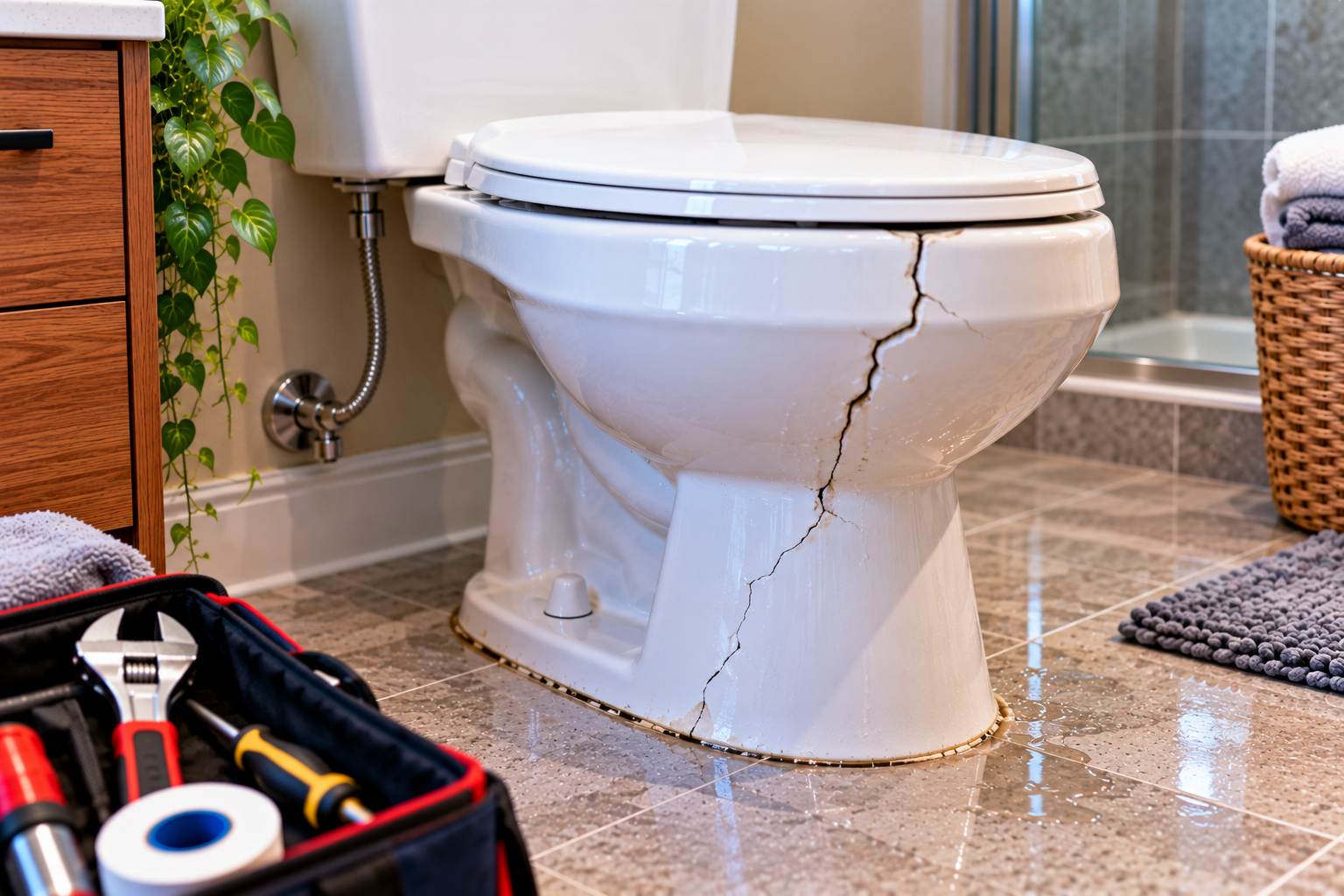
Can a Cracked Toilet Be Repaired Instead of Replaced?
Some cosmetic defects can be addressed without replacing an entire toilet. However, a true structural crack is different from a surface blemish, and the distinction determines what can be repaired safely.
Adhesive products may improve the appearance of certain superficial defects, but they do not restore the original strength of fractured porcelain. A toilet that holds water or supports weight should not rely on a patch over structural damage.
Will Epoxy or Porcelain Repair Products Work?
Porcelain touch-up products and certain epoxies are marketed for cosmetic repairs. They may help conceal minor surface chips or marks in locations that are not structurally important.
However, an adhesive patch is not an appropriate permanent solution for a crack through a toilet bowl, tank wall, or load-bearing base. These areas must remain sound during normal use.
A repaired appearance should never be confused with restored structural integrity. If the porcelain body is fractured, replacement is generally the safer option.
Can a Cracked Toilet Tank Be Replaced Separately?
Sometimes. A two-piece toilet has a separate tank and bowl, which may allow the tank to be replaced without changing the entire fixture.
The replacement tank must be compatible with the specific toilet model and approved for that arrangement. Tank shapes, mounting holes, flushing systems, and connections vary between manufacturers.
If an appropriate replacement tank is unavailable, replacing the complete toilet may be more practical.
Can a Cracked Bowl Be Replaced Without Changing the Tank?
Some two-piece toilet systems allow compatible bowl replacement, but availability and manufacturer requirements must be considered.
Because the bowl provides structural support and contains wastewater, a genuine crack in the bowl generally calls for replacement of the affected component rather than patching.
For older toilets in Lake Bonavista or Riverbend, locating an exact compatible bowl may be difficult. In that situation, a complete replacement may offer a simpler long-term solution.
What Happens During Professional Toilet Replacement?
A plumber typically begins by isolating the water supply and removing the damaged fixture. The mounting flange, drain seal, surrounding flooring, and supply connection are then checked for problems.
If the flange or floor is damaged, that issue should be corrected before installing the replacement toilet. A new suitable seal is used, and the fixture is secured without placing excessive stress on the porcelain.
The completed installation is checked for stability, proper flushing, and leakage.
How Much Does Cracked Toilet Replacement Cost in Calgary?
Costs depend on the toilet model, installation conditions, removal requirements, and any additional repairs discovered beneath the fixture.
The following Canadian-dollar amounts are broad planning illustrations, not verified company prices or guaranteed Calgary quotes.
| Potential Service | Illustrative CAD Range | Factors Affecting Cost |
|---|---|---|
| Inspection and diagnosis | $100–$220 | Access, service minimum, inspection scope |
| Standard replacement toilet fixture | $180–$500+ | Brand, flushing design, features, model |
| Basic toilet replacement labour | $180–$400 | Removal, installation access, existing connections |
| Flange or mounting repairs | $150–$500+ | Condition, material, extent of repair |
| Floor restoration or extensive plumbing work | Quoted after assessment | Hidden damage, materials, required trades |
These figures are illustrative budgeting ranges only. Actual pricing may differ substantially, and some items may overlap within a complete installation quote. Obtain a job-specific estimate before proceeding.
Is Repair or Replacement More Cost-Effective?
When the issue is a superficial finish mark, replacement may be unnecessary. When the porcelain itself is structurally cracked, the safety concern generally outweighs the apparent savings of a patch.
For a homeowner in Douglasdale, replacing a cracked toilet may also be an opportunity to select a modern fixture suited to the household’s needs. The decision should be based on compatibility, installation quality, and the condition of the surrounding plumbing.
Best practical approach: Repair a cosmetic finish issue only after confirming the porcelain structure is sound. Replace a toilet or compatible component when a crack affects the tank, bowl, or supporting base. Do not rely on glue to make a structurally damaged toilet safe.
For additional business information, residents can consult another Calgary Electrical and Plumbing map listing or listen to the company’s plumbing audio information channel.
What Causes Toilets to Crack and How Can You Prevent It?
Toilet cracks can develop for several reasons, including physical impact, uneven installation stress, manufacturing defects, and changes in the surrounding support conditions.
Understanding these causes can help homeowners recognize potential problems before damage becomes severe. However, a cracked fixture should not remain in use simply because the suspected cause appears minor.
Can Loose Bolts or Poor Installation Crack a Toilet?
Yes. Excessive tightening of mounting bolts can concentrate force around the porcelain mounting points. Uneven flooring can also cause a toilet to bear weight on limited areas rather than distributing it properly.
If the toilet rocks during normal use, the repeated movement may place additional stress on the fixture. The underlying cause should be addressed before a new toilet is installed.
For more information about stability problems, see our guide explaining why toilets can experience repeated clogging. Clogging and cracking are separate issues, but a toilet with multiple symptoms may need a broader assessment of its condition and installation.
Can Dropped Objects Crack a Toilet?
A heavy object striking the bowl, tank, or rim can chip the glazed surface or fracture the porcelain beneath it. Bathroom renovations and accidental impacts are possible sources of damage.
A visible chip is not always structural, but a crack extending away from an impact point may require replacement.
Can Temperature Changes Damage Porcelain?
Porcelain can be affected by sudden or extreme temperature changes. However, ordinary bathroom temperature variations are not a common reason for a properly installed toilet to crack.
In Calgary, preventing freezing conditions in unheated or vacant buildings is important for plumbing generally. Water left in fixtures and pipes can expand if it freezes, potentially causing damage.
Do not pour boiling water into a toilet in an attempt to clear a blockage. Sudden temperature changes can place unnecessary stress on the fixture.
Could Age or Manufacturing Defects Contribute?
Some toilets develop damage after years of use, while others may have a pre-existing material or manufacturing defect. Age alone does not prove that porcelain is unsafe.
If a relatively new toilet develops a crack without obvious impact or installation problems, the manufacturer or installer may need to review the circumstances and any applicable warranty.
How Can You Reduce the Risk of Future Cracks?
Good installation and maintenance practices can help protect a toilet from avoidable stress:
- Ensure the fixture sits evenly and does not rock.
- Use compatible mounting components and appropriate seals.
- Avoid excessive tightening of porcelain mounting points.
- Keep heavy objects from striking the tank or bowl.
- Investigate leaks and soft flooring before they affect support.
- Address freezing risks in unheated properties.
These steps cannot prevent every possible defect, but they reduce several common sources of installation-related damage.
When Should You Call a Calgary Plumber About a Crack?
Arrange professional assessment when a crack is visible in the bowl, tank, or base; when water is leaking; or when the toilet becomes unstable.
More immediate action is appropriate if the toilet has a significant fracture, the floor is becoming wet, or the fixture no longer appears structurally sound. Stop using the toilet until it can be evaluated.
Residents can also explore the company’s plumbing-related Pinterest profile for general home-service content and visual references.
Remember: The safest repair is not always the one that preserves the existing fixture. When a crack affects water containment or structural support, replacing the damaged toilet or compatible component is generally the appropriate long-term solution.
Request a cracked toilet inspection and replacement estimate in Calgary in just a few clicks.
Get My Free Estimate
Choose a Safe Solution for a Cracked Toilet
A small mark in the glaze and a structural fracture are not the same problem. Cosmetic defects may not require replacement, but cracks affecting the bowl, tank, or supporting base should be treated seriously. A proper assessment can establish the safest next step.
If you are concerned about a damaged fixture, contact a local calgary plumber for guidance. Call Calgary Electrical and Plumbing at (403) 421-1991 to discuss a toilet inspection or replacement.
Frequently Asked Questions about Cracked Toilets
Can a hairline crack in a toilet be repaired safely?
A superficial mark in the glaze may be cosmetic, but a genuine hairline fracture through the porcelain can affect safety. Its location and depth matter. If the crack involves the bowl, tank, or supporting base, replacement is generally safer than an adhesive repair.
Is it safe to use a toilet with a cracked bowl?
No. A suspected structural crack in the bowl can weaken the fixture and may allow wastewater to escape. Even without visible leakage, continued use is not advisable. Stop using the toilet and arrange an inspection to determine the appropriate replacement.
Can I use epoxy to stop a cracked toilet from leaking?
Epoxy should not be relied upon as a permanent repair for a structural crack in a toilet tank or bowl. Adhesives cannot be assumed to restore the original strength of porcelain. A leaking or structurally damaged fixture generally requires replacement.
Can a cracked toilet tank be replaced without replacing the bowl?
Sometimes. A two-piece toilet may allow tank-only replacement if a compatible manufacturer-approved tank is available. Mounting connections and flushing components must match the model. If a suitable tank cannot be obtained, replacing the complete toilet may be necessary.
How urgently should I replace a cracked toilet in Calgary?
If the crack affects the bowl, tank, or supporting base, stop using the toilet and arrange prompt assessment. Active leakage or significant instability makes the situation more urgent. A Calgary plumber can identify the damage and recommend a safe replacement option.
Don’t wait for the problem to get worse.
Call (403) 421-1991 Now
Local Help Available 24/7 in Calgary