
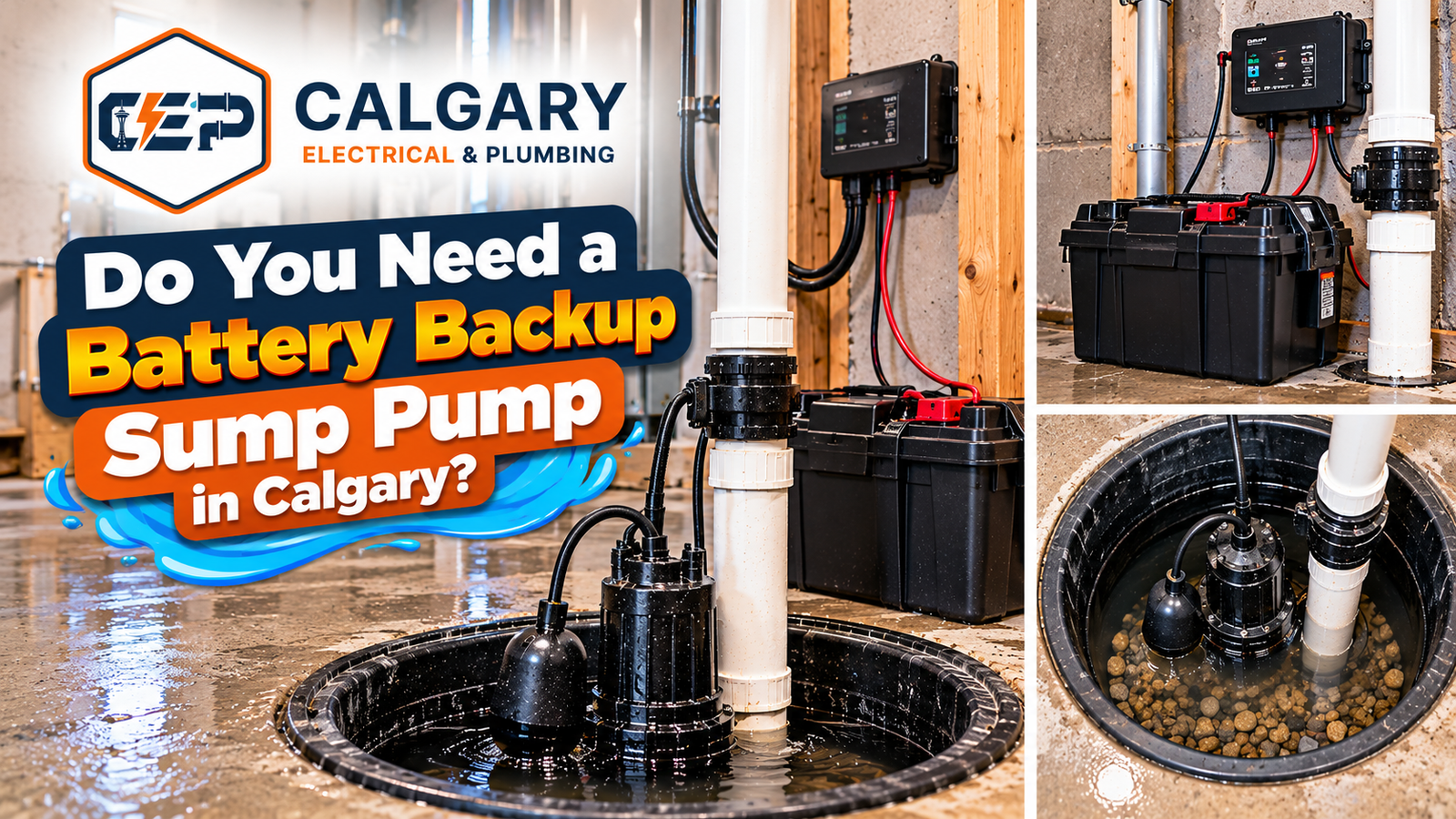
Do You Need a Battery Backup Sump Pump in Calgary? Imagine heavy spring snowmelt filling your sump pit while a neighbourhood power outage leaves your primary pump inactive. For homeowners who rely on mechanical drainage, that combination can create a serious basement flooding risk.
Properties in Mahogany, Auburn Bay, Cranston, Seton, and other Southeast Calgary communities can experience changing drainage demands during wet weather and seasonal thaw. Understanding when backup protection is worthwhile helps homeowners make better decisions about sump pump installation and basement drainage services in Calgary.
A battery backup is not necessary for every property, but it can be valuable when the consequences of pump failure are significant. The decision depends on how much water enters the sump pit, how frequently the primary pump operates, whether the basement is finished, and how much protection is needed during power interruptions.
A battery backup sump pump is worth considering in Calgary if your basement depends on sump pumping, experiences frequent water inflow, or contains valuable finished spaces. It provides temporary pumping during certain power outages or primary pump failures, reducing risk without guaranteeing complete flood protection.
Why Would a Calgary Home Need a Battery Backup Sump Pump?
A sump pump protects a basement by removing water collected in the sump pit. In many homes, the primary pump depends entirely on household electricity.
If that pump stops while water continues entering the pit, the available storage space can eventually fill.
Can Calgary Weather Increase Sump Pump Demand?
Yes. Spring snowmelt, rainfall, and changing ground conditions can increase drainage demand at some properties.
The amount of water entering a sump pit depends on site conditions, foundation drainage, and surrounding water movement.
Not every home experiences the same level of risk.
Why Is Spring Thaw an Important Consideration?
Snow accumulated during winter can release substantial water as temperatures rise.
Where soil remains frozen or drainage conditions are restricted, water may move differently around foundations.
Homes that depend on active sump pumping should have their systems assessed before periods of expected heavy inflow.
What Happens if the Power Goes Out During Heavy Rain?
A standard electric sump pump stops when its electrical supply is interrupted.
If water continues entering the pit, the level may rise until the pump is restored or another system removes the water.
A battery backup provides an alternative source of pumping power for a limited period.
Can a Primary Sump Pump Fail Without a Power Outage?
Yes. Motor wear, faulty float switches, blocked impellers, and discharge problems can prevent normal operation.
Some failures develop gradually, while others occur unexpectedly.
A backup pump with independent controls may provide additional protection when the primary pump cannot activate.
Does Every Calgary Basement Need Backup Protection?
No. Some properties have little water entering the sump pit and may rarely require pumping.
Others depend on frequent pump operation to manage drainage water.
The need for backup protection should reflect actual system use, property conditions, and the consequences of possible flooding.
What Are the Signs That Backup Protection May Be Worthwhile?
- The primary sump pump operates frequently during wet weather.
- Water rises quickly when the primary pump is inactive.
- The basement has experienced previous water intrusion.
- The property has a finished basement or moisture-sensitive belongings.
- Household power interruptions are a concern.
- The homeowner is frequently away during heavy rainfall or spring thaw.
- The existing sump pump is older or has a history of problems.
Does a Finished Basement Change the Decision?
It often does.
Finished basements may contain flooring, drywall, insulation, furniture, electronics, and other materials vulnerable to water damage.
Even limited flooding can create substantial cleanup and restoration requirements.
What About Homes With Unfinished Basements?
Unfinished basements can still contain electrical equipment, storage, mechanical systems, and structural materials that should remain dry.
Although some surfaces may tolerate moisture better than finished materials, standing water can still create safety and maintenance concerns.
Backup protection should therefore be evaluated based on drainage risk, not appearance alone.
Can Basement Flooding Happen Without Warning?
Yes. A pump can stop operating while the homeowner is asleep, travelling, or occupied elsewhere.
Without an alarm, rising water may go unnoticed until it reaches the basement floor.
Some backup systems include warning features that can help occupants recognize developing problems.
Calgary example: A homeowner in Cranston notices that the sump pump cycles repeatedly during spring snowmelt. Because the basement is finished and the pit fills quickly, adding a battery backup could provide useful temporary protection if the main pump loses power.
Can Exterior Drainage Improvements Reduce the Need for Backup?
Appropriate grading, roof drainage, and discharge arrangements can help manage water around a property.
However, exterior improvements do not necessarily eliminate groundwater entering an existing foundation drainage system.
The City of Calgary provides information about drainage and water management measures for Calgary properties.
Homeowner takeaway: A battery backup is most valuable when a property depends on reliable sump pumping and the consequences of failure are significant. Frequent water inflow, finished basement spaces, and concerns about power interruptions are practical reasons to consider additional protection.
Local service information is available through the Calgary Electrical and Plumbing Google Maps listing.
How Does a Battery Backup Sump Pump Work During an Emergency?
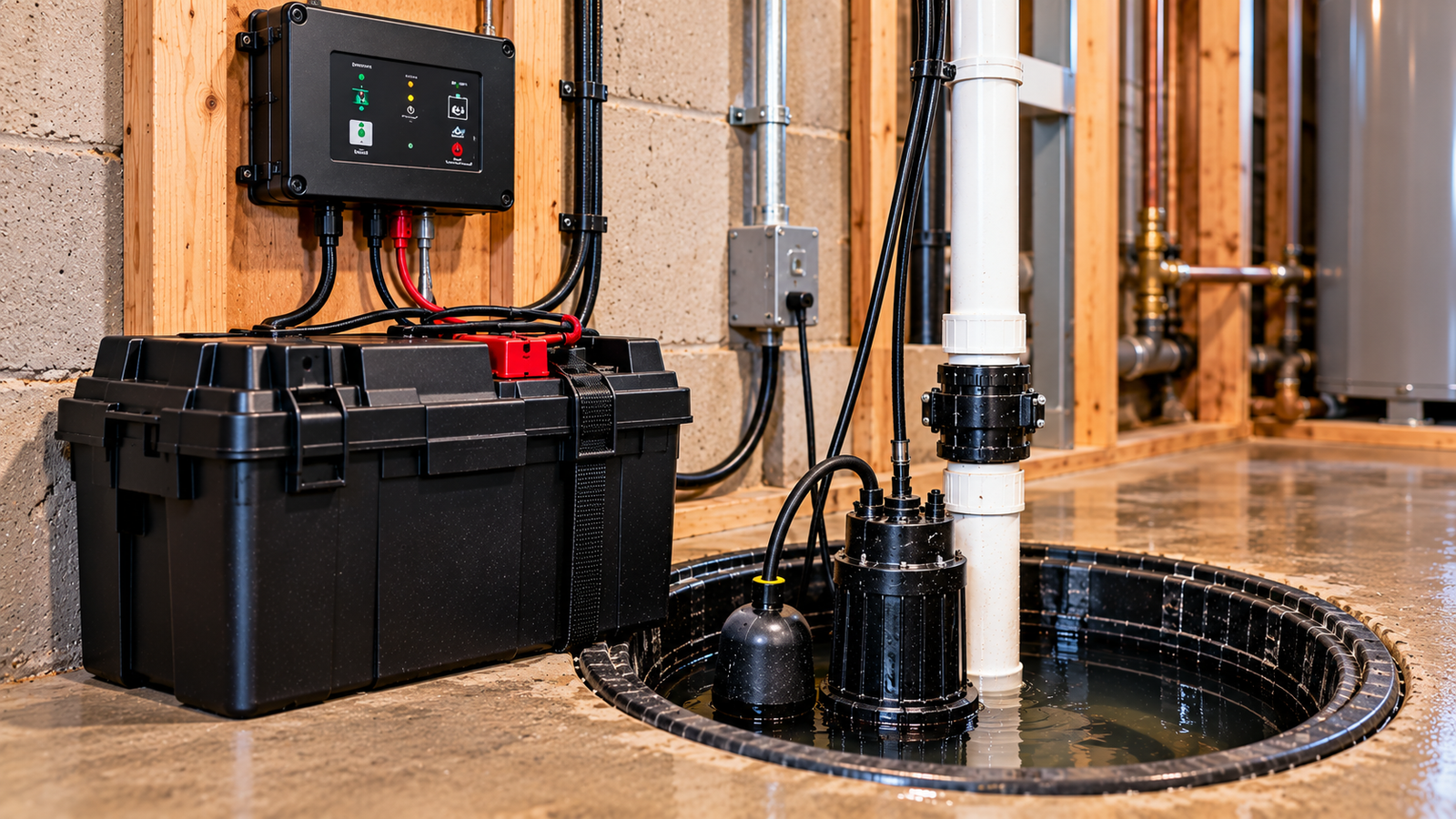
A battery backup sump pump is a secondary pumping system designed to operate when the primary pump cannot adequately remove water.
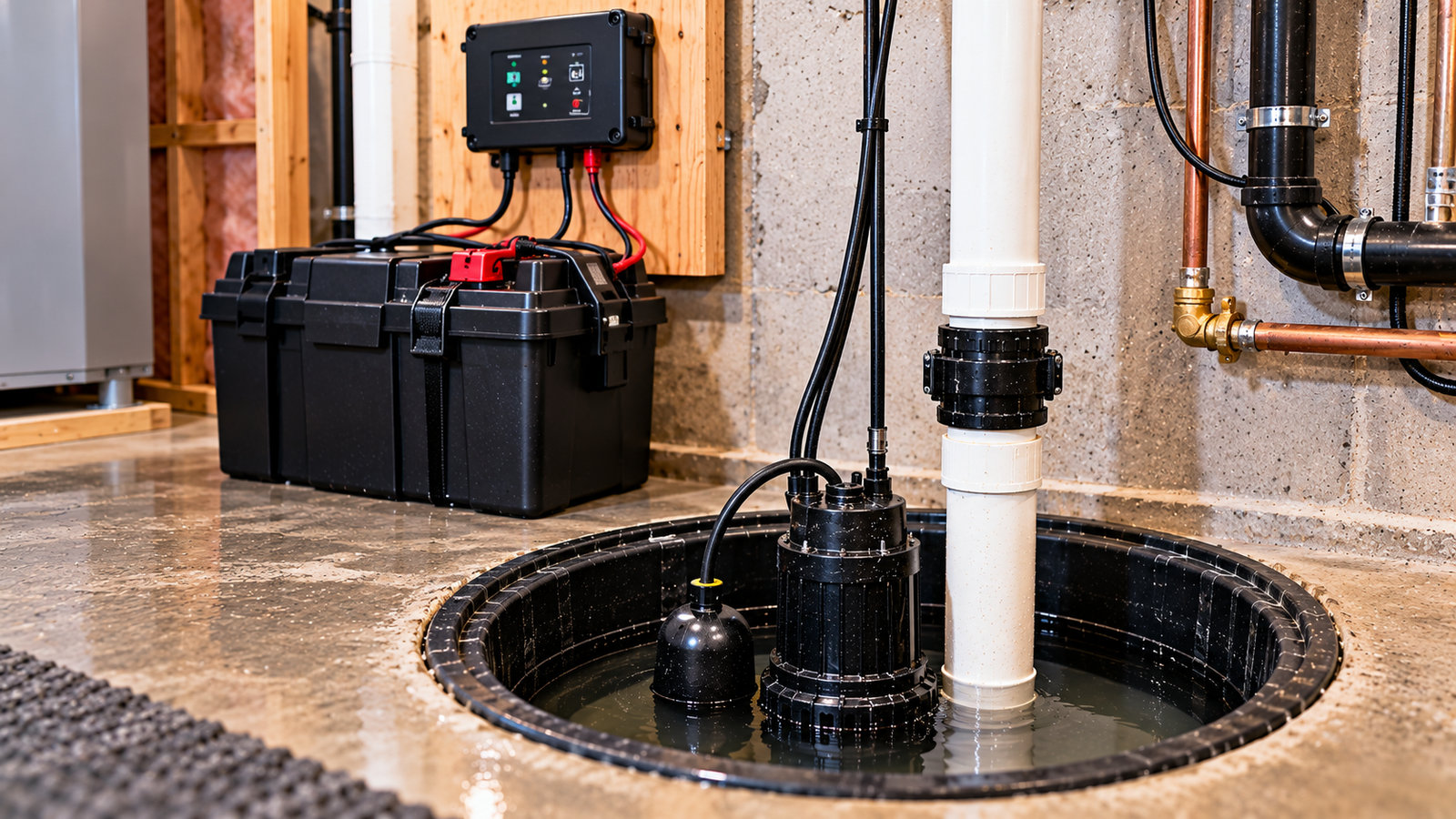
Most installations include a separate pump, battery, charger, water-level control, and discharge connection.
What Activates the Backup Pump?
The backup typically activates when water rises above the primary pump’s normal operating level.
This can occur during a power outage, primary pump malfunction, or unusually heavy drainage demand.
Activation arrangements vary by model and installation.
Does the Backup Pump Start Automatically?
Most residential battery backup systems are designed for automatic operation.
When the backup control detects the required water level, it activates the secondary pump.
Automatic operation is valuable because homeowners may not be present when the primary system stops.
How Does the Battery Supply Power?
The battery stores electrical energy for use when the backup pump is required.
During normal conditions, a compatible charger may maintain the battery’s charge.
When backup pumping begins, stored energy powers the motor until the water level falls or available battery capacity becomes insufficient.
How Long Can a Battery Backup Pump Run?
There is no single runtime that applies to every system.
Duration depends on battery capacity, pump efficiency, water inflow, discharge height, and the frequency of pumping cycles.
Continuous operation can drain the battery much faster than intermittent use.
Can a Backup Pump Operate for Several Hours?
Some systems can provide several hours of pumping under suitable conditions, but actual runtime varies significantly.
Manufacturer specifications should be reviewed at realistic pumping loads.
Homeowners should not assume that a backup system will operate throughout every extended power outage.
Can the Backup Pump Work if the Primary Motor Fails?
Yes, provided the backup has suitable independent controls and remains functional.
If the primary motor stops, water may rise to the backup activation level.
The secondary pump can then remove water while its battery has sufficient charge.
What Happens if Both Pumps Share a Blocked Discharge Pipe?
A shared discharge restriction may prevent either pump from removing water effectively.
This is why installation design matters.
Discharge piping, check valves, and outlet conditions should be evaluated when adding backup equipment.
Does the Battery Backup Replace the Primary Pump?
Generally, no.
The primary pump is intended to manage routine drainage, while the battery backup provides secondary protection.
Backup systems may have limited runtime or different pumping capacity, making them unsuitable as permanent replacements for properly sized primary equipment.
What Is the Difference Between the Two Systems?
The primary pump normally uses household electricity and handles everyday drainage demand.
The battery backup uses stored energy and operates when additional protection is required.
For a more detailed comparison, read Primary vs. Battery Backup Sump Pumps.
Can a Battery Backup Pump Send Warning Alerts?
Some models include audible alarms, battery status indicators, or remote notifications.
These features may alert homeowners to high water levels, charging problems, or backup activation.
Available functions vary, so specifications should be checked before selecting equipment.
Does the Battery Recharge After an Outage?
Many systems recharge automatically when household power returns.
However, charging time depends on the battery, charger, and amount of energy consumed.
A deeply discharged or deteriorated battery may require inspection or replacement.
Electrical safety: Never handle sump pump wiring, battery terminals, chargers, or electrical connections while standing in water. Use only compatible equipment and follow manufacturer requirements. Damaged batteries and incorrect charging arrangements can create serious hazards.
Local scenario: A homeowner in McKenzie Towne experiences a power interruption during heavy rainfall. The primary pump stops, and the sump pit begins filling. A correctly installed battery backup activates at its designated water level and provides temporary pumping while sufficient battery capacity remains.
How it works: A battery backup sump pump uses stored electrical energy to operate a secondary pump when water reaches its activation level. It can help during power loss or primary pump failure, but its protection is limited by battery capacity, equipment condition, and discharge performance.
Homeowners can explore additional company information through this Calgary plumbing service map reference.
Request a battery backup sump pump installation estimate in Calgary in just a few clicks.
Get My Free Estimate
Is a Battery Backup Sump Pump Worth the Investment in Calgary?
The value of a battery backup depends on the likelihood of sump pump interruption and the potential consequences of basement flooding.
For some homeowners, additional protection provides meaningful peace of mind. For others, drainage conditions may justify a different level of investment.
What Makes a Battery Backup Worthwhile?
A backup system reduces dependence on a single electrically powered pump.
If the primary pump loses power or fails, the secondary system may continue removing water for a limited period.
This additional protection can be especially valuable when the basement contains expensive finishes or equipment.
Can a Battery Backup Reduce Basement Flooding Risk?
Yes. A functioning backup can reduce the chance of sump pit overflow during certain primary pump interruptions.
However, it cannot prevent every flood.
Battery exhaustion, excessive water inflow, discharge restrictions, and unrelated water entry can still create problems.
Does the Cost Depend on the Existing Installation?
Yes. Installation costs vary with pump capacity, battery technology, available pit space, discharge piping, and electrical arrangements.
Some homes can accommodate a backup with relatively limited modifications.
Others may require changes to the pit or discharge system.
What Costs Should Homeowners Consider?
The initial equipment purchase is only one part of the decision.
Professional installation, battery replacement, maintenance, and optional monitoring features may also affect total ownership costs.
Because product and labour costs vary, a property-specific estimate is more useful than assuming a universal Calgary price.
| Cost Consideration | What Affects It? | Why It Matters |
|---|---|---|
| Backup pump equipment | Pumping capacity, controls, manufacturer, and features | Determines system suitability and performance |
| Battery | Battery chemistry, capacity, and compatibility | Affects runtime and replacement requirements |
| Installation labour | Existing pit layout and equipment accessibility | Influences installation complexity |
| Discharge modifications | Piping arrangement, check valves, and outlet routing | Supports effective water removal |
| Alarm and monitoring | Audible alerts, connectivity, and monitoring features | Improves awareness of developing problems |
| Ongoing maintenance | Battery age, testing, and component condition | Helps maintain backup readiness |
Is a Battery Backup More Valuable for Finished Basements?
Often, yes.
Finished basements may contain flooring, insulation, furniture, and electrical equipment that can be expensive to restore after water damage.
The potential consequences of flooding may make additional drainage protection more attractive.
What if Your Sump Pump Rarely Runs?
Infrequent operation may indicate relatively low drainage demand, but it does not eliminate the possibility of unusual water inflow.
A homeowner should consider historical conditions, basement construction, and potential consequences of failure.
Professional assessment can help determine whether backup protection is justified.
Can a Backup System Lower Home Insurance Costs?
Insurance arrangements vary by provider and policy.
Some insurers may consider flood prevention measures when assessing risk, but discounts should never be assumed.
Homeowners should ask their insurer about applicable coverage, endorsements, exclusions, and any recognized mitigation measures.
Does Insurance Cover Sump Pump Failure?
Coverage depends on the policy and any relevant endorsements.
Water damage resulting from sump pump failure may be treated differently from other sources of basement flooding.
Reviewing policy details before a loss occurs is important.
Can a Battery Backup Prevent Mould Problems?
A backup system may reduce the likelihood of water entering the basement during certain failures.
However, it does not directly remove moisture already trapped in building materials.
Proper drying and moisture control remain essential after any water intrusion.
What About Homeowners Who Travel Frequently?
A backup pump can provide additional protection when no one is home to respond immediately.
Systems with remote monitoring may also provide useful alerts.
However, remote notifications depend on the equipment, connectivity, and available power.
Is a Backup Pump Better Than a Portable Generator?
These solutions address different needs.
A battery backup can activate automatically when correctly installed.
A generator may support additional equipment but requires an appropriate electrical arrangement, fuel, and safe operation.
Portable generators must never be operated indoors or in enclosed spaces because of carbon monoxide hazards.
Can Both Systems Be Used Together?
Yes. Some homeowners combine battery backup protection with an appropriately designed standby power arrangement.
Compatibility and electrical safety must be assessed.
Multiple power options can improve resilience, but they still require maintenance and proper installation.
Calgary example: A homeowner in Mahogany has a finished basement with a home office and entertainment area. The primary sump pump operates regularly during wet periods. A battery backup offers additional protection against certain interruptions, potentially reducing the risk of water damage to valuable belongings.
Is Backup Protection Worthwhile for Older Homes?
It may be, particularly where drainage systems have a history of heavy inflow or equipment failures.
However, newer homes can also benefit when sump pumping is important.
The decision should be based on actual property conditions rather than building age alone.
Investment perspective: A battery backup sump pump is best viewed as a risk-reduction measure. Its value depends on the home’s drainage needs, the consequences of flooding, and the system’s actual capacity. It adds protection but cannot guarantee that basement water damage will never occur.
For more information about the company, visit the Calgary Electrical and Plumbing shared business profile.
How Do You Choose and Maintain the Right Battery Backup Sump Pump?
Choosing a battery backup requires more than selecting a pump that fits beside the existing equipment.
The system must provide suitable capacity, reliable activation, safe battery operation, and adequate access for maintenance.
How Much Pumping Capacity Do You Need?
Capacity should reflect the property’s expected drainage inflow and discharge conditions.
Manufacturer performance charts show how pumping output changes with discharge height.
A professional can compare the backup pump’s performance with the actual installation requirements.
Does Battery Size Affect Protection?
Yes. Battery capacity influences how long the backup can operate.
However, runtime also depends on pump demand, discharge conditions, and battery condition.
A larger battery is not automatically suitable unless it is compatible with the system’s electrical and charging specifications.
What Battery Technology Should You Choose?
Different backup systems may support different battery chemistries.
Each has specific charging, maintenance, temperature, and safety requirements.
Homeowners should use only manufacturer-approved batteries and charging equipment.
Can a Backup Pump Fit Inside an Existing Sump Pit?
Often, but available space must be evaluated.
The pit must accommodate the additional pump and controls without restricting float movement.
Some installations may require a different arrangement or modifications.
Should the Backup Pump Have Its Own Float Switch?
Independent activation controls can help reduce dependence on the primary pump’s control system.
However, the specific configuration depends on the manufacturer’s design.
Correct float placement is essential to prevent interference and ensure activation at the intended water level.
How Important Is the Discharge Pipe?
The discharge system must allow water to leave the sump pit effectively.
Blocked, frozen, or poorly configured piping can compromise pumping performance.
Installation should also consider check valves, outlet location, and applicable local drainage requirements.
Should You Install a High-Water Alarm?
A high-water alarm can warn occupants when the sump pit reaches an abnormal level.
Some backup systems include alarms, while others require separate equipment.
Remote notifications may be useful for homeowners who are frequently away.
How Often Should You Test the Backup System?
Testing should follow the manufacturer’s recommended schedule and procedures.
Regular checks help identify battery deterioration, charger problems, control faults, or pump performance issues.
Testing before spring thaw can be particularly useful for homes with seasonal drainage demand.
What Should Be Included in Routine Maintenance?
- Inspect battery condition and charging indicators.
- Check for visible damage or corrosion.
- Confirm backup pump activation according to manufacturer instructions.
- Verify that float switches move freely.
- Review alarm and monitoring functions.
- Inspect accessible discharge piping.
- Confirm that battery placement remains safe and accessible.
- Arrange professional inspection when performance changes.
How Do You Know When the Battery Needs Replacement?
Warning signs may include battery fault indicators, reduced runtime, charging problems, or failure during testing.
Battery age also matters, but replacement intervals vary by technology and manufacturer.
Follow the equipment’s instructions rather than assuming every battery lasts the same number of years.
Can a Battery Backup Fail Without Warning?
Yes. Batteries can deteriorate, chargers can malfunction, and pumps can develop mechanical problems.
Some systems provide warning indicators, but these features do not eliminate the need for maintenance.
Regular inspection improves the likelihood that problems are identified before an emergency.
Should the Primary Pump Also Be Inspected?
Absolutely. A backup is not a substitute for maintaining the main drainage system.
The primary pump should remain properly sized and functional.
Both pumps, their controls, and the discharge arrangement should be considered together.
Can Professional Installation Improve Reliability?
Correct installation supports appropriate activation levels, electrical safety, battery compatibility, and effective water removal.
A technician can also identify existing drainage problems that might affect both pumps.
Professional assessment is especially useful when modifying an older sump pit.
What Should Calgary Homeowners Ask an Installer?
Ask about realistic pumping capacity, battery runtime, maintenance requirements, alarm options, and compatibility with the existing system.
It is also important to understand whether discharge modifications are necessary.
Clear explanations help homeowners compare equipment based on actual performance rather than marketing claims.
Can a Backup System Protect Against Every Flood?
No. A sump pump backup addresses water collected by the sump drainage system.
It may not prevent flooding from burst plumbing pipes, sewer backups, surface water entry, or other unrelated sources.
Comprehensive basement protection may require additional drainage and maintenance measures.
Practical example: A homeowner in Lake Bonavista wants to add a battery backup before spring thaw. Inspection reveals limited space in the existing sump pit and an aging discharge arrangement. Addressing those conditions first helps ensure the backup system can operate as intended.
What Is the Best Long-Term Approach?
Reliable basement drainage starts with a properly functioning primary pump.
Where appropriate, a compatible battery backup adds another layer of protection.
Regular testing, battery maintenance, alarms, and suitable exterior drainage arrangements can further reduce vulnerability.
Final recommendation: Consider a battery backup sump pump if your Calgary home depends on active sump pumping, has a finished basement, or faces meaningful consequences from a power interruption. Choose equipment based on actual drainage demand and maintain both the primary and backup systems.
Additional company resources include this Calgary Electrical and Plumbing video and the company’s Quora profile.
Request a battery backup sump pump installation estimate in Calgary in just a few clicks.
Get My Free Estimate
Make an Informed Decision About Your Basement’s Backup Protection
A battery backup sump pump can be a valuable safeguard when a Calgary basement depends on reliable drainage. Its ability to operate during certain power interruptions and primary pump failures provides additional protection, although battery capacity and equipment condition determine its limitations.
An experienced local calgary plumber can evaluate your sump pit, drainage demand, and suitable backup options. Call Calgary Electrical and Plumbing at (403) 421-1991 to discuss whether a battery backup sump pump is appropriate for your home.
Frequently Asked Questions about Battery Backup Sump Pumps
Is a battery backup sump pump necessary in Calgary?
Not every Calgary home requires one, but backup protection is worth considering when the basement depends on frequent sump pumping or contains valuable finished spaces. A battery backup can help during certain power outages or primary pump failures, reducing reliance on one pumping system.
How long will a battery backup sump pump run during a power outage?
Runtime depends on battery capacity, pump efficiency, discharge height, and how frequently water enters the sump pit. Some systems can provide several hours of protection under suitable conditions, but continuous pumping may exhaust the battery much sooner. Manufacturer specifications should guide expectations.
Can I install a battery backup sump pump in my existing sump pit?
Often, yes, but the pit must have sufficient space for the additional pump and controls. Discharge piping, electrical arrangements, and battery placement also require assessment. A professional can determine whether the existing installation is compatible or needs modifications before adding backup equipment.
Will a battery backup sump pump prevent all basement flooding?
No. A battery backup reduces risk during certain primary pump interruptions, but it has limited runtime and pumping capacity. It may not prevent flooding caused by excessive water inflow, blocked discharge piping, burst plumbing pipes, sewer backups, or other sources outside the sump system.
How often should I maintain a battery backup sump pump?
Follow the manufacturer’s maintenance and testing schedule. Regular checks should address battery condition, charger indicators, float-switch operation, alarms, and pumping performance. Testing before spring thaw is useful for homes with seasonal drainage demand, while aging or damaged batteries may require replacement.
Protect your basement with a backup system suited to your drainage requirements.
Call (403) 421-1991 Now
Battery Backup Sump Pump Installation and Inspection Services in Calgary