
How Long Do Water Heaters Last in Calgary? If your hot water tank has been operating for years without major problems, you may be wondering how much longer it can continue working reliably. Most homeowners do not think about replacement until the water runs cold, a leak appears, or an unexpected repair becomes necessary.
In Southeast Calgary communities such as Mahogany, Auburn Bay, Cranston, and Seton, water heater longevity depends on more than the appliance’s installation date. Professional water heater inspection and plumbing services in Calgary can help evaluate how mineral deposits, corrosion, maintenance, and daily hot water demand affect the condition of an existing system.
Conventional storage water heaters and tankless models have different expected service lives, but no single age guarantees failure. Understanding typical lifespan ranges, early warning signs, and repair-versus-replacement considerations can help Calgary homeowners plan ahead instead of waiting for an inconvenient breakdown.
Conventional storage water heaters commonly last about 8–12 years, while many tankless models can operate for 15–20 years or longer with appropriate maintenance. Actual lifespan in Calgary varies with water hardness, installation quality, usage, corrosion protection, and servicing. Age alone does not determine whether replacement is necessary.
What Is the Average Lifespan of a Water Heater in Calgary?
Water heaters do not have a fixed expiration date. Their useful service life depends on the appliance design, the condition of its components, and the environment in which it operates.
For planning purposes, homeowners commonly use an approximate 8–12-year range for conventional storage tanks and 15–20 years or longer for many tankless systems. These are general expectations rather than guarantees.
How Long Do Conventional Hot Water Tanks Last?
Traditional storage water heaters keep a reservoir of water heated and ready for household use. Many units provide approximately 8–12 years of service, although some fail earlier and others operate longer.
Because most conventional tanks contain steel components, corrosion protection plays an important role in longevity. Internal tank lining, sacrificial anode rods, water chemistry, and installation conditions all influence deterioration.
For a homeowner in Copperfield or New Brighton with a ten-year-old tank, the appliance’s age should encourage inspection and replacement planning, not an automatic decision to discard it.
Do Tankless Water Heaters Last Longer?
Many tankless water heaters can operate for approximately 15–20 years or longer when properly installed, maintained, and used within their design limits.
Instead of storing a large volume of heated water, tankless equipment heats water as it passes through the system. This changes its operating characteristics and maintenance requirements.
However, tankless units are not immune to mineral scaling, heat exchanger problems, or electronic component failures. Their longer potential lifespan depends on suitable water conditions and regular servicing.
Do Gas and Electric Water Heaters Have Different Lifespans?
Both gas and electric storage heaters often fall within similar broad service-life ranges. The specific model, tank construction, water quality, and maintenance history can matter more than the energy source alone.
Gas units have combustion and venting components, while electric models use electrical heating elements and controls. Each design has different inspection and repair requirements.
How Long Do Hybrid Heat Pump Water Heaters Last?
Hybrid heat pump water heaters are another option, particularly where installation space and environmental conditions are suitable. Some have expected service lives of roughly 10–15 years.
Actual longevity depends on the storage tank, compressor system, controls, maintenance, and installation environment. Calgary homeowners should confirm that a proposed model is appropriate for its intended indoor location.
| Water Heater Type | Typical Planning Range | Important Consideration |
|---|---|---|
| Gas storage water heater | 8–12 years | Tank corrosion and combustion-system condition |
| Electric storage water heater | 8–12 years | Tank condition, elements, and controls |
| Tankless water heater | 15–20+ years | Scaling, maintenance, and component availability |
| Hybrid heat pump water heater | 10–15 years | Tank, compressor, and installation conditions |
These are broad planning estimates, not manufacturer warranties or predictions for a particular appliance.
Does the Manufacturer’s Warranty Determine Lifespan?
No. A warranty specifies certain coverage terms and conditions; it does not establish how long an appliance will operate.
A heater may continue working after its warranty expires, while a covered component may require service before the warranty ends.
Keep the model information and warranty documentation available when evaluating repair options.
Bottom line: An eight-year-old water heater is not necessarily failing, and a newer unit is not guaranteed to be problem-free. Its condition and performance are more informative than age alone.
Calgary homeowners can find local company details through the Calgary Electrical and Plumbing Google Maps location.
What Factors Affect Water Heater Lifespan in Calgary?
Two identical water heaters installed in different homes may have very different service lives. Water conditions, daily demand, equipment sizing, and maintenance can all influence how quickly components deteriorate.
How Does Calgary’s Hard Water Affect Water Heaters?
Calgary’s municipal water contains naturally occurring hardness minerals, primarily calcium and magnesium. The concentration can vary with source-water and treatment conditions.
When water is repeatedly heated, minerals may form deposits on internal surfaces. Over time, significant scaling can interfere with heat transfer or contribute to maintenance problems.
Storage tanks may accumulate sediment, while tankless systems can develop scale in heat exchangers. Appropriate maintenance differs by appliance type.
Why Sediment Buildup Matters
Deposits collecting inside a storage tank can contribute to popping or rumbling noises during heating. They may also affect heating performance, depending on the tank’s design and the amount of accumulation.
Sediment does not automatically mean a tank is damaged beyond repair. However, persistent symptoms deserve attention before maintenance problems become more extensive.
How Corrosion Shortens Tank Life
Steel storage tanks rely on protective design features to limit corrosion. Over time, those protective components can deteriorate.
Once significant corrosion develops within the tank, its structural integrity may be compromised. A tank that begins leaking through its body generally requires replacement rather than patching.
Rust-coloured water can be one possible clue. Our related guide, What Does Rust-Coloured Hot Water Mean?, explains why discolouration should be investigated rather than automatically attributed to the tank.
Does Household Hot Water Demand Affect Longevity?
Frequent heating cycles and high daily demand can influence wear on components. A household with several bathrooms and simultaneous hot water use may place different demands on equipment than a smaller household.
Proper sizing matters. An undersized system may struggle to meet demand, while an unsuitable replacement can create unnecessary operating costs.
How Calgary Winters Influence Water Heating
Cold incoming water requires more heating to reach the desired delivery temperature. This can affect recovery times for storage tanks and output capacity for tankless systems.
Winter conditions do not automatically shorten equipment life by a specific number of years. They do make appropriate sizing, insulation, and installation conditions especially important.
Can Poor Installation Reduce Service Life?
Yes. Improper installation may contribute to premature component wear, inefficient operation, or safety concerns.
Water pressure, venting, electrical connections, drainage provisions, and manufacturer clearance requirements must be considered according to the equipment type.
Professional installation helps ensure the system is suitable for the home and complies with applicable requirements.
Does Regular Maintenance Extend Water Heater Life?
Appropriate maintenance can help identify developing problems and may improve the likelihood of reliable operation.
Depending on the appliance, service may involve evaluating sediment, corrosion-protection components, accessible connections, and manufacturer-specified operating checks.
Maintenance cannot guarantee a particular lifespan or reverse advanced tank corrosion.
Calgary maintenance insight: Homes in Mahogany, McKenzie Towne, Riverbend, and Douglasdale can experience different usage patterns even when supplied by the same municipal water system. Maintenance decisions should reflect the actual appliance and household conditions.
What About Water Pressure?
Water pressure outside appropriate operating conditions can stress plumbing components and create performance or safety concerns.
Pressure-related issues should be assessed using suitable professional equipment. Homeowners should not modify safety valves or pressure controls without the required expertise.
Can Long Periods of Inactivity Affect a Heater?
Seasonal or infrequently occupied properties may experience different maintenance concerns from continuously occupied homes.
Extended inactivity can affect water quality and may require manufacturer-specific procedures before normal operation resumes.
Consult qualified guidance rather than assuming that unused equipment requires no maintenance.
Most important factors: Water quality, corrosion protection, installation quality, maintenance, and daily demand all influence water heater longevity. No single factor predicts the exact year a system will fail.
For service-area and business location information, see this Calgary plumbing map reference.
Request a water heater inspection and replacement estimate in Calgary in just a few clicks.
Get My Free Estimate
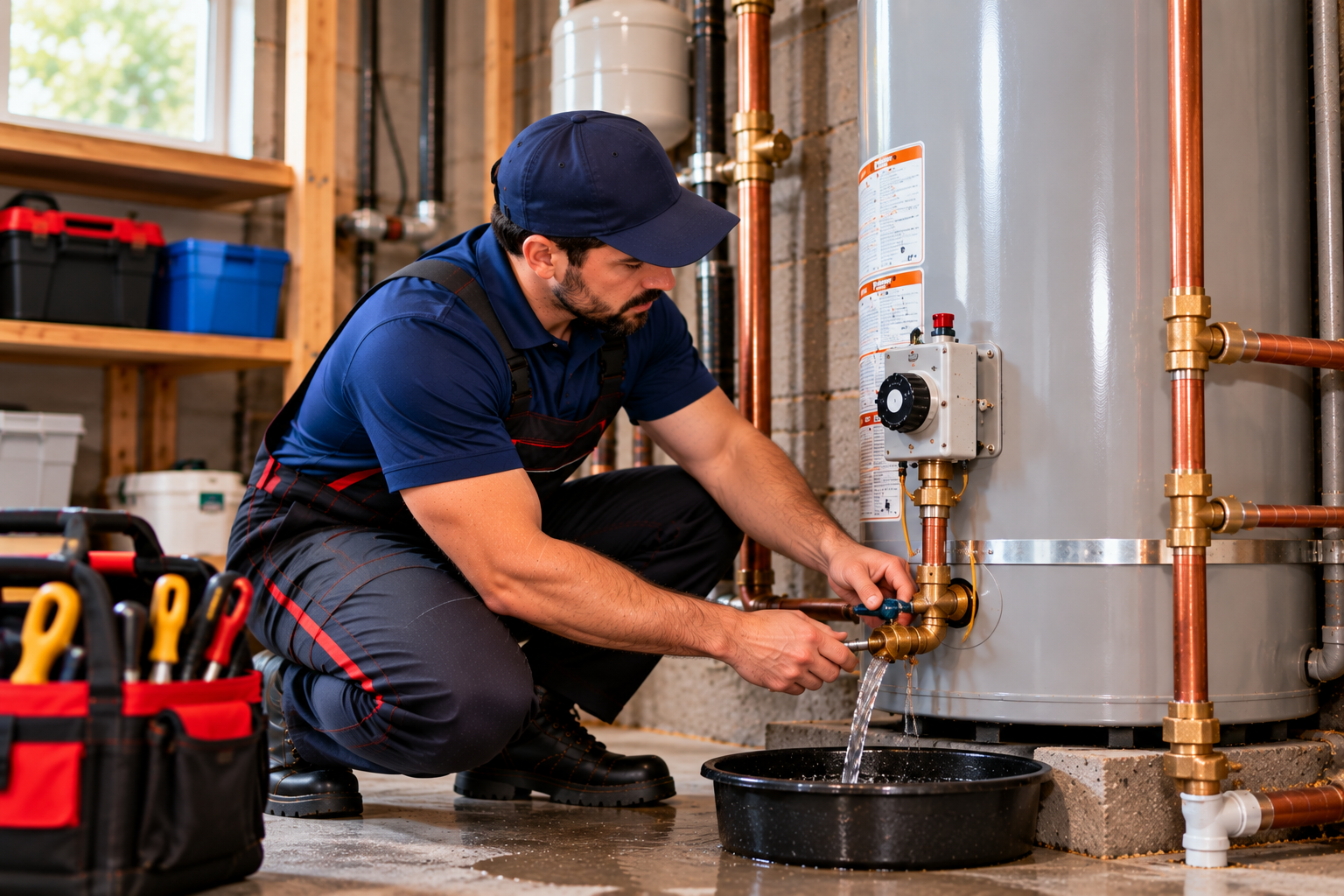
What Are the Signs Your Water Heater Is Nearing the End of Its Life?
Water heaters often develop warning signs before a major failure, although some problems appear without much notice. Recognizing changes in performance can help homeowners arrange inspection and plan for replacement.
Which Water Heater Warning Signs Require Professional Attention?
Some symptoms indicate maintenance needs, while others suggest significant deterioration or a possible safety concern.
- Water collecting around the base of the tank.
- Persistent rust-coloured hot water.
- Reduced hot water availability or slow recovery.
- Repeated popping, rumbling, or banging sounds.
- Visible corrosion on the tank or connections.
- Frequent repairs or recurring equipment faults.
- Unusual temperature fluctuations.
- Persistent discharge from safety-related piping.
Is a Leaking Water Heater Always Finished?
Not necessarily. Some leaks originate from accessible connections or replaceable components rather than the tank body.
However, leakage through a corroded storage tank generally indicates that replacement is required.
Because water can damage surrounding materials and create electrical hazards, visible leakage deserves prompt attention.
Why Does Hot Water Run Out Faster Than Before?
A decline in available hot water may result from sediment accumulation, failing components, changed household demand, or equipment that no longer operates as intended.
For example, an aging electric heater may experience an element-related problem, while a storage tank may have accumulated deposits.
The symptom does not prove the appliance needs replacement, but it warrants diagnosis.
Are Strange Noises a Sign of Failure?
Popping and rumbling can be associated with sediment, while knocking may originate from thermal expansion or nearby plumbing.
Unusual noise alone does not establish that a heater is near the end of its life.
However, noise combined with corrosion, leakage, or declining performance can strengthen the case for a comprehensive inspection.
Does Rust-Coloured Water Mean the Tank Is Corroding?
Possibly, but not always. Iron-containing deposits, older pipes, and incoming water disturbances can produce similar discolouration.
If only hot water is affected, the heater and connected hot water piping are reasonable starting points for investigation.
Water colour should not be used as the sole basis for replacing an appliance.
How Can You Determine the Age of Your Water Heater?
Look for the manufacturer’s rating label on the exterior of the appliance, provided it can be viewed safely.
The label may contain a manufacturing date, serial number, model number, or other identifying information.
Serial-number date formats differ by manufacturer, so consult official product documentation or a qualified service provider when the date is unclear.
What If the Water Heater Is More Than Ten Years Old?
A conventional storage heater older than ten years deserves thoughtful replacement planning, especially if maintenance history is uncertain.
That does not mean every ten-year-old tank should immediately be replaced.
Condition, reliability, visible deterioration, and repair costs should guide the decision.
Can a Water Heater Fail Without Warning?
Yes. Certain components can fail unexpectedly, and tank leakage may develop without obvious earlier symptoms.
Regular professional inspections may help identify some developing concerns, but no inspection can guarantee that failure will never occur.
Knowing the equipment’s age and having a replacement plan can reduce disruption.
Important safety warning: If water is spreading near electrical equipment, a gas leak is suspected, or uncontrolled hot water discharge occurs, keep clear of the hazard and seek appropriate urgent assistance. Do not open electrical panels, adjust gas components, or obstruct safety valves.
What Should You Document Before Calling a Plumber?
Useful information includes the heater’s approximate age, model, energy source, maintenance history, and any changes in performance.
Note when symptoms began and whether they occur continuously or intermittently.
Photographs of visible corrosion or leakage taken from a safe location may also help explain the concern.
Practical planning tip: If an aging heater is still working, consider arranging an assessment before winter demand increases. Planned replacement generally provides more opportunity to compare suitable equipment than an unexpected breakdown.
Additional company information is available through the Calgary Electrical and Plumbing shared Google business listing.
Should You Repair or Replace an Aging Water Heater in Calgary?
The best decision depends on the equipment’s condition, the nature of the problem, and the cost of a reliable repair compared with a suitable replacement.
A relatively new heater with a replaceable faulty component may be worth repairing. An older tank with structural leakage or extensive corrosion is a different situation.
When Does Repair Make Financial Sense?
Repair may be reasonable when the tank remains structurally sound and the problem involves an accessible, serviceable component.
Examples include certain controls, heating elements, or plumbing connections, depending on the model and condition.
A written estimate should explain the repair scope and any relevant limitations.
When Is Replacement the Better Option?
Replacement becomes more compelling when the tank itself leaks, significant corrosion is present, or repeated major repairs make continued operation uneconomical.
Homeowners may also choose replacement when an older system no longer meets household hot water requirements.
However, replacing a heater simply because it reaches a particular age may be unnecessary.
How Much Does Water Heater Replacement Cost in Calgary?
Replacement costs vary according to the appliance type, capacity, installation conditions, venting requirements, electrical or gas work, and removal of existing equipment.
Tankless conversions can cost more than straightforward storage-tank replacements because they may require additional system modifications.
The following figures are illustrative planning ranges rather than verified current Calgary prices.
| Service or Equipment | Illustrative Cost (CAD) | Cost Considerations |
|---|---|---|
| Water heater condition assessment | $100–$250+ | Inspection scope and accessibility |
| Selected component repair | $200–$700+ | Parts, labour, and appliance design |
| Conventional storage heater replacement | $1,500–$3,500+ | Capacity, installation, and removal |
| Tankless water heater installation | $3,000–$6,500+ | Equipment and required system modifications |
| Hybrid heat pump water heater installation | $3,000–$6,000+ | Equipment, electrical needs, and installation space |
Pricing disclaimer: These are illustrative, nonbinding CAD ranges, not confirmed Calgary market averages or Calgary Electrical and Plumbing quotations. Actual prices may differ substantially. Taxes, permits, labour, materials, and site-specific modifications can affect total cost.
Should You Choose a Tank or Tankless Replacement?
Storage heaters generally have simpler replacement requirements when a compatible tank is already installed. They also maintain a ready supply of heated water.
Tankless models can offer longer potential service life and avoid continuously storing a large volume of hot water, but they require appropriate sizing and maintenance.
Household demand, incoming water temperature, installation costs, and equipment suitability should determine the choice.
Do Water Heater Replacements Require Permits in Calgary?
Permit requirements depend on the scope of work and the systems being altered. Plumbing, gas, and electrical work may be subject to different requirements.
For additional background, see this Calgary hot water tank permit discussion from an external plumbing resource. Verify applicable requirements with the City of Calgary or the appropriate authority before proceeding.
How Can You Plan Replacement Before a Breakdown?
Start by confirming the heater’s age, reviewing maintenance records, and assessing whether performance has changed.
Next, compare the existing system’s capacity with current household needs. A growing family may require a different solution from the one originally installed.
Obtaining a professional assessment allows you to consider repair and replacement options before an urgent failure limits your choices.
What Questions Should You Ask About a New Water Heater?
- Which capacity is suitable for the household?
- Is a storage or tankless system more appropriate?
- What installation modifications are necessary?
- What manufacturer warranty applies?
- Which maintenance tasks are recommended?
- Are permits or inspections required?
- What is included in the written installation estimate?
Can a New Heater Lower Energy Costs?
Newer equipment may offer efficiency improvements, especially when replacing an older or poorly performing model.
Actual savings depend on the appliance’s efficiency rating, energy source, household usage, and local utility rates.
Homeowners should compare operating costs alongside purchase and installation expenses rather than assuming a fixed payback period.
Why Proper Sizing Matters in Southeast Calgary
A family home in Auburn Bay may have different hot water needs from a smaller residence in Seton or Lake Bonavista.
Fixture count, simultaneous demand, occupancy, and incoming water temperature can all influence appropriate equipment selection.
A qualified installer can evaluate these factors instead of relying on tank size alone.
Should You Replace a Working Water Heater?
Sometimes proactive replacement is reasonable when an aging system has recurring problems or a high risk of costly disruption.
In other situations, continued use with appropriate monitoring and maintenance may be practical.
The decision should balance condition, reliability, household priorities, and total expected costs.
Replacement decision: A water heater’s age should trigger planning, not panic. Structural tank leakage, serious corrosion, and repeated expensive failures are stronger reasons to replace equipment than age alone.
For more homeowner guidance and company updates, visit Calgary Electrical and Plumbing on Medium.
Request a water heater inspection and replacement estimate in Calgary in just a few clicks.
Get My Free Estimate
Plan Ahead for Reliable Hot Water in Calgary
Most conventional water heaters last approximately 8–12 years, while many tankless systems can serve longer with appropriate maintenance. Actual longevity depends on water conditions, installation, usage, corrosion protection, and equipment care.
If your system is aging or showing warning signs, a local calgary plumber can assess its condition and explain your options. Call Calgary Electrical and Plumbing at (403) 421-1991 to discuss water heater inspection, repair, or replacement planning.
Frequently Asked Questions about Water Heater Lifespan
How many years does a hot water tank usually last in Calgary?
Many conventional storage water heaters last approximately 8–12 years, although individual results vary. Calgary’s water conditions, maintenance history, installation quality, and household usage can influence longevity. A professional inspection can help assess an older tank’s condition rather than relying on age alone.
Can a water heater last 15 years or longer?
Yes. Some conventional storage heaters operate beyond 15 years, while many tankless systems have longer expected service lives. However, extended operation does not guarantee reliability. An older unit should be evaluated for corrosion, leakage, performance problems, and the cost of future repairs.
Does Calgary’s hard water shorten water heater lifespan?
Hardness minerals in Calgary’s water can contribute to scale and sediment accumulation inside water heating equipment. Significant deposits may affect performance and maintenance requirements. Actual lifespan depends on several factors, so water hardness alone cannot predict when a particular heater will fail.
Should I replace my water heater after ten years?
Not automatically. Ten years is a useful planning milestone for many conventional storage tanks, but condition matters more than the calendar alone. If the heater is leaking, significantly corroded, or repeatedly failing, replacement may be appropriate after professional assessment.
How can I make my water heater last longer in Calgary?
Follow the manufacturer’s maintenance recommendations, arrange appropriate professional inspections, and investigate leaks, unusual noises, or declining performance early. Proper installation, suitable operating conditions, and attention to sediment or corrosion-related concerns may support reliable service, although no maintenance plan guarantees a specific lifespan.
Don’t wait for the problem to get worse.
Call (403) 421-1991 Now
Contact Our Calgary Plumbing Team