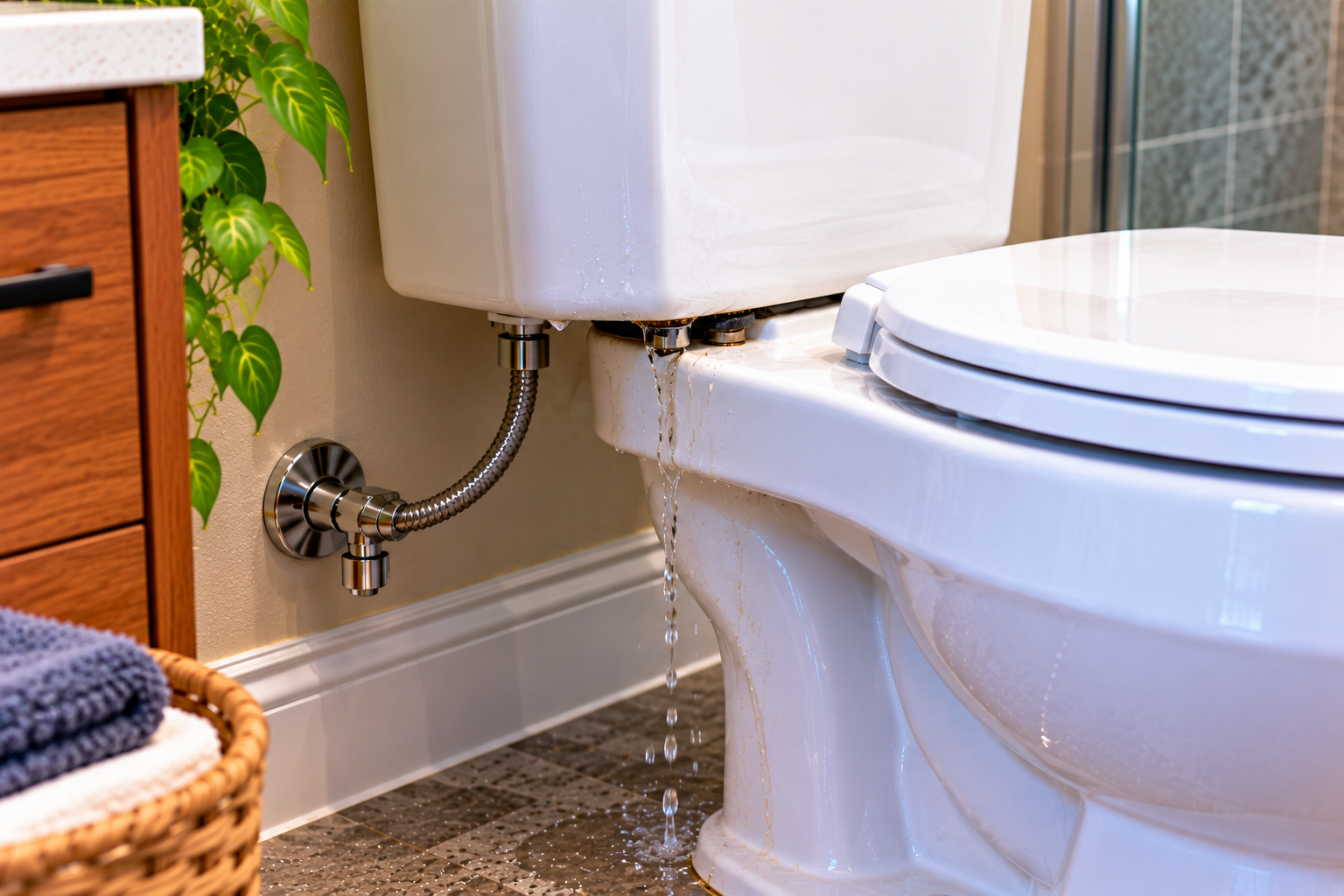

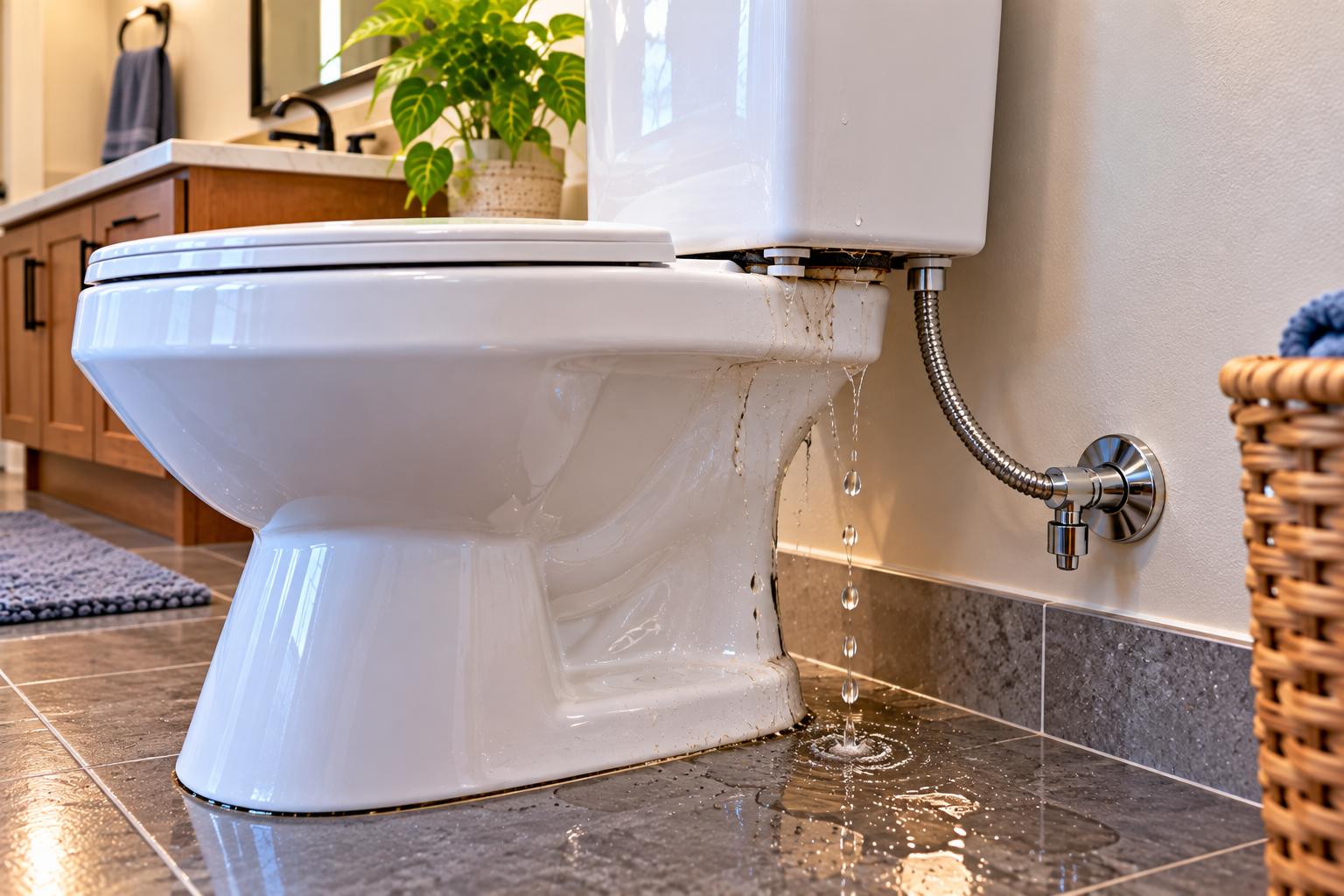
Why Is Water Leaking Between the Toilet Tank and Bowl? If you notice water dripping from underneath your toilet tank after flushing, the problem may be coming from the seal or mounting hardware connecting the tank to the bowl. This type of leak can begin as a few drops and gradually become more noticeable, especially when the toilet is flushed frequently.
In Southeast Calgary communities such as Mahogany, Cranston, Auburn Bay, and Copperfield, homeowners may discover this problem while cleaning the bathroom or investigating water on the floor. Understanding how residential toilet plumbing and repair services in Calgary address these leaks can help you recognize the likely cause before water damages surrounding surfaces.
The most common explanations include a deteriorated tank-to-bowl gasket, leaking mounting bolt seals, uneven tank installation, or damaged porcelain. Although several of these problems can be repaired, identifying the exact source is important because water from another connection can travel along the toilet and appear beneath the tank.
Water leaking between a toilet tank and bowl is commonly caused by a worn tank-to-bowl gasket, deteriorated bolt washers, loose mounting hardware, or damaged porcelain. The leak may appear mainly during flushing. Replacing faulty seals or correcting installation problems can resolve many cases, but cracked porcelain usually requires replacement.
What Causes Water to Leak Between a Toilet Tank and Bowl?
Two-piece toilets have a separate tank mounted above the bowl. Water passes from the tank into the bowl through a large opening during flushing, while seals and mounting hardware keep the connection watertight.
When one of these components deteriorates or becomes misaligned, water can escape beneath the tank. The timing and location of the moisture often provide useful clues.
How Does a Worn Tank-to-Bowl Gasket Cause Leaks?
The tank-to-bowl gasket is a large rubber or foam seal positioned around the flush outlet between the tank and bowl. It helps prevent water from escaping as the tank empties during flushing.
Over time, the gasket may harden, deform, deteriorate, or lose its ability to seal properly. An incorrect replacement gasket or a tank that is not seated evenly can also create leakage.
For example, a homeowner in Mahogany may notice that water appears beneath the tank only after pressing the flush handle. A worn central gasket is one possible explanation because flushing sends a larger volume of water through this connection.
Can Toilet Tank Bolts and Washers Leak?
Yes. Most two-piece toilets use mounting bolts to secure the tank to the bowl. Rubber washers around the bolt openings help keep water inside the tank.
As washers age, they can lose flexibility or develop damage. Corroded hardware and improper installation may also interfere with sealing.
A leak near one side of the tank may indicate a problem around a mounting bolt rather than the central gasket. However, water can travel along the underside of the porcelain, so the apparent drip location is not always the actual source.
Can Loose Mounting Hardware Cause a Leak?
Loose hardware can allow the tank to shift slightly or sit unevenly. This may reduce pressure on the gasket and washers, creating an opening for water to escape.
However, tightening bolts without identifying the cause is not always appropriate. Porcelain can crack if mounting hardware is overtightened, and damaged washers may need replacement rather than additional pressure.
Could a Cracked Tank Cause Water to Appear Between the Tank and Bowl?
A crack in the tank may allow water to escape and run down the outside of the porcelain. The moisture can collect at the tank-to-bowl connection, making a structural crack resemble a gasket leak.
In an Auburn Bay bathroom, for instance, water dripping near the rear of the bowl could originate from a hairline fracture higher on the tank.
If cracked porcelain is suspected, stop using the fixture and arrange an inspection. Our related guide explains when a cracked toilet can be repaired safely and when replacement is necessary.
Water may escape around the large flush outlet, particularly while the toilet is flushing.
Water can seep through mounting openings and travel beneath the tank.
A poorly seated tank may prevent the seals from making consistent contact.
A fracture may release water that runs toward the tank-to-bowl connection.
Residents seeking local service information can review the company’s Calgary plumbing business location and a related plumbing service video for general background.
How Can You Identify the Exact Source of a Toilet Tank Leak?
Water beneath a toilet tank does not always originate from the gasket. The supply connection, mounting bolts, condensation, and porcelain itself can produce similar symptoms.
Identifying the source before replacing parts helps avoid unnecessary work and reduces the chance that the leak will return.
Why Does the Toilet Leak Only When Flushing?
When a toilet leaks mainly during flushing, the central tank-to-bowl gasket becomes an important possibility. During a flush, water moves rapidly through the large outlet at the bottom of the tank.
If the gasket does not seal properly, some water may escape instead of flowing into the bowl.
For a homeowner in Cranston, a small puddle that appears after each flush but does not continue growing between flushes may point toward this connection. However, the bolt seals and other components should still be checked.
What If Water Drips Even When Nobody Flushes?
A continuous drip can suggest a problem with a connection that remains exposed to water while the tank is full, such as a mounting bolt washer or the supply connection.
A cracked tank may also leak continuously. The location and movement of the water help distinguish these possibilities.
If the leak is active, close the toilet’s water supply valve if it can be operated safely and arrange an assessment.
Could Toilet Tank Condensation Look Like a Leak?
Yes. Condensation can form on the outside of a cold toilet tank when warm, humid bathroom air contacts the porcelain surface.
Water droplets may run down the tank and collect around the bowl or floor, resembling a plumbing leak.
Condensation often appears across a wider area of the tank surface rather than at one specific connection. A plumber can help distinguish moisture from humidity from water escaping through a failed seal.
How Can You Check for Visible Moisture Safely?
Without dismantling the toilet, you can observe when moisture appears and where it collects. Note if the area becomes wet immediately after flushing or remains damp throughout the day.
A dry cloth can help identify where water first becomes visible on accessible exterior surfaces. Avoid moving the tank, forcing bolts, or pressing against suspected cracked porcelain.
Do not repeatedly flush a toilet that is actively leaking onto the floor merely to reproduce the problem.
Can a Toilet Supply Line Leak Look Like a Tank Gasket Problem?
Yes. The supply line usually connects to the fill valve beneath the tank. If the connection or washer leaks, water may travel along the tank’s underside and appear near the bowl.
In Copperfield or McKenzie Towne homes, moisture behind the toilet may be difficult to trace because several connections are located close together.
Correct diagnosis determines if the repair involves the supply line, fill valve connection, bolt seals, or tank-to-bowl gasket.
Why Is Water Damage Around the Toilet a Concern?
Even a small recurring leak can affect flooring, baseboards, and materials beneath the toilet. Moisture trapped under flooring may remain unnoticed after the visible puddle has been wiped away.
In an upstairs bathroom, water can also migrate through the floor assembly and cause staining below.
Protect your bathroom: If water is actively escaping, stop using the toilet and shut off its supply if safe. Avoid placing weight on an unstable or visibly cracked tank. Seek professional assistance if the leak cannot be isolated or moisture is spreading into surrounding materials.
Homeowners can find further location information through the company’s additional Calgary map listing and explore its Instagram home-service updates.
Request a toilet tank-to-bowl leak repair estimate in Calgary in just a few clicks.
Get My Free Estimate
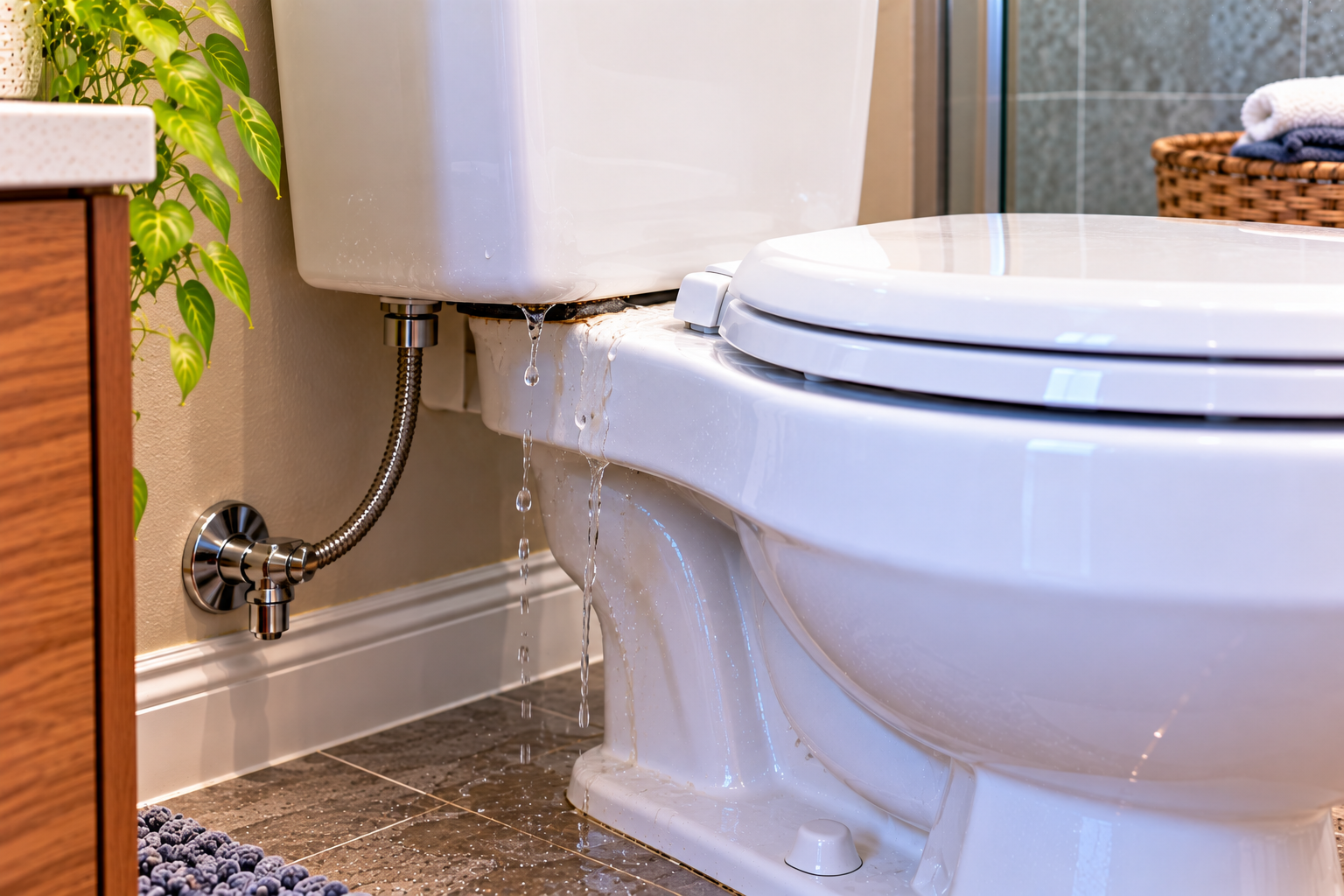
How Do Plumbers Repair a Leak Between the Toilet Tank and Bowl?
Repairing a tank-to-bowl leak begins with identifying the failed component and checking the condition of the porcelain. Many leaks can be resolved by replacing seals and mounting hardware, provided the tank and bowl remain structurally sound.
Correct replacement parts are important because toilet models vary in outlet size, gasket design, and mounting arrangements.
What Happens During Tank-to-Bowl Gasket Replacement?
A plumber normally isolates the toilet’s water supply, drains the tank, and carefully separates the tank from the bowl when the model permits this service.
The old gasket is removed, and the sealing surfaces are inspected for damage, deposits, or other problems. A compatible replacement gasket is then fitted according to the toilet manufacturer’s requirements.
After reassembly, the plumber checks that the tank sits correctly and tests the connection for leakage.
Are Toilet Tank Bolts and Rubber Washers Replaced Together?
Often, replacing deteriorated bolt washers and mounting hardware at the same time as a central gasket is practical because the tank is already being removed.
However, the appropriate repair depends on the toilet model and the condition of its components. Some installations use specialized mounting assemblies rather than a generic bolt kit.
Using incompatible hardware can create new leaks or damage the porcelain.
Can a Plumber Fix a Loose Toilet Tank Without Replacing Parts?
In some cases, a tank may be improperly seated or have mounting hardware that needs adjustment. If the seals are sound and the porcelain is undamaged, correcting the installation may resolve the issue.
However, old or compressed washers may not seal properly after adjustment. Simply tightening bolts is not a suitable solution for every leak.
What If the Toilet Tank Is Cracked?
A structural crack changes the repair decision. Adhesives are not a suitable permanent repair for a water-holding porcelain tank that has fractured.
If a compatible replacement tank is available for a two-piece toilet, the tank may be replaced separately. Otherwise, replacing the complete fixture may be necessary.
For older toilets in Lake Bonavista or Riverbend, replacement part availability can influence the most practical solution.
How Is the Toilet Tested After Repairs?
After installing the appropriate parts, the plumber checks the supply connection, tank mounting points, and central gasket area for leaks.
The toilet is flushed and observed to confirm that water flows into the bowl without escaping around the connection. The tank should also remain stable without being subjected to excessive mounting pressure.
If moisture persists, the remaining possible sources should be investigated rather than assuming the new gasket is defective.
How Much Does Toilet Tank Leak Repair Cost in Calgary?
Repair costs vary according to the cause, accessibility, toilet model, parts availability, and the amount of work required.
Replacing a gasket or bolt kit is usually a different scope of work from replacing a cracked tank or entire toilet. The following amounts are broad Canadian-dollar budgeting illustrations, not verified company prices or guaranteed Calgary quotes.
| Potential Service | Illustrative CAD Range | Factors Affecting Cost |
|---|---|---|
| Toilet leak diagnosis | $100–$220 | Inspection scope, access, service minimum |
| Tank-to-bowl gasket replacement | $150–$320 | Labour, toilet model, gasket compatibility |
| Tank bolt and washer replacement | $140–$300 | Hardware condition, removal difficulty |
| Combined gasket and mounting seal service | $180–$380 | Parts, installation condition, testing |
| Tank or complete toilet replacement | Quoted after assessment | Fixture selection, compatibility, installation |
These are general illustrative ranges only. Actual costs may fall outside them, and overlapping services should not automatically be added together. Request a written estimate based on the specific toilet and leak.
Is It Better to Repair the Connection or Replace the Toilet?
If the porcelain is sound and the problem is limited to a gasket or washer, replacing the failed sealing component is often a practical solution.
Replacement becomes more relevant when the tank or bowl is cracked, compatible parts are unavailable, or the fixture has several additional problems.
For a homeowner in Douglasdale, the decision may also depend on the toilet’s age and whether other components need attention. A professional assessment helps avoid replacing an otherwise serviceable fixture unnecessarily.
Can a tank-to-bowl leak be fixed without replacing the toilet? Often, yes. A failed gasket, deteriorated bolt washer, or mounting problem can frequently be repaired when the porcelain is intact. If the tank or bowl is structurally cracked, replacement of the damaged component or complete toilet is generally the safer approach.
How Can You Prevent Future Toilet Tank and Bowl Leaks?
Toilet seals naturally age, but careful installation and routine attention can reduce avoidable leaks. The most useful preventive measures focus on stable mounting, compatible parts, and early recognition of moisture.
Preventive maintenance cannot guarantee that a gasket will never fail, but it can help homeowners notice problems before water affects flooring or nearby materials.
Why Should Toilet Tank Bolts Never Be Overtightened?
Porcelain is strong under normal operating conditions but can fracture when excessive force is concentrated around mounting holes.
Overtightening tank bolts may damage the porcelain or deform the seals, creating the very leak the adjustment was intended to stop.
Hardware should be installed according to the manufacturer’s requirements, with the tank supported and aligned properly.
Why Is Proper Tank Alignment Important?
A tank that sits unevenly may place inconsistent pressure on the central gasket and mounting washers. This can allow water to escape during flushing or while the tank is full.
Correct alignment helps the seals contact the intended surfaces without excessive force.
In a New Brighton home, a tank that begins to move after years of use should be inspected rather than repeatedly tightened without checking the hardware.
Should You Replace Old Seals Before They Start Leaking?
There is no universal replacement schedule for every toilet gasket. Service life depends on the material, water conditions, installation, and usage.
Replacing seals is appropriate when they are visibly deteriorated, leaking, or removed during related repair work. Unnecessary disassembly can create problems if components are disturbed or reinstalled incorrectly.
How Can You Spot Small Leaks Early?
Occasionally inspect the accessible area behind and beneath the toilet tank. Look for unexplained moisture, staining, or changes in the condition of nearby flooring.
If the bathroom floor becomes wet, identify the source instead of assuming it is condensation or splashed water.
For an upstairs bathroom in Seton, early attention may help reduce the chance that repeated moisture reaches the ceiling or finishes below.
Can Hard Water or Mineral Deposits Affect Toilet Seals?
Mineral deposits may accumulate around plumbing components and sealing surfaces. Depending on the material and condition of the parts, buildup can complicate maintenance or interfere with proper seating.
However, mineral deposits should not automatically be blamed for every tank-to-bowl leak. Rubber deterioration, incorrect installation, and damaged hardware are also common possibilities.
What Should You Avoid When a Toilet Starts Leaking?
Do not ignore repeated moisture, use excessive force on mounting bolts, or rely on sealants applied around the outside of the connection as a substitute for repairing the actual failed component.
An exterior bead of caulk may conceal moisture without correcting the leak. Water can continue escaping into concealed areas.
Practical maintenance reminder: Keep the tank stable, watch for moisture around its underside, and address leaks early. When a gasket or mounting washer fails, replacing the appropriate component is more useful than repeatedly tightening bolts or covering the connection with sealant.
When Should You Call a Calgary Plumber for a Toilet Leak?
Contact a plumber when water repeatedly appears beneath the tank, the source is uncertain, or the tank feels unstable. Professional attention is also appropriate when mounting hardware is corroded or the toilet has a suspected crack.
More urgent assistance may be needed if the leak is continuous, water is spreading into flooring, or the supply valve cannot safely stop the flow.
In Southeast Calgary communities including Mahogany, Copperfield, Cranston, and McKenzie Towne, identifying the actual leak source is the first step toward a lasting repair.
Repairing the failed seal or connection promptly can help protect the bathroom and restore normal toilet operation.
Request a toilet tank-to-bowl leak repair estimate in Calgary in just a few clicks.
Get My Free Estimate
Stop Toilet Tank Leaks Before They Cause More Damage
Water leaking between a toilet tank and bowl is often caused by a worn gasket, damaged mounting washers, or an installation problem. In other cases, the source may be a supply connection or cracked porcelain. Identifying the cause makes it possible to select the correct repair and protect surrounding bathroom surfaces.
If moisture keeps returning, speak with a local calgary plumber about inspecting the tank connection. Call Calgary Electrical and Plumbing at (403) 421-1991 to discuss your toilet leak and arrange assistance.
Frequently Asked Questions about Toilet Tank Leaks
Why is my toilet leaking between the tank and bowl after flushing?
A leak that appears mainly during flushing often points to a worn or incorrectly seated tank-to-bowl gasket. Water passes through this connection during each flush. Damaged mounting washers or other defects can cause similar symptoms, so the source should be confirmed before replacing parts.
Can a toilet tank-to-bowl gasket be replaced without replacing the toilet?
Yes. Many two-piece toilets allow the tank-to-bowl gasket to be replaced while keeping the existing fixture. The tank is carefully removed, the sealing surfaces are inspected, and a compatible gasket is installed. Replacement may be necessary if the porcelain is cracked or damaged.
Can loose toilet tank bolts cause water to leak?
Loose or uneven mounting hardware can interfere with gasket sealing, while worn rubber washers may leak around bolt openings. However, tightening bolts excessively can crack porcelain. A plumber should assess the seals, hardware, and tank alignment before deciding which components need repair.
Is water leaking between the toilet tank and bowl an emergency?
A small intermittent leak may not require emergency service, but it should be addressed promptly. Continuous leakage, spreading water, damaged flooring, or a suspected porcelain crack increases urgency. Stop using the toilet and close its supply valve if it is safe to do so.
How much does it cost to repair a toilet tank leak in Calgary?
The cost depends on the failed component, toilet model, and labour involved. A gasket or washer replacement is generally less extensive than replacing a cracked tank. Request a job-specific estimate because actual Calgary pricing varies with accessibility, parts, and the condition of the fixture.
Don’t wait for the problem to get worse.
Call (403) 421-1991 Now
Local Help Available 24/7 in Calgary