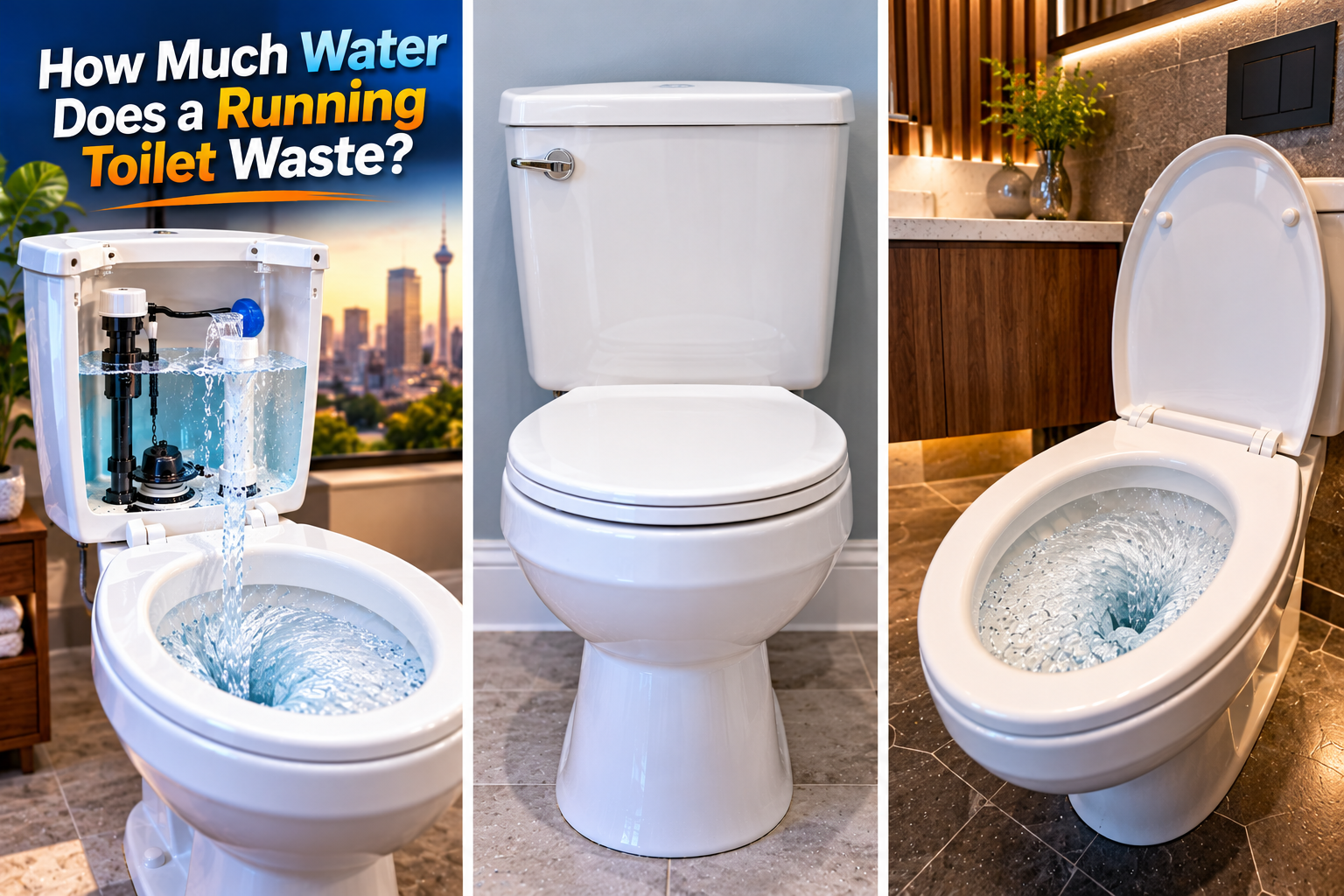

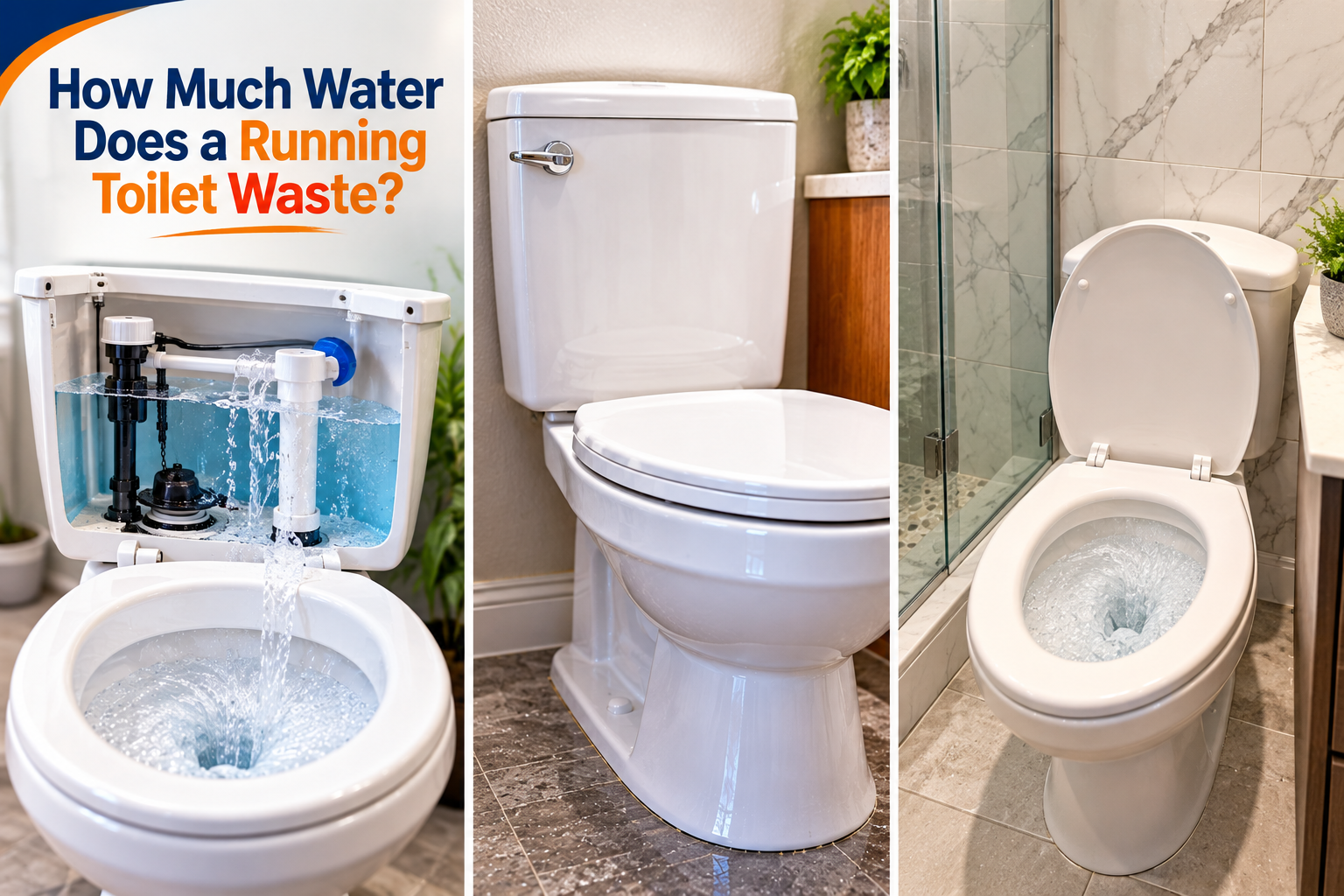
How Much Water Does a Running Toilet Waste? If your toilet keeps hissing, refilling, or allowing water to trickle into the bowl after flushing, the amount can be surprisingly high. Even a small leak that continues all day may waste thousands of litres over a month without leaving water on the bathroom floor.
For homeowners in Mahogany, Auburn Bay, Cranston, and nearby Southeast Calgary communities, a running toilet is often noticed only after an unusual utility bill or repeated refilling sounds. Understanding how residential toilet plumbing services in Calgary identify these problems can help explain what is happening inside the tank.
The actual water loss depends on the leak rate, the faulty component, and how long the toilet continues running. Some leaks are silent, while others create constant noise. Knowing how to estimate the waste and recognize the cause can help homeowners decide when a repair is needed.
A running toilet can waste about 144 litres per day at a continuous leak rate of 0.1 litre per minute, or 1,440 litres daily at one litre per minute. Severe leaks can waste more. Actual consumption depends on the leak rate and duration.
How Many Litres of Water Can a Running Toilet Waste?
A toilet wastes water when fresh water continues moving from the tank into the bowl after the normal flush cycle should have finished. The amount depends on the opening allowing water through, the condition of the internal parts, and the length of time the leak continues.
A minor leak may be nearly silent. A more serious problem can create a constant rushing sound. Both deserve attention because the toilet may keep drawing treated water from the home’s supply.
How Much Water Can a Toilet Waste in One Day?
Continuous water loss becomes significant when calculated across 24 hours. Even a small amount escaping every minute can produce a large daily total.
Daily loss at 0.1 litre per minute
Daily loss at 0.5 litre per minute
Daily loss at 1 litre per minute
For example, a toilet leaking half a litre per minute wastes approximately 720 litres in one day. In a Mahogany household, that water could pass directly into the drain without creating any visible moisture around the fixture.
These figures are mathematical examples, not measured averages for Calgary homes. Actual water consumption varies according to the toilet’s condition and operating pattern.
How Much Water Can a Running Toilet Waste in a Month?
Over several weeks, a continuous leak can waste thousands of litres. A leak of 0.1 litre per minute wastes approximately 4,320 litres over 30 days.
At one litre per minute, the total reaches 43,200 litres. Severe leaks may waste even more if they continue without repair.
| Continuous Leak Rate | Daily Water Loss | 30-Day Water Loss | Volume in Cubic Metres |
|---|---|---|---|
| 0.05 L/min | 72 litres | 2,160 litres | 2.16 m³ |
| 0.10 L/min | 144 litres | 4,320 litres | 4.32 m³ |
| 0.25 L/min | 360 litres | 10,800 litres | 10.8 m³ |
| 0.50 L/min | 720 litres | 21,600 litres | 21.6 m³ |
| 1.00 L/min | 1,440 litres | 43,200 litres | 43.2 m³ |
| 2.00 L/min | 2,880 litres | 86,400 litres | 86.4 m³ |
Calculations assume continuous leakage for 24 hours daily over 30 days. Intermittent leaks produce different totals. One cubic metre equals 1,000 litres.
Can a Running Toilet Waste Water Without Making Noise?
Yes. A worn flush valve seal can allow water to seep slowly into the bowl without producing a noticeable sound.
When the tank level falls, the fill valve may briefly activate to replace the missing water. This can happen while homeowners are sleeping or away from the property.
In an Auburn Bay home, unexplained refilling during the night may indicate an internal leak even if the toilet appears normal during the day.
Does Every Running Toilet Waste the Same Amount?
No. The total depends on the size of the opening, the water level, supply conditions, and the duration of the leak.
Some toilets leak continuously, while others refill only occasionally. An intermittent leak may waste less per hour but can still become significant over several billing periods.
Important: A quiet toilet is not necessarily leak-free. Repeated refilling, unexplained water movement in the bowl, or unusually high water consumption can indicate an internal plumbing problem.
Homeowners can review the company’s Calgary plumbing service location and watch a residential plumbing service video for additional local information.
What Causes a Toilet to Run Continuously?
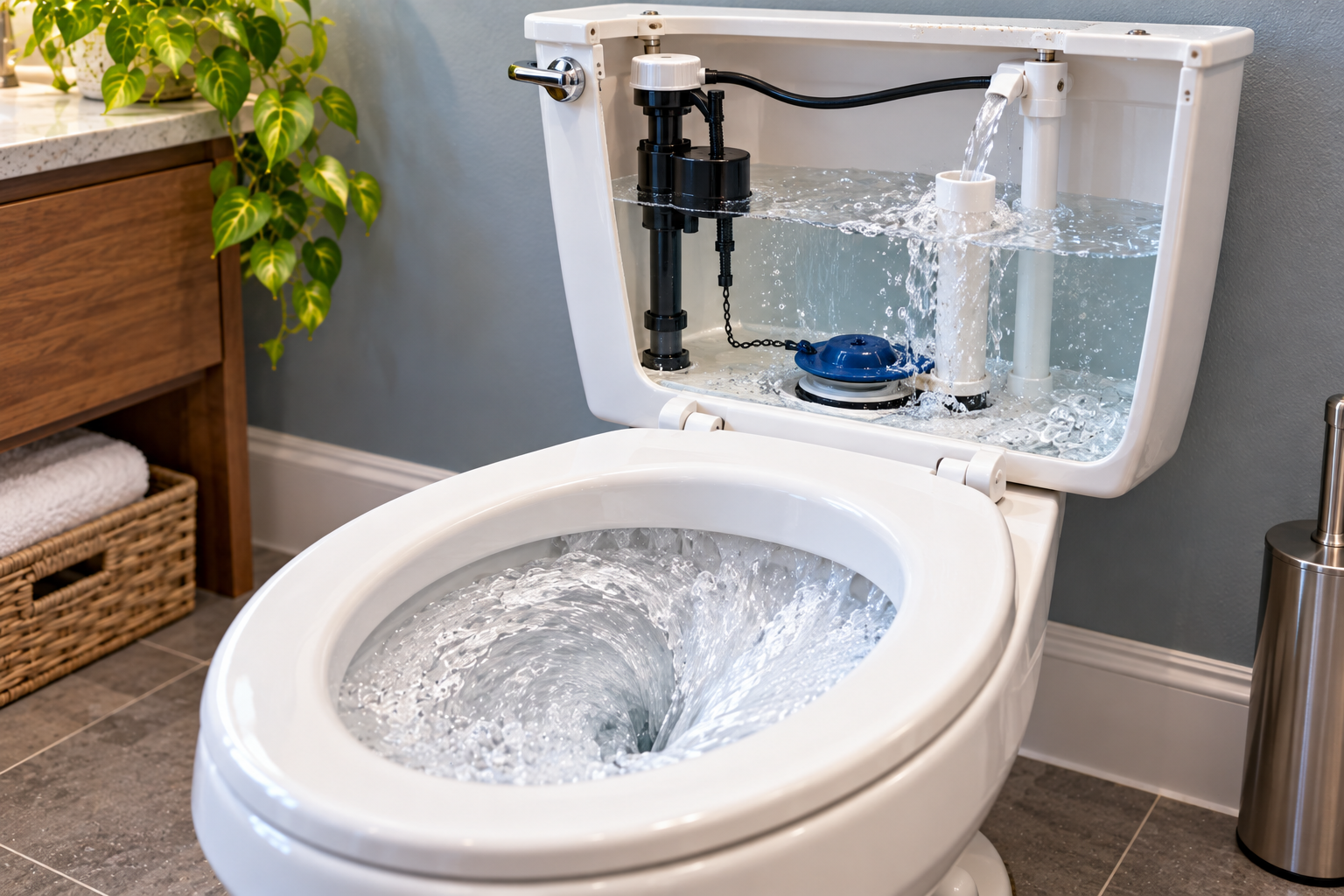
A properly functioning toilet stops filling once the tank reaches its intended water level. When water keeps entering the tank or escaping into the bowl, an internal component may no longer be regulating or sealing the flow correctly.
The most common causes involve the flapper, fill valve, float mechanism, overflow tube, or flush handle assembly.
Can a Faulty Toilet Flapper Waste Water?
Yes. Many conventional toilets use a rubber flapper to cover the flush valve opening at the bottom of the tank.
During a flush, the flapper lifts to release water into the bowl. It should then settle back into place and form a seal.
If the flapper becomes brittle, warped, damaged, or misaligned, water may continue escaping. The fill valve then replaces the lost water, creating repeated or continuous refilling.
For a Cranston homeowner, a toilet that refills every few minutes without being flushed may have a leaking flapper or another problem affecting the flush valve seal.
Why Does a Faulty Fill Valve Keep Running?
The fill valve controls incoming water after flushing. Once the tank reaches the intended level, the valve should shut off.
A defective fill valve may continue admitting water, allowing the level to rise until excess water enters the overflow tube.
This water then flows into the bowl and drain, sometimes producing constant hissing or rushing sounds.
Can an Incorrect Float Setting Cause Water Waste?
Yes. The float mechanism helps control the tank’s fill level. If the setting allows water to rise too high, excess water may enter the overflow tube.
Correcting the float setting may restore normal operation if the fill valve is otherwise functional.
However, adjustment cannot repair a damaged flapper or defective valve.
Can a Stuck Flush Handle Keep a Toilet Running?
A handle that sticks or a lift chain that is too tight can prevent the flapper from closing completely.
Even a small opening may allow water to escape continuously. The toilet may then refill repeatedly without anyone using it.
Different toilet models use different flushing mechanisms, so the relevant parts should be identified before repairs begin.
Why Does My Toilet Refill Without Being Flushed?
When a toilet briefly refills on its own, water may be slowly escaping from the tank. This is sometimes called phantom flushing.
The toilet is not performing a normal flush. Instead, the fill valve is replacing water that has leaked into the bowl.
In Copperfield and McKenzie Towne homes, this symptom may appear as a short refill sound several times throughout the day.
Could an External Toilet Leak Cause Similar Problems?
An external leak differs from the internal flow responsible for most running toilets. Water may escape from the supply connection, tank bolts, or the connection between the tank and bowl.
If you notice water beneath the tank, our related article explains why water leaks between the toilet tank and bowl.
External leakage deserves prompt attention because it may affect flooring and surrounding materials.
Water damage warning: If water is escaping onto the floor, stop using the toilet and close its dedicated supply valve if it can be operated safely. Do not force damaged or corroded plumbing hardware.
Additional company information is available through its professional plumbing business profile on LinkedIn and Instagram home-service updates.
Request a running toilet repair estimate in Calgary in just a few clicks.
Get My Free Estimate
How Can You Measure the Water Wasted by a Running Toilet?
Estimating water waste involves identifying the leak and determining how much water passes through the defective component over time.
A dye test can help confirm an internal leak. Water meter observations and calculations may provide additional information about unwanted consumption.
How Does a Toilet Dye Test Detect Silent Leaks?
A toilet dye test helps identify water escaping from the tank into the bowl when the toilet has not been flushed.
For a conventional toilet, suitable non-staining toilet leak detection dye can be placed in the tank water. Without flushing, observe the bowl after the waiting period recommended by the product.
If colour appears in the bowl, water is passing through the tank outlet when it should be sealed.
This confirms leakage but does not directly establish the number of litres being wasted.
Can Your Water Meter Help Identify Unwanted Consumption?
In a property with an accessible individual water meter, changes in the reading while all intentional water use is stopped may indicate unwanted consumption.
However, other plumbing fixtures, appliances, or hidden leaks may also affect the reading. The meter alone does not prove that the toilet is responsible.
Homeowners should not interfere with restricted or utility-owned meter equipment.
How Do You Calculate Water Loss From a Known Leak Rate?
If the leak rate is known, multiply the litres lost per minute by the number of minutes in a day.
For example, a continuous leak of 0.25 litre per minute produces:
0.25 × 60 × 24 = 360 litres per day.
Over 30 days, that becomes 10,800 litres, or 10.8 cubic metres.
The calculation assumes uninterrupted leakage. A toilet that runs only occasionally requires a different estimate based on its actual operating pattern.
Can You Estimate Water Loss From Repeated Refilling?
Hearing a toilet refill periodically may indicate a leak, but the sound alone does not reveal the exact amount of water being lost.
For example, a toilet that refills every 20 minutes does not necessarily lose an entire tank of water during each cycle.
The refill volume depends on how far the tank level drops before the valve activates.
How Much Can a Running Toilet Add to a Calgary Water Bill?
The added cost depends on the amount of water wasted and the applicable usage-based water and wastewater charges.
To illustrate the calculation, assume a hypothetical combined marginal rate of $4 per cubic metre. This is not a verified current City of Calgary rate and should not be treated as an official utility quote.
| Water Wasted in 30 Days | Volume | Illustrative Added Cost at $4/m³ |
|---|---|---|
| 2,160 litres | 2.16 m³ | $8.64 |
| 4,320 litres | 4.32 m³ | $17.28 |
| 10,800 litres | 10.8 m³ | $43.20 |
| 21,600 litres | 21.6 m³ | $86.40 |
| 43,200 litres | 43.2 m³ | $172.80 |
| 86,400 litres | 86.4 m³ | $345.60 |
These are hypothetical calculations, not current Calgary utility rates. Actual charges vary according to the applicable tariff, billing arrangements, and other account factors. Fixed charges are excluded.
Why Can a Small Leak Affect Several Utility Bills?
Because internal toilet leaks often send water directly into the drain, homeowners may not notice the problem immediately.
A slow leak can continue through several billing periods and gradually increase total consumption.
In Seton or New Brighton, an unexpected increase in water use may be one reason to investigate the toilet, although other household activities and plumbing problems can also affect consumption.
Water waste example: At a continuous leak rate of one litre per minute, a toilet wastes 43,200 litres over 30 days. At one-tenth of that rate, it still wastes 4,320 litres. Actual loss depends on the fixture’s measured or estimated leak rate.
How Can You Stop a Running Toilet and Prevent Water Waste?
Stopping a running toilet begins with identifying the component responsible for the unwanted water flow. Many problems can be repaired without replacing the entire fixture.
The appropriate solution depends on the toilet model, condition of the flush mechanism, and whether the problem involves a worn seal or defective water control component.
How Is a Worn Toilet Flapper Repaired?
When a flapper no longer seals properly, a compatible replacement may restore normal operation.
The flush valve seating surface should also be inspected because mineral deposits, damage, or incorrect parts can prevent a new flapper from sealing correctly.
Some modern toilets use canister seals or other mechanisms instead of traditional flappers, so replacement parts must match the fixture.
What If the Toilet Fill Valve Is Defective?
A fill valve that does not shut off at the intended level may require adjustment or replacement.
After repair, the tank should fill to the manufacturer’s specified level without sending excess water into the overflow tube.
Testing confirms that the valve shuts off consistently and does not restart unexpectedly.
Can Float Adjustment Stop a Running Toilet?
Sometimes. If the float setting allows the water level to rise too high, adjusting it may prevent overflow into the bowl.
However, changing the float setting will not solve a worn flapper or defective fill valve.
In a McKenzie Towne bathroom, a toilet that continues hissing after adjustment may need a more detailed inspection.
Should You Repair or Replace a Running Toilet?
Repair is often appropriate when the porcelain is intact and the problem involves a replaceable flapper, fill valve, float mechanism, or flush component.
Replacement becomes more relevant if the fixture is cracked, compatible parts are unavailable, or several major components are deteriorated.
For older toilets in Lake Bonavista, comparing repair needs with the benefits of a modern water-efficient fixture can help determine the most practical option.
Can a Water-Efficient Toilet Help Reduce Consumption?
A properly functioning water-efficient toilet may use less water per flush than certain older models.
However, even a newer fixture can waste substantial water if a seal fails or the fill valve continues operating.
Water efficiency depends on both the toilet’s design and its condition.
What Maintenance Helps Prevent Running Toilets?
Simple observations can help identify problems before they continue for several weeks:
- Listen for refilling sounds when nobody has flushed.
- Check for unexplained water movement inside the bowl.
- Make sure the flush handle returns normally.
- Investigate unexpected increases in water consumption.
- Use compatible replacement components.
- Arrange an inspection if a previous repair does not stop the running.
In Riverbend and Douglasdale homes, noticing these early symptoms can help reduce unnecessary water consumption.
Should You Turn Off the Water Supply to a Running Toilet?
If the toilet cannot be repaired immediately, closing its dedicated supply valve may prevent further water loss until service is arranged.
Only operate the valve if it is accessible and turns safely. Do not force a corroded or damaged valve because it may begin leaking.
If water is already escaping onto the floor, stop using the toilet and arrange appropriate assistance.
When Should You Call a Calgary Plumber for a Running Toilet?
Contact a plumber when the toilet runs continuously, refills without being flushed, or continues wasting water after a simple adjustment.
Professional inspection is also appropriate if the tank is unstable, the porcelain appears damaged, or water is leaking outside the fixture.
Identifying the failed component can help restore normal operation while avoiding unnecessary replacement work.
Water conservation reminder: A running toilet may waste water every minute it remains unresolved. Addressing the actual cause, replacing faulty parts where appropriate, and confirming proper shutoff can help reduce ongoing consumption.
Request a running toilet repair estimate in Calgary in just a few clicks.
Get My Free Estimate
Stop Unnecessary Water Waste From Your Toilet
A running toilet can waste thousands of litres when a faulty flapper, fill valve, or flush mechanism allows water to flow continuously. Even a silent leak deserves attention because water may travel directly into the drain without leaving an obvious sign.
If your toilet keeps running, speak with a local calgary plumber about the cause. Call Calgary Electrical and Plumbing at (403) 421-1991 to discuss an inspection or repair.
Frequently Asked Questions about Running Toilet Water Waste
How much water can a running toilet waste in 24 hours?
The amount depends on the leak rate. At 0.1 litre per minute, a toilet wastes approximately 144 litres daily. At one litre per minute, the total reaches 1,440 litres. Some toilets leak intermittently, so actual water consumption may be lower or higher.
Can a running toilet increase my Calgary water bill?
Yes. A running toilet uses additional treated water, and usage-based water and wastewater charges may increase. The financial impact depends on the volume wasted and applicable rates. Even a quiet internal leak can affect bills if it continues for several weeks.
Can a toilet waste water without making a running sound?
Yes. A worn flapper or flush valve seal can allow water to seep silently into the bowl. The tank may refill occasionally rather than continuously. A suitable toilet dye test can help identify an internal leak that is not obvious by sound.
Will replacing the toilet flapper stop water waste?
Replacing a defective flapper can stop water loss when the flapper is the cause. However, a faulty fill valve, incorrect float setting, or damaged flush valve seat may produce similar symptoms. The toilet should be checked to confirm the actual source.
Should I turn off the water if my toilet keeps running?
If the toilet will not stop running, closing its dedicated supply valve may prevent further water loss until repairs are arranged. Only turn the valve if it operates safely. Avoid forcing damaged hardware, and seek plumbing assistance if the problem persists.
Don’t wait for the problem to get worse.
Call (403) 421-1991 Now
Local Help Available 24/7 in Calgary