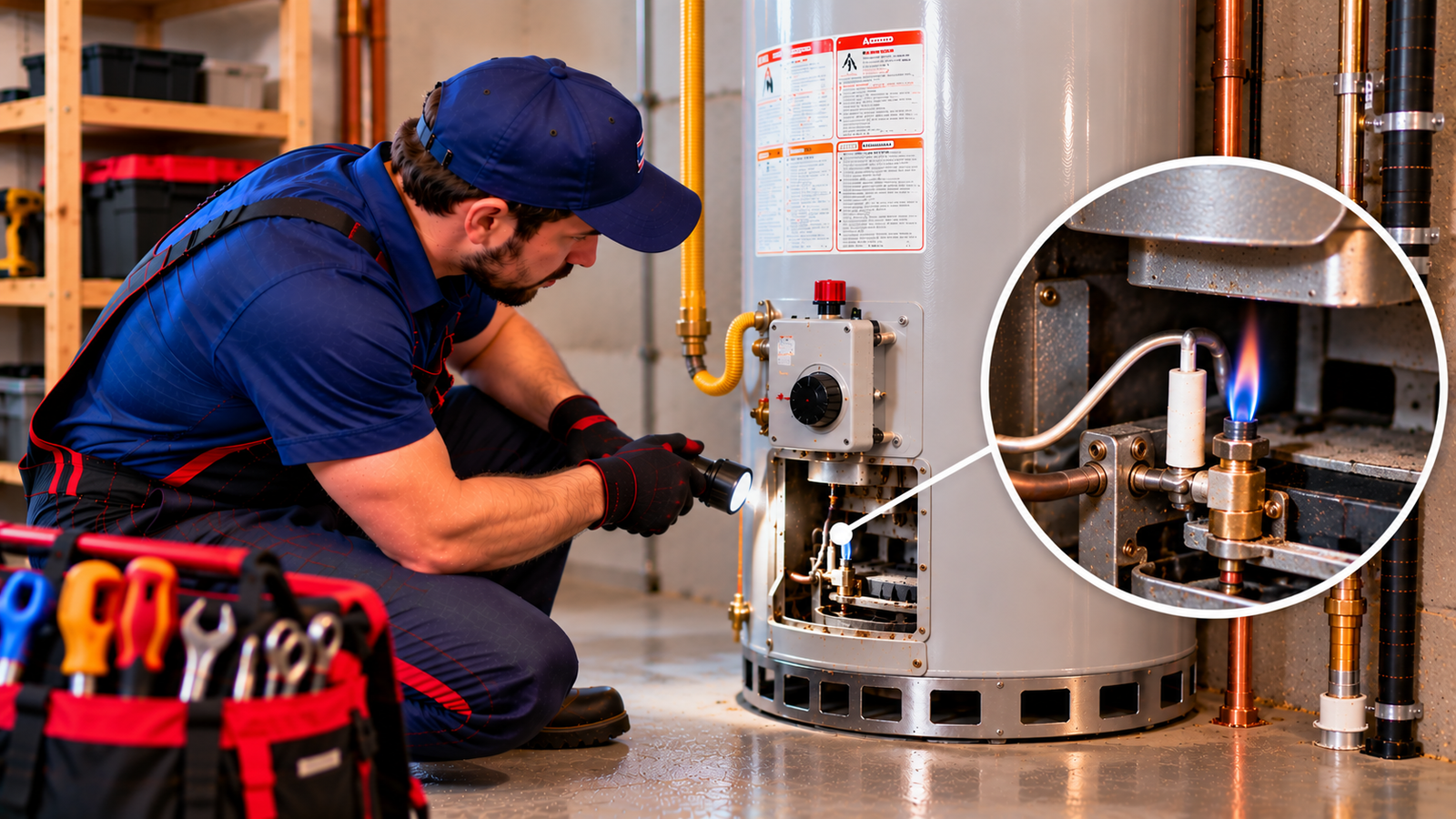

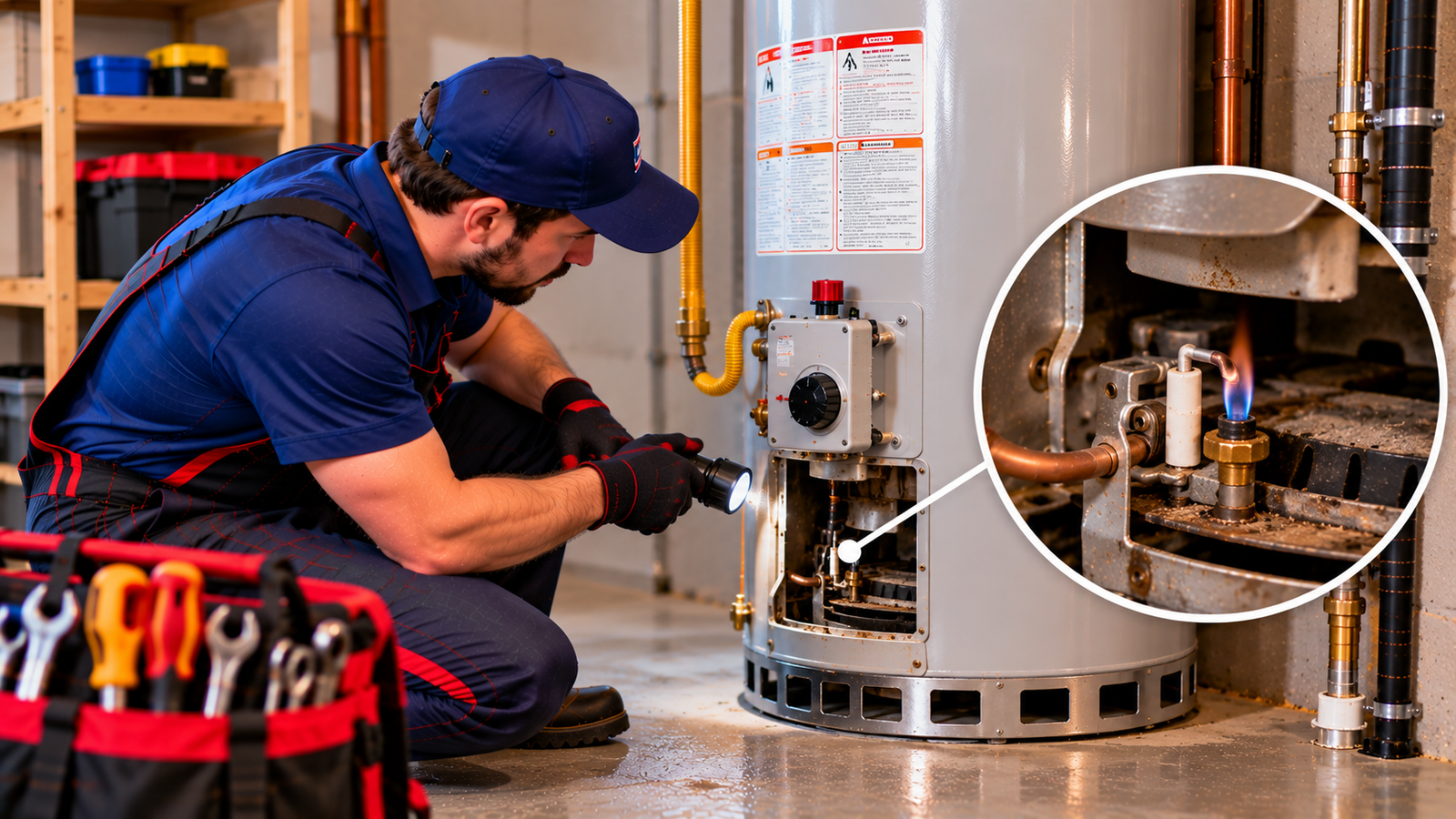
Why Does My Water Heater’s Pilot Light Keep Going Out? If your Calgary home’s hot water suddenly turns cold and the gas water heater will not stay lit, a recurring pilot light problem may be responsible. The issue can appear without warning, leaving you wondering whether the heater needs maintenance, repair, or replacement.
For homeowners in Mahogany, Auburn Bay, Cranston, and other Southeast Calgary communities, a failed pilot light can interrupt showers, laundry, and daily routines. Professional water heater repair and plumbing services in Calgary can help identify whether the problem involves flame detection, gas controls, ventilation, or another component.
Although a pilot light may occasionally go out, repeated flame loss should never be dismissed as normal. Understanding the likely causes, recognizing safety warnings, and knowing when to request qualified assistance can help prevent unnecessary repairs and unsafe troubleshooting.
A water heater pilot light may keep going out because of a faulty thermocouple or flame sensor, restricted combustion air, venting problems, a dirty pilot assembly, or malfunctioning gas controls. Repeated outages require professional diagnosis, particularly if the heater shows signs of overheating, poor ventilation, or gas-related problems.
Why Does a Gas Water Heater Pilot Light Keep Going Out?
A standing pilot light provides the ignition flame used by certain gas-fired storage water heaters. When the pilot flame is lost, the appliance’s safety system is designed to stop gas flow under appropriate conditions.
Modern water heaters use different ignition and safety technologies. Some have standing pilots, while others use electronic ignition. Understanding the model is important because the causes and repair procedures are not identical.
Can a Faulty Thermocouple Cause the Pilot Light to Go Out?
Yes. In water heaters equipped with a thermocouple, this component senses heat from the pilot flame and helps the gas control determine whether the flame is present.
If the thermocouple fails, becomes poorly positioned, or cannot detect sufficient heat, the safety system may shut off gas to the pilot.
Some newer heaters use thermopiles or other flame-sensing arrangements. A qualified technician must identify the actual system before recommending component replacement.
Can a Dirty Pilot Assembly Cause Repeated Flame Loss?
Contamination around the pilot assembly may interfere with proper flame formation or flame detection.
Dust, debris, or deposits can affect certain components, depending on heater design. However, a weak or unstable flame may also indicate gas pressure or combustion-air problems.
Cleaning and adjustment of gas-burning components should be performed according to manufacturer instructions by a qualified professional.
Can Poor Ventilation or Airflow Extinguish a Pilot Light?
Gas water heaters require an appropriate supply of combustion air and a correctly functioning venting system.
Restricted air openings, blocked intake screens, or inadequate combustion air can contribute to unstable operation or safety shutdowns on certain models.
Improper venting may also create a carbon monoxide hazard. These conditions require qualified inspection rather than repeated attempts to restart the appliance.
Can a Faulty Gas Control Valve Be Responsible?
Yes. A malfunctioning gas control assembly can interrupt pilot operation or prevent the heater from maintaining normal heating cycles.
Gas controls contain safety functions and are not suitable for improvised repairs.
Technicians may evaluate the control assembly, flame-sensing circuit, and related components before determining whether replacement is necessary.
Does Low Gas Pressure Affect Pilot Light Operation?
Inadequate gas supply pressure can interfere with the operation of some gas appliances.
However, pressure problems cannot be confirmed by observing the pilot flame alone. Qualified technicians use appropriate testing procedures and consider the entire gas supply system.
Homeowners should not adjust regulators or gas valves to compensate for recurring flame loss.
Can a Safety Switch Shut Off the Pilot Light?
Some water heaters include safety devices that respond to excessive temperatures, combustion-air restrictions, or other abnormal operating conditions.
When a safety device operates, it may prevent the burner or pilot from continuing normally.
Resetting or bypassing a safety device without diagnosing the underlying problem can create serious hazards.
Key takeaway: Repeated pilot light failure may involve flame detection, the pilot assembly, combustion air, venting, gas supply, or a safety control. The correct repair depends on the heater model and the cause confirmed during inspection.
Calgary homeowners can find company location details through the Calgary Electrical and Plumbing Google Maps listing.
What Are the Warning Signs of a Failing Water Heater Pilot Light?
When a pilot light stops working properly, the most obvious symptom is often a sudden loss of hot water. However, the timing and frequency of the problem can provide useful information for a qualified technician.
Some symptoms suggest flame-sensing problems, while others may indicate ventilation, combustion, or gas-control concerns.
Why Does the Pilot Light Go Out Immediately After Lighting?
A pilot that extinguishes shortly after an attempted restart may indicate a flame-sensing or gas-control problem.
On some models, the flame may not be properly detected even when it initially appears present.
Because the cause can involve safety-critical components, repeated unsuccessful lighting attempts should be avoided.
Why Does the Pilot Light Go Out Overnight?
Intermittent flame loss can occur when an underlying problem develops only under certain operating conditions.
Changes in combustion airflow, appliance temperature, or component performance may contribute, depending on the heater.
The timing alone does not identify the cause, but recording when outages occur can assist professional diagnosis.
Can a Water Heater Stop Producing Hot Water Without a Pilot Problem?
Yes. Failed thermostats, gas controls, burner components, and other appliance faults may interrupt hot water production.
Electronic-ignition water heaters do not necessarily have a continuously burning pilot flame.
Before assuming the pilot has failed, the technician should identify the ignition system and review any available diagnostic indicators.
What Does an Unusual Pilot Flame Mean?
A pilot flame that appears unstable, unusually weak, or inconsistent may suggest an operating problem.
However, flame appearance varies by equipment design and should not be used as the sole diagnostic method.
Homeowners should avoid removing sealed combustion covers or accessing internal gas components to inspect the flame.
Can a Water Heater Make Clicking or Ignition Sounds?
Some appliances produce clicking sounds during ignition attempts or control operations.
Repeated unsuccessful ignition cycles may indicate a problem requiring inspection, but the meaning depends on the model.
Persistent unusual sounds should be evaluated alongside error codes and other symptoms.
Does a Pilot Light Problem Affect Heating Efficiency?
If the pilot repeatedly goes out, the heater may fail to maintain the expected hot water supply.
However, recurring flame loss does not automatically mean the tank itself has become inefficient.
The appliance may have a repairable ignition or control problem while the storage tank remains in satisfactory condition.
Can Sediment Buildup Cause Pilot Light Problems?
Sediment usually affects heating performance rather than directly extinguishing the pilot flame.
Heavy deposits may contribute to unusual operating noises or heat-transfer problems, but pilot outages require separate investigation of ignition, combustion, and safety components.
For a closer look at tank deposits, read What Are the Signs of Sediment Buildup in a Water Heater?.
| Observed Symptom | Possible Cause | Recommended Response |
|---|---|---|
| Pilot goes out shortly after an attempted restart | Flame-sensing or gas-control fault | Stop repeated attempts and arrange qualified inspection |
| Pilot extinguishes intermittently | Combustion-air, venting, or component problem | Record symptoms and request professional diagnosis |
| No hot water and no visible pilot | Ignition or safety-control issue | Confirm heater type and follow manufacturer guidance |
| Repeated diagnostic alerts | Model-specific control or safety condition | Have a technician interpret the manufacturer’s fault information |
| Gas odour near the appliance | Possible gas leak | Leave the area immediately and contact emergency gas services from a safe location |
The table provides general symptom guidance. It does not replace model-specific diagnosis or gas safety procedures.
Calgary example: A homeowner in Copperfield may discover cold water in the morning and assume the pilot light has failed. A professional inspection may instead reveal a gas-control fault, a safety shutdown, or a different issue affecting the heating cycle.
Additional local business information is available through this Calgary plumbing service location reference.
Request a water heater pilot light inspection and repair estimate in Calgary in just a few clicks.
Get My Free Estimate
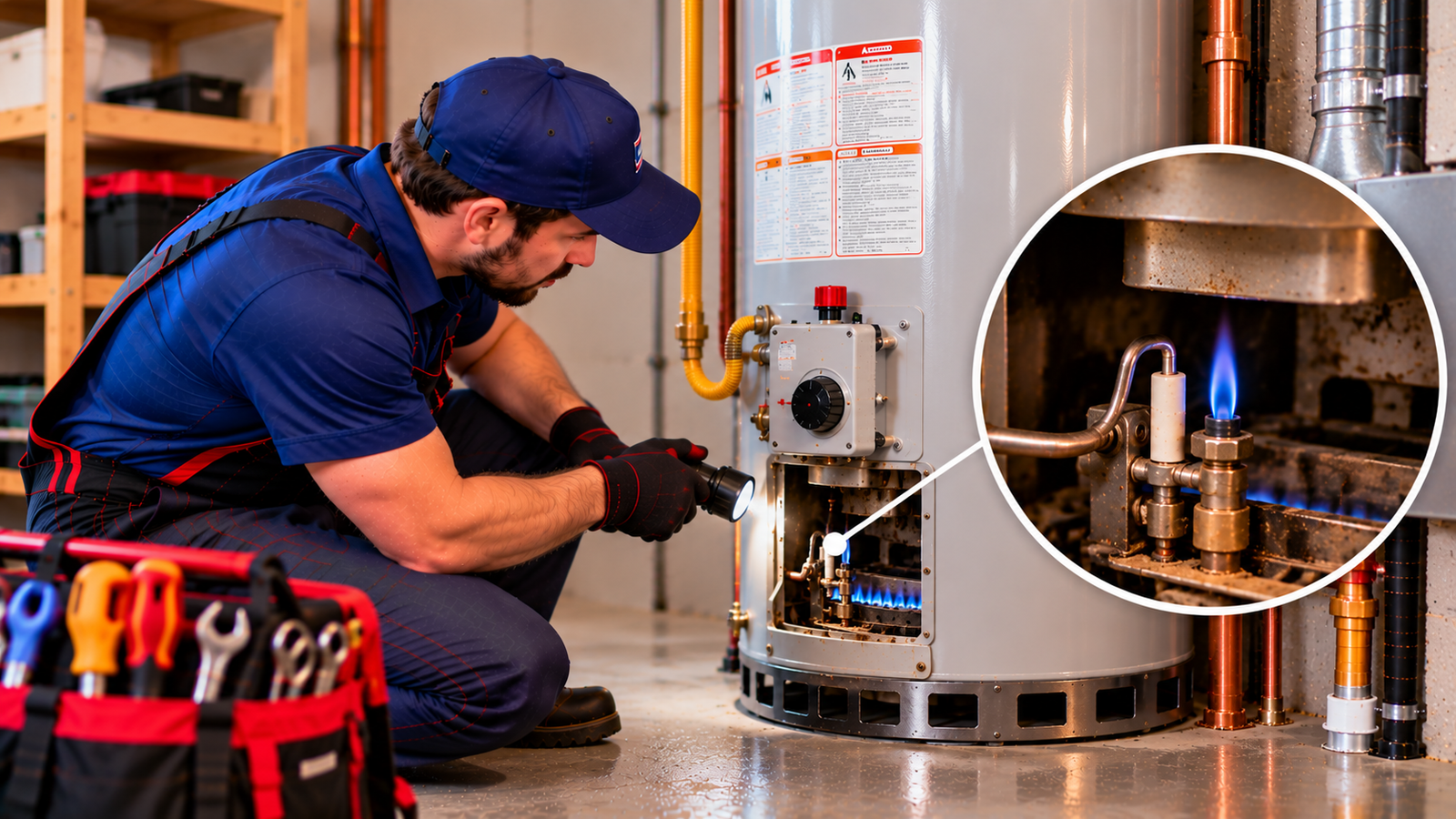
Is It Safe to Relight a Water Heater Pilot Light That Keeps Going Out?
Some gas water heaters include manufacturer-approved procedures for restarting a pilot light after an isolated outage.
However, repeated flame loss is different from a one-time interruption. It can indicate a malfunction that requires professional attention, especially when the appliance has safety-control or combustion problems.
Should You Follow the Instructions Printed on the Water Heater?
The manufacturer’s instructions are the appropriate reference for the specific model.
However, instructions should never be used to justify repeated attempts when the pilot will not remain lit or when there are signs of gas, ventilation, or combustion problems.
Homeowners who are uncertain about the appliance’s condition should arrange qualified service.
Is It Safe to Keep Trying When the Pilot Will Not Stay Lit?
No. Repeated unsuccessful attempts may indicate a safety-control or combustion problem.
Continuing to restart an appliance without identifying the cause can delay necessary repairs and may create additional hazards.
If the pilot repeatedly fails, stop attempting to relight it and have the system inspected.
When Is a Pilot Light Problem a Gas Safety Emergency?
A suspected gas leak is an emergency. If you smell gas, hear escaping gas, or suspect a gas release, leave the building immediately.
Do not operate electrical switches, appliances, phones, or ignition sources inside the affected area. Contact the gas utility’s emergency service or 911 from a safe location outside.
Do not re-enter until emergency personnel or the gas utility confirms it is safe.
What If You Suspect Carbon Monoxide?
Carbon monoxide is a colourless, odourless gas that can be produced by malfunctioning fuel-burning equipment.
A carbon monoxide alarm, unexplained headaches, dizziness, nausea, or similar symptoms near operating fuel-burning appliances require immediate attention.
Leave the building, seek emergency assistance, and do not use the appliance again until qualified personnel have assessed it.
Can Blocked Venting Make a Water Heater Unsafe?
Yes. Gas appliances must safely exhaust combustion products.
Obstructed or improperly functioning venting can create dangerous operating conditions, including potential carbon monoxide exposure.
Venting systems should be inspected by qualified professionals rather than modified or disconnected by homeowners.
Does Calgary Winter Weather Affect Pilot Light Operation?
Cold weather can affect building airflow and the operation of some venting systems.
Snow or ice around exterior terminations may also create concerns for appliances designed with outdoor air intake or exhaust components.
However, winter conditions do not make repeated pilot outages normal. Any suspected venting problem requires professional evaluation.
Should You Remove the Burner Cover to Check the Pilot?
No. Some modern water heaters use sealed combustion chambers that should not be opened except during authorized servicing.
Removing covers or disturbing safety components can affect appliance operation and may violate manufacturer requirements.
Qualified technicians should handle internal burner and flame-sensing components.
Gas safety warning: Never bypass a thermocouple, flame sensor, thermal switch, or gas-control safety device. Do not attempt to modify gas piping or regulators. Repeated pilot light failure requires diagnosis, not a workaround.
Can You Use Online Relighting Guides?
General educational material can explain how different water heaters operate, but it cannot confirm the safety or condition of your particular appliance.
For background reading, see the Lennox consumer guide to water heater pilot lights.
Use model-specific manufacturer instructions and qualified assistance for actual servicing, especially when the pilot repeatedly fails.
What Information Should You Give the Technician?
Provide the water heater brand, model, approximate age, and a description of when the pilot goes out.
Also mention any diagnostic indicators, unusual noises, changes in hot water supply, or recent appliance servicing.
This information can help the technician prepare for a more focused inspection.
Safe homeowner response: If a pilot light repeatedly goes out, stop relighting attempts and request qualified service. If gas odour or suspected carbon monoxide is present, leave immediately and contact emergency services from a safe location.
For additional general video context about residential water heaters, see this water heater video resource. Online videos should not replace professional gas appliance servicing.
How Do Calgary Plumbers Diagnose and Repair Pilot Light Problems?
A professional water heater inspection focuses on identifying why the flame is being lost rather than simply restoring it temporarily.
Qualified gas technicians consider the heater’s ignition design, safety controls, combustion-air supply, venting, and overall condition before recommending repairs.
How Is the Pilot Assembly Evaluated?
A technician may inspect the pilot assembly for visible deterioration, contamination, or other conditions affecting normal operation.
The exact evaluation depends on the heater’s construction and manufacturer instructions.
Not every pilot problem requires a replacement assembly; some faults originate elsewhere in the system.
Can a Thermocouple Be Replaced?
In heaters equipped with replaceable thermocouples, replacement may be appropriate when testing confirms the component has failed.
Other models use different flame-detection components or integrated assemblies.
Parts must be compatible with the specific heater and installed according to applicable requirements.
How Are Gas-Control Problems Diagnosed?
Qualified technicians may assess the appliance’s operating sequence, manufacturer diagnostic information, and relevant gas-control functions.
Gas-control components contain important safety features, so diagnosis and replacement require appropriate training.
A suspected control problem should not be addressed by adjusting or bypassing safety mechanisms.
What If Combustion Air Is Restricted?
Some water heaters rely on designated air openings, intake screens, or sealed combustion pathways.
A technician can determine whether airflow restrictions, installation conditions, or venting defects are affecting operation.
Corrective work must preserve the appliance’s approved combustion and ventilation design.
Can Regular Maintenance Prevent Pilot Light Failures?
Appropriate maintenance may help identify developing component wear, contamination, or installation problems.
However, no maintenance schedule can prevent every thermocouple, sensor, or gas-control failure.
Periodic inspection is most useful when performed according to the manufacturer’s recommendations and the appliance’s condition.
Do Modern Water Heaters Still Have Pilot Lights?
Some modern gas storage heaters use standing pilots, while others have electronic ignition or different control systems.
Tankless gas water heaters commonly use electronic ignition rather than a continuously burning pilot.
Identifying the exact equipment type prevents unnecessary troubleshooting of components that may not exist.
Should You Repair or Replace a Water Heater With Pilot Light Problems?
Repair may be appropriate when the tank is structurally sound and the fault involves a serviceable component.
Replacement may be more economical when the heater is near the end of its expected service life, the tank is leaking, or multiple expensive repairs are required.
The decision should consider age, warranty coverage, equipment condition, and repair cost.
Does Water Heater Age Affect the Repair Decision?
Many conventional storage water heaters have a typical service life of approximately 8–12 years, although actual longevity varies.
An older heater with recurring pilot problems may also have corrosion, sediment, or other maintenance concerns.
A professional assessment can help determine whether repairing the ignition system remains worthwhile.
How Much Does Pilot Light Repair Cost in Calgary?
Repair costs depend on the specific component, heater model, accessibility, diagnostic requirements, and labour involved.
A straightforward component replacement may cost less than repairs involving an integrated gas-control assembly or multiple faults.
Because pricing varies, request an itemized estimate after the underlying problem has been identified.
What Should a Professional Pilot Light Inspection Include?
- Identifying the water heater model and ignition system.
- Reviewing pilot outage frequency and operating symptoms.
- Evaluating flame-sensing and applicable safety components.
- Assessing combustion-air and venting concerns.
- Checking for visible deterioration or other equipment faults.
- Recommending manufacturer-compatible repairs or replacement.
Why Does Local Experience Matter in Calgary?
Water heater installations vary between older properties in Riverbend and Lake Bonavista and newer homes in Seton or New Brighton.
Appliance age, installation design, venting arrangement, and available replacement parts can affect repair recommendations.
A technician familiar with Calgary residential plumbing and gas appliance requirements can assess the system in its actual operating environment.
Can Pilot Light Problems Be Prevented Completely?
No. Even properly installed and maintained gas water heaters can experience component failures.
However, following manufacturer guidance, maintaining suitable combustion-air conditions, and addressing early warning signs can reduce the likelihood of neglected problems becoming more serious.
Practical recommendation: Keep your water heater’s model number and maintenance history available. If the pilot fails repeatedly, record the symptoms and arrange a qualified inspection rather than continuing to restart the appliance.
Repair decision: A recurring pilot light problem does not automatically mean the entire water heater needs replacement. The best option depends on the confirmed fault, tank condition, appliance age, repair cost, and manufacturer requirements.
For company updates and local service information, visit the Calgary Electrical and Plumbing Google business profile or its official Instagram page.
Request a water heater pilot light inspection and repair estimate in Calgary in just a few clicks.
Get My Free Estimate
Restore Reliable Hot Water With Professional Diagnosis
A pilot light that repeatedly goes out can indicate a faulty flame sensor, gas-control problem, restricted combustion air, or another appliance defect. Identifying the actual cause is essential for safe, effective repairs.
A local calgary plumber can help assess your water heater and recommend suitable next steps. Call Calgary Electrical and Plumbing at (403) 421-1991 to discuss professional water heater inspection or repair.
Frequently Asked Questions about Water Heater Pilot Light Problems
Why does my water heater pilot light keep going out after I light it?
A pilot that repeatedly extinguishes may indicate a faulty thermocouple, flame sensor, gas-control component, or combustion-air problem. The cause depends on the heater model. Avoid repeated relighting attempts and arrange qualified inspection to identify the fault and confirm safe operation.
Can a bad thermocouple cause a water heater pilot light to go out?
Yes. In water heaters equipped with a thermocouple, a failed or improperly functioning component may prevent the gas control from confirming that the pilot flame is present. Other heaters use different sensing systems, so a technician should verify the design before recommending replacement.
Is it dangerous if my gas water heater pilot light keeps going out?
Repeated pilot failure can indicate a safety-control, gas-supply, combustion-air, or venting problem. Stop repeated relighting attempts and request qualified service. If you smell gas or suspect carbon monoxide, leave the building immediately and contact emergency services from a safe location.
Can Calgary’s cold weather make a water heater pilot light go out?
Cold weather can influence building airflow and some venting systems, while snow or ice may affect certain exterior appliance terminations. However, recurring pilot outages are not normal winter operation. A qualified technician should investigate suspected airflow or venting problems rather than assuming weather is the cause.
Should I replace my water heater if the pilot light keeps failing?
Not necessarily. Some pilot light problems involve repairable flame-sensing or control components. Replacement may be more appropriate when the tank leaks, corrosion is advanced, or repairs are uneconomical. A professional inspection can help compare repair costs with the heater’s age and condition.
Recurring pilot outages deserve qualified diagnosis and repair.
Call (403) 421-1991 Now
Professional Water Heater Help in Calgary