
Why Does My Circuit Breaker Keep Tripping? If you have asked this question after losing power to your kitchen, basement, or living room, the answer often involves an overloaded circuit, a wiring fault, or an electrical appliance problem. A breaker that repeatedly switches off should never be treated as a minor inconvenience.
In Calgary homes, electrical demand changes throughout the year. Portable heaters during winter, air conditioners in summer, and everyday kitchen appliances can place substantial demands on individual circuits. Understanding when to contact Calgary Electrical and Plumbing helps homeowners avoid unnecessary repairs while addressing genuine electrical safety concerns.
Whether you live in Mahogany, Auburn Bay, Cranston, McKenzie Towne, or an older neighbourhood such as Riverbend, this guide explains the most common reasons breakers trip, what you can safely check, which warning signs require urgent attention, and when an electrician should investigate.
A circuit breaker usually trips because it detects an overload, short circuit, ground fault, or another condition its protective mechanism is designed to interrupt. Defective appliances, damaged wiring, loose connections, and faulty breakers can also be involved. Repeated trips require diagnosis rather than repeated resetting.
What Are the Main Reasons a Circuit Breaker Keeps Tripping?
A circuit breaker is a protective device that interrupts electrical current when certain abnormal conditions occur. Its purpose is to help protect wiring and equipment from dangerous electrical faults and excessive current.
When a breaker trips, the most important question is not simply how to restore power. It is why the protective device operated in the first place.
Overloaded Circuits and Too Many Appliances
An overloaded circuit is one of the most common explanations for repeated breaker trips.
Overloading occurs when connected equipment demands more current than the circuit is designed to carry for the relevant operating conditions.
For example, using a portable heater, vacuum cleaner, and other electrical devices on the same branch circuit may exceed its capacity.
The breaker may trip after several minutes rather than immediately because overload protection responds to current magnitude and duration.
Why Kitchen Circuit Breakers Often Trip
Kitchens contain several appliances that can draw substantial electrical current.
Microwaves, kettles, toasters, coffee makers, and portable cooking equipment may contribute to overloads when connected to the same circuit.
In a Calgary household, a breaker that trips whenever multiple countertop appliances operate simultaneously may indicate excessive demand on that particular circuit.
However, wiring faults and defective appliances must also be considered.
Short Circuits and Ground Faults
A short circuit occurs when electrical current follows an unintended low-impedance path, potentially producing very high current.
Damaged insulation, faulty connections, or defective equipment can cause this condition.
A ground fault involves current travelling along an unintended path to ground or grounded components.
Ground-fault protection devices are designed to respond to certain leakage-current conditions, while ordinary breakers primarily provide overcurrent protection.
Electrical safety warning: A breaker that trips immediately after being reset may indicate an active fault. Do not repeatedly reset it, force it into position, or replace it with a higher-rated breaker. Leave the affected circuit off and arrange qualified electrical assistance.
Damaged Electrical Appliances
Sometimes the circuit breaker is functioning correctly, and the actual problem is a connected appliance.
Damaged power cords, deteriorated internal wiring, faulty heating elements, and defective motors can create electrical faults.
If a breaker trips whenever a particular appliance operates, that pattern is useful information for an electrician.
Stop using equipment that appears damaged or causes repeated electrical interruptions.
Loose Electrical Connections
Loose connections can create resistance, overheating, and intermittent electrical problems.
Depending on the fault and the type of protective device installed, a loose connection may contribute to tripping or may remain hazardous without causing an ordinary breaker to operate.
That is why flickering lights, unusual sounds, and burning smells deserve attention even when the breaker has not tripped.
Moisture Around Electrical Equipment
Water exposure can damage electrical equipment and contribute to ground faults.
Outdoor receptacles, basement circuits, garages, and appliances near plumbing fixtures may be vulnerable to moisture-related problems.
In Calgary, melting snow, leaks, and seasonal moisture can create additional exposure risks.
Never handle wet electrical equipment or attempt to reset a breaker while standing in water.
Faulty or Deteriorated Circuit Breakers
Breakers can develop defects because of damage, deterioration, or previous electrical faults.
A defective breaker may trip unexpectedly, fail to reset, or show visible signs of damage.
However, these symptoms are not sufficient to diagnose the breaker without testing the connected circuit.
Quick answer: The most common causes of circuit breaker tripping include overloads, short circuits, ground faults, defective appliances, and wiring problems. A faulty breaker is possible, but should not be assumed before the circuit has been evaluated.
For Calgary homeowners looking for electrical service information, the company’s Google Maps business listing provides a local reference.
How Can You Safely Troubleshoot a Circuit Breaker That Keeps Tripping?
Homeowners can make a few basic observations without opening electrical equipment or attempting repairs.
The goal is to identify useful information while avoiding contact with energized components.
Identify Which Circuit Has Lost Power
Notice which lights, outlets, or appliances stopped working.
A labelled electrical panel may help identify the affected circuit, but labels can be incomplete or inaccurate.
Do not remove the panel cover to investigate.
Check for Obvious Appliance Problems
Look for damaged cords, unusual smells, or equipment that stopped functioning immediately before the trip.
Do not touch a damaged plug or appliance if there is evidence of overheating, sparking, or moisture.
Disconnecting ordinary portable appliances is reasonable only when it is safe to do so.
Reduce the Load on the Circuit
If several portable appliances were operating together, switch them off and disconnect them where safe.
This may help determine whether the circuit was overloaded.
However, removing appliances does not prove the wiring is safe or rule out an intermittent fault.
Can You Reset a Tripped Circuit Breaker?
If there are no signs of damage, overheating, moisture, or another hazardous condition, a homeowner may be able to follow the manufacturer’s instructions for a normal breaker reset.
Do not repeatedly reset a breaker that trips again.
If you are uncertain about the condition of the equipment, leave it alone and contact an electrician.
What if the Breaker Trips Immediately?
Immediate tripping can indicate a short circuit, ground fault, defective connected equipment, or another active electrical problem.
Repeatedly energizing the circuit can expose equipment and wiring to additional stress.
Leave the breaker off and arrange professional diagnosis.
What if the Breaker Trips After Several Minutes?
A delayed trip may be consistent with an overload, particularly when multiple appliances are running.
Other possibilities include equipment faults that appear after a motor starts or a heating element reaches operating temperature.
Timing is useful diagnostic information, but it does not establish the cause by itself.
Does the Breaker Trip Only When One Appliance Runs?
If the problem repeatedly occurs when a particular appliance starts, stop using that appliance until it can be assessed.
The cause may involve the appliance, its cord, the outlet, or the connected circuit.
An electrician or appropriate appliance technician can determine the next step.
Common Breaker Tripping Symptoms and Their Possible Causes
| Symptom | Possible Cause | Recommended Response |
|---|---|---|
| Breaker trips when several appliances run | Possible circuit overload | Reduce appliance use and arrange assessment if trips continue. |
| Breaker trips immediately | Possible short circuit or ground fault | Leave the circuit off and request professional diagnosis. |
| Breaker trips when one appliance starts | Defective appliance, motor fault, or circuit issue | Stop using the appliance and have the cause investigated. |
| Breaker trips after rain or moisture exposure | Possible water-related electrical fault | Avoid wet equipment and seek qualified assistance. |
| Breaker will not remain reset | Continuing fault or defective breaker | Do not force or repeatedly reset the device. |
| Burning smell or visible scorching | Overheating or electrical damage | Keep clear and seek urgent electrical assistance. |
| Multiple circuits behave unusually | Possible panel or supply-related issue | Arrange professional evaluation without delay. |
Why Repeated Resetting Is a Bad Idea
A circuit breaker is a safety device, not a switch intended to override a recurring electrical fault.
Repeated resets can re-energize damaged equipment or wiring.
When a breaker continues tripping, the cause must be identified rather than bypassed.
What Information Should You Give an Electrician?
Explain which circuit is affected, how often the problem occurs, and whether it happens when particular appliances operate.
Also mention unusual smells, noises, moisture exposure, or recent electrical changes.
These details can help narrow the diagnostic process.
Calgary homeowner example: In Auburn Bay, a homeowner notices that the basement breaker trips whenever a portable heater and vacuum cleaner operate together. The pattern may suggest excessive circuit demand, but an electrician should still verify the circuit and rule out defects before recommending changes.
For more information about the company’s local presence, homeowners can consult this Calgary electrical service location listing.
Request a circuit breaker inspection and repair estimate in Calgary in just a few clicks.
Get My Free Estimate
When Is a Tripping Circuit Breaker Dangerous or an Electrical Emergency?
Not every breaker trip represents an emergency, but certain symptoms suggest a potentially serious electrical hazard.
The safest response depends on whether there is evidence of overheating, arcing, water exposure, or other dangerous conditions.
Burning Smells Near the Electrical Panel
A burning or melting-plastic smell may indicate overheating insulation, damaged connections, or failing electrical components.
Do not open the panel or attempt to identify the source by touching electrical equipment.
Arrange urgent qualified assistance.
Sparking or Crackling Sounds
Visible sparks or persistent crackling sounds may indicate electrical arcing.
Arcing can generate substantial heat and damage surrounding materials.
Keep people away from the affected equipment and seek urgent help.
Scorch Marks Around Breakers or Outlets
Dark marks, melted plastic, and discolouration can indicate overheating.
These signs may appear at receptacles, switches, plugs, or the electrical panel.
Do not continue using affected equipment until it has been assessed.
Breaker Trips After Water Exposure
Water entering an electrical panel, outlet, or appliance can create hazardous conditions.
This is particularly concerning after basement flooding or plumbing leaks.
Never approach submerged electrical equipment or operate breakers while standing in water.
Repeated Trips Affecting Multiple Circuits
When several circuits experience unusual interruptions, the cause may extend beyond one appliance or branch circuit.
Possible explanations include distribution equipment defects, wiring problems, or supply-related issues.
A qualified electrician should investigate.
Why You Should Never Install a Larger Breaker to Stop Tripping
Replacing a breaker with one rated for more current is not a safe way to solve an overload.
Breaker ratings must be compatible with the circuit design, conductors, equipment, and applicable requirements.
An improperly increased rating can leave wiring inadequately protected.
Never bypass electrical protection: Do not replace a breaker with a larger one simply because the existing breaker trips. Do not wedge the breaker into the ON position or attempt to defeat its protective function. These actions can create serious electrical and fire hazards.
How to Recognize a Faulty Circuit Breaker
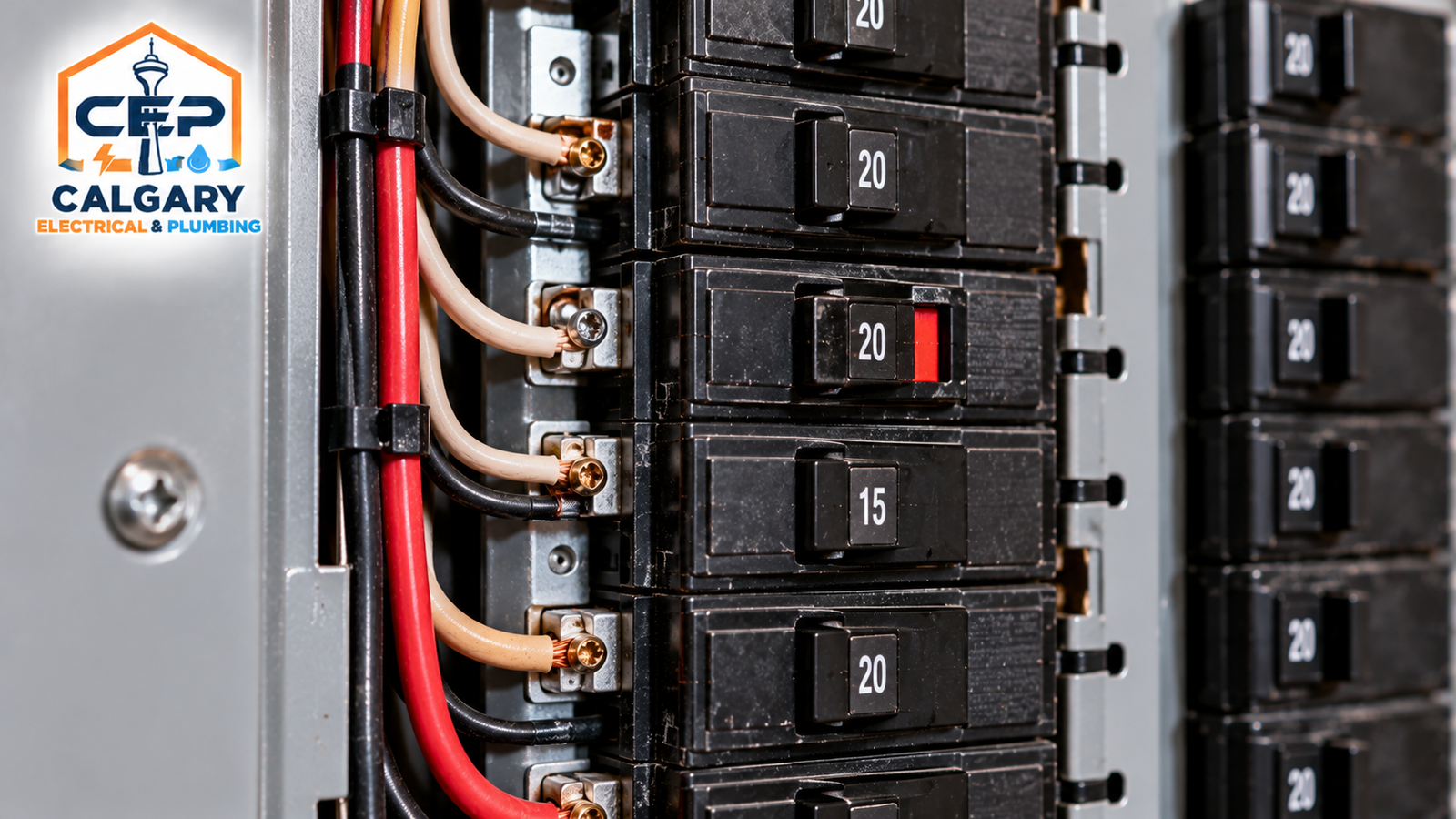
A breaker may be defective if it has visible damage, fails to operate correctly, or behaves abnormally during professional testing.
However, a breaker that trips repeatedly may actually be functioning as designed.
Diagnosis should include the connected circuit and appropriate equipment checks.
Can a Breaker Trip Without an Overload?
Yes. Short circuits, ground faults, certain arc-fault conditions, defective equipment, and damaged breakers can cause trips without a sustained overload.
The specific response depends on the type of protective device installed.
Understanding this distinction helps explain why moving appliances to another outlet does not always solve the problem.
Do AFCI and GFCI Breakers Trip for Different Reasons?
Yes. Arc-fault circuit interrupters are designed to detect certain hazardous arcing conditions.
Ground-fault circuit interrupters respond to specified current imbalances associated with leakage paths.
Combination devices may provide more than one protective function.
These breakers can trip for reasons that differ from conventional overcurrent protection.
Can an Electrical Panel Problem Cause Repeated Trips?
Yes. Damaged breaker connections, deteriorated panel components, or unsuitable equipment can contribute to electrical problems.
However, the panel should not be blamed without inspection.
If multiple warning signs are present, review our related article on signs your electrical panel needs to be replaced.
What if the Main Breaker Keeps Tripping?
A main breaker trip can affect the entire home’s electrical supply.
Possible causes include excessive overall demand, serious electrical faults, or equipment problems.
Because the main breaker protects a larger portion of the installation, repeated trips deserve professional attention.
Emergency takeaway: Smoke, sparks, strong burning smells, visible overheating, or water contacting electrical equipment require urgent action. Keep clear of the affected area, call emergency services when there is immediate danger, and do not restore power until the installation has been evaluated.
Calgary homeowners can also review the City of Calgary’s electrical appliance safety information for additional guidance on reducing electrical hazards.
For company information and service updates, see this Google business reference.
How Do Electricians Fix Repeated Circuit Breaker Trips in Calgary?
Professional electrical troubleshooting focuses on finding the cause of the trip rather than simply replacing the breaker.
The correct repair depends on the circuit, connected equipment, protective device, and condition of the wiring.
Inspecting the Affected Electrical Circuit
An electrician may begin by reviewing the reported symptoms and identifying the affected circuit.
Depending on the circumstances, testing can help identify overloads, insulation problems, connection defects, or equipment faults.
Appropriate safety procedures are essential throughout the process.
Checking Electrical Appliances
If trips occur when a specific appliance operates, the electrician may investigate the appliance and its connected circuit.
A defective appliance may need repair or replacement.
Replacing a healthy breaker would not resolve an appliance fault.
Repairing Damaged Wiring
Damaged wiring can cause short circuits, ground faults, and other dangerous conditions.
The required repair depends on the location and extent of the damage.
Work may involve correcting connections, replacing affected conductors, or repairing unsuitable installations.
Replacing a Defective Circuit Breaker
If testing identifies a defective breaker, a compatible replacement may be appropriate.
The new device must be suitable for the panel and circuit.
Breaker replacement should not be used to conceal an unresolved wiring or load problem.
Adding Dedicated Circuits
Some appliances require dedicated circuits because of their electrical demand or installation requirements.
Where existing circuits are consistently overloaded, an electrician may recommend additional circuits.
The home’s available panel capacity and calculated electrical load must be considered.
Evaluating Electrical Panel Capacity
A full panel does not automatically mean the home requires a larger electrical service.
Likewise, a panel with empty breaker spaces may still have limited available electrical capacity.
An electrician can assess circuit arrangement, panel suitability, and the home’s overall electrical demand.
When Is an Electrical Panel Upgrade Necessary?
A panel upgrade may be appropriate when existing equipment is damaged, unsuitable, or unable to accommodate required electrical changes.
However, a single tripping breaker usually calls for circuit diagnosis before a complete panel replacement is considered.
The decision should be supported by inspection findings.
Do Electrical Repairs Require Permits in Calgary?
Permit requirements depend on the type and scope of electrical work.
Some repairs may differ from projects involving new circuits, panel replacements, or service modifications.
Ask the electrical contractor to explain which permits and inspections apply to the proposed work.
How Much Does Circuit Breaker Repair Cost in Calgary?
Repair costs depend on the cause of the problem and the work required.
Replacing a defective breaker may involve a different scope than locating damaged wiring or installing a new circuit.
Complex troubleshooting, equipment accessibility, and permit requirements can also affect pricing.
A site-specific estimate is more useful than assuming every tripping breaker requires the same repair.
Should You Replace the Breaker Yourself?
Electrical panel interiors contain hazardous components, and some parts may remain energized even when the main breaker is off.
Breaker compatibility and correct installation are also essential.
Homeowners should not remove panel covers or attempt breaker replacement without appropriate qualifications and authorization.
How to Prevent Circuit Breakers From Tripping Again
Although not every electrical fault can be prevented, sensible equipment use and maintenance can reduce avoidable problems.
- Avoid operating several high-demand portable appliances on the same circuit.
- Follow manufacturer instructions for appliance installation and use.
- Stop using damaged cords, plugs, and electrical devices.
- Keep electrical equipment protected from moisture.
- Avoid overloading extension cords and power strips.
- Arrange professional installation when adding high-demand equipment.
- Have repeated breaker trips investigated instead of continually resetting the breaker.
- Keep the electrical panel accessible for inspection and maintenance.
Why Calgary Homes Experience Different Breaker Problems
Electrical usage varies between households and properties.
In Mahogany or Seton, homeowners may be adding EV charging equipment or finishing basements. In established areas such as Lake Bonavista or Riverbend, electrical circuits may have undergone several renovations over the years.
Neither newer nor older homes are immune to electrical faults.
The correct solution depends on the actual condition of the installation.
What Should You Expect During a Professional Electrical Visit?
An electrician should review the symptoms, investigate likely causes, and explain the recommended correction.
If repairs are necessary, ask about the proposed scope, expected electrical interruption, and any required permits.
Clear explanations help homeowners understand why a repair is needed.
Calgary example: A homeowner in Cranston experiences repeated trips on a basement circuit after installing additional equipment. Professional testing determines whether the problem involves excessive load, damaged wiring, or a protective device fault. The resulting recommendation is based on the findings rather than guesswork.
Professional repair takeaway: Repeated breaker trips should be diagnosed before components are replaced. The appropriate solution may involve appliance repair, wiring corrections, breaker replacement, an additional circuit, or improvements to the electrical distribution system.
For more background about the company’s services, watch this Calgary Electrical and Plumbing service video.
Request a circuit breaker inspection and repair estimate in Calgary in just a few clicks.
Get My Free Estimate
Stop Repeated Circuit Breaker Trips Before They Become a Bigger Problem
A circuit breaker that keeps tripping is signalling that something needs attention. Overloaded circuits, faulty appliances, damaged wiring, and defective electrical equipment are all possible causes. Identifying the source is essential before deciding on the right repair.
Calgary Electrical and Plumbing supports homeowners with electrical services alongside its work as a local calgary plumber. If your breaker keeps tripping, call (403) 421-1991 to discuss a professional electrical inspection and the next steps.
Frequently Asked Questions about Circuit Breakers Tripping
Why does my circuit breaker keep tripping when nothing is plugged in?
A breaker can trip even when no portable appliances are connected because fixed electrical equipment, hidden wiring faults, moisture, or a defective protective device may still be involved. Leave the circuit off if trips continue and arrange professional electrical troubleshooting.
Is it dangerous if my circuit breaker keeps tripping?
Repeated trips can indicate an overload, short circuit, ground fault, or equipment defect. Some causes present significant electrical hazards. Do not repeatedly reset the breaker. Burning smells, smoke, sparking, or visible overheating require urgent attention from qualified electrical personnel.
Can I reset a circuit breaker that keeps tripping?
If there are no signs of damage, moisture, or overheating, a normal reset may be appropriate according to the manufacturer’s instructions. However, a breaker that trips again should be left off. Repeated resetting can re-energize a dangerous electrical fault.
Does a tripping breaker mean my electrical panel needs replacement?
Not necessarily. Most breaker trips require investigation of the connected circuit and equipment before panel replacement is considered. A complete panel replacement may be recommended when the panel is damaged, deteriorated, incompatible with required components, or otherwise unsuitable for continued service.
How can I stop a circuit breaker from tripping in my Calgary home?
Start by reducing unnecessary appliance demand and avoiding damaged electrical equipment. If the breaker trips repeatedly, arrange professional diagnosis. The solution may involve repairing wiring, replacing a defective appliance or breaker, adding a dedicated circuit, or correcting another electrical problem.
Don’t ignore recurring electrical faults or warning signs.
Call (403) 421-1991 Now
Local Electrical Assistance Available 24/7 in Calgary