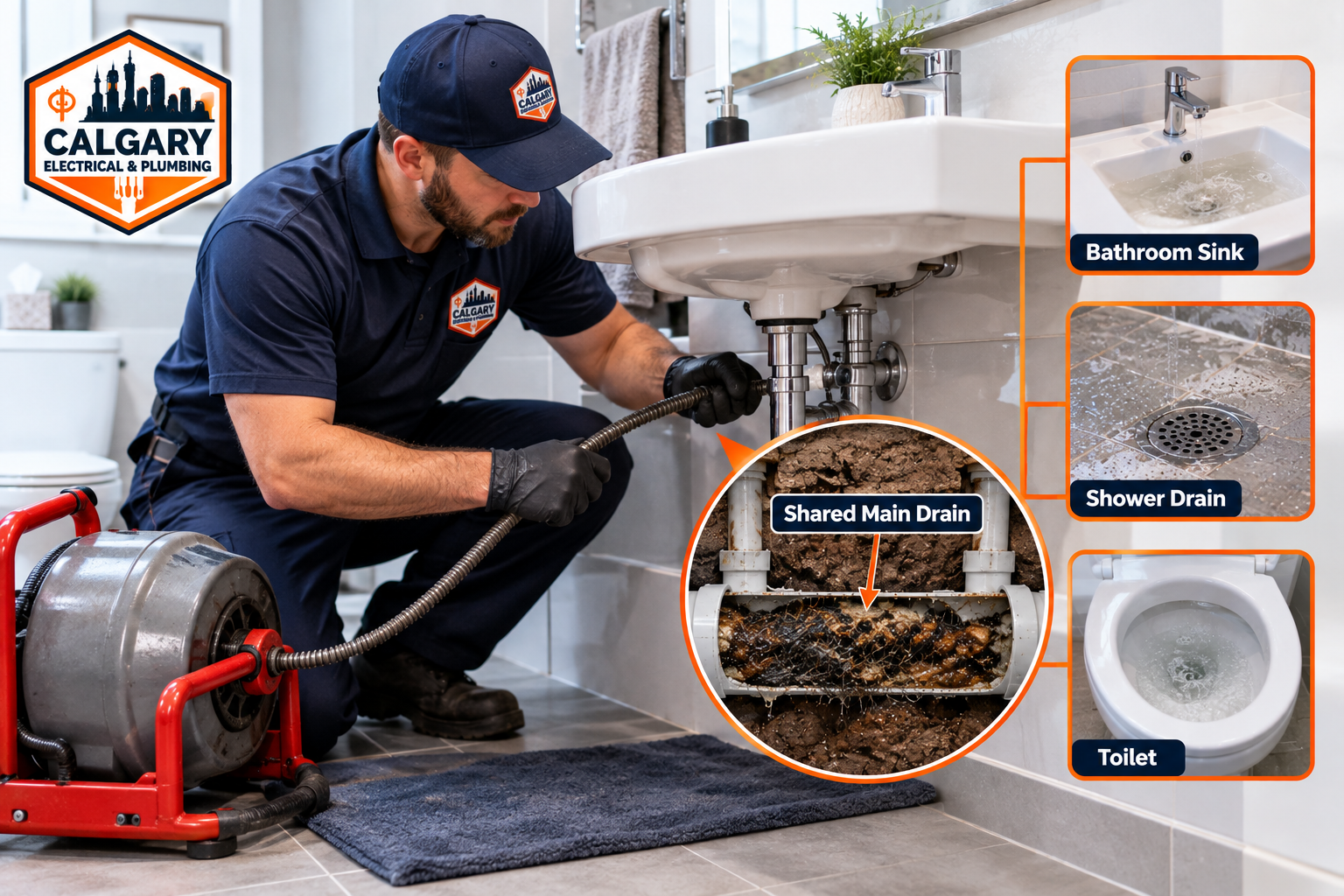


Why Do Multiple Drains Clog at the Same Time? Imagine finishing a shower and noticing water collecting around your feet, only to discover that the bathroom sink is also draining slowly. A few minutes later, the toilet begins gurgling. When several plumbing fixtures develop problems together, the cause may be deeper inside the home’s drainage system.
Homeowners in Southeast Calgary communities such as Mahogany, Cranston, Auburn Bay, and Copperfield may encounter simultaneous drainage problems when a shared pipe becomes restricted. Understanding when to arrange professional drain cleaning and plumbing services in Calgary can help prevent a developing obstruction from turning into a wastewater backup.
Although individual sinks and showers can clog independently, several affected fixtures often indicate a restriction in a common drainage branch or the main building sewer. Pipe damage, tree-root intrusion, accumulated debris, and venting issues can also contribute to related symptoms. Identifying which fixtures are affected helps determine the likely location.
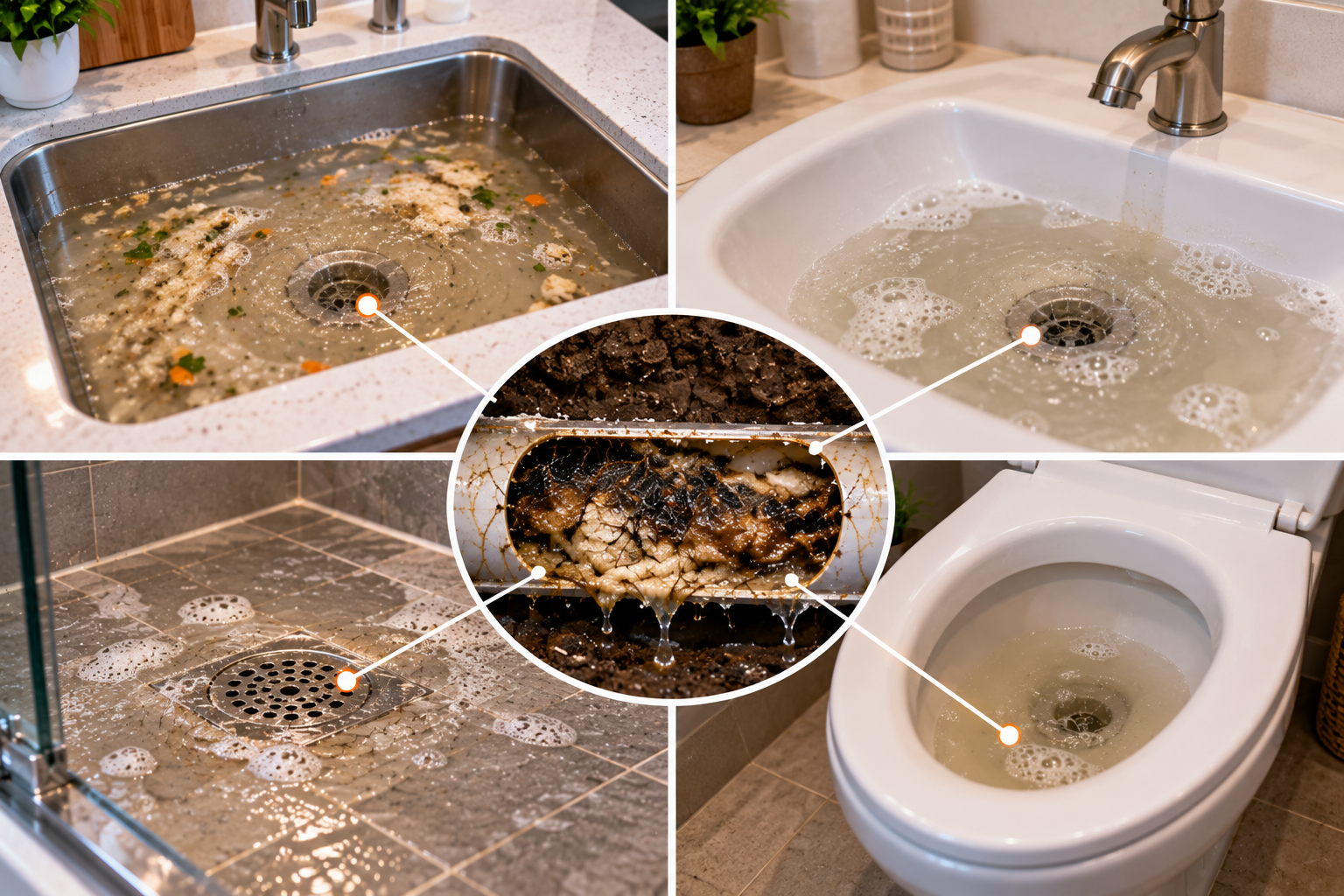
Multiple drains often clog at the same time because they share a partially or fully obstructed drainage pipe. Common causes include accumulated debris, grease, tree roots, and damaged sewer lines. If several fixtures back up together, stop using the affected plumbing and arrange an inspection.
What Causes Multiple Household Drains to Clog Simultaneously?
Residential plumbing systems contain several interconnected drainpipes. Wastewater from sinks, showers, bathtubs, toilets, and appliances travels through individual fixture drains before joining larger pipes.
When an obstruction develops downstream of several connected fixtures, those fixtures may begin draining slowly or backing up at approximately the same time.
The number and location of affected drains help determine if the restriction is confined to one bathroom or involves a larger section of the system.
How Does a Shared Drain Line Cause Several Fixtures to Back Up?
A shared branch drain collects wastewater from two or more fixtures before connecting to a larger building drain.
If that branch becomes restricted, water from each connected fixture may have difficulty moving downstream.
For example, a Cranston homeowner might notice that the upstairs bathroom sink and bathtub both drain slowly, while the kitchen sink continues functioning normally.
This pattern may suggest a restriction affecting the bathroom branch rather than the entire building sewer.
However, fixture locations and pipe routing vary, so symptoms alone cannot confirm the exact obstruction point.
Can a Main Sewer Line Blockage Affect Every Drain?
Yes. The main building sewer carries wastewater away from the home’s drainage system toward the municipal sewer or another approved wastewater disposal system.
A significant obstruction in this line can affect multiple fixtures throughout the property.
Because wastewater cannot move freely downstream, it may rise through lower fixtures or floor drains when additional water enters the system.
Basement floor drains, lower-level showers, and toilets can be among the first locations where a backup becomes visible.
Important: If wastewater is rising through a floor drain, shower, or toilet, stop using the connected plumbing. Avoid running dishwashers, washing machines, and other fixtures until the drainage problem has been assessed.
Can Grease and Food Waste Block Several Drains?
Grease, cooking oils, and food residue can contribute to restrictions in kitchen drainage pipes.
As grease cools and accumulates, it can trap additional debris and reduce the effective pipe opening.
If the obstruction develops in a shared downstream line, fixtures beyond the kitchen may also be affected.
This is one reason grease should not be poured into sinks, even when followed by hot water.
Can Tree Roots Cause Multiple Drain Blockages?
Tree roots can enter underground sewer piping through damaged joints, cracks, or other openings.
Once inside, roots may catch paper and debris, creating progressively larger restrictions.
Root intrusion is more likely in susceptible underground piping than in the short drain connection beneath a sink.
Homes with mature trees and older sewer infrastructure may require further investigation when repeated backups occur.
Can Damaged or Sagging Sewer Pipes Cause Recurring Clogs?
Yes. Cracked, displaced, or deteriorated sewer pipes can interrupt normal wastewater movement.
A section with inadequate slope or a localized sag may allow water and solids to accumulate.
Repeated drain cleaning may temporarily improve flow without correcting the underlying pipe condition.
A suitable sewer inspection can help identify defects that require repair rather than another basic cleaning.
Can Several Fixtures Develop Independent Clogs at Once?
It is possible for separate drains to become restricted independently, particularly in heavily used households.
However, simultaneous symptoms involving several fixtures should raise suspicion of a shared drainage problem.
Assuming every fixture has an unrelated clog can lead to unnecessary cleaning attempts while the main obstruction remains.
Key takeaway: Several drains becoming slow or blocked together often indicates a restriction downstream of their connection points. Shared branch drains, main sewer lines, roots, grease deposits, and damaged piping are important possibilities.
Homeowners can review the Calgary Electrical and Plumbing Google Maps business listing and watch a video overview of the company’s plumbing services when researching local service options.
How Can You Tell If Multiple Clogged Drains Are a Sewer Emergency?
Not every slow drain requires emergency service. However, simultaneous backups can become urgent when wastewater is unable to leave the building.
The most important clues are the fixtures affected, the direction of water movement, and the presence of wastewater where it should not appear.
Why Does the Shower Back Up When the Toilet Flushes?
Toilets release a relatively large volume of wastewater during flushing.
If the downstream drainage branch is restricted, that discharge may raise the water level inside connected piping.
Water can then appear in a nearby shower or bathtub, especially when that fixture has a lower drain opening.
In a Copperfield home, a shower that backs up every time the toilet flushes may indicate a shared branch obstruction.
This is a reason to stop using the affected fixtures rather than repeatedly testing them.
What Warning Signs Indicate a Serious Sewer Blockage?
Several symptoms may suggest that a drainage problem extends beyond an individual sink or shower.
- Water rising through a basement floor drain when another fixture is used.
- A shower or bathtub backing up after a toilet flush.
- Several fixtures draining slowly within the same period.
- Repeated gurgling from toilets, sinks, or floor drains.
- Sewage-like odours accompanied by poor drainage.
- Wastewater appearing in a lower-level fixture or utility area.
These signs do not all confirm the same defect, but they warrant careful assessment.
Why Do Basement Drains Back Up Before Upstairs Fixtures?
Water can emerge at the lowest available opening when wastewater accumulates behind a downstream obstruction.
That opening may be a basement floor drain, lower-level shower, or another connected fixture.
The precise behaviour depends on the plumbing layout, elevations, and location of the blockage.
In a Riverbend home with a basement bathroom, a main-line restriction may become visible downstairs before upstairs fixtures overflow.
Can a Blocked Plumbing Vent Affect Multiple Drains?
Drainage vents help manage air pressure within the plumbing system and protect fixture trap seals.
A venting problem can contribute to gurgling and unusual drainage behaviour.
However, venting issues do not explain every simultaneous blockage, particularly when wastewater is visibly backing up through lower fixtures.
A plumber should distinguish air-pressure problems from a physical obstruction.
What Should You Do Immediately When Several Drains Back Up?
Stop using the affected plumbing fixtures and avoid introducing more wastewater into the drainage system.
Keep people and pets away from contaminated water, and avoid direct contact with sewage.
If wastewater is near electrical equipment or outlets, stay clear of the affected area and seek appropriate professional assistance.
Do not repeatedly flush toilets or run taps to see if the blockage has disappeared.
Emergency guidance: Active sewage backups can create contamination and property-damage risks. Avoid opening pressurized cleanouts or attempting repairs in contaminated areas. Arrange qualified plumbing assistance and appropriate cleanup.
Can a Sewer Problem Cause Bad Smells in Several Bathrooms?
Yes. Drainage restrictions, trap-seal problems, and venting defects may contribute to unpleasant odours in connected fixtures.
However, an odour alone does not prove that the main sewer is blocked.
For additional information about one common symptom, read Why Does My Shower Drain Smell?, which explains drain deposits, trap water seals, and related plumbing concerns.
Can Municipal Sewer Problems Affect Household Drains?
In some circumstances, a problem affecting municipal sewer infrastructure may contribute to backups at connected properties.
However, many household backups originate within privately maintained drainage piping.
Responsibility depends on the location of the defect and applicable municipal requirements.
For properties outside Calgary, homeowners can begin researching local municipal information through the City of Airdrie official website.
Urgency takeaway: Multiple slow drains deserve attention, but wastewater backing up through lower fixtures is especially concerning. Stop using connected plumbing and have the cause assessed before normal use resumes.
For another local reference, consult the Calgary Electrical and Plumbing Google Maps location information.
Request a multiple-drain blockage assessment estimate in Calgary in just a few clicks.
Get My Free Estimate
How Do Calgary Plumbers Diagnose and Clear Multiple Clogged Drains?
Professional diagnosis begins by identifying which fixtures are affected and how the symptoms developed.
The plumber may examine accessible cleanouts, evaluate drainage behaviour, and determine which branch or main line is most likely restricted.
Cleaning methods depend on pipe material, size, condition, accessibility, and the suspected obstruction.
How Do Plumbers Locate a Shared Drain Blockage?
A plumber may review the drainage layout and determine which fixtures connect to the same branch.
For example, a blockage affecting only one bathroom may be located before that branch joins the main building drain.
If fixtures throughout the property are affected, attention may shift toward a larger shared pipe.
Accessible cleanouts can provide useful entry points for investigation and cleaning.
When Is a Sewer Camera Inspection Necessary?
A sewer camera inspection may be appropriate when recurring blockages suggest roots, pipe damage, displaced joints, or other structural problems.
A camera can help document visible conditions inside accessible piping.
However, heavy standing water or a complete obstruction may limit visibility until the line has been sufficiently cleared.
Camera findings should be interpreted alongside the property’s symptoms and plumbing configuration.
Can Mechanical Drain Cleaning Clear Several Blocked Fixtures?
Mechanical drain cleaning uses suitable cable equipment to address obstructions within connected drainage pipes.
If several fixtures are affected by one shared blockage, clearing that restriction may restore flow to all of them.
The plumber must select equipment appropriate for the pipe size and condition.
Mechanical cleaning may not permanently resolve a problem caused by a collapsed pipe or recurring root intrusion.
When Is Hydro Jetting Considered?
Hydro jetting uses specialized high-pressure water equipment to clean suitable drainage or sewer piping.
It may be considered for certain accumulated deposits or recurring restrictions after the condition of the line has been assessed.
It is not automatically appropriate for every residential drain.
Fragile, damaged, or unsuitable piping may require another approach or repair.
Mechanical Drain Cleaning
Often used to address a localized obstruction with equipment selected for the pipe diameter and material.
Hydro Jetting
May help clean suitable piping affected by certain deposits, subject to inspection, access, and equipment requirements.
Why Are Chemical Drain Cleaners a Poor Solution for Multiple Blocked Drains?
Pouring chemicals into several fixtures does not reliably resolve an obstruction located in a shared sewer line.
Some chemical products can cause burns and create hazards for people working on the plumbing later.
Never mix drain-cleaning products or combine them with other household chemicals.
For general background on different product categories, see the overview of drain-cleaning methods and chemicals.
If chemical cleaners have already been used, tell the plumber before any drainage components are opened.
How Much Does It Cost to Clear Multiple Clogged Drains in Calgary?
Costs depend on the location and severity of the obstruction, access to the drainage system, equipment required, and any underlying defects.
| Service | Illustrative CAD Range | Typical Purpose |
|---|---|---|
| Drainage diagnosis and assessment | $100–$300+ | Identifying likely shared drainage restrictions |
| Mechanical branch drain cleaning | $150–$400+ | Clearing suitable shared branch obstructions |
| Main sewer line cleaning | $250–$700+ | Addressing accessible main-line blockages |
| Sewer camera inspection | $200–$500+ | Examining accessible piping for recurring problems |
| Specialized hydro jetting | $400–$1,000+ | Cleaning suitable piping where justified |
Pricing disclaimer: These figures are illustrative budgeting ranges, not verified Calgary market averages or published Calgary Electrical and Plumbing rates. Actual costs may differ substantially. Taxes, emergency attendance, difficult access, excavation, replacement parts, and sewer repairs may increase the total.
When Is Sewer Line Repair Necessary?
Cleaning may not be sufficient when a pipe is collapsed, severely displaced, or structurally deteriorated.
Repeated obstructions in the same location can also justify investigating an underlying defect.
Repair options depend on the pipe material, location, extent of damage, and available access.
Any excavation or pipe replacement should be based on a suitable diagnosis rather than assumed from symptoms alone.
Professional service takeaway: Clearing one shared blockage may resolve symptoms at several fixtures. However, repeated clogs, root intrusion, and damaged piping may require camera inspection or repairs to address the underlying cause.
Additional company details can be found through the shared Google business information for Calgary Electrical and Plumbing.
How Can Calgary Homeowners Prevent Multiple Drains From Clogging Again?
Preventing repeated drain blockages involves reducing debris entering the plumbing system and correcting any confirmed pipe defects.
Household habits can help limit common buildup, but maintenance alone cannot repair damaged underground sewer lines.
Keep Grease and Cooking Oils Out of Kitchen Drains
Cooking grease can contribute to deposits inside drainage pipes.
Allow grease to cool and dispose of it appropriately rather than pouring it into the sink.
Use sink strainers to collect food particles and reduce the amount of debris entering the kitchen drain.
Prevent Hair and Soap Residue From Entering Bathroom Drains
Hair and personal-care residue commonly accumulate in bathroom drainage fittings.
Suitable hair catchers can help reduce buildup in showers and bathtubs.
Regularly remove visible debris and follow the manufacturer’s guidance for maintaining drain covers and stoppers.
Flush Only Appropriate Materials Down Toilets
Toilets should not be used to dispose of wipes, paper towels, hygiene products, or other materials not intended for flushing.
Even products marketed as flushable may contribute to drainage restrictions under some conditions.
Keeping inappropriate materials out of the system can reduce the risk of shared-line blockages.
Investigate Repeated Drain Problems Instead of Repeatedly Clearing Them
If several drains become blocked again shortly after professional cleaning, the cause may involve more than ordinary debris accumulation.
Recurring symptoms can justify examining the sewer for roots, pipe defects, or persistent restrictions.
A suitable inspection can help determine if additional cleaning or repair is necessary.
Do Newer Calgary Homes Experience Shared Drain Blockages?
Yes. A newer home is not automatically protected from drainage problems.
Improper disposal of grease, excessive debris, installation defects, or damage can affect newer plumbing systems.
In communities such as Seton, Mahogany, and New Brighton, homeowners should still investigate simultaneous drainage symptoms rather than assuming the age of the property rules out a shared blockage.
Should Homeowners Schedule Preventive Sewer Inspections?
Not every property needs routine sewer camera inspections.
However, homes with recurring backups, known root intrusion, or previously identified pipe defects may benefit from a maintenance plan based on their condition.
Inspection frequency should reflect actual risks rather than an arbitrary schedule.
How Can You Recognize a Returning Shared-Line Problem?
Pay attention when the same combination of fixtures repeatedly drains slowly.
For example, a Lake Bonavista homeowner might notice that the basement shower and laundry drain develop symptoms together every few months.
Documenting which fixtures are affected and when the problem occurs can help identify a recurring shared restriction.
What Information Should You Give a Plumber?
Describe which drains are affected, when symptoms began, and if wastewater has backed up through a lower fixture.
Mention previous cleaning work, known sewer repairs, and any chemical products used.
For homeowners in McKenzie Towne, Douglasdale, Riverbend, and surrounding Southeast Calgary communities, these details can help guide an efficient initial assessment.
Property owners who share plumbing experiences online can also use platforms such as the Tumblr dashboard to organize their own maintenance notes, although personal posts should not replace a qualified plumbing diagnosis.
Final recommendation: Prevent shared drain blockages by limiting grease, hair, wipes, and other debris entering the plumbing system. When several fixtures repeatedly clog together, investigate the common drainage piping instead of treating each fixture as an isolated problem.
Request a multiple-drain blockage assessment estimate in Calgary in just a few clicks.
Get My Free Estimate
Restore Proper Drainage Throughout Your Calgary Home
When several drains clog together, a shared branch restriction or main sewer blockage may be responsible. Recognizing the warning signs, stopping wastewater discharge during a backup, and identifying the affected pipe can help limit further damage.
If multiple fixtures are draining slowly or backing up, a local calgary plumber can assess the system and explain suitable cleaning or repair options. Call Calgary Electrical and Plumbing at (403) 421-1991 to discuss the problem.
Frequently Asked Questions about Multiple Clogged Drains
Why are my kitchen sink, shower, and toilet clogging at the same time?
Several fixtures developing drainage problems together may indicate an obstruction in a shared branch or the main building sewer. The exact location depends on how the fixtures connect. A plumber can assess the affected drains and determine if a common pipe is restricted.
Does having multiple clogged drains mean my main sewer line is blocked?
Not necessarily. A main sewer blockage is one possibility, but a shared bathroom or kitchen drainage branch can also affect several fixtures. The location of the symptoms, presence of backups, and plumbing layout help determine which section requires investigation.
Why does my shower fill with water when I flush the toilet?
Water may rise through the shower when the toilet discharges into a restricted shared drain. Because the shower opening is often lower, wastewater can appear there when it cannot flow downstream. Stop using the affected fixtures and arrange a plumbing assessment.
How much does it cost to fix multiple clogged drains in Calgary?
Costs depend on the blockage location, access, equipment, and any pipe damage. An illustrative planning range for main sewer cleaning is CAD $250–$700 or more. This is not a verified Calgary average or binding company quote, and repairs may cost extra.
Should I stop using water when several drains are backing up?
Yes. If wastewater is backing up through fixtures, stop using connected sinks, toilets, showers, and appliances to avoid adding more water to the affected system. Keep people away from contaminated areas and arrange qualified plumbing assistance before normal use resumes.
Don’t wait for the problem to get worse.
Call (403) 421-1991 Now
Local Help Available 24/7 in Calgary