
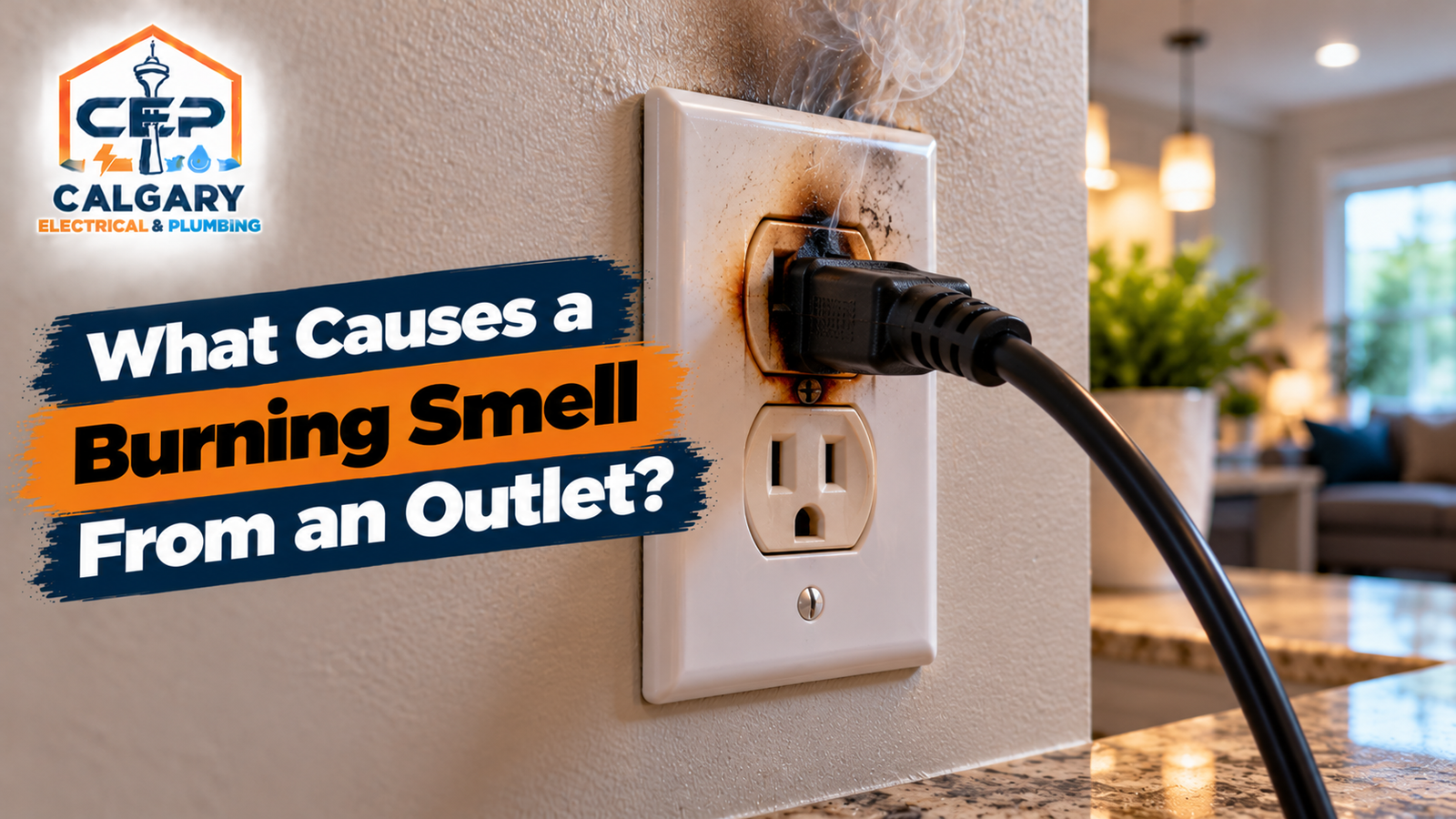
What Causes a Burning Smell From an Outlet? A Calgary homeowner might first notice the problem while making breakfast, charging a phone or switching on a portable heater. The smell may resemble melting plastic, burnt rubber or an unfamiliar electrical odour. Although the outlet might still work, that does not mean it is safe.
Electrical receptacles should not produce burning smells during normal operation. Homeowners looking for information about inspections, wiring repairs and other residential services can visit Calgary Electrical and Plumbing. Understanding what can cause overheating is an important first step, but identifying the actual fault requires appropriate electrical assessment.
Whether your property is in Mahogany, Cranston, Auburn Bay, McKenzie Towne or an established community such as Riverbend, the same basic warning signs apply. This guide explains why outlets develop burning odours, which symptoms are particularly concerning, what to do immediately and how professional electricians investigate and correct the problem.
A burning smell from an outlet may result from loose electrical connections, arcing, worn receptacle contacts, damaged wire insulation or defective appliances. Stop using the affected outlet and arrange a qualified electrical inspection. If smoke, flames or an active fire are present, evacuate and call 911.
What Causes a Burning Smell From an Electrical Outlet?
A burning odour near a receptacle can originate from several different electrical components. The visible outlet is one possibility, but the source may also be a connection inside the wall box, a damaged conductor or equipment plugged into the receptacle.
Electrical current naturally generates some heat when it encounters resistance. Properly designed and installed components manage this heat within their intended operating limits. Problems develop when resistance becomes excessive, components deteriorate or electrical equipment operates outside suitable conditions.
How Loose Wiring and Electrical Arcing Create Burning Smells
Loose wiring is an important cause of localized electrical overheating. If a conductor is not securely connected to a terminal, the contact area may become unreliable. Resistance at that connection can increase, producing heat as current flows.
Electrical arcing is another concern. Arcing occurs when electricity crosses a gap between conductive surfaces. It can produce intense localized heat capable of damaging contacts, insulation and nearby materials.
Both conditions may create a burning-plastic odour. Some faults produce buzzing or crackling sounds, but the absence of noise does not establish that the wiring is safe.
Worn Receptacle Contacts and Loose Plugs
Inside a receptacle, metal contacts are designed to grip plug blades securely. Repeated insertion, mechanical damage and deterioration can weaken that grip.
A loose-fitting plug may develop an unreliable electrical connection. Under load, the connection can generate excessive heat. If a plug falls out easily or feels unusually unstable, the outlet should be inspected rather than adjusted by the homeowner.
High-Demand Appliances and Circuit Overloading
Portable heaters, kettles, air conditioners and certain kitchen appliances draw substantial electrical current. Using multiple high-demand devices on a circuit can increase the load beyond what the installation is intended to handle.
Overcurrent protection may interrupt an overloaded circuit. However, a poor connection can overheat even when total circuit current remains below the threshold needed to trip a conventional breaker.
For this reason, an outlet that smells like burning should not be considered safe simply because electricity is still available.
Damaged Appliance Plugs and Charging Equipment
The source of the odour is not always the receptacle itself. Damaged appliance cords, loose plug blades and defective charging adapters can generate heat close to an outlet.
A failing adapter may smell like burning plastic while the receptacle remains functional. Nevertheless, when overheating has occurred near the outlet, both the equipment and the electrical connection may need assessment.
Damaged Electrical Insulation
Electrical conductors have insulation designed for specified operating conditions. If a connection overheats, the insulation surrounding nearby wiring may soften, discolour or deteriorate.
The resulting odour can travel through openings around the electrical box. The wall plate may still look clean even though concealed components have experienced heat damage.
Why the Smell Sometimes Disappears
A burning smell may occur only when a particular appliance is operating. Once the appliance is switched off, a defective connection can cool and the odour may fade.
This temporary change does not correct loose terminals, damaged contacts or deteriorated insulation. Repeated heating can make the problem worse over time.
Calgary example: A homeowner in Mahogany notices an unfamiliar burning smell while using a countertop appliance. The odour disappears after the appliance is switched off. Because a faulty connection may simply have cooled, the homeowner should keep the outlet out of service until it is assessed.
Quick takeaway: Burning outlet smells commonly involve loose connections, arcing, worn receptacle contacts, damaged insulation or faulty connected equipment. Identifying the exact cause requires more than examining the outlet cover.
Homeowners looking for company location and service information can consult the Calgary Electrical and Plumbing Google Maps listing.
Is a Burning Smell From an Electrical Outlet Dangerous?
Yes. A burning smell associated with an outlet can indicate a condition capable of creating an electrical fire or shock hazard. Overheating may damage insulating materials, receptacle components and wiring connections.
Not every unusual smell in a home comes from electrical equipment. However, when the odour appears to originate from a receptacle, it is safer to treat it as a possible electrical problem until the source has been identified.
Warning Signs of an Overheating Electrical Outlet
Some electrical faults produce visible or audible symptoms. Others remain concealed behind the wall plate. Warning signs that deserve attention include:
- A burning-plastic or rubber-like odour near the outlet.
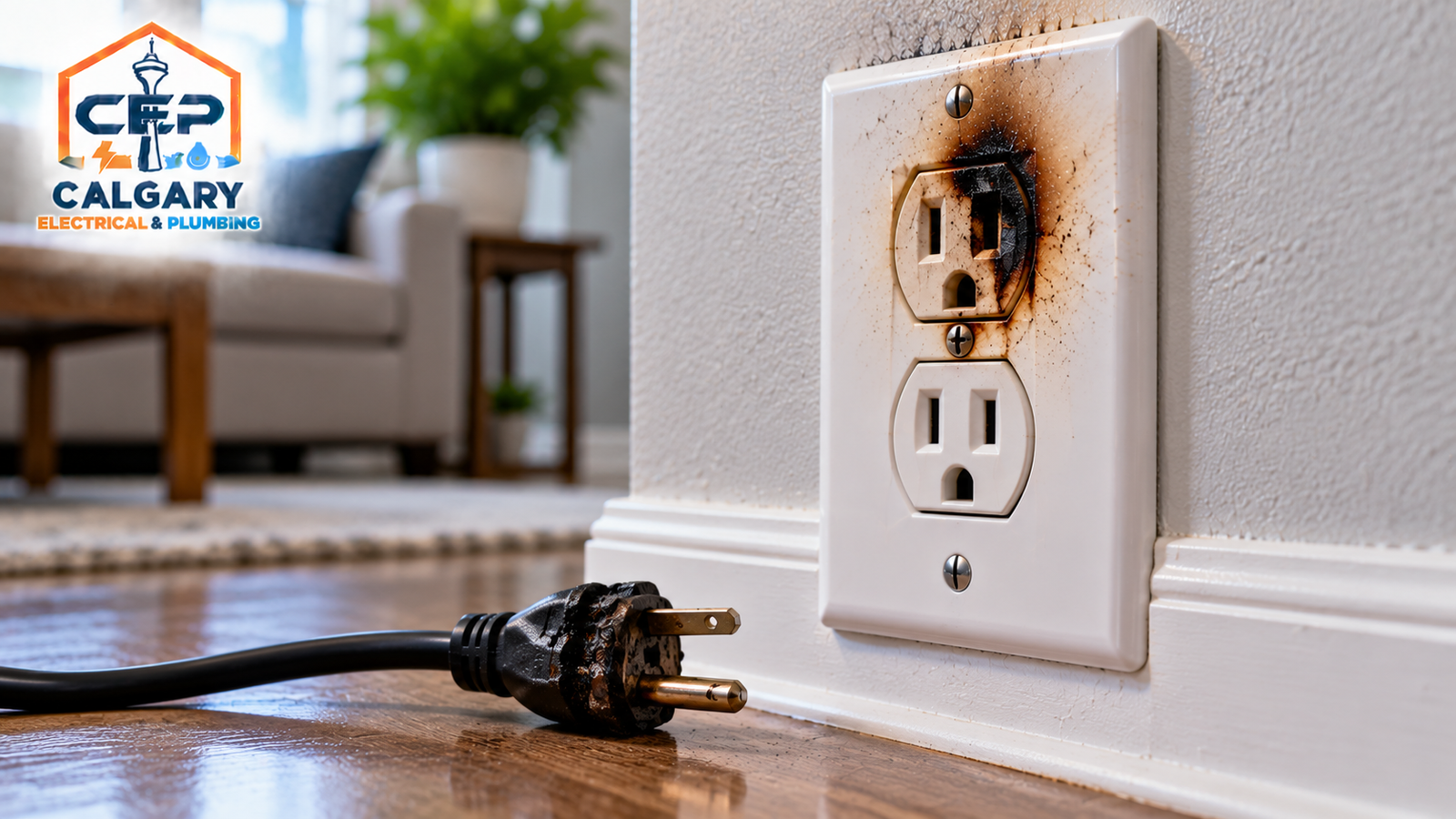
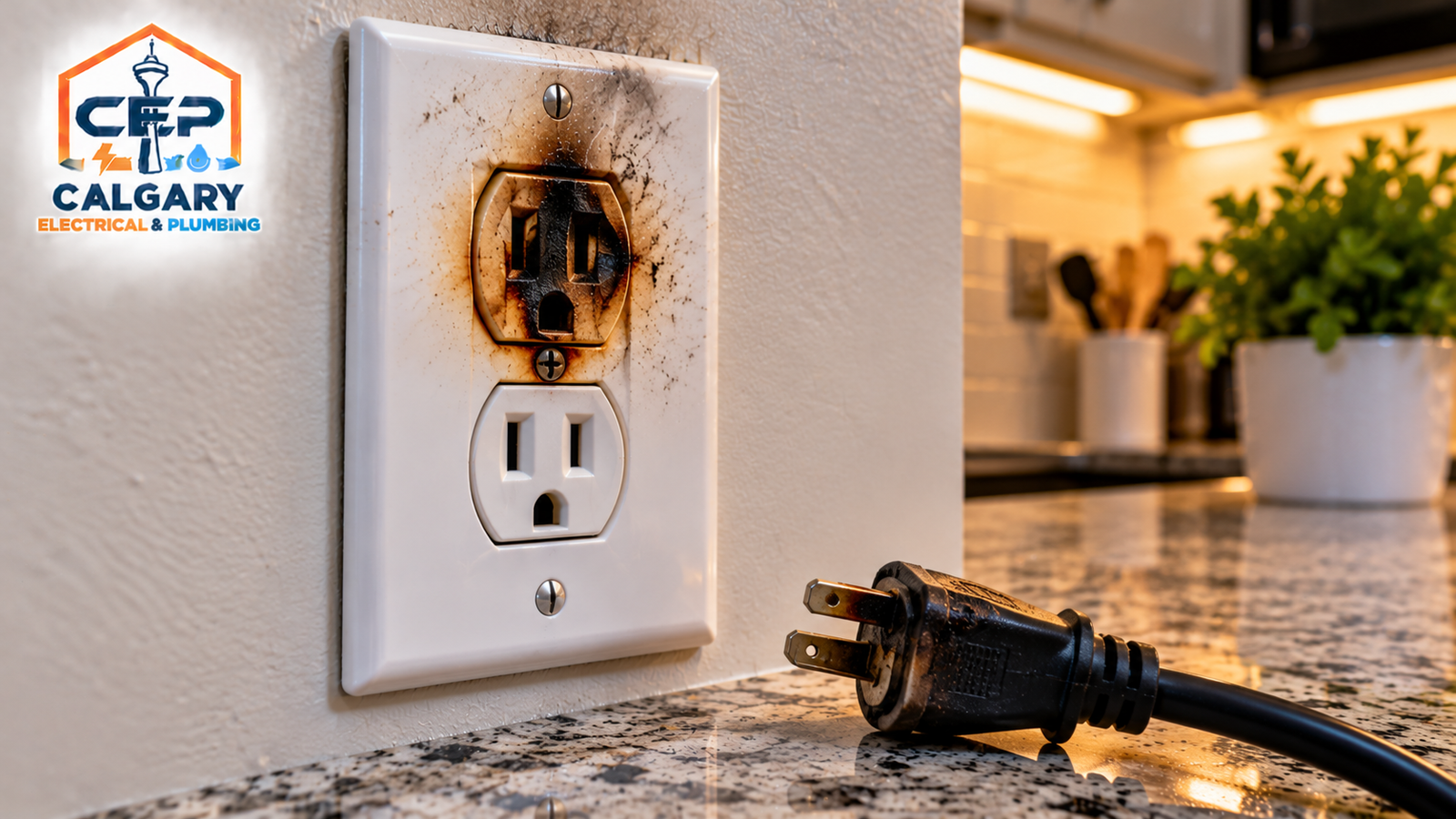
- Brown or black marks around receptacle openings.
- Cracked, distorted or melted plastic components.
- Buzzing, crackling or popping noises.
- Visible sparks or evidence of arcing.
- Unusually hot appliance plugs.
- Intermittent power or recurring breaker trips.
- Smoke coming from the outlet or surrounding wall.
Any of these symptoms can justify professional attention. Smoke, flames or an active fire require immediate emergency action.
Can an Outlet Overheat Without Tripping a Breaker?
Yes. Conventional circuit breakers are intended to respond to specified overcurrent conditions. A loose terminal can generate localized heat while the overall circuit current remains below the breaker’s trip threshold.
Consequently, the fact that a breaker has not tripped does not prove that a receptacle or its wiring is safe.
Does a Burning-Plastic Smell Identify the Fault?
No. Overheated wire insulation, receptacle plastic, power adapters and appliance components may produce similar odours. Human smell perception cannot reliably identify which component is responsible.
For general background on how people perceive odours, see this overview of the sense of smell. Electrical safety decisions should be based on proper inspection rather than smell alone.
What if Nearby Lights Flicker?
Electrical connection problems can sometimes contribute to intermittent power or unusual behaviour in connected equipment. Depending on the circuit arrangement, nearby lighting may also be affected.
However, flickering lights can have several causes. An electrician must investigate before linking the symptom to a particular receptacle.
Is a Burning Smell Worse Than a Warm Outlet?
An unusually warm outlet may already indicate an electrical concern. A burning odour raises additional concern because insulating or plastic materials may be overheating.
Neither symptom should be ignored. For a related explanation, read our guide on why an electrical outlet feels warm.
| Symptom | Possible Concern | Recommended Response |
|---|---|---|
| Burning-plastic smell | Overheated outlet, insulation or connected equipment | Stop using the receptacle and arrange urgent inspection. |
| Scorching or melting | Heat damage or possible arcing | Keep the outlet out of service. |
| Crackling or buzzing | Possible loose connection or electrical arcing | Avoid touching affected components. |
| Repeated breaker trips | Possible overload or circuit fault | Do not repeatedly reset the breaker. |
| Smoke or flames | Active electrical emergency | Evacuate and call 911. |
Electrical emergency: If smoke, flames or an active fire are present, evacuate and call 911. Do not handle overheated plugs, touch damaged outlets or apply water to energized electrical equipment.
Additional local business information is available through this Calgary electrical service map reference.
Request an electrical outlet inspection and repair estimate in Calgary in just a few clicks.
Get My Free Estimate
What Should You Do if an Electrical Outlet Smells Like Burning?
The safest response is to stop using the suspected outlet and avoid disturbing electrical components that may be overheated or damaged.
Do not repeatedly connect appliances, remove the wall plate or attempt to recreate the smell. A damaged connection may remain hazardous even after the odour becomes less noticeable.
Immediate Safety Steps for a Burning Electrical Outlet
First, assess the situation without touching the affected equipment. If there is smoke, fire or another immediate danger, leave the area and call emergency services.
If the situation is stable, discontinue use of the outlet and arrange qualified electrical assistance. Avoid allowing other household members to use the receptacle before it has been inspected.
Do Not Handle a Melted or Overheated Plug
Unplugging an appliance may seem like an obvious solution, but handling a visibly melted, smoking or excessively hot plug can expose you to burns and electrical hazards.
Leave damaged equipment undisturbed and obtain professional guidance on isolating the circuit safely.
Switch Off the Breaker Only When Safe
If the electrical panel is safe to approach and the affected circuit is clearly identified, switching off the correct breaker may help isolate the problem.
Do not operate a panel that is wet, damaged, smoking or unusually hot. Never remove the panel cover or touch internal electrical components.
Do Not Spray Water or Cleaning Products Into the Outlet
Water and household cleaning products cannot correct loose wiring, damaged contacts or overheating insulation. Introducing liquids into a receptacle may create additional hazards.
Do not attempt to cool the outlet manually or cover it with damp materials.
Observe the Symptoms Without Testing the Fault
Information that may help an electrician includes when the smell started, which appliance was operating and whether there were unusual sounds or visible marks.
From a safe distance, note whether nearby outlets or lights have behaved abnormally. Do not reconnect equipment to reproduce the problem.
What if the Burning Smell Goes Away?
An intermittent odour may occur when a poor connection heats up under electrical load and cools after the load decreases.
The disappearance of the smell does not mean the underlying fault has been corrected. The outlet should remain unused until a qualified electrician has assessed it.
When Is Emergency Electrical Assistance Necessary?
A burning smell, scorching, unusual heat or crackling sounds justify urgent professional attention. Smoke, flames or immediate danger require emergency services rather than a routine appointment.
If the situation is stable but the source remains uncertain, arrange an electrical inspection before restoring use.
Calgary example: A resident in McKenzie Towne notices a burning smell after using a portable heater. Instead of moving the heater to another receptacle to test it, the resident stops using the equipment and arranges an inspection. This avoids placing additional demand on a potentially defective appliance or electrical connection.
Why DIY Outlet Repairs Can Make the Problem Worse
Electrical receptacles contain connections that must be installed correctly and matched to the circuit. Replacing a visible outlet without identifying damaged conductors or other faults can leave the underlying hazard unresolved.
Improper connections may also introduce new overheating risks. Burning smells and evidence of heat damage are reasons to seek qualified electrical assistance.
Safety takeaway: Stop using the outlet, avoid touching damaged components and arrange professional assessment. If smoke or flames are present, evacuate and call 911. Never assume a disappearing odour means the electrical problem is resolved.
Homeowners can also consult this Calgary Electrical and Plumbing business profile reference for additional company information.
How Do Calgary Electricians Diagnose and Repair Burning Outlets?
Professional electrical troubleshooting focuses on identifying the cause of overheating rather than simply replacing the most visible component.
A burning smell may originate from the receptacle, wiring connections, an appliance plug or another component on the circuit. The appropriate repair depends on the inspection findings.
Inspecting the Receptacle and Electrical Box
After appropriate isolation and testing, an electrician may examine the receptacle, its terminals and the wiring inside the electrical box.
Visible damage may include discolouration, melted plastic, deteriorated contacts or evidence of excessive heat. Additional testing may be necessary when the outlet appears normal.
Checking Wiring for Heat Damage
Overheating can affect more than the receptacle. Conductors and their insulation may also be damaged, particularly when a loose connection has generated heat repeatedly.
An electrician can determine whether the affected wiring remains suitable for service or requires corrective work. Replacing the outlet alone is insufficient if damaged conductors remain connected.
Testing the Electrical Circuit
Depending on the symptoms, testing may help identify connection defects, excessive current or other circuit conditions.
The electrician may also evaluate relevant protective devices and connected equipment. This helps distinguish a localized receptacle problem from a wider electrical issue.
Replacing a Damaged Outlet
If a receptacle is worn, scorched or otherwise defective, replacement may be necessary. The replacement must be appropriate for the circuit and installed using suitable electrical connection methods.
Any additional damaged wiring or components must also be addressed before the circuit is returned to service.
Checking Appliances and Charging Adapters
A damaged appliance plug, power cord or charging adapter can produce a burning smell close to an otherwise functional outlet.
In such cases, the connected equipment may require repair or replacement. The outlet should still be evaluated when there is evidence of overheating near the receptacle.
How Much Does Burning Outlet Repair Cost in Calgary?
Repair costs depend on the actual cause and extent of damage. A straightforward receptacle replacement generally involves a different scope of work than tracing concealed wiring defects or repairing heat-damaged conductors.
Diagnostic time, accessibility, replacement materials, repair complexity and applicable permit requirements can affect the estimate.
Because several faults can produce similar burning odours, an inspection provides a more reliable basis for pricing than assuming a fixed repair amount.
Do Outlet Repairs Require Electrical Permits?
Permit requirements depend on the scope of work and the applicable electrical rules. Replacing an existing component may be treated differently from installing new wiring, modifying circuits or adding electrical equipment.
A qualified electrical contractor can explain which permits or inspections apply to the proposed work.
How to Prevent Electrical Outlets From Overheating
Good electrical habits and timely attention to warning signs can reduce avoidable overheating risks.
- Follow appliance manufacturers’ electrical connection instructions.
- Avoid overloading receptacles, power bars and extension cords.
- Stop using damaged plugs, cords and charging adapters.
- Do not use receptacles that no longer hold plugs securely.
- Avoid using extension cords as permanent household wiring.
- Keep electrical equipment protected from moisture.
- Arrange inspections when outlets become unusually warm.
- Have electrical modifications completed by qualified personnel.
- Do not ignore recurring breaker trips or intermittent power.
Can New Calgary Homes Have Burning Outlet Problems?
Yes. Newer homes in Seton, Copperfield and New Brighton may have modern electrical installations, but individual connections and appliances can still develop faults.
Mechanical damage, defective components or unsuitable electrical loading can affect equipment regardless of the property’s age.
What About Older Calgary Properties?
Established homes in Riverbend, Douglasdale and Lake Bonavista may have undergone several electrical renovations over time. Changes to wiring, outlets and appliance demand can affect how circuits are used.
An electrician should evaluate the actual installation rather than assuming that an outlet is safe or unsafe based solely on the age of the home.
What Happens During a Professional Electrical Visit?
An electrician should review the symptoms, investigate likely causes and explain the recommended corrective work.
Homeowners can ask about the proposed repair scope, expected electrical interruptions and any applicable permit requirements. A clear explanation helps distinguish necessary repairs from unrelated upgrades.
Calgary example: A homeowner in Cranston reports a burning smell near a basement receptacle. Inspection helps determine whether the problem involves worn outlet contacts, a loose wiring connection or defective equipment. The repair recommendation should follow the findings rather than rely on guesswork.
Professional repair takeaway: Burning outlet smells should be investigated for loose connections, damaged contacts, overheated wiring and defective appliances. Effective repair addresses the underlying electrical fault, not merely the visible symptoms.
For additional information about the business, watch this Calgary Electrical and Plumbing service video.
You can also explore the company’s LinkedIn professional profile.
Request an electrical outlet inspection and repair estimate in Calgary in just a few clicks.
Get My Free Estimate
Protect Your Calgary Home From Electrical Outlet Hazards
A burning smell near an electrical outlet is a warning sign that deserves attention. Loose wiring, damaged receptacle contacts, overheated insulation and faulty appliances can produce similar symptoms. Stop using the affected outlet and arrange professional assessment rather than waiting for visible damage.
Calgary Electrical and Plumbing provides electrical services while also helping homeowners as a local calgary plumber. If you are concerned about an outlet producing a burning smell, call (403) 421-1991 to discuss the situation and appropriate electrical assistance.
Frequently Asked Questions about Burning Smells From Outlets
Why does my electrical outlet smell like burning plastic?
A burning-plastic smell may indicate overheated receptacle components, damaged wire insulation, loose electrical connections or a faulty appliance. The exact source cannot be determined by smell alone. Stop using the affected outlet and arrange an inspection by a qualified electrician.
Can an electrical outlet catch fire without tripping the breaker?
Yes. A damaged or loose connection can generate localized heat without drawing enough current to trip a conventional circuit breaker. The absence of a tripped breaker does not establish safety. Burning smells, scorching, smoke or unusual sounds require immediate attention.
Should I unplug an appliance if the outlet smells like burning?
Do not touch a plug or receptacle that appears hot, melted, smoking or damaged. If there is immediate danger, move to safety and call emergency services. Otherwise, stop using the equipment and seek professional guidance about safely isolating the affected circuit.
Is an electrical outlet safe after the burning smell disappears?
No. A disappearing odour may simply mean the affected connection has cooled after electrical demand decreased. Loose wiring, damaged contacts or deteriorated insulation may still be present. Keep the outlet out of service until a qualified electrician has assessed it.
When should I call a Calgary electrician about a burning outlet?
Arrange urgent electrical assistance whenever a receptacle produces a burning smell, unusual heat, crackling sounds or visible discolouration. If smoke, flames or an active fire are present, evacuate and call 911. Do not continue using the outlet while waiting for an inspection.
Don’t ignore electrical warning signs or wait for the problem to get worse.
Call (403) 421-1991 Now
Local Help Available 24/7 in Calgary