
Why is wastewater suddenly backing up into your basement drain when someone flushes an upstairs toilet? Signs Your Main Sewer Line May Be Blocked often begin with seemingly unrelated plumbing problems, including slow sinks, gurgling toilets, and recurring drainage backups. Recognizing these warning signs early can help Calgary homeowners respond before wastewater affects additional fixtures.
In Southeast Calgary neighbourhoods such as Mahogany, Auburn Bay, Cranston, and Copperfield, household drainage systems connect multiple plumbing fixtures to shared sewer piping. Understanding when to seek professional sewer line and drain cleaning services in Calgary can help homeowners distinguish an isolated fixture clog from a potentially more serious drainage restriction.
A blocked main sewer line does not always produce the same symptoms in every home. The location of the restriction, plumbing layout, and amount of wastewater entering the system all influence what homeowners notice. Knowing the common warning signs and appropriate next steps can reduce unnecessary water use and help prevent further damage.
Common signs of a blocked main sewer line include multiple slow drains, toilets that gurgle, wastewater backing up into showers or basement floor drains, recurring clogs, and sewage-like odours. If wastewater is actively backing up, stop using affected plumbing and arrange professional assessment.
What Are the Warning Signs of a Blocked Main Sewer Line?
A main sewer line carries wastewater from connected household drains toward the municipal sewer or another approved disposal system. When this shared line becomes restricted, symptoms may appear at several fixtures rather than one sink or toilet.
Not every symptom proves that the main sewer is blocked. However, certain combinations strongly suggest that a professional investigation is necessary.
1. Multiple Drains Are Slow at the Same Time
One slow bathroom sink may have a localized hair or soap blockage. When the kitchen sink, bathtub, and basement floor drain all begin draining slowly, the restriction may be located in shared piping.
Homeowners should pay attention to whether several fixtures develop problems around the same time.
A restriction farther downstream can affect wastewater from multiple parts of the home.
2. Wastewater Backs Up Into the Basement Floor Drain
Basement floor drains are often among the lowest drainage openings in a house.
When wastewater cannot move through a restricted main sewer line, it may rise through a low fixture or floor drain.
This is a serious warning sign, especially if the backup occurs while toilets, showers, or washing machines are being used.
Immediate safety concern: If wastewater is rising through a basement drain, stop using connected plumbing fixtures. Keep children and pets away from the affected area, avoid direct contact with wastewater, and arrange qualified plumbing assistance. Do not attempt to force additional water through the system.
3. Toilets Gurgle When Other Fixtures Are Used
Unusual bubbling or gurgling in a toilet may occur when airflow is disturbed within connected drainage pipes.
For example, a toilet may gurgle while a bathtub drains or a washing machine discharges water.
Partial sewer restrictions can contribute to these pressure changes, although venting problems may produce similar sounds.
A plumber should consider the full pattern of symptoms before identifying the cause.
4. Shower Water Rises When the Toilet Is Flushed
A shower or bathtub that receives wastewater when a toilet is flushed may share a drainage path affected by a downstream restriction.
The wastewater may be unable to pass through the blocked section and instead move toward another available opening.
This is different from ordinary slow shower drainage and should be assessed promptly.
5. Recurring Drain Clogs Return After Cleaning
Repeated clogs may indicate that previous cleaning removed only part of the obstruction.
Tree roots, grease deposits, pipe defects, or debris trapped around a damaged joint can cause restrictions to return.
If the same problem reappears after several cleaning attempts, additional diagnosis may be more useful than repeating the same treatment.
6. Sewage-Like Odours Develop Around Drains
Persistent unpleasant odours can accompany some drainage problems, particularly when wastewater is not moving normally.
However, a sewage-like smell can also result from a dry trap, damaged connection, or venting issue.
Odour alone does not confirm a main sewer blockage, but it deserves attention when combined with backups or multiple slow drains.
7. The Washing Machine Causes Nearby Drains to Back Up
Washing machines release relatively large volumes of wastewater during discharge.
If a shared drainage line is restricted, this flow may expose a developing blockage.
Homeowners may notice water rising in a laundry sink or nearby floor drain during the drain cycle.
Stop using the affected appliances if wastewater begins backing up.
8. Unexplained Wet Areas Appear Near Sewer Piping
Unusual moisture around accessible sewer connections or unexplained wet ground may indicate a drainage problem.
However, moisture can also come from water supply leaks, groundwater, or surface drainage.
A professional assessment is needed to determine whether the sewer system is involved.
Key warning: The combination of several slow drains, gurgling fixtures, and wastewater rising through low-level drains is more concerning than an isolated slow sink. Stop using affected plumbing when a backup occurs.
For local service information, homeowners can consult the Calgary Electrical and Plumbing Google Maps listing or view the company’s plumbing services video.
What Causes Main Sewer Line Blockages in Calgary Homes?
Main sewer blockages can develop gradually or appear suddenly when accumulated material restricts wastewater flow.
The cause depends on pipe condition, household habits, underground conditions, and previous plumbing repairs.
Identifying the underlying problem is important because different restrictions require different solutions.
Tree Roots Entering Underground Sewer Pipes
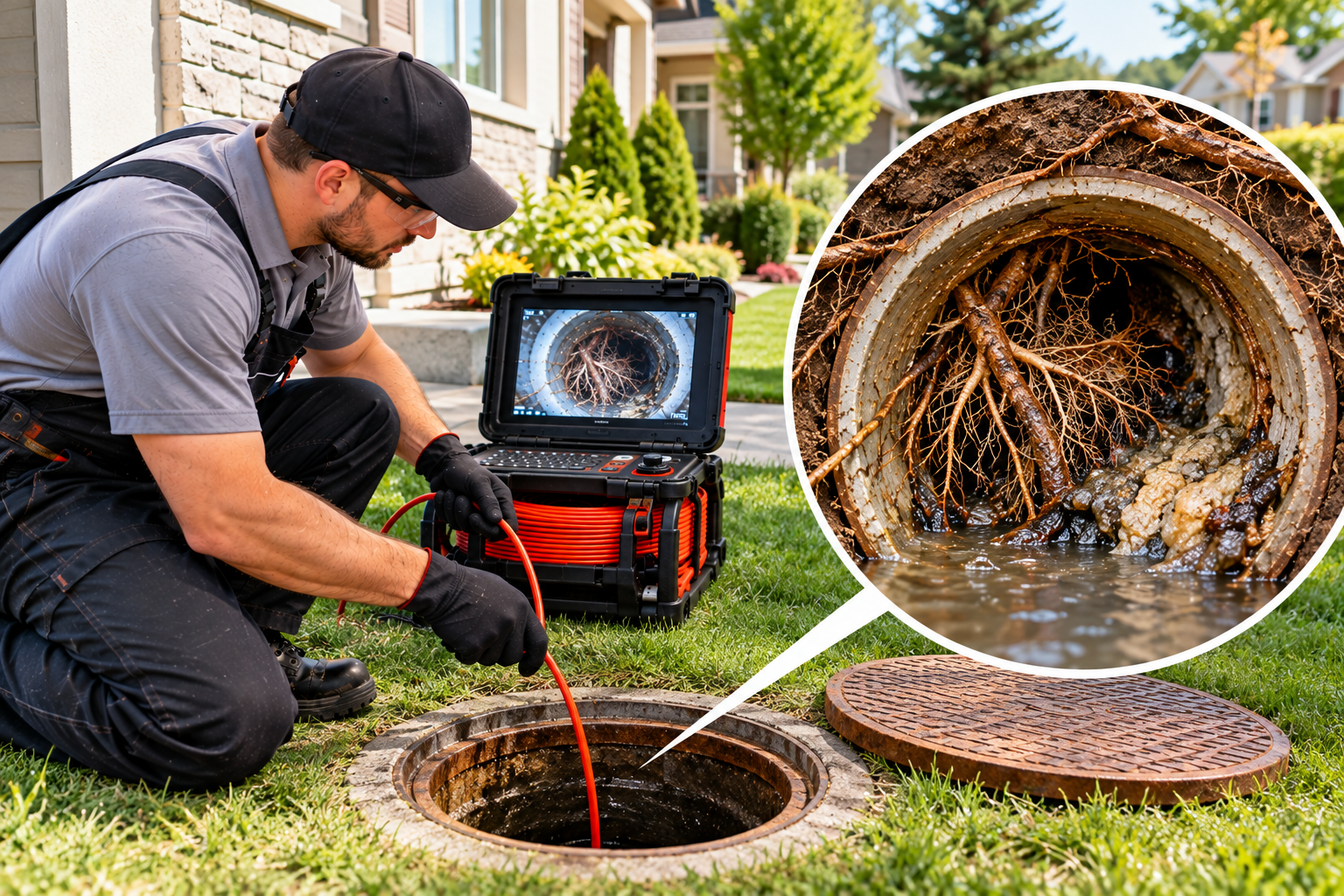
Tree roots may enter sewer pipes through cracks, damaged joints, or other openings.
Once inside, they can grow into the drainage path and collect debris.
Roots may be more relevant in properties with established landscaping, but the presence of nearby trees does not automatically mean the sewer is damaged.
Camera inspection may help identify visible root intrusion.
Grease and Cooking Oil Accumulation
Cooking grease and oils can cool and accumulate along drainage pipe surfaces.
Over time, these deposits may trap food particles and other materials.
Repeated disposal of grease through kitchen sinks can contribute to restrictions in shared drainage lines.
Homeowners should dispose of cooking grease appropriately rather than washing it into the plumbing.
Flushing Wipes and Non-Flushable Materials
Wipes, paper towels, hygiene products, and other unsuitable materials can contribute to sewer obstructions.
Even products marketed as flushable may not break down in the same way as toilet paper.
These materials can become trapped around existing deposits or pipe defects.
Broken or Collapsed Sewer Pipes
A damaged sewer line may become restricted when a pipe section cracks, deforms, or collapses.
Structural problems can result from several factors, including deterioration, soil movement, or previous damage.
Severe defects may require repair rather than cleaning alone.
Misaligned Sewer Pipe Joints
Connected pipe sections can sometimes shift out of alignment.
An offset joint may create an internal edge where debris collects and wastewater movement becomes restricted.
Repeated clogs at the same location may justify investigation for a visible joint defect.
Corrosion and Internal Pipe Deterioration
Some older drainage materials can develop corrosion, scaling, or rough internal surfaces.
These conditions may contribute to debris accumulation and reduced drainage capacity.
However, pipe age alone does not prove that replacement is necessary.
The condition of the actual sewer line should guide maintenance decisions.
Construction Debris or Foreign Objects
Foreign materials can sometimes enter drainage piping during construction, renovation, or improper waste disposal.
Objects that become lodged inside the sewer may collect additional debris.
Professional inspection can help determine whether an accessible object is contributing to the blockage.
Pipe Settlement and Drainage Slope Problems
Some sewer lines develop low sections where wastewater and debris accumulate.
These conditions may be associated with settlement, installation issues, or other structural changes.
Standing water observed during a camera inspection can suggest a problem, but additional measurements may be required to confirm pipe slope.
Can Calgary’s Weather Cause Sewer Blockages?
Calgary’s cold winters can affect exposed or inadequately protected plumbing.
However, a sewer blockage should not automatically be attributed to freezing.
Grease, roots, debris, and pipe defects remain possible causes regardless of season.
Professional diagnosis is important when the source of the restriction is unclear.
Are Older Calgary Neighbourhoods More Vulnerable?
Established neighbourhoods such as Riverbend and Lake Bonavista may contain properties with older sewer infrastructure.
However, not every older sewer is defective, and newer homes can also experience drainage restrictions.
Homeowners in Mahogany, Cranston, and New Brighton should respond to actual symptoms rather than assuming a newer property cannot develop a blockage.
Important distinction: A blockage caused by grease or debris may be removable through appropriate cleaning. A restriction caused by a damaged pipe or displaced joint may require further inspection and repair. The underlying cause determines the appropriate solution.
Can Municipal Sewer Problems Affect Residential Drains?
Yes. In some situations, drainage problems outside the private property may affect household sewer performance.
Determining whether the issue is within private plumbing or municipal infrastructure may require professional investigation.
Homeowners should avoid assuming responsibility for a specific section until the location and cause have been established.
For additional local information, residents can review this Calgary plumbing service location reference. Airdrie homeowners may also consult the City of Airdrie municipal document for information relevant to their municipality.
Cause assessment: Main sewer blockages can involve grease, roots, unsuitable waste, pipe defects, or foreign objects. Because these problems can produce similar symptoms, identifying the actual restriction is more useful than repeatedly treating the drain without diagnosis.
Request a main sewer line blockage inspection and drain cleaning estimate in Calgary in just a few clicks.
Get My Free Estimate
How Do Plumbers Diagnose and Clear a Blocked Sewer Line?
Professional sewer diagnosis begins with understanding the symptoms and identifying which fixtures are affected.
A plumber may inspect accessible drains, review previous blockage history, and determine whether the problem appears localized or shared.
The cleaning or repair method should follow the findings rather than relying on assumptions.
Step 1: Identify Which Plumbing Fixtures Are Affected
The plumber may ask when the drainage problem began and whether several fixtures are involved.
For example, a single slow sink suggests a different investigation from wastewater rising through a basement floor drain whenever a toilet is flushed.
The pattern helps narrow the possible location of the restriction.
Step 2: Inspect Accessible Drainage Connections
Accessible traps, cleanouts, and other drainage components may be examined.
The plumber considers whether the restriction can be reached safely and whether wastewater is actively backing up.
Any previous chemical drain cleaner use should be disclosed before work begins.
Step 3: Use Sewer Camera Inspection When Appropriate
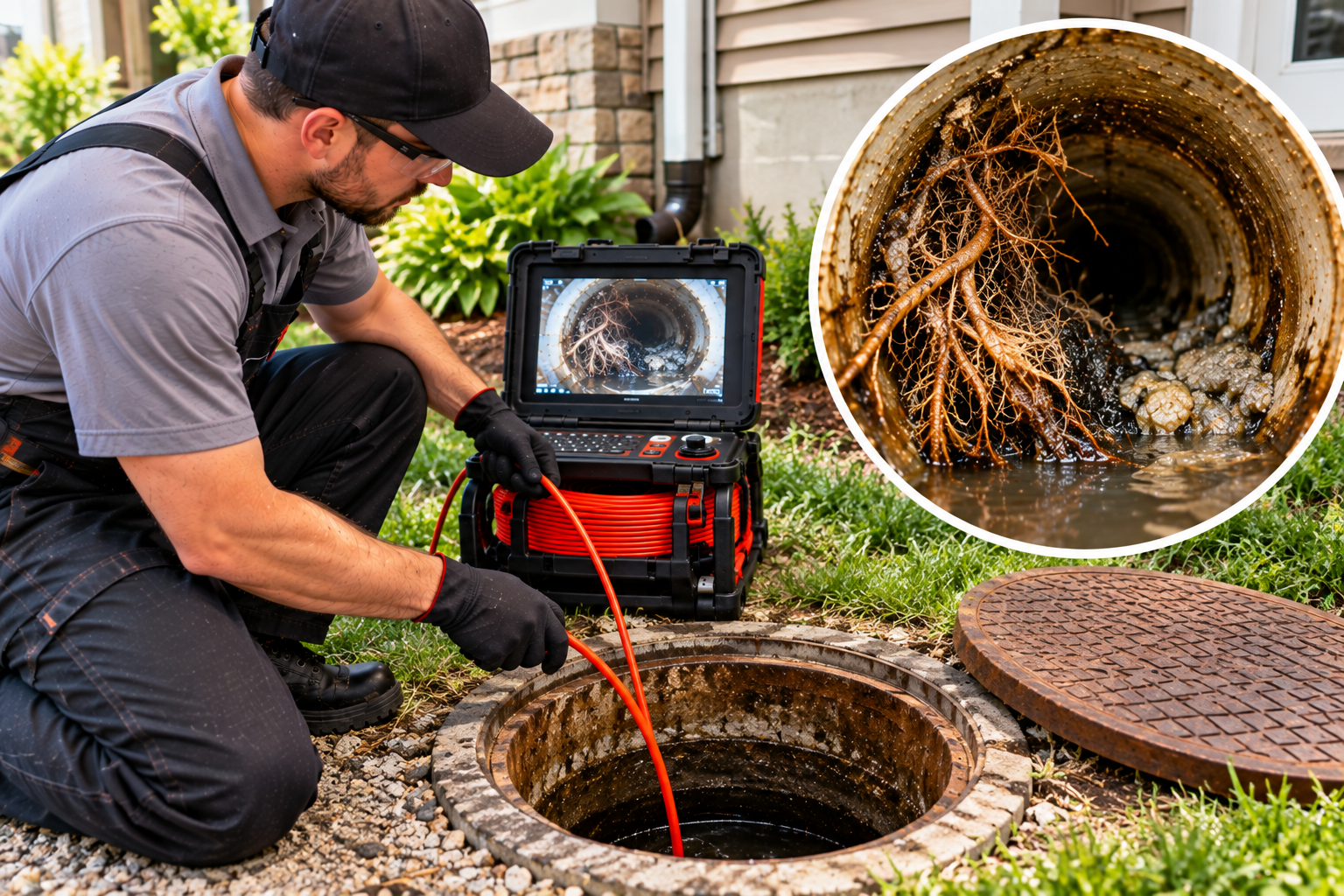
A drain camera can reveal visible roots, debris, displaced joints, cracks, and other conditions inside accessible sewer pipes.
It may help distinguish a removable blockage from a structural defect.
However, heavy deposits or standing water can limit visibility, and cleaning may be necessary before a useful inspection is possible.
For a detailed explanation, read What Can a Drain Camera Inspection Find?.
Step 4: Select the Appropriate Sewer Cleaning Method
Mechanical drain cleaning may be suitable for certain obstructions.
High-pressure water cleaning may be considered for appropriate piping after assessing its condition.
The method depends on the pipe material, restriction type, accessibility, and risk of damage.
Not every sewer line is suitable for every cleaning technique.
Step 5: Determine Whether Pipe Repair Is Necessary
If the blockage is associated with a cracked, displaced, or collapsed pipe, cleaning alone may not provide a lasting solution.
The plumber may recommend additional investigation or repair based on the severity of the defect.
Some conditions may be addressed through localized repairs, while others require more extensive work.
Can Hydro Jetting Clear a Main Sewer Blockage?
Hydro jetting uses specialized high-pressure water equipment to clean suitable drainage lines.
It may remove certain grease deposits and other accumulations.
However, pipe condition must be considered, especially when deterioration or structural defects are suspected.
Hydro jetting is not automatically the best solution for every blockage.
Can a Drain Snake Clear the Main Sewer Line?
Professional mechanical cleaning equipment can remove or break through certain sewer restrictions.
However, restoring wastewater flow does not always correct the underlying cause.
Recurring root intrusion or pipe defects may require additional assessment after the immediate obstruction is removed.
How Much Does Main Sewer Line Cleaning Cost in Calgary?
Costs depend on the obstruction, accessibility, equipment, inspection requirements, and whether repairs are necessary.
| Service | Illustrative CAD Range | Purpose |
|---|---|---|
| Initial drainage assessment | $100–$300+ | Evaluating symptoms and accessible plumbing |
| Mechanical sewer cleaning | $200–$500+ | Removing suitable main-line restrictions |
| Sewer camera inspection | $200–$500+ | Examining accessible pipe interiors |
| Hydro jetting | $350–$900+ | Cleaning suitable drainage piping |
| Sewer pipe repair or replacement | Scope-dependent | Correcting confirmed structural defects |
Pricing disclaimer: These are illustrative planning ranges, not verified Calgary averages or published Calgary Electrical and Plumbing rates. Actual charges depend on diagnosis, access, equipment, service conditions, and required repairs. Taxes and emergency attendance may increase the total.
How Long Does It Take to Clear a Main Sewer Blockage?
Service duration depends on the location and severity of the restriction.
A removable obstruction may be simpler to address than root intrusion or a collapsed pipe.
Additional inspection, difficult access, or repairs can extend the work.
Reliable timing should be based on the specific property rather than a universal guarantee.
Should You Use Chemical Drain Cleaners on a Main Sewer Blockage?
Chemical drain cleaners are not a suitable substitute for professional diagnosis of a suspected main sewer obstruction.
They may fail to reach or remove the underlying restriction and can create safety risks when trapped behind a blockage.
Avoid combining drain cleaning chemicals or attempting repeated chemical treatments.
Safety reminder: Never open sewer fittings or attempt to clear a pressurized or actively backing-up drain without appropriate training and protection. Wastewater exposure and trapped chemical products can create serious hazards. Seek qualified assistance.
What If the Sewer Line Is Completely Blocked?
A complete blockage can prevent wastewater from leaving the property normally.
Continuing to use toilets, showers, or appliances may cause additional backups.
Stop using connected fixtures and arrange professional assessment.
If contamination has occurred, appropriate cleanup may also be necessary.
Professional diagnosis takeaway: The best solution depends on the cause. Mechanical cleaning may restore flow, camera inspection may reveal visible defects, and damaged piping may require repair. Repeated blockages should be investigated rather than treated as isolated incidents.
Homeowners can find additional business information through the shared Calgary Electrical and Plumbing Google reference or follow the company’s X profile for plumbing-related updates.
How Can Calgary Homeowners Prevent Main Sewer Line Blockages?
Not every sewer blockage can be prevented, particularly when structural defects or underground conditions are involved.
However, everyday household habits can reduce the amount of material entering the drainage system.
Preventive maintenance is especially useful for homes with previous blockages or known sewer concerns.
Keep Cooking Grease Out of Kitchen Drains
Grease and cooking oils can accumulate inside drainage piping.
Allow cooking grease to cool and dispose of it appropriately rather than pouring it into the sink.
Using hot water afterward does not guarantee that grease will travel through the entire sewer system.
Flush Only Appropriate Waste
Toilets should not be used to dispose of wipes, paper towels, hygiene products, or other unsuitable materials.
These products can contribute to sewer restrictions, particularly when they collect around existing debris or damaged joints.
Place inappropriate waste in a suitable disposal container.
Use Drain Strainers and Hair Catchers
Kitchen strainers can catch food particles before they enter the drainage system.
Hair catchers can reduce the amount of hair entering shower and bathtub drains.
Regularly remove collected debris to help prevent localized restrictions.
Investigate Recurring Clogs Early
A drain that repeatedly blocks after cleaning may indicate a deeper problem.
Instead of relying on repeated temporary treatments, arrange professional assessment when the same symptoms continue returning.
Early investigation can help determine whether the issue involves buildup, roots, or damaged piping.
Consider Sewer Inspection After Repeated Backups
Camera inspection may be useful when a property has a history of recurring sewer backups.
It can reveal visible restrictions or structural conditions that influence maintenance decisions.
However, routine camera inspections are not necessary for every home without symptoms or known risk factors.
Maintain Records of Previous Sewer Repairs
Keep documentation of sewer cleaning, inspections, and repairs.
These records may help future plumbers identify recurring patterns and understand previously observed pipe conditions.
Documentation can also be useful during property maintenance planning.
Pay Attention to Basement Drainage Changes
Basement floor drains can provide early evidence of certain sewer restrictions.
Unusual gurgling, slow drainage, or wastewater rising through these openings should not be ignored.
Stop using connected plumbing if an active backup develops.
Do Newer Southeast Calgary Homes Need Sewer Maintenance?
Yes. Homes in Seton, Mahogany, Auburn Bay, and Copperfield can develop drainage problems despite newer construction.
Improper waste disposal, grease accumulation, and other restrictions can affect properties of different ages.
Preventive habits are useful regardless of when the home was built.
Should Older Homes Have More Frequent Sewer Inspections?
Older properties with known sewer defects or recurring backups may benefit from a tailored inspection schedule.
However, age alone does not establish that frequent cleaning or inspection is required.
The condition of the sewer line and previous maintenance history should guide the decision.
What Should Homeowners Do When Sewer Warning Signs Appear?
Use the following checklist to respond appropriately:
- Identify whether one fixture or several drains are affected.
- Check for recurring gurgling, slow drainage, or sewage-like odours.
- Stop using connected plumbing if wastewater is backing up.
- Keep children and pets away from contaminated areas.
- Avoid repeated chemical drain cleaner treatments.
- Record when the symptoms occur and which fixtures are involved.
- Arrange professional assessment when a shared sewer restriction is suspected.
Prevention recommendation: Good disposal habits, early attention to recurring symptoms, and appropriate professional assessment can reduce avoidable sewer problems. However, structural defects and root intrusion may require targeted repairs or monitoring.
Can Preventive Cleaning Eliminate Every Sewer Blockage?
No. Cleaning can remove certain deposits, but it cannot guarantee that future restrictions will not occur.
Roots may return through damaged joints, and structural defects may continue affecting drainage.
The most effective maintenance plan addresses both the immediate obstruction and its underlying cause.
Final takeaway: Main sewer blockages often produce warning signs before a complete backup occurs. Recognizing multiple slow drains, gurgling fixtures, and recurring clogs can help homeowners seek appropriate diagnosis and avoid further wastewater discharge into a restricted system.
Request a main sewer line blockage inspection and drain cleaning estimate in Calgary in just a few clicks.
Get My Free Estimate
Recognize Sewer Blockage Warning Signs Before Problems Escalate
Multiple slow drains, unusual gurgling, recurring clogs, and wastewater backups can indicate a restriction in your home’s main sewer line. Although these symptoms do not identify the exact cause, they provide important reasons to investigate the drainage system.
If you suspect a main sewer blockage, a local calgary plumber can assess the symptoms and recommend appropriate cleaning or further inspection. Call Calgary Electrical and Plumbing at (403) 421-1991 to discuss your sewer drainage concerns.
Frequently Asked Questions about Main Sewer Line Blockages
What are the first signs of a blocked main sewer line?
Early warning signs may include several slow drains, recurring clogs, unusual toilet gurgling, and wastewater backing up into low-level fixtures. One slow sink does not necessarily indicate a main sewer blockage. Multiple related symptoms deserve professional assessment.
Can a blocked main sewer line cause water to back up into a basement?
Yes. When wastewater cannot pass through a restricted sewer line, it may rise through lower fixtures such as basement floor drains. Stop using connected plumbing if a backup occurs, avoid contact with contaminated water, and arrange qualified assistance.
How can I tell whether the blockage is in one drain or the main sewer?
A localized clog usually affects one fixture, while a main sewer restriction may affect several drains or cause wastewater to rise through lower openings. However, symptoms can overlap. A plumber can assess the drainage pattern and determine whether further inspection is necessary.
How much does it cost to clear a main sewer line blockage in Calgary?
Costs depend on the restriction, pipe access, and required equipment. An illustrative planning range for mechanical sewer cleaning is CAD $200–$500 or more. This is not a verified Calgary average or binding company quote. Camera inspections and repairs may cost extra.
Should I keep using my plumbing if the main sewer line is blocked?
No. If wastewater is actively backing up, stop using connected toilets, sinks, showers, and appliances. Additional water can worsen the overflow. Keep people away from contaminated areas and seek professional plumbing assistance to identify and address the restriction.
Don’t wait for the problem to get worse.
Call (403) 421-1991 Now
Local Help Available 24/7 in Calgary