
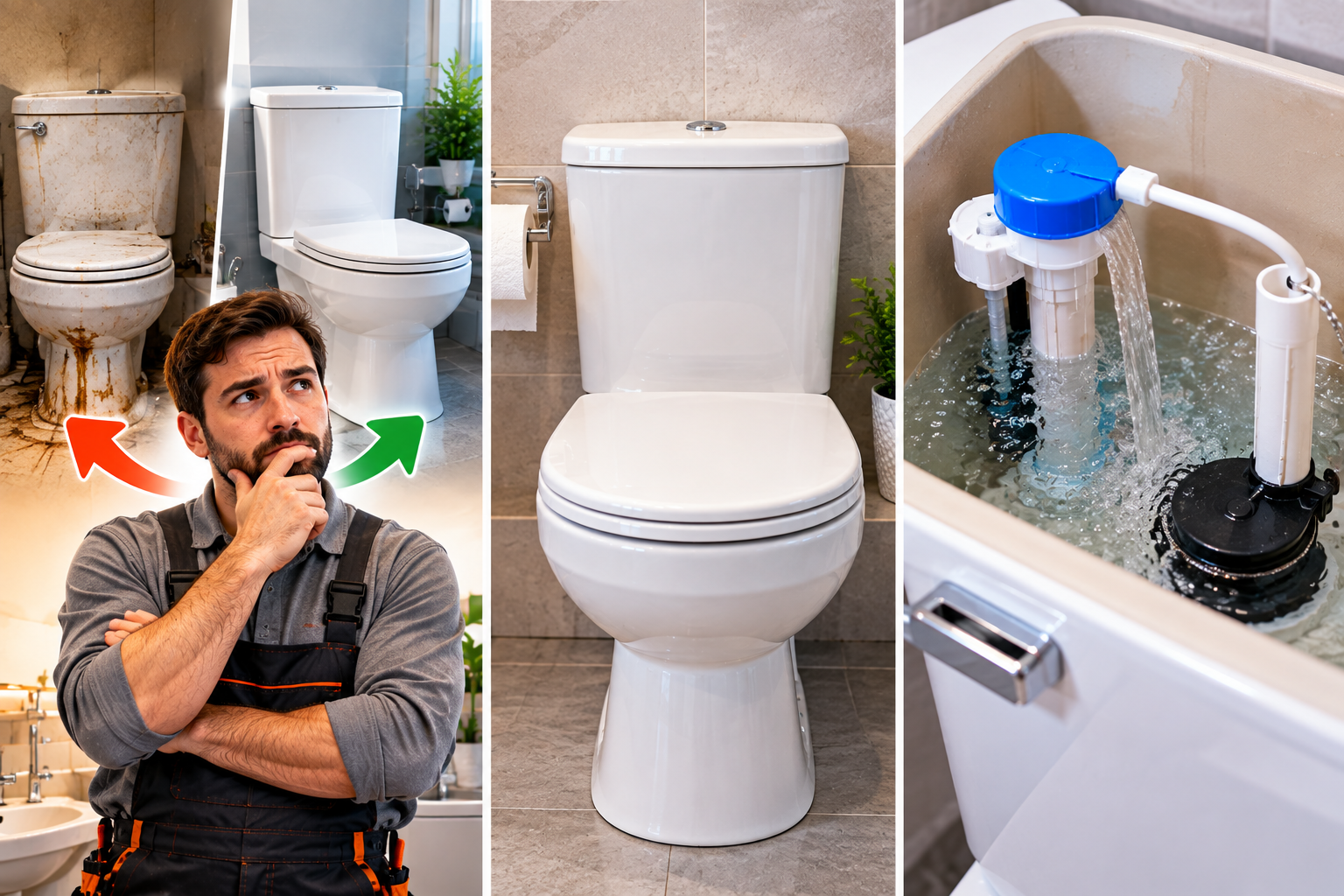
Should You Repair or Replace an Old Toilet? If your Calgary toilet keeps running, clogs more often than it used to, rocks at the floor or has already needed several repairs, that question can quickly become more important than simply fixing the latest symptom.
Age alone does not determine the answer. A homeowner looking for professional toilet plumbing help in Calgary may discover that a 15-year-old fixture only needs an inexpensive internal component, while a newer toilet with cracked porcelain or serious flange trouble may be a stronger replacement candidate.
Homes across communities such as Acadia, Riverbend, McKenzie Towne, Cranston and Douglasdale contain toilets of many ages and designs. The practical choice comes down to condition, repair frequency, flushing performance, water use and the difference between the cost of repairing the existing fixture and installing another one.
Repair an old toilet when the fixture is structurally sound and the problem is limited to replaceable parts. Consider replacement when cracks, repeated repairs, poor flushing, persistent clogs, major leaks or rising repair costs make keeping the old toilet less practical.
When Is an Old Toilet Still Worth Repairing?
An old toilet can remain serviceable for years when the porcelain is sound, it flushes effectively and the problem is limited to components designed to be replaced. The tank contains several parts that naturally wear with use and do not necessarily indicate that the entire fixture has reached the end of its useful life.
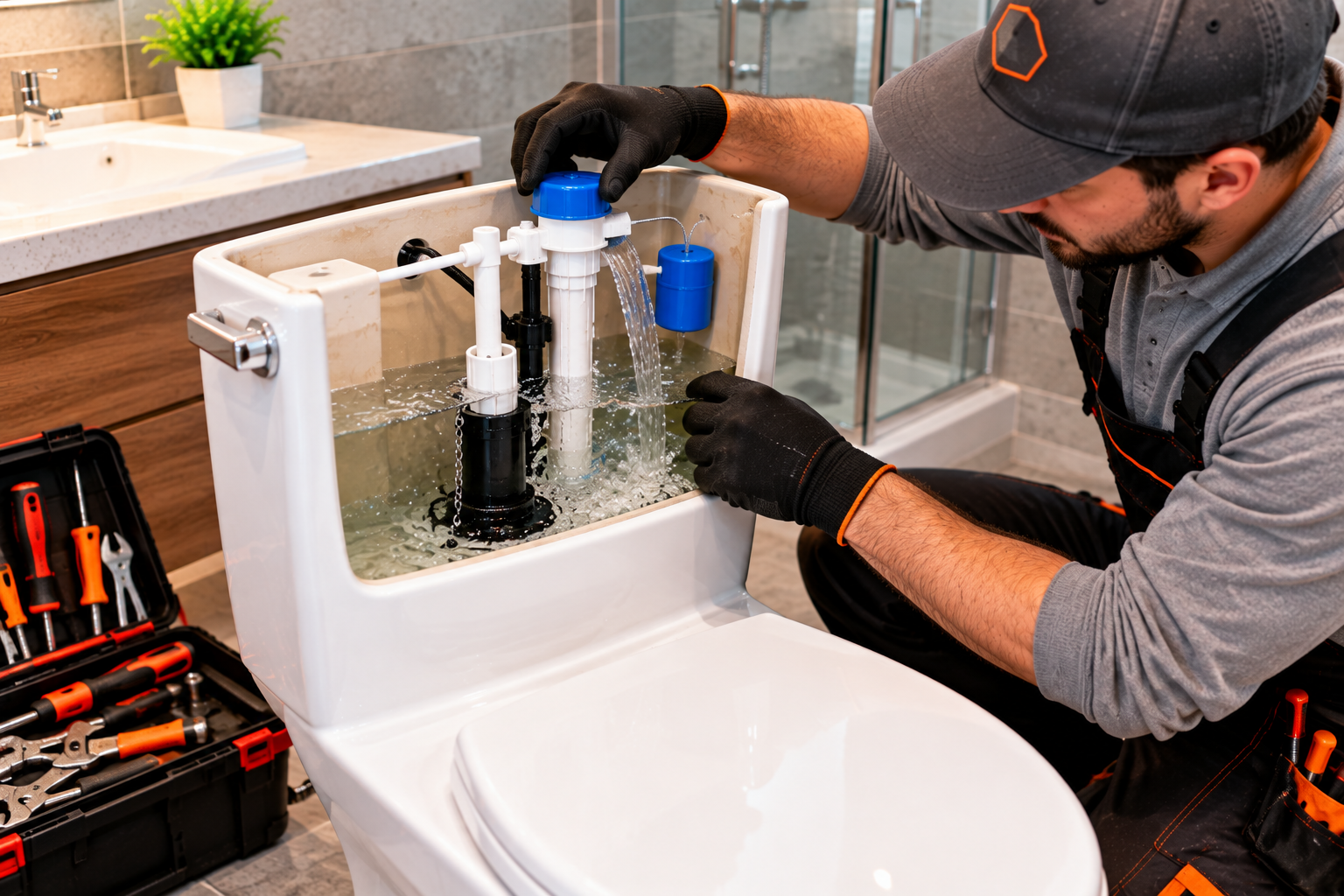
A worn flapper usually does not justify replacing the toilet
A deteriorated flapper can allow water to escape slowly from the tank into the bowl. The toilet may then refill every few minutes even though nobody has flushed it.
If the fixture is otherwise in good condition, replacing the failed sealing component can be far more practical than removing the whole toilet.
A faulty fill valve is another common repair
The fill valve controls the tank refill after flushing. When it wears out, the toilet may fill slowly, run continuously, make unusual sounds or fail to stop at the correct water level.
Replacing the valve is a normal toilet repair. A single faulty valve on an otherwise healthy fixture is rarely enough reason by itself to buy a new toilet.
Tank hardware and seals can often be renewed
Bolts, gaskets and other internal components can deteriorate as a toilet ages. If the porcelain remains intact and replacement parts are readily available, servicing those components may restore normal operation.
The decision changes when corrosion is extensive or several parts are failing at the same time.
A failed wax seal does not automatically mean replacement
The seal between the toilet and drain connection can eventually fail. If the toilet itself is sound and the flange beneath it remains in acceptable condition, removing the fixture, replacing the seal and resetting the toilet may solve the problem.
Water around the base still needs proper diagnosis because moisture can also come from another source. Persistent leakage should not be treated as a cosmetic issue.
Repair makes more sense when problems are infrequent
Imagine a well-performing toilet in Auburn Bay that has operated for many years without trouble and suddenly develops a fill-valve problem. One component repair can be a reasonable way to extend the fixture’s useful life.
That situation is very different from a toilet that has needed a flapper, valve, seal and clog service within a short period.
Repair is usually worth considering when:
- The porcelain has no cracks.
- The toilet remains stable on the floor.
- Flushing performance is normally good.
- The problem is limited to one component.
- Replacement parts are readily available.
- Previous repairs have been infrequent.
Replacement may be more practical when:
- The bowl or tank is cracked.
- The toilet repeatedly clogs.
- Several parts are deteriorating.
- Repairs are becoming frequent.
- The fixture performs poorly.
- Repair costs are approaching replacement cost.
Homeowners checking service coverage and local business information can also review the Calgary plumbing service location on Google Maps.
What Signs Suggest an Old Toilet Should Be Replaced?
Replacement becomes more compelling when the problem is no longer limited to an ordinary service component. Structural damage, repeated failures and consistently poor performance can change the economics of keeping an old fixture.
1. Cracked porcelain
A crack in the toilet tank or bowl is different from a worn valve or seal. Porcelain is the structure of the fixture itself, and visible cracking deserves careful attention.
A leaking or compromised fixture can create water damage. Replacement is generally a more sensible direction when the porcelain itself is damaged rather than a removable component.
2. Repairs are becoming frequent
One repair over many years is normal. Several repairs over a short period can tell a different story.
If an older toilet has recently needed tank components, a seal and another service visit for poor flushing, the combined cost and inconvenience should be compared with replacement.
3. The toilet clogs repeatedly
An occasional clog does not mean a toilet is worn out. Recurring clogs under normal use deserve investigation because the problem may involve the fixture’s trapway, flushing performance or the connected drainage system.
Diagnosis matters before replacement. Installing a new toilet will not correct a blockage farther down the drain line.
4. Flushing performance remains poor
An older toilet may require more than one flush or leave material behind despite appropriate tank adjustments. Before replacing it, a plumber can check the tank water level, flush components, mineral buildup and drain condition.
If the fixture itself consistently performs poorly after repairable causes are eliminated, upgrading can become more attractive.
5. The toilet rocks or moves
A toilet should sit securely. Movement can compromise the seal below the fixture and may point to mounting, flooring or flange issues.
Sometimes the toilet can simply be removed and properly reset. If inspection reveals a damaged fixture along with significant mounting problems, replacement may be considered during the repair process.
6. Replacement parts are becoming difficult to source
Common toilet mechanisms are often easy to service, but unusual or discontinued designs may require harder-to-find parts. Repeatedly searching for specialty components can reduce the appeal of continuing to repair an old fixture.
A standard modern toilet with readily available components can make future maintenance easier.
7. You are already planning a bathroom renovation
A bathroom renovation changes the calculation. If the toilet will already be disconnected and the existing fixture is old, inefficient or visually worn, replacing it during planned work may avoid another installation later.
The new fixture should still be properly selected for the existing rough-in, space and plumbing configuration.
Scenario: repeated repairs in Riverbend
Consider an older toilet that has received a new flapper, fill valve and seal over the past couple of years. It now develops another flushing problem and has begun clogging more frequently.
Instead of automatically purchasing another component, comparing the next repair cost against replacement can reveal which option offers better long-term value.
Scenario: one simple failure in Mahogany
Another homeowner has an older but well-maintained toilet that still flushes effectively and has never required major work. The fill valve begins running and needs replacement.
There may be little financial reason to discard an otherwise functional fixture because of one serviceable part.
Homeowners who prefer visual service information can explore the company’s Calgary plumbing video channel and this featured local plumbing service video.
Request a toilet repair or replacement estimate in Calgary in just a few clicks.
Get My Free Estimate
Is It Cheaper to Repair or Replace an Old Toilet?
Repair normally has the lower immediate cost when the problem is straightforward. The better financial decision over time, however, depends on how much work the existing toilet needs and how likely another repair is to follow.
A useful comparison looks beyond today’s invoice and considers the fixture’s overall condition.
| Situation | Typical Direction | Approximate Planning Range | Decision Consideration |
|---|---|---|---|
| Minor tank adjustment or simple component | Repair | $150–$225 | Usually sensible if the rest of the toilet is sound |
| Fill or flush component repair | Repair | $175–$350 | Compare age and condition if several parts are failing |
| Wax seal / toilet reset | Usually repair | $250–$450+ | Flange condition can affect the total |
| Flange-related repair | Inspect first | $300–$650+ | Toilet may already need removal, making replacement worth comparing |
| Several recurring failures | Compare both | Varies | Cumulative repair cost matters more than one individual part |
| Cracked porcelain | Replacement often preferred | Varies by fixture and installation | Structural fixture damage is different from a serviceable component |
| Standard toilet replacement | Replacement | Often $350–$800+ for installation considerations, with fixture cost varying | Final cost depends on toilet choice, connections and site conditions |
These figures are broad Canadian-dollar planning ranges rather than fixed quotations. Toilet model, parts, labour, accessibility, flange condition, service timing and unexpected plumbing problems can change the actual price.
For a more detailed breakdown of individual repairs, see this guide to common toilet repair costs for Calgary homeowners.
Think about cumulative repair costs
A $200 repair can be worthwhile on a toilet that has otherwise been trouble-free. Three or four repairs over a relatively short period deserve a different calculation.
Keeping a simple record of previous service can make the repair-versus-replacement decision easier because you can see how much has already been invested in the fixture.
Do not replace a toilet before confirming the real problem
A toilet that flushes slowly may appear worn out when the actual problem is a partial drain obstruction. A toilet that rocks may need correction at the flange or floor rather than a completely new fixture.
Diagnosis protects homeowners from paying for a replacement that does not address the root cause.
Consider the shut-off valve and supply connection
Older toilets are sometimes paired with aging water-supply valves and connectors. If the toilet is being removed for replacement, these surrounding components should be inspected as part of the installation.
A deteriorated shut-off valve can add to the scope and cost of the work, but replacing an aging valve can also make future servicing easier.
What if the flange is damaged?
The flange anchors the toilet and connects it to the drainage system. If it is broken, corroded, loose or improperly positioned, simply installing a new toilet on top does not correct the underlying issue.
The flange should be addressed so the toilet can be securely installed and properly sealed.
Does toilet age alone matter?
Age is useful context, but there is no birthday at which every toilet suddenly becomes unusable. A well-performing older fixture with available parts may continue serving the home effectively.
Condition and repair history are stronger decision factors than age by itself.
Water use can influence the replacement decision
Older toilets can use more water per flush than many modern fixtures. A toilet that also runs because of deteriorated tank components can waste additional water between flushes.
If replacement is already being considered for mechanical reasons, water use becomes another factor to evaluate when choosing the new fixture.
What about plumbing codes and installation requirements?
Plumbing work should be completed in accordance with applicable requirements. Homeowners planning broader bathroom plumbing changes can consult the Government of Alberta plumbing codes and standards information for provincial regulatory context.
A straightforward fixture replacement and a larger bathroom alteration are not necessarily the same scope of work. When additional plumbing is being moved or modified, confirm the requirements that apply to the project.
Compare the current repair cost + recent repair history + fixture condition + flushing performance + expected future maintenance. If several of those factors are becoming unfavourable, replacement deserves serious consideration.
Local company information and homeowner-focused updates are also available through the Calgary plumbing Facebook resource and Calgary Electrical and Plumbing on Instagram.
How to Make the Right Toilet Repair or Replacement Decision
A good decision starts with separating cosmetic age from mechanical condition. Staining, an outdated appearance or an old manufacture date do not necessarily mean the toilet has failed.
Conversely, a fixture that still looks clean can have recurring internal problems, poor performance or hidden damage around its mounting connection.
Step 1: Identify the exact symptom
Is the toilet running, leaking, clogging, rocking, filling slowly or flushing weakly? Different symptoms point toward different components and different repair costs.
Write down when the problem happens. A leak only during flushing can provide different diagnostic information from water that appears continuously.
Step 2: Check the repair history
Think back over the last few years. If this is the first problem, repair may be an easy decision.
If the toilet has required several visits for different failures, the pattern may indicate that the fixture is entering a higher-maintenance stage.
Step 3: Look at overall physical condition
Visible porcelain damage, severe corrosion around hardware, persistent instability or deterioration around the base deserves attention. A plumber can inspect areas that are not visible without removing the fixture.
Never assume that caulk or tightening bolts will permanently correct a toilet that moves or leaks.
Step 4: Compare repair cost with replacement
Ask what the repair will accomplish. If one modest repair is likely to restore a sound fixture, replacement may provide little immediate financial benefit.
If expensive work is required and the toilet also has other weaknesses, putting that money toward a suitable replacement may offer better value.
Step 5: Consider future bathroom plans
If you expect to renovate the bathroom soon, avoid paying for extensive work on a toilet you already intend to replace. On the other hand, a small repair may still make sense if the renovation is years away.
Timing can be just as important as fixture age.
Scenario: an old but reliable toilet in McKenzie Towne
A 15-year-old toilet still flushes well, sits securely and has no cracks. Its first significant problem is a faulty fill valve.
Because the problem is isolated and repairable, replacing the whole toilet simply because of age may provide little advantage.
Scenario: an increasingly troublesome toilet in Cranston
A similar-age toilet has needed multiple tank repairs, rocks slightly, occasionally clogs and now appears to leak near the base. The latest problem should be diagnosed, but the overall history changes the financial calculation.
Once the cost of correcting several conditions is known, replacement can be compared against another round of repairs.
Scenario: weak flushing in Copperfield
A homeowner assumes the toilet is too old because the bowl drains slowly. Before buying a new fixture, inspection finds that the real issue is connected to drainage rather than the toilet itself.
This is why diagnosis should come before replacement when the cause is uncertain.
Questions worth asking before deciding
- Is the porcelain structurally sound?
- How many repairs has the toilet needed recently?
- Does it flush effectively under normal use?
- Are replacement parts still readily available?
- Is there water around the base?
- Does the toilet rock or shift?
- Are clogs becoming more frequent?
- Is the problem actually in the drain line?
- How close is the repair cost to replacement?
- Are you planning a bathroom renovation soon?
Why local diagnosis matters
Homes in Southeast Calgary vary considerably in age and plumbing configuration. A toilet in an established Acadia or Riverbend property can present different installation conditions from a fixture in Seton, Auburn Bay or Mahogany.
The toilet, shut-off valve, flange, drainage connection and surrounding floor all contribute to the final scope of work.
Do not let a small leak become a larger repair
Water at the base, a constantly refilling tank or movement at the floor should be addressed rather than ignored. Early diagnosis can identify a replaceable part before continued leakage affects surrounding materials.
Homeowners can also review this additional Calgary service-area map reference and the company’s Calgary plumbing profile on Reddit for further business information.
A further supplied company reference is available through this shared Calgary Electrical and Plumbing business resource.
Request a toilet repair or replacement estimate in Calgary in just a few clicks.
Get My Free Estimate
Choose the Option That Makes Sense for the Whole Toilet
An old toilet can be worth repairing when the fixture remains structurally sound and one serviceable component is causing the problem. Replacement becomes more practical when damage, recurring failures, poor performance and accumulated repair costs begin working against the existing fixture.
If you need a local calgary plumber to inspect an aging toilet and explain the repair-versus-replacement options, call (403) 421-1991 for professional local assistance.
Frequently Asked Questions about Repairing or Replacing an Old Toilet
How do I know if my old Calgary toilet is worth repairing?
An older Calgary toilet is often worth repairing when the porcelain is sound, it sits securely, flushes effectively and the problem involves one replaceable component. A fill valve, flapper or seal failure does not automatically mean the complete toilet needs replacement.
When should an old toilet be replaced instead of repaired?
Replacement deserves consideration when a Calgary toilet has cracked porcelain, repeated clogs, poor flushing, frequent component failures or repair costs that keep accumulating. The decision should consider the fixture’s complete condition rather than its age alone.
Is a running old toilet better to repair or replace?
A running older toilet can often be repaired if a flapper, fill valve or another tank component is responsible. Replacement may make more sense when the toilet also has poor flushing, recurring leaks or several aging components that have already required repeated service.
Does a toilet that keeps clogging need to be replaced?
Not necessarily. Repeated Calgary toilet clogs can result from fixture performance, the trapway or a problem farther into the drainage system. The cause should be diagnosed before replacement because installing a new toilet will not correct a blockage located downstream.
Is it cheaper to keep repairing an old toilet in Calgary?
One modest repair is usually cheaper than replacement, but repeated repairs can change the calculation. Calgary homeowners should compare the current repair cost, recent service history, fixture condition and flushing performance with the cost of installing a suitable replacement toilet.
Find out if repair or replacement makes more sense.
Call (403) 421-1991 Now
Local Help Available 24/7 in Calgary