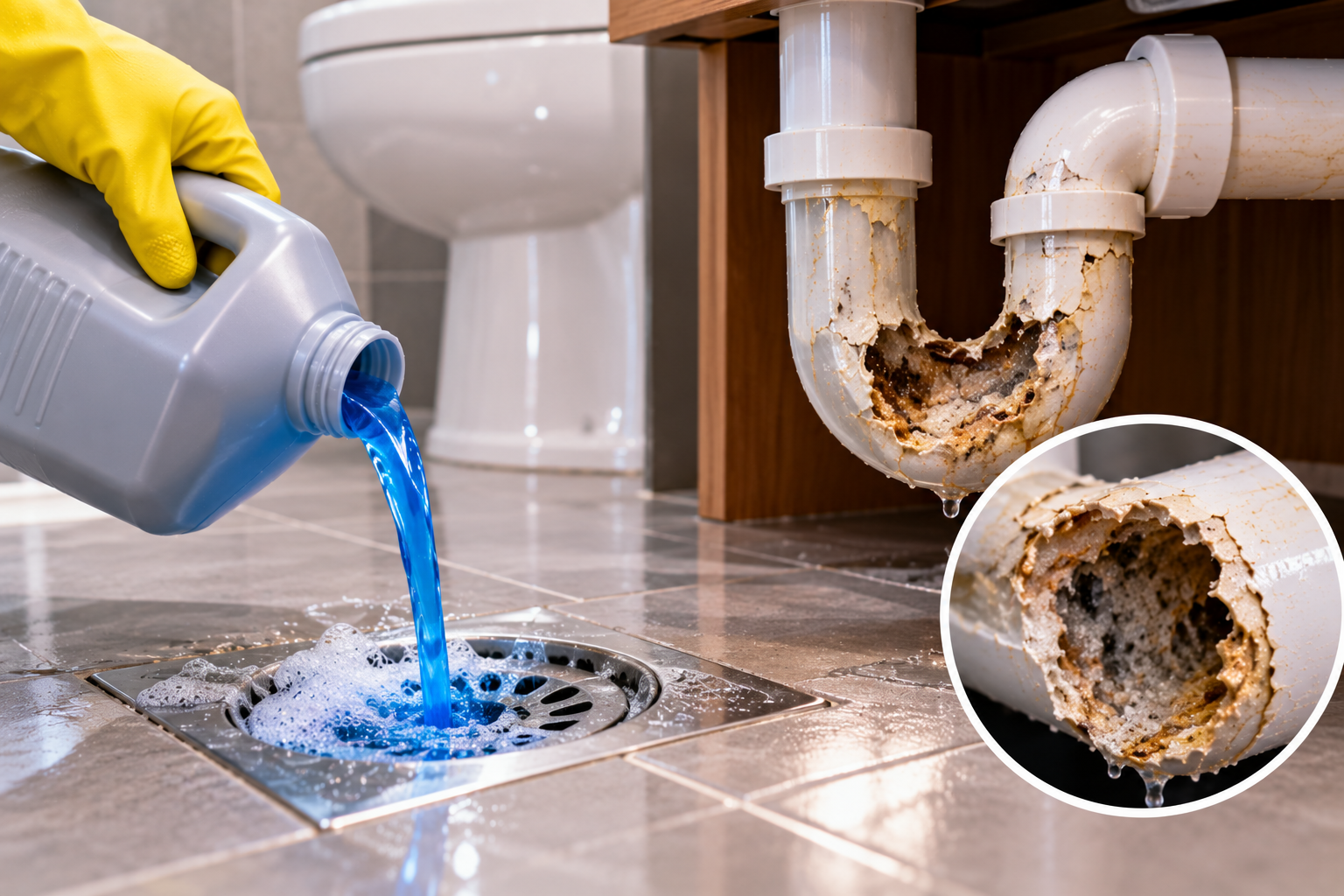

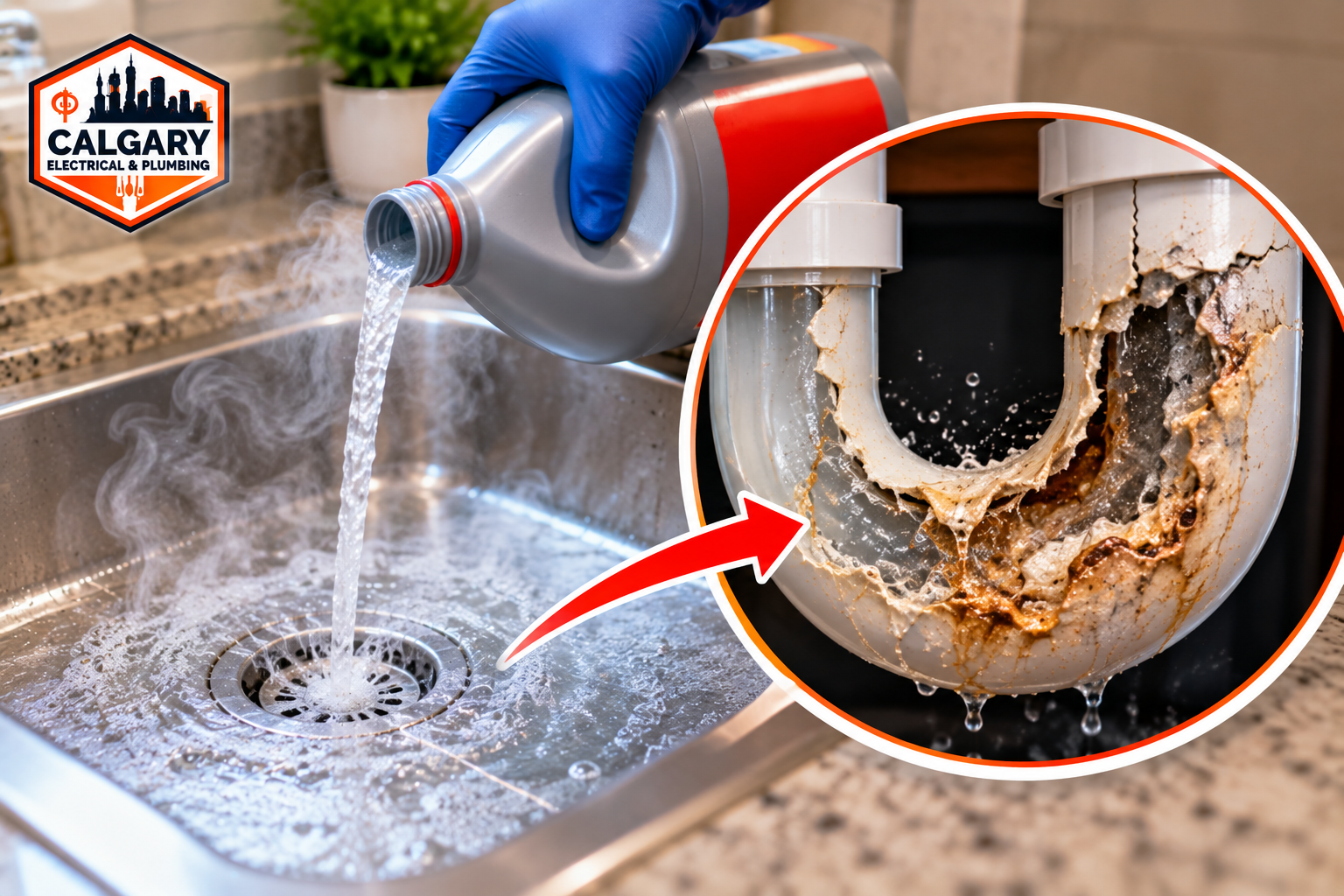
Is Chemical Drain Cleaner Safe for Your Plumbing? When a kitchen sink drains slowly or a bathroom shower begins collecting water, reaching for a bottle of drain cleaner can seem like the quickest solution. However, the chemicals designed to break down blockages can also create risks for household plumbing and anyone handling them.
In Southeast Calgary communities such as Mahogany, Auburn Bay, Cranston, and Copperfield, residential drainage systems may contain plastic pipes, metal fittings, rubber seals, and older connections. Knowing when to arrange professional drain cleaning and plumbing services in Calgary can help homeowners avoid unnecessary damage from unsuitable cleaning products.
Not every chemical drain cleaner works the same way, and not every clog responds to chemical treatment. Product ingredients, pipe materials, existing damage, ventilation, and the location of the obstruction all influence the risks. Understanding these factors is essential before attempting to clear a blocked drain.
Chemical drain cleaners can damage some plumbing materials, seals, and fittings, particularly when used incorrectly or left in blocked pipes. They may also cause serious chemical burns and hazardous reactions. Their safety depends on the product and plumbing system; mechanical cleaning is often preferable for persistent blockages.
How Do Chemical Drain Cleaners Affect Household Plumbing?
Chemical drain cleaners are formulated to break down or loosen certain materials that accumulate inside drainage pipes.
Depending on the product, the active ingredients may react with grease, hair, soap residue, or other organic debris.
However, these reactions do not distinguish perfectly between unwanted deposits and vulnerable plumbing components.
The effect depends on chemical concentration, exposure time, temperature, and the materials used in the drainage assembly.
What Types of Chemical Drain Cleaners Are Available?
Many conventional drain cleaners fall into three broad chemical categories.
- Caustic cleaners: Some contain strong alkaline ingredients, such as sodium hydroxide, that react with certain organic materials and grease.
- Acid-based cleaners: Certain specialized products contain highly corrosive acids and may pose substantial handling and material-compatibility risks.
- Oxidizing cleaners: Some formulations use oxidizing ingredients to react with organic buildup.
These categories describe general chemical behaviour, not universal suitability for household drains.
Specific products may have additional ingredients, restrictions, or warnings that must be followed.
Can Chemical Drain Cleaners Damage PVC or ABS Pipes?
Yes, under certain conditions. Polyvinyl chloride (PVC) and acrylonitrile butadiene styrene (ABS) are commonly used in drainage applications, but their compatibility with chemicals varies.
Some cleaners are marketed as compatible with specified plastic pipes when used exactly as directed.
However, that does not establish that every product is safe for every plastic fitting, connection, or drainage configuration.
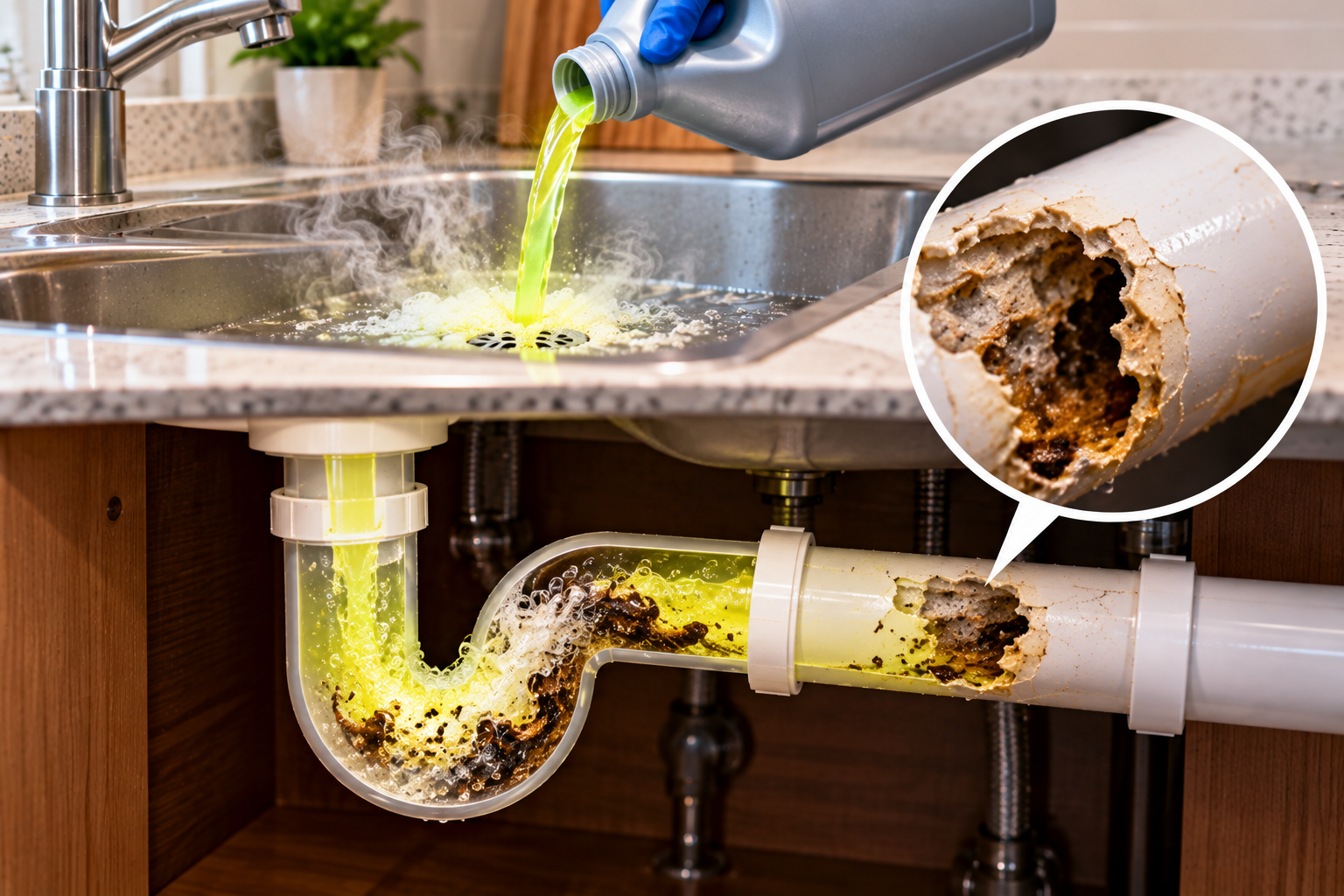
Excessive exposure, chemical concentration, or heat generated during a reaction may increase the risk of damage.
In a Cranston home, for example, a slow bathroom sink with plastic drainage fittings should not automatically be treated with a harsh chemical product.
Can Chemical Drain Cleaners Corrode Metal Pipes?
Some chemical formulations can contribute to corrosion or deterioration of susceptible metal plumbing components.
Older metal drains may already have internal corrosion, weakened walls, or deteriorated connections.
Exposure to an incompatible cleaner may worsen existing problems.
The age of the property alone does not establish the condition of the piping, so material identification and inspection remain important.
Are Drain Seals, Gaskets, and Fittings Vulnerable?
Yes. Household drainage assemblies include more than straight pipe sections.
Washers, flexible connectors, gaskets, sealants, and other components may have chemical-resistance limitations.
A product compatible with one pipe material may not necessarily be suitable for every connected component.
Leaks can develop when an already deteriorated connection is exposed to additional chemical stress.
Can Chemical Drain Cleaners Generate Heat Inside Pipes?
Some chemical reactions release heat.
When concentrated cleaning products react with water or drain deposits, localized temperatures may increase.
The amount of heat depends on the formulation and conditions.
Heat-sensitive plumbing materials may face additional stress when chemical exposure and elevated temperatures occur together.
This is one reason chemical cleaners should never be combined with improvised hot-water treatments.
Material compatibility matters: A cleaner labelled suitable for certain plastic pipes is not automatically appropriate for all drains. Product instructions, the complete plumbing assembly, existing pipe condition, and the nature of the blockage must all be considered.
Do Chemical Drain Cleaners Remove Every Type of Blockage?
No. Chemical cleaners may affect some organic deposits but cannot reliably resolve every obstruction.
Foreign objects, displaced pipe joints, tree roots, and structural drainage defects require different solutions.
Even when a chemical temporarily improves drainage, residue may remain inside the pipe.
Recurring clogs are often better addressed by identifying the underlying cause rather than repeatedly treating the symptoms.
Key takeaway: Chemical drain cleaners may work on selected types of buildup, but they can expose plumbing components to corrosive substances and, in some cases, heat. Their suitability depends on the exact product and the entire drainage assembly.
Calgary homeowners can find local service information through the Calgary Electrical and Plumbing Google Maps business listing or watch the company’s plumbing service video.
What Are the Risks of Using Chemical Drain Cleaner at Home?
The most immediate risks of chemical drain cleaners often involve personal safety.
Some formulations are strongly corrosive and can injure skin or eyes. Fumes, splashing, and incompatible chemical mixtures may create additional hazards.
Plumbing damage is another concern, particularly when a cleaner remains trapped inside a blocked pipe.
Can Chemical Drain Cleaner Cause Burns or Eye Injuries?
Yes. Certain drain-cleaning chemicals can cause serious burns if they contact skin or eyes.
Splashes may occur during pouring, when liquid accumulates above a clog, or if someone attempts to disturb a chemically treated drain.
Never lean directly over a drain containing cleaning chemicals.
Store these products securely in their original containers, away from children and pets.
Why Is Mixing Drain Cleaning Chemicals Dangerous?
Combining drain cleaners with other products can cause dangerous reactions.
For example, mixing incompatible cleaners or combining certain products with bleach may release hazardous gases or generate heat.
Even two products marketed for the same household task may contain ingredients that should never be mixed.
Critical safety warning: Never mix drain cleaners with bleach, ammonia-containing products, acids, other drain cleaners, or household chemicals. Do not add boiling water to a chemically treated drain. If hazardous fumes develop, leave the area and contact emergency services or poison-control professionals.
What Happens When Chemical Cleaner Cannot Clear a Clog?
When a drain is completely blocked, the cleaner may remain above or near the obstruction.
Standing chemical solution can increase exposure time for susceptible plumbing components.
It also creates a hazard for anyone who later attempts plunging, disassembly, or mechanical drain cleaning.
Repeatedly adding more cleaner can make the situation more dangerous without removing the blockage.
Can You Use a Plunger After Adding Chemical Drain Cleaner?
Plunging a drain that contains corrosive cleaning chemicals can cause hazardous splashing.
For that reason, do not attempt to plunge a chemically treated drain unless the product’s safety instructions and qualified guidance establish that it is safe.
If the cleaner has not worked, stop adding products and inform the plumber what was used.
Are Chemical Drain Cleaners Safe for Septic Systems?
Compatibility with septic systems varies by product and formulation.
Some cleaners may affect the biological processes involved in wastewater treatment, particularly when used improperly.
Homeowners with septic systems should follow the system manufacturer’s recommendations and use only products explicitly approved for their application.
Do not assume a product suitable for a municipal sewer connection is automatically suitable for a septic installation.
Can Chemical Drain Cleaner Damage a Garbage Disposal?
Garbage disposals contain mechanical components and are connected to drainage fittings that may have specific chemical restrictions.
Some drain cleaners are not suitable for use with these appliances.
Always follow the disposal manufacturer’s instructions.
If a disposal is not draining, the problem may involve food debris, a blocked trap, or another restriction requiring appropriate service.
Are Chemical Cleaners Effective Against Tree Roots?
Ordinary household chemical drain cleaners are not a reliable solution for structural sewer problems or significant root intrusion.
Roots may enter damaged or displaced underground pipe joints and create recurring restrictions.
Proper investigation may require specialized equipment and an assessment of pipe condition.
Homeowners in established Calgary communities such as Riverbend and Lake Bonavista should not assume repeated chemical treatments will correct an underground defect.
Why Does a Drain Keep Clogging After Chemical Treatment?
A cleaner may affect only part of the accumulated material.
Hair, grease, soap residue, or debris can remain attached to the pipe interior, allowing the problem to return.
Sometimes the restriction is farther downstream or involves multiple fixtures.
For additional information about temperature-related plumbing risks, read Can Boiling Water Damage Drainpipes?, which explains why extreme heat is not always a safe alternative.
Localized Organic Buildup
Some compatible chemical formulations may affect certain deposits, but results vary and incomplete cleaning is possible.
Solid or Structural Obstruction
Foreign objects, damaged pipes, roots, and displaced joints generally require investigation and a different repair approach.
Safety takeaway: Chemical drain cleaners create risks beyond possible pipe damage. Corrosive exposure, fumes, incompatible mixtures, and chemical solution trapped behind a blockage can make unsuccessful treatment particularly hazardous.
Additional local business information is available through this Calgary Electrical and Plumbing location reference.
Request a professional drain cleaning and plumbing inspection estimate in Calgary in just a few clicks.
Get My Free Estimate
How Do Calgary Plumbers Safely Clear Stubborn Drain Blockages?
Professional drain cleaning begins with identifying the likely cause and location of the restriction.
Different obstructions require different equipment, and the plumber must consider the condition of the pipes before selecting a cleaning method.
If chemical products have already been used, that information is important for planning safe service.
How Is a Recurring Drain Blockage Diagnosed?
A plumber may ask which fixtures are affected, how long the problem has existed, and whether drainage improves temporarily before slowing again.
Accessible traps, cleanouts, and visible connections may be examined.
If several fixtures are involved, the investigation may extend to shared branches or the building sewer.
Homeowners should disclose any chemical cleaner used, including the product name and approximate timing.
How Does Mechanical Drain Cleaning Work?
Mechanical drain cleaning uses suitable equipment to remove or break through certain obstructions.
Depending on the system, a plumber may use a hand-operated tool or a powered drain-cleaning machine.
Equipment selection depends on pipe size, material, access, and the suspected blockage.
Mechanical cleaning is not automatically appropriate for every damaged or fragile pipe.
When Is Hydro Jetting Appropriate?
Hydro jetting uses specialized high-pressure water equipment to clean suitable drainage or sewer lines.
It may be considered for certain grease deposits, sludge, or recurring buildup in appropriately assessed piping.
However, damaged pipes, unsuitable materials, and difficult access may make another method preferable.
Professional evaluation should determine whether hydro jetting is appropriate.
Can a Plumber Remove a Clog Without Chemical Cleaners?
Yes. Many blockages can be addressed using appropriate mechanical methods or by accessing and cleaning removable drainage components.
For example, hair accumulated around a bathroom sink stopper may require physical removal rather than chemical treatment.
A kitchen branch containing heavy grease buildup may need a different approach.
The goal is to remove the obstruction while minimizing unnecessary stress on the plumbing system.
When Is a Sewer Camera Inspection Recommended?
A sewer camera may help investigate recurring restrictions, suspected pipe damage, root intrusion, or problems farther along the building sewer.
Camera inspection can reveal certain visible defects and help locate affected pipe sections.
However, heavy deposits or standing wastewater may limit visibility until appropriate cleaning has been completed.
Can Chemical Drain Cleaner Complicate Professional Repairs?
Yes. Residual chemical solution can expose workers to corrosive liquids or fumes.
A plumber may need to take additional precautions before opening or cleaning the affected drain.
Do not conceal previous chemical use, even if the product was applied several hours earlier.
Accurate information helps the technician assess the situation and select suitable protective measures.
How Do Plumbers Assess Possible Pipe Damage?
Visible piping may be examined for leaks, corrosion, deformation, or damaged connections.
Where appropriate, further testing or inspection may be recommended.
Not every leak or deteriorated fitting is caused by chemical exposure.
A qualified assessment should distinguish possible chemical damage from age-related deterioration, installation defects, or other plumbing problems.
How Much Does Professional Drain Cleaning Cost in Calgary?
Pricing varies with the obstruction, accessibility, equipment required, and whether repairs are necessary.
| Service | Illustrative CAD Range | Possible Application |
|---|---|---|
| Drain blockage assessment | $100–$300+ | Evaluating symptoms and accessible plumbing |
| Basic fixture drain cleaning | $100–$250+ | Removing suitable localized obstructions |
| Mechanical branch drain cleaning | $150–$400+ | Addressing deeper branch-line restrictions |
| Sewer camera inspection | $200–$500+ | Investigating accessible sewer piping |
| Drainpipe or fitting repair | Scope-dependent | Correcting confirmed plumbing defects |
Pricing disclaimer: These figures are illustrative budgeting ranges, not verified Calgary market averages or published Calgary Electrical and Plumbing rates. Actual estimates depend on diagnosis, site conditions, equipment, and materials. Taxes, emergency attendance, difficult access, and additional repairs may increase costs.
Why Is Professional Diagnosis Important for Repeated Clogs?
Repeated clogs may indicate a persistent restriction, a pipe defect, or inappropriate materials entering the system.
Simply restoring temporary flow does not always correct the cause.
In Southeast Calgary communities such as Douglasdale and McKenzie Towne, a homeowner experiencing recurring drainage problems may benefit from a targeted assessment rather than repeated chemical treatments.
Before a service visit: Tell the plumber which drain is affected, whether multiple fixtures have problems, and exactly which chemical products have been used. Do not add further chemicals, attempt to neutralize them, or dismantle a drain containing cleaner.
Professional service takeaway: Mechanical cleaning, suitable drain inspection, and targeted repairs can address many problems that chemical cleaners cannot resolve. The correct method depends on the obstruction, plumbing condition, and any hazardous substances already present.
Homeowners can consult the shared Google business reference for Calgary Electrical and Plumbing and explore the company’s Medium articles about plumbing and electrical services for additional business-related content.
What Are Safer Alternatives to Chemical Drain Cleaners?
Preventive maintenance is generally preferable to repeatedly treating blockages after they develop.
Household practices that reduce grease, hair, and debris entering drains can help lower the likelihood of recurring restrictions.
When a blockage does occur, the appropriate response depends on its location and severity.
Use Kitchen Sink Strainers to Catch Food Waste
Food particles can accumulate inside kitchen drainage pipes.
A suitable sink strainer helps intercept debris before it enters the plumbing system.
Empty the strainer into the appropriate waste container rather than washing the material down the drain.
Regularly removing visible debris is simpler than treating a developed obstruction.
Keep Cooking Grease and Oils Out of Drains
Grease can cool and accumulate along pipe interiors.
Dispose of cooled cooking grease appropriately rather than pouring it into the kitchen sink.
Adding detergent or hot water afterward does not guarantee that grease will travel completely through the drainage system.
Preventing grease entry is more effective than attempting to dissolve it repeatedly.
Install Hair Catchers in Showers and Bathtubs
Hair and soap residue are common contributors to bathroom drain restrictions.
A suitable hair catcher can reduce the amount of material entering the drain.
Clean the catcher regularly and follow the fixture manufacturer’s instructions when removing drain covers or stoppers.
Can a Plunger Be Used Instead of Chemical Drain Cleaner?
A suitable plunger may help with certain localized blockages when no chemical cleaners are present.
However, plunging is not appropriate for every plumbing problem.
If several fixtures are backing up, the pipe appears damaged, or chemicals have already been used, stop and seek qualified advice.
Are Enzyme-Based Drain Products Safer?
Some enzyme-based or biological maintenance products are marketed as alternatives to harsh chemical cleaners.
Their effectiveness depends on the formulation, type of buildup, and application conditions.
They should not be assumed universally safe or effective simply because they are described as natural or biological.
Always follow product instructions and confirm compatibility with the plumbing system.
Should You Use Baking Soda and Vinegar?
Baking soda and vinegar are often recommended as household drain treatments.
However, their reaction does not reliably remove substantial hair, grease, or solid blockages.
They should never be added to a drain that already contains chemical cleaner because the resulting mixture may be unsafe.
For persistent drainage problems, identifying the obstruction is more useful than experimenting with multiple products.
Can Routine Warm-Water Cleaning Help?
Ordinary warm water may assist routine sink cleaning when used within the fixture and plumbing manufacturer’s temperature limits.
It should not be treated as a guaranteed solution for clogs.
Extreme temperatures and repeated improvised treatments may expose vulnerable plumbing components to unnecessary stress.
When Should You Stop DIY Drain Cleaning?
Stop attempting household remedies if wastewater backs up, several fixtures are affected, or the same blockage repeatedly returns.
Persistent gurgling, leaks, sewage-like odours, and standing wastewater can indicate problems requiring professional investigation.
If chemical cleaner has already been used, do not add other products or attempt to dismantle the affected drain.
Do Newer Calgary Homes Need Drain Maintenance?
Yes. Newer properties can still develop drain restrictions from hair, grease, food debris, and inappropriate waste.
Homes in Seton, New Brighton, Mahogany, and other developing Calgary communities are not immune to clogs.
Good disposal habits and attention to early drainage symptoms remain useful regardless of building age.
Why Does Understanding Plumbing Materials Matter?
Residential plumbing can include several materials with different chemical and temperature limitations.
Even within one home, the kitchen, bathroom, and main drainage lines may contain different components.
For general background on plumbing materials and systems, see the overview of plumbing pipe materials. Product-specific instructions and professional assessment should guide actual maintenance decisions.
How Can Homeowners Reduce Long-Term Drain Problems?
Preventing unnecessary debris buildup is the most practical starting point.
- Use strainers in kitchen and bathroom fixtures.
- Keep cooking grease and oils out of sink drains.
- Remove hair from accessible drain covers regularly.
- Avoid flushing wipes, paper towels, and hygiene products.
- Investigate repeated slow drainage instead of relying on chemical treatments.
- Tell plumbers about previous chemical use before service begins.
For homeowners in Auburn Bay, Copperfield, Riverbend, and surrounding Southeast Calgary communities, these habits can help reduce avoidable drainage restrictions.
Final recommendation: Avoid relying on harsh chemical cleaners as routine drain maintenance. Reduce debris entering pipes, use methods suitable for the fixture, and arrange professional diagnosis when blockages recur or chemical exposure creates a safety concern.
Request a professional drain cleaning and plumbing inspection estimate in Calgary in just a few clicks.
Get My Free Estimate
Protect Your Plumbing With Safer Drain Cleaning Choices
Chemical drain cleaners may affect certain types of buildup, but they can also create hazards for people, pipes, fittings, and seals. Repeated chemical treatment is not a substitute for identifying the cause of a persistent blockage.
If a drain continues clogging or you are concerned about possible chemical damage, a local calgary plumber can evaluate the system and recommend an appropriate solution. Call Calgary Electrical and Plumbing at (403) 421-1991 to discuss your drainage concerns.
Frequently Asked Questions about Chemical Drain Cleaner Safety
Can chemical drain cleaners damage PVC or ABS plumbing pipes?
Yes, depending on the formulation, concentration, exposure time, and plumbing condition. Some products are labelled compatible with specified plastic pipes when used as directed, but not every cleaner is suitable for every fitting or seal. Repeated or improper use may increase the risk of damage.
Is it safe to use chemical drain cleaner in a completely blocked sink?
A completely blocked drain can trap corrosive cleaner above the obstruction, creating risks of splashing and prolonged chemical exposure. Avoid adding more cleaner or attempting to plunge the drain. Follow the product’s safety instructions and inform a qualified plumber about any chemicals already used.
Can I pour boiling water down the drain after using chemical cleaner?
No. Adding boiling water to a chemically treated drain can increase the risk of splashing, heat-related reactions, and injury. Do not combine cleaning methods unless the product’s instructions explicitly permit them. If the treatment has failed, stop adding substances and seek qualified advice.
How much does professional drain cleaning cost in Calgary?
Costs depend on the obstruction, access, and required equipment. An illustrative planning range for basic fixture drain cleaning is CAD $100–$250 or more. This is not a verified Calgary average or binding company quote. Deeper blockages, inspections, and repairs may cost extra.
What is a safer alternative to chemical drain cleaner?
Preventive measures such as sink strainers, grease disposal, and hair catchers can reduce common clogs. A suitable plunger may help certain localized blockages when no chemicals are present. Persistent or recurring restrictions are better assessed by a plumber using methods appropriate for the pipe condition.
Don’t wait for the problem to get worse.
Call (403) 421-1991 Now
Local Help Available 24/7 in Calgary