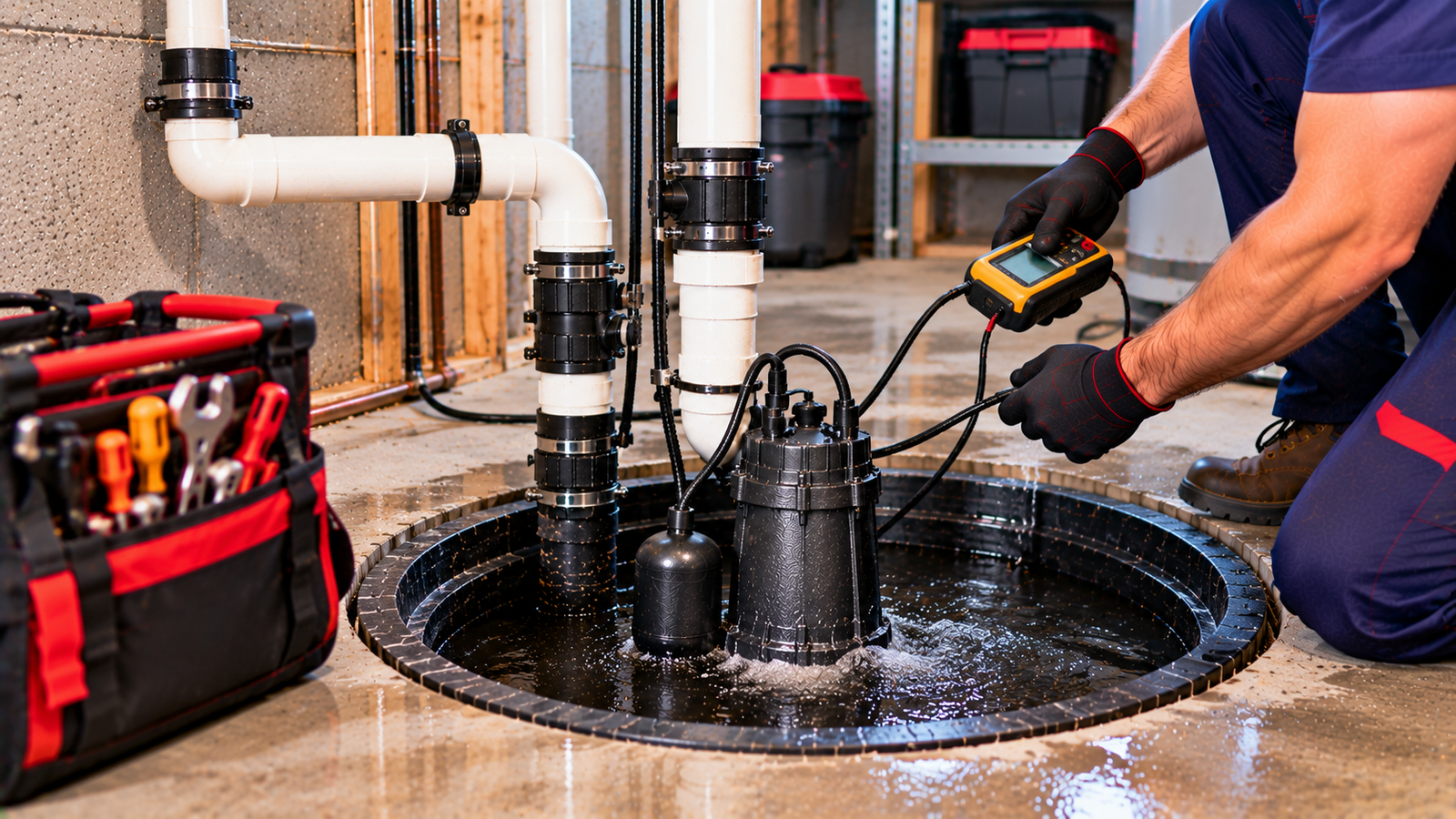

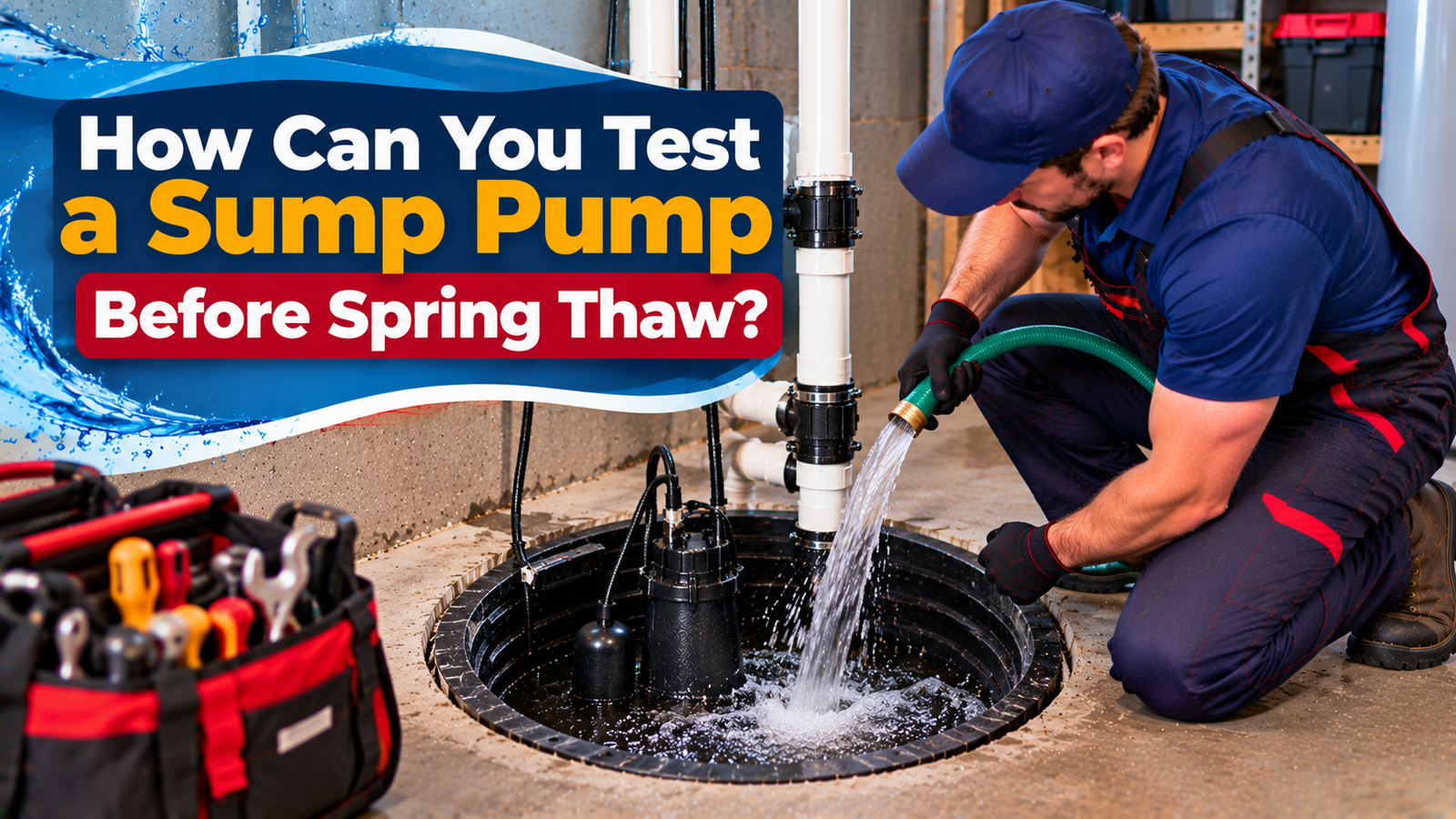
How Can You Test a Sump Pump Before Spring Thaw? As Calgary temperatures begin rising and accumulated snow starts melting, basement drainage systems may face increased demand. A sump pump that has remained inactive throughout winter should be checked before significant snowmelt reaches the foundation drainage system.
For homeowners in Mahogany, Auburn Bay, Cranston, and surrounding Southeast Calgary communities, early inspection can help identify problems before water begins collecting in the sump pit. Professional sump pump inspection and plumbing services in Calgary can assess equipment performance, discharge piping, and potential maintenance concerns.
A basic sump pump test can help confirm whether the pump activates, moves water, and shuts off correctly. However, testing must follow manufacturer instructions and appropriate electrical safety precautions. Understanding what to observe—and when to stop and call a professional—is essential.
Before spring thaw, inspect the sump pit and discharge outlet, then follow the manufacturer’s safe testing procedure. Where permitted, carefully add clean water to trigger the float switch. Confirm the pump starts, discharges water, and stops automatically. If it fails, leaks, or behaves unusually, arrange professional inspection.
Why Should You Test Your Sump Pump Before Calgary’s Spring Thaw?
Calgary’s transition from winter to spring can create changing drainage conditions around residential foundations.
When accumulated snow melts, water may enter foundation drainage systems and collect in sump pits where these systems are installed.
Testing before this happens provides an opportunity to identify problems while the basement is still dry.
How Does Spring Snowmelt Increase Basement Water Risks?
As temperatures rise, snow and ice begin releasing water into surrounding soil and surface drainage routes.
If the ground remains partially frozen or drainage pathways are restricted, water may accumulate near foundations.
Properties with sump systems may experience increased pumping demand when collected drainage water enters the pit.
Can a Sump Pump Stop Working During Winter?
Yes. A pump may develop electrical, mechanical, or switch-related problems even when it has not operated frequently.
Some faults remain unnoticed until the system is needed again.
A pre-thaw test helps determine whether the pump responds when the water level rises.
Why Is Early Testing Better Than Waiting for Water?
Testing during relatively dry conditions can provide more time to investigate problems, compare repair options, and schedule service.
Waiting until the sump pit fills during a major melt event may increase the urgency of the situation.
Early preparation also helps homeowners identify drainage concerns beyond the pump itself.
Does Every Calgary Home Have a Sump Pump?
No. Basement drainage arrangements differ according to construction, site conditions, and approved drainage designs.
Some homes use sump pumps while others have different foundation drainage systems.
Homeowners should understand their property’s existing arrangement before attempting modifications.
Which Calgary Homes Benefit Most From Pre-Thaw Testing?
Testing is particularly important for properties where a sump pump is essential to managing foundation drainage.
Finished basements, homes with previous water intrusion, and systems that operate frequently during wet periods may warrant closer attention.
The property’s drainage conditions matter more than the neighbourhood name alone.
Local example: A homeowner in Mahogany may notice that the sump pit remains dry throughout winter. That does not guarantee the pump will activate correctly during spring snowmelt. Testing before increased drainage demand can reveal an inactive float switch or other operating problem.
Can Spring Thaw Cause Problems Beyond the Sump Pump?
Yes. Surface grading, blocked drainage pathways, foundation seepage, and exterior discharge conditions can all influence basement water exposure.
A functioning sump pump cannot compensate for every drainage defect.
For background information about the seasonal transition, see this reference search covering spring thaw.
Why testing matters: A pre-thaw sump pump test helps confirm whether the equipment starts, moves water, and stops as intended. It can also reveal warning signs that should be investigated before Calgary’s seasonal snowmelt increases drainage demand.
For local business information, homeowners can consult the Calgary Electrical and Plumbing Google Maps listing.
How Do You Safely Test a Sump Pump Before Spring Thaw?
A basic sump pump test involves checking the surrounding conditions, following the manufacturer’s instructions, and observing how the pump responds to an appropriate water level.
The objective is to verify normal operation without exposing anyone to electrical hazards or damaging the equipment.
What Should You Check Before Starting the Test?
Begin with a visual inspection of the sump pit and nearby area.
Look for standing water around electrical equipment, damaged cords, loose components, unusual debris, or other conditions that may make testing unsafe.
If the installation appears damaged or the area is wet near electrical connections, stop and request qualified assistance.
Should You Inspect the Discharge Outlet First?
Yes. Where safely accessible, check whether the visible exterior discharge outlet appears blocked by snow, ice, or debris.
Do not dismantle piping, force frozen components, or enter hazardous areas to investigate.
A restricted outlet may prevent a functioning pump from moving water effectively.
How Do You Perform a Sump Pump Water Test?
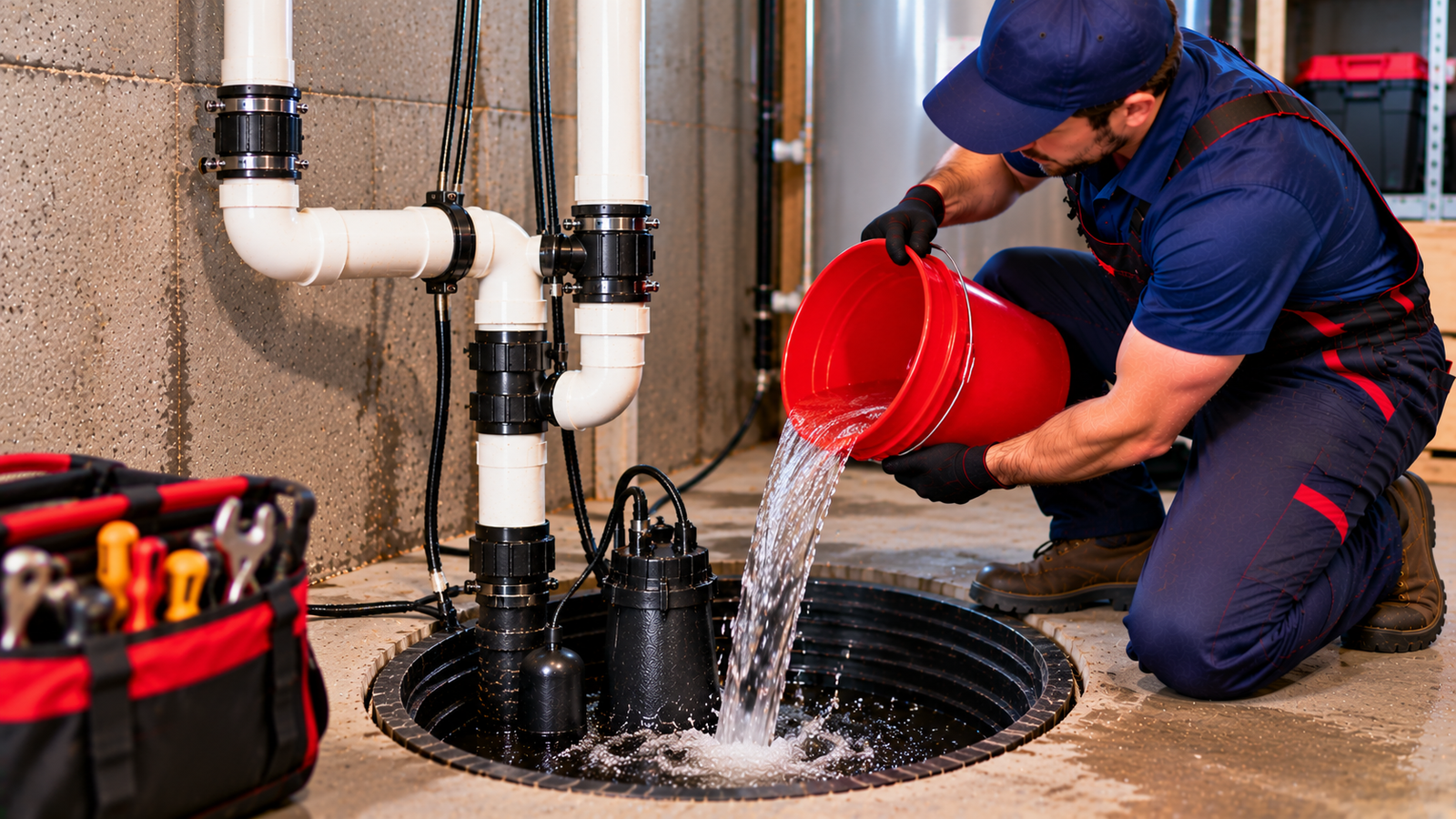
For pump models whose manufacturer permits this procedure, carefully adding clean water to the sump pit can simulate rising drainage water.
The water level should reach the pump’s normal activation point without overflowing the pit.
Observe whether the pump starts, removes water, and shuts off automatically.
Do not continue adding water if the pump fails to activate or the water level approaches an unsafe height.
- Confirm the testing area is dry and electrically safe.
- Review the manufacturer’s testing instructions.
- Visually inspect the sump pit and accessible components.
- Check the visible discharge outlet for obstructions.
- Use the approved water-testing method if permitted.
- Observe whether the pump activates automatically.
- Confirm water is being discharged appropriately.
- Check whether the pump stops at the intended level.
- Listen for unfamiliar noises or excessive vibration.
- Arrange inspection if the system behaves abnormally.
How Can You Tell Whether the Float Switch Works?
The float switch is designed to activate the pump when the water reaches a predetermined level.
During a manufacturer-approved water test, the pump should start automatically as the water rises.
If it fails to activate, the switch may be obstructed, defective, or affected by another problem.
Avoid reaching into an energized sump pit to move or adjust the switch.
What Should a Properly Working Sump Pump Sound Like?
Normal operating noise varies by pump model and installation.
However, the pump should not produce unfamiliar grinding, harsh rattling, or excessive vibration.
Unusual sounds may indicate debris, worn components, or installation concerns.
How Do You Know the Pump Is Removing Water?
During a successful test, the water level in the pit should decrease as the pump operates.
Where the discharge outlet is visible from a safe location, water flow may also be observable.
If the motor runs but the water level does not fall, the system needs further assessment.
Should the Sump Pump Stop Automatically?
Yes. A properly functioning automatic pump should stop when the water reaches its normal shutoff level.
Continuous operation after the water has dropped may indicate a switch or control problem.
Allowing an unsuitable pump to run dry can damage certain models.
How Long Should a Sump Pump Test Take?
There is no universal test duration because pit size, pump capacity, activation settings, and water volume differ.
The goal is to observe one appropriate operating cycle according to the manufacturer’s procedure.
Do not force prolonged operation merely to reach a particular number of minutes.
Important electrical precaution: Never handle plugs, cords, switches, or the pump while standing in water. Do not open electrical components or reach into an energized pit. If the area is wet, the installation appears damaged, or the manufacturer’s instructions are unavailable, request professional assistance.
Can You Test a Sump Pump Without Adding Water?
Some systems provide manufacturer-approved testing controls or diagnostic features.
However, a simple indicator light or motor sound may not confirm that water is being pumped correctly.
Follow the instructions for the specific model and arrange professional testing if the appropriate procedure is unclear.
Homeowners can also review this Calgary plumbing service location reference for additional business information.
Request a sump pump inspection and testing estimate in Calgary in just a few clicks.
Get My Free Estimate
What Should You Do If Your Sump Pump Fails the Test?
A failed test does not automatically mean the entire sump pump must be replaced.
Problems can involve electrical supply, float switches, discharge restrictions, check valves, or worn internal components.
Identifying the cause is important before choosing repair or replacement.
What If the Sump Pump Does Not Turn On?
Failure to activate may indicate a defective switch, power supply problem, or motor fault.
If the pump does not respond during a manufacturer-approved test, stop rather than repeatedly forcing activation.
Qualified diagnosis can determine whether the issue is electrical, mechanical, or related to the controls.
Why Does a Sump Pump Run Without Removing Water?
A running motor does not guarantee that water is moving through the discharge line.
Possible causes include a blocked outlet, damaged pumping components, an air-related problem, or an unsuitable installation.
Continued operation without effective water removal may increase the risk of overheating or damage.
What If the Pump Runs Continuously?
Continuous operation may result from a stuck float, high incoming water volume, or an inability to discharge water effectively.
During a controlled test, the pump should normally stop when the water level reaches its designated shutoff point.
Failure to stop warrants investigation.
Why Does the Pump Start and Stop Repeatedly?
Rapid cycling may indicate a float adjustment issue, check valve problem, or mismatch between the pump and sump pit.
Repeated starts can increase wear on motor and control components.
A technician can assess whether the problem is repairable.
What If the Sump Pump Makes Grinding Noises?
Grinding or harsh mechanical noises may indicate debris, damaged components, or wear.
Do not reach into an energized pump to investigate the source.
If the sound is new or severe, stop testing and arrange professional assessment.
Can a Frozen Discharge Pipe Cause a Failed Test?
Yes. Ice can restrict or block water movement through exposed discharge arrangements.
Even a functioning pump may struggle when the outlet is obstructed.
Frozen piping should be evaluated safely rather than forced apart or heated using unsafe methods.
Does a Failed Float Switch Require Pump Replacement?
Not always. Some pump designs allow compatible float switches or control components to be replaced separately.
Other models may have integrated parts that make repair less practical.
Equipment age, replacement part availability, and overall condition influence the decision.
When Is Replacement More Practical Than Repair?
Replacement may be appropriate when the pump is aging, the motor has failed, or repeated repairs have not restored reliability.
A single minor fault does not necessarily justify replacing otherwise serviceable equipment.
For additional guidance, read How Often Should a Sump Pump Be Replaced?.
| Test Result | Possible Concern | Next Step |
|---|---|---|
| Pump does not activate | Power, switch, or motor problem | Stop testing and arrange diagnosis |
| Motor runs but water remains | Discharge restriction or pumping failure | Have the pump and discharge assessed |
| Pump does not shut off | Float or control malfunction | Request inspection before further use |
| Rapid on-off cycling | Float, valve, or sizing issue | Evaluate operating conditions |
| Unusual grinding or vibration | Debris or mechanical wear | Stop the test and seek professional assessment |
| Water leaks from discharge piping | Damaged or loose plumbing connection | Arrange plumbing repair |
What If Water Is Already Entering the Basement?
Active water intrusion requires greater caution than routine testing.
Keep away from affected electrical equipment and avoid entering flooded areas where electrical hazards may be present.
Contact appropriate qualified assistance and prioritize safety over troubleshooting.
Calgary example: A homeowner in Copperfield notices that the sump pump activates during a pre-thaw test but the water level does not decrease. The issue may involve the pump or discharge arrangement. Continuing to add water would increase risk rather than provide useful information.
What to remember: If the pump fails to activate, cannot remove water, or does not shut off correctly, stop the test. A professional can determine whether the problem requires maintenance, a component repair, or full replacement.
For additional company content, watch this Calgary Electrical and Plumbing video resource.
How Can You Prepare Your Sump Pump System for Spring?
Testing is one part of spring drainage preparation.
Homeowners should also consider the condition of the sump pit, visible discharge piping, backup protection, and surrounding drainage arrangements.
These checks can help identify concerns before increased snowmelt and rainfall place greater demands on the system.
Should You Clean the Sump Pit Before Spring?
Excessive sediment and debris can interfere with some sump pump components.
However, cleaning should follow manufacturer guidance and appropriate electrical safety procedures.
If cleaning requires lifting equipment, disconnecting components, or entering a hazardous area, professional assistance is advisable.
Should You Check the Exterior Discharge Area?
Yes. Where safely visible, check whether the outlet appears obstructed by snow, ice, or debris.
Discharged water should be directed according to applicable drainage requirements.
Do not make unauthorized drainage connections or redirect water in ways that create problems for neighbouring properties.
How Important Is the Sump Pump Check Valve?
The check valve helps limit water flowing back toward the sump pit after the pump stops.
A damaged or malfunctioning valve can contribute to repeated cycling.
Professional inspection can determine whether the existing valve is functioning correctly.
Should You Test a Battery Backup Sump Pump?
Where a backup system is installed, it should be checked according to its manufacturer’s instructions.
Battery condition, charging status, alarms, and backup pump operation may all require evaluation.
Do not bypass electrical controls or deliberately create unsafe power conditions to simulate an outage.
Are High-Water Alarms Useful During Spring Thaw?
High-water alarms can alert homeowners when the sump pit reaches an abnormal level.
Some systems provide audible notifications, while others offer remote alerts.
Although alarms do not remove water, they can help identify a developing problem before the pit overflows.
Should You Check Basement Floor Drains?
Visible basement drainage fixtures should be considered as part of general water management.
However, floor drains and sump systems may serve different functions and should not be assumed to be interchangeable.
Unusual drainage behaviour may require a separate plumbing assessment.
Can Exterior Grading Affect Basement Water Problems?
Yes. Surface drainage conditions influence how water moves around a home’s foundation.
Snow accumulation, blocked pathways, and grading problems can contribute to water collecting near the building.
A sump pump may manage certain collected drainage water, but broader site drainage issues may still need correction.
Does a Successful Test Guarantee the Pump Will Work All Spring?
No. A successful test confirms operation under the conditions observed at that time.
It cannot guarantee that the pump will handle every future water volume, electrical interruption, or mechanical problem.
Regular observation and appropriate maintenance remain important.
When Should You Schedule a Professional Sump Pump Inspection?
Professional inspection is appropriate when a pump fails testing, produces unusual noises, cycles excessively, or has an uncertain maintenance history.
It may also be useful when the equipment is approaching the later stages of its expected service life.
Homes with previous basement water intrusion may benefit from a broader drainage assessment.
What Should a Professional Pre-Thaw Inspection Include?
- Reviewing the sump pump’s age, model, and maintenance history.
- Checking pump activation and automatic shutoff.
- Assessing visible sump pit conditions.
- Evaluating float-switch operation.
- Checking discharge piping and check valve performance.
- Reviewing backup pump and alarm operation where installed.
- Identifying electrical or drainage concerns requiring qualified work.
- Recommending repair or replacement when appropriate.
How Can Calgary Homeowners Create a Spring Testing Routine?
Choose a convenient time before the expected period of increased drainage demand.
Keep the manufacturer’s instructions accessible and record the date and outcome of each inspection.
Document unusual noises, delayed activation, or water removal concerns so changes can be identified over time.
Do All Southeast Calgary Homes Need the Same Preparation?
No. A home in Cranston may have different drainage requirements from a property in Seton, New Brighton, McKenzie Towne, or Lake Bonavista.
Even neighbouring homes can have different sump pit designs, discharge arrangements, and water inflow patterns.
Preparation should reflect the individual property’s drainage system.
Spring preparation example: A homeowner in Douglasdale completes a manufacturer-approved test and confirms that the pump activates correctly. They also notice that the exterior discharge area remains obstructed by winter debris. Identifying this concern before significant snowmelt provides time to arrange safe correction.
What Records Should You Keep After Testing?
Record the inspection date, pump age if known, whether activation and shutoff were normal, and any unusual observations.
Keep invoices for repairs, maintenance, and equipment replacement.
These records can help a technician understand recurring problems and determine when replacement is becoming practical.
Spring readiness summary: Confirm safe pump operation, check accessible drainage components, review backup protection, and investigate unusual performance. A successful test is useful, but continued attention throughout changing spring conditions remains important.
For additional local company information, visit the Calgary Electrical and Plumbing shared Google business profile or follow the Calgary Electrical and Plumbing X account.
Request a sump pump inspection and testing estimate in Calgary in just a few clicks.
Get My Free Estimate
Prepare Your Basement Drainage System Before the Snow Melts
Testing a sump pump before Calgary’s spring thaw can help identify problems before seasonal drainage demand increases. Following manufacturer-approved procedures, observing automatic operation, and checking visible drainage conditions can provide valuable information about system readiness.
If testing reveals a problem, a local calgary plumber can assess the system and recommend appropriate next steps. Call Calgary Electrical and Plumbing at (403) 421-1991 to discuss professional sump pump testing, maintenance, or replacement.
Frequently Asked Questions about Testing a Sump Pump Before Spring Thaw
How do I know if my sump pump is working before spring thaw?
Follow the manufacturer’s testing instructions and observe whether the pump activates, removes water, and shuts off automatically. Some models permit a controlled clean-water test. If the pump fails to respond, makes unusual noises, or cannot discharge water, arrange professional inspection before increased drainage demand.
Can I pour water into my sump pit to test the pump?
Many sump pumps can be tested by carefully adding clean water, but only when the manufacturer permits this method and conditions are electrically safe. Stop if the pump does not activate or water approaches an unsafe level. Never reach into an energized pit.
How often should I test my sump pump in Calgary?
Follow the testing schedule recommended by the pump manufacturer. Checking operation before spring snowmelt is particularly useful for Calgary homes that rely on sump systems. Pumps with heavy operating demands, previous failures, or uncertain maintenance histories may require more frequent professional attention.
What should I do if my sump pump runs but does not pump water?
Stop the test and avoid adding more water. A discharge restriction, damaged pumping component, or another system fault may prevent water removal. Because the motor running does not confirm effective pumping, professional diagnosis is advisable before relying on the system during spring thaw.
Should I have a plumber inspect my sump pump before spring?
Professional inspection is worthwhile when the pump is aging, has failed a test, operates unusually, or protects a basement with previous water intrusion. A technician can evaluate pump operation, discharge plumbing, and related components to identify repair or replacement needs before seasonal drainage increases.
Make sure your basement drainage system is ready for changing spring conditions.
Call (403) 421-1991 Now
Professional Sump Pump Inspection and Plumbing Services in Calgary