

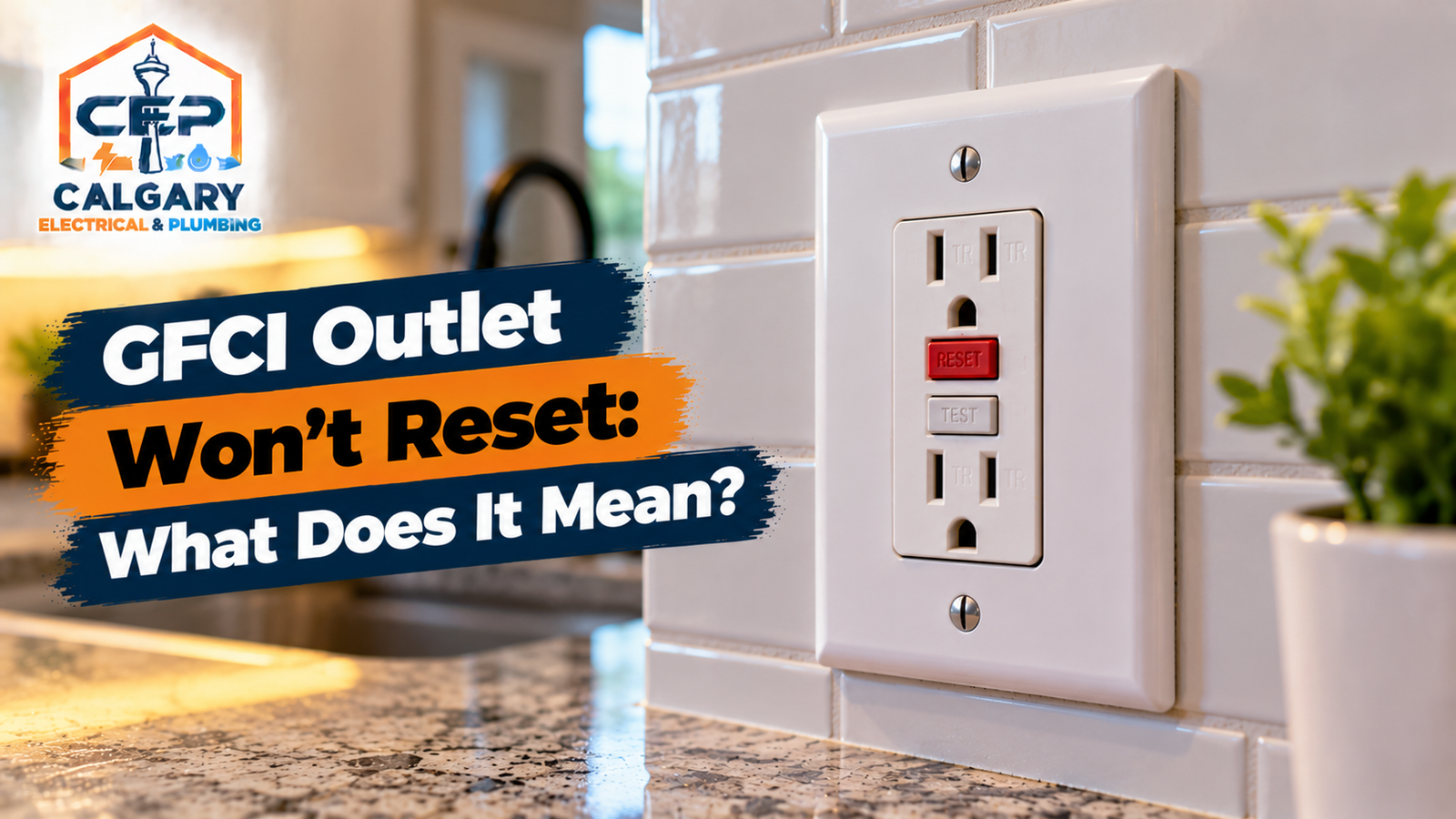
GFCI Outlet Won’t Reset: What Does It Mean? If you press the reset button on a bathroom, kitchen or garage outlet and nothing happens, you may be dealing with more than a minor inconvenience. A ground-fault circuit interrupter is designed to help protect people from electric shock, so a reset failure deserves careful attention.
Sometimes the problem involves an appliance that has developed an electrical fault. In other cases, the outlet has lost its power supply, detected a continuing ground fault or reached the end of its useful life. Calgary homeowners seeking information about residential electrical troubleshooting can explore Calgary Electrical and Plumbing and its electrical services.
From bathrooms in Mahogany and Auburn Bay to basement utility rooms in Riverbend and garages in McKenzie Towne, GFCI protection is an important part of household electrical safety. Understanding why a device refuses to reset can help you recognize when basic observation is appropriate and when a qualified electrician should investigate.
A GFCI outlet may refuse to reset because it detects a continuing ground fault, has no incoming power, contains damaged wiring or has failed internally. Stop using the affected receptacle. If there is moisture, burning, visible damage or repeated tripping, arrange a qualified electrical inspection.
Why Won’t My GFCI Outlet Reset?
A GFCI outlet that refuses to reset may be responding to a genuine electrical fault. It may also have lost its incoming power supply or developed an internal failure. The reset button alone cannot tell you which condition is present.
Unlike an ordinary receptacle, a GFCI contains protective electronics designed to detect certain differences in electrical current. When the device identifies a potentially hazardous condition, it interrupts power to help reduce the risk of electric shock.
How Does a GFCI Outlet Work?
A ground-fault circuit interrupter compares the electrical current flowing through the circuit’s intended paths. Under normal conditions, the current leaving through the hot conductor should return through the neutral conductor.
If the device detects a sufficient difference between those currents, it trips. That difference may indicate that electricity is flowing along an unintended path, potentially through a person or another conductive surface.
GFCI protection is particularly important where electrical equipment may be used near water or moisture. Depending on the installation and applicable code requirements, protection may be found in bathrooms, kitchens, garages, outdoor receptacles and other locations.
Why the Reset Button Sometimes Does Nothing
Some GFCI receptacles require a suitable incoming power supply before their reset mechanism will latch. If the circuit has lost power, pressing RESET may not restore operation.
A device may also refuse to reset when it detects an ongoing fault or when its internal components are no longer functioning correctly.
Different GFCI models can behave differently, so a button that will not stay engaged does not identify one specific cause.
What Does It Mean When the GFCI Trips Immediately?
If a GFCI resets briefly and trips again, the device may be detecting a continuing ground fault. The source could involve connected equipment, moisture or wiring associated with the protected circuit.
Repeated tripping should not be treated as an inconvenience to overcome. It may indicate that the protective device is responding to an unsafe electrical condition.
Can One GFCI Protect Several Outlets?
Yes. A properly installed GFCI receptacle may protect additional downstream outlets connected through its load terminals.
As a result, a GFCI in one location may interrupt power to receptacles elsewhere on the same protected circuit. The arrangement depends on how the electrical system was installed.
For example, a homeowner may discover that a garage receptacle has stopped working because a GFCI device protecting it has tripped in another location.
Calgary example: A homeowner in Cranston discovers that a basement receptacle has no power. The outlet itself has no reset button, but it may be protected by a GFCI elsewhere on the circuit. Identifying the protective device is part of determining why power was interrupted.
Does a GFCI Outlet Protect Against Every Electrical Problem?
No. GFCI protection is designed primarily to reduce electric shock risk from certain ground-fault conditions. It is not a substitute for proper overcurrent protection, sound wiring or other electrical safety measures.
A GFCI does not detect every dangerous electrical condition. A circuit can still have damaged wiring, loose connections or other faults requiring professional attention.
Key takeaway: A GFCI that will not reset may be protecting you from a continuing ground fault, may lack incoming power or may have failed. The safest response depends on identifying the actual cause rather than repeatedly pressing the reset button.
Homeowners seeking local electrical service information can consult the Calgary Electrical and Plumbing Google Maps listing.
What Are the Most Common Reasons a GFCI Outlet Will Not Reset?
Several electrical conditions can prevent a GFCI from resetting. Some involve the protective device itself, while others originate elsewhere on the circuit.
Understanding the possibilities can help explain the problem, but the symptoms do not replace proper testing by a qualified electrician.
A Continuing Ground Fault
A ground fault occurs when electrical current travels along an unintended path. A damaged appliance, deteriorated insulation or moisture may create conditions that cause GFCI protection to operate.
If the fault remains present, the device may trip again immediately or refuse to remain reset.
Moisture Inside an Outlet or Connected Equipment
Water and electrical equipment are a hazardous combination. Moisture entering a receptacle, outdoor electrical box or appliance may contribute to unintended current leakage.
In Calgary, outdoor receptacles can be exposed to rain, snow, melting ice and changing temperatures. Damaged weatherproof covers or deteriorated seals may allow moisture to reach electrical components.
Do not attempt to dry a wet outlet with a hair dryer or insert objects into the receptacle. Keep the affected equipment out of service until it can be assessed safely.
Can a GFCI Outlet Fail to Reset Because There Is No Power?
Yes. Many modern GFCI receptacles are designed so their reset mechanisms will not latch without an appropriate incoming power supply.
A tripped circuit breaker, disconnected conductor or upstream electrical problem may prevent the device from receiving power.
The absence of power at a GFCI does not automatically mean that the receptacle itself needs replacement.
A Faulty Appliance Connected to the Circuit
Appliances with damaged cords, failing components or moisture-related faults may cause GFCI protection to trip.
Equipment used in kitchens, bathrooms, garages and utility rooms can develop problems through wear, physical damage or exposure to damp conditions.
The appliance may require separate inspection or replacement. Restoring power to the outlet without addressing defective equipment can allow the problem to recur.
A Worn-Out or Defective GFCI Receptacle
GFCI devices contain mechanical and electronic components that can deteriorate over time. Electrical surges, environmental conditions and ordinary wear may contribute to failure.
Some modern devices include self-monitoring features that can prevent normal operation when the protective function is no longer available.
If the device has failed internally, a qualified electrician may recommend replacement.
Loose or Incorrect Electrical Connections
Damaged wiring connections can interrupt power or interfere with normal operation. Incorrect connections may also prevent a GFCI from functioning as intended.
Because GFCI receptacles have designated line and load connections, installation details matter. Homeowners should not remove the device or rearrange conductors to experiment with the wiring.
A Problem With an Upstream Protective Device
In some installations, a GFCI receptacle receives power through another protective device or circuit arrangement.
If an upstream breaker or protective device has interrupted the supply, the downstream receptacle may appear defective even though it is not the original source of the problem.
| Possible Cause | Common Symptom | Appropriate Response |
|---|---|---|
| Continuing ground fault | GFCI trips again or will not remain reset | Stop using the circuit and arrange inspection. |
| Loss of incoming power | Reset button does not latch; outlet remains dead | Have the power supply and circuit assessed. |
| Moisture exposure | Tripping after rain, snowmelt or damp conditions | Keep wet electrical equipment out of service. |
| Faulty appliance | Tripping associated with particular equipment | Discontinue use of the suspected appliance. |
| Defective GFCI device | Failed test or reset operation | Arrange professional testing and replacement if required. |
| Wiring defect | Intermittent power or repeated reset failure | Have a qualified electrician investigate. |
Can a GFCI Outlet Be Dangerous When It Will Not Reset?
A reset failure may indicate that the protective device is preventing power from being restored because a fault remains present. That protective response should not be bypassed.
In other cases, the device may have failed and no longer provide the intended protection.
Neither situation should be resolved by replacing the GFCI with an ordinary unprotected receptacle.
Important safety warning: If a GFCI outlet is wet, scorched, smoking, unusually hot or producing a burning smell, do not touch it or repeatedly press RESET. If smoke, flames or an active fire are present, evacuate and call 911.
For a broader explanation of protective receptacles, see this guide explaining how GFCI outlets work.
Additional company location information is available through this Calgary electrical service map reference.
Request a GFCI outlet inspection and repair estimate in Calgary in just a few clicks.
Get My Free Estimate
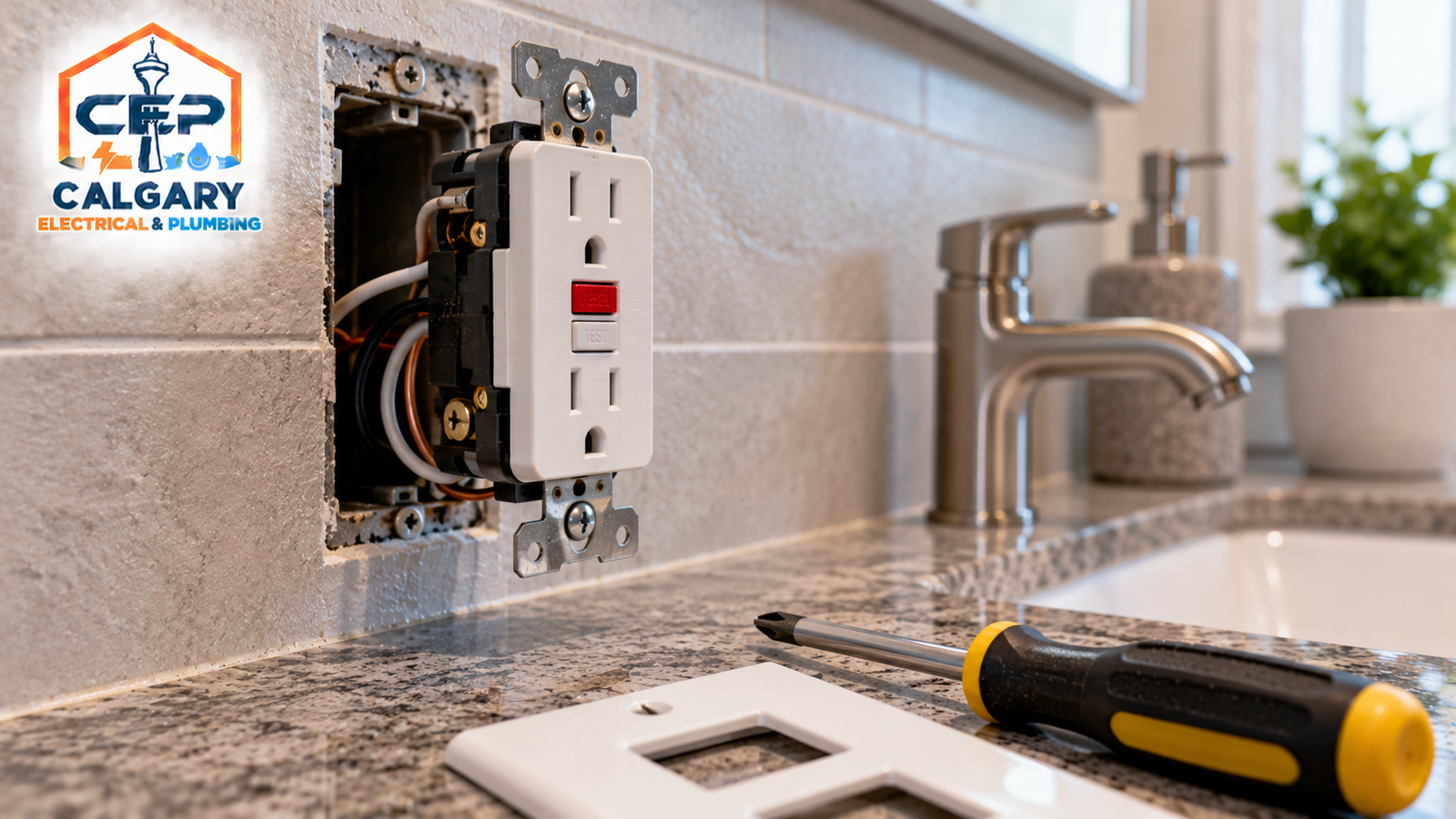
What Should You Do When a GFCI Outlet Won’t Reset?
A GFCI that refuses to reset should be treated as an electrical safety concern rather than a button that needs extra force.
The appropriate first response is to stop using the affected receptacle and check for obvious signs of danger without opening electrical equipment.
Safe Checks Before Calling a Calgary Electrician
Begin by observing the outlet and its surroundings. Look for visible damage, moisture, discolouration or other warning signs without touching exposed electrical components.
If the receptacle appears damaged, wet or unusually hot, do not attempt further operation.
When there are no signs of danger, the device manufacturer’s instructions may explain normal indicator lights and button operation. Follow those instructions rather than forcing the reset mechanism.
Check Whether Other Outlets Have Lost Power
Notice whether nearby receptacles or connected devices have also stopped working. Multiple affected outlets may indicate a shared circuit or an upstream protective device.
This information can help an electrician identify the likely circuit arrangement.
Do not assume that every dead receptacle has failed independently.
Inspect Connected Appliances Without Handling Damaged Equipment
Think about which appliances were operating when the GFCI tripped. A faulty appliance may contribute to current leakage that activates ground-fault protection.
If a cord, plug or appliance appears damaged, wet or overheated, do not touch or reuse it.
Do not move suspected defective equipment to another outlet to see whether it trips again.
Do Not Repeatedly Force the Reset Button
Repeated reset attempts do not repair a continuing ground fault or restore a failed protective mechanism.
If the device immediately trips again or refuses to latch, stop attempting to restore power and arrange appropriate electrical assessment.
Check the Electrical Panel Only When Safe
If the panel is dry, undamaged and safe to approach, a homeowner may be able to observe whether a breaker appears tripped.
Do not repeatedly reset a breaker that trips again. Never remove the panel cover or touch internal electrical components.
If the panel is wet, smoking, damaged or unusually hot, keep away and seek emergency assistance as appropriate.
Do Not Replace a GFCI With an Ordinary Outlet
Removing ground-fault protection to restore power defeats an important electrical safety function.
Where GFCI protection is required, the appropriate repair must preserve that protection and address any underlying wiring or equipment fault.
What if the GFCI Keeps Tripping After Rain?
Repeated tripping during wet weather may indicate moisture reaching outdoor electrical equipment or connected devices.
Calgary’s changing weather can expose exterior receptacles to snow, rain and melting ice. Damaged covers, seals or electrical enclosures may contribute to moisture problems.
Keep the affected outlet out of service and arrange inspection rather than attempting to dry or disassemble it.
What if the GFCI Is in a Bathroom or Kitchen?
Bathrooms and kitchens are locations where water and electrical equipment may be close together. A GFCI that will not reset in these areas should not be bypassed.
If moisture, damaged equipment or repeated tripping is involved, professional assessment can help determine whether the problem is in the receptacle, connected appliances or circuit wiring.
Calgary example: A homeowner in Auburn Bay discovers that a bathroom GFCI will not reset after a hair dryer stops working. Rather than trying the appliance in another receptacle, the homeowner stops using the equipment and arranges an inspection to identify whether the problem involves the appliance, outlet or wiring.
When Should You Call an Electrician Immediately?
Arrange urgent professional assistance when the GFCI repeatedly trips, refuses to reset, shows damage or appears to be associated with moisture or faulty wiring.
Burning smells, unusual heat, buzzing, smoke or visible scorching are especially concerning.
For related warning signs, read our article on what causes a burning smell from an outlet.
Safety takeaway: Do not force a GFCI to reset, bypass its protection or move suspected faulty equipment to another outlet. If the cause is unclear, keep the receptacle out of service until it has been professionally assessed.
Homeowners can also consult this Calgary Electrical and Plumbing Google business profile reference for additional company information.
How Do Electricians Repair a GFCI Outlet That Won’t Reset?
Professional GFCI troubleshooting begins with identifying why the protective device is not operating normally.
The electrician may need to distinguish between a defective receptacle, loss of incoming power, a continuing ground fault and problems involving connected equipment or downstream wiring.
Confirming the Electrical Supply
Appropriate testing can help establish whether the GFCI is receiving the electrical supply needed for normal operation.
If incoming power is absent, the electrician may investigate the breaker, upstream connections or other relevant circuit components.
Replacing the receptacle without identifying the supply problem may not restore operation.
Testing the GFCI Protective Function
Electricians use suitable testing methods and equipment to assess electrical conditions and protective-device operation.
Testing helps determine whether the GFCI can provide its intended protection or whether replacement is required.
A device that has failed its protective function should not remain in service.
Investigating Ground Faults
When a continuing ground fault is suspected, the electrician may investigate connected equipment, circuit wiring and affected receptacles.
The goal is to locate the unintended current path and correct the underlying condition.
Depending on the findings, repairs may involve damaged wiring, moisture-affected components or defective electrical equipment.
Checking Line and Load Connections
GFCI receptacles have designated line terminals for incoming supply and may have load terminals for protecting downstream equipment.
Incorrect or damaged connections can interfere with normal operation and protection.
A qualified electrician can assess the installation and correct wiring defects using appropriate electrical practices.
Replacing a Defective GFCI Receptacle
If the GFCI has failed internally, replacement may be the appropriate solution.
The replacement device must be suitable for the installation and provide the required protective function.
Any associated wiring damage or continuing ground fault should be addressed before the circuit is returned to service.
How Much Does GFCI Outlet Replacement Cost in Calgary?
The cost of repairing or replacing a GFCI depends on the underlying problem and the amount of electrical work required.
A straightforward device replacement involves a different scope of work from tracing an intermittent ground fault, repairing damaged wiring or investigating moisture inside multiple electrical boxes.
Diagnostic time, accessibility, materials, circuit condition and applicable permit requirements can influence the final estimate.
Because a GFCI reset failure can have several causes, a site-specific assessment provides a more useful basis for pricing than assuming every problem requires the same repair.
Should You Replace Every GFCI Outlet at the Same Time?
Not necessarily. The condition, age, location and operation of each device should guide replacement decisions.
A failed receptacle may need replacement, while other properly functioning devices may remain suitable for continued use.
An electrician can identify whether additional outlets require attention based on inspection findings.
How Can You Prevent GFCI Outlet Problems?
Regular attention to electrical equipment and proper use can help reduce avoidable GFCI problems.
- Follow the manufacturer’s instructions for testing GFCI protection.
- Keep electrical receptacles and connected equipment away from moisture.
- Maintain suitable weather-resistant covers on outdoor outlets.
- Stop using appliances with damaged plugs or cords.
- Do not overload electrical circuits or power bars.
- Avoid using extension cords as permanent wiring.
- Arrange inspections when a GFCI repeatedly trips.
- Do not bypass required ground-fault protection.
- Have electrical modifications completed by qualified personnel.
Do New Calgary Homes Experience GFCI Problems?
Yes. Homes in newer communities such as Seton, Copperfield and New Brighton may have modern electrical installations, but individual protective devices and connected appliances can still develop faults.
Moisture exposure, physical damage and equipment defects can affect electrical components regardless of a property’s age.
What About Older Homes in Calgary?
Established properties in Riverbend, Douglasdale and Lake Bonavista may have undergone electrical renovations or changes in appliance use over time.
Existing wiring arrangements and previous modifications can influence how GFCI protection is installed and where downstream receptacles receive power.
An electrician should assess the actual circuit rather than assuming that every older installation has the same configuration.
What Should You Ask During a GFCI Repair Visit?
Ask the electrician what caused the reset failure, whether the device itself was defective and whether other outlets are protected by the same GFCI.
You can also ask whether the repair requires additional wiring work and how to test the replacement device according to the manufacturer’s instructions.
Calgary example: A homeowner in McKenzie Towne reports that a garage GFCI stopped resetting after snowmelt reached outdoor equipment. Inspection may reveal moisture intrusion, a defective connected device or another circuit fault. The appropriate repair depends on the actual findings.
Professional repair takeaway: A GFCI that will not reset may require supply testing, ground-fault investigation, wiring correction or device replacement. Effective repair restores the intended protection while addressing the underlying cause.
For additional information about the business, watch this Calgary Electrical and Plumbing service video.
You can also explore the company’s Instagram profile featuring electrical and plumbing services.
Request a GFCI outlet inspection and repair estimate in Calgary in just a few clicks.
Get My Free Estimate
Keep Your Calgary Home Protected With Proper GFCI Repairs
A GFCI outlet that refuses to reset may be responding to a genuine ground fault, an interrupted power supply or an internal device failure. Repeatedly forcing the reset button or bypassing protection can leave electrical hazards unresolved.
Calgary Electrical and Plumbing provides residential electrical services while also assisting homeowners as a local calgary plumber. If a GFCI outlet in your home will not reset, call (403) 421-1991 to discuss the problem and appropriate electrical assistance.
Frequently Asked Questions about GFCI Outlets That Won’t Reset
Why does my GFCI outlet click but not reset?
A GFCI that clicks but will not remain reset may be detecting a continuing ground fault, lacking suitable incoming power or experiencing an internal failure. The clicking sound alone cannot identify the cause. Stop repeated reset attempts and arrange professional electrical assessment.
Can a GFCI outlet stop working without tripping?
Yes. A GFCI receptacle may stop supplying power because of an upstream circuit problem, a failed internal component or damaged wiring. Some devices also prevent reset when their protective function is unavailable. A qualified electrician can determine why the outlet is not operating.
Should I replace a GFCI outlet that will not reset?
Replacement may be necessary if the GFCI has failed internally, but a reset problem can also originate from the electrical supply, wiring or connected equipment. Replacing the device without identifying the cause may leave the underlying fault unresolved. Professional testing is recommended.
Can rain or moisture cause a GFCI outlet to trip repeatedly?
Yes. Moisture entering an outdoor receptacle, electrical enclosure or connected appliance can contribute to unintended current leakage and GFCI tripping. Keep affected electrical equipment out of service. A qualified electrician can inspect the installation and identify necessary repairs.
When should I call a Calgary electrician for a GFCI that will not reset?
Arrange electrical assistance when a GFCI repeatedly trips, refuses to reset or shows signs of damage. Burning smells, unusual heat, buzzing or moisture exposure require particular caution. If smoke, flames or an active fire are present, evacuate and call 911.
Don’t ignore recurring electrical protection problems.
Call (403) 421-1991 Now
Local Help Available 24/7 in Calgary