
Why Does an Electrical Outlet Feel Warm? If you have unplugged a phone charger, space heater, or kitchen appliance and noticed warmth around the receptacle, you may be wondering whether the temperature is normal or a sign of an electrical problem. The answer depends on where the heat originates, how noticeable it is, and whether other warning signs are present.
Electrical outlets are designed to provide power through properly installed connections, not to become noticeably hot during ordinary use. Homeowners looking for qualified electrical assistance can learn more about Calgary Electrical and Plumbing and the services available for residential electrical concerns.
From newer homes in Seton and Mahogany to established properties in Lake Bonavista and Riverbend, outlet problems can occur in any neighbourhood. Understanding the difference between ordinary appliance warmth and dangerous receptacle overheating can help you respond safely before damage becomes more serious.
An electrical outlet may feel warm because of heat from a connected appliance, excessive current, loose wiring, worn contacts, or a faulty receptacle. Noticeable heat, burning smells, buzzing, discolouration, or melted plastic are warning signs. Stop using the outlet and arrange professional electrical inspection.
What Causes an Electrical Outlet to Feel Warm?
A receptacle can become warm for several reasons, but the source of the heat matters. Sometimes warmth comes from an appliance or charging adapter plugged into the outlet. In other cases, electrical resistance or a deteriorating connection generates heat within the receptacle itself.
Determining the difference requires attention to the circumstances. An outlet that becomes noticeably hot, remains warm after equipment is disconnected, or shows visible damage should not be considered normal.
Heat Transferred From Phone Chargers and Power Adapters
Phone chargers, laptop adapters, and similar electronic devices convert electrical power into the form required by the connected equipment. This conversion produces some heat, even when the device operates correctly.
A warm charger positioned close to a receptacle can make the surrounding area seem warm. However, this does not mean that a hot outlet is automatically safe.
Excessive adapter heat, deformation, discolouration, or unusual smells are reasons to stop using the equipment. The outlet should also be assessed if it appears to be generating heat independently.
High Electrical Demand From Connected Appliances
Space heaters, portable air conditioners, and certain kitchen appliances draw substantial electrical current. Higher current increases the importance of sound connections and properly rated electrical equipment.
When a receptacle or its connections are damaged, electrical resistance can produce additional heat during appliance operation.
Do not assume that warmth is acceptable simply because the connected appliance uses a large amount of electricity. A properly installed receptacle should not exhibit concerning overheating.
Can Loose Electrical Wiring Make an Outlet Hot?
Yes. Loose wiring connections can create resistance at the point where electrical current passes through the connection. That resistance generates heat, potentially damaging the receptacle, surrounding insulation, and nearby materials.
Loose connections may develop because of installation defects, deterioration, mechanical stress, or other problems. The symptoms can include warmth, intermittent power, buzzing, or discolouration.
Because the connection is located inside electrical equipment, diagnosis and repair should be performed by a qualified electrician.
Worn or Damaged Receptacle Contacts
Electrical outlets contain metal contacts designed to grip the blades of a plug securely. Over time, these contacts can become worn or damaged.
A loose-fitting plug may make unreliable electrical contact. This can increase resistance and, under certain conditions, contribute to overheating or arcing.
If plugs repeatedly fall out or fit loosely, stop using the receptacle and arrange an inspection. Do not bend plug blades or attempt to tighten internal contacts.
Overloaded Circuits and Extension Cords
An electrical circuit can become overloaded when connected equipment draws more current than the circuit is intended to supply.
Although circuit breakers provide important protection, they do not prevent every hazardous condition. A poor connection may overheat even when total circuit current remains below the breaker’s trip threshold.
Extension cords and power bars introduce additional connections that may become damaged or overloaded. High-demand appliances should be connected according to manufacturer instructions, often directly to a suitable wall receptacle.
Damaged Plugs and Appliance Cords
The heat may originate from a damaged plug rather than the wall outlet. Loose plug blades, deteriorated insulation, and damaged cords can create unsafe electrical conditions.
A plug that is unusually hot, scorched, or deformed should not be reused. The connected appliance may also require inspection or replacement.
Replacing the wall receptacle alone will not resolve a defect originating inside the appliance.
Incorrect or Deteriorating Electrical Connections
Some outlet problems originate from installation methods or components that have deteriorated over time. These can include unsuitable terminations, damaged conductors, or connections that were not installed correctly.
Older and newer Calgary homes can both experience these issues. A property’s age does not reliably establish whether its electrical connections are safe.
Homeowners can find the company’s local service information through the Calgary Electrical and Plumbing Google Maps listing.
Key distinction: A charging adapter may produce some heat during normal operation, but a noticeably warm or hot wall receptacle can indicate excessive resistance, worn contacts, or damaged wiring. If the source is uncertain, discontinue use and have the outlet assessed.
Is a Warm Electrical Outlet Dangerous?
A warm outlet is not proof that an electrical fire is about to occur, but it can be an early indication of a hazardous connection. Electrical heat deserves particular attention because some faults develop behind the outlet cover, where damage is not immediately visible.
Rather than trying to determine safety by touch, look for the circumstances and warning signs associated with the problem. Never deliberately touch a suspected overheated receptacle to test its temperature.
Warning Signs That an Outlet May Be Overheating
Several symptoms suggest that an electrical outlet requires urgent professional attention. These signs can appear separately or together.
- A burning or melting-plastic smell near the receptacle.
- Brown or black discolouration around the outlet openings.
- Visible melting, deformation, or cracking of the cover.
- Buzzing, crackling, or unusual electrical sounds.
- Sparks, smoke, or evidence of electrical arcing.
- A plug that becomes excessively hot or fits loosely.
- Power that cuts in and out when equipment is connected.
- Repeated breaker trips associated with the outlet or circuit.
Any of these conditions can justify stopping use immediately. Smoke, flames, or an active electrical fire require emergency assistance.
Why Electrical Resistance Creates Heat
Electrical current passing through a resistive connection produces heat. In a sound electrical installation, components are designed and installed to manage normal operating conditions.
When a connection becomes loose or damaged, resistance may increase at a small contact area. Heat can then concentrate in that location, sometimes damaging nearby insulation or plastic components.
The hazard can worsen as the connection deteriorates. This is one reason a warm receptacle should not be ignored simply because the connected appliance still works.
Can a Warm Outlet Start an Electrical Fire?
Yes, under certain conditions. Overheated connections and electrical arcing can damage insulation and expose nearby combustible materials to excessive temperatures.
However, not every warm outlet is actively failing, and the presence of warmth alone cannot establish the level of risk.
A professional assessment is necessary to determine whether the outlet, wiring, or connected equipment is responsible.
What Does a Burning Smell Near an Outlet Mean?
A burning smell may indicate overheating plastic, damaged insulation, or another electrical component operating abnormally.
Do not remove the cover plate to investigate. Avoid using nearby electrical equipment if the source is uncertain.
If it is safe to do so, disconnect power using an appropriate breaker. Do not approach damaged or smoking electrical equipment to operate a switch.
Can a Faulty Outlet Cause Lights to Flicker?
Electrical problems can sometimes produce more than one symptom. A loose connection may contribute to intermittent power or lighting fluctuations, depending on how the circuit is configured.
However, flickering lights can also have unrelated causes, including incompatible dimmers or supply voltage changes.
Our related article explains why lights flicker in Calgary homes and when broader electrical troubleshooting may be needed.
Warm Outlet Versus Hot Outlet: What Is the Difference?
There is no reliable homeowner temperature threshold that proves a receptacle is safe. The amount of heat transferred from a connected adapter, the surrounding temperature, and the condition of the electrical connections all affect what you notice.
A wall receptacle that is distinctly warm, especially when it was previously cool under similar conditions, deserves investigation.
| Observation | Possible Explanation | Recommended Response |
|---|---|---|
| Charger body feels mildly warm | Normal power-conversion heat may be present | Follow manufacturer guidance; check for damage or excessive heat. |
| Wall receptacle feels noticeably warm | Possible heat transfer or electrical connection problem | Stop using the outlet until its condition is assessed. |
| Plug fits loosely | Worn or damaged receptacle contacts | Discontinue use and arrange professional replacement or inspection. |
| Outlet has dark marks or melted plastic | Possible overheating or arcing damage | Keep clear and seek urgent electrical assistance. |
| Smoke or flames appear | Active electrical emergency | Move to safety and call emergency services. |
Electrical safety warning: If an outlet is smoking, sparking continuously, melting, or producing a strong burning smell, do not touch the receptacle, plug, or nearby damaged equipment. Move away from the hazard and seek emergency assistance when there is immediate danger.
For broader information about household electrical hazards, consult the City of Calgary’s electrical appliance safety guidance.
Another local reference is the company’s additional Calgary Google Maps listing.
Request a warm electrical outlet inspection and repair estimate in Calgary in just a few clicks.
Get My Free Estimate
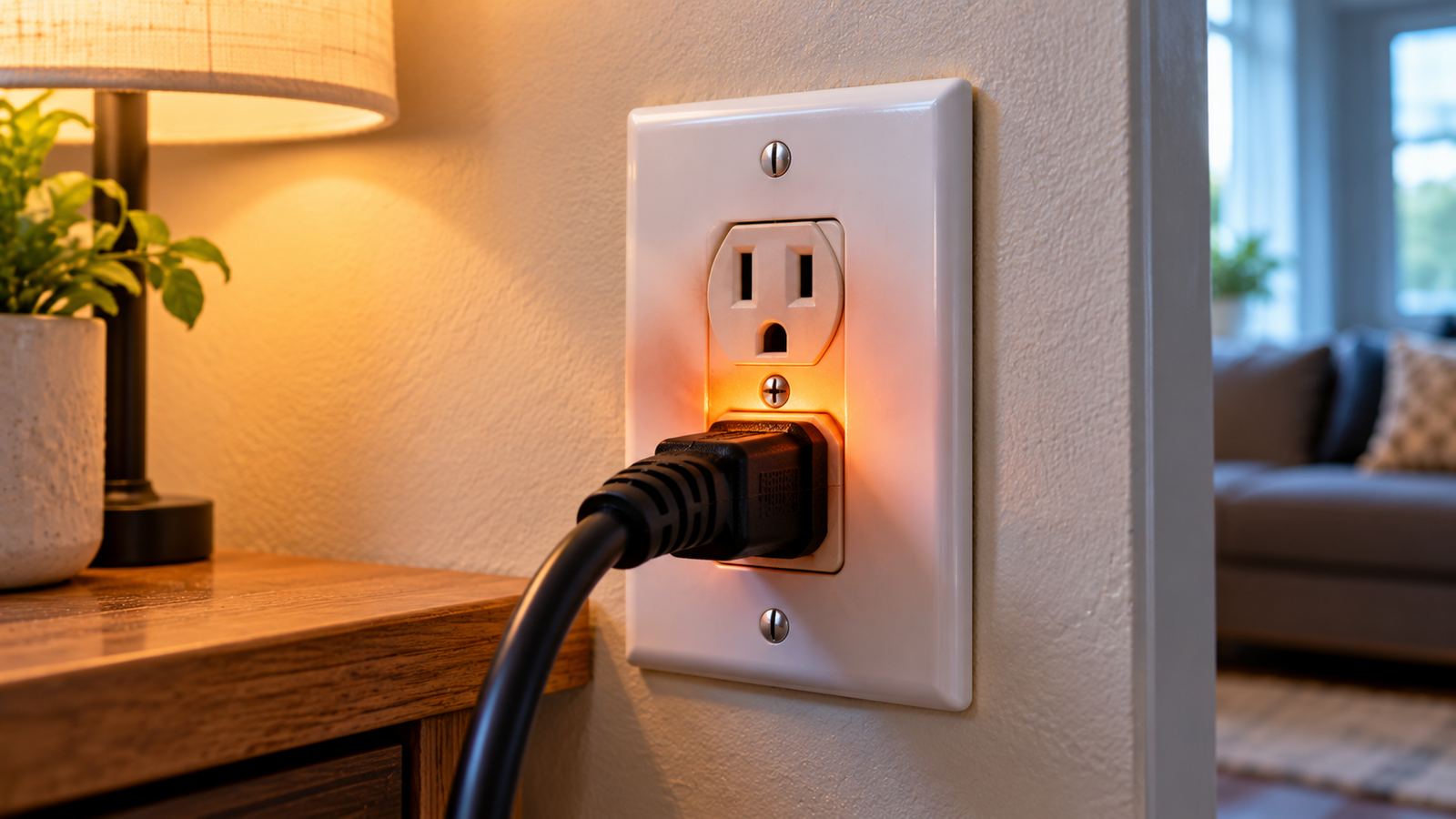
What Should You Do When an Electrical Outlet Feels Warm?
The safest response depends on the severity of the symptoms. A receptacle that is unexpectedly warm should not continue supplying power while you investigate whether the problem will disappear.
Focus on reducing exposure to the suspected hazard rather than performing electrical repairs yourself.
Stop Using the Affected Outlet
Discontinue use of the receptacle and avoid connecting additional devices.
If the plug and surrounding equipment show no signs of overheating or damage, disconnecting the appliance may be appropriate. Do not pull on a cord or touch a plug that appears hot, melted, or damaged.
If there is any uncertainty, leave the equipment undisturbed and seek professional guidance.
Switch Off the Circuit if It Is Safe
Where the affected circuit is clearly identified and the electrical panel is safe to approach, switching off the correct breaker can reduce the risk of continued heating.
Do not operate a damaged, wet, smoking, or unusually hot panel.
Never remove the panel cover or touch internal electrical components.
Do Not Reuse the Outlet After It Cools
Cooling does not necessarily mean that an electrical problem has been resolved.
A damaged connection may heat up again when current flows through it. Repeated heating can worsen deterioration.
Keep the outlet out of service until its condition is properly assessed.
Do Not Cover the Outlet or Apply Water
Never attempt to cool electrical equipment by spraying it with water, applying wet materials, or placing objects over the receptacle.
Water and electricity create additional hazards, while covering an overheated component may interfere with heat dissipation.
Seek professional assistance instead of attempting improvised cooling methods.
Safe Checks Homeowners Can Make Without Opening an Outlet
Homeowners can gather useful information without touching the receptacle or exposing electrical wiring.
From a safe distance, note which appliance was connected, whether the outlet has visible discolouration, and whether the problem occurred during normal use.
Also observe whether nearby outlets or lights have behaved unusually. These details may help an electrician identify the source.
Check the Appliance Manufacturer’s Instructions
Some appliances require dedicated circuits, specific receptacle types, or direct wall connections.
Review the manufacturer’s installation and operating instructions before using high-demand equipment elsewhere.
Do not move a potentially defective appliance to another outlet merely to see whether the same overheating occurs.
Avoid Repeatedly Resetting a Tripped Breaker
If the circuit breaker trips while the outlet is in use, do not repeatedly reset it.
The breaker may be responding to excessive current or another electrical problem. Repeated resets can expose the circuit to additional stress without correcting the cause.
Leave the affected equipment disconnected or the circuit off, as appropriate, until the problem is evaluated.
When Should You Request Urgent Electrical Assistance?
Seek urgent assistance if the outlet produces a burning smell, makes crackling sounds, shows scorch marks, or becomes excessively hot.
Visible smoke, flames, or an immediate electrical threat requires emergency services.
For a warm outlet without those severe symptoms, arrange a qualified electrical inspection rather than continuing normal use.
Calgary homeowner example: A resident in Auburn Bay notices warmth around an outlet after using a portable heater. Rather than reconnecting the heater to test the receptacle, the homeowner stops using the outlet and arranges an inspection. The electrician can determine whether the appliance, receptacle contacts, or circuit connections caused the problem.
Should You Replace a Warm Outlet Yourself?
Replacing a receptacle involves electrical connections that may be hazardous if handled incorrectly.
In addition, a warm outlet may be a symptom of damaged wiring or another problem that a simple replacement will not correct.
Qualified electrical assessment helps ensure that the underlying cause is identified and the repair meets applicable requirements.
For more information about the company, visit this Google business profile reference.
How Do Calgary Electricians Diagnose and Repair Warm Outlets?
Professional outlet repair begins with identifying why the receptacle became warm. The visible outlet may be damaged, but the source of the problem can also involve the connected appliance, branch circuit, or another electrical connection.
A qualified electrician can evaluate the condition of the equipment and recommend repairs based on the findings.
Inspecting the Receptacle and Electrical Connections
After following appropriate isolation and testing procedures, an electrician may inspect the outlet, its terminals, and associated wiring.
The inspection can reveal damaged contacts, loose connections, deteriorated insulation, or other defects.
The extent of the investigation depends on the symptoms and the installation.
Testing Electrical Load and Circuit Conditions
Electrical testing may help determine whether the circuit is carrying excessive current or whether a particular connection is operating abnormally.
Where necessary, the electrician may also assess the connected appliance and circuit configuration.
These tests help distinguish a local receptacle problem from a broader wiring issue.
Replacing Damaged Electrical Outlets
If the receptacle is worn, scorched, or otherwise defective, replacement may be necessary.
The replacement must be suitable for the circuit and installed using appropriate connection methods.
Any damaged conductors or other affected components must also be addressed. Installing a new outlet over deteriorated wiring is not a complete repair.
Correcting Loose or Deteriorated Wiring
When the inspection identifies faulty electrical connections, repairs may involve correcting terminations or replacing damaged wiring components.
The electrician should also evaluate whether overheating has affected nearby insulation or equipment.
Appropriate corrective work reduces the likelihood of the same connection overheating again.
Evaluating the Electrical Panel and Circuit Breaker
Some outlet problems are associated with the circuit supplying power to the receptacle.
If the symptoms indicate a broader problem, an electrician may inspect the circuit breaker, relevant connections, and distribution equipment.
A warm outlet does not automatically mean the electrical panel requires replacement.
Checking for Suitable Circuit Capacity
High-demand appliances may require particular circuit arrangements or dedicated circuits.
An electrician can determine whether the existing circuit is appropriate for the connected equipment and whether changes are necessary.
The recommendation should reflect the appliance specifications, circuit conditions, and applicable electrical requirements.
How Much Does Warm Electrical Outlet Repair Cost in Calgary?
Repair costs vary according to the underlying problem. Replacing a damaged receptacle is generally a different scope of work from tracing concealed wiring damage or correcting an overloaded circuit.
Diagnostic time, materials, accessibility, the extent of damage, and any required permits can affect the final price.
Because a warm outlet may have several possible causes, a site-specific estimate is more useful than assuming a fixed repair cost.
Do Electrical Outlet Repairs Require Permits in Calgary?
Permit requirements depend on the work being performed and the applicable Alberta and Calgary electrical rules.
A straightforward component replacement may be treated differently from adding a circuit, modifying wiring, or undertaking more extensive electrical work.
Ask your electrical contractor to explain which permits or inspections apply to the proposed repair.
How Can You Prevent Electrical Outlets From Overheating?
Good electrical habits can reduce unnecessary stress on receptacles and help homeowners recognize developing problems.
- Connect appliances according to their manufacturer instructions.
- Avoid overloading receptacles, extension cords, and power bars.
- Do not use outlets that no longer grip plugs securely.
- Replace damaged appliance cords and plugs.
- Keep electrical equipment away from moisture and physical damage.
- Do not use extension cords as permanent wiring.
- Arrange an inspection when an outlet becomes unusually warm.
- Have electrical additions and wiring changes completed by qualified personnel.
Why Outlet Problems Can Affect Both New and Older Calgary Homes
Homes in Cranston, Copperfield, and New Brighton may have relatively modern electrical installations, but components can still become damaged or develop faults.
Established properties in Riverbend, Douglasdale, and Lake Bonavista may also have electrical changes from previous renovations.
The age of a home does not determine whether a particular outlet is safe. Its actual condition and installation are what matter.
What Should You Expect During a Professional Outlet Inspection?
An electrician will typically ask when the outlet becomes warm, what equipment was connected, and whether there have been other electrical symptoms.
After appropriate inspection and testing, the electrician can explain the suspected cause and recommended repair.
Homeowners should understand whether the issue is confined to one receptacle or requires additional circuit investigation.
Professional repair takeaway: A warm outlet may require a simple receptacle replacement, but the correct solution depends on whether the problem involves damaged contacts, loose wiring, connected equipment, or circuit conditions. Professional testing helps identify the actual fault before repairs begin.
Watch this Calgary Electrical and Plumbing company video for additional information about the business.
You can also explore the company’s Pinterest profile for Calgary electrical and plumbing content.
Request a warm electrical outlet inspection and repair estimate in Calgary in just a few clicks.
Get My Free Estimate
Protect Your Calgary Home From Electrical Outlet Overheating
An electrical outlet that feels warm deserves attention, particularly when the warmth is noticeable, persistent, or accompanied by discolouration, unusual sounds, or a burning smell. The problem may involve the connected device, but it can also indicate damaged contacts or unsafe wiring connections.
Calgary Electrical and Plumbing provides electrical services in addition to serving homeowners as a local calgary plumber. If you are concerned about a warm receptacle, call (403) 421-1991 to discuss an electrical inspection and the appropriate next steps.
Frequently Asked Questions about Warm Electrical Outlets
Is it normal for an electrical outlet to feel slightly warm?
Some warmth may come from a connected charger or adapter, but a noticeably warm wall receptacle should not automatically be considered normal. If the outlet itself appears to be generating heat, stop using it and arrange an inspection by a qualified electrician.
Can a warm electrical outlet cause a house fire?
Yes. Certain electrical faults, including loose connections and arcing, can generate enough heat to damage insulation and nearby materials. Warmth alone does not prove a fire is imminent, but overheating, burning smells, smoke, or discolouration require immediate attention and appropriate professional assistance.
Why does my outlet get warm when I plug in a space heater?
Space heaters draw substantial electrical current, which can expose worn contacts, loose connections, or unsuitable circuit conditions. A wall receptacle should not become noticeably hot during normal use. Stop using the affected outlet and have the appliance and electrical connection evaluated.
Should I replace a warm outlet myself or call an electrician in Calgary?
A warm outlet may indicate damaged wiring or another problem that replacing the receptacle alone will not solve. Because electrical connections can remain hazardous without proper isolation and testing, a qualified Calgary electrician should identify the cause and perform the necessary repairs.
What should I do if an electrical outlet smells like burning plastic?
Stop using the outlet immediately and do not touch damaged or overheated equipment. If safe, isolate the affected circuit without approaching the hazard. Seek urgent electrical assistance. If smoke, flames, or immediate danger are present, move to safety and call emergency services.
Don’t wait for an electrical warning sign to become a larger problem.
Call (403) 421-1991 Now
Local Electrical Help Available 24/7 in Calgary