
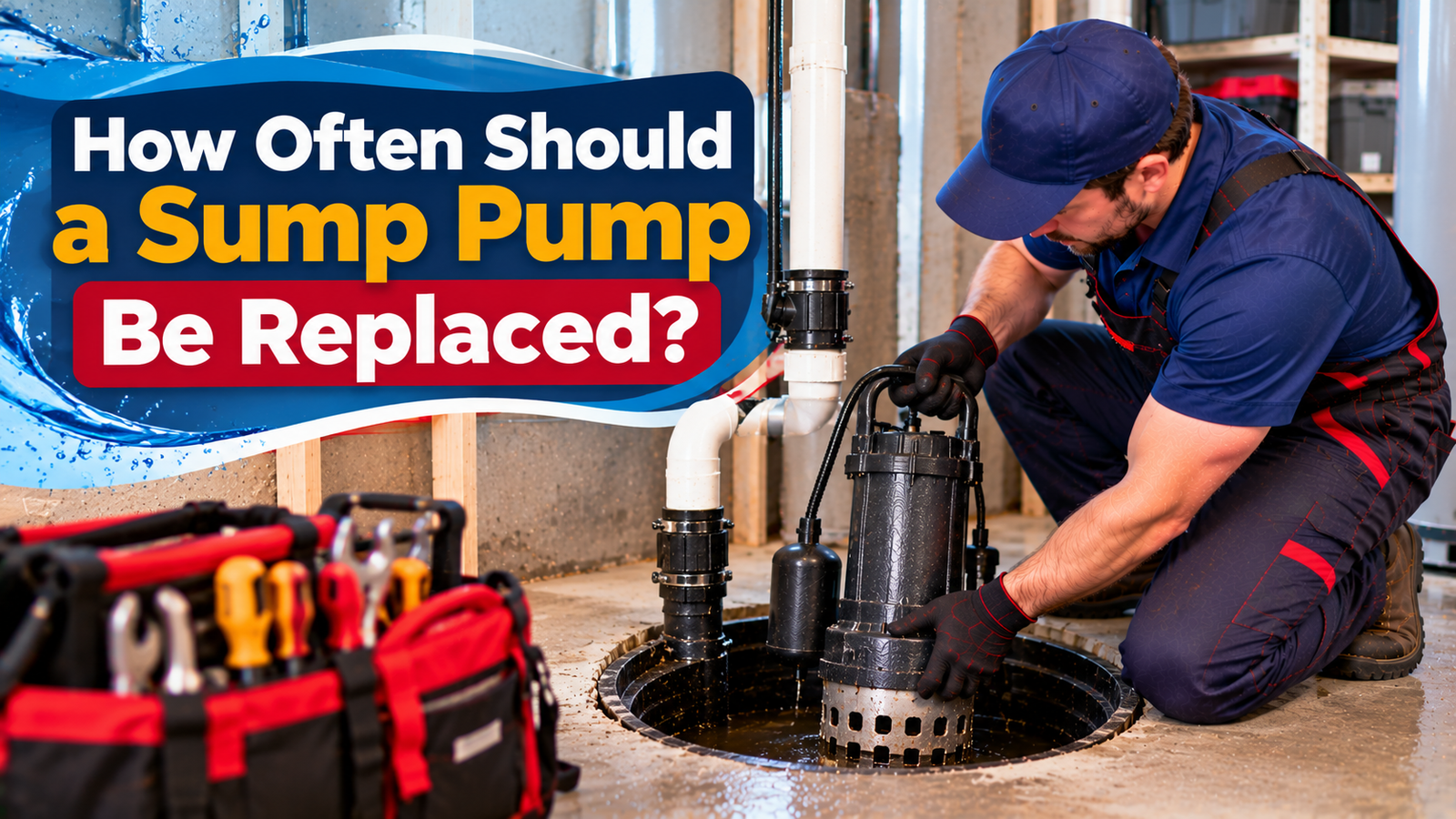
How Often Should a Sump Pump Be Replaced? If your basement relies on a sump pump to manage collected drainage water, knowing when the equipment is nearing the end of its useful life can help prevent unexpected failures. A pump that worked reliably last spring may not necessarily perform the same way this year.
For homeowners in Mahogany, Auburn Bay, Cranston, and other Southeast Calgary communities, seasonal snowmelt and periods of heavy rainfall make sump pump reliability particularly important. Professional sump pump inspection and plumbing services in Calgary can help determine whether an aging system is operating correctly or needs attention.
Replacement timing depends on more than the installation date. Pump quality, frequency of operation, water conditions, maintenance, and drainage demand all influence service life. Understanding these factors can help homeowners decide whether to continue maintaining the existing pump or budget for a new one.
Many residential sump pumps last approximately 7–10 years, although replacement timing depends on usage, maintenance, water conditions, and equipment quality. Pumps that run frequently may wear out sooner. Calgary homeowners should arrange inspection when a pump shows declining performance, unusual noises, frequent cycling, or repeated failures.
How Many Years Does a Residential Sump Pump Usually Last?
Many residential sump pumps have an expected service life of approximately seven to ten years. This is a general planning guideline rather than a fixed expiration date.
Some pumps continue operating beyond ten years, while heavily used equipment may fail earlier. A pump’s actual condition is more important than its age alone.
Is Seven to Ten Years a Reliable Replacement Guideline?
The seven-to-ten-year range is useful for planning inspections and future replacement expenses.
However, it should not be treated as a guarantee that every pump will last that long or automatically fail afterward.
Once a pump approaches this age range, homeowners should pay closer attention to operating behaviour, maintenance history, and drainage demand.
Do Submersible and Pedestal Sump Pumps Last the Same Amount of Time?
Submersible and pedestal pumps have different designs, but neither type has a universally guaranteed lifespan.
Submersible pumps operate within the sump pit, while pedestal models position the motor above the collected water.
Build quality, operating conditions, maintenance, and proper installation often matter more than the category alone.
What Factors Determine How Long a Sump Pump Lasts?
The most important factors include operating frequency, motor quality, water conditions, installation design, and maintenance.
A pump that operates many times each day experiences more mechanical and electrical wear than one that activates only occasionally.
Improper sizing, restricted discharge piping, and repeated short cycling can also increase strain.
Does Frequent Pumping Shorten Sump Pump Lifespan?
Generally, frequent operation increases wear on moving parts, switches, and electrical components.
However, a pump designed for demanding service may tolerate regular operation better than a lower-quality model.
The key question is whether the pump is operating within its intended performance range.
Can Sediment and Debris Damage a Sump Pump?
Sand, grit, and other debris can interfere with certain pump components and may contribute to premature wear.
Accumulated material can also obstruct float movement or reduce the effective capacity of the sump pit.
Maintaining a suitable pit environment helps reduce avoidable operating problems.
Does Calgary’s Climate Affect Sump Pump Longevity?
Calgary’s seasonal snowmelt and rainfall patterns can influence how often a sump pump operates.
Properties with higher drainage demand may experience more pump cycles during wet periods.
Winter conditions can also affect exterior discharge arrangements if freezing or blockage occurs.
Calgary example: A sump pump in an Auburn Bay home that operates frequently during spring thaw may experience different wear than a pump in a Riverbend property with relatively low drainage demand. Installation conditions and water volume matter more than neighbourhood alone.
Homeowners looking for local service information can visit the Calgary Electrical and Plumbing Google Maps listing.
Key takeaway: Consider seven to ten years a useful planning range, not an automatic replacement deadline. A sump pump’s reliability should be assessed through age, operating history, visible condition, and functional testing.
What Are the Signs Your Sump Pump Needs Replacement?
Sump pumps often show signs of trouble before complete failure, although some faults develop suddenly.
Recognizing changes in operation can help homeowners arrange inspection before a significant water event.
What Does an Unusual Sump Pump Noise Mean?
Grinding, rattling, excessive vibration, or other unfamiliar noises may indicate mechanical wear, debris, or installation problems.
Some pumps are naturally louder than others, so changes from normal operation are particularly important.
A professional assessment can determine whether the problem is repairable.
Does a Sump Pump That Runs Constantly Need Replacing?
Not necessarily. Continuous operation may indicate high incoming water volume, a stuck float switch, insufficient pump capacity, or a restricted discharge line.
The pump itself may still be functional.
However, prolonged operation outside the intended conditions can accelerate wear and eventually cause failure.
Why Does a Sump Pump Turn On and Off Too Frequently?
Rapid cycling may result from an incorrectly adjusted float, a leaking check valve, an unsuitable pump, or an undersized pit.
Repeated starts place additional demands on electrical and mechanical components.
Correcting the underlying issue may extend equipment life without requiring immediate replacement.
What If the Sump Pump Does Not Start?
A pump that fails to activate may have a power supply problem, defective switch, failed motor, or another malfunction.
Homeowners should not assume the motor has failed without diagnosis.
Where electrical components are exposed to water, qualified assistance is essential.
Does Rust Mean the Sump Pump Must Be Replaced?
Minor surface discoloration does not always indicate structural failure.
However, significant corrosion, deteriorating electrical components, or damaged housing materials may justify replacement.
The location and extent of deterioration are more important than appearance alone.
Can a Sump Pump Lose Pumping Capacity Over Time?
Yes. Mechanical wear, debris, discharge restrictions, or other faults may reduce effective performance.
A pump that once cleared water quickly but now struggles should be inspected.
Reduced output may also indicate a problem elsewhere in the drainage system.
What If Water Remains in the Sump Pit?
Some residual water may be normal depending on pump design and switch settings.
However, a rising water level that does not decrease when the pump should be operating can indicate a serious problem.
Persistent high water requires timely attention, particularly during wet weather.
| Warning Sign | Possible Explanation | Recommended Action |
|---|---|---|
| Grinding or rattling | Debris, wear, or vibration | Arrange inspection before further deterioration |
| Frequent short cycling | Float, check valve, sizing, or pit issue | Have operating conditions evaluated |
| Continuous operation | High inflow, discharge restriction, or control problem | Investigate pump and drainage performance |
| Failure to activate | Electrical, switch, or motor fault | Request qualified diagnosis |
| Water rising above normal level | Insufficient pumping or system failure | Address promptly to reduce water intrusion risk |
| Repeated breakdowns | Aging equipment or unresolved system problems | Compare repair and replacement options |
Can Basement Moisture Indicate a Sump Pump Problem?
Basement dampness or water intrusion may indicate drainage concerns, but it does not always mean the sump pump is defective.
Surface grading, foundation drainage, plumbing leaks, and seepage can create similar symptoms.
The City of Calgary provides information about basement flooding and seepage prevention that can help homeowners understand broader drainage risks.
Electrical safety: Never touch a sump pump, plug, or electrical connection while standing in water. If flooding has affected electrical equipment, avoid the area and contact qualified assistance before attempting inspection or operation.
Additional local business information is available through this Calgary plumbing service location reference.
Request a sump pump inspection and replacement estimate in Calgary in just a few clicks.
Get My Free Estimate
Should You Replace a Sump Pump Before It Fails?
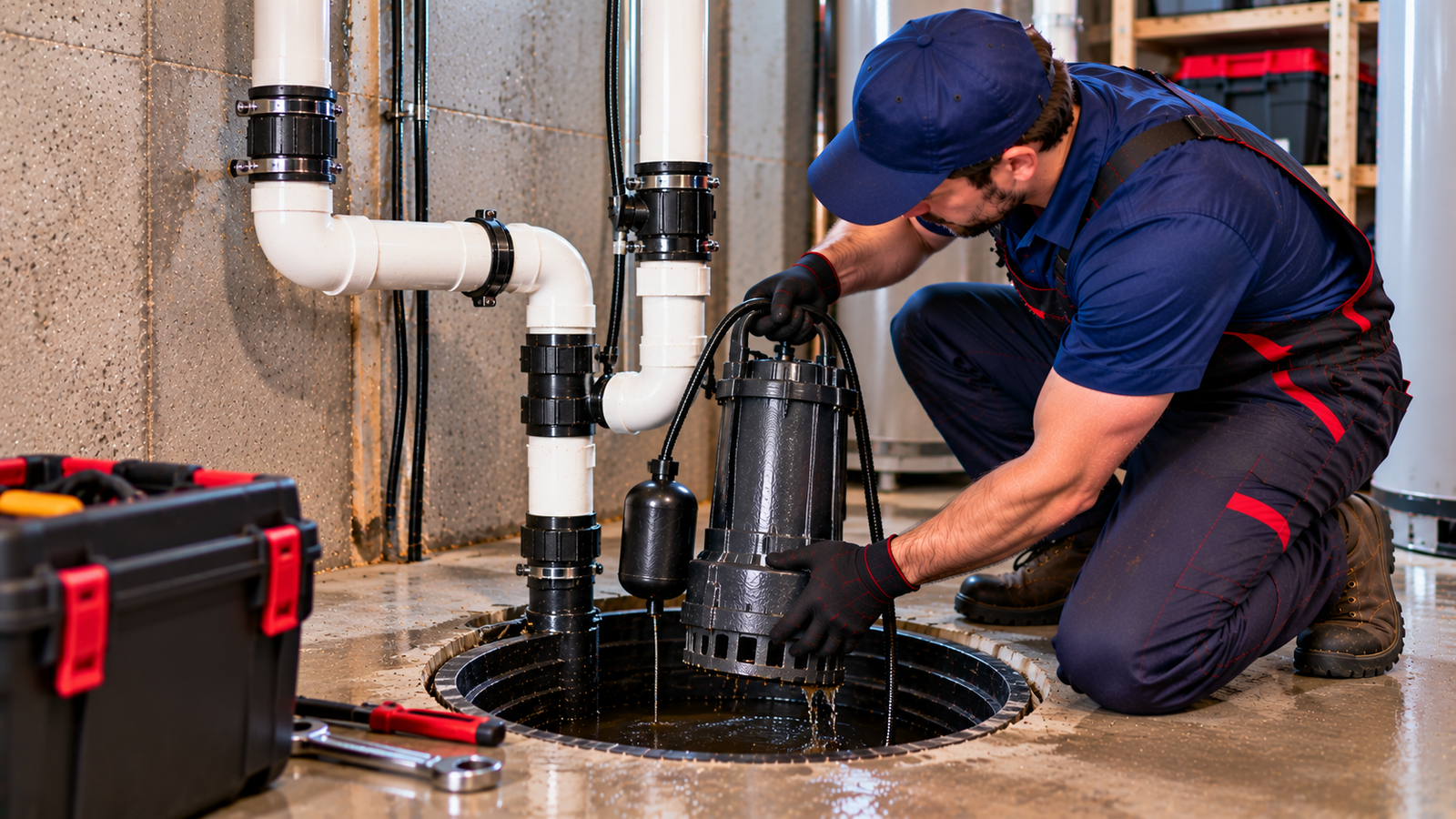
Preventive replacement can be reasonable when an aging sump pump protects a basement that is vulnerable to water intrusion.
However, replacing every functioning pump solely because it reaches a particular age is not always necessary.
The decision should reflect risk, condition, maintenance history, and the consequences of failure.
When Does Preventive Replacement Make Sense?
Preventive replacement becomes more attractive when a pump is approaching the later stages of its expected lifespan and has begun showing unreliable operation.
It may also be worth considering when the basement contains valuable finished spaces or equipment that could be damaged by water.
Frequent pumping demand increases the importance of reliability.
Is It Better to Repair or Replace an Older Sump Pump?
Repair may be practical when the problem involves a serviceable switch, check valve, or minor component.
Replacement may provide better long-term value when the motor is deteriorating, parts are unavailable, or failures occur repeatedly.
Comparing the repair cost with the age and condition of the entire system helps avoid unnecessary spending.
Should a Sump Pump Be Replaced After Ten Years?
A ten-year-old pump deserves careful evaluation, but replacement is not automatically mandatory.
If the equipment operates properly, has a suitable maintenance history, and passes inspection, continued service may be reasonable.
Homeowners should also consider whether backup protection is available.
What If the Pump Has Never Been Used?
A pump that rarely activates may experience less operating wear, but inactivity does not guarantee reliability.
Switches, electrical components, seals, and other materials can still deteriorate over time.
Periodic manufacturer-approved testing is important even when the sump pit usually remains dry.
Should You Replace the Pump Before Spring Snowmelt?
For Calgary properties that experience increased drainage during spring thaw, inspecting the sump system before snowmelt is a sensible precaution.
Discovering a failed pump during heavy water inflow can leave less time to arrange replacement.
Pre-season planning also provides an opportunity to compare equipment and installation options.
Is a Battery Backup Necessary for an Older Pump?
A battery backup system can provide additional protection during certain power outages or primary pump failures.
However, backup capacity and runtime are limited, and batteries require maintenance and eventual replacement.
A backup system should complement a reliable primary pump rather than serve as a substitute for necessary repairs.
Can Replacing a Sump Pump Improve Basement Protection?
A correctly selected replacement can restore pumping capacity and improve reliability when the existing unit is worn or unsuitable.
Additional features such as high-water alarms and backup systems may improve monitoring and resilience.
However, no pump can guarantee protection against every flooding or drainage scenario.
How Much Does Replacing an Aging Sump Pump Cost in Calgary?
For planning purposes, a straightforward professional replacement may cost approximately CAD $450–$1,200, while complex installations or backup systems may exceed that range.
These are illustrative estimates rather than verified contractor quotations.
For a detailed breakdown, read How Much Does Sump Pump Replacement Cost in Calgary?.
Does Replacing a Sump Pump Require New Plumbing?
Not always. If the existing pit, discharge piping, and check valve remain suitable, replacement may involve relatively limited modifications.
Damaged fittings, improper discharge arrangements, or incompatible equipment can require additional work.
A professional inspection should identify these issues before installation.
Homeowner scenario: A Copperfield homeowner with a nine-year-old pump that has begun cycling unpredictably may benefit from inspection before the next major rainfall. The technician can determine whether the problem involves a replaceable control or aging equipment that warrants replacement.
Replacement decision: Consider proactive replacement when age, repeated malfunctions, heavy pumping demand, and potential basement damage create an unacceptable risk. A properly functioning older pump may remain serviceable, but regular assessment becomes increasingly important.
For additional company content, see this Calgary Electrical and Plumbing video resource.
How Can Calgary Homeowners Extend Sump Pump Lifespan?
Proper maintenance can help identify developing problems and reduce avoidable wear, although it cannot prevent every mechanical or electrical failure.
The most useful approach combines manufacturer-recommended care, attention to drainage conditions, and periodic professional evaluation.
How Often Should a Sump Pump Be Inspected?
Homeowners should follow the inspection and testing schedule provided by the pump manufacturer.
For systems that protect basements during seasonal water events, checking operation before spring snowmelt and other periods of increased drainage demand is sensible.
Heavily used systems may require more frequent attention.
Should You Test Your Sump Pump Regularly?
Yes, where the manufacturer provides a safe homeowner testing procedure.
Testing can help confirm that the pump activates and moves water through the discharge system.
However, homeowners should avoid unsafe electrical contact, opening equipment housings, or performing tests that conflict with manufacturer instructions.
Can Cleaning the Sump Pit Improve Pump Reliability?
Keeping the sump pit free from excessive debris can help reduce obstructions and interference with pump components.
However, cleaning methods depend on the equipment and site conditions.
Disconnecting, lifting, or dismantling a pump should not be attempted when electrical or water hazards are present.
Why Is the Float Switch Important?
The float switch helps determine when the pump starts and stops.
If it becomes obstructed, incorrectly positioned, or defective, the pump may fail to activate or may cycle unnecessarily.
Ensuring proper float operation is an important part of professional sump pump maintenance.
Should the Discharge Pipe Be Inspected?
Yes. A blocked or damaged discharge line can prevent the pump from removing water effectively.
Exterior piping may also require attention where freezing conditions create restrictions.
Any discharge modifications should follow applicable drainage requirements and manufacturer guidance.
Can a Check Valve Affect Pump Lifespan?
A properly functioning check valve can help limit water flowing back into the pit after the pump stops.
A defective valve may contribute to unnecessary cycling and increased wear.
Valve condition and compatibility should be considered during maintenance and replacement assessments.
Does Pump Size Affect How Long It Lasts?
Yes. An undersized pump may struggle with drainage demand, while an oversized pump may cycle excessively in certain installations.
Appropriate selection considers water volume, discharge height, piping resistance, and sump pit dimensions.
Correct sizing helps the equipment operate within its intended performance range.
Are High-Water Alarms Worth Installing?
High-water alarms can alert occupants when water rises above the expected level.
Some systems provide audible alerts, while others offer remote notification capabilities.
An alarm does not extend pump life directly, but it may help homeowners recognize a malfunction before water reaches finished basement areas.
When Should You Schedule a Professional Sump Pump Inspection?
Professional inspection is advisable when a pump develops unusual noises, fails to activate, cycles excessively, or struggles to remove water.
It is also useful when the pump’s age is unknown or it has operated for many years without maintenance.
Inspection before periods of increased drainage demand can help identify problems while replacement options remain flexible.
What Should a Professional Inspection Include?
- Reviewing the pump’s age, model, and operating history.
- Checking for unusual noise, vibration, or visible deterioration.
- Evaluating float-switch operation and pump activation.
- Assessing discharge flow and check valve performance.
- Reviewing sump pit condition and possible obstructions.
- Checking compatibility with the existing electrical supply.
- Considering whether repair, maintenance, or replacement is appropriate.
How Can Homeowners Prepare for a Replacement?
Keep the pump’s model information, approximate installation date, and maintenance records available.
Document recurring problems, including when the pump runs and whether water levels return to normal.
This information can help the technician assess the equipment and recommend suitable replacement specifications.
Do Calgary Neighbourhoods Have Different Sump Pump Needs?
Properties in Seton, New Brighton, McKenzie Towne, Douglasdale, and Lake Bonavista may have different drainage arrangements and operating demands.
However, neighbourhood alone does not determine pump lifespan or replacement frequency.
The individual home’s drainage design, site conditions, and equipment usage are more meaningful factors.
Maintenance planning: Keep a simple record of inspection dates, unusual operating behaviour, and completed repairs. This history can help identify declining reliability and support more informed replacement decisions.
Best practice: Maintain the sump pump according to manufacturer guidance, investigate changes in performance, and consider professional assessment as the equipment ages. Preventive attention is generally more manageable than discovering a failure during significant water inflow.
For company information and updates, explore the Calgary Electrical and Plumbing shared Google business profile and the official Calgary Electrical and Plumbing Facebook page.
Request a sump pump inspection and replacement estimate in Calgary in just a few clicks.
Get My Free Estimate
Keep Your Basement Protected With Timely Sump Pump Care
Many sump pumps last approximately seven to ten years, but actual replacement timing depends on operating conditions, maintenance, and equipment performance. Regular inspection helps identify when repair remains practical and when replacement offers better protection.
A local calgary plumber can assess your sump pump and recommend appropriate next steps. Call Calgary Electrical and Plumbing at (403) 421-1991 to discuss professional sump pump inspection or replacement.
Frequently Asked Questions about Sump Pump Replacement Frequency
How often should a sump pump be replaced in Calgary?
Many residential sump pumps last approximately 7–10 years, but there is no universal replacement deadline. Frequent operation, water conditions, equipment quality, and maintenance influence lifespan. Calgary homeowners should consider inspection as pumps age and arrange replacement when reliability or performance becomes questionable.
Can a sump pump last longer than ten years?
Yes. Some sump pumps remain functional beyond ten years, particularly when operating conditions are favourable and maintenance has been appropriate. However, older equipment may have an increased risk of unexpected failure. Continued use should depend on inspection results, operating history, and basement drainage requirements.
Should I replace my sump pump before spring snowmelt?
Inspecting your sump pump before Calgary’s spring thaw is sensible, especially if the system is aging or has shown problems. Replacement may be advisable when reliability is uncertain. A functioning pump does not automatically need replacement, but pre-season assessment can reduce unexpected disruptions.
What is the biggest sign that a sump pump needs replacing?
Repeated failure to activate or remove water effectively is a significant warning sign. However, the cause may involve a switch, electrical supply, or discharge restriction rather than the pump motor. Professional diagnosis helps determine whether replacement is necessary or a repair is appropriate.
Does regular maintenance make a sump pump last longer?
Appropriate maintenance may reduce avoidable wear and help identify developing problems before failure. Manufacturer-recommended testing, attention to debris, and inspection of operating components can support reliability. However, maintenance cannot prevent every motor, switch, or electrical failure, and eventual replacement remains necessary.
Don’t wait for an aging sump pump to leave your basement unprotected.
Call (403) 421-1991 Now
Professional Sump Pump Services in Calgary