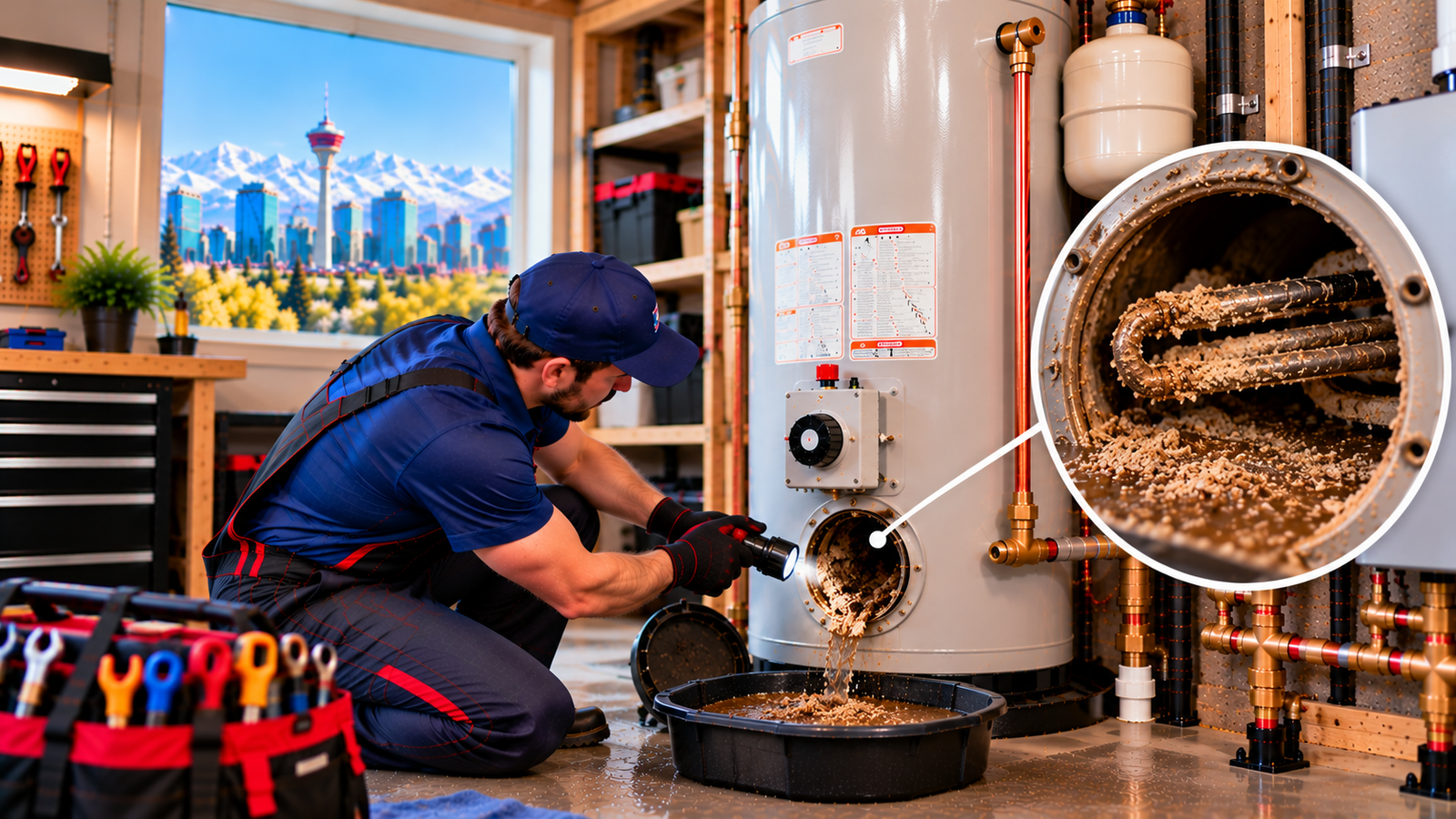

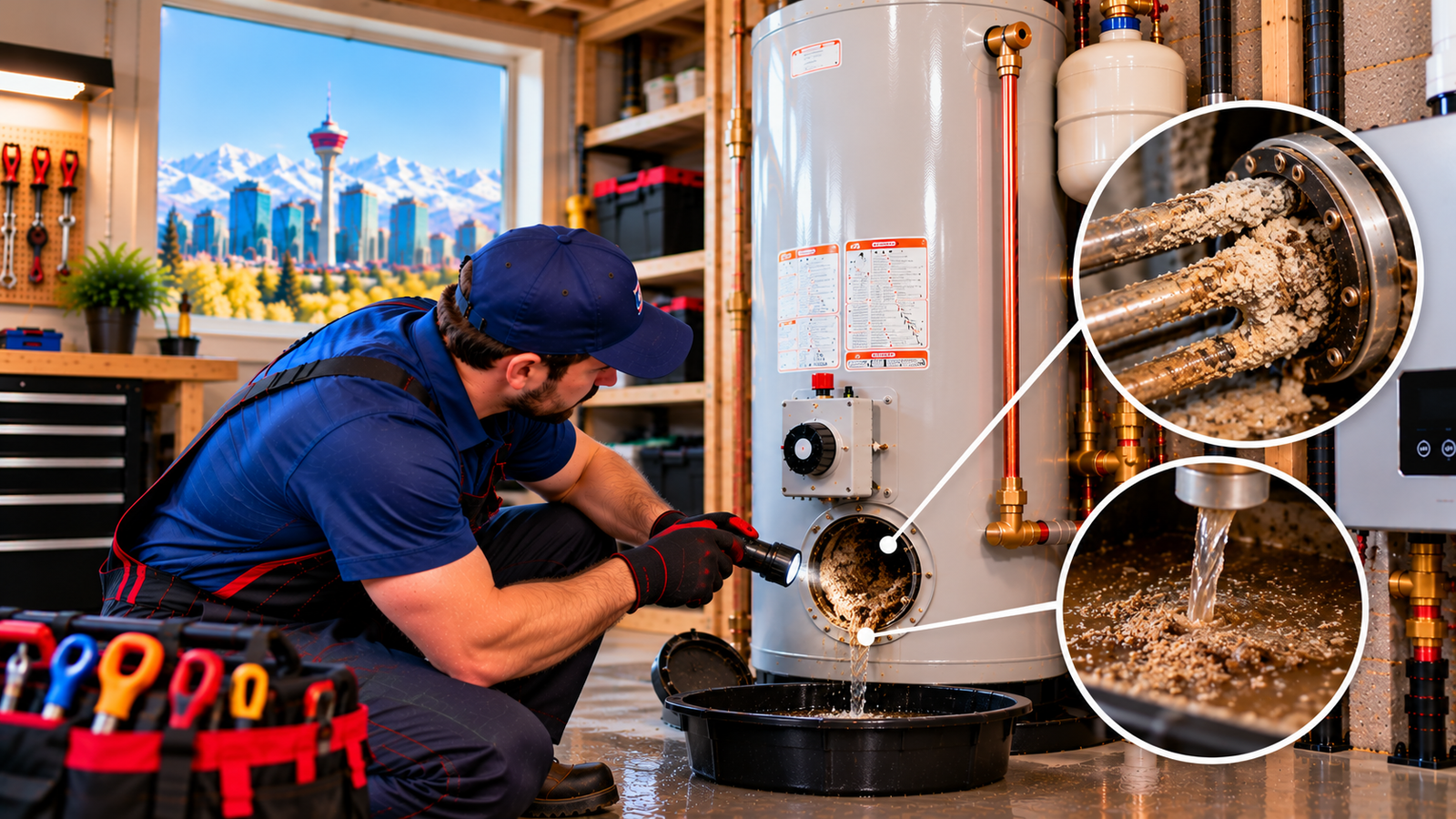
What Are the Signs of Sediment Buildup in a Water Heater? That question often comes up when a Calgary homeowner hears popping sounds from the hot water tank or notices that showers are getting shorter. These changes can be frustrating, especially when the water heater previously worked without problems.
In communities such as Mahogany, Cranston, Auburn Bay, and Copperfield, water heaters operate with municipal water containing naturally occurring minerals. Professional water heater repair and plumbing services in Calgary can help determine whether sediment, mineral scale, or another equipment issue is responsible for declining hot water performance.
Sediment buildup is common in storage water heaters, but not every noise or temperature problem means deposits are present. Recognizing the warning signs, understanding their possible causes, and arranging appropriate maintenance can help homeowners make better decisions before a manageable issue becomes an expensive repair.
Common signs of sediment buildup in a water heater include popping or rumbling noises, slower hot water recovery, reduced hot water availability, and declining heating efficiency. Cloudy or discoloured water may also occur, although these symptoms can have other causes. A professional inspection helps confirm the problem.
What Causes Sediment Buildup Inside a Water Heater?
Sediment buildup occurs when suspended particles or minerals accumulate inside water heating equipment. In conventional storage tanks, these materials can gradually settle at the bottom, particularly after repeated heating and cooling cycles.
Not all sediment has the same origin. Some deposits are mineral scale formed during heating, while others may include particles entering through the water supply or material associated with internal corrosion.
How Does Calgary’s Hard Water Contribute to Sediment?
Calgary’s municipal water contains naturally occurring calcium and magnesium. When water is heated, some dissolved minerals can form solid deposits, including calcium carbonate.
These deposits may settle in a tank or accumulate on heating surfaces. The amount of buildup depends on water chemistry, heater temperature, usage, and maintenance history.
Learn more about the relationship between mineral content and equipment longevity in our guide, Can Calgary’s Hard Water Shorten a Water Heater’s Life?.
Why Does Sediment Settle at the Bottom of a Hot Water Tank?
Storage heaters hold a reservoir of water for extended periods. Heavier particles can settle through gravity, while mineral deposits may accumulate as the heater repeatedly raises water temperature.
Over time, loose sediment can collect near the lower heating surfaces, potentially affecting operation depending on the tank’s design.
Does Water Heater Age Affect Sediment Accumulation?
Older tanks may have accumulated more deposits simply because they have been in service longer. However, age alone does not determine sediment levels.
A newer heater operating under demanding conditions may develop noticeable buildup, while an older, appropriately maintained tank may remain relatively free of troublesome deposits.
Do Gas and Electric Water Heaters Collect Different Deposits?
Both gas and electric storage heaters can accumulate sediment. The main difference is how deposits interact with their heating systems.
In gas heaters, deposits near the bottom of the tank may contribute to operating noises. In electric heaters, scale can collect on immersed heating elements and affect heat transfer.
Can Tankless Water Heaters Develop Sediment Problems?
Tankless water heaters do not have a large storage reservoir, but they can develop mineral scale inside heat exchangers. These deposits may interfere with water flow or heating performance.
Tankless maintenance usually involves manufacturer-approved descaling rather than conventional tank flushing.
Local insight: A water heater in Mahogany may develop deposits differently from one in Riverbend, even when both receive Calgary municipal water. Appliance design, temperature settings, usage patterns, and service history can be more important than the neighbourhood itself.
For local company information and directions, visit the Calgary Electrical and Plumbing Google Maps listing.
What Are the Most Common Signs of Sediment Buildup in a Water Heater?
Sediment accumulation does not always produce obvious symptoms. Many water heaters continue working normally despite some deposits.
However, significant buildup can contribute to changes in sound, heating performance, and hot water availability. The following warning signs are worth investigating.
Why Does a Water Heater Make Popping or Rumbling Noises?
Popping or rumbling is one of the better-known symptoms associated with sediment in gas storage water heaters.
Heat interacting with deposits near the tank bottom can produce localized bubbling or other sounds during heating cycles.
Not every sound indicates sediment. Thermal expansion, pipe movement, and equipment components can create similar noises.
Can Sediment Cause Hot Water to Run Out Faster?
Heavy sediment accumulation may reduce usable tank capacity or interfere with heating performance in some systems.
Homeowners may notice that hot water becomes insufficient during back-to-back showers or simultaneous household use.
However, an undersized tank, faulty heating element, damaged dip tube, or increased household demand can produce similar results.
Does Sediment Make Water Take Longer to Heat?
Mineral deposits on heating surfaces can interfere with heat transfer. Depending on equipment design and deposit severity, the heater may take longer to restore its hot water supply.
Slower recovery should be assessed alongside the heater’s age, heating capacity, and operating condition.
Can Sediment Increase Energy Bills?
Substantial scale may reduce heating efficiency in certain water heater designs, potentially increasing energy use.
However, a higher utility bill is not reliable proof of sediment buildup. Seasonal heating demand, household occupancy, and other appliances can affect energy costs.
Is Cloudy or Discoloured Hot Water a Warning Sign?
Cloudy, gritty, or discoloured water can sometimes accompany sediment or corrosion-related problems.
Cloudiness may also result from harmless air bubbles, while rust-coloured water may indicate corrosion in the tank or plumbing system.
Persistent changes should be investigated rather than automatically attributed to hard water.
What About Unusual Water Temperature Changes?
Inconsistent hot water can occur when heating components are affected by deposits, but sediment is only one possible cause.
Thermostat problems, mixing-valve faults, and inadequate heating capacity may also create temperature fluctuations.
| Warning Sign | Possible Sediment Connection | Other Possible Causes |
|---|---|---|
| Popping or rumbling | Deposits near heated tank surfaces | Thermal expansion or equipment noise |
| Slow hot water recovery | Reduced heat transfer | Faulty heating component or heavy demand |
| Shorter hot water supply | Severe sediment accumulation | Undersized tank or damaged dip tube |
| Higher energy consumption | Scale interfering with heating | Seasonal usage or other equipment |
| Discoloured hot water | Suspended particles | Corrosion or supply-side issues |
| Temperature fluctuations | Deposits affecting performance | Thermostat or mixing-valve problems |
These symptoms are diagnostic clues, not proof of sediment buildup. A qualified technician should evaluate the actual cause.
Most recognizable warning signs: Repeated rumbling during heating, reduced hot water availability, and slower recovery may justify a sediment inspection. Sudden overheating, leaks, or repeated shutdowns require broader equipment assessment.
Additional location information is available through this Calgary plumbing service map reference.
Request a water heater sediment inspection and maintenance estimate in Calgary in just a few clicks.
Get My Free Estimate
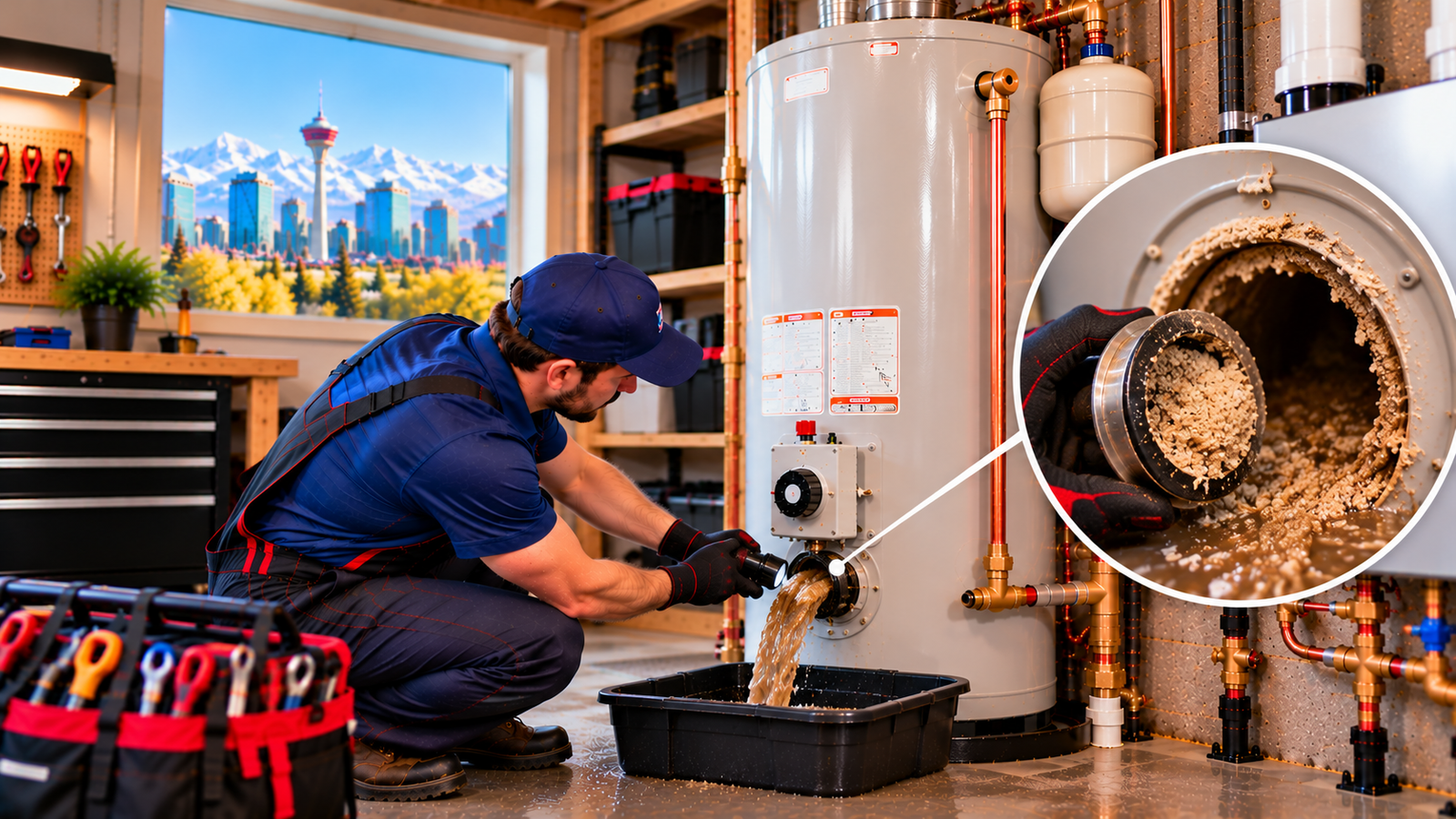
How Can You Tell Whether Sediment Is Damaging Your Water Heater?
Recognizing a symptom is only the first step. The next question is whether deposits are interfering with normal operation or whether another defect is responsible.
Professional diagnosis considers the heater’s condition, operating history, and symptoms before recommending flushing, repairs, or replacement.
What Can a Professional Inspection Reveal?
A plumber may assess heating performance, visible connections, equipment age, unusual noises, and previous maintenance.
Depending on the heater, inspection may also identify signs of loose sediment, restricted flow, or problems affecting heating components.
Some internal deposits cannot be fully evaluated without specialized servicing.
Can Sediment Be Confirmed Without Draining the Tank?
Operating symptoms may suggest deposits, but they do not always confirm their quantity or location.
A professional may recommend an appropriate inspection or maintenance procedure based on the manufacturer’s guidance and the tank’s condition.
Unnecessary draining of an old, deteriorated tank may introduce additional risks.
What Is the Difference Between Sediment Buildup and Tank Corrosion?
Sediment refers to accumulated particles or mineral deposits. Corrosion involves deterioration of metal components through chemical or electrochemical processes.
These problems can occur together, but one does not automatically prove the other.
Flushing may remove some loose sediment; it cannot restore metal that has been weakened by corrosion.
Can Sediment Cause Permanent Damage?
Severe deposits can contribute to operating stress or component problems in certain systems.
However, the extent of damage depends on equipment design, maintenance history, and whether other faults are present.
A water heater with sediment does not necessarily require replacement.
Does a Leaking Water Heater Mean Sediment Is Responsible?
No. Tank leaks often involve corrosion, deteriorated fittings, or other structural and component failures.
Sediment may be present in the same heater without being the direct cause of leakage.
An actively leaking tank should be professionally assessed promptly because structural tank leaks generally cannot be repaired reliably.
When Is a Water Heater Beyond Repair?
Replacement is often appropriate when the storage tank itself has failed, corrosion is advanced, or repairs are repeatedly uneconomical.
By contrast, some thermostat, valve, or heating element problems may be repairable.
Equipment age, warranty status, repair costs, and overall condition should guide the decision.
Do Tankless Heaters Show Different Symptoms?
Tankless water heaters may experience declining hot water flow, temperature instability, or manufacturer-specific diagnostic alerts when scale affects internal components.
These symptoms can also result from other operating faults.
Technicians should use the model’s diagnostic information rather than assuming descaling will resolve every issue.
How Does Calgary’s Climate Affect Diagnosis?
Colder incoming water during winter can increase the heating demand placed on residential water heaters.
A heater that seems adequate during warmer months may struggle during periods of heavy use.
That does not necessarily indicate sediment; seasonal temperature rise and equipment capacity should also be considered.
Example: A household in Cranston notices shorter showers during winter and assumes sediment is reducing tank capacity. An inspection may reveal deposits, but it could also identify insufficient heating capacity, a failing component, or increased simultaneous demand.
Which Symptoms Require Urgent Attention?
Active leakage, unusually hot water, repeated safety shutdowns, or visible signs of equipment deterioration should not be dismissed as routine sediment problems.
If a gas appliance is suspected of malfunctioning, avoid tampering with its controls and arrange qualified assistance.
Safety warning: Do not open electrical access panels, modify gas controls, remove safety devices, or attempt to drain an aging heater without understanding its condition. Hot water, pressurized plumbing, electricity, and gas equipment present serious hazards.
For additional visual context, watch this water heater-related video. Video content should supplement, not replace, the manufacturer’s instructions and qualified service advice.
How Can Calgary Homeowners Remove and Prevent Water Heater Sediment?
Preventive maintenance is generally more practical than waiting until a water heater becomes noisy, unreliable, or severely restricted by deposits.
The appropriate solution depends on whether the appliance is a storage tank or tankless model, its condition, and the maintenance procedures approved by the manufacturer.
Does Flushing Remove Water Heater Sediment?
Flushing can remove some loose particles from a conventional storage tank.
However, hardened mineral scale may remain attached to heating surfaces or internal components.
Flushing is a maintenance measure, not a guaranteed repair for poor heating performance or a deteriorating tank.
How Often Should a Water Heater Be Flushed in Calgary?
Many homeowners review sediment maintenance annually, but the correct interval varies by equipment model, water conditions, and manufacturer recommendations.
Some heaters require different servicing schedules, while older tanks may need inspection before draining.
Maintenance should be based on the actual appliance rather than a universal flushing rule.
Should an Old Water Heater Be Flushed?
Older water heaters with unknown maintenance histories deserve special caution.
Corroded drain valves, deteriorated fittings, or existing tank damage may become apparent during servicing.
A qualified plumber can evaluate whether flushing is appropriate or whether replacement planning would be more sensible.
Does Tankless Water Heater Descaling Work Differently?
Yes. Tankless systems may require a specialized process to remove scale from the heat exchanger.
Servicing must follow manufacturer instructions for the exact model, including approved cleaning products and maintenance procedures.
Incorrect chemicals or techniques can damage internal components.
Can a Water Softener Reduce Sediment Formation?
A properly selected water softener can reduce calcium and magnesium hardness minerals entering household plumbing.
This may help limit mineral scale in water heating equipment.
However, softeners require maintenance, and their suitability depends on water chemistry, equipment compatibility, and household requirements.
Should You Change the Water Heater Temperature?
Higher temperatures may encourage certain mineral deposits, but reducing storage temperature without professional advice can create bacterial-control concerns.
Water heating systems must balance appropriate storage temperatures with scald protection at fixtures.
Temperature settings should follow manufacturer instructions and applicable plumbing requirements.
Can Regular Maintenance Improve Water Heater Efficiency?
Appropriate maintenance may help manage deposits and support normal heating performance.
Its effect depends on the heater’s design and the severity of existing buildup.
Maintenance cannot reverse tank corrosion or guarantee lower utility bills, but it can help identify developing problems.
When Should You Schedule Professional Water Heater Maintenance?
Arrange an inspection when unusual noises persist, hot water recovery slows, supply becomes inconsistent, or the heater has not been serviced according to its manufacturer’s recommendations.
Older equipment, visible corrosion, or repeated repairs may warrant a broader evaluation before maintenance is attempted.
What Should a Sediment Inspection Include?
- Review of the water heater’s age, model, and service history.
- Assessment of unusual heating noises and hot water recovery.
- Inspection of visible connections, valves, and leakage concerns.
- Evaluation of manufacturer-approved flushing or descaling needs.
- Review of heating components where symptoms justify testing.
- Recommendations for maintenance, repair, or replacement.
Is Maintenance Better Than Water Heater Replacement?
Maintenance is generally preferable when the tank remains structurally sound and deposits can be managed appropriately.
Replacement becomes more reasonable when the tank leaks, significant corrosion is present, or repair costs approach the value of a new system.
A professional diagnosis helps avoid replacing equipment unnecessarily.
How Much Does Water Heater Sediment Removal Cost?
Costs vary according to the heater type, accessibility, service complexity, and whether additional repairs are needed.
Routine storage-tank maintenance may differ substantially from tankless descaling or repairs involving defective heating components.
Request an itemized estimate that identifies the proposed work rather than relying on generic prices.
What Can Homeowners Do Between Service Visits?
Keep the water heater’s model information, installation date, and maintenance records accessible.
Pay attention to new sounds, leaks, or changes in hot water performance. Ensure the equipment area remains accessible for inspection and avoid modifying controls or safety devices.
Does Preventive Maintenance Guarantee a Longer Lifespan?
No. Water heaters can fail because of corrosion, component defects, or age even when properly maintained.
Preventive care helps address appropriate service needs and identify problems earlier, but it cannot eliminate every breakdown.
Maintenance recommendation: Follow manufacturer-approved servicing, investigate persistent symptoms, and have aging tanks assessed before draining. Sediment control is most effective when combined with proper installation, corrosion protection, and timely equipment repairs.
Southeast Calgary consideration: Homes in Seton, New Brighton, McKenzie Towne, and Lake Bonavista may have very different water heater models and service histories. A maintenance plan should reflect the installed equipment rather than relying on a one-size-fits-all recommendation.
For further company information, explore the Calgary Electrical and Plumbing shared Google business profile or the company’s Quora profile.
Request a water heater sediment inspection and maintenance estimate in Calgary in just a few clicks.
Get My Free Estimate
Recognize Sediment Problems Before They Become Costly
Popping noises, reduced hot water availability, and slow recovery can be warning signs of sediment buildup, but they may also indicate unrelated equipment problems. Calgary homeowners benefit most from accurate diagnosis and maintenance suited to their specific water heater.
A local calgary plumber can evaluate your system and recommend appropriate next steps. Call Calgary Electrical and Plumbing at (403) 421-1991 to discuss water heater inspection, sediment maintenance, or repair.
Frequently Asked Questions about Water Heater Sediment Buildup
What is the first sign of sediment buildup in a water heater?
Popping or rumbling during heating is a common warning sign, particularly in gas storage water heaters. Other early symptoms may include slower hot water recovery or reduced availability. However, these changes can have different causes, so professional diagnosis is recommended before assuming sediment is responsible.
Can sediment buildup cause a water heater to stop working?
Severe sediment or mineral scale can contribute to heating problems and component stress in some water heaters. However, complete failure may also result from electrical, gas-control, thermostat, or corrosion issues. A qualified technician should determine the cause before recommending flushing, repairs, or replacement.
How often should Calgary homeowners flush their water heaters?
Many homeowners review sediment maintenance annually, but the appropriate flushing schedule depends on the water heater model, manufacturer instructions, and equipment condition. Older tanks with unknown maintenance histories should be professionally assessed before draining because worn valves or existing corrosion may complicate servicing.
Does Calgary’s hard water make sediment buildup worse?
Calgary’s water contains calcium and magnesium minerals that can form deposits during heating. These deposits may contribute to sediment accumulation or scale on heating surfaces. The severity varies with water chemistry, operating temperature, equipment design, household usage, and maintenance history.
Should I replace a water heater that has sediment buildup?
Not necessarily. Some sediment-related problems can be managed through manufacturer-approved maintenance or repairs. Replacement may be more appropriate if the tank leaks, corrosion is advanced, or repeated repairs are uneconomical. A plumber can assess the heater’s condition and recommend a practical solution.
Get unusual noises and declining hot water performance professionally assessed.
Call (403) 421-1991 Now
Professional Water Heater Help in Calgary