
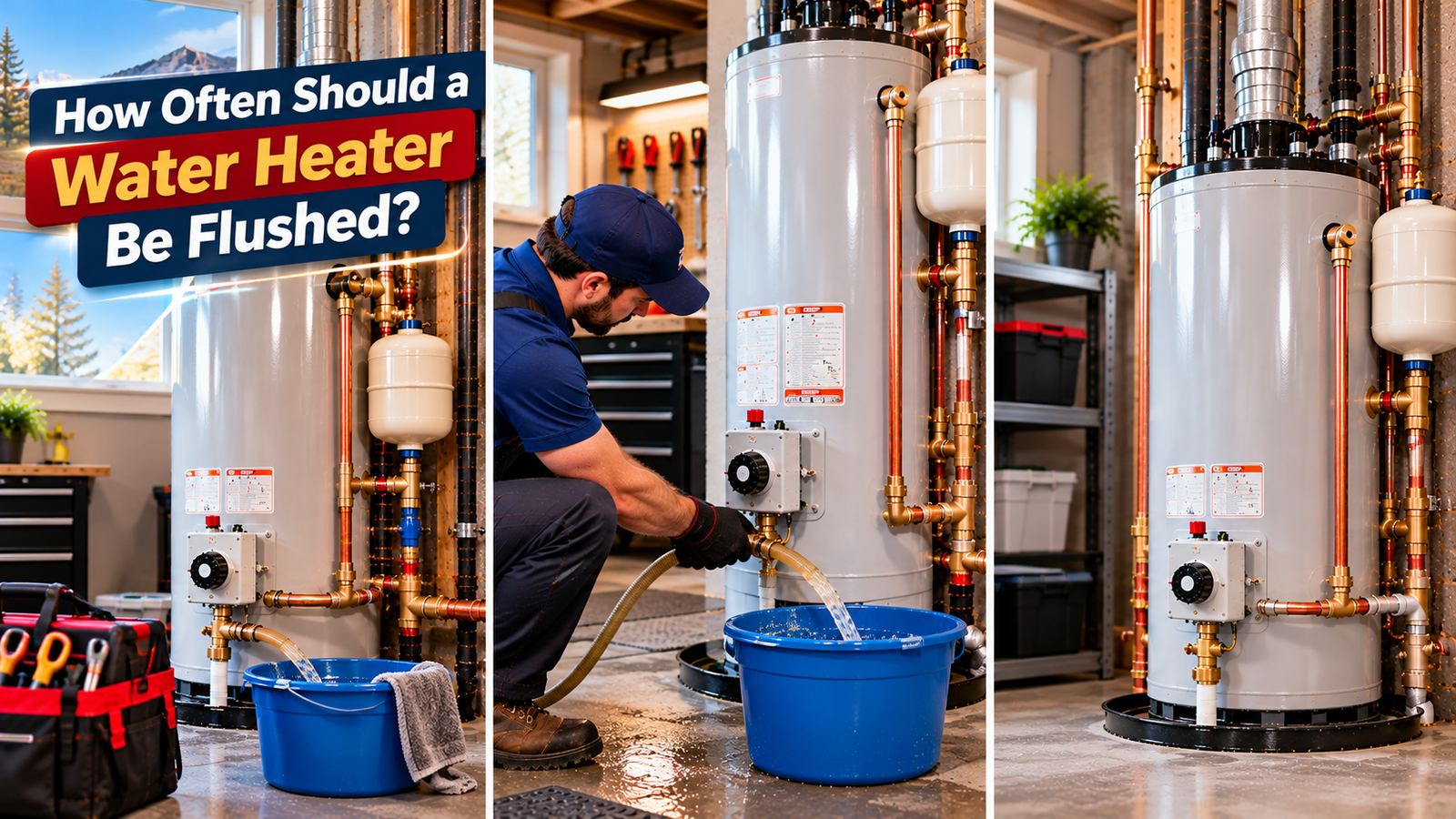
How Often Should a Water Heater Be Flushed? If your hot water tank has started making rumbling noises, takes longer to recover, or has not been serviced for several years, sediment may be accumulating inside it. Understanding when flushing is appropriate can help you maintain your water heater without exposing aging equipment to unnecessary risks.
For homeowners in Mahogany, Auburn Bay, Cranston, and other Southeast Calgary communities, water heater maintenance deserves attention because mineral deposits can develop as water is heated. Professional water heater maintenance and plumbing services in Calgary can help assess sediment buildup, equipment condition, and the appropriate servicing schedule.
Although annual flushing is a commonly recommended starting point for many storage water heaters, the correct interval depends on manufacturer instructions, water quality, usage, and equipment age. Tankless systems have different maintenance requirements, and older tanks may need inspection before any draining procedure is attempted.
Many conventional water heaters benefit from sediment flushing approximately once a year, but the manufacturer’s instructions determine the appropriate schedule. Hard water, heavy use, or visible sediment may justify more frequent assessment. Older or neglected tanks should be inspected before flushing because draining can reveal existing leaks or valve problems.
How Often Should You Flush a Water Heater in Calgary?
For many conventional storage water heaters, flushing approximately once every 12 months is a reasonable maintenance starting point. However, there is no universal interval that applies to every model, water supply, or household.
Some manufacturers recommend periodic draining or sediment removal, while others specify different procedures or schedules. Always follow the instructions for your exact appliance.
Is Annual Water Heater Flushing Necessary?
Annual maintenance is commonly recommended because minerals and other particles can settle inside a storage tank over time.
As the water heats, some dissolved minerals may precipitate and accumulate near the bottom of the tank.
Flushing can help remove loose sediment, although it may not eliminate hardened deposits or reverse existing corrosion.
Does Calgary’s Hard Water Affect Flushing Frequency?
Calgary’s municipal water contains naturally occurring hardness minerals, primarily calcium and magnesium.
When water is heated, some mineral content can form deposits on internal surfaces and heating components.
Homes experiencing noticeable sediment accumulation may benefit from more frequent professional assessment, but water hardness alone does not establish a fixed flushing schedule.
Should a Water Heater Be Flushed Every Six Months?
A six-month interval may be appropriate in certain situations, particularly where sediment accumulation is substantial or the equipment manufacturer recommends it.
However, flushing twice yearly is not automatically necessary for every Calgary household.
Unnecessary draining can introduce additional wear to aging valves and components, so maintenance should reflect actual conditions.
Does Household Size Change the Maintenance Schedule?
Household size can influence water heater usage, but it is not the only factor.
A busy five-person home in McKenzie Towne may use considerably more hot water than a two-person household in Riverbend.
Higher water throughput can affect sediment accumulation, although water chemistry, heating temperature, and equipment design also matter.
Do Gas and Electric Water Heaters Need Different Care?
Both gas and electric storage heaters can accumulate sediment, but deposits may affect their components differently.
Electric heaters contain heating elements that can develop mineral buildup, while gas-fired models transfer heat through the tank’s lower surfaces or other heat exchange structures.
The manufacturer’s maintenance instructions should guide servicing for either type.
What About Tankless Water Heater Flushing?
Tankless heaters do not store a large reservoir of water, so their maintenance differs from sediment flushing in a conventional tank.
Many tankless models require periodic heat exchanger descaling to manage mineral buildup.
Depending on water conditions and manufacturer instructions, descaling may be recommended annually or at another interval.
For homeowners comparing the two technologies, our related guide, Tank vs. Tankless Water Heater: Which Is Better in Calgary?, explains the differences in performance, installation, and maintenance.
Water Heater Maintenance Frequency Comparison
| Water Heater Type | General Maintenance Starting Point | Important Consideration |
|---|---|---|
| Gas storage tank | Review sediment maintenance approximately annually | Follow manufacturer instructions and assess tank condition |
| Electric storage tank | Review sediment maintenance approximately annually | Check manufacturer guidance for elements and draining |
| Tankless water heater | Review descaling requirements approximately annually | Interval depends on water hardness and manufacturer guidance |
| Older or neglected storage tank | Professional inspection before flushing | Corrosion, leaks, and drain valve condition may create risks |
These are general maintenance considerations, not universal service requirements. The manufacturer’s instructions and equipment condition take priority.
Recommended starting point: Review your water heater’s maintenance requirements annually. A storage tank may benefit from periodic sediment flushing, while a tankless system may need heat exchanger descaling. The appropriate procedure depends on the appliance and water conditions.
Homeowners can find company location information through the Calgary Electrical and Plumbing Google Maps listing.
What Are the Signs Your Water Heater Needs Flushing?
Sediment buildup does not always produce obvious symptoms. A water heater can accumulate deposits gradually while continuing to deliver apparently normal hot water.
However, certain changes in performance may suggest that maintenance or professional inspection is needed.
1. Popping, Rumbling, or Crackling Sounds
Unusual sounds from a storage heater can sometimes result from heat interacting with sediment deposits.
As water trapped near mineral buildup heats, localized movement or bubbling may create popping or rumbling noises.
Not every sound indicates sediment, however. Heating components, thermal expansion, and other mechanical issues can produce similar symptoms.
2. Hot Water Runs Out Faster Than Before
If a household’s hot water supply seems to decline more quickly, sediment may be one possible contributing factor.
However, changes in household demand, faulty heating components, thermostat problems, or deteriorating equipment can also reduce performance.
A professional assessment can help distinguish sediment-related problems from other causes.
3. Longer Water Heating Recovery Times
Some mineral deposits can interfere with efficient heat transfer, potentially affecting how quickly a heater restores its hot water supply.
However, recovery time also depends on equipment capacity, heating input, incoming water temperature, and the amount of water used.
Do not assume flushing alone will correct slow recovery.
4. Sediment or Discolouration in Hot Water
Visible particles or discoloured hot water can indicate sediment, corrosion, or another plumbing issue.
If discolouration occurs only at hot water fixtures, the heater or hot water piping may be involved.
Persistent discolouration should be assessed rather than treated as a routine maintenance inconvenience.
5. Unexplained Changes in Water Heater Performance
Changes in hot water temperature, inconsistent delivery, or unusual operating behaviour can justify an inspection.
These symptoms are not specific to sediment accumulation.
Electrical controls, gas heating components, plumbing restrictions, and other issues may require diagnosis.
Can Sediment Increase Energy Consumption?
Substantial mineral deposits can interfere with heat transfer in some water heater designs.
This may contribute to less efficient operation, although the actual effect depends on equipment construction and deposit severity.
Flushing loose sediment can be beneficial, but it does not guarantee a measurable reduction in utility bills.
Does Sediment Reduce Water Heater Lifespan?
Accumulated deposits may contribute to operating problems, especially when combined with other maintenance concerns.
However, tank lifespan also depends on corrosion protection, water chemistry, installation, operating temperature, and manufacturing design.
Regular maintenance can support equipment care but cannot prevent every failure.
When Is Flushing Not the Right Solution?
If the tank is leaking, severely corroded, or showing signs of structural deterioration, flushing may be inappropriate.
Similarly, repeated loss of hot water may result from a defective component rather than sediment.
Diagnosis should come before maintenance when the underlying cause is uncertain.
Important: Water collecting beneath a tank, persistent leakage, or visible corrosion should be professionally assessed before draining or flushing. Maintenance cannot repair a compromised tank, and attempting to operate damaged equipment can create additional risks.
How Can Calgary Homeowners Recognize a Developing Problem?
Compare current performance with the heater’s normal operation.
A homeowner in Auburn Bay may notice that morning showers no longer stay consistently warm, while a household in Cranston may first hear unusual noises from the utility room.
Recording when symptoms occur can help a plumber identify likely causes.
Does Every Noisy Water Heater Need Flushing?
No. Some operating sounds are normal, while others may indicate sediment, expansion, or component problems.
Noise alone cannot confirm that flushing is required.
An inspection is especially worthwhile if sounds are new, persistent, or accompanied by reduced hot water performance.
Practical observation: A combination of rumbling noises, reduced hot water delivery, and a long maintenance history may suggest sediment accumulation. Nevertheless, professional diagnosis is preferable to assuming that every symptom can be solved by draining the tank.
Should You Wait Until Symptoms Appear?
Not necessarily. Preventive maintenance is generally more useful when performed before substantial problems develop.
Waiting for severe noise, discolouration, or performance loss may allow deposits or other issues to progress.
A planned maintenance schedule provides an opportunity to evaluate the equipment before an unexpected interruption.
Warning signs to remember: New rumbling sounds, reduced hot water availability, slower recovery, and discoloured hot water deserve attention. These symptoms may involve sediment, but they can also indicate other plumbing or water heater problems.
For additional local service information, see this Calgary plumbing service location reference.
Request a water heater flushing and maintenance estimate in Calgary in just a few clicks.
Get My Free Estimate
How Is a Water Heater Safely Flushed and Maintained?
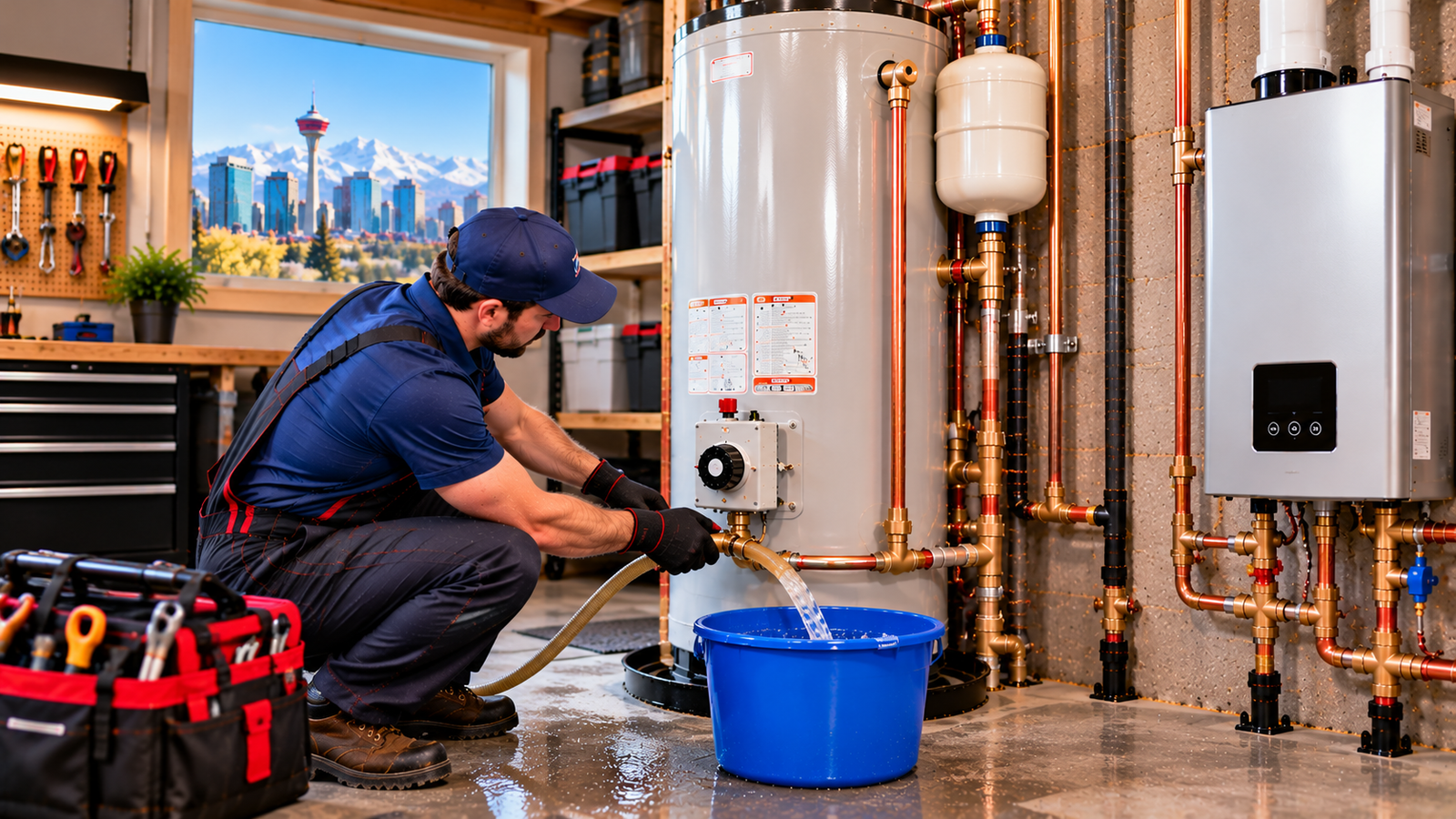
Flushing a water heater involves removing water and loose deposits from the system, but the procedure should not be treated as a risk-free household chore.
Hot water, pressurized plumbing, electrical components, gas connections, and aging drain valves can create hazards if the work is performed incorrectly.
What Does Professional Water Heater Flushing Involve?
A qualified technician begins by identifying the heater type, checking its condition, and reviewing the manufacturer’s servicing requirements.
The technician then determines whether draining or sediment removal is appropriate and uses procedures suited to the specific appliance.
After maintenance, the system should be checked for proper operation and leakage.
Why Is Equipment Inspection Important Before Flushing?
Water heaters that have not been maintained for many years may have weakened components, sediment accumulation, or deteriorating drain valves.
Draining can reveal existing problems that were not previously visible.
An inspection helps determine whether maintenance is appropriate or whether repair or replacement should be considered instead.
Can You Flush an Older Water Heater?
Possibly, but age and condition matter.
A relatively old tank that has never been drained may have corrosion or valve issues that increase the risks associated with servicing.
Rather than beginning an unfamiliar draining procedure, arrange an assessment of the tank’s condition and remaining serviceability.
Why Does the Drain Valve Matter?
Storage heaters commonly have a drain valve intended for servicing.
Over time, valves can become difficult to operate, obstructed by sediment, or unable to reseal properly.
A leaking drain valve after maintenance may require professional attention, particularly on older equipment.
Can Hot Water Cause Injuries During Flushing?
Yes. Water inside a heater can be hot enough to cause serious scalding.
Improper handling of pressurized hot water or associated connections can also create hazards.
For this reason, unfamiliar maintenance procedures should be left to qualified professionals.
What Is the Difference Between Draining and Flushing?
Draining generally means removing water from the tank.
Flushing refers to a maintenance process intended to carry loose sediment out of the system.
Simply emptying a tank does not necessarily remove all deposits, particularly when mineral buildup has hardened.
Can Flushing Remove Hardened Scale?
Not always. Loose particles may be removed through appropriate sediment maintenance, but firmly attached mineral scale can remain.
Severe deposits may require further assessment, and some deterioration cannot be reversed through cleaning.
A technician can help determine whether continued maintenance is worthwhile.
How Is Tankless Descaling Different?
Tankless water heaters use heat exchangers that may accumulate mineral deposits on internal surfaces.
Manufacturer-approved descaling procedures differ from conventional storage-tank flushing and may involve specialized servicing equipment.
Because equipment designs vary, maintenance should follow the exact model’s instructions.
Should You Use Household Chemicals to Clean a Water Heater?
Do not introduce household cleaning chemicals or improvised descaling products into water heating equipment.
Incompatible substances can damage components or contaminate plumbing.
Only manufacturer-approved products and qualified servicing methods should be used where chemical descaling is required.
Water heater safety: Do not attempt to modify gas connections, electrical wiring, safety valves, or pressurized plumbing during maintenance. If you notice active leakage, a gas odour, damaged wiring, or another immediate hazard, stop using the affected equipment and seek appropriate professional assistance.
What Else Should Be Checked During Maintenance?
A water heater inspection may include checking for leaks, visible corrosion, connection problems, and unusual operation.
Depending on the appliance, the technician may also assess components related to corrosion protection, temperature control, and safe operation.
Not every task is required at every visit; the inspection scope should reflect the equipment and manufacturer’s instructions.
Can Maintenance Improve Hot Water Performance?
It may, especially when loose sediment is affecting the heater’s operation.
However, flushing will not correct every problem associated with poor heating or reduced capacity.
Defective components, undersized equipment, and substantial corrosion may require separate solutions.
Is There a Useful Water Heater Maintenance Video?
Visual demonstrations can help homeowners understand the equipment involved, but they should not replace model-specific instructions or professional safety precautions.
You can view this water heater-related video resource for additional visual context. Any procedure shown should be evaluated against your actual appliance and the manufacturer’s guidance before work is considered.
How Can You Prepare for a Maintenance Appointment?
Make the water heater accessible and note any recent changes in performance.
Useful information includes the approximate installation date, model number, maintenance history, unusual noises, and whether hot water delivery has changed.
These details can help the technician assess the system more efficiently.
Professional maintenance principle: Effective water heater care begins with assessing the appliance, not automatically draining it. The correct procedure depends on equipment condition, manufacturer instructions, water quality, and whether the system uses storage or tankless heating.
Additional company information is available through the Calgary Electrical and Plumbing shared Google business profile.
When Should You Schedule Professional Water Heater Flushing in Calgary?
The best time to arrange water heater maintenance is before significant performance problems develop.
For many households, an annual review of maintenance requirements provides a practical opportunity to check sediment accumulation and overall equipment condition.
Schedule Maintenance When the Manufacturer Recommends It
The owner’s manual is the most important reference for determining maintenance intervals.
Some equipment requires specific inspections or procedures to maintain safe operation and comply with warranty conditions.
Follow the schedule for your exact model rather than relying on a general recommendation alone.
Arrange an Inspection When New Symptoms Appear
New rumbling noises, inconsistent hot water, or unexplained performance changes should be evaluated.
These symptoms may indicate sediment, but they can also result from unrelated equipment problems.
Early diagnosis can help identify the appropriate next step.
Consider Equipment Age Before Booking a Flush
Older heaters deserve careful evaluation, especially when maintenance history is unknown.
A tank showing corrosion, leakage, or other signs of deterioration may not be a suitable candidate for routine flushing.
In some cases, replacement planning may be more appropriate than attempting to restore an aging appliance.
What If the Heater Has Never Been Flushed?
A neglected maintenance history does not automatically mean the tank should be drained immediately.
The longer the heater has operated without inspection, the more important it becomes to assess the condition of the tank and drain valve.
A professional can explain whether maintenance is advisable.
Is Water Heater Flushing Worth the Cost?
When recommended by the manufacturer and appropriate for the equipment, sediment maintenance can be a useful part of preventive care.
However, its value depends on the actual condition of the heater and whether flushing addresses a meaningful maintenance need.
It should not be presented as a guaranteed way to prevent replacement or reduce energy bills.
How Much Does Water Heater Flushing Cost in Calgary?
Professional servicing costs vary with equipment type, accessibility, condition, and the work included.
A straightforward storage-tank service may differ significantly from tankless descaling or a diagnostic visit involving additional repairs.
The following amounts are illustrative budgeting examples, not verified current Calgary prices or company quotations.
| Service | Illustrative Cost (CAD) | Important Factors |
|---|---|---|
| Water heater inspection | $100–$200+ | Inspection scope and diagnostic work |
| Storage tank sediment flushing | $150–$300+ | Tank condition, accessibility, and service requirements |
| Tankless water heater descaling | $200–$450+ | Equipment design and maintenance complexity |
| Additional component repair | Quoted after assessment | Parts, labour, and equipment condition |
Pricing disclaimer: These are illustrative, nonbinding CAD ranges. Actual Calgary service costs may be higher or lower. Taxes, travel, materials, diagnostic work, and repairs may affect the final estimate.
Should Flushing Be Part of an Annual Plumbing Inspection?
Water heater maintenance can be considered during a broader plumbing inspection.
Reviewing the equipment alongside visible plumbing connections may help identify leaks, corrosion, or changes in operation.
However, the need for actual flushing should be determined separately rather than assumed at every visit.
Does Flushing Prevent Water Heater Replacement?
No maintenance procedure can permanently prevent equipment deterioration.
Flushing may help manage sediment, but it cannot reverse tank corrosion or restore a failed heating component.
Preventive care is valuable because it supports informed maintenance decisions, not because it guarantees indefinite service life.
What Should You Ask Before Scheduling Service?
- Does my water heater manufacturer recommend sediment flushing?
- Is the tank in suitable condition for draining?
- Does my tankless heater require heat exchanger descaling?
- What maintenance tasks are included in the service?
- Will the technician inspect the drain valve and visible connections?
- Are additional repairs quoted separately?
- What maintenance interval is appropriate for my equipment?
Why Local Water Heater Experience Matters
Homes in Seton, Copperfield, Douglasdale, and Lake Bonavista can have different equipment ages, household demands, and installation arrangements.
Understanding Calgary water conditions and common residential heating systems helps inform maintenance recommendations.
A qualified technician should assess the actual appliance rather than applying the same procedure to every property.
When Should Replacement Be Considered Instead?
Replacement may be appropriate when the tank is leaking, severely corroded, or experiencing repeated failures.
It may also be worth evaluating when repair costs are substantial relative to the equipment’s age and condition.
A professional assessment can help compare repair, maintenance, and replacement options.
Maintenance planning tip: If you live in Mahogany, New Brighton, Riverbend, or another Calgary community, keep a record of your water heater’s installation date, service history, and manufacturer recommendations. This information makes future maintenance decisions more informed.
How Can You Build a Practical Maintenance Routine?
Start by identifying the exact heater model and reviewing its maintenance documentation.
Arrange inspections when recommended and address new symptoms rather than ignoring them.
For aging or neglected equipment, prioritize an assessment before authorizing flushing or descaling.
Final recommendation: Review water heater maintenance annually, but schedule flushing according to the manufacturer’s instructions and the appliance’s condition. When the tank is older, leaking, or poorly maintained, professional inspection should come before draining.
For additional company discussions and updates, explore the Calgary Electrical and Plumbing Reddit profile.
Request a water heater flushing and maintenance estimate in Calgary in just a few clicks.
Get My Free Estimate
Keep Your Water Heater Maintained Without Taking Unnecessary Risks
Many storage water heaters benefit from periodic sediment maintenance, but flushing frequency should reflect the manufacturer’s instructions, equipment condition, and household water characteristics. Tankless systems require a different approach, often involving heat exchanger descaling.
A local calgary plumber can assess your water heater and recommend suitable maintenance. Call Calgary Electrical and Plumbing at (403) 421-1991 to discuss professional water heater inspection and flushing services.
Frequently Asked Questions about Water Heater Flushing
How often should a hot water tank be flushed in Calgary?
Many storage water heaters benefit from sediment maintenance approximately once a year, but the correct interval depends on manufacturer instructions, water conditions, and equipment age. Calgary’s hardness minerals can contribute to deposits, so maintenance should be based on the specific heater’s requirements and condition.
What happens if you never flush your water heater?
Over time, sediment may accumulate inside a storage tank and contribute to noise or reduced heating performance. However, the effects vary by equipment and water conditions. If a heater has never been flushed, especially when older, arrange an inspection before attempting maintenance.
Can flushing an old water heater cause a leak?
Draining an aging heater can reveal existing corrosion or problems with a deteriorating drain valve. Flushing does not necessarily create tank damage, but it may expose weaknesses already present. Older or neglected water heaters should be professionally assessed before draining or sediment removal.
Do tankless water heaters need flushing every year?
Many tankless heaters require periodic descaling to manage mineral deposits in the heat exchanger. An annual review is a useful starting point, but the actual service interval depends on manufacturer instructions, water hardness, and usage. Tankless descaling differs from conventional storage-tank flushing.
Will flushing a water heater stop popping or rumbling noises?
Flushing may reduce noise when loose sediment is the cause, but it cannot guarantee a solution. Hardened scale, thermal expansion, and component problems may produce similar sounds. Persistent or unusual noises should be professionally diagnosed before assuming sediment removal will resolve them.
Have your water heater assessed before sediment or equipment problems worsen.
Call (403) 421-1991 Now
Contact Our Calgary Plumbing Team