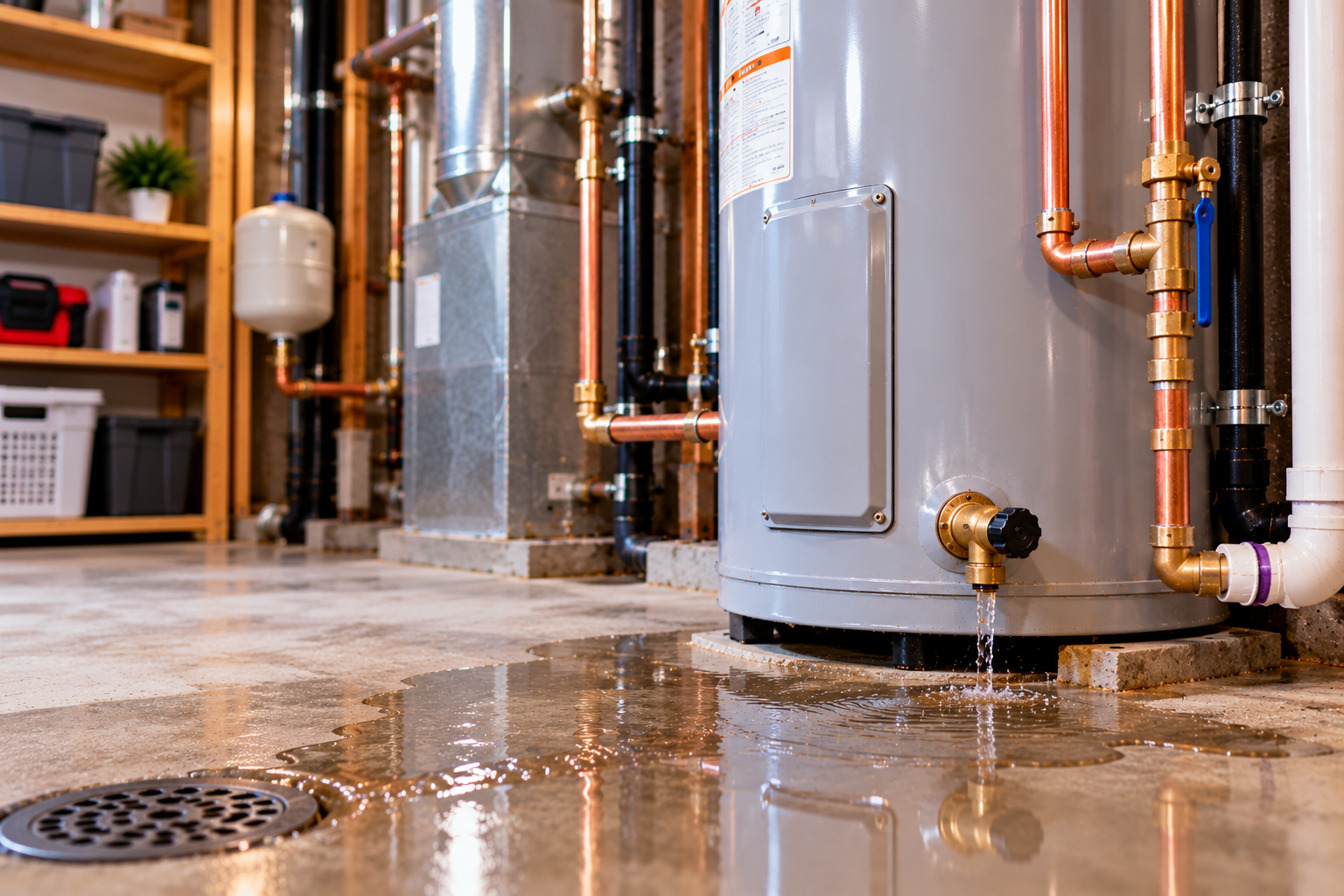

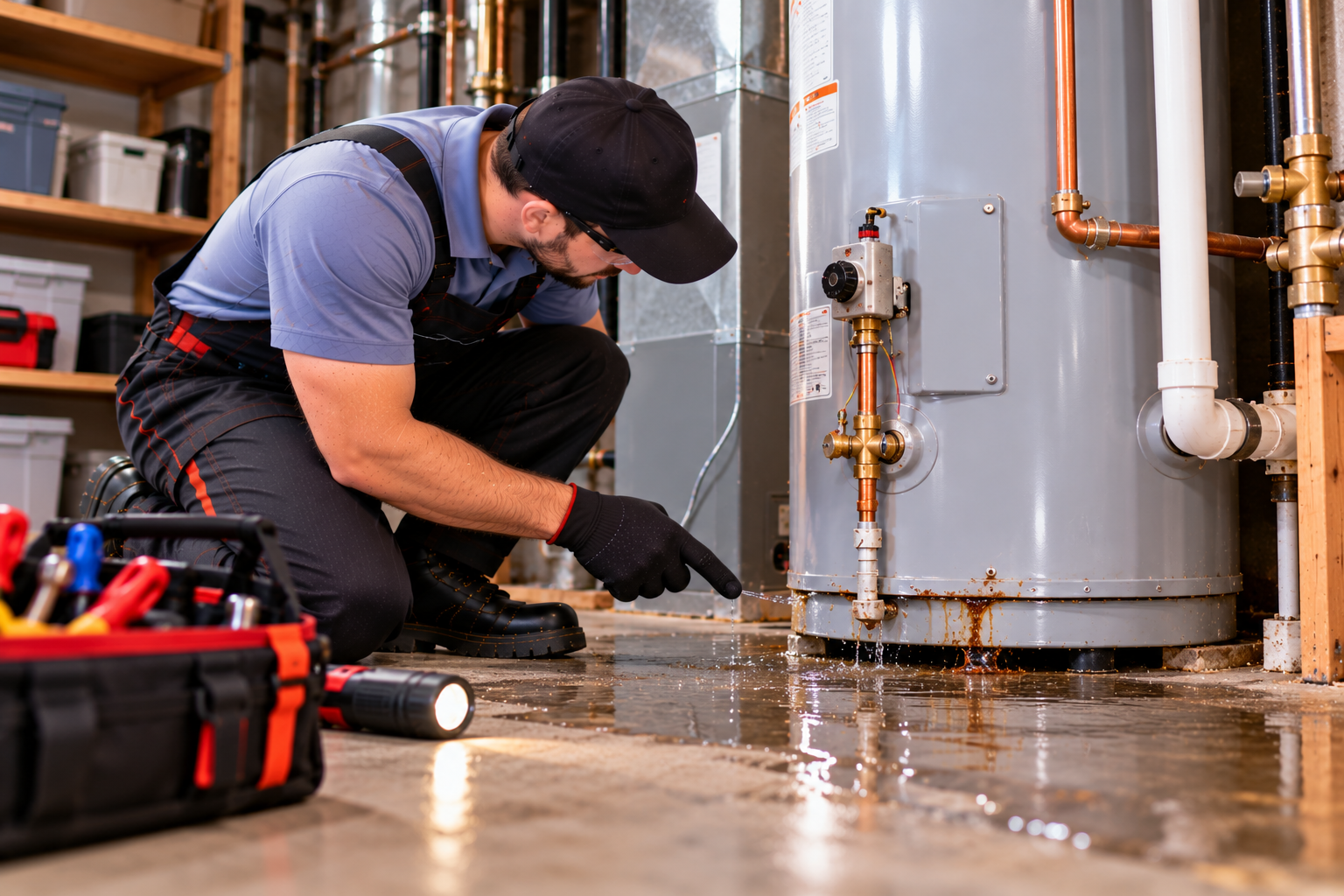
Why Is My Water Heater Leaking From the Bottom? It is an unsettling question when you discover a puddle around your hot water tank, especially if the floor was dry earlier that day. For Calgary homeowners, even a small leak deserves attention because water can damage flooring, nearby belongings, and equipment in the utility room.
Whether your home is in Mahogany, Cranston, Auburn Bay, or McKenzie Towne, identifying the source of moisture is the first step toward an appropriate solution. Professional water heater repair and plumbing services in Calgary can help determine whether the water originates from a repairable fitting or a damaged storage tank.
Not every puddle means the entire heater has failed. Water may travel down the exterior of the appliance before collecting underneath, making the source difficult to identify. This guide explains common causes, safe initial observations, warning signs, repair considerations, and when replacement may be the better option.
A water heater may leak from the bottom because of a loose drain valve, leaking connection, condensation, temperature-and-pressure relief discharge, or internal tank corrosion. Water collecting beneath the heater does not always originate at the bottom. Persistent leakage requires professional assessment.
What Causes a Water Heater to Leak From the Bottom?
A puddle beneath a hot water tank can have several explanations. Some involve external components that may be repairable, while others indicate deterioration inside the storage tank. The location where water collects is not always the location where the leak begins.
Water Travelling Down the Outside of the Tank
Water from an upper connection can run down the appliance casing and accumulate underneath. This may make a leak near the top appear to originate at the bottom.
Supply connections, valves, and nearby plumbing should therefore be considered before concluding that the tank itself has failed.
How Can a Drain Valve or Pipe Connection Cause a Leak?
Most conventional storage water heaters have a drain valve near the lower portion of the tank. This component is used during certain maintenance procedures.
If the valve or its seal deteriorates, water may drip from the lower area of the heater. A leaking connection elsewhere in the system can create a similar puddle.
Some valve or fitting problems can be repaired without replacing the entire water heater, provided the tank remains structurally sound.
Condensation Around the Water Heater
Under certain operating conditions, condensation can form on parts of water heating equipment. This moisture may collect on nearby surfaces and resemble a small leak.
Condensation is not the same as water escaping from a pressurized tank. However, persistent moisture should not be dismissed without identifying its source.
Does Water Leaking Under the Tank Mean Internal Corrosion?
Internal corrosion is one of the more serious possible causes of water appearing beneath a storage heater. Over time, protective components and tank materials can deteriorate.
When the storage tank itself develops a leak, replacing an external valve will not solve the problem. Tank replacement is generally necessary because the damaged vessel is not ordinarily repaired in place.
Rust staining or corrosion around the lower casing can be a warning sign, but it does not independently prove the exact leak source.
What Role Does the Anode Rod Play?
Many storage water heaters contain a sacrificial anode rod designed to help protect the tank against corrosion.
As the rod deteriorates, its protective effectiveness may decline. Inspection and replacement recommendations depend on the manufacturer’s specifications and the condition of the appliance.
Replacing an anode rod cannot repair a tank that has already developed a structural leak.
Could Nearby Plumbing Be Responsible?
A wet floor near the water heater may come from another plumbing source, such as a nearby pipe, fixture, or drainage connection.
In some Calgary utility rooms, multiple water-related appliances share the same area. A puddle can travel across the floor before becoming visible beside the heater.
Identifying the source prevents unnecessary water heater replacement.
Key point: A bottom puddle does not automatically mean the tank has ruptured. A qualified plumber can determine whether moisture originates from an external fitting, condensation, nearby plumbing, or the storage vessel itself.
Homeowners can find local business information through the Calgary Electrical and Plumbing Google Maps listing.
How Can You Tell Whether a Water Heater Leak Is Serious?
The seriousness of a leak depends on its source, rate, location, and proximity to electrical or gas equipment. Even slow leakage deserves attention because water damage can develop gradually.
A Small Drip Versus Continuous Leakage
A small drip may indicate a fitting or valve problem, but it can also be an early sign of a more significant failure.
Continuous water accumulation is especially concerning because the moisture source remains active.
Do not assume that a leak is harmless simply because the puddle appears small.
Signs That the Storage Tank May Be Failing
Water emerging from the tank body, significant corrosion, or repeated leakage after external components have been assessed can indicate a deteriorating storage vessel.
Other symptoms may include declining hot water performance or visible deterioration around the appliance.
A technician should confirm whether the tank itself is leaking before recommending replacement.
Why Is Water Coming From the Pressure Relief Pipe?
Storage water heaters commonly have a temperature-and-pressure relief valve designed to help protect against unsafe conditions.
Water discharged through its outlet pipe may indicate thermal expansion, a valve problem, or a pressure or temperature condition requiring investigation.
The discharge pipe must not be blocked, capped, or altered to stop the water. Doing so can defeat an important safety function.
Can High Water Pressure Contribute to Leaks?
Excessive pressure or repeated pressure changes can place additional stress on plumbing components.
In some systems, thermal expansion can contribute to pressure-related concerns when water is heated.
Qualified assessment may involve checking operating conditions and determining whether pressure-control equipment is appropriate.
What If Water Is Near Electrical Components?
Water around electrical connections, wiring, or powered equipment creates a potentially hazardous situation.
Avoid touching wet electrical equipment or stepping into standing water near energized components.
Keep others away from the affected area and seek qualified assistance.
What If the Water Heater Uses Natural Gas?
A water leak and a gas leak are different problems, but both can involve the same appliance.
If you suspect a gas leak, leave the area and contact the gas utility’s emergency service from a safe location. Do not operate switches or attempt to inspect the fuel system.
Gas appliance repairs should be completed by appropriately qualified professionals.
Why Utility Room Location Matters
Some water heaters are installed near finished basements, storage areas, or other moisture-sensitive spaces.
In communities such as Mahogany, Seton, and Auburn Bay, utility room layouts vary by home design and renovations.
Even a modest leak can affect surrounding finishes or stored belongings if it continues unnoticed.
Important safety warning: Do not block a pressure relief discharge pipe, open electrical compartments, modify gas connections, or attempt to patch a leaking pressurized storage tank. Keep clear of water near electrical equipment and arrange professional help.
Does a Leaking Heater Always Stop Producing Hot Water?
No. A heater may continue producing hot water while an external fitting or even the tank itself leaks.
Continued heating does not establish that the appliance is safe to operate.
The leak source and equipment condition still require assessment.
Practical distinction: A repairable external connection may be relatively straightforward to address. A leaking storage tank is a different situation and usually requires replacement of the appliance.
For additional company location details, see this Calgary plumbing service map reference.
Request a leaking water heater inspection and repair estimate in Calgary in just a few clicks.
Get My Free Estimate
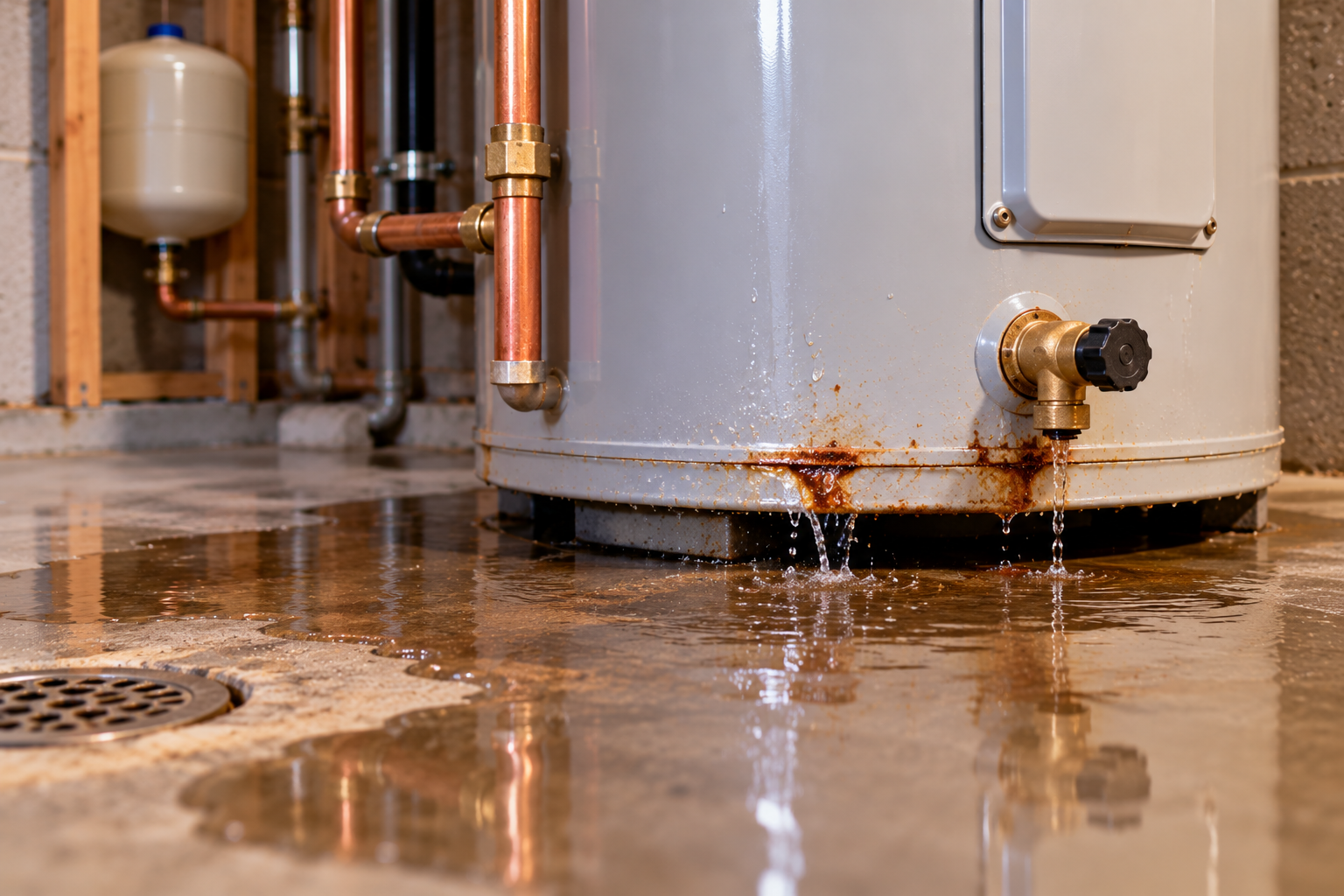
What Should You Do When Your Water Heater Is Leaking?
Discovering water around a hot water tank can be stressful. The immediate priorities are personal safety, limiting damage where it is safe to do so, and arranging appropriate professional assessment.
What Can Calgary Homeowners Check Safely?
From a safe, dry location, observe where moisture appears and whether it is accumulating quickly.
Look for visible dripping at external connections without touching electrical components, hot piping, or gas equipment.
Do not remove appliance covers or dismantle fittings to investigate.
Keep People Away From Wet Electrical Areas
If water has reached electrical equipment or outlets, avoid the affected area.
Do not step into standing water to reach switches or controls.
A qualified professional can determine how to make the area safe before repairs begin.
Do Not Ignore a Growing Puddle
Water that continues accumulating can damage surrounding materials and may indicate an active pressurized leak.
Arrange professional assistance rather than waiting for the problem to resolve on its own.
If the leak is substantial, explain that clearly when contacting the service provider.
Know the Location of Household Water Shutoffs
Knowing where the home’s main water shutoff is located can be useful during plumbing emergencies.
However, do not approach a valve through standing water near electrical equipment or attempt to operate damaged or inaccessible controls.
If the area is unsafe, leave isolation and equipment handling to qualified personnel.
Avoid Tampering With the Relief Valve
Some homeowners notice water near a relief discharge pipe and assume that tightening or blocking it will stop the leak.
The relief valve is a safety component, and interfering with its discharge arrangement can create dangerous conditions.
Persistent discharge requires professional diagnosis of the underlying cause.
Document Visible Conditions
If it is safe, take photographs of the puddle, surrounding connections, and any visible corrosion.
Record when the moisture first appeared and whether the amount has increased.
This information can help a technician understand the history of the problem.
Protect Nearby Belongings Without Entering Hazardous Areas
Move easily accessible items away from moisture when doing so does not require contact with wet electrical equipment or hot components.
Avoid attempting cleanup around an actively leaking appliance if the area is unsafe.
Preventing personal injury takes priority over protecting stored items.
What If the Leak Stops Temporarily?
Intermittent leakage can still indicate a plumbing or equipment problem.
For example, moisture may appear only during heating cycles or certain pressure conditions.
A leak that disappears temporarily should not automatically be considered resolved.
What Information Should You Give the Plumber?
- Whether the appliance is a gas or electric storage water heater.
- Its approximate age and model, if known.
- Where water appears around the heater.
- Whether leakage is continuous or intermittent.
- Whether visible corrosion or rust staining is present.
- Whether the appliance is still producing hot water.
- Whether moisture is near electrical equipment or finished surfaces.
Why Professional Leak Detection Matters
Water can travel along piping, insulation, and exterior surfaces before reaching the floor.
A professional assessment can distinguish an external fitting problem from a structural tank leak.
This distinction determines whether a limited repair is reasonable or replacement is necessary.
Safe response: Keep clear of electrical and gas hazards, observe the leak without dismantling equipment, and arrange qualified assistance. Do not attempt to patch a pressurized tank or interfere with safety devices.
For company updates and customer communication, visit the Calgary Electrical and Plumbing Facebook page.
Should You Repair or Replace a Water Heater Leaking From the Bottom?
The answer depends primarily on the source of the leak and the condition of the storage tank. External valves and connections may be repairable, but leakage from the tank body generally changes the decision.
When Is a Water Heater Leak Repairable?
Repair may be appropriate when the leak comes from a replaceable drain valve, accessible connection, or another serviceable external component.
The tank must still be structurally sound, and the proposed repair should address the actual cause.
Qualified plumbers can assess whether repairing the component is practical and safe.
When Does a Leaking Tank Need Replacement?
A storage tank that has developed a structural leak is generally replaced rather than patched.
The vessel is designed to contain heated water under pressure, and an improvised repair is not an appropriate substitute for a sound tank.
Replacement also becomes more attractive when significant corrosion or repeated major failures are present.
Does the Age of the Water Heater Matter?
Many conventional storage water heaters have service lives measured in roughly a decade, although actual longevity varies.
Maintenance history, water conditions, installation quality, and usage all influence durability.
An older heater with a minor fitting leak may still be repairable, while a newer heater with a failed storage vessel may require replacement.
Can a Leaking Tank Be Patched?
Applying sealant or attempting to patch a corroded storage tank is not a reliable solution to structural deterioration.
Such attempts do not restore the original integrity of the pressure-containing vessel.
Professional replacement is the appropriate direction when the tank itself is confirmed to be leaking.
How Much Could Water Heater Leak Repair Cost in Calgary?
Costs vary with the leak source, appliance type, access, labour, and required replacement parts.
External component repairs may cost less than replacing the appliance. A confirmed structural tank leak usually requires a more substantial investment.
| Service | Illustrative Cost (CAD) | Main Cost Factors |
|---|---|---|
| Leak diagnosis and inspection | $100–$250+ | Assessment scope and accessibility |
| Minor valve or connection repair | $175–$450+ | Component type and labour |
| More involved plumbing or valve repair | $300–$800+ | Parts, access, and additional work |
| Conventional storage-tank replacement | $1,500–$3,500+ | Equipment, installation, removal, and connections |
| Tankless water heater installation | $3,500–$7,500+ | Equipment and potential venting or utility modifications |
Pricing disclaimer: These are illustrative, nonbinding CAD planning ranges, not verified current Calgary averages or Calgary Electrical and Plumbing quotations. Actual costs may be higher or lower. Taxes, permits, equipment selection, and installation modifications can affect the final price.
How Should You Compare Repair and Replacement?
Begin with a confirmed diagnosis and an itemized repair estimate.
Then compare the complete installed replacement cost, including equipment, labour, removal, and any required changes to connections or venting.
Consider warranty coverage, the tank’s condition, and the likelihood of further repairs.
Could Replacement Improve Hot Water Performance?
A new water heater may improve performance if the existing system is deteriorating or no longer meets household demand.
However, replacing a functioning heater will not necessarily solve a separate plumbing leak or fixture problem.
Accurate diagnosis remains essential before selecting new equipment.
What About Energy Efficiency?
Newer water heaters may offer improved efficiency compared with some older models, depending on their technology and ratings.
Potential savings depend on energy prices, household use, and the specifications of both appliances.
Efficiency should be considered alongside installation cost, capacity, and long-term maintenance.
Why Correct Sizing Matters in Calgary
Replacement provides an opportunity to reassess household hot water requirements.
A family in Copperfield with several consecutive morning showers may need different recovery capacity from a smaller household in Lake Bonavista.
For tankless systems, Calgary’s colder incoming water temperatures should be included in sizing calculations.
Can Preventive Maintenance Reduce Future Leaks?
Manufacturer-recommended maintenance can help identify certain developing problems and support equipment performance.
Depending on the system, professional service may include checking accessible connections and assessing components designed for periodic maintenance.
Maintenance cannot prevent every failure or reverse a tank that has already corroded through.
What Should You Ask Before Approving Replacement?
- Has the storage tank itself been confirmed as the leak source?
- Are any external components repairable?
- What equipment capacity is appropriate for the household?
- Does the estimate include removal of the old heater?
- Are connection or venting modifications necessary?
- What warranties apply to the equipment and installation?
- Are permits or inspections required for the proposed work?
Repair-versus-replacement guidance: A sound tank with a leaking external component may be worth repairing. A tank with confirmed structural leakage generally requires replacement. The final decision should follow a professional assessment.
What If the Heater Also Runs Out of Hot Water Quickly?
Leakage and reduced hot water duration can occur together, but they do not necessarily share the same cause.
A leaking tank may need replacement regardless of heating performance. If the tank is sound, a separate heating or capacity problem may require attention.
For more information about reduced hot water duration, read Why Does My Hot Water Run Out So Quickly?
Final takeaway: The critical question is whether water is escaping from a replaceable external component or the storage tank itself. Confirming that difference helps prevent unnecessary replacement and avoids unsafe attempts to repair a deteriorating tank.
Request a leaking water heater inspection and repair estimate in Calgary in just a few clicks.
Get My Free Estimate
Protect Your Calgary Home From Water Heater Leaks
Water collecting beneath a hot water tank may come from a repairable connection, condensation, pressure relief discharge, or deterioration inside the storage vessel. Identifying the actual source is essential because the appropriate response can range from a limited repair to full equipment replacement.
A local calgary plumber can assess the leak and explain the available options. Call Calgary Electrical and Plumbing at (403) 421-1991 to discuss your water heater concerns.
Frequently Asked Questions about Water Heater Leaks
Is a water heater leaking from the bottom always dangerous?
Not every bottom leak indicates immediate tank failure, but all persistent leakage deserves attention. Water may come from a valve, connection, relief discharge, or corroded tank. Moisture near electrical equipment or significant water accumulation creates additional concerns and requires qualified assistance.
Can a leaking water heater be repaired without replacing it?
Some leaks involving external valves, fittings, or accessible plumbing connections can be repaired when the storage tank remains sound. However, a confirmed structural leak in the tank generally requires replacement. Professional diagnosis is necessary to determine which situation applies.
Why is water pooling underneath my hot water tank?
Water may pool beneath a heater because of a leaking drain valve, loose connection, condensation, relief valve discharge, nearby plumbing leak, or internal tank deterioration. The puddle location does not always reveal the source because water can travel along the appliance exterior.
Should I keep using a water heater that is leaking?
Continued heating does not mean a leaking appliance is safe. The seriousness depends on the source, leak rate, and proximity to electrical or gas equipment. Avoid tampering with controls or safety devices and seek professional advice before continuing normal operation.
How much does it cost to fix a leaking water heater in Calgary?
Costs depend on whether the leak involves a serviceable valve, connection, or the storage tank itself. Minor repairs may be less expensive than replacement, while a failed tank generally requires a new appliance. Request an itemized estimate after the leak source is confirmed.
Don’t wait for the problem to get worse.
Call (403) 421-1991 Now
Contact Our Calgary Plumbing Team