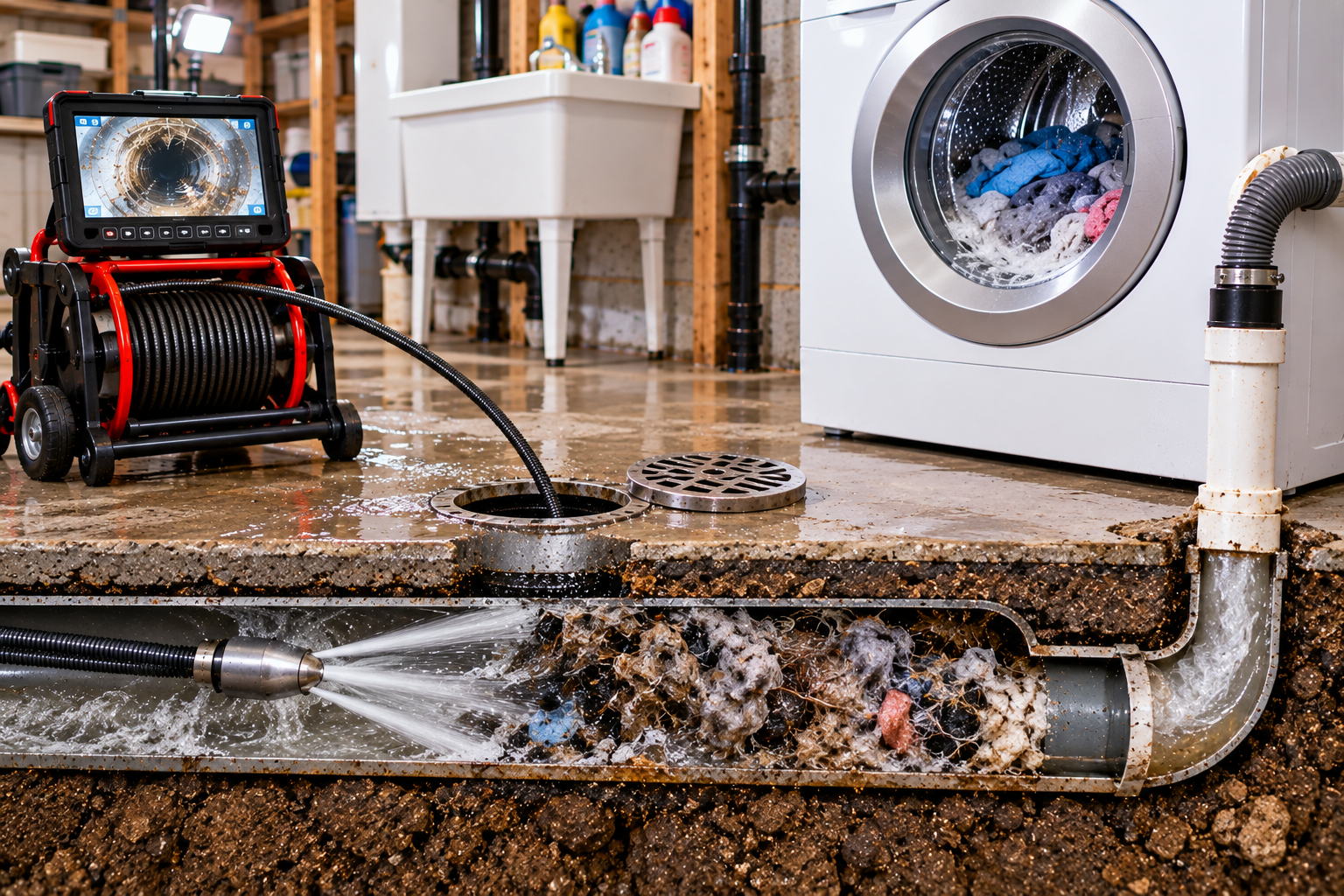

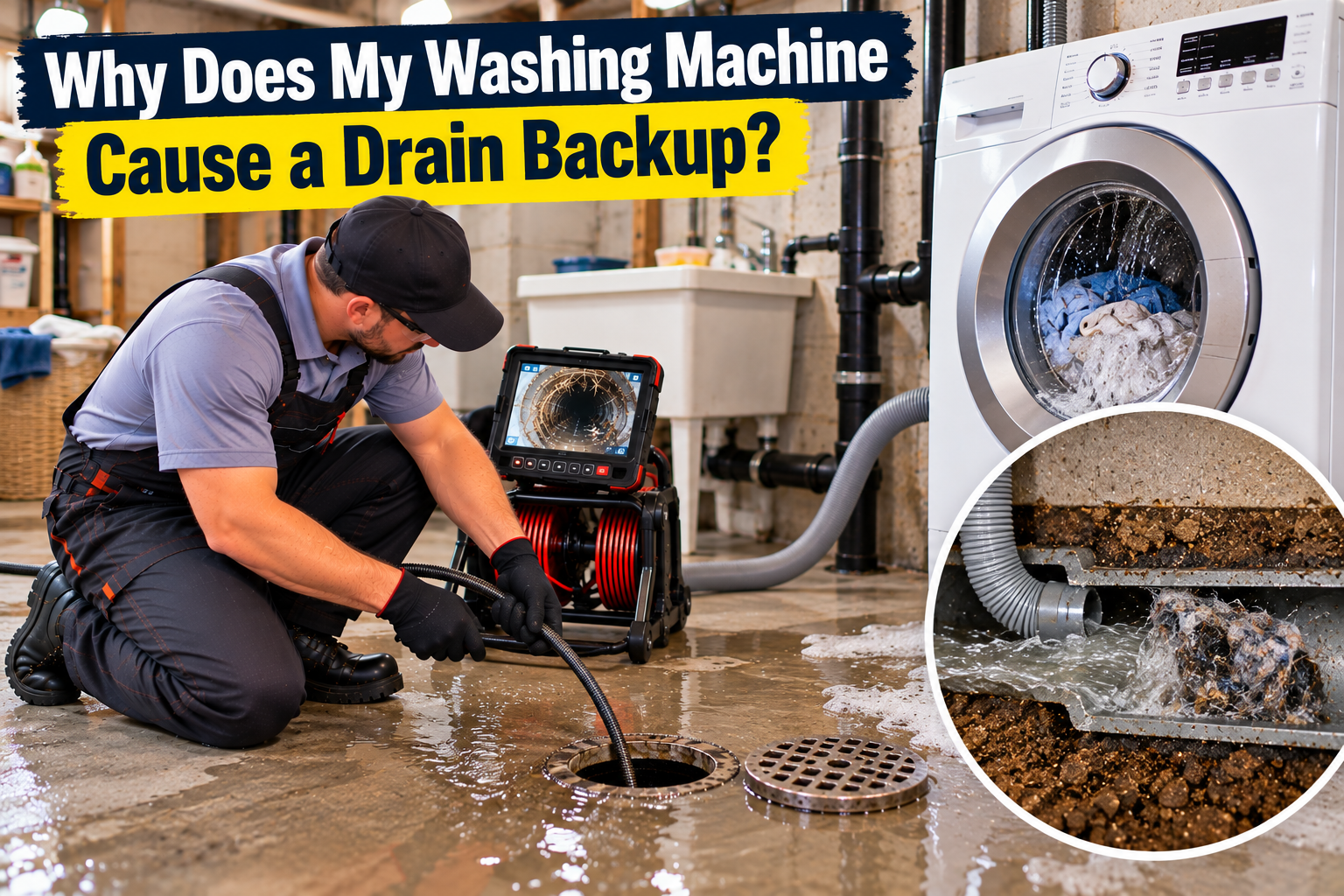
Why does water suddenly rise from the laundry drain every time the washing machine empties? Why Does My Washing Machine Cause a Drain Backup? is a common question when homeowners notice overflowing standpipes, gurgling sinks, or wastewater appearing around basement floor drains during a wash cycle. The problem often involves a restriction or installation issue in the connected drainage system rather than the washing machine itself.
In Southeast Calgary communities such as Mahogany, Copperfield, Cranston, and McKenzie Towne, laundry rooms may be located on the main floor or in the basement. When the drainage system cannot handle the washer’s discharge, professional washing machine drain cleaning and plumbing services in Calgary can help identify whether the problem involves lint accumulation, blocked pipes, inadequate drainage capacity, or a shared sewer restriction.
Understanding when the backup occurs is an important diagnostic clue. Water overflowing directly from a laundry standpipe suggests a different possible problem from sewage rising through a basement floor drain. This guide explains the common causes, warning signs, professional solutions, and practical ways to prevent repeated laundry-related drain backups.
A washing machine may cause a drain backup when its discharge pump sends water into a blocked, undersized, poorly vented, or improperly installed drain. Lint, soap residue, debris, and main sewer restrictions can also contribute. Stop the cycle if water overflows and have the drainage system assessed.
Why Does a Washing Machine Make Water Back Up Into a Drain?
A washing machine removes used wash and rinse water with an internal discharge pump. Unlike a slowly draining sink, the appliance may release a substantial amount of water over a relatively short period.
If the connected drainage system cannot accept that discharge, water may rise inside the standpipe, overflow onto the laundry floor, or appear at another connected fixture.
Lint and Fabric Fibres Accumulating Inside the Drain
Every laundry cycle can release lint, hair, fabric fibres, and other small particles into the wastewater.
Some of these materials may accumulate inside the laundry drainage system, particularly where other deposits already restrict the pipe.
Over time, the available opening can become smaller, making it difficult for water to pass through at the washing machine’s normal discharge rate.
Detergent Residue and Soap Buildup
Laundry detergents, fabric softeners, dirt, and suspended particles can contribute to deposits inside drainage piping.
Excessive detergent use may increase residue and foaming, although the effect depends on the product, machine, and drainage arrangement.
These deposits can combine with lint and other debris, gradually reducing drainage capacity.
A Partially Blocked Laundry Standpipe
The standpipe is the vertical drain opening that typically receives the washing machine discharge hose.
When a restriction develops inside the standpipe, trap, or connected branch drain, wastewater may rise faster than it can flow away.
The result is often visible overflow during the drain or spin portion of the wash cycle.
Drainage Pipes That Cannot Handle the Washer’s Discharge
Some drainage arrangements may not be adequately sized or configured for the connected washing machine.
This can be especially relevant when a newer appliance replaces an older model without evaluating the existing drain installation.
Pipe sizing, standpipe configuration, trap placement, and connection requirements should be assessed against applicable plumbing rules and the appliance manufacturer’s instructions.
Improper Washing Machine Drain Hose Installation
A drain hose that is incorrectly positioned may contribute to drainage problems.
For example, inserting the hose too deeply or sealing it improperly into the standpipe can interfere with the intended discharge arrangement.
The hose should be installed according to the appliance manufacturer’s specifications and applicable plumbing requirements.
Blocked or Improperly Configured Plumbing Venting
Drainage systems use venting arrangements to support wastewater flow and maintain appropriate air pressure.
Improper venting can contribute to gurgling, trap problems, and unusual drainage behaviour.
However, gurgling alone does not prove a vent blockage. A shared drain restriction may produce similar symptoms.
A Blockage Farther Down the Main Sewer Line
Sometimes the laundry standpipe is functioning correctly, but the obstruction is farther downstream.
When a washing machine discharges water into a restricted main sewer, wastewater may rise through a basement floor drain or another low fixture.
This situation can affect more than the laundry area and requires investigation of the shared drainage system.
Tree Roots or Damaged Underground Sewer Pipes
Roots can enter sewer piping through cracks or damaged joints and trap debris.
Similarly, sagging, displaced, or deteriorated sewer sections may restrict wastewater movement.
The washing machine’s discharge can reveal these existing problems because it introduces water rapidly into the connected system.
Why Does the Problem Happen Only During the Spin Cycle?
Many washing machines discharge water during particular stages of operation, including portions of the drain and spin sequence.
That concentrated discharge can expose a partial blockage that remains unnoticed during ordinary sink use.
The timing helps identify the source of the water but does not establish the precise location of the restriction.
Key explanation: A washing machine often reveals an existing drainage restriction rather than creating an immediate blockage. Its discharge pump may release water faster than a partially blocked or improperly configured drain can carry it away.
Homeowners looking for local service information can consult the Calgary Electrical and Plumbing Google Maps listing.
What Warning Signs Reveal a Washing Machine Drainage Problem?
Washing machine drainage problems often produce recognizable patterns. The location of the overflow, its timing, and whether nearby fixtures are affected can help narrow the possible causes.
Homeowners should avoid repeatedly operating the appliance once an active backup has been observed.
Water Overflows From the Laundry Standpipe
One of the clearest warning signs is water rising out of the standpipe when the washing machine pumps out wastewater.
This may indicate a restriction inside the standpipe, trap, or connected branch drain.
Improper installation or inadequate drainage capacity may also contribute, so the actual cause requires assessment.
The Laundry Sink Fills When the Washer Drains
Some homes have laundry sinks connected to the same drainage branch as the washing machine.
If the shared branch is restricted, wastewater may rise into the sink when the washer discharges.
This symptom suggests that the problem may be downstream of the point where the fixtures connect.
Water Appears Around the Basement Floor Drain
When wastewater emerges from a basement floor drain during laundry operation, the restriction may involve a shared drainage branch or main sewer.
Because basement drains are often located at a low point, wastewater may appear there before overflowing from fixtures on higher floors.
Potentially contaminated water should be treated cautiously.
The Toilet Gurgles During the Wash Cycle
Gurgling can occur when wastewater and air movement are disrupted inside connected plumbing.
If a toilet reacts whenever the washer discharges, the fixtures may share an affected drainage section.
However, unusual sounds can also involve venting conditions, making professional diagnosis important.
The Washing Machine Displays a Drain Error
A washing machine drain error does not automatically mean the home’s plumbing is blocked.
The appliance may have a clogged pump filter, kinked hose, pump malfunction, or another internal issue.
Distinguishing appliance drainage faults from household sewer restrictions helps avoid unnecessary plumbing repairs.
Water Remains Inside the Washing Machine Drum
Standing water inside the appliance after a completed cycle may indicate that the machine has not discharged properly.
Possible causes include appliance components, a blocked hose, or resistance in the connected drainage system.
The symptom should be evaluated before assuming that the main sewer is responsible.
Several Fixtures Drain Slowly After Laundry
When multiple household fixtures show drainage problems, a shared restriction becomes more likely.
For example, a basement shower and floor drain may react after a washing machine empties.
Continuing laundry cycles under these conditions can add wastewater to an already restricted system.
Does the Location of the Water Matter?
Yes. Water appearing beneath the appliance may come from a supply hose, internal component, or drain connection rather than a sewer backup.
Water rising from a standpipe or another plumbing fixture points more strongly toward a drainage problem.
Identifying the source helps determine whether a plumber, appliance technician, or both may be required.
| Symptom | Possible Explanation | Recommended Next Step |
|---|---|---|
| Standpipe overflows during washer discharge | Blocked branch drain or installation issue | Stop the cycle and assess the laundry drain |
| Laundry sink fills with washer wastewater | Shared branch restriction | Inspect connected drainage piping |
| Basement floor drain backs up | Possible shared sewer blockage | Stop connected fixture use and arrange plumbing assessment |
| Washer retains water and shows an error | Possible appliance drainage fault | Assess the appliance and discharge connection |
| Water leaks beneath the appliance | Possible hose, supply, or internal leak | Identify the source without entering unsafe conditions |
What Should You Do When the Washer Starts Backing Up?
Stop or cancel the appliance cycle using its normal controls if it is safe to do so.
Avoid operating additional connected plumbing fixtures if wastewater is backing up through shared drains.
Keep people away from contaminated water and do not approach flooded electrical equipment.
Safety warning: If sewage is emerging from a basement drain, stop using connected plumbing. Do not touch contaminated water or enter flooded areas with potential electrical hazards. Do not add chemical drain cleaners to an overflowing system.
Can Heavy Rain Affect Laundry Drainage?
Some backups occur during periods of increased sewer demand or other drainage problems.
However, sanitary wastewater and stormwater drainage serve different functions. A storm drain system is generally intended to collect surface runoff, whereas a washing machine normally discharges into an approved sanitary drainage arrangement.
Rain-related timing alone does not prove the source of a backup.
When Is a Washing Machine Backup an Emergency?
An overflowing standpipe may cause significant water damage, while sewage emerging from a basement floor drain introduces additional contamination concerns.
Multiple affected fixtures, rapidly rising wastewater, or flooding near electrical equipment warrant urgent attention.
Homeowners can also review the related guide, Emergency Drain Backup: What Should You Do First?, for additional safety considerations.
Warning-sign takeaway: Standpipe overflow suggests a laundry drainage problem, while wastewater appearing in multiple fixtures may indicate a shared sewer restriction. Water remaining inside the washer may instead involve the appliance itself.
Additional company location information is available through this Calgary plumbing business location reference.
Request a washing machine drain backup inspection and cleaning estimate in Calgary in just a few clicks.
Get My Free Estimate
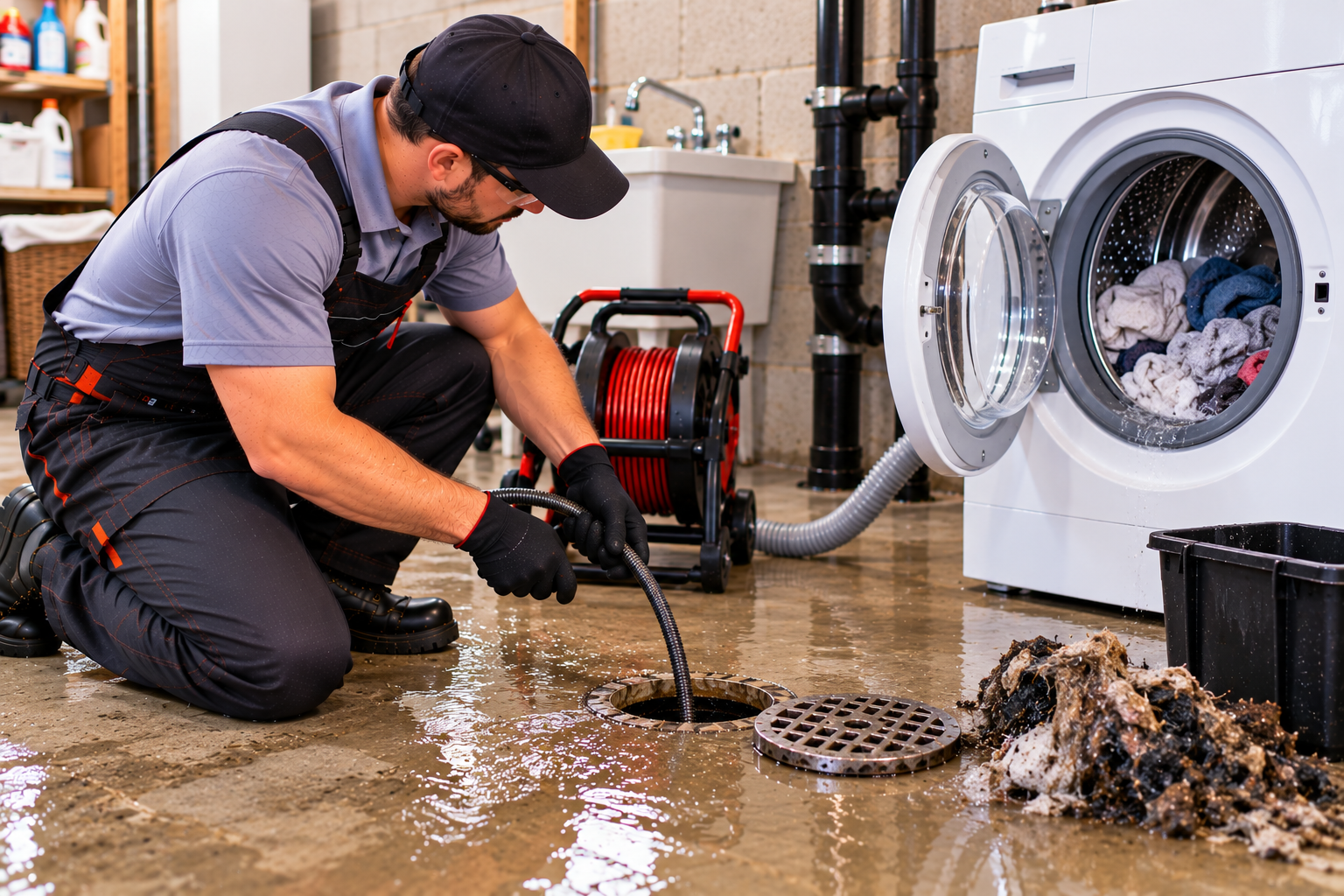
How Do Calgary Plumbers Fix Washing Machine Drain Backups?
Professional diagnosis begins by determining whether the problem is inside the appliance, at the standpipe connection, or farther downstream.
The correct solution depends on the location and nature of the restriction rather than simply forcing water through the drain.
Inspecting the Washing Machine Drain Hose
The discharge hose is an important starting point because incorrect installation or damage can interfere with drainage.
A qualified professional may assess its position, condition, and connection to the standpipe.
The arrangement should comply with the appliance manufacturer’s instructions and applicable plumbing requirements.
Checking the Standpipe and Trap
The standpipe and connected trap can accumulate lint, residue, and other debris.
Inspection helps determine whether a localized restriction is responsible for the overflow.
It can also reveal installation concerns that may affect the standpipe’s ability to receive the appliance discharge.
Cleaning a Blocked Laundry Branch Drain
When the obstruction is inside the laundry branch, professional mechanical drain cleaning may restore normal flow.
The appropriate equipment depends on pipe material, diameter, accessibility, and condition.
Cleaning should address the actual restriction without unnecessarily stressing vulnerable piping.
Evaluating Shared Drainage Connections
If the laundry sink, basement shower, or floor drain also backs up, the plumber may investigate a shared drainage section.
This helps distinguish a localized laundry problem from a restriction affecting several fixtures.
Understanding the pipe connections can prevent unnecessary work on individual drains that are not responsible for the backup.
Using a Sewer Camera When Necessary
A sewer camera may be useful when repeated backups suggest roots, damaged joints, or other structural problems.
The camera can reveal visible conditions inside accessible piping.
However, heavy deposits or standing water may limit visibility, and some cleaning may be necessary before a complete inspection.
Correcting Inadequate Drainage Configuration
Sometimes the drain is not substantially blocked but is improperly configured for the appliance discharge.
A plumber may assess standpipe height, pipe sizing, venting, trap configuration, and other applicable installation requirements.
Any modification should follow current plumbing rules and the washing machine manufacturer’s specifications.
When Is Hydro Jetting Appropriate?
Hydro jetting may be considered for certain deposits in structurally suitable drain or sewer piping.
It is not automatically appropriate for every laundry blockage, especially where pipe deterioration is suspected.
A professional assessment should determine whether mechanical cleaning, pressure cleaning, or repair is the better option.
Repairing Damaged Sewer Pipes
When inspection reveals cracks, displaced joints, or collapsed sections, the underlying pipe defect may require repair.
Repeated cleaning cannot permanently correct a severely damaged sewer line.
The repair method depends on the location, extent of damage, and surrounding property conditions.
What If the Washing Machine Pump Is Faulty?
A machine that fails to empty its drum may have an internal pump or filter problem.
That differs from a drain that overflows while receiving discharged water.
When symptoms indicate an appliance fault, a qualified appliance service technician may be the appropriate professional.
How Much Does Washing Machine Drain Backup Repair Cost?
The cost depends on the cause, accessibility, and required service.
A localized standpipe obstruction may require less work than a main sewer restriction or underground pipe repair.
Inspection, cleaning, and repair costs should be explained in a service-specific estimate rather than assumed from the symptoms alone.
Why Can Drain Backups Return After Cleaning?
Recurring backups may indicate that a restriction was not fully removed or that a structural problem remains.
For example, roots may re-enter through an unrepaired sewer joint, while a poorly configured laundry drain may continue overflowing.
Repeated symptoms justify investigating the underlying cause rather than relying on the same temporary treatment.
Can Professional Cleaning Damage Older Pipes?
Any cleaning method should be selected according to the pipe’s material and condition.
Fragile or deteriorated piping may require a cautious approach, particularly when aggressive equipment is being considered.
Inspection can help identify situations where repair is more appropriate than repeated cleaning.
How Is the Repair Checked?
After the obstruction or installation problem has been addressed, the drainage system may be evaluated to confirm improved flow.
Testing should be conducted under controlled conditions by the professional performing the work.
Where a structural defect was identified, additional inspection may be necessary to verify the repair.
Professional diagnosis matters: Washing machine drain backups may require standpipe cleaning, branch drain clearing, sewer inspection, installation correction, or appliance servicing. The right solution depends on where the problem originates.
For additional company information and updates, homeowners can visit the Calgary Electrical and Plumbing Google business profile reference.
How Can You Prevent Washing Machine Drain Backups in Calgary?
Preventing laundry drain backups requires attention to both the appliance and the household drainage system.
Good maintenance habits can reduce avoidable debris buildup, while recurring problems may require professional inspection or correction of the existing plumbing arrangement.
Use the Appropriate Amount of Laundry Detergent
Follow the washing machine and detergent manufacturer’s instructions for product type and quantity.
Excessive detergent can contribute to foaming and residue, although it is not the sole cause of drainage blockages.
Appropriate detergent use also supports the appliance’s intended operation.
Maintain the Washing Machine According to Its Manual
Some washing machines have accessible filters or maintenance procedures specified by the manufacturer.
These instructions can help reduce certain appliance-related drainage problems.
Do not open service panels or attempt internal electrical repairs without the necessary qualifications.
Keep Lint and Debris Under Control
Laundry wastewater can contain lint and fabric fibres that contribute to drainage deposits.
Where an approved lint-catching arrangement is suitable for the installation, it should be maintained according to the manufacturer’s instructions.
Any added accessory must not obstruct the appliance discharge or conflict with the required drainage configuration.
Do Not Ignore Gurgling or Slow Drains
Repeated gurgling, slow drainage, or occasional standpipe overflow can indicate an underlying restriction.
Investigating these symptoms early may help prevent larger wastewater releases.
When several fixtures are affected, the main sewer or shared drainage branches may require assessment.
Check Laundry Drain Installation When Replacing an Appliance
A replacement washing machine may have different installation requirements from the previous model.
Before assuming the existing standpipe and drain connection are suitable, review the appliance specifications.
A plumber can assess whether the drainage arrangement meets applicable requirements.
Keep Cooking Grease Out of Household Drains
A laundry backup may be caused by an obstruction located downstream of other household fixtures.
Cooking grease entering the kitchen drain can contribute to deposits in shared drainage piping.
Keeping grease and unsuitable waste out of drains helps reduce avoidable sewer restrictions.
Investigate Recurring Main Sewer Blockages
If laundry operation repeatedly causes wastewater to rise through a basement floor drain, the problem may extend beyond the laundry branch.
A professional sewer assessment can help identify roots, debris, or structural defects.
Correcting the underlying cause is more effective than repeatedly treating the same symptom.
Understand the Difference Between Laundry Drainage and Stormwater Systems
Washing machine wastewater should discharge through an appropriate sanitary drainage arrangement.
Stormwater systems generally serve a different purpose, managing runoff from rainfall and other surface water.
Improper cross-connections or drainage modifications should be assessed by qualified professionals.
Protect Finished Basement Laundry Rooms
Basement laundry areas may contain flooring, cabinets, storage, and electrical equipment that can be affected by overflow.
Homeowners should understand where water could travel if the standpipe or another drain backs up.
Appropriate leak detection and drainage planning may help reduce damage, although they do not eliminate sewer blockage risks.
Are Older Calgary Homes More Likely to Experience Laundry Backups?
Established neighbourhoods such as Riverbend, Douglasdale, and Lake Bonavista may include properties with older plumbing installations.
However, the actual condition and configuration of each home’s drainage system matter more than neighbourhood age alone.
Previous renovations and appliance replacements may also affect how the laundry drainage system performs.
Can Newer Homes Experience the Same Problem?
Yes. Homes in Mahogany, Auburn Bay, Seton, and New Brighton can also experience laundry drain restrictions or installation issues.
New construction does not eliminate the possibility of debris accumulation, defective components, or drainage configuration problems.
Symptoms should be investigated based on the individual property.
Should You Schedule Routine Drain Cleaning?
Routine professional cleaning may be appropriate for properties with documented recurring deposits or blockages.
However, unnecessary aggressive cleaning is not automatically beneficial for every home.
A maintenance plan should reflect the condition of the pipes and previous drainage history.
What Should You Do Before Starting Another Laundry Cycle?
If the drain has recently overflowed, do not simply restart the washer to see whether the problem disappears.
Confirm that the cause has been assessed and corrected before resuming normal use.
Repeated operation can introduce additional wastewater into a restricted system and worsen flooding.
Practical Washing Machine Drain Maintenance Checklist
- Use detergent according to appliance and product instructions.
- Follow the washing machine manufacturer’s maintenance recommendations.
- Investigate repeated standpipe overflow or gurgling.
- Keep grease and unsuitable materials out of household drains.
- Confirm drainage compatibility when replacing a washing machine.
- Arrange professional assessment when multiple fixtures are affected.
- Keep records of previous drain cleaning and sewer repairs.
- Stop appliance use if wastewater begins overflowing.
Prevention takeaway: Appropriate appliance maintenance, responsible household drainage habits, and timely investigation of recurring symptoms can reduce washing machine drain backup risks. Structural sewer defects and improper installations require targeted correction.
Homeowners can also follow Calgary Electrical and Plumbing on Instagram for company updates and plumbing-related content.
Request a washing machine drain backup inspection and cleaning estimate in Calgary in just a few clicks.
Get My Free Estimate
Keep Your Calgary Laundry Drainage System Working Properly
Washing machine drain backups often indicate that wastewater cannot move through the connected plumbing at the required rate. Lint deposits, restricted standpipes, shared sewer blockages, improper installations, and damaged pipes can all contribute.
If your laundry drain repeatedly overflows or wastewater appears elsewhere in the home, a local calgary plumber can help identify the cause and recommend appropriate repairs. Call Calgary Electrical and Plumbing at (403) 421-1991 to discuss your washing machine drainage concerns.
Frequently Asked Questions about Washing Machine Drain Backups
Why does my washing machine drain overflow only during the spin cycle?
Many washing machines pump out water during portions of the drain and spin sequence. This concentrated discharge can overwhelm a partially blocked or improperly configured standpipe or branch drain. The timing suggests a drainage capacity problem but does not identify the exact obstruction location.
Can a washing machine cause sewage to back up through a basement floor drain?
Yes. If the washing machine discharges into a restricted shared sewer line, wastewater may rise through a lower basement floor drain. Stop using connected fixtures if sewage appears, avoid contaminated water, and arrange professional assessment of the drainage system.
Does a washing machine drain backup mean the appliance is broken?
Not necessarily. Water overflowing from the standpipe often indicates a plumbing restriction or installation issue, while water remaining inside the drum may involve the appliance’s pump, filter, or discharge hose. A proper assessment helps distinguish appliance faults from household drainage problems.
Can too much laundry detergent cause a drain backup?
Excessive detergent can contribute to foaming and residue that may combine with lint and other deposits inside drainage piping. However, detergent alone is not always responsible. A partially blocked drain, inadequate drainage capacity, or another plumbing defect may also be involved.
When should I call a plumber for a washing machine drain backup in Calgary?
Arrange plumbing assessment when the standpipe repeatedly overflows, nearby fixtures gurgle, or wastewater appears through a basement floor drain. Multiple affected fixtures may indicate a shared sewer restriction. Stop operating the washing machine during active overflow to reduce additional flooding.
Don’t wait for the problem to get worse.
Call (403) 421-1991 Now
Contact Our Calgary Plumbing Team