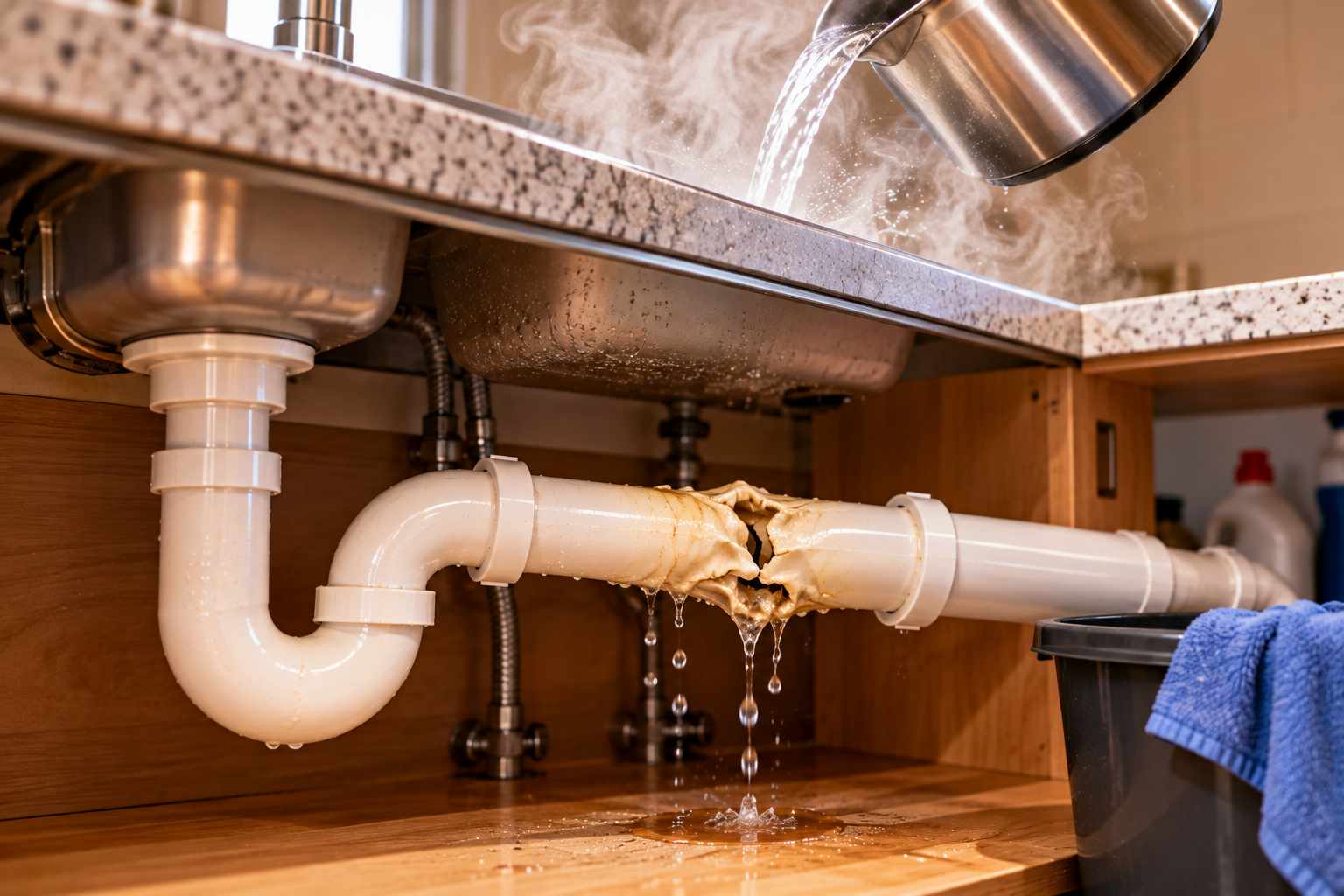

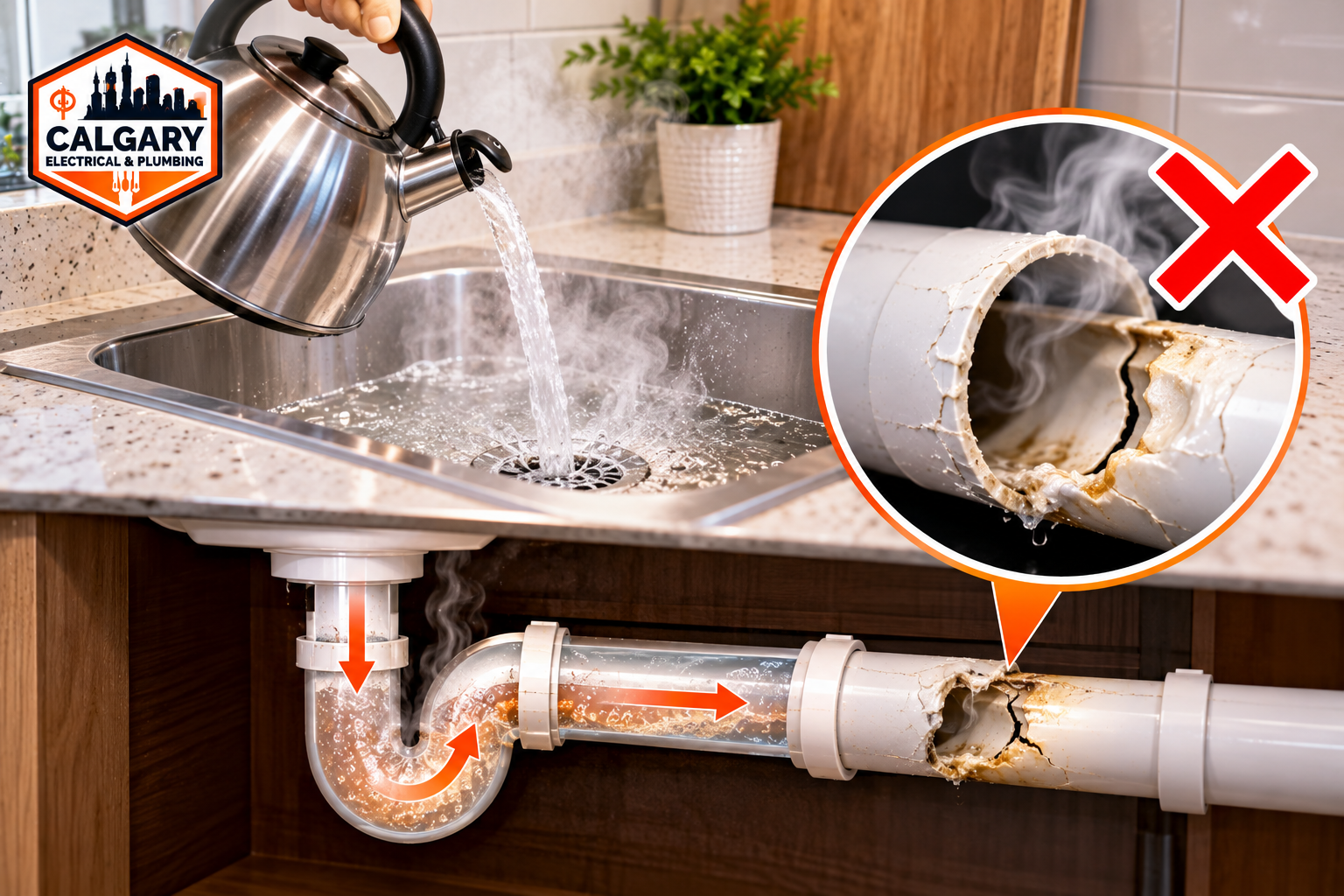
Can Boiling Water Damage Drainpipes? It is a question many Calgary homeowners ask after hearing that pouring a kettle of boiling water down the sink can clear grease or loosen a stubborn clog. The method sounds inexpensive and convenient, but exposing plumbing components to extreme temperatures can create risks.
In Southeast Calgary communities such as Mahogany, Cranston, Auburn Bay, and Copperfield, residential drainage systems may contain plastic pipes, metal components, rubber seals, and different connection types. Understanding when to seek professional drain cleaning and plumbing services in Calgary can help homeowners avoid treating a blockage in a way that could damage vulnerable plumbing.
Boiling water is not automatically destructive to every drainpipe, and the result depends on more than the pipe’s appearance. Temperature, exposure duration, pipe material, joint construction, existing damage, and whether water is trapped behind a blockage all matter. Safer maintenance begins with understanding these differences.
Yes, boiling water can damage some drainpipes, seals, and fittings, particularly when components are not rated for sustained high temperatures. PVC and certain other plastic plumbing materials may be vulnerable. Boiling water is also unreliable for clearing serious clogs and can cause burns or worsen plumbing problems.
Can Boiling Water Damage PVC, ABS, or Metal Drainpipes?
The potential for heat damage depends largely on the plumbing material and the manufacturer’s temperature limitations.
Water boils at approximately 100°C at sea level, with a slightly lower boiling point at Calgary’s elevation. This is substantially hotter than ordinary domestic hot water.
Not all drainpipes, fittings, or seals are designed to tolerate repeated exposure to water at these temperatures.
Can Boiling Water Damage PVC Drainpipes?
Polyvinyl chloride, commonly called PVC, is used in many plumbing applications, including certain drainage systems.
PVC components have temperature limitations that depend on the specific product and application. They should not be assumed suitable for direct exposure to boiling water.
Excessive heat can contribute to softening, deformation, or stress in susceptible components, particularly when exposure is prolonged.
In a Copperfield home, a sink drain containing PVC components may therefore be vulnerable to repeated high-temperature treatment.
The safest approach is to follow the manufacturer’s specifications rather than assuming all white plastic pipes can withstand the same temperatures.
What About ABS Drainpipes?
Acrylonitrile butadiene styrene, or ABS, is another plastic material commonly associated with residential drainage systems.
ABS and PVC have different material properties, but neither should automatically be treated as resistant to unlimited heat.
The permissible temperature depends on the particular product, its intended use, and applicable installation requirements.
Repeated exposure to very hot water may place unnecessary thermal stress on vulnerable fittings and connections.
Are Copper and Cast-Iron Drainpipes Safer With Boiling Water?
Metal pipes generally tolerate higher temperatures than many plastic drainage products.
However, a metal pipe does not mean the entire connected drainage assembly is heat-resistant.
The system may include plastic downstream sections, flexible connectors, gaskets, sealants, or other components with lower temperature limits.
Older metal piping may also have corrosion or weakened joints that deserve attention independently of heat exposure.
Can Boiling Water Damage Drain Seals and Pipe Joints?
Yes. A drainage assembly contains more than straight sections of pipe.
Slip-joint washers, flexible connectors, gasketed fittings, and other sealing components may have their own temperature ratings.
Thermal expansion and contraction can also affect connections, especially if they are already loose or deteriorated.
Consequently, a pipe that appears unaffected by heat does not guarantee that every joint remains secure.
Important distinction: A material’s general resistance to heat is not the same as its approved operating temperature. Product ratings, installation conditions, exposure duration, and the weakest connected component determine what is suitable.
Can a Porcelain Sink Crack From Boiling Water?
Some sinks, particularly those made from materials sensitive to sudden temperature changes, may be vulnerable to thermal shock.
Rapidly exposing a cold surface to very hot water can create uneven expansion.
The risk depends on the sink material, existing condition, temperature difference, and manufacturer’s instructions.
Boiling water should not be poured into a fixture merely because the drainpipe underneath appears metallic.
Does One Accidental Pour of Boiling Water Always Cause Damage?
No. A single accidental exposure does not prove that a pipe or fitting has failed.
Water may cool during contact with the fixture and surrounding plumbing, and actual exposure conditions vary.
However, the absence of immediate leakage does not establish that repeated exposure is safe.
Homeowners should avoid using boiling water as a routine treatment unless the complete assembly is specifically suitable for it.
Key takeaway: Boiling water is more concerning for temperature-sensitive plastic components, seals, and fittings than for many metal pipes. Because household drains contain interconnected materials, it is safer to assess the entire assembly rather than only the visible pipe.
For local plumbing service details, homeowners can review the Calgary Electrical and Plumbing Google Maps listing or watch the company’s plumbing service video.
Does Pouring Boiling Water Down a Drain Actually Clear Clogs?
Boiling water is often recommended online as a quick solution for slow sinks.
Although heat may temporarily soften some greasy deposits, that does not make it a reliable or universally safe drain-cleaning method.
The obstruction’s composition and location determine if heat has any meaningful effect.
Can Boiling Water Dissolve Grease in Kitchen Drains?
Heat can soften certain fats and greasy residues, but it does not necessarily remove them from the drainage system.
Grease may move farther into the pipe and cool again, contributing to deposits downstream.
If the restriction involves food particles or other trapped material, hot water alone may not restore normal flow.
For a Mahogany homeowner dealing with recurring kitchen sink problems, identifying the cause is more useful than repeatedly applying extreme heat.
Will Boiling Water Remove Hair and Soap Buildup?
Hair does not simply dissolve when exposed to boiling water.
Soap residue may soften under some conditions, but hair tangled around a drain fitting often requires physical removal.
Repeatedly pouring boiling water into a slow bathroom drain may therefore add heat exposure without resolving the obstruction.
Can Boiling Water Clear a Completely Blocked Drain?
A complete blockage prevents wastewater from moving through the affected section of pipe.
Pouring boiling water into the fixture may cause extremely hot water to collect above the obstruction.
This increases the risk of splashing, burns, and prolonged heat exposure to susceptible plumbing components.
Safety warning: Never pour boiling water into a drain that is completely blocked or already holding standing water. Avoid adding hot water to drains containing chemical cleaning products. Dangerous splashing or chemical reactions may occur.
Can Hot Water Push a Clog Deeper Into the Plumbing?
Heat may loosen certain deposits without removing the material from the system.
Dislodged grease and debris can travel downstream and potentially accumulate where flow slows again.
This does not happen with every obstruction, but it explains why a temporary improvement may not mean the underlying problem has been resolved.
Why Does My Sink Drain Slowly Again After Hot Water Treatment?
A recurring slow drain often indicates that the restriction was not fully removed.
Deposits may remain along the pipe walls, or the obstruction may involve material that does not respond to heat.
Problems farther downstream can also affect several connected fixtures.
If the sink begins gurgling, read Why Does My Drain Gurgle? to understand how restricted drainage and air-pressure problems can produce unusual sounds.
Is Warm Tap Water Different From Boiling Water?
Yes. Ordinary domestic hot water is typically supplied at a temperature well below boiling, although it can still cause scalds.
Drainage products are generally selected for expected plumbing service conditions, not unlimited exposure to kettle-temperature water.
Using water within the fixture and plumbing manufacturer’s instructions is preferable to assuming hotter water will produce better cleaning results.
Warm Water
May assist ordinary cleaning when used within the temperature limits of the fixture and drainage assembly.
Boiling Water
Creates greater thermal exposure and burn risks without reliably removing hair, solid debris, or deep blockages.
Can Boiling Water Fix a Main Sewer Line Blockage?
No. A kettle of boiling water is not a practical solution for a significant main sewer restriction.
Root intrusion, accumulated debris, displaced joints, and damaged underground pipes require appropriate investigation and treatment.
If multiple drains are affected or wastewater is backing up, stop using the connected plumbing rather than attempting repeated household remedies.
Practical takeaway: Boiling water may temporarily affect certain deposits, but it cannot reliably clear hair, solid obstructions, tree roots, or damaged sewer lines. Its potential benefits do not justify exposing unsuitable plumbing components to extreme heat.
Homeowners researching local plumbing options can also consult this Calgary Electrical and Plumbing location reference.
Request a drainpipe inspection and drain cleaning estimate in Calgary in just a few clicks.
Get My Free Estimate
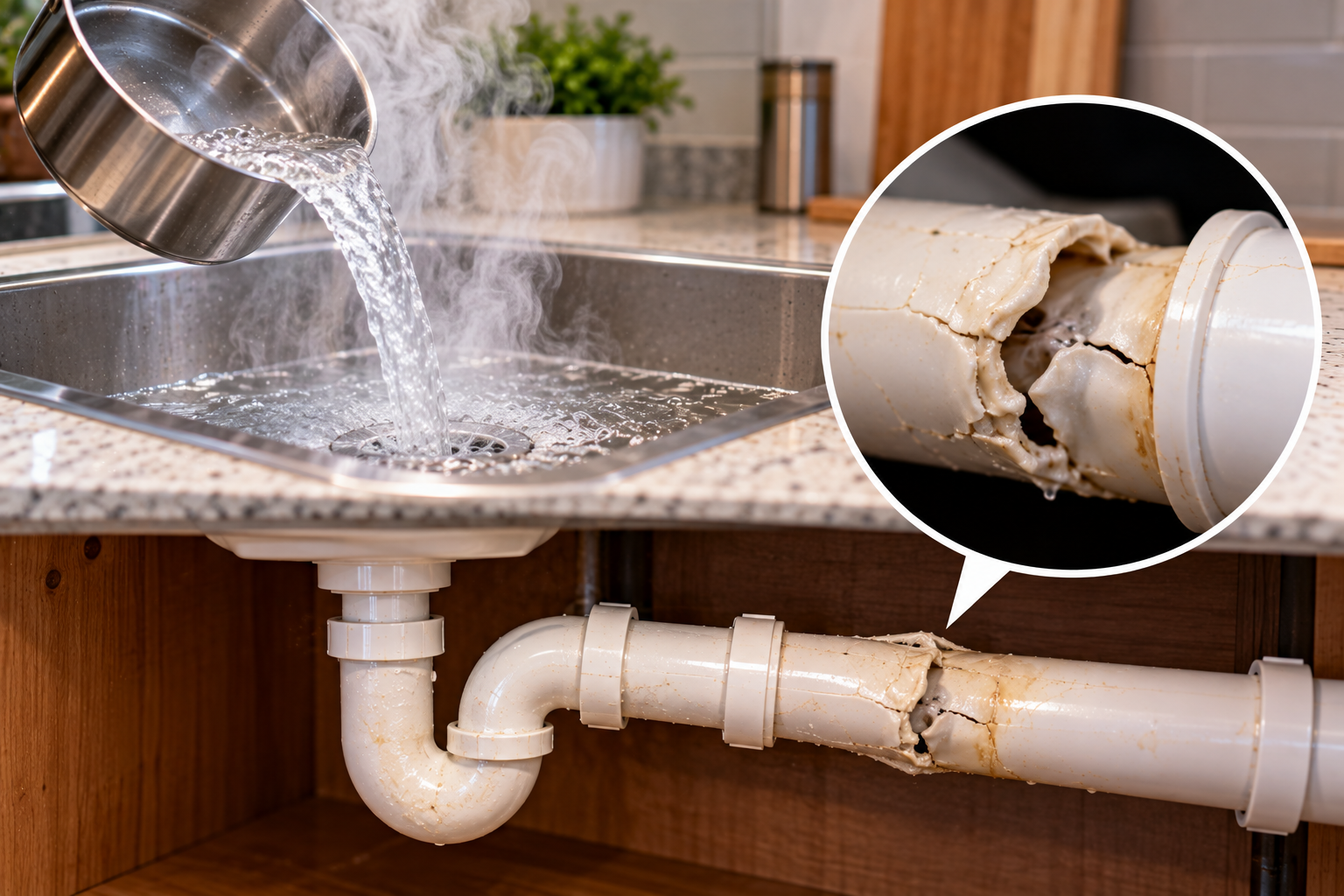
How Do Calgary Plumbers Identify and Repair Heat-Damaged Drains?
Suspected heat damage should be evaluated based on actual plumbing conditions rather than appearance alone.
A plumber may inspect accessible pipes, joints, seals, and surrounding surfaces for signs of leakage or deformation.
The repair depends on the affected material, the location of the problem, and the condition of connected components.
What Are the Warning Signs of Heat-Damaged Drainpipes?
Possible warning signs include new leaks, unusual movement at connections, visible distortion, and moisture beneath a sink.
Some symptoms may become noticeable only after the plumbing is used again.
However, these conditions can also result from loose fittings, corrosion, aging materials, or mechanical damage.
A visual symptom does not prove boiling water caused the defect.
Can a Plastic P-Trap Become Deformed by Excessive Heat?
A plastic P-trap may be vulnerable if exposed to temperatures beyond its product rating.
Depending on the material and conditions, excessive heat can contribute to softening or deformation.
If a trap becomes distorted or its connections no longer seal correctly, replacement may be necessary.
Any replacement should use components suitable for the fixture and applicable plumbing requirements.
How Does a Plumber Check for Leaking Drain Connections?
An assessment may begin with the visible drain assembly beneath the fixture.
The plumber can examine slip-joint connections, washers, fittings, and signs of previous leakage.
Where appropriate, controlled testing can help identify the source of moisture.
Testing should account for the possibility of concealed leaks and avoid creating additional water damage.
When Is Drainpipe Replacement Necessary?
Replacement may be appropriate when a pipe is cracked, deformed, structurally weakened, or no longer capable of forming a suitable connection.
A loose washer or minor fitting defect may require a smaller repair.
The plumber should determine if the problem is isolated or affects additional sections of the drainage assembly.
Can a Sewer Camera Detect Heat Damage?
A sewer camera can help inspect accessible sections of drainage piping for visible defects.
However, it is not always the best tool for evaluating a short sink trap or exposed connection.
Camera inspection is more useful when symptoms suggest deeper restrictions, damaged underground pipes, or recurring drainage problems.
What If Boiling Water Was Poured Into a Drain Containing Chemicals?
Stop using the drain and avoid adding any more products or water.
Chemical drain cleaners may create hazardous splashes, fumes, or reactions when combined with other substances or heat.
Keep people away from the affected area and follow the product’s emergency safety instructions.
Tell the plumber exactly which products were used before any work begins.
Do not mix treatments: Never combine boiling water with chemical drain cleaners, bleach, acids, or other cleaning products. If exposure causes symptoms or dangerous fumes, leave the area and contact appropriate emergency or poison-control services.
How Much Does Drainpipe Inspection or Repair Cost in Calgary?
Repair costs depend on the location, accessibility, materials, and extent of damage.
| Service | Illustrative CAD Range | Possible Scope |
|---|---|---|
| Drainpipe assessment | $100–$300+ | Inspecting accessible piping and identifying symptoms |
| Minor drain fitting or seal repair | $100–$250+ | Correcting suitable accessible connection defects |
| Sink P-trap replacement | $150–$350+ | Replacing a damaged accessible trap assembly |
| Mechanical drain cleaning | $150–$400+ | Clearing suitable drainage obstructions |
| Concealed drainpipe repair | Scope-dependent | Repairing inaccessible or damaged piping |
Pricing disclaimer: These figures are illustrative planning ranges, not verified Calgary market averages or published Calgary Electrical and Plumbing rates. Actual prices depend on the diagnosis, materials, access, and required work. Taxes, emergency service, opening finished surfaces, and additional repairs may increase the total.
Should You Repair a Small Leak Yourself?
Minor accessible plumbing components may appear straightforward, but a leak can indicate a damaged seal, incorrect fitting, or compromised pipe.
Temporary tape or sealant may conceal symptoms without correcting the underlying defect.
If water is reaching cabinets, walls, floors, or electrical equipment, professional assessment is particularly important.
Can a Drain Be Damaged Without an Immediate Leak?
Yes. Some forms of material stress or deterioration may not produce visible leakage immediately.
However, it is not possible to conclude that hidden damage occurred solely because boiling water was used.
Repeated exposure, existing defects, and manufacturer ratings should inform whether further inspection is justified.
Repair takeaway: A plumber can assess suspected heat damage by examining the relevant pipe materials, joints, and seals. The appropriate solution may involve replacing a defective fitting, repairing a leak, or clearing an unrelated obstruction.
Additional business details are available through the shared Google listing for Calgary Electrical and Plumbing. For visual plumbing-related updates, visitors can also explore the company’s Pinterest profile.
What Are Safer Ways to Maintain and Unclog Household Drains?
Effective drain maintenance focuses on preventing debris accumulation and selecting cleaning methods appropriate for the plumbing system.
Extreme heat is not necessary for most routine household drain care.
The safest approach depends on the fixture, the suspected obstruction, and the condition of the connected pipes.
Use Sink Strainers to Reduce Food Debris
Kitchen sink strainers help catch food particles before they enter the drainage system.
Dispose of collected debris in the appropriate waste stream instead of washing it down the sink.
This simple habit can reduce the material available to accumulate inside kitchen drainpipes.
Keep Cooking Grease Out of Household Drains
Cooking oils and grease can cool and accumulate inside drainage piping.
Allow grease to cool and dispose of it appropriately rather than pouring it into the sink.
Adding boiling water afterward does not guarantee that grease will be carried completely out of the plumbing system.
Remove Hair From Bathroom Drain Covers
Hair and soap residue are common contributors to shower and bathtub restrictions.
Use a suitable hair catcher and remove visible debris regularly.
Follow manufacturer guidance when cleaning drain covers and stoppers to avoid damaging finishes or components.
Can a Plunger Be Safer Than Boiling Water?
A suitable plunger can sometimes help address a localized obstruction without exposing pipes to extreme heat.
However, plunging is not appropriate for every situation, particularly when chemical drain cleaners have been used or wastewater is backing up from a shared sewer problem.
Stop if the fixture or plumbing appears damaged.
When Is Professional Drain Cleaning the Better Choice?
Professional service becomes more appropriate when a clog repeatedly returns, several fixtures are affected, or a drain remains blocked despite ordinary maintenance.
A plumber can identify the likely obstruction location and select equipment suitable for the pipe material.
In New Brighton or McKenzie Towne, recurring kitchen sink problems may warrant investigating the branch drain rather than repeatedly applying home remedies.
Do Newer Calgary Homes Need Drain Maintenance?
Yes. Newer plumbing systems can still develop restrictions from grease, hair, food debris, and inappropriate materials.
Homes in Seton, Mahogany, and other developing communities are not automatically protected from clogged drains.
Routine prevention is useful regardless of the age of the property.
What Should You Do After Accidentally Pouring Boiling Water Down a Drain?
Do not assume damage has occurred, but avoid repeating the exposure until the plumbing materials and temperature limitations are known.
Check for visible moisture around accessible connections without dismantling hot components.
If leakage, deformation, or unusual drainage symptoms develop, arrange an assessment.
Does Calgary’s Climate Change the Risk of Heat Damage?
Calgary’s cold winters can influence the temperature of exposed plumbing and surrounding building materials.
However, the main concern with boiling water remains the actual temperature exposure and the ratings of the plumbing components.
Cold weather does not make an unsuitable pipe material safe for boiling-water treatment.
Where Can Homeowners Find Local Community Information?
Plumbing maintenance advice should come from qualified professionals and appropriate manufacturer guidance.
Residents looking for broader Airdrie community information can visit the Airdrie Scots community website, which is separate from plumbing service guidance.
For plumbing concerns in Calgary or Airdrie, the property’s specific pipe materials and symptoms remain the most important factors.
Final recommendation: Avoid using boiling water as a routine drain-clearing method when the plumbing materials and temperature ratings are unknown. Prevent buildup with strainers and appropriate disposal habits, and arrange professional assistance for recurring clogs, leaks, or suspected pipe damage.
Request a drainpipe inspection and drain cleaning estimate in Calgary in just a few clicks.
Get My Free Estimate
Protect Your Drainpipes With the Right Cleaning Approach
Boiling water may temporarily soften certain deposits, but it can expose vulnerable pipes, seals, fittings, and fixtures to temperatures beyond their intended limits. A safer approach begins with understanding the plumbing materials and identifying the actual cause of a blockage.
If you suspect drainpipe damage or have a recurring clog, a local calgary plumber can assess the system and recommend appropriate repairs or cleaning. Call Calgary Electrical and Plumbing at (403) 421-1991 to discuss your drainage concerns.
Frequently Asked Questions about Boiling Water and Drainpipes
Can pouring boiling water down a PVC drain damage the pipe?
Yes. PVC plumbing components have temperature limitations, and boiling water may exceed the rating of some products. The risk depends on the pipe, fittings, exposure duration, and existing condition. Avoid using boiling water unless the complete drainage assembly is specifically suitable for it.
Is boiling water safe for metal drainpipes?
Metal pipes generally tolerate higher temperatures than many plastic products, but connected seals, fittings, and downstream pipes may have lower temperature limits. A metal section beneath the sink does not prove the entire drainage system is suitable for boiling-water treatment.
Will boiling water clear grease from a kitchen sink drain?
Heat may soften some greasy deposits, but it does not reliably remove them from the drainage system. Grease can cool and accumulate farther downstream. If the sink repeatedly drains slowly, identifying and clearing the actual obstruction is more effective than repeated boiling-water treatments.
How do I know if boiling water damaged my drainpipes?
Possible warning signs include new leaks, visible deformation, loose connections, or moisture beneath the sink. However, these symptoms can have other causes. A plumber can inspect accessible components and determine if a repair is necessary rather than assuming heat caused the problem.
What should I use instead of boiling water to unclog a drain?
Start with prevention and methods appropriate for the fixture, such as removing visible debris or using a suitable plunger when no chemical cleaners are present. Persistent, recurring, or shared drainage blockages should be assessed professionally. Avoid adding boiling water to a completely blocked drain.
Don’t wait for the problem to get worse.
Call (403) 421-1991 Now
Local Help Available 24/7 in Calgary