
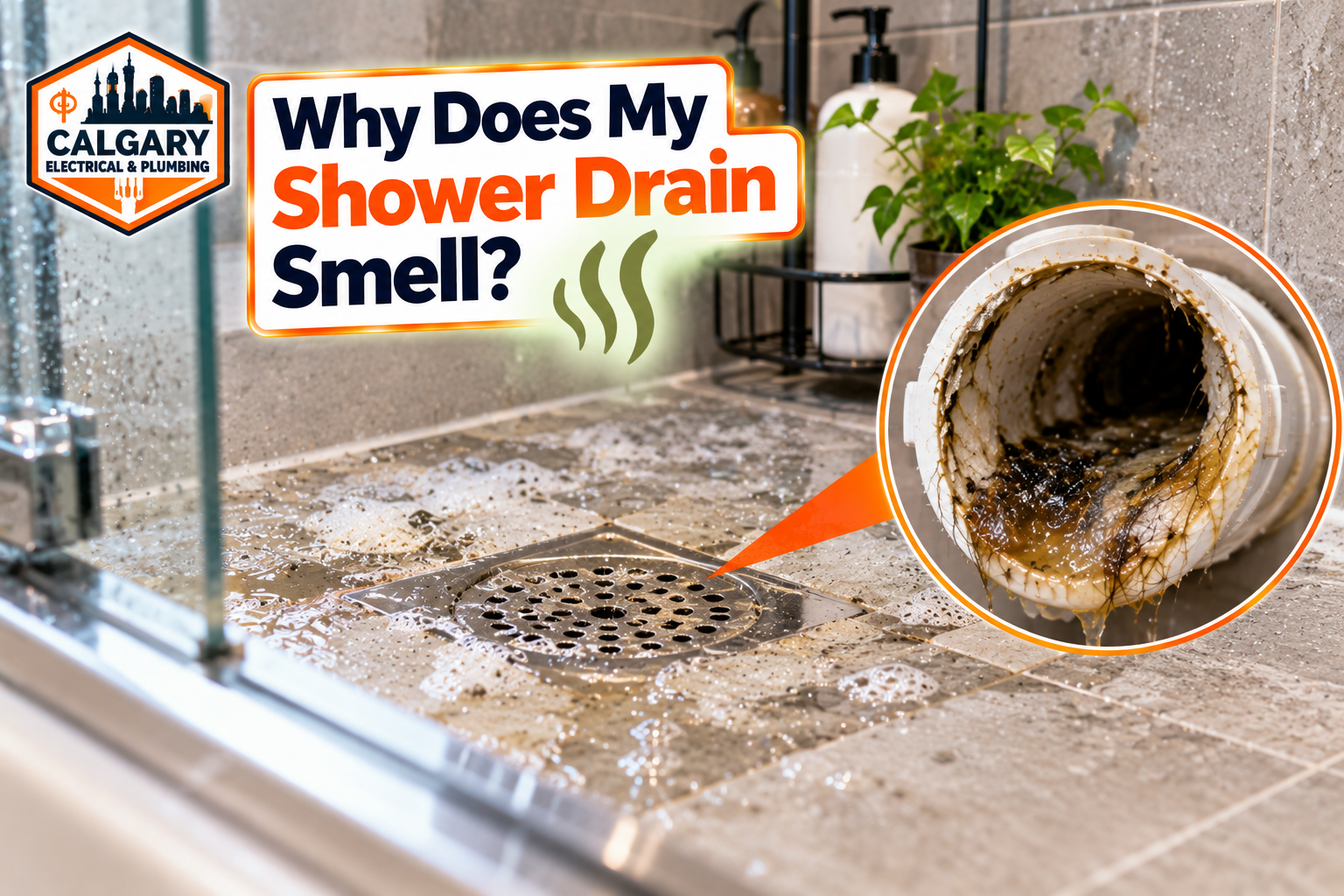
Why Does My Shower Drain Smell? You step into the bathroom expecting a clean, comfortable space, but an unpleasant odour rises from the shower drain. Sometimes the smell resembles sewage, while other times it is musty or similar to rotting organic material. Identifying the type and source of the odour is the first step toward resolving it.
Homeowners in Southeast Calgary communities such as Mahogany, Auburn Bay, Cranston, and Copperfield may notice shower drain smells after a bathroom has remained unused, following a period of slow drainage, or when several plumbing fixtures are operating. Understanding when to seek professional plumbing and drain cleaning services in Calgary can help distinguish routine buildup from a problem requiring further investigation.
Although hair and soap deposits are common contributors, persistent shower odours can also involve an evaporated P-trap water seal, venting problems, concealed moisture, or restrictions deeper inside the drainage system. The correct solution depends on determining where the smell originates rather than simply masking it with fragrance.
A shower drain may smell because hair, soap residue, and bacteria accumulate inside the drain, or because a dry P-trap allows sewer gases into the bathroom. Other possibilities include venting problems, hidden moisture, or deeper drainage defects. Persistent odours require identifying the underlying cause.
What Causes a Shower Drain to Smell Bad?
A shower drain carries wastewater containing soap, shampoo, body oils, hair, and other organic material. Some of these substances can collect around the drain cover and inside the connected pipe.
As deposits accumulate, bacteria can break down organic material and produce unpleasant odours. In other situations, the smell comes from a plumbing component that is no longer preventing sewer gases from entering the room.
Understanding these differences helps determine if routine cleaning is sufficient or if the drainage system requires inspection.
How Do Hair, Soap Residue, and Bacteria Create Shower Drain Odours?
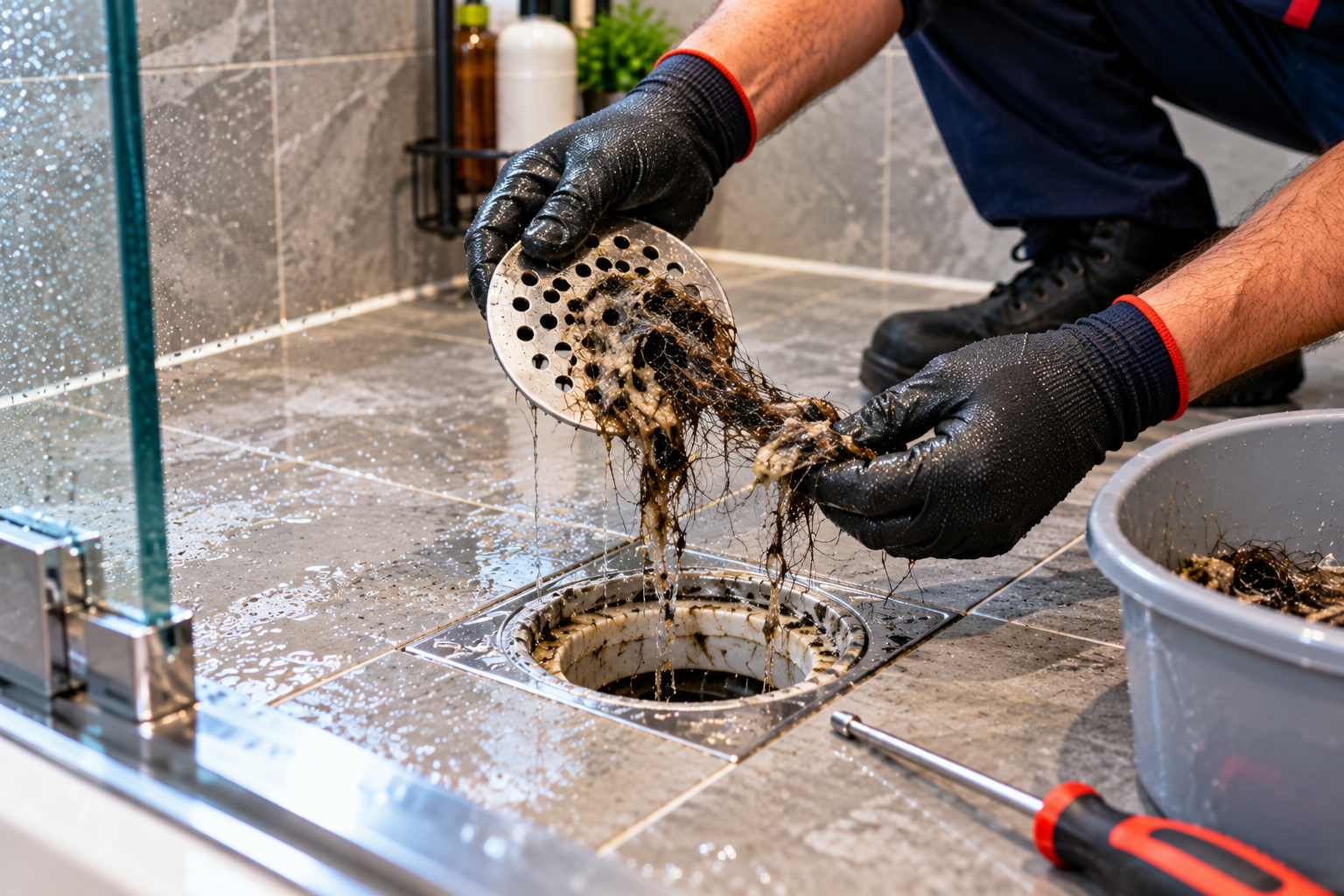
Hair frequently becomes trapped beneath shower drain covers or inside nearby drainage fittings. Soap residue, skin oils, and other organic materials can adhere to the collected strands.
Over time, the buildup creates conditions in which microorganisms can break down organic matter and generate unpleasant smells.
In a busy Cranston household where several family members share one shower, accumulated hair and product residue may contribute to both odours and gradually slowing drainage.
The smell may become more noticeable after warm water runs because moisture and airflow can carry odours into the bathroom.
Can a Dry P-Trap Make a Shower Drain Smell Like Sewage?
Yes. A P-trap is a curved plumbing fitting designed to retain a small amount of water. This water forms a barrier that helps prevent sewer gases from travelling into the home.
If a shower remains unused for an extended period, water in the trap can gradually evaporate.
Once the water seal is lost, gases from the connected drainage system may enter through the shower drain.
This can occur in a guest bathroom, basement shower, or secondary bathroom that receives little use.
Useful distinction: A dry trap may be restored by running water into the unused shower. If a strong sewage odour continues or quickly returns, the issue may involve trap leakage, siphoning, venting, or another drainage defect.
Can Shampoo and Body Wash Cause Drain Odours?
Shampoo, conditioner, body wash, and other personal-care products can contribute to residue inside the drain.
These substances may combine with hair, skin oils, and other debris to form deposits that retain organic material.
Although using ordinary shower products does not automatically cause a plumbing problem, repeated accumulation can contribute to odours and restrictions.
Why Does My Shower Smell Like Rotten Eggs?
A rotten-egg smell can be associated with hydrogen sulfide, a gas that may be present in sewer gas mixtures or produced by certain microbial processes.
However, an odour alone cannot confirm the source or concentration of a gas.
If the smell appears only when hot water runs, the water supply or water heater may also warrant investigation.
Persistent or strong odours should not be dismissed as an ordinary dirty drain.
Can Mould or Hidden Moisture Make a Shower Smell Musty?
A musty bathroom smell may originate outside the drain itself.
Moisture trapped beneath damaged sealant, behind wall finishes, or around poorly sealed shower components can support microbial growth.
In a Mahogany or Auburn Bay home, a persistent musty odour accompanied by staining, loose tiles, or damp surfaces may indicate a moisture problem requiring further inspection.
Cleaning the drain will not resolve a leak concealed behind the shower enclosure.
Why Does the Smell Get Worse After Showering?
Warm water can disturb deposits inside the drain and increase the release of existing odours.
Water flowing through a partially restricted pipe may also move air through the drainage system, making smells more noticeable.
If the odour appears primarily during shower use, note if the water drains normally or begins pooling around the drain.
Key takeaway: Shower drain smells can result from organic buildup, a missing trap water seal, moisture problems, or drainage defects. The type of odour and when it appears provide useful clues, but they do not establish a diagnosis by themselves.
Homeowners researching local assistance can review the Calgary Electrical and Plumbing Google Maps listing and watch a video introducing the company’s plumbing services for additional background.
How Can You Identify the Source of a Smelly Shower Drain?
Identifying the source of a shower drain odour requires considering more than the smell itself.
The location, frequency, drainage behaviour, and condition of nearby fixtures can help narrow down the likely cause.
A plumber may also need to inspect accessible plumbing components or investigate concealed drainage connections.
What Are the Warning Signs of Sewer Gas in a Bathroom?
A sewage-like odour near a drain can suggest that gases from the drainage system are entering the room.
Possible contributing conditions include an evaporated trap seal, a leaking connection, improper trap installation, or venting problems.
Additional clues may include repeated gurgling, unexplained trap water loss, or similar smells near other fixtures.
Safety warning: If a strong unexplained gas-like odour is present, leave the affected area and seek appropriate assistance. A rotten-egg smell can also be associated with fuel gas, so do not assume every such odour comes from the sewer. Follow local gas-emergency guidance when a fuel-gas leak is possible.
Does the Smell Come From the Drain or the Shower Surround?
Try to determine where the odour is strongest without disturbing concealed plumbing or exposing yourself to a strong unexplained gas smell.
An odour concentrated at the drain opening may indicate deposits or a trap-related issue.
A musty smell strongest near grout, wall joints, or damaged sealant may point toward persistent moisture.
Water stains, loose finishes, or damp flooring are reasons to investigate possible leakage.
Why Does My Shower Drain Smell and Gurgle?
Gurgling can occur when air moves through wastewater in a partially restricted drainage line.
It may also indicate a venting problem or pressure changes affecting connected fixtures.
For example, a homeowner in Copperfield may notice a gurgling shower drain when the nearby bathroom sink empties.
That symptom can help identify a shared drainage issue, although it does not prove that the shower trap is defective.
What If the Shower and Bathroom Sink Both Smell?
When several fixtures produce unpleasant odours, the cause may extend beyond one drain opening.
Shared drainage restrictions, venting issues, or multiple dry traps may be involved.
Slow drainage in a nearby sink can provide another useful clue.
For related information, read Why Is My Bathroom Sink Draining Slowly? to understand how bathroom fixture blockages develop and when they may indicate deeper plumbing concerns.
Can a Shower Drain Smell Even When Water Drains Normally?
Yes. Drainage speed and odour are separate symptoms.
A shower may drain at a normal rate while organic deposits remain near the drain cover.
A dry trap or damaged connection can also permit odours without causing an obvious blockage.
Normal drainage does not rule out every plumbing problem.
What Does a Plumber Check During an Odour Investigation?
A professional assessment may include the shower drain cover, accessible drain components, trap condition, visible seals, and the behaviour of nearby fixtures.
Depending on the symptoms, further investigation may involve checking drainage connections or venting conditions.
Specialized testing or camera inspection may be considered when the cause remains unclear and suitable access is available.
Diagnostic takeaway: An odour accompanied by hair buildup may be localized, while persistent sewage smells, gurgling, repeated trap water loss, or several affected fixtures can justify a broader plumbing assessment.
Another Calgary Electrical and Plumbing location reference is available for homeowners looking for local business information.
Request a shower drain cleaning estimate in Calgary in just a few clicks.
Get My Free Estimate
How Do Calgary Plumbers Fix a Smelly Shower Drain?
The appropriate solution depends on the source of the smell.
A drain affected by hair and organic buildup may require cleaning, while a dry trap, damaged connection, or venting problem calls for a different approach.
Professional diagnosis helps avoid repeatedly treating symptoms without correcting the cause.
Which Professional Shower Drain Cleaning Methods Are Used?
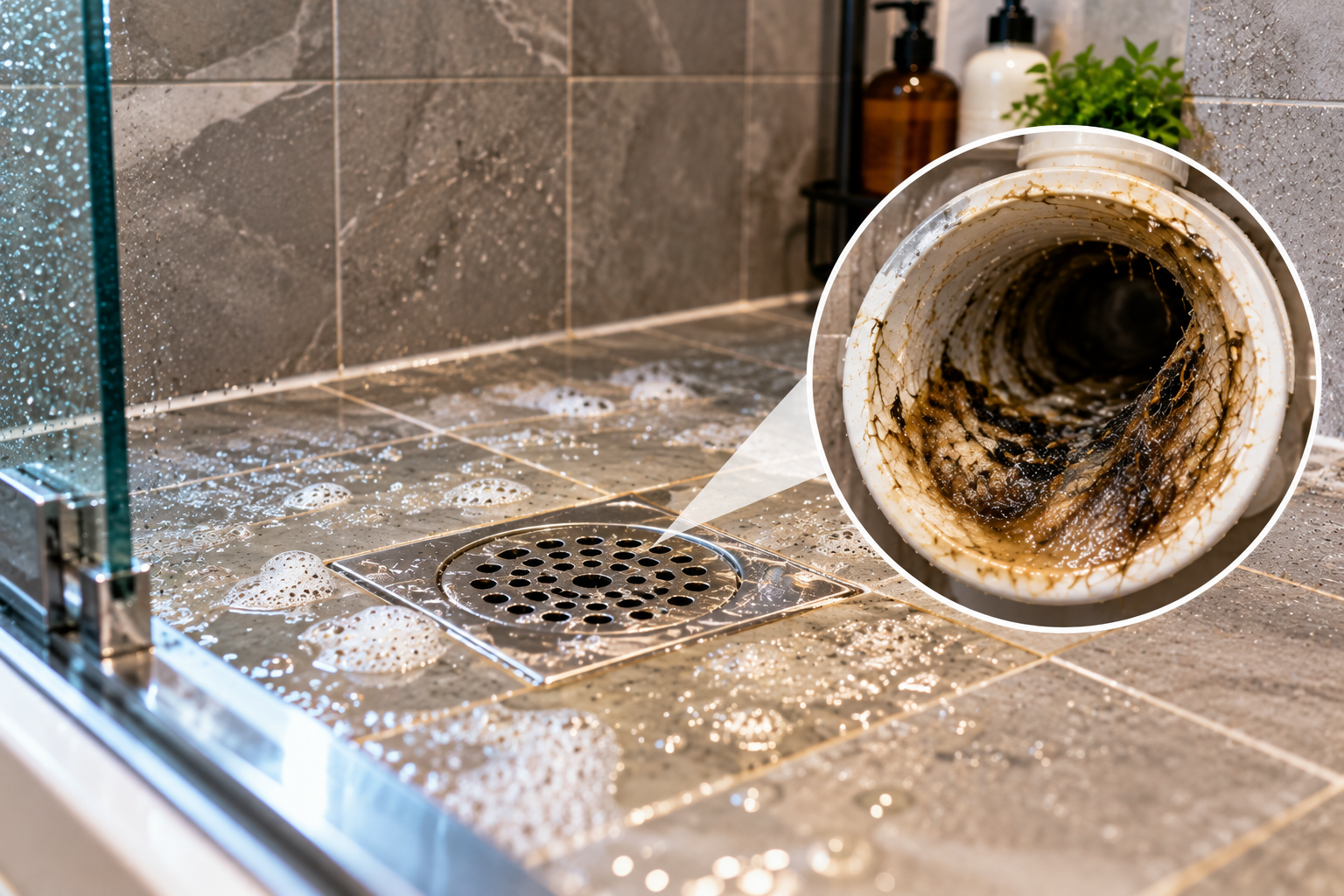
When the smell originates from debris, a plumber may remove accumulated hair and residue near the drain opening.
Deeper restrictions may require suitable mechanical drain cleaning equipment.
The method should be selected according to pipe diameter, material, condition, and accessibility.
Localized Drain Cleaning
May address accessible hair, soap deposits, and organic debris around the drain cover or nearby fittings.
Mechanical Drain Cleaning
May be appropriate when a restriction is located farther along the connected drainpipe and cannot be reached through basic cleaning.
How Is a Dry Shower Trap Corrected?
If an unused shower has lost its trap water seal through evaporation, running water may restore the barrier.
However, if the trap repeatedly loses water despite regular use, further investigation may be necessary.
A leaking trap, siphoning, or improper venting can require professional correction rather than repeated refilling.
Can Professional Cleaning Remove Bacteria-Related Drain Odours?
Removing accumulated organic material can reduce the conditions contributing to certain drain odours.
A plumber may recommend an appropriate cleaning method based on the condition of the drain.
However, cleaning cannot guarantee that all future bacterial buildup will be prevented.
Regular maintenance and reducing the amount of hair entering the drain remain important.
Are Chemical Drain Cleaners Suitable for a Smelly Shower?
Chemical drain cleaners may not resolve a smell caused by a dry trap, leaking connection, or venting defect.
Some products also present risks to users and can complicate later plumbing work.
Never mix drain cleaners with bleach, acids, ammonia-containing products, or other household chemicals.
If chemicals have already been poured into the drain, inform the plumber before service begins.
When Is a Sewer Camera Inspection Useful?
A camera inspection may be considered if odours accompany recurring blockages or if damaged drainage piping is suspected.
Camera access depends on the pipe configuration and available entry points.
Not every shower drain can accommodate a camera directly, and a camera may not identify all sources of odour.
How Much Does Shower Drain Cleaning Cost in Calgary?
Service costs vary according to the cause, access requirements, equipment, and any necessary repairs.
| Service | Illustrative CAD Range | Typical Application |
|---|---|---|
| Basic shower drain cleaning | $100–$250+ | Accessible hair and organic buildup |
| Mechanical shower drain cleaning | $150–$400+ | Suitable deeper drainage restrictions |
| Drain odour diagnosis | $100–$300+ | Investigating persistent or unexplained smells |
| Specialized drain camera inspection | $200–$500+ | Examining accessible piping when warranted |
Pricing disclaimer: These are illustrative budgeting ranges, not verified Calgary market averages or published Calgary Electrical and Plumbing prices. Actual estimates may differ considerably. Taxes, emergency attendance, access work, testing, and repairs may increase the total.
Why Can Shower Drain Odour Repairs Cost More Than Cleaning?
A simple buildup problem may be addressed through localized cleaning.
However, damaged trap connections, inaccessible drainage piping, or concealed moisture problems can require additional labour and materials.
Repairs involving waterproofing or finished surfaces may require a broader scope than drain cleaning alone.
Can a Plumber Permanently Eliminate Shower Drain Smells?
Correcting an identified defect can resolve the associated odour, but no service can guarantee that future smells will never develop.
Organic buildup may return if hair and residue continue accumulating.
Similarly, an infrequently used shower can lose its trap water seal again through evaporation.
Long-term improvement depends on both appropriate repairs and suitable maintenance.
Professional service takeaway: Drain cleaning is appropriate for many debris-related odours, but sewage smells caused by failed trap seals, venting issues, or damaged piping require diagnosis and correction of the underlying plumbing condition.
For company information and additional plumbing-related discussions, explore the Calgary Electrical and Plumbing Quora profile and its shared Google business reference.
How Can You Prevent Shower Drain Smells From Returning?
Preventing recurring shower drain odours begins with reducing organic buildup and keeping drainage components functioning properly.
Regular maintenance can help address common causes, but persistent sewage-like smells or concealed moisture problems may require professional attention.
Use a Suitable Shower Drain Hair Catcher
A properly fitted hair catcher can reduce the amount of hair entering the drain.
Remove collected hair regularly and dispose of it in the appropriate waste container.
Keeping hair out of the drain helps limit the material available to combine with soap residue and body oils.
Keep the Drain Cover and Surrounding Area Clean
Soap deposits and organic residue can collect around the drain cover, especially where water regularly remains after showering.
Follow the fixture manufacturer’s cleaning guidance and use products appropriate for the drain cover and shower materials.
Do not force tools into the drain or damage seals while attempting to remove debris.
Run Water in Infrequently Used Showers
A shower that remains unused for long periods can lose water from its trap through evaporation.
Periodically running water helps maintain the trap seal.
For example, a basement guest shower in a Seton home may benefit from occasional use if it otherwise remains dry for extended periods.
If the trap repeatedly dries out despite regular use, ask a plumber to investigate.
Address Slow Shower Drainage Early
Hair and soap buildup may produce both odours and reduced drainage.
If water begins collecting around your feet during a shower, the drain may be developing a restriction.
Investigating slow drainage before a complete blockage develops can reduce disruption and help identify the cause sooner.
Improve Bathroom Ventilation and Moisture Control
Not every bathroom smell originates inside the drainpipe.
Moisture remaining on walls, floors, grout, and shower seals can contribute to musty conditions.
Use suitable bathroom ventilation and address damaged sealant or suspected leaks rather than relying on air fresheners.
Persistent dampness or visible material deterioration may require further assessment.
Understand the Difference Between Shower Drainage and Other Bathroom Plumbing
A shower is a fixture that delivers water for bathing and directs wastewater into a sanitary drainage system.
For general background on shower fixture configurations, see the overview of shower designs and components.
In homes with shared bathroom drainage branches, problems affecting one fixture may sometimes influence the behaviour of another.
When Should Calgary Homeowners Arrange Professional Help?
Consider a plumbing assessment when sewage-like odours persist, the shower repeatedly gurgles, drainage slows, or other fixtures develop similar symptoms.
Homeowners in McKenzie Towne, New Brighton, Riverbend, Douglasdale, and Lake Bonavista should also investigate unexplained dampness near shower enclosures.
Describing the smell, when it appears, and any related drainage problems can help the plumber determine the appropriate next steps.
Final recommendation: Keep hair and organic debris out of the shower drain, maintain water in infrequently used traps, and address moisture problems early. Persistent sewage-like odours should be investigated rather than repeatedly covered with cleaning products or fragrance.
Request a shower drain cleaning estimate in Calgary in just a few clicks.
Get My Free Estimate
Restore a Fresh, Properly Draining Shower
A smelly shower drain may involve organic deposits, a dry P-trap, moisture problems, or a deeper drainage defect. Identifying the source is essential because cleaning alone cannot correct every cause of unpleasant bathroom odours.
If the smell continues, a local calgary plumber can assess the affected plumbing and explain appropriate solutions. Call Calgary Electrical and Plumbing at (403) 421-1991 to discuss your shower drainage concerns.
Frequently Asked Questions about Shower Drain Smells
Why does my shower drain smell like sewage?
A sewage-like smell may occur when the shower trap loses its water seal or when a drainage connection or venting problem allows sewer gases into the bathroom. Persistent odours should be investigated, especially if they occur alongside gurgling or other drainage symptoms.
Why does my shower drain smell even after cleaning it?
Cleaning may remove surface residue without addressing deposits farther inside the drain. A dry trap, leaking connection, hidden moisture, or venting defect can also produce odours. If the smell continues, further inspection may be needed to identify the underlying cause.
Can a dry P-trap cause a bad shower drain smell?
Yes. The P-trap holds water that helps prevent sewer gases from entering the bathroom. If the shower remains unused, that water may evaporate. Running water can restore the seal, but repeated water loss may indicate another plumbing problem.
How much does it cost to fix a smelly shower drain in Calgary?
Costs depend on the cause and required work. An illustrative planning range for basic shower drain cleaning is CAD $100–$250 or more. This is not a verified local average or binding company quote, and additional diagnosis or repairs may cost extra.
When should I call a plumber about a shower drain odour?
Arrange an assessment if a sewage-like smell persists, the drain repeatedly gurgles, or other fixtures develop related symptoms. Slow drainage, recurring backups, and unexplained moisture can also indicate a problem that requires professional diagnosis rather than routine cleaning.
Don’t wait for the problem to get worse.
Call (403) 421-1991 Now
Local Help Available 24/7 in Calgary