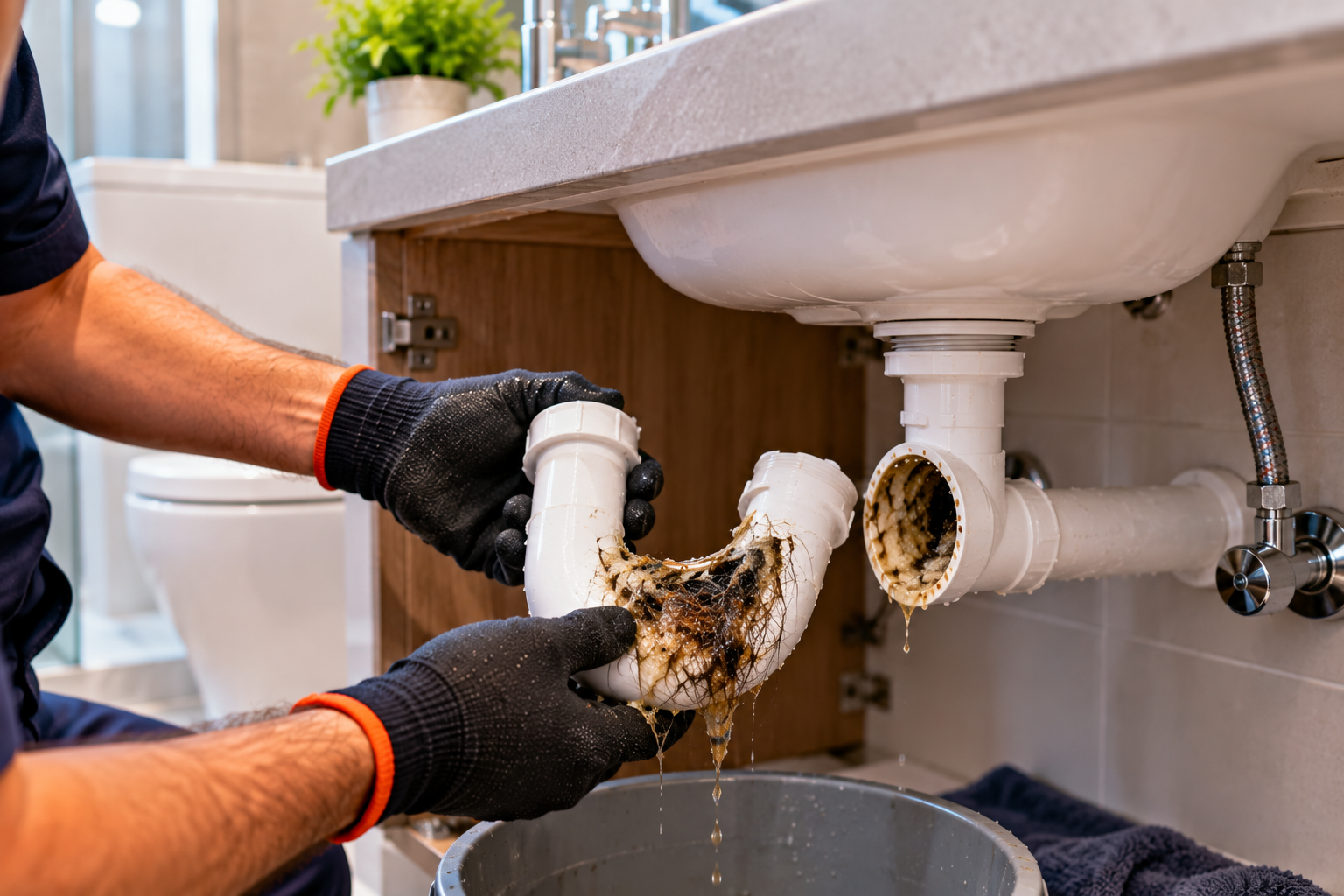

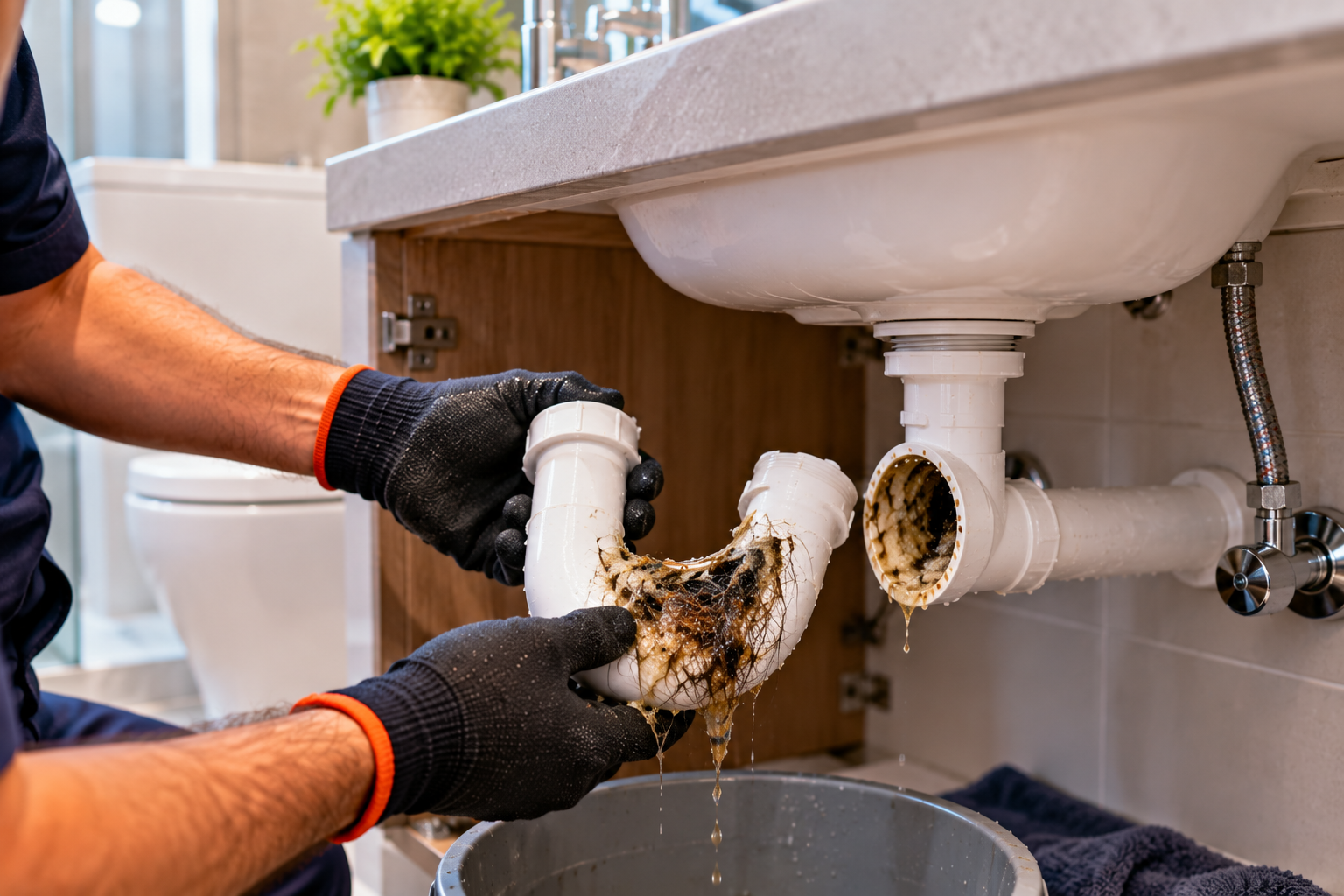
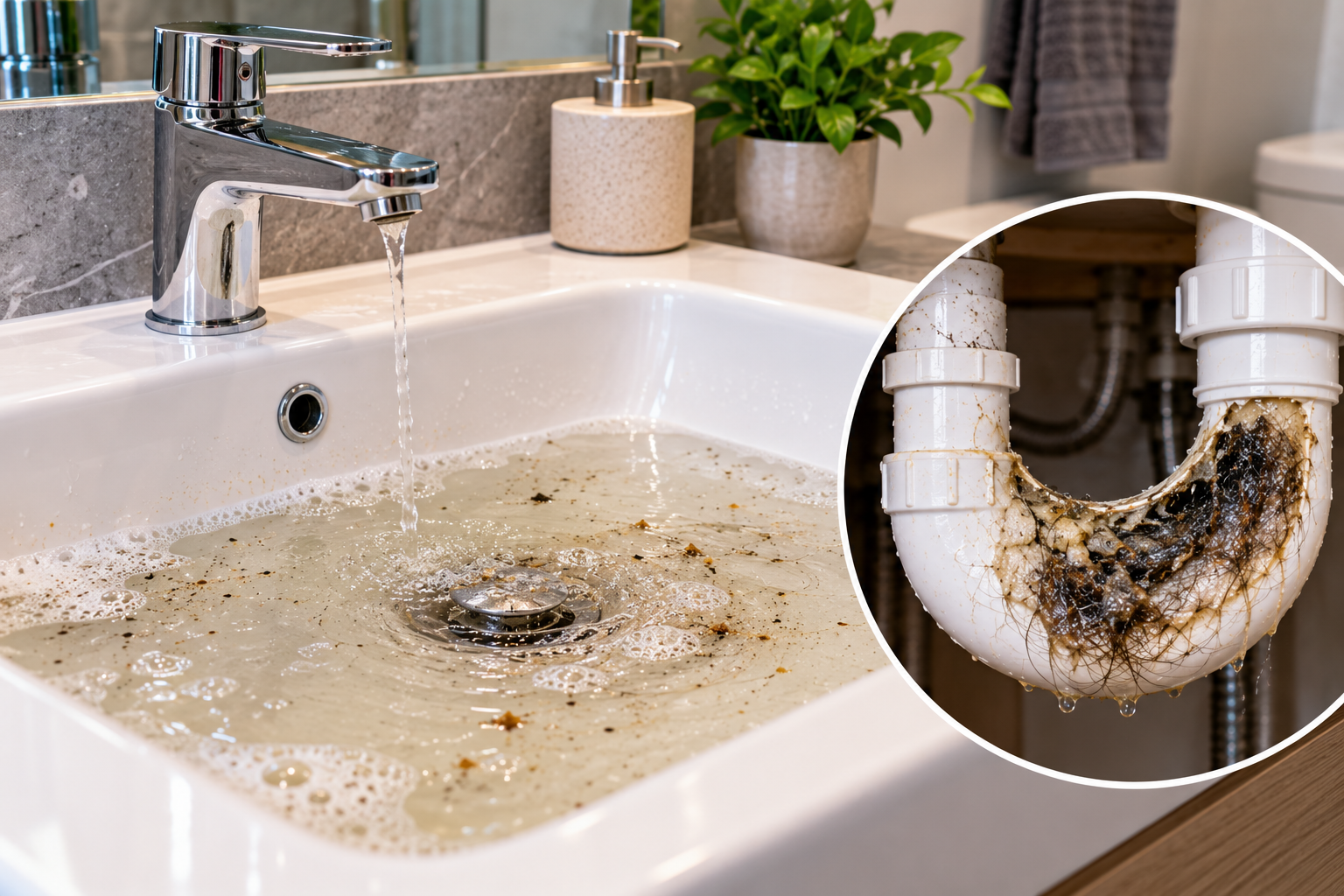
Why Is My Bathroom Sink Draining Slowly? You turn on the faucet to wash your hands, but the water collects around the drain instead of disappearing. A few minutes later, the basin finally empties. This common plumbing problem can begin with a small obstruction and gradually develop into a more disruptive blockage.
Bathroom sinks in Southeast Calgary homes, including properties in Mahogany, Auburn Bay, Cranston, and Copperfield, can experience slow drainage as hair, soap residue, and personal-care products accumulate inside the plumbing. Understanding the causes and knowing when to arrange professional plumbing and drain cleaning services in Calgary can help prevent repeated drainage problems.
Although the blockage may be located directly beneath the sink stopper, restricted flow can also develop inside the P-trap, wall drain, or connected branch line. The most appropriate solution depends on identifying the affected section rather than repeatedly treating the visible drain opening.
A bathroom sink usually drains slowly because hair, soap residue, toothpaste, or debris restricts water flow around the stopper, P-trap, or connected drainpipe. Less commonly, venting issues or deeper pipe obstructions contribute. Identifying the location helps determine the appropriate cleaning or repair.
What Causes a Bathroom Sink to Drain Slowly?
Bathroom sink drains carry water mixed with soap, toothpaste, hair, shaving residue, and personal-care products. Over time, these materials can collect around the drain opening and inside connected pipes.
The restriction often develops gradually. At first, water may drain only slightly slower than usual. As additional material accumulates, standing water can remain in the basin for longer periods.
The exact cause depends on the plumbing configuration, daily use, and condition of the drain.
How Do Hair and Soap Residue Block Bathroom Sink Drains?
Hair is a common contributor to bathroom sink blockages because strands can become caught around stopper components and rough surfaces inside the drain.
Soap residue, toothpaste, and other materials may attach to the trapped hair, gradually forming a thicker obstruction.
In a Cranston household where several family members use the same bathroom sink, accumulated grooming residue may reduce drainage without producing an immediate complete blockage.
The result is often a sink that drains slowly during regular handwashing but eventually empties when the faucet is turned off.
Can a Bathroom Sink Stopper Cause Slow Drainage?
Yes. Many bathroom sinks have a pop-up stopper or another drain-closing mechanism designed to retain water in the basin.
The stopper assembly can collect hair, soap residue, and debris around its moving components.
Even a relatively small buildup can restrict the opening through which water enters the drain.
In some cases, a stopper that does not lift fully can also reduce drainage flow.
A plumber can examine the mechanism and determine if cleaning, adjustment, or replacement is appropriate.
Can Toothpaste Cause a Bathroom Sink to Clog?
Toothpaste generally disperses in water, but residue can contribute to buildup when mixed with hair, soap deposits, and other materials.
Repeatedly allowing thick product residue to collect around the drain may increase the amount of material available to form an obstruction.
Toothpaste alone is not usually the only explanation for a severely blocked sink.
Do Shaving Products and Personal-Care Items Affect Drainage?
Shaving cream, facial cleansers, cosmetics, and similar products can contribute to deposits inside bathroom sink drains.
Hair from shaving may collect around the stopper or become trapped in existing residue.
For homeowners in Auburn Bay and Mahogany, routine bathroom maintenance can help reduce the accumulation of these materials.
Can Hard Water Contribute to Slow Bathroom Sink Drainage?
Calgary water contains dissolved minerals that can contribute to deposits on fixtures and plumbing surfaces.
Mineral buildup may contribute to restrictions in some circumstances, particularly when combined with other deposits.
However, hair and soap residue are often more likely explanations for a localized bathroom sink clog.
A professional inspection can help distinguish ordinary debris accumulation from a more complicated drainage issue.
Important distinction: Slow bathroom sink drainage is not always caused by a major sewer problem. Many restrictions develop close to the stopper or inside the accessible trap, but recurring symptoms may justify investigating deeper piping.
Why Does the Sink Drain Slowly Only When the Faucet Runs Continuously?
A partially restricted drain may allow a small amount of water to pass while struggling to accommodate continuous flow.
Water can gradually accumulate in the basin when the faucet delivers water faster than the drain can carry it away.
Once the faucet is turned off, the remaining water may slowly disappear.
This behaviour is a useful clue, although it does not identify the exact obstruction location.
Key takeaway: Hair, soap residue, stopper buildup, and accumulated grooming products are common causes of slow bathroom sink drainage. A localized restriction may be relatively simple to address, while recurring problems can require further investigation.
Calgary homeowners can review the Calgary Electrical and Plumbing Google Maps business listing and watch a video introducing the company’s plumbing services for additional service information.
How Can You Identify Where a Bathroom Sink Drain Is Blocked?
The location of the restriction influences the appropriate cleaning method. A blockage near the stopper may require a different approach from one farther along the wall drain.
Plumbers consider the drainage symptoms, accessible connections, and other affected fixtures before recommending a solution.
Is the P-Trap Responsible for a Slow Bathroom Sink?
The P-trap is the curved pipe beneath the sink. It holds water to create a barrier against sewer gases entering the home.
Because of its shape, the trap can also collect hair, soap residue, and other debris.
If only one bathroom sink drains slowly, the trap is one of several areas a plumber may examine.
However, a clear trap does not rule out a restriction farther along the connected branch drain.
What Happens When the Blockage Is Inside the Wall?
After leaving the trap, wastewater usually travels through a horizontal or sloped drain connection toward a larger drainage branch.
Debris can accumulate in sections concealed behind bathroom walls or beneath floors.
In a Copperfield home, a sink that continues draining slowly after the stopper and trap have been cleaned may have a restriction farther downstream.
Mechanical equipment or additional inspection may be required to assess the concealed section.
What Does It Mean When Several Bathroom Drains Are Slow?
When the sink, bathtub, and shower all drain slowly, the problem may involve a shared drainage branch rather than individual fixture blockages.
The timing and behaviour of each fixture provide useful diagnostic clues.
For example, a homeowner in New Brighton may notice that the bathroom sink gurgles when the bathtub empties.
This pattern may indicate a drainage or venting issue affecting connected plumbing.
Warning: If wastewater rises through a shower, floor drain, or another fixture, stop using the connected plumbing until the situation is assessed. Continued discharge can worsen a backup and increase contamination risks.
Can a Plumbing Vent Problem Slow Down a Bathroom Sink?
Drainage systems use vent piping to help manage air pressure and protect fixture trap seals.
Venting problems can contribute to unusual gurgling or drainage behaviour.
However, slow drainage is more commonly associated with an obstruction in or near the affected drain.
A plumber can assess venting when symptoms suggest that air movement or trap performance may be involved.
How Do Plumbers Locate a Hidden Bathroom Sink Blockage?
Professional diagnosis usually begins with examining the stopper, trap, and accessible drain connections.
When the restriction appears farther inside the plumbing, mechanical equipment may be used to investigate or clear the affected line.
A camera inspection may be appropriate for recurring problems or suspected pipe defects, depending on pipe size and access.
For a more detailed explanation, read Why Does My Kitchen Sink Keep Clogging? to understand how household drainage deposits can produce repeated restrictions in another commonly affected fixture.
Is a Slow Bathroom Sink Related to a Blocked Storm Drain?
Generally, no. Bathroom sinks discharge into the property’s sanitary drainage system, while storm drains collect surface runoff.
Community conversations about municipal drainage, such as this Calgary discussion about neighbourhood storm drains, concern a different drainage system.
A slow bathroom sink should be investigated through the household plumbing rather than assuming a nearby street drain is responsible.
Diagnostic takeaway: A single slow bathroom sink often points toward a localized restriction. Several affected fixtures, recurring backups, or unusual gurgling can indicate a problem in connected drainage or vent piping.
Additional location information is available through a second Calgary Electrical and Plumbing Google Maps reference.
Request a bathroom sink drain cleaning estimate in Calgary in just a few clicks.
Get My Free Estimate
How Do Calgary Plumbers Fix a Slow-Draining Bathroom Sink?
Professional bathroom sink drain cleaning begins with determining the location and likely cause of the restriction.
A plumber may remove accessible debris, inspect the stopper mechanism, clean the trap, or use specialized equipment to reach material farther inside the pipe.
The selected method should suit the plumbing material, configuration, and condition.
Which Professional Drain Cleaning Methods Are Used?
Different blockages require different approaches.
Accessible hair and soap buildup may be removed from the stopper or trap. Restrictions farther along the drain may require a flexible mechanical cable.
Stopper and Trap Cleaning
Appropriate when debris is located close to the sink opening or inside accessible under-sink piping. Connections should be checked for proper reassembly and leaks.
Mechanical Drain Cleaning
Uses a suitable flexible cable to address obstructions farther inside connected piping. Equipment selection depends on pipe diameter, material, and accessibility.
Can a Plumber Repair a Faulty Pop-Up Sink Stopper?
Yes. A stopper mechanism that does not open properly can reduce the effective drainage opening.
The plumber may inspect the lift rod, pivot mechanism, seals, and related components.
Cleaning or adjustment may restore normal operation, while damaged parts may require replacement.
Are Chemical Drain Cleaners Safe for a Slow Bathroom Sink?
Chemical drain cleaners can present risks and may not address the underlying cause of recurring slow drainage.
Some products contain corrosive substances that can injure users and complicate later plumbing work.
Never mix different drain-cleaning chemicals or combine them with other household cleaning products.
If a chemical cleaner has already been used, tell the plumber before the drain is opened or serviced.
Should You Use Boiling Water to Clear the Sink?
Boiling water is not a reliable solution for every bathroom sink blockage.
Very hot water can present burn risks and may be unsuitable for certain plumbing materials or fixtures.
It also cannot reliably remove a compacted hair obstruction or repair a damaged drain connection.
A safer approach is to identify the actual restriction and use a method appropriate for the plumbing.
When Is a Drain Camera Inspection Recommended?
A camera inspection may be useful when slow drainage keeps returning despite cleaning or when a deeper defect is suspected.
However, small bathroom sink drains and tight fittings can limit camera access.
The plumber may need to use another diagnostic method or inspect the line from a different access point.
How Much Does Bathroom Sink Drain Cleaning Cost in Calgary?
The cost depends on the blockage location, accessibility, equipment required, and any repairs needed.
| Service | Illustrative CAD Range | Typical Purpose |
|---|---|---|
| Bathroom sink stopper or trap cleaning | $100–$250+ | Removing accessible hair and debris |
| Mechanical bathroom drain cleaning | $150–$400+ | Clearing suitable deeper drain restrictions |
| Drain inspection and diagnosis | $100–$300+ | Investigating recurring or unclear symptoms |
| Specialized camera inspection | $200–$500+ | Examining suitable accessible piping when warranted |
Pricing disclaimer: These figures are illustrative planning ranges, not verified Calgary market averages or published Calgary Electrical and Plumbing rates. Actual estimates may differ substantially. Taxes, difficult access, emergency attendance, replacement parts, and additional repairs can affect the total.
Why Can Bathroom Sink Drain Cleaning Prices Vary?
A localized stopper blockage may require less work than a restriction concealed inside the wall.
Older or damaged connections can complicate access, and replacement parts may be needed if components are deteriorated.
Recurring problems may also require additional diagnostic work rather than repeated basic cleaning.
How Can You Compare Drain Cleaning Services in Calgary?
Before arranging service, ask what the assessment includes, which cleaning methods may be used, and how additional work will be approved.
Homeowners researching providers can review Calgary drain cleaning service listings on HomeStars as one independent comparison resource.
Online directories should be considered alongside licensing requirements, service descriptions, estimates, and the specific plumbing problem.
Service takeaway: Professional bathroom sink cleaning may involve stopper maintenance, trap cleaning, mechanical equipment, or further inspection. The most appropriate method depends on the diagnosed restriction rather than a one-size-fits-all treatment.
For additional company background and updates, visit the Calgary Electrical and Plumbing LinkedIn profile or review the company’s shared Google business information.
How Can You Prevent Your Bathroom Sink From Draining Slowly Again?
Preventing recurring bathroom sink drainage problems involves reducing debris entering the drain and addressing any confirmed plumbing defects.
Simple maintenance habits can help limit hair and soap residue buildup, especially in frequently used family bathrooms.
Remove Hair Before It Enters the Drain
Hair can collect around the stopper and combine with soap residue to form obstructions.
Collect visible hair from the basin and use a suitable drain screen where the fixture design allows.
Dispose of collected hair in the appropriate waste container rather than washing it into the drain.
Keep the Sink Stopper Clean
The stopper is a common location for accumulated hair, toothpaste, and soap deposits.
Follow the manufacturer’s maintenance guidance for your particular stopper design.
If the mechanism is difficult to remove or does not operate correctly, professional servicing can help avoid damaging the fixture.
Avoid Washing Excessive Product Residue Down the Sink
Thick cosmetic products, shaving residue, and other personal-care materials can contribute to buildup when mixed with hair and soap deposits.
Dispose of excess product appropriately before rinsing containers or grooming tools.
These habits help reduce the amount of material entering the drainage system.
Watch for Early Drainage Changes
A bathroom sink that takes progressively longer to empty may be developing a partial obstruction.
Investigating the problem early can help prevent a complete blockage and reduce disruption.
For households in Seton, McKenzie Towne, and Douglasdale, recurring slow drainage should not automatically be dismissed as normal fixture behaviour.
Does Routine Maintenance Prevent Every Bathroom Sink Clog?
Routine cleaning can reduce common debris accumulation, but it cannot correct every plumbing condition.
Improper pipe slope, damaged connections, and restrictions deeper in the drainage system may require repair.
Maintenance should be based on the actual condition and usage of the fixture rather than unnecessary repeated chemical treatments.
When Should You Contact a Plumber?
Arrange an assessment when slow drainage keeps returning, water remains standing in the basin, or other fixtures begin showing related symptoms.
Unusual gurgling, repeated odours, leaks beneath the sink, or wastewater backing up elsewhere can also justify professional attention.
Homeowners in Riverbend, Lake Bonavista, and surrounding Southeast Calgary communities should describe the affected fixtures and how long the problem has been occurring.
Final recommendation: Preventing bathroom sink blockages starts with controlling hair and product residue, maintaining the stopper, and investigating recurring symptoms. If cleaning the accessible components does not restore normal drainage, the restriction may be deeper inside the plumbing.
Request a bathroom sink drain cleaning estimate in Calgary in just a few clicks.
Get My Free Estimate
Restore Proper Bathroom Sink Drainage
A slow bathroom sink may be caused by hair, soap residue, stopper buildup, a restricted P-trap, or a deeper drainage problem. Understanding the cause helps determine if basic cleaning is sufficient or if additional inspection is appropriate.
If the problem continues, a local calgary plumber can assess the affected plumbing and explain suitable solutions. Call Calgary Electrical and Plumbing at (403) 421-1991 to discuss your bathroom sink drainage concerns.
Frequently Asked Questions about Slow Bathroom Sink Drainage
Why is my bathroom sink draining slowly but not completely blocked?
A partial restriction may allow some water to pass while limiting the drainage rate. Hair, soap residue, toothpaste, or debris around the stopper and trap are common contributors. If the problem persists after accessible cleaning, the obstruction may be farther inside the drain.
Can hair and toothpaste cause a bathroom sink to drain slowly?
Yes. Hair can become trapped around the stopper or inside the drain, while toothpaste and soap residue may contribute to accumulated deposits. Together, these materials can gradually reduce the opening available for water to flow through the pipe.
Why does my bathroom sink drain slowly even after cleaning the stopper?
Cleaning the stopper removes only debris near the drain opening. A restriction may remain inside the P-trap or farther along the connected pipe. Recurring slow drainage can also indicate a plumbing defect that requires additional assessment.
How much does it cost to unclog a bathroom sink in Calgary?
Costs depend on accessibility, blockage location, and the work required. An illustrative planning range for basic trap cleaning is CAD $100–$250 or more. This is not a verified Calgary average or binding company quote, and additional diagnostics or repairs may cost extra.
When should I call a plumber for a slow bathroom sink?
Contact a plumber when drainage remains slow, the same blockage repeatedly returns, or several fixtures show related symptoms. Gurgling, leaks beneath the sink, and wastewater backing up elsewhere can also indicate a problem that needs professional assessment.
Don’t wait for the problem to get worse.
Call (403) 421-1991 Now
Local Help Available 24/7 in Calgary