

How Do Plumbers Find a Blockage Inside a Drain? If your kitchen sink drains slowly, your toilet gurgles, or wastewater begins rising through a basement floor drain, the obstruction may be concealed several feet inside your plumbing. Identifying its location is often more important than immediately attempting to clear it.
In Southeast Calgary communities such as Mahogany, Auburn Bay, Cranston, and Copperfield, homeowners can encounter blockages caused by grease, hair, foreign objects, or problems within shared drainage lines. Understanding how professional plumbing and drain cleaning services in Calgary investigate these symptoms helps homeowners make informed decisions.
Plumbers combine drainage symptoms, fixture testing, pipe access points, mechanical equipment, and sewer camera inspections to locate restrictions. The investigation determines if the problem is near a fixture, inside a shared branch, or farther along the main sewer connection.
Plumbers find drain blockages by comparing affected fixtures, checking accessible traps and cleanouts, testing drainage, and using mechanical equipment or sewer cameras when appropriate. Camera inspections can reveal obstructions and pipe defects, while locating equipment may help identify the affected underground section.
How Do Plumbers Locate a Hidden Blockage in a Drain?
Professional drain diagnosis usually begins with the symptoms rather than immediately inserting equipment into a pipe. The plumber first determines which fixtures are affected and how the problem developed.
A single slow bathroom sink suggests a different obstruction location from a home where the toilet, shower, and basement floor drain are all affected.
By understanding the drainage layout and comparing fixture behaviour, plumbers can narrow the investigation to a particular section of the system.
What Drainage Symptoms Help Identify the Blockage Location?
Different drainage symptoms provide clues about where an obstruction may be located.
For example, if a kitchen sink drains slowly but nearby fixtures operate normally, the restriction may be close to the sink trap or within the connected branch drain.
If several fixtures begin draining slowly at the same time, the problem may be farther downstream in a shared drainage line.
Common warning signs include:
- Slow drainage: Water takes longer than normal to leave a sink, bathtub, or shower.
- Gurgling sounds: Air movement and restricted flow may produce unusual noises in connected fixtures.
- Recurring clogs: Drainage improves temporarily before the same problem returns.
- Water backing up: Wastewater appears in another fixture or floor drain.
- Unpleasant odours: Trapped organic material may produce smells, although odours can have other causes.
These symptoms are useful diagnostic clues, but they do not establish the exact cause without further investigation.
How Do Plumbers Test Individual Fixtures and Shared Drains?
Plumbers may examine accessible traps, fixture connections, and drainage access points to determine where water flow becomes restricted.
Controlled drainage testing may help establish which fixtures share an affected line. Testing must be appropriate for the situation, especially if wastewater is already backing up.
In a Mahogany home, for instance, a plumber may investigate a kitchen sink that drains normally when lightly used but slows considerably during larger water discharges.
The pattern can suggest a partial restriction, although additional inspection may be necessary to identify its location.
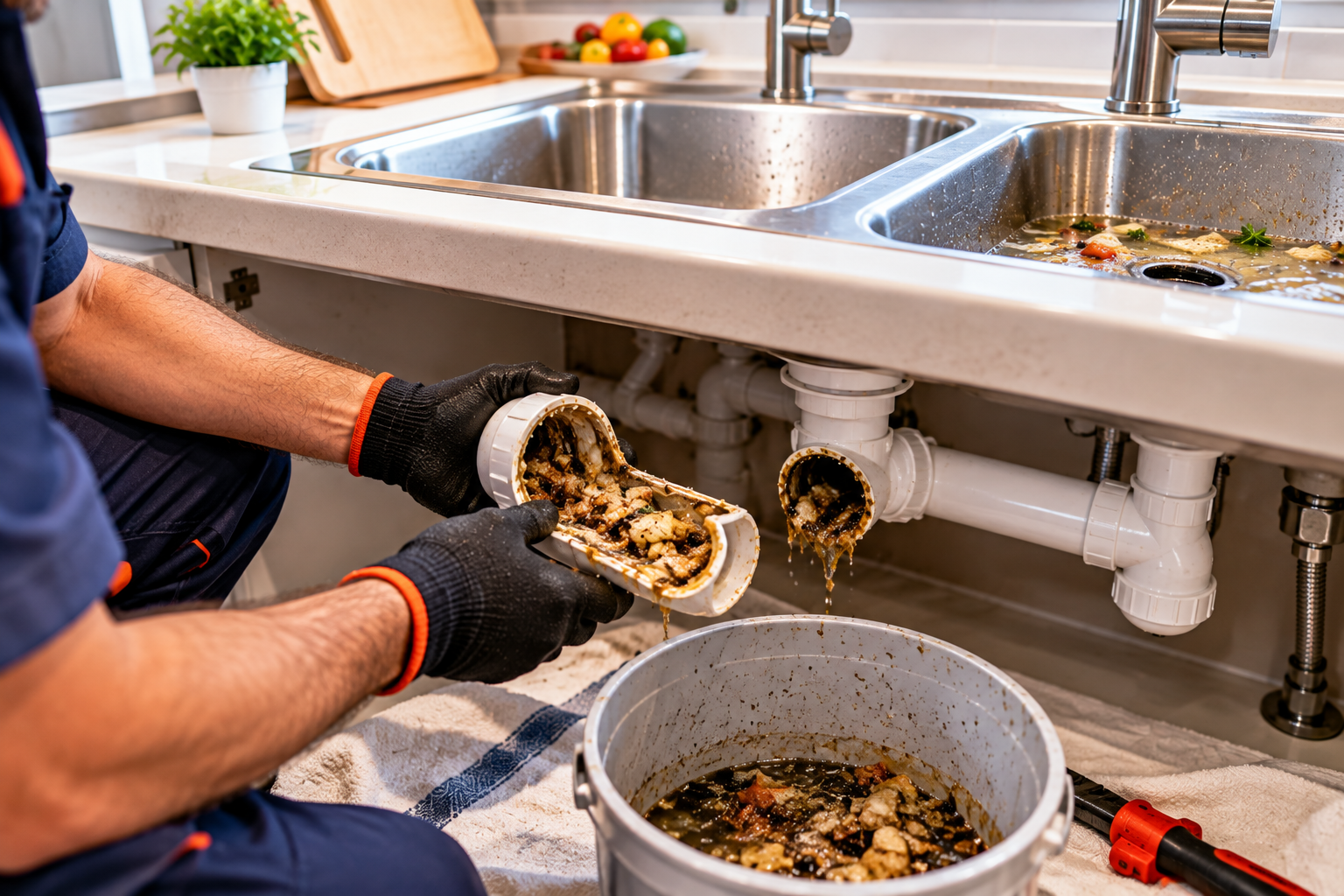
How Can Plumbers Tell If the Blockage Is Near a Sink Trap?
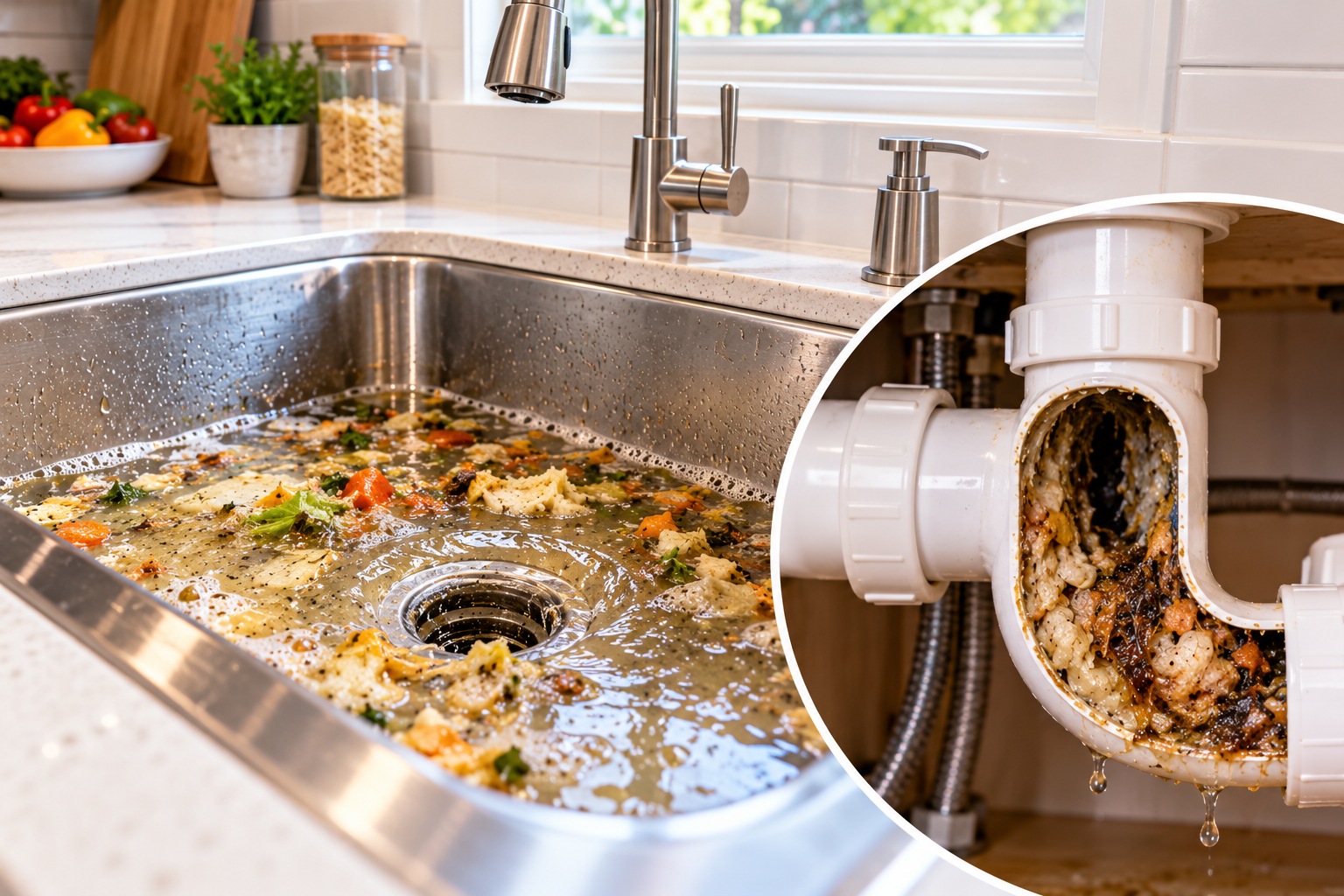
Sink traps collect water to prevent sewer gases from entering the home. Their curved design can also collect hair, food debris, and other materials.
When a sink alone is affected, the plumber may inspect the accessible trap and nearby connections before investigating deeper piping.
A blockage close to the fixture may be resolved without extensive sewer equipment.
What Does It Mean When Several Drains Are Blocked?
Multiple affected fixtures can indicate a restriction in a shared branch or main sewer connection.
For example, a Cranston homeowner might notice wastewater rising in a basement shower when an upstairs toilet is flushed.
This pattern suggests the investigation should extend beyond the individual toilet or shower.
Important: If wastewater backs up into a shower, floor drain, or basement, stop using connected plumbing fixtures. Continued water discharge can worsen the backup and increase contamination risks.
Can a Plumber Locate a Blockage Without Removing Pipes?
Often, yes. Existing cleanouts, fixture openings, and accessible connections can provide entry points for diagnostic equipment.
Plumbers may be able to examine a drain using a camera or mechanical equipment without opening walls or floors.
However, concealed damage, inaccessible connections, or severe obstructions may require additional access work.
Diagnostic takeaway: The first step is determining if the problem affects one fixture, several connected fixtures, or the main drainage system. That information helps guide the plumber toward the correct access point and inspection method.
Homeowners can review the Calgary Electrical and Plumbing business location and watch a video featuring the company’s plumbing services for additional service information.
What Tools Do Plumbers Use to Find Drain Blockages?
Professional plumbers use several diagnostic tools depending on the suspected obstruction, pipe diameter, access points, and condition of the drainage system.
Not every clogged sink requires a sewer camera. Likewise, a recurring main sewer backup may need more investigation than a basic mechanical cleaning attempt.
How Does a Sewer Camera Inspection Locate an Obstruction?
A sewer camera inspection uses a specialized camera mounted on a flexible cable or push rod. The equipment is introduced through an appropriate access point and advanced into the drainage line.
As the camera moves through the pipe, the plumber views the interior on a monitor.
Depending on visibility and equipment capabilities, the inspection may reveal grease deposits, roots, displaced joints, standing water, foreign objects, or damaged sections.
For a homeowner in Auburn Bay with repeated sewer backups, camera inspection may help distinguish accumulated debris from a structural pipe defect.
Can a Sewer Camera See Through a Complete Blockage?
Not necessarily. A camera cannot reliably see through opaque wastewater, heavy deposits, or a solid obstruction.
If the pipe is completely blocked, the camera may only reach the obstruction rather than pass beyond it.
Preliminary cleaning may be necessary before a more complete inspection can take place.
How Do Drain Snakes Help Identify a Blockage?
A mechanical drain snake uses a flexible cable that travels through the pipe. Resistance or changes in cable movement can help a plumber recognize a possible obstruction.
However, cable resistance alone does not identify the exact material or structural condition inside the pipe.
A bend, fitting, root intrusion, or foreign object can produce different levels of resistance, and interpretation requires experience.
Can Plumbers Find an Underground Blockage Without Digging?
In many cases, plumbers can narrow down the location of an underground drainage problem without excavation.
Some sewer camera systems include a transmitting locator head. A compatible surface receiver can help identify the approximate position and depth of the camera inside the pipe.
This can be useful when investigating a suspected defect beneath a yard, driveway, or basement floor.
For example, a Lake Bonavista homeowner with recurring main sewer restrictions may benefit from locating the affected pipe section before repair planning begins.
Important distinction: A camera locator helps identify the position of the camera head, not automatically the full extent of a blockage. Depth readings and surface positions can have limitations, and underground utilities must be properly located before excavation.
Do Plumbers Use Pressure Testing to Find Drain Blockages?
Pressure testing is more commonly associated with assessing the integrity of certain plumbing systems than locating ordinary household drain clogs.
Drainage investigations may instead rely on fixture observations, flow behaviour, inspection equipment, and suitable access points.
Specialized tests may be appropriate when leaks, venting problems, or structural defects are suspected.
What Is the Difference Between a Blockage and a Broken Drainpipe?
A blockage restricts wastewater movement because material obstructs the pipe. A broken or displaced pipe can also restrict drainage, but cleaning alone may not correct the problem.
Camera inspection can sometimes reveal a cracked section, offset joint, root entry point, or other visible defect.
In a Copperfield property, recurring clogs after repeated cleaning may justify investigating the pipe itself rather than assuming more debris has accumulated.
For additional regional drainage-service context, homeowners may encounter third-party directory listings such as Canadian Drains on MapQuest. This is an independent business listing, not an endorsement or affiliation with Calgary Electrical and Plumbing.
Company-specific location details can also be found through a second Google Maps reference for Calgary Electrical and Plumbing.
Request a drain blockage inspection estimate in Calgary in just a few clicks.
Get My Free Estimate
How Much Does Professional Drain Blockage Detection Cost in Calgary?
The cost of locating a drain blockage depends on the symptoms, diagnostic equipment required, accessibility of the pipe, and complexity of the drainage system.
A straightforward fixture inspection may involve less work than investigating a recurring sewer backup beneath a basement floor.
Some plumbing visits combine diagnosis and cleaning, while more complicated cases may require separate camera inspection or locating services.
Drain Inspection and Blockage Detection Cost Comparison
| Service | Illustrative CAD Range | Typical Purpose |
|---|---|---|
| Basic drain assessment | $100–$250+ | Reviewing symptoms and accessible fixture connections |
| Mechanical drain cleaning | $150–$400+ | Clearing suitable localized or branch-drain obstructions |
| Sewer camera inspection | $200–$500+ | Examining accessible drain interiors and visible defects |
| Camera inspection with locating | $300–$700+ | Investigating and approximately locating concealed pipe problems |
| Extensive sewer cleaning | $400–$900+ | Removing suitable deposits where more involved equipment is needed |
Pricing disclaimer: These are illustrative planning ranges, not verified Calgary market averages or published Calgary Electrical and Plumbing rates. Actual estimates may differ substantially. Taxes, emergency attendance, difficult access, repairs, and additional diagnostics may affect the total.
For more information about the factors influencing cleaning charges, read How Much Does Drain Cleaning Cost in Calgary?
Why Do Some Drain Inspections Cost More?
The time and equipment required can vary considerably between properties.
A plumber may be able to inspect an accessible sink trap quickly. A main sewer problem may require locating a cleanout, preparing camera equipment, and examining a longer section of pipe.
Additional complications include heavy wastewater accumulation, inaccessible cleanouts, multiple affected branches, and suspected underground damage.
Is Sewer Camera Inspection Worth the Cost?
A camera inspection may be worthwhile when the cause of a recurring blockage remains uncertain.
It can help distinguish removable deposits from visible pipe defects, potentially informing a more appropriate repair or cleaning plan.
However, a camera does not always provide a complete diagnosis. Poor visibility, inaccessible sections, and concealed defects can limit what the plumber can confirm.
Can Plumbers Identify the Blockage During the First Visit?
Many common drainage problems can be assessed during an initial visit, but an exact diagnosis is not guaranteed.
The result depends on pipe accessibility, obstruction severity, and available equipment.
Some situations require cleaning before inspection or a follow-up visit for specialized equipment.
What Should Be Included in a Drain Inspection Estimate?
Before authorizing work, ask the plumber to explain:
- Which fixtures and drainage connections will be examined.
- If camera inspection is included or billed separately.
- How the blockage location will be identified.
- If mechanical cleaning is included in the quoted price.
- What additional charges may apply if access is difficult.
- How findings and recommended repairs will be communicated.
Clear estimates help homeowners distinguish diagnostic work from cleaning and repair services.
Can Finding the Blockage Reduce Unnecessary Repairs?
Identifying the affected section can help avoid treating an unrelated fixture or cleaning a line that is not responsible for the problem.
For example, a homeowner in McKenzie Towne may initially assume a toilet is defective because it gurgles during laundry drainage.
Further investigation may reveal that the restriction is in a shared branch, changing the recommended service.
Cost takeaway: Drain blockage detection can range from a basic fixture assessment to a more involved camera inspection with locating equipment. The value lies in identifying the cause and selecting appropriate work, not simply performing the most expensive test.
Homeowners interested in additional company information can explore the Calgary Electrical and Plumbing SoundCloud profile and the company’s shared Google business information.
What Happens After a Plumber Finds the Drain Blockage?
Once the obstruction has been identified, the next step is selecting an appropriate cleaning or repair method.
The recommended service depends on the blockage material, its location, pipe accessibility, and structural condition.
A localized hair clog may require straightforward mechanical cleaning, while a damaged sewer connection may need a separate repair plan.
Which Drain Cleaning Method Works for Different Blockages?
Plumbers may recommend several approaches based on the findings.
Mechanical Drain Snaking
Often appropriate for localized hair, paper, or debris obstructions. A flexible cable reaches and breaks apart or removes suitable material.
Hydro Jetting
May be appropriate for extensive grease and sludge deposits in structurally suitable pipes. Pressurized water removes suitable buildup along the pipe interior.
Foreign objects may require retrieval, while root intrusion can call for specialized cleaning and further assessment of the pipe’s structural condition.
What If the Camera Finds Tree Roots?
Roots can enter sewer pipes through damaged joints or cracks, creating restrictions that worsen as growth continues.
Specialized equipment may remove some root intrusions, but cleaning does not repair the entry point.
A plumber may recommend further inspection and repair planning to address the underlying defect.
What If the Pipe Is Cracked or Collapsed?
A damaged pipe may need repair or replacement rather than repeated cleaning.
Camera inspection can sometimes identify visible defects, but the appropriate repair depends on the location, material, severity, and accessibility of the damage.
Excavation or other access work should be planned only after the problem has been sufficiently assessed.
How Do Plumbers Confirm the Drain Is Clear?
After cleaning, the plumber may check drainage flow and observe how the affected fixtures perform.
In some cases, a follow-up camera inspection may help evaluate remaining deposits or visible defects.
Restored flow is encouraging, but it does not necessarily prove that every underlying structural issue has been resolved.
How Can Homeowners Prevent Future Blockages?
Preventive habits can reduce the accumulation of common household debris.
- Keep cooking grease and food scraps out of kitchen sinks.
- Use suitable strainers to collect hair from showers and bathtubs.
- Flush only toilet paper and human waste.
- Keep wipes, hygiene products, and foreign objects out of toilets.
- Investigate recurring gurgling and slow drainage.
- Address confirmed root intrusion or structural pipe defects.
- Ask about suitable maintenance if your property has repeated blockages.
These habits can reduce preventable obstructions, but they cannot correct broken joints, collapsed pipes, or poor drainage alignment.
When Should You Call a Plumber About a Hidden Blockage?
Arrange an assessment when a drain repeatedly clogs, several fixtures become slow, unusual gurgling develops, or wastewater appears where it should not.
More urgent attention is appropriate when wastewater backs up into a basement floor drain, shower, or toilet.
Homeowners in New Brighton, Douglasdale, Riverbend, and nearby Southeast Calgary communities should describe all affected fixtures so the plumber can investigate the appropriate part of the drainage system.
Final recommendation: Finding a drain blockage is a diagnostic process, not simply a matter of pushing a cable into a pipe. Accurate assessment helps determine if the solution is mechanical cleaning, hydro jetting, object retrieval, or structural repair.
Request a drain blockage inspection estimate in Calgary in just a few clicks.
Get My Free Estimate
Find the Cause of Your Drainage Problem Before It Gets Worse
Hidden drain blockages can develop near fixtures, inside shared drainage branches, or farther along a sewer connection. Plumbers use symptom analysis, accessible inspection points, mechanical equipment, and sewer cameras to identify the likely cause and location.
If drainage problems keep returning, a local calgary plumber can help assess the system and explain suitable next steps. Call Calgary Electrical and Plumbing at (403) 421-1991 to discuss your drain blockage concerns.
Frequently Asked Questions about Finding Drain Blockages
How do plumbers know where a drain blockage is located?
Plumbers compare affected fixtures, examine accessible traps and cleanouts, and assess drainage behaviour. Mechanical equipment or sewer cameras may help narrow down the obstruction. The exact method depends on the symptoms, drainage layout, pipe accessibility, and suspected cause.
Can a sewer camera identify what is blocking my drain?
A sewer camera can sometimes reveal grease deposits, roots, foreign objects, displaced joints, and visible pipe damage. However, heavy wastewater or a complete obstruction may limit visibility. Preliminary cleaning may be needed before a useful inspection can be completed.
Can plumbers locate an underground sewer blockage without digging?
Often, yes. Some sewer camera systems include a transmitting locator head that works with a surface receiver. This equipment may help estimate the position and depth of an affected pipe section. Excavation is not always necessary for the initial investigation.
How much does a sewer camera inspection cost in Calgary?
Costs vary with pipe access, inspection length, equipment, and diagnostic complexity. An illustrative planning range is CAD $200–$500 or more for camera inspection. This is not a verified Calgary average or binding company price, and additional services may cost extra.
What should I do if several drains are backing up at once?
Stop using connected fixtures if wastewater is backing up, especially through a shower or basement floor drain. Multiple affected fixtures may indicate a shared branch or main sewer restriction. A plumber can assess the system and recommend appropriate inspection or cleaning.
Don’t wait for the problem to get worse.
Call (403) 421-1991 Now
Local Help Available 24/7 in Calgary