
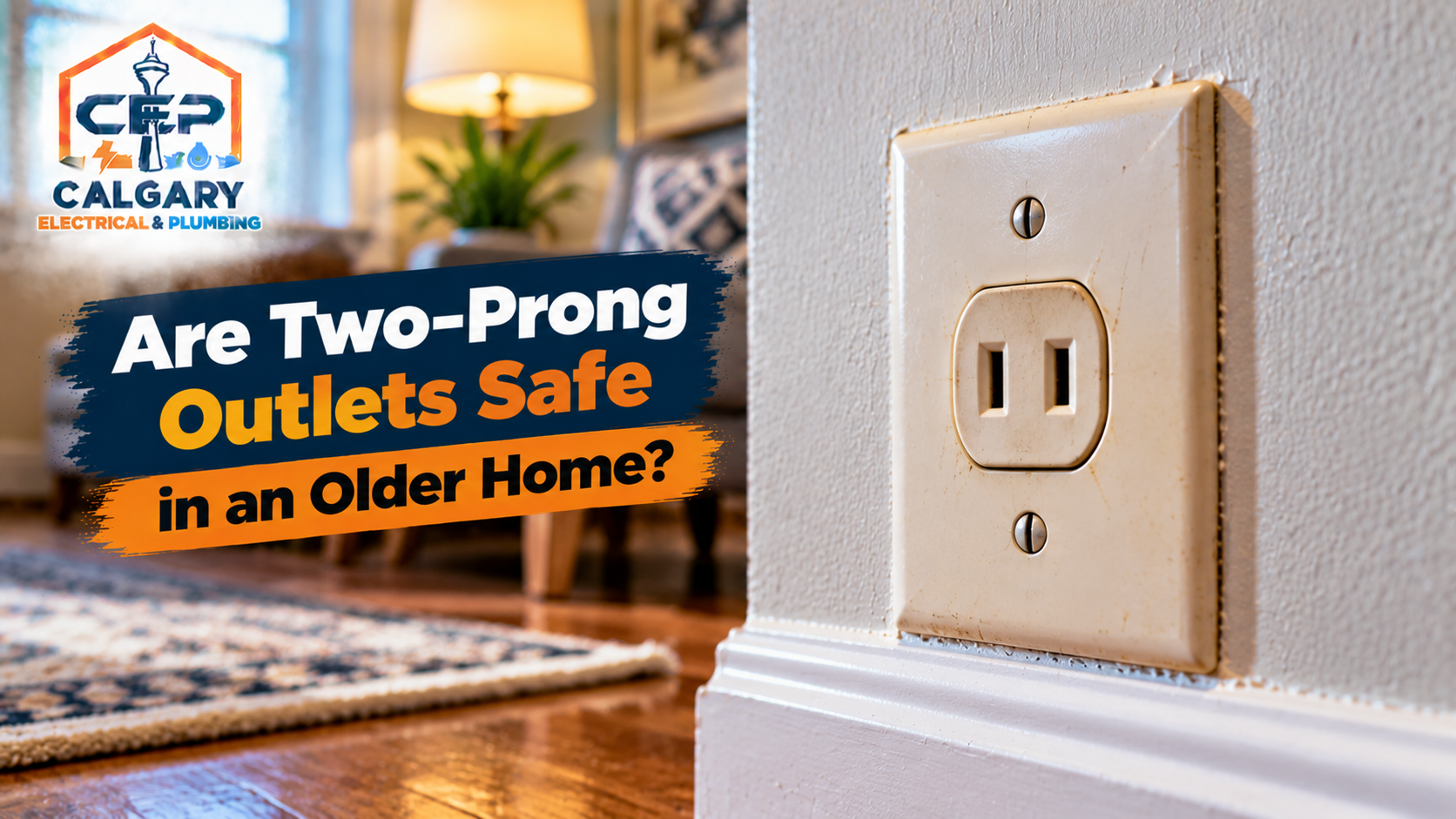
Are Two-Prong Outlets Safe in an Older Home? If you have recently moved into an older Calgary property, you may have noticed electrical receptacles with only two vertical slots instead of the familiar three-opening design. These outlets can still supply electricity, but their lack of a grounding contact raises important questions about electrical safety and modern appliance compatibility.
Many older electrical installations were designed before grounded receptacles became standard in residential construction. Although a two-prong outlet does not automatically mean that a home is unsafe, its presence can indicate an electrical system that deserves closer evaluation. Homeowners seeking professional electrical services can explore Calgary Electrical and Plumbing for information about residential electrical inspections and upgrades.
Properties in established Calgary communities such as Lake Bonavista, Riverbend and Douglasdale may contain older wiring, previous renovations or a combination of different receptacle types. Understanding what two-prong outlets mean can help homeowners make informed decisions about electrical inspections, grounding protection and safe upgrades.
Two-prong outlets may still operate, but they generally lack an equipment grounding contact. This can reduce protection for appliances that require grounding. A qualified electrician can assess the wiring and recommend suitable upgrades, such as properly grounded receptacles or code-compliant GFCI protection where permitted.
Are Two-Prong Outlets Safe in Older Calgary Homes?
Two-prong electrical outlets are not automatically defective simply because they have an older design. However, they typically lack a dedicated equipment grounding connection, which can limit the protection available when certain electrical faults occur.
Whether an existing receptacle can remain in service depends on the condition of the installation, the equipment being connected and applicable electrical requirements.
Why Older Homes Have Two-Prong Electrical Outlets
Many homes built decades ago were wired when two-slot receptacles were common. Electrical standards, appliance designs and residential power requirements have changed significantly since then.
Some older properties have been partially upgraded, leaving a mixture of grounded and ungrounded receptacles throughout the building.
For this reason, the age of the house alone cannot confirm whether every circuit has suitable grounding.
What Is the Difference Between Two-Prong and Three-Prong Outlets?
A conventional two-prong receptacle provides connections for the circuit’s hot and neutral conductors. It does not provide the third grounding contact found on a standard grounded three-prong receptacle.
The grounding connection provides an intended fault-current path for certain electrical equipment. When properly installed, it works with overcurrent protection to help address specific fault conditions.
However, a three-prong receptacle is not proof that the wiring behind it is grounded. Its grounding connection must be verified.
Why Electrical Grounding Matters
Some appliances have exposed conductive metal parts that are connected to an equipment grounding conductor.
If an internal electrical fault energizes those parts, proper grounding can help provide a fault-current path that allows the electrical protection system to respond.
Without an appropriate grounding path, certain equipment faults may present a greater shock hazard.
Does Every Appliance Need a Three-Prong Outlet?
No. Some appliances are designed with two-prong plugs and do not require an equipment grounding connection.
For example, appropriately certified double-insulated equipment may use a two-prong plug because its design provides an alternative means of protection.
Other appliances are designed to use a grounding connection and should not be connected through arrangements that defeat that protection.
Can a Two-Prong Outlet Still Work Normally?
Yes. A two-prong receptacle may supply electricity without showing obvious symptoms of failure.
However, normal appliance operation does not establish that the outlet is suitable for every type of equipment or that its wiring is free from defects.
Electrical safety involves more than whether power is available.
Calgary example: A homeowner in Lake Bonavista discovers two-prong outlets in a basement bedroom. Although a lamp works normally, the homeowner plans to connect a computer and other electronic equipment. An electrical inspection can help determine the available grounding protection and suitable upgrade options.
Are Two-Prong Outlets Illegal in Older Homes?
The presence of an existing two-prong receptacle does not automatically establish a code violation.
Requirements depend on the installation, its condition, the scope of any alterations and the electrical rules applicable to the work.
New electrical work and receptacle replacements may be subject to requirements different from those that applied when the original installation was completed.
Key takeaway: Two-prong outlets may still function, but they generally do not provide an equipment grounding contact. A qualified electrician can determine whether the existing installation is suitable and which improvements would provide appropriate protection.
Homeowners looking for local electrical service information can consult the Calgary Electrical and Plumbing Google Maps listing.
What Are the Electrical Safety Risks of Two-Prong Outlets?
The main concern with a conventional two-prong receptacle is the absence of an equipment grounding contact.
This limitation becomes especially important when someone attempts to connect equipment designed for a grounded receptacle.
Increased Electric Shock Risk
When electrical equipment develops an internal fault, exposed conductive components may become energized.
Proper equipment grounding helps address certain faults by providing an intended conductive path. Without that path, the protective response may be different.
This does not mean that every ungrounded outlet will cause a shock, but it does mean that some important protective measures may be absent.
Using Three-Prong Appliances With Two-Prong Outlets
A three-prong appliance plug should not be modified to fit a two-prong receptacle.
Removing the grounding pin defeats a safety feature that the equipment may depend on.
Likewise, adapters should not be assumed to provide grounding simply because they allow a three-prong plug to fit an older outlet.
Potential Problems With Sensitive Electronics
Some electronic equipment is designed for connection to a grounded electrical system.
Grounding may also be relevant to certain surge-protection arrangements and equipment designs.
Homeowners should follow the manufacturer’s electrical requirements rather than assuming a two-prong receptacle is suitable for every device.
Loose Contacts and Worn Receptacles
Older outlets may have experienced decades of repeated plug insertion, mechanical stress and environmental exposure.
Worn internal contacts can result in loose-fitting plugs and unreliable electrical connections.
These problems are not unique to two-prong outlets, but they are worth considering when evaluating aging electrical equipment.
Warning Signs That an Older Electrical Outlet Needs Inspection
Some receptacle problems produce visible or audible warning signs. Others remain hidden behind the wall plate.
Arrange professional attention if you notice:
- Burning-plastic or unusual electrical odours.
- Brown or black discolouration around outlet openings.
- Loose plugs that do not remain securely connected.
- Cracked, damaged or distorted receptacle covers.
- Buzzing, crackling or popping sounds.
- Unusually warm or hot plugs and outlets.
- Intermittent power to connected equipment.
- Repeated circuit breaker trips.
These symptoms may indicate damaged contacts, loose connections or other electrical faults requiring investigation.
Electrical safety warning: If an outlet is smoking, visibly melting or producing a burning smell, stop using it and avoid touching damaged equipment. If smoke, flames or an active fire are present, evacuate and call 911.
Can an Ungrounded Outlet Cause an Electrical Fire?
The absence of equipment grounding can affect how certain electrical faults are cleared. However, electrical fires can also result from loose connections, overloaded circuits and damaged wiring in grounded or ungrounded installations.
A two-prong outlet should therefore be evaluated as part of the broader electrical system rather than treated as the only possible concern.
Are Two-Prong Outlets Safe Near Water?
Electrical equipment near sinks, bathrooms, laundry areas and outdoor locations requires particular attention because moisture can increase shock hazards.
Applicable electrical rules may require ground-fault protection in certain locations.
A qualified electrician can determine which protective measures are appropriate for the installation.
Should You Replace Every Two-Prong Outlet Immediately?
Not every home requires the same upgrade strategy.
Some circuits may need new grounding conductors, while others may qualify for a different code-compliant protective arrangement.
An inspection helps prioritize outlets based on their condition, location and intended use.
| Electrical Feature | Two-Prong Outlet | Properly Grounded Three-Prong Outlet |
|---|---|---|
| Hot and neutral connections | Yes | Yes |
| Equipment grounding contact | No | Yes |
| Accepts standard grounded three-prong plugs | No | Yes |
| Suitable for every appliance | No | No; appliance and circuit requirements still apply |
| Protection against every electrical fault | No | No |
| Additional GFCI protection | May be required or appropriate | May also be required depending on location |
Calgary example: A homeowner in Riverbend notices that an older living room outlet does not securely hold a lamp plug. Even if the receptacle still supplies electricity, worn contacts can justify replacement and a broader assessment of the circuit.
For information about electrical supplies and equipment available locally, homeowners can explore the City Electric Supply Calgary–Foothills branch. Product selection does not replace a professional assessment of wiring or installation requirements.
Additional local business information is available through this Calgary electrical service map reference.
Request a two-prong outlet inspection and electrical upgrade estimate in Calgary in just a few clicks.
Get My Free Estimate
Can You Replace a Two-Prong Outlet With a Three-Prong Outlet?
Yes, but the correct method depends on the existing wiring and the electrical requirements that apply to the installation.
Simply replacing a two-slot receptacle with a three-slot model does not create an equipment grounding connection.
Why Changing the Outlet Cover Is Not Enough
A three-prong receptacle has a grounding contact, but that contact must be connected to an appropriate grounding path when the installation is intended to be grounded.
If the existing wiring lacks that path, installing a standard three-prong outlet without suitable corrective measures can create a misleading appearance of protection.
Homeowners may assume the outlet is grounded when it is not.
Installing Proper Equipment Grounding
One upgrade approach involves providing an appropriate equipment grounding path as part of the electrical installation.
Depending on the existing system, this may require new wiring or other code-compliant electrical work.
A qualified electrician can assess the available options and determine what is practical for the property.
Can GFCI Protection Make an Ungrounded Outlet Safer?
Ground-fault circuit interrupter protection can reduce the risk of electric shock by interrupting power when it detects certain current imbalances.
In some existing installations, applicable electrical rules may permit GFCI-protected replacement arrangements where an equipment grounding conductor is not available.
However, GFCI protection does not create a grounding conductor. A receptacle installed under an approved ungrounded replacement arrangement must meet applicable identification and installation requirements.
Does a GFCI Outlet Provide the Same Protection as Grounding?
No. Grounding and GFCI protection serve different electrical safety functions.
Equipment grounding provides an intended fault-current path for certain faults, while GFCI protection responds to specified differences between outgoing and returning current.
One should not automatically be described as an identical substitute for the other.
Can You Use a Three-Prong Adapter Instead?
Adapters do not create an equipment grounding connection where none exists.
Using an adapter without an appropriate grounding arrangement can leave equipment that requires grounding without the intended protection.
Never remove the grounding pin from a three-prong appliance plug to make it fit an older outlet.
What if a GFCI Outlet Will Not Reset?
A GFCI that refuses to reset may be responding to a continuing ground fault, a loss of incoming power or an internal device failure.
The reset mechanism should not be forced or bypassed.
For a related explanation, read our guide on why a GFCI outlet will not reset.
Should Homeowners Replace Electrical Outlets Themselves?
Electrical receptacle replacement involves wiring connections, circuit identification and applicable safety requirements.
Incorrect connections can create shock, overheating or fire hazards. An apparently simple outlet replacement may also reveal wiring defects that require additional attention.
For older installations, professional assessment is particularly valuable because the grounding arrangement may not be obvious from the receptacle’s appearance.
Important: Do not install a three-prong receptacle merely to make grounded appliance plugs fit. The electrical system must provide the required protection through an appropriate, code-compliant arrangement.
What About Homes With Mixed Outlet Types?
Some Calgary homes contain two-prong receptacles in older rooms and three-prong outlets in renovated areas.
This does not necessarily mean that all circuits were upgraded at the same time.
An electrician can assess individual circuits and identify which outlets have verified grounding or other appropriate protection.
Calgary example: A homeowner in Douglasdale discovers two-prong outlets in an older finished basement and three-prong outlets upstairs. Before connecting new office equipment, the homeowner arranges an inspection to determine whether the basement circuits have suitable grounding and what upgrades may be required.
Upgrade takeaway: A two-prong outlet can be replaced, but the appropriate solution depends on the existing wiring. Proper grounding is preferable where required and practical; permitted GFCI-protected arrangements may offer an alternative in certain existing installations.
Homeowners can also consult this Calgary Electrical and Plumbing business profile reference for additional company information.
How Do Electricians Upgrade Two-Prong Outlets in Calgary?
Professional outlet upgrades begin with an assessment of the existing electrical installation.
The electrician needs to understand how the circuit is wired, whether suitable grounding is present and whether the receptacle location requires additional protection.
Inspecting the Existing Receptacle
An electrician may examine the condition of the receptacle, its electrical connections and the wiring within the box after following appropriate isolation and testing procedures.
Signs of overheating, damaged insulation or deteriorated contacts may influence the recommended repair.
Evaluating the Grounding Arrangement
The electrician can determine whether an appropriate equipment grounding path is available.
This matters because the visible receptacle design does not always reveal how the wiring is configured.
A three-prong outlet installed during an earlier renovation may still require verification.
Reviewing Circuit Capacity and Condition
Older electrical systems may have been designed for different household equipment demands.
Modern appliances, entertainment systems and home-office equipment can change how electrical circuits are used.
An inspection may identify whether additional circuits or other electrical improvements should be considered.
Choosing the Appropriate Replacement
Depending on the findings, an electrician may recommend a suitable grounded receptacle installation, an approved GFCI-protected arrangement or other corrective electrical work.
The selected approach should meet applicable requirements and support the intended use of the outlet.
How Much Does It Cost to Replace Two-Prong Outlets in Calgary?
The cost depends on whether the work involves a straightforward receptacle replacement, installation of appropriate protection or more extensive wiring upgrades.
Factors that can affect the estimate include accessibility, circuit condition, grounding requirements, materials, diagnostic time and any applicable permit requirements.
Replacing several outlets during one project may involve different labour considerations from addressing a single isolated receptacle.
Because older homes can contain unexpected wiring conditions, an on-site assessment provides a more reliable basis for pricing than a universal fixed amount.
Do Electrical Outlet Upgrades Require Permits?
Permit requirements depend on the scope of work and applicable Alberta and Calgary electrical rules.
Replacing an existing component may be treated differently from installing new wiring, adding circuits or making broader electrical alterations.
A qualified electrical contractor can explain the requirements associated with the proposed work.
How Can You Improve Electrical Safety in an Older Home?
Improving electrical safety does not always require replacing every component immediately. A structured inspection can help identify the most important concerns and establish an appropriate upgrade plan.
Useful precautions include:
- Have older wiring and receptacles evaluated by a qualified electrician.
- Use appliances only with suitable electrical connections.
- Never remove grounding pins from appliance plugs.
- Replace worn, cracked or damaged receptacles.
- Do not overload outlets or extension cords.
- Address burning smells, unusual heat and repeated breaker trips.
- Keep electrical equipment protected from moisture.
- Use required GFCI protection in applicable locations.
- Verify grounding before relying on three-prong receptacles.
- Have electrical modifications completed by qualified personnel.
Should You Upgrade Outlets Before Selling an Older Home?
Electrical condition can be an important consideration during property transactions.
A homeowner preparing to sell may benefit from understanding whether older receptacles are functioning properly and whether significant electrical deficiencies exist.
An inspection can provide information that helps guide maintenance and upgrade decisions.
What About Renovations in Established Calgary Communities?
Renovations in older properties may involve new kitchens, finished basements, home offices or updated electrical equipment.
These projects provide an opportunity to evaluate existing circuits and determine whether electrical improvements are needed.
Properties in Lake Bonavista, Riverbend and other established communities may benefit from planning electrical upgrades alongside renovation work.
What Should You Ask an Electrician Before Upgrading?
Ask whether the existing wiring has an appropriate grounding path, what protective measures are recommended and whether the proposed work requires permits.
You can also ask which outlets should receive priority and whether any broader electrical deficiencies were identified.
Clear explanations help homeowners distinguish necessary safety work from optional improvements.
Calgary example: A homeowner in Lake Bonavista plans to renovate a basement office containing several two-prong outlets. An electrician evaluates the wiring and explains suitable options for connecting modern equipment while meeting applicable electrical requirements.
Professional assessment takeaway: The safest outlet upgrade is based on verified wiring conditions, appropriate grounding or permitted protective arrangements, and the requirements of the electrical equipment being used.
For additional information about the company, watch this Calgary Electrical and Plumbing service video.
You can also explore the company’s Reddit profile for Calgary electrical and plumbing information.
Request a two-prong outlet inspection and electrical upgrade estimate in Calgary in just a few clicks.
Get My Free Estimate
Make Your Older Calgary Home Electrically Safer
Two-prong outlets may continue supplying electricity, but they generally lack the equipment grounding contact provided by properly grounded three-prong receptacles. Their suitability depends on the existing wiring, appliance requirements and applicable electrical standards. Professional assessment can help identify appropriate improvements without relying on assumptions.
Calgary Electrical and Plumbing provides residential electrical services while also assisting homeowners as a local calgary plumber. If you are concerned about older outlets or grounding protection, call (403) 421-1991 to discuss an electrical inspection and suitable upgrade options.
Frequently Asked Questions about Two-Prong Outlets
Are two-prong outlets dangerous in older Calgary homes?
Two-prong outlets are not automatically defective, but they generally lack an equipment grounding contact. This can limit protection for appliances that require grounding. A qualified electrician can assess the wiring, receptacle condition and applicable electrical requirements before recommending suitable improvements.
Can I replace a two-prong outlet with a three-prong outlet?
Yes, but simply installing a three-prong receptacle does not create an equipment grounding connection. The replacement must use an appropriate, code-compliant arrangement. An electrician can determine whether proper grounding is available or whether another permitted protective solution is suitable.
Does a GFCI outlet provide grounding in an older home?
No. A GFCI detects certain electrical current imbalances and helps reduce electric shock risk, but it does not create an equipment grounding conductor. Some existing installations may permit appropriately identified GFCI-protected replacement arrangements under applicable electrical rules.
Can I use a three-prong appliance with a two-prong outlet?
Do not remove the grounding pin from an appliance plug or assume an adapter creates grounding. Equipment designed for a grounded connection should be connected using a suitable electrical installation. Ask a qualified electrician about appropriate options for the outlet and appliance.
When should I upgrade two-prong outlets in my Calgary home?
Consider professional assessment when older outlets are damaged, loose, unusually warm or unsuitable for the equipment you need to connect. Renovations and electrical inspections are also useful opportunities to evaluate grounding, circuit condition and possible upgrades.
Need Help With Two-Prong Outlet Replacement in Calgary?
Don’t wait for an electrical safety concern to become a bigger problem.
Local Help Available 24/7 in Calgary