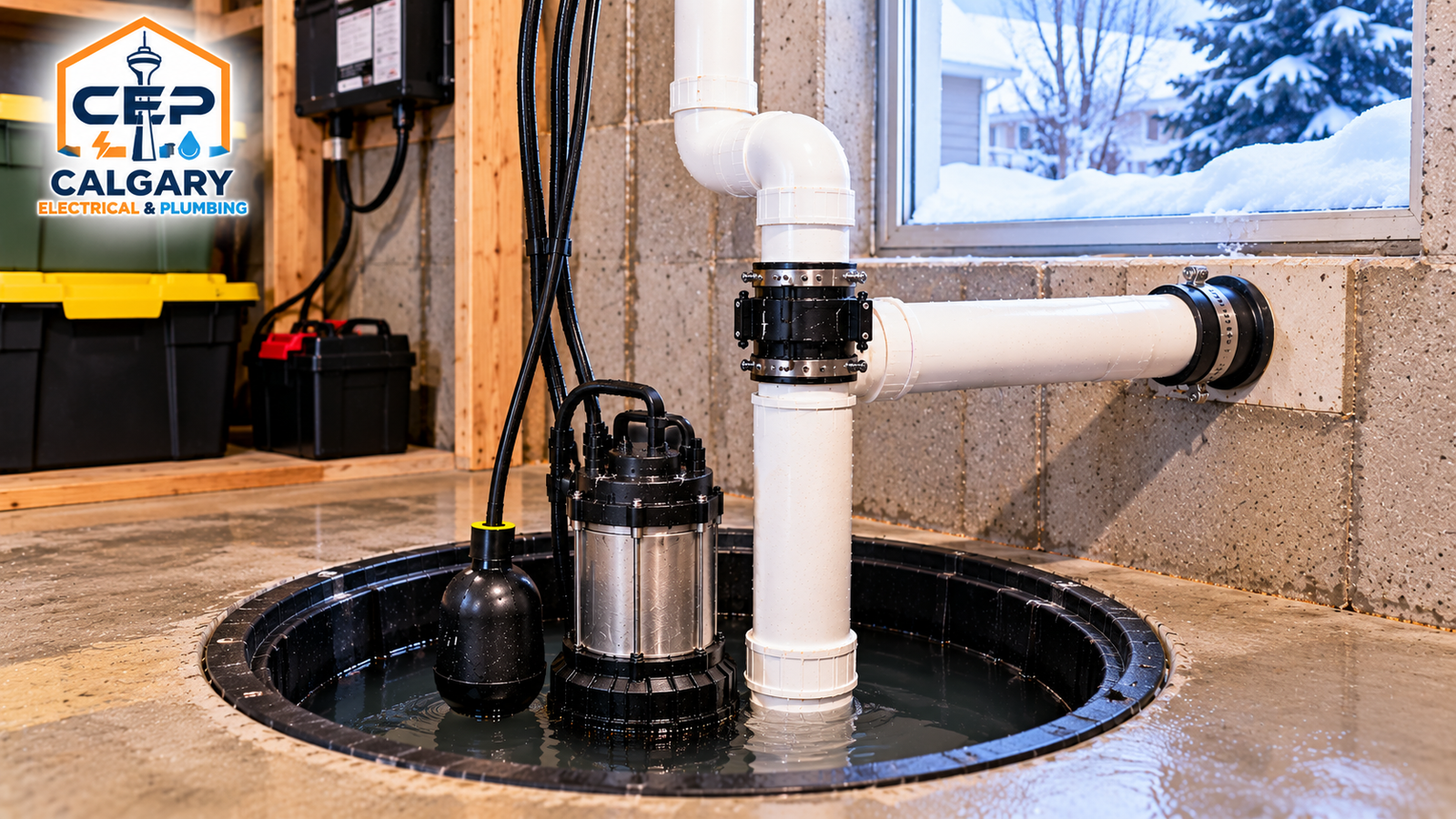

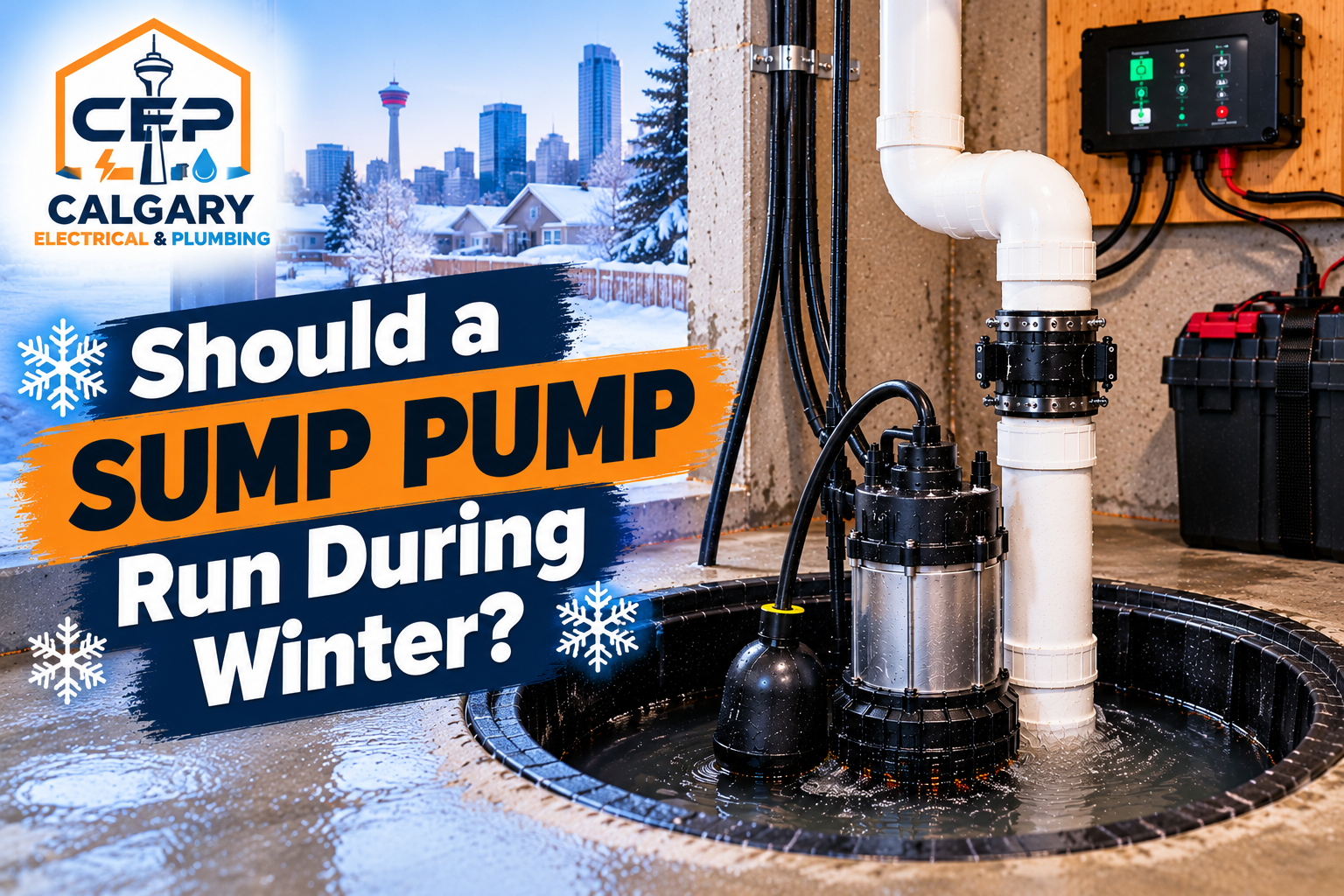
Should a Sump Pump Run During Winter? Many Calgary homeowners assume their sump pump should remain completely inactive once temperatures fall below freezing. However, hearing the pump operate in January or February does not automatically mean something is wrong. Winter sump pump activity depends on groundwater conditions, drainage design, and the location of the discharge piping.
Homes in Mahogany, Auburn Bay, Cranston, Seton, and other Southeast Calgary neighbourhoods may experience different winter drainage conditions. Understanding when a pump should operate can help homeowners recognize problems that may require professional sump pump inspection and plumbing services in Calgary.
Although winter pumping can be normal, continuous running, frozen discharge lines, unusual noises, or water rising inside the sump pit deserve closer attention. Knowing the difference between normal seasonal operation and a developing failure can help reduce the risk of basement flooding.
Yes, a sump pump can run during winter if groundwater or foundation drainage continues entering the sump pit. Occasional operation may be normal, especially during temperature changes or snowmelt. However, continuous running, frozen discharge pipes, or rising water levels may indicate a problem requiring professional inspection.
Is It Normal for a Sump Pump to Run During Winter in Calgary?
Yes. A sump pump can operate during winter whenever water enters the sump pit and activates the float switch. The pump responds to water levels, not outdoor temperature or the calendar.
Although frozen ground may reduce some surface infiltration, water can still move through deeper soil layers and foundation drainage systems.
Why Does Groundwater Enter a Sump Pit During Freezing Weather?
Ground conditions below the frost-affected layer may remain unfrozen, allowing groundwater to move toward foundation drainage systems.
Water entering a sump pit depends on local soil conditions, drainage design, groundwater levels, and seasonal moisture.
Consequently, two neighbouring homes may have very different winter pumping patterns.
Can a Sump Pump Run When the Ground Is Frozen?
Yes. Frozen surface soil does not necessarily mean all underground water movement has stopped.
Some homes continue receiving drainage water below the frozen layer.
The pump may therefore activate occasionally even during extended periods of subzero weather.
Why Does My Sump Pump Run During a Calgary Chinook?
Chinook-related temperature increases can melt accumulated snow and ice.
Where meltwater reaches foundation drainage systems, the sump pit may receive additional water.
Not every warm spell produces increased pumping, but changes in activity can coincide with thawing conditions.
Is It Normal for a Sump Pump to Run in January or February?
Yes, provided the pump is responding to water entering the pit and successfully lowering the water level.
Winter operation is not automatically evidence of a malfunction.
However, unusually frequent cycling or a pump that cannot remove water should be investigated.
Should a Sump Pump Stay Completely Dry During Winter?
Not necessarily. Many sump pits retain some water below the pump’s activation level.
Whether the pit is wet or dry depends on the installation and drainage conditions.
A small amount of standing water does not automatically indicate a defect.
Why Do Some Calgary Homes Have More Winter Sump Pump Activity?
Differences in soil permeability, foundation elevation, lot grading, and drainage arrangements can influence how much water reaches a sump pit.
Homes in Mahogany, Seton, and Cranston should therefore be assessed individually rather than compared solely by neighbourhood.
A neighbour’s inactive pump does not prove that your operating pump is defective.
Can a Sump Pump Run More Often During Snowmelt?
Yes. Melting snow can increase water movement around a property, especially when drainage pathways direct water toward the foundation.
Spring thaw often creates greater pumping demand than midwinter conditions.
However, winter warm spells can also produce temporary increases.
Calgary example: A homeowner in Auburn Bay hears the sump pump activate several times during a January warm spell. The water level rises gradually, the pump removes it, and the motor stops normally. This may reflect seasonal drainage rather than equipment failure.
How Can You Tell Whether Winter Pumping Is Normal?
Observe whether the water level falls when the pump runs and whether the motor stops after the pit reaches its normal shutdown level.
Consistent operation without unusual sounds or water accumulation is generally more reassuring than a pump that runs continuously without moving water.
Changes from the system’s usual behaviour deserve attention.
Key point: Winter sump pump operation can be normal in Calgary. The important questions are whether water is entering the pit, whether the pump removes it effectively, and whether the discharge system remains functional in freezing conditions.
Homeowners seeking local service details can visit the Calgary Electrical and Plumbing Google Maps listing.
What Problems Can Affect Sump Pumps During Calgary Winters?
Cold weather can expose weaknesses in sump pump discharge systems, especially where piping is exposed to freezing temperatures.
Some winter problems involve ice, while others result from ordinary mechanical or electrical faults that become noticeable when pumping demand changes.
Can a Frozen Sump Pump Discharge Pipe Cause Basement Flooding?
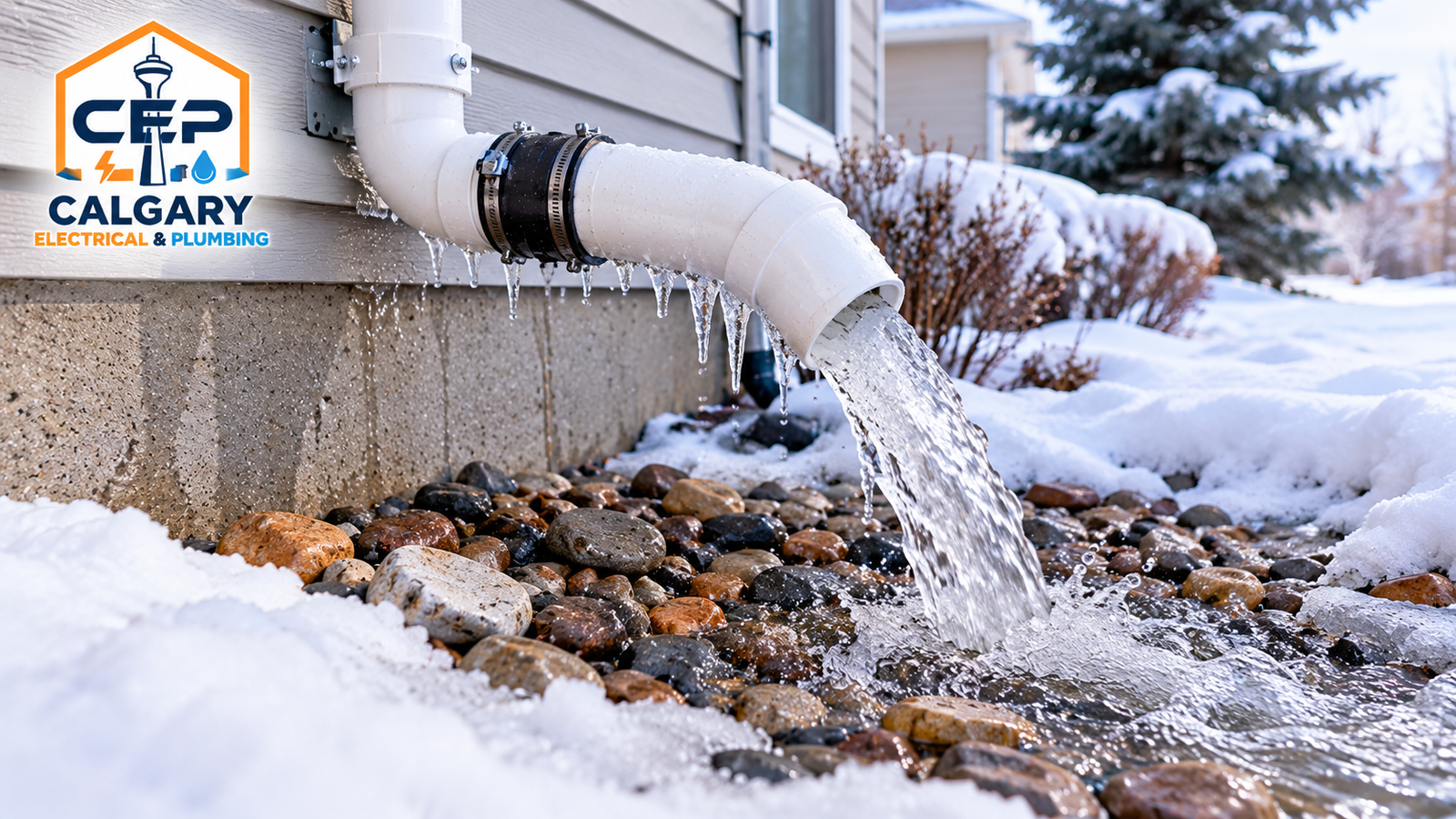
Yes. If water freezes inside a discharge pipe and blocks the flow, the pump may run without removing water from the pit.
When groundwater continues entering, the water level can rise toward the top of the pit.
This creates a potential basement flooding risk.
Why Do Sump Pump Discharge Pipes Freeze?
Freezing can occur when water remains trapped in an exposed pipe, the outlet becomes obstructed by ice, or the discharge arrangement does not drain appropriately.
Low outdoor temperatures increase the risk.
Pipe slope, routing, and installation details also matter.
Can Ice Form at the Discharge Outlet?
Yes. Water discharged outdoors may freeze near the outlet, especially if it collects in a low area.
Ice accumulation can gradually restrict the opening.
Repeated discharge onto the same frozen surface may worsen the obstruction.
What Happens When a Pump Runs Against an Ice Blockage?
A blocked discharge line can prevent normal pumping and place additional stress on the equipment.
The motor may operate while little water leaves the pit.
Prolonged operation under these conditions may contribute to overheating or mechanical damage.
Why Does My Sump Pump Run Continuously in Winter?
Continuous operation may result from sustained groundwater inflow, a stuck float switch, a blocked discharge pipe, or inadequate pumping performance.
The water level provides an important clue.
If the level keeps rising while the pump runs, the system may be failing to discharge water effectively.
Can a Check Valve Cause Winter Sump Pump Problems?
A check valve helps prevent discharged water from flowing back into the sump pit.
If it fails, water may return after the pump stops, causing repeated cycling.
However, check valve installation and discharge drainage must be evaluated together because trapped water can contribute to freezing in exposed piping.
Can a Frozen Pipe Make the Pump Sound Different?
Possibly. A restricted discharge line may change how the pump operates, although unusual sounds can also indicate motor or impeller problems.
Humming without effective pumping, grinding, or repeated shutdowns should be investigated.
Sound alone cannot confirm an ice blockage.
Winter Sump Pump Warning Signs and Possible Causes
| Winter Warning Sign | Possible Cause | Recommended Action |
|---|---|---|
| Pump runs but water level rises | Frozen discharge line, obstruction, or pump failure | Arrange urgent inspection before the pit overflows |
| Pump runs continuously | High inflow, stuck float, or discharge restriction | Check water-level behaviour from a safe location |
| Repeated short cycling | Check valve fault or float control problem | Have the controls and discharge arrangement assessed |
| Ice around discharge outlet | Water collecting and freezing outdoors | Keep clear of hazards and arrange appropriate correction |
| Motor hums without pumping | Blocked discharge, jammed impeller, or motor fault | Avoid prolonged operation and request diagnosis |
| Breaker repeatedly trips | Electrical fault or motor problem | Do not repeatedly reset; seek qualified assistance |
| Water leaks near discharge piping | Damaged fitting, loose connection, or pressure buildup | Arrange plumbing inspection and repair |
Can a Sump Pump Freeze Inside a Heated Basement?
A sump pump located in a normally heated basement is less likely to freeze than exposed outdoor piping.
However, equipment installed in an unheated crawlspace or poorly protected area may face different conditions.
The entire installation must be considered.
Can Power Outages Affect Winter Sump Pump Operation?
Yes. Standard electric sump pumps stop operating when household power is unavailable.
If water continues entering the pit, the level may rise until electricity returns or a suitable backup system operates.
Battery backup capacity and runtime depend on the equipment and conditions.
Winter safety warning: Never use an open flame, torch, or uncontrolled heat source to thaw sump pump piping. Do not handle electrical equipment while standing in water. If the pump is running without lowering the water level, avoid unsafe troubleshooting and arrange qualified assistance.
Can Frozen Discharge Problems Damage the Pump?
Yes. Continued operation against a serious restriction can increase stress on the pump and may contribute to overheating or premature failure.
Repeated freezing may also damage piping and fittings.
Correcting the discharge arrangement is often more important than simply replacing the pump.
Local scenario: A homeowner in McKenzie Towne notices that the sump pump runs continuously during a cold spell. Water remains high in the pit, and ice has formed near the outdoor discharge. The restriction must be investigated before the system can operate normally.
Most important winter risk: A frozen discharge pipe can prevent a functioning pump from removing water. Continuous motor operation does not guarantee effective drainage. Monitor water levels and seek help when pumping performance changes.
Additional location information is available through this Calgary plumbing service map reference.
Request a winter sump pump inspection and repair estimate in Calgary in just a few clicks.
Get My Free Estimate
How Can You Protect a Sump Pump From Freezing in Winter?
Winter protection focuses primarily on maintaining a functional discharge route and preventing water from becoming trapped where freezing can occur.
The correct solution depends on the system’s design, the location of exposed piping, and applicable local drainage requirements.
Should Sump Pump Discharge Pipes Be Insulated?
Insulation may reduce heat loss in certain installations, but insulation alone does not guarantee that water-filled piping will remain unfrozen.
Pipe routing, drainage slope, and exposure are also important.
A plumber can assess whether insulation is suitable for the specific installation.
Why Is Proper Discharge Pipe Slope Important?
A suitable discharge arrangement helps prevent water from remaining trapped in vulnerable sections of piping.
Standing water in exposed sections may freeze during prolonged cold weather.
However, discharge design must also account for check valves, backflow prevention, and manufacturer requirements.
Can You Extend the Discharge Pipe Away From the House?
Discharge extensions may help direct water away from the foundation when correctly designed.
However, poorly sloped or exposed extensions can create additional freezing problems.
Changes should comply with local drainage requirements and avoid directing water onto neighbouring properties or public walkways.
Should You Use Heat Tape on a Sump Pump Discharge Line?
Heat-tracing products may be suitable for certain piping arrangements when specifically approved for the application.
Improper installation can create electrical or fire hazards.
Use only appropriately rated equipment and follow manufacturer instructions and applicable electrical requirements.
How Can You Keep the Outdoor Outlet Clear?
Check accessible discharge outlets for visible ice or snow accumulation when conditions are safe.
Avoid damaging piping while attempting to remove obstructions.
If ice repeatedly forms, the discharge configuration may need professional correction rather than repeated manual clearing.
Can Snow Piles Block Sump Pump Discharge?
Yes. Snow accumulation near an outlet can obstruct water movement or contribute to ice formation.
Discharge points should remain accessible and appropriately located.
Do not create slippery conditions on sidewalks, driveways, or neighbouring property.
Should You Turn Off or Unplug Your Sump Pump During Winter?
Generally, a sump pump should remain available to operate when water enters the pit.
Unplugging it simply because temperatures are below freezing may leave the basement unprotected during groundwater movement or snowmelt.
Any seasonal shutdown should be based on the actual system design and professional guidance.
Should You Drain the Sump Pit Completely Before Winter?
Not necessarily. Many sump systems are designed to retain some water below the activation level.
Attempting to empty the pit completely may be unnecessary and could interfere with normal operation.
Follow the manufacturer’s recommendations rather than making seasonal adjustments without a clear reason.
Can You Pour Antifreeze Into the Sump Pit?
Do not add automotive antifreeze or other chemicals to a sump pit as a routine winter precaution.
Such products may damage equipment, create environmental concerns, or be unsuitable for the drainage system.
Freezing problems should be corrected through appropriate system design and maintenance.
Does a Battery Backup Protect Against Frozen Discharge Pipes?
A battery backup can provide pumping power during certain electrical outages, but it cannot necessarily overcome a blocked or frozen discharge route.
Both the primary and backup systems require an effective path for water removal.
Backup equipment should be inspected as part of winter maintenance.
What if the Discharge Pipe Is Already Frozen?
Do not force the pump to operate continuously against a suspected blockage.
Avoid open flames and unsafe electrical heating methods.
Arrange professional assessment to identify the frozen section and determine an appropriate correction.
Important: Never bypass pump safety controls, repeatedly reset a tripping breaker, or use unapproved heating devices around wet electrical equipment. Frozen discharge problems can create both flooding and electrical hazards.
Can Proper Winter Protection Reduce Basement Flooding Risk?
Yes. Maintaining a clear discharge route, functional pump controls, and appropriate backup arrangements can reduce preventable failures.
However, no sump pump system guarantees protection from every source of basement flooding.
Foundation drainage, grading, and other water-entry pathways also matter.
Calgary example: A homeowner in New Brighton experiences recurring ice near the sump pump discharge outlet. Rather than repeatedly breaking the ice, a plumber evaluates the outlet location, pipe slope, and drainage arrangement to recommend a more suitable winter configuration.
Freeze-prevention takeaway: Keep the discharge route functional, avoid trapped water in exposed piping, maintain accessible outlets, and use only properly approved freeze-protection methods. Never unplug a working sump pump solely because winter has arrived.
For additional company information, visit the Calgary Electrical and Plumbing shared Google business profile.
How Should Calgary Homeowners Maintain Sump Pumps Throughout Winter?
Winter maintenance should focus on observing normal pump operation, keeping discharge pathways functional, and recognizing changes before they lead to water accumulation.
A practical maintenance routine does not require unnecessary adjustments. It involves checking the equipment according to manufacturer guidance and addressing problems when they appear.
How Often Should You Check a Sump Pump in Winter?
Follow the manufacturer’s inspection schedule and increase attention when weather conditions change or the pump begins operating differently.
Checks during thaw periods can be particularly useful.
Do not enter unsafe or flooded areas to inspect equipment.
Should You Test the Pump Before the First Freeze?
Yes. Testing before winter can help identify obvious problems with activation, pumping, and shutdown.
Testing should follow the manufacturer’s instructions and be performed only when the area is safe.
A functioning pump still requires an unobstructed discharge system.
What Should You Inspect During a Winter Maintenance Check?
- Confirm that the pump activates and stops as intended.
- Observe whether water levels fall during operation.
- Look for visible ice near accessible discharge outlets.
- Check exposed piping for damage or leakage.
- Listen for unusual motor or mechanical noises.
- Review backup battery indicators where applicable.
- Watch for frequent short cycling or continuous running.
- Arrange professional inspection when performance changes.
Can Winter Sump Pump Activity Change From Year to Year?
Yes. Groundwater levels, snowfall, temperature patterns, and drainage conditions vary between winters.
A system that remained inactive one winter may operate during another.
For general background on seasonal conditions, see this overview of winter and its climatic characteristics.
Should You Monitor the Sump Pump During Chinook Conditions?
Yes. Rapid temperature increases may produce snowmelt and changing drainage conditions.
Watch for increased cycling, rising pit water levels, or ice forming around the outdoor outlet.
These observations can help identify problems before they become urgent.
Can a High-Water Alarm Help During Winter?
A high-water alarm can alert occupants when the sump pit reaches an abnormal level.
Some systems also provide remote notifications.
However, an alarm does not remove water or correct a frozen discharge pipe.
Why Should You Check the Sump Pump After a Power Outage?
After power returns, confirm that the system resumes normal operation when safe to do so.
Check for unusual noises, alarms, or rising water levels.
If a backup system operated during the outage, review its condition according to manufacturer guidance.
Can Sump Pump Problems Cause Basement Odours in Winter?
Yes. Water that remains stagnant because of poor pumping performance may contribute to unpleasant odours, particularly when organic material accumulates.
However, basement smells can also originate from nearby plumbing or moisture problems.
Our related article explains why a sump pump may smell and how to identify the cause.
When Is Winter Sump Pump Replacement Necessary?
Replacement may be appropriate when the pump is unreliable, mechanically damaged, or unable to meet the home’s drainage needs.
However, a frozen discharge pipe does not automatically mean the pump itself must be replaced.
Accurate diagnosis helps avoid unnecessary equipment costs.
When Should You Call a Calgary Plumber About Winter Sump Pump Problems?
Contact a plumber when the pump runs without lowering the water level, the discharge repeatedly freezes, or the system develops unusual cycling or mechanical noises.
Professional inspection is also appropriate when the pit approaches overflow or discharge piping shows signs of damage.
Electrical faults require qualified assessment.
What Does a Professional Winter Inspection Include?
An inspection may evaluate pump performance, float switch operation, check valve condition, discharge routing, and visible freezing risks.
The technician may also assess whether the installation is suitable for expected drainage demand.
Recommendations depend on the actual findings.
How Can You Prepare for Calgary’s Spring Thaw?
Spring thaw can increase water movement toward foundation drainage systems.
Before the season begins, confirm that the pump operates properly and that the discharge route is functional.
Addressing winter damage early can help prepare the system for higher drainage demand.
Local example: A homeowner in Douglasdale notices occasional winter sump pump activity but no flooding. Before spring thaw, a technician checks the float switch, discharge outlet, and pump performance. This preventive approach helps identify maintenance needs before heavier water inflow begins.
Maintenance takeaway: Winter sump pump care involves monitoring water levels, checking discharge conditions, maintaining controls, and responding to unusual operation. A properly functioning system may run during freezing weather, but it must continue removing water effectively.
Additional resources include this Calgary Electrical and Plumbing video and the company’s X profile for service updates.
Request a winter sump pump inspection and repair estimate in Calgary in just a few clicks.
Get My Free Estimate
Keep Your Calgary Sump Pump Ready for Winter and Spring Thaw
A sump pump can run during winter when groundwater continues entering the pit. The main concern is not the season itself, but whether the pump removes water effectively and whether the discharge system remains clear of freezing obstructions.
An experienced local calgary plumber can inspect winter sump pump problems and recommend appropriate repairs or maintenance. Call Calgary Electrical and Plumbing at (403) 421-1991 to discuss concerns about your basement drainage system.
Frequently Asked Questions about Sump Pumps During Winter
Is it normal for a sump pump to run during winter in Calgary?
Yes. A sump pump may operate during winter when groundwater or foundation drainage continues entering the pit. Occasional pumping can be normal, especially during temperature changes or snowmelt. The important factor is whether the pump removes water effectively and stops at the appropriate level.
Should I unplug my sump pump during freezing weather?
Generally, no. A sump pump should remain available to remove water when the pit fills, even during freezing weather. Unplugging it may leave your basement unprotected during groundwater movement or snowmelt. Seasonal shutdown decisions should follow the system design and professional guidance.
Can a sump pump discharge pipe freeze in Calgary?
Yes. Water trapped in exposed discharge piping can freeze and restrict flow. A blocked line may cause the pump to run without lowering the pit water level, increasing flooding risk. Proper discharge routing, drainage, and suitable freeze protection can help reduce this problem.
Why does my sump pump run more often during a Chinook?
Warmer temperatures during a Chinook can melt accumulated snow and ice. Where meltwater reaches foundation drainage systems, more water may enter the sump pit and activate the pump. Increased cycling can be normal if the system continues removing water effectively.
When should I call a plumber about winter sump pump problems?
Contact a plumber if the pump runs continuously without lowering water, discharge piping repeatedly freezes, or the system makes unusual noises. Rising water, visible leaks, and repeated electrical faults also require attention. Avoid unsafe troubleshooting around standing water or electrical equipment.
Get professional assistance with frozen discharge pipes, sump pump inspections, troubleshooting, and repairs.
Call (403) 421-1991 Now
Residential Sump Pump Repair and Basement Drainage Services in Calgary