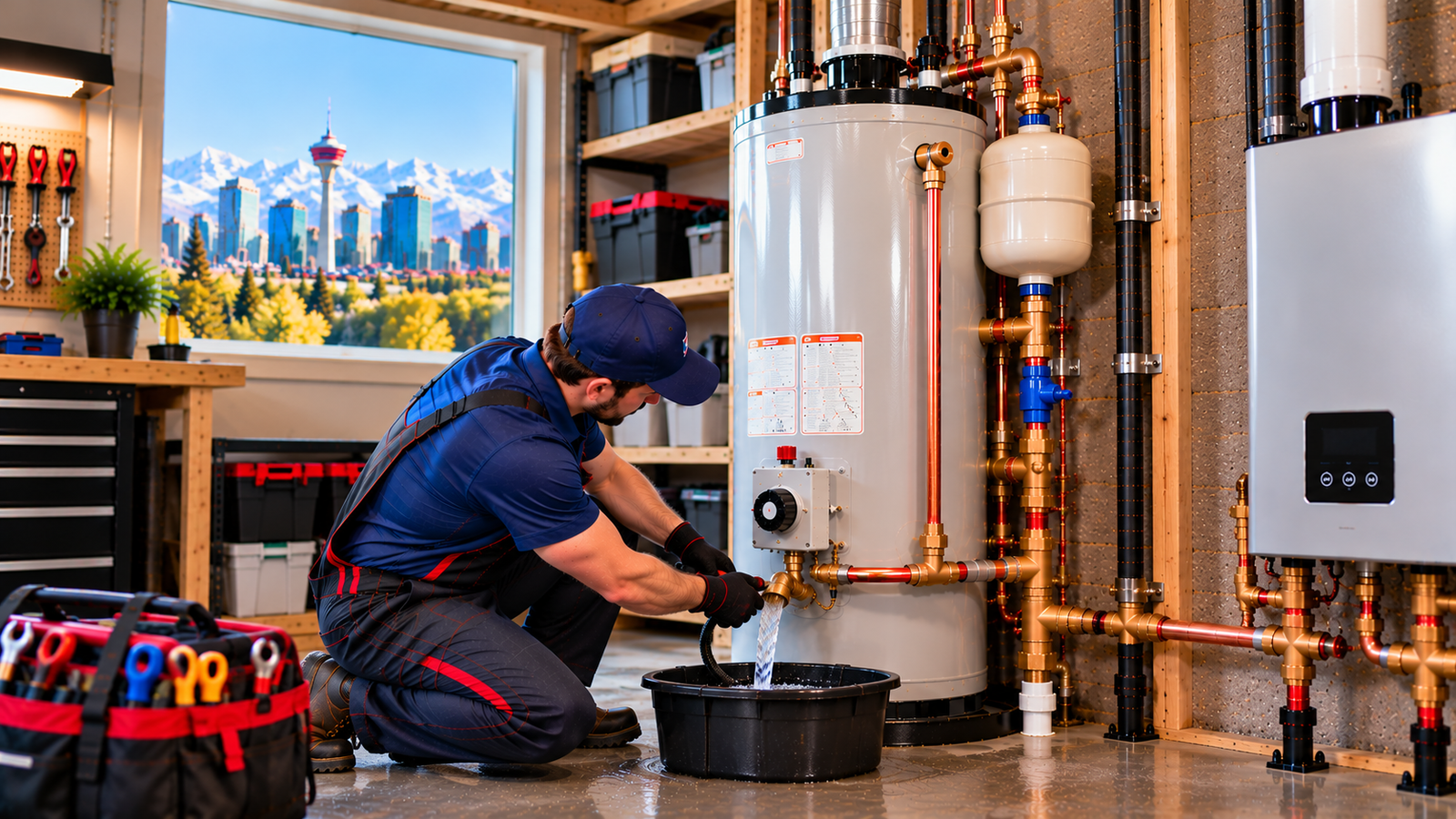

Can Calgary’s Hard Water Shorten a Water Heater’s Life? If your hot water tank has started rumbling, takes longer to heat water, or seems to need repairs more often, mineral buildup could be part of the problem. Calgary homeowners frequently hear about hard water, but its effect on water heating equipment deserves a closer look.
Homes in Mahogany, Auburn Bay, Cranston, and other Southeast Calgary communities receive municipal water containing naturally occurring calcium and magnesium. These minerals can form deposits when water is heated. Professional water heater repair and plumbing services in Calgary can help determine whether mineral buildup, corrosion, or another equipment problem is affecting performance.
Hard water does not automatically destroy a water heater, and it is rarely the only factor determining equipment lifespan. However, accumulated scale, neglected maintenance, operating temperature, and the condition of corrosion-protection components can influence how efficiently a heater operates and how long it remains serviceable.
Yes. Calgary’s hard water can contribute to mineral scale and sediment buildup inside water heaters, potentially reducing efficiency and increasing maintenance needs. Severe deposits may contribute to premature equipment problems, but actual lifespan also depends on corrosion protection, installation quality, usage, water chemistry, and maintenance.
How Does Calgary’s Hard Water Affect Water Heaters?
Hard water contains dissolved minerals, particularly calcium and magnesium. These minerals occur naturally as water moves through soil and geological formations.
Calgary’s drinking water contains hardness minerals, although concentrations can vary with source water and seasonal conditions. The presence of these minerals is not automatically a drinking water safety problem, but it can affect plumbing fixtures and heating equipment.
What Happens When Hard Water Is Heated?
Heating changes the behaviour of certain dissolved minerals. Calcium carbonate, for example, can become less soluble as water temperature rises, allowing solid deposits to form.
These deposits may settle at the bottom of a storage tank or attach to heated surfaces.
Over time, repeated heating cycles can contribute to scale accumulation, particularly in systems exposed to substantial mineral content.
Why Is Scale Buildup a Concern?
Mineral scale can create an insulating layer between heated surfaces and the water they are intended to warm.
Depending on heater design, this may interfere with heat transfer, contribute to operating noise, or increase the workload on heating components.
Severe deposits may also make maintenance more difficult.
Does Calgary Have Hard Water?
Yes. Calgary’s municipal water generally contains enough dissolved calcium and magnesium to be classified as hard.
However, the precise hardness level can change with water source and operating conditions. It is more accurate to consult current City of Calgary water quality information than assume one permanent hardness measurement applies throughout the city.
For general background on mineral content and classification, see this explanation of hard water and its effects.
Do All Calgary Neighbourhoods Experience the Same Effects?
Municipal supply conditions may vary, but household equipment also plays a major role.
Two homes in Mahogany may experience different levels of sediment accumulation because their water heaters operate at different temperatures, have different capacities, or receive different amounts of use.
Similarly, a home in Riverbend with an older tank may have a different maintenance history from a newer property in Seton.
How Does Scale Affect Gas Water Heaters?
Conventional gas storage heaters typically transfer heat through surfaces associated with the tank’s lower portion and combustion system.
Sediment accumulating near heated surfaces can sometimes produce popping or rumbling noises during operation.
These symptoms may indicate deposits, although other mechanical or thermal effects can create similar sounds.
How Does Scale Affect Electric Water Heaters?
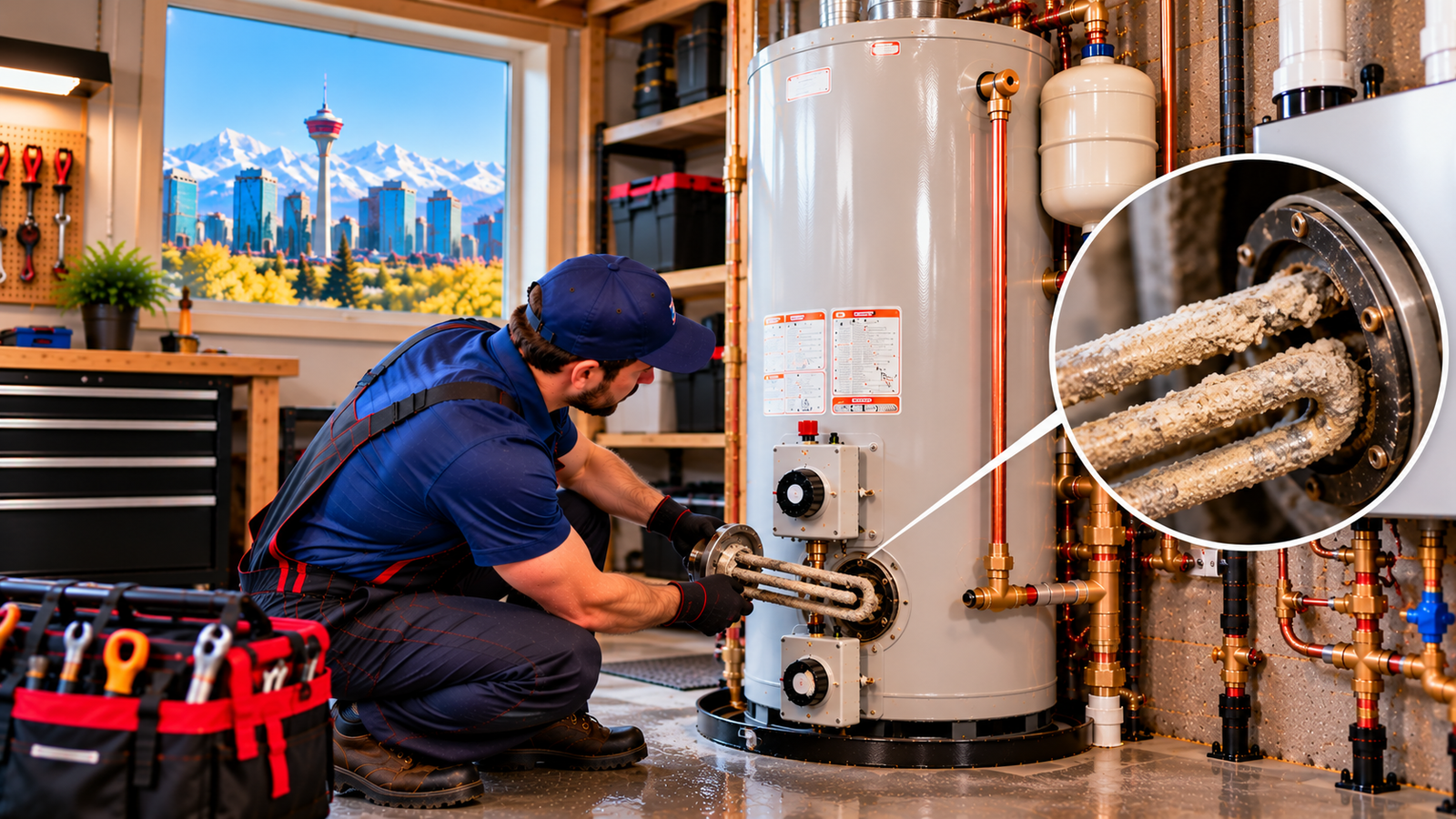
Electric storage heaters generally use heating elements immersed in water.
Mineral deposits can accumulate on these elements, potentially interfering with heat transfer and contributing to component stress.
However, a failed heating element does not automatically mean hard water was responsible. Electrical and mechanical problems can have several causes.
Are Tankless Water Heaters Affected by Hard Water?
Yes. Tankless systems can develop mineral deposits inside their heat exchangers.
Because water flows through relatively compact heating passages, scale may interfere with performance and, in some cases, contribute to restrictions.
Many manufacturers specify descaling procedures and maintenance intervals suited to the equipment and water conditions.
Does Higher Water Temperature Increase Scale Formation?
Higher temperatures can encourage precipitation of certain hardness minerals, potentially increasing scale formation on heated surfaces.
However, water heater temperatures must also account for scald prevention and bacterial-control requirements.
Lowering storage temperature solely to reduce scale may therefore be inappropriate.
For a more detailed discussion, read What Is the Best Temperature for a Residential Water Heater?.
Key point: Calgary’s hard water can contribute to mineral scale in both storage and tankless water heaters. The severity of buildup depends on water chemistry, operating conditions, household demand, equipment design, and maintenance history.
Homeowners looking for company location details can visit the Calgary Electrical and Plumbing Google Maps listing.
Can Hard Water Reduce a Water Heater’s Lifespan?
Hard water can contribute to conditions that affect water heater performance and maintenance requirements. However, predicting how many years it will shorten a particular heater’s life is not straightforward.
Equipment lifespan depends on several interacting factors, including tank construction, corrosion protection, water chemistry, installation, usage, and maintenance.
How Long Should a Water Heater Last?
Many conventional storage water heaters have a typical service life of approximately 8–12 years, although some last longer with suitable conditions and maintenance.
Tankless models may operate for 15–20 years or more, depending on design, water quality, maintenance, and component availability.
These are general planning ranges rather than guaranteed replacement dates.
Can Scale Make a Heater Work Harder?
In some equipment designs, substantial mineral deposits can reduce effective heat transfer.
This may increase heating time or contribute to higher energy consumption under certain operating conditions.
The actual effect varies, and small amounts of sediment do not necessarily cause a noticeable increase in utility bills.
Does Hard Water Directly Cause Tank Corrosion?
Not necessarily. Mineral hardness and corrosion are related to different aspects of water chemistry.
Hardness deposits may create operating or maintenance problems, but corrosion also depends on factors such as dissolved oxygen, pH, chloride content, temperature, tank materials, and corrosion-protection components.
It is therefore misleading to assume every rusted tank failed because Calgary has hard water.
Why Is the Anode Rod Important?
Many conventional storage tanks contain a sacrificial anode rod designed to help protect exposed metal surfaces from corrosion.
The rod gradually deteriorates as part of its protective function and may eventually require replacement.
Its condition should be evaluated according to manufacturer guidance, especially in tanks with a history of corrosion concerns.
Does Flushing Extend Water Heater Life?
Appropriate sediment maintenance may help manage loose deposits and support normal equipment operation.
However, flushing cannot reverse existing corrosion, repair damaged heating components, or remove every hardened mineral deposit.
Maintenance can contribute to better equipment care without guaranteeing a particular lifespan.
Can Hard Water Affect Water Heater Efficiency?
Yes, especially when substantial deposits accumulate on heat transfer surfaces.
The degree of efficiency loss depends on the type of heater, thickness and location of deposits, and operating conditions.
Professional assessment is preferable to assuming that every increase in utility costs is caused by mineral scale.
Typical Lifespan and Hard Water Considerations
| Water Heater Type | General Lifespan Range | Potential Hard Water Concern |
|---|---|---|
| Gas storage tank | Approximately 8–12 years | Sediment buildup near heated tank surfaces |
| Electric storage tank | Approximately 8–12 years | Mineral deposits on heating elements |
| Tankless water heater | Approximately 15–20+ years | Scale accumulation in heat exchangers |
| Heat pump water heater | Approximately 10–15 years | Storage tank sediment and component maintenance |
Lifespan figures are broad industry planning estimates, not manufacturer guarantees. Actual performance and longevity vary with installation, water conditions, maintenance, and equipment quality.
Can Hard Water Make a Water Heater Fail Early?
Severe mineral buildup may contribute to component problems, overheating of certain surfaces, or restrictions in some systems.
These conditions can increase the likelihood of service needs and potentially contribute to premature failure.
However, a failed water heater requires diagnosis before hard water can reasonably be identified as the cause.
Are Older Water Heaters More Vulnerable?
Older equipment may already have accumulated sediment, experienced corrosion, or developed worn components.
Additional scale can complicate an existing maintenance problem.
Aging tanks that have never been serviced should be inspected before flushing because draining may expose deteriorated valves or pre-existing leaks.
Important: Visible tank corrosion, active leakage, or repeated equipment failures require professional assessment. Flushing or descaling cannot restore the structural integrity of a compromised water heater.
Is Hard Water the Biggest Factor in Water Heater Lifespan?
Not always. Incorrect installation, neglected anode protection, unsuitable operating conditions, and manufacturing defects can be equally important or more significant.
Hard water is best understood as one maintenance consideration among several.
A complete evaluation should consider the heater’s overall condition rather than focusing exclusively on mineral content.
Calgary example: A well-maintained tank in Copperfield may remain serviceable longer than a poorly maintained unit of the same age in McKenzie Towne. The difference cannot be attributed to neighbourhood water hardness alone; equipment condition and maintenance history matter.
For another local company reference, see this Calgary plumbing service location listing.
Request a water heater inspection, maintenance, or repair estimate in Calgary in just a few clicks.
Get My Free Estimate
What Are the Warning Signs of Hard Water Damage in a Water Heater?
Mineral buildup can develop gradually, and a water heater may continue operating normally for years before noticeable symptoms appear.
When performance changes occur, it is important to distinguish possible scale problems from unrelated heating, plumbing, or corrosion issues.
1. Popping or Rumbling Sounds
Some storage water heaters develop popping or rumbling noises when heat interacts with accumulated sediment.
These sounds may become more noticeable during heating cycles.
However, thermal expansion and other operating conditions can also create noise, so the sound alone does not confirm mineral buildup.
2. Hot Water Takes Longer to Recover
Heavy deposits may interfere with heat transfer in certain water heaters.
As a result, the appliance may take longer to restore its hot water supply after substantial use.
Slow recovery can also result from faulty heating components, heavy demand, or cold incoming water.
3. Reduced Hot Water Availability
A household that previously enjoyed consistent hot water may begin noticing shorter showers or inadequate supply during busy periods.
Sediment may contribute to the problem, but tank capacity, heating performance, and changes in household usage must also be considered.
4. White Mineral Deposits Around Fixtures
Chalky white residue around faucets and showerheads is a common sign of hardness minerals left behind when water evaporates.
These deposits indicate mineral content in the water, but they do not establish how much scale has accumulated inside the water heater.
5. Inconsistent Water Temperature
Temperature fluctuations may sometimes accompany equipment problems associated with mineral deposits.
However, faulty thermostats, mixing valves, heating elements, and other components can produce similar symptoms.
A qualified plumber should identify the actual cause before recommending descaling or replacement.
6. Tankless Water Heater Performance Problems
In tankless systems, scale buildup may contribute to restricted heat exchanger passages or reduced heating performance.
Some appliances display diagnostic codes when operating conditions fall outside expected ranges.
Any displayed code should be interpreted using the manufacturer’s documentation.
7. Discoloured Hot Water
Rust-coloured or cloudy hot water can indicate several different conditions, including corrosion, suspended sediment, or issues elsewhere in the plumbing system.
Discolouration should not automatically be blamed on hardness minerals.
Persistent changes in water appearance deserve professional investigation.
Can Hard Water Cause a Water Heater to Leak?
Hard water does not automatically cause a tank to leak.
Leakage is often associated with corrosion, deteriorated connections, valves, or other equipment defects.
Mineral deposits may coexist with these problems, but a professional inspection is needed to determine the cause.
Should You Flush a Noisy Water Heater Immediately?
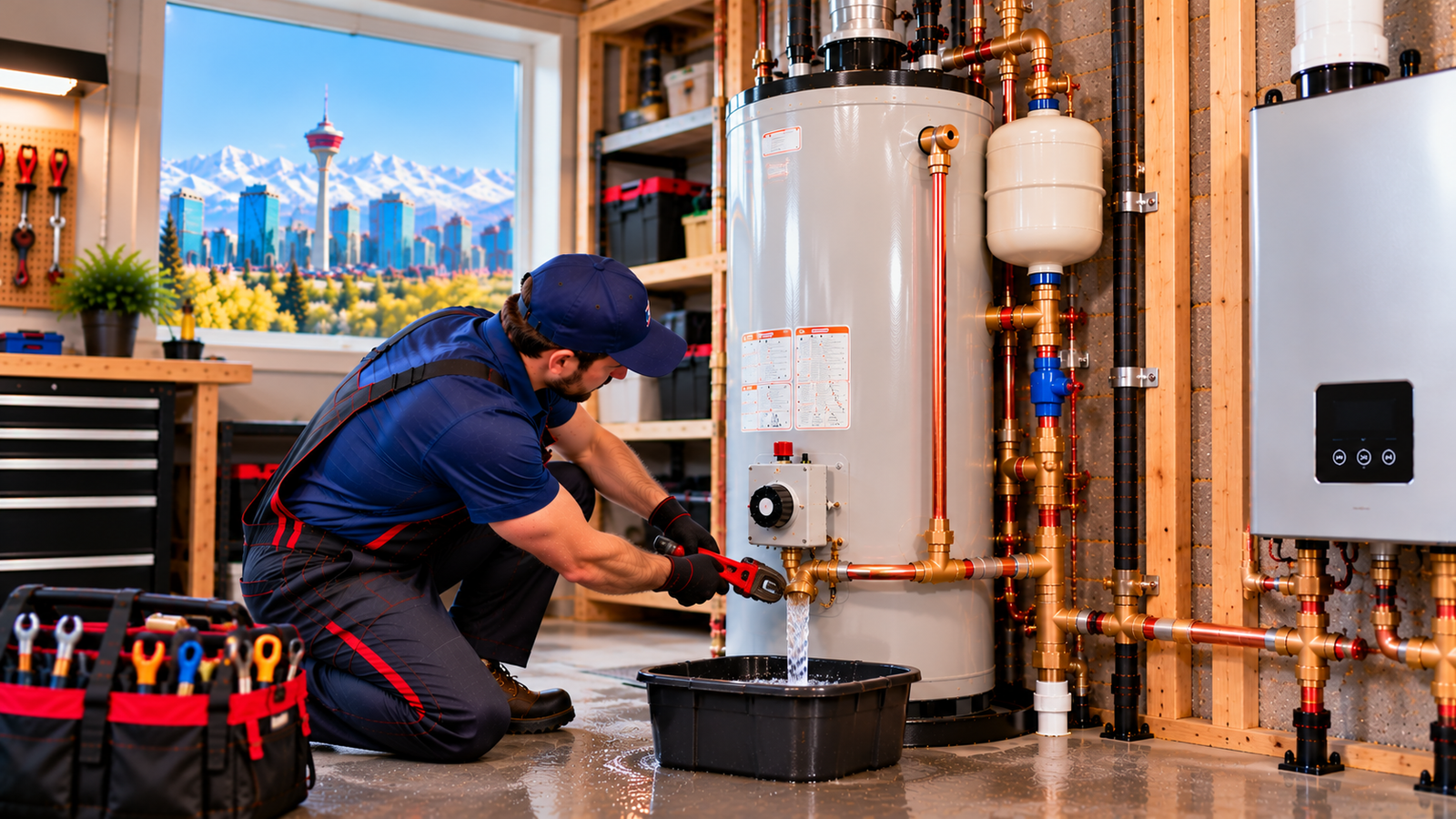
Not necessarily. Flushing may be appropriate when loose sediment is present and the manufacturer recommends the procedure.
However, older tanks with unknown maintenance histories may have deteriorating drain valves or existing corrosion.
These systems should be inspected before draining.
Can a Plumber Confirm Whether Scale Is the Problem?
A plumber can review symptoms, equipment age, maintenance history, and operating performance.
Depending on the appliance, the inspection may identify evidence of sediment, restricted flow, or component problems.
Not every internal deposit can be measured directly without additional procedures, so recommendations should reflect the available findings.
When to seek help: Arrange professional attention if you notice active leakage, unusual overheating, repeated shutdowns, persistent discolouration, or a sudden decline in hot water performance. These symptoms may involve problems beyond mineral scale.
How Can Homeowners Track Developing Symptoms?
Keep a simple record of unusual sounds, hot water interruptions, and changes in heating performance.
Note whether the symptoms occur during heavy household use or throughout the day.
This information can help a technician distinguish between demand-related issues and equipment faults.
Warning-sign summary: Rumbling, slow recovery, reduced hot water delivery, and tankless performance problems may indicate mineral buildup. None of these symptoms proves hard water damage on its own, so diagnosis should come before maintenance or replacement decisions.
For visual background on residential water heating equipment, this water heater video resource may provide additional context. Always follow manufacturer instructions and professional safety guidance rather than attempting unfamiliar servicing procedures.
How Can Calgary Homeowners Protect Their Water Heaters From Hard Water?
Managing mineral buildup is one part of protecting a residential water heater.
The most effective maintenance approach combines manufacturer-approved servicing, appropriate temperature control, inspection of corrosion-protection components, and attention to developing equipment problems.
Follow the Manufacturer’s Maintenance Schedule
Every water heater has specific servicing requirements.
Some storage tanks recommend periodic sediment draining or flushing, while tankless models may require heat exchanger descaling.
Maintenance intervals should reflect manufacturer instructions, water conditions, and the equipment’s actual condition.
Consider Periodic Sediment Flushing
Flushing may help remove loose deposits from a storage tank.
For many models, annual maintenance review is a reasonable starting point, although the correct schedule varies.
Flushing does not necessarily remove hardened scale or repair existing damage.
Arrange Tankless Water Heater Descaling When Recommended
Tankless heaters may require specialized descaling to remove mineral deposits from internal heat exchangers.
Using incorrect chemicals or procedures can damage equipment.
Professional servicing should follow the manufacturer’s requirements for the exact model.
Have the Anode Rod Inspected
In storage heaters equipped with sacrificial anodes, the rod plays an important role in corrosion protection.
Periodic inspection may identify a depleted rod before corrosion becomes severe.
The inspection and replacement schedule depends on tank design, manufacturer instructions, and water conditions.
Would a Water Softener Help?
A properly selected water softener can reduce calcium and magnesium hardness minerals entering household plumbing.
This may reduce scale formation in water heating equipment.
However, a softener is not necessary for every household, and installation should consider water chemistry, maintenance requirements, equipment compatibility, and local regulations.
Do Scale-Prevention Devices Work?
Products marketed for scale control use different technologies and may perform differently under real household conditions.
Some systems aim to reduce mineral deposition without removing hardness minerals from the water.
Claims should be evaluated using independent performance information relevant to the specific technology and water conditions.
Should You Lower the Water Heater Temperature?
Do not lower storage temperature solely to prevent scale.
Domestic hot water temperatures must account for bacterial-control recommendations and scald prevention.
Appropriate mixing or temperature-limiting devices may allow safe fixture delivery while maintaining suitable storage conditions.
How Often Should a Calgary Water Heater Be Inspected?
An annual review of maintenance needs is a practical starting point for many households.
However, the exact inspection and servicing schedule should follow manufacturer guidance and reflect equipment age, symptoms, and water conditions.
Older or neglected heaters may need inspection before flushing.
Is Preventive Maintenance Better Than Waiting for Failure?
Planned maintenance provides opportunities to identify sediment accumulation, worn components, and visible corrosion before major performance problems develop.
It cannot eliminate every breakdown, but it supports better-informed repair and replacement decisions.
Waiting until the tank leaks may leave fewer practical repair options.
Should You Repair or Replace a Scale-Affected Heater?
Repair may be reasonable when the tank is structurally sound and the problem involves a serviceable component.
Replacement may be more appropriate when the tank leaks, corrosion is advanced, or repeated repairs are no longer economical.
Age, warranty status, repair cost, and expected remaining service life should all be considered.
What Should a Professional Inspection Include?
- Reviewing the water heater model, age, and maintenance history.
- Checking visible plumbing connections for leakage or corrosion.
- Assessing unusual noises and changes in heating performance.
- Reviewing manufacturer-approved sediment or scale maintenance.
- Considering the condition of corrosion-protection components.
- Evaluating whether repair, maintenance, or replacement is appropriate.
How Much Does Hard Water Maintenance Cost?
Service costs depend on the heater type, accessibility, condition, and required work.
A routine storage-tank maintenance visit may differ considerably from tankless descaling or a repair involving replacement parts.
Rather than relying on generic prices, request an estimate that identifies the specific service and any additional diagnostic work.
Why Does Local Plumbing Experience Matter?
Homes across Southeast Calgary have different water heater ages, layouts, and hot water demands.
A household in Douglasdale may have an older conventional gas tank, while a newer property in Seton may use a high-efficiency system.
Maintenance recommendations should account for the actual equipment and Calgary’s water conditions.
Can Regular Maintenance Guarantee a Longer Lifespan?
No. Maintenance cannot prevent every component failure or permanently stop corrosion.
Its value lies in managing appropriate service needs, identifying problems early, and supporting normal operation.
Even well-maintained water heaters eventually require replacement.
Practical Calgary maintenance plan: Keep the installation date, model information, and service records for your water heater. Review manufacturer instructions annually, investigate new symptoms, and have aging equipment assessed before attempting sediment removal.
When Is It Time to Contact a Plumber?
Arrange an inspection if your heater makes persistent unusual noises, struggles to supply enough hot water, develops leaks, or requires repeated repairs.
Professional diagnosis can help determine whether mineral buildup is contributing to the problem and whether maintenance remains worthwhile.
Best long-term approach: Calgary homeowners can reduce hard water-related maintenance problems by following manufacturer guidance, arranging appropriate sediment or scale removal, monitoring corrosion protection, and addressing changes in performance before they become severe.
For additional company details and local service information, visit the Calgary Electrical and Plumbing shared Google business profile.
Request a water heater inspection, maintenance, or repair estimate in Calgary in just a few clicks.
Get My Free Estimate
Protect Your Water Heater From Calgary’s Hard Water
Calgary’s hard water can contribute to sediment and mineral scale, potentially affecting heating performance and increasing maintenance requirements. However, water heater lifespan depends on much more than hardness alone. Proper installation, corrosion protection, manufacturer-approved servicing, and timely repairs all matter.
A local calgary plumber can help assess your equipment and recommend practical next steps. Call Calgary Electrical and Plumbing at (403) 421-1991 to discuss water heater inspection, maintenance, or repair.
Frequently Asked Questions about Calgary Hard Water and Water Heaters
Can Calgary’s hard water shorten a hot water tank’s lifespan?
Yes. Hardness minerals can contribute to sediment and scale buildup, potentially affecting heating performance and maintenance needs. Severe deposits may contribute to premature equipment problems, but lifespan also depends on corrosion protection, installation, usage, water chemistry, and how well the heater is maintained.
How often should a water heater be flushed in Calgary?
Many storage water heaters benefit from reviewing sediment maintenance approximately once a year, but the correct schedule depends on manufacturer instructions and equipment condition. Older or neglected tanks should be professionally inspected before draining because existing corrosion or worn valves may create additional risks.
Does a water softener help protect a water heater?
A properly selected water softener can reduce calcium and magnesium hardness minerals, potentially limiting scale formation. However, softeners require maintenance and may not be appropriate for every household. Equipment compatibility, water chemistry, and installation requirements should be reviewed before choosing a treatment system.
Can mineral buildup make a water heater use more energy?
Substantial mineral deposits can interfere with heat transfer in some water heater designs, potentially increasing heating time or energy consumption. The actual effect depends on equipment type and deposit severity. Higher utility bills alone do not prove scale buildup, so professional diagnosis may be necessary.
Should I replace my water heater if it has hard water scale?
Not necessarily. Some scale-related performance problems may be addressed through appropriate maintenance or component repairs. Replacement becomes more likely when the tank leaks, corrosion is advanced, or repeated repairs are uneconomical. A plumber can assess the equipment’s condition and recommend suitable options.
Don’t wait for water heater performance problems to get worse.
Call (403) 421-1991 Now
Professional Water Heater Help in Calgary