
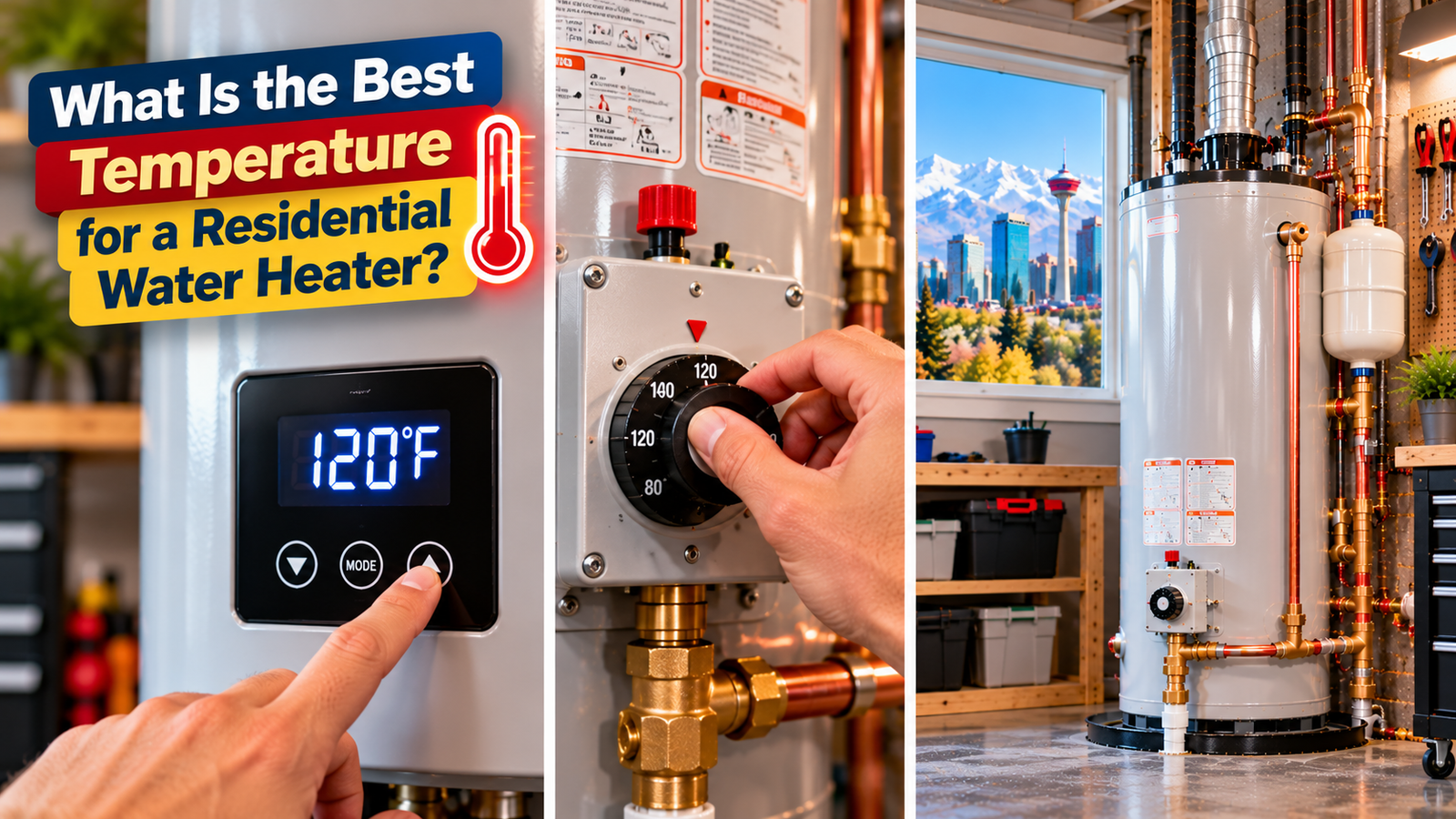
What Is the Best Temperature for a Residential Water Heater? If your shower feels excessively hot, your tap water never seems warm enough, or your utility bills have increased, you may wonder whether the water heater temperature is correct. The answer involves more than selecting a comfortable number on the thermostat.
For homeowners in Mahogany, Auburn Bay, Cranston, and Seton, water heater temperature affects everyday comfort, energy consumption, and household safety. Professional residential water heater and plumbing services in Calgary can help evaluate storage temperatures, fixture-level water delivery, and whether suitable anti-scald protection is installed.
A commonly recommended approach in Canada is to store domestic hot water at approximately 60°C (140°F) while using appropriate temperature-limiting or mixing devices to reduce water temperature at fixtures. The right arrangement depends on your plumbing system, appliance, local requirements, and household needs.
For many Canadian homes, domestic hot water should be stored at approximately 60°C (140°F) to help control Legionella bacteria, while suitable mixing or temperature-limiting devices reduce water delivered to fixtures. A qualified plumber should confirm the correct settings, applicable code requirements, and scald protection for your system.
What Temperature Should a Residential Water Heater Be Set To?
For many residential hot water storage systems in Canada, approximately 60°C (140°F) is an important recommended storage temperature because sufficiently hot storage helps reduce the risk of Legionella bacteria.
However, water at that temperature can cause serious scalding injuries. Safe household design therefore distinguishes between the temperature inside the heater and the temperature delivered at taps and showers.
Is 60°C (140°F) the Recommended Water Heater Temperature?
Health guidance commonly recommends maintaining stored domestic hot water at approximately 60°C to help control Legionella growth.
This recommendation does not mean water should be delivered directly to every fixture at 60°C.
Appropriate mixing valves or temperature-limiting devices may be required to provide safer water temperatures where people use it.
What Is the Difference Between Storage and Delivery Temperature?
Storage temperature is the temperature maintained inside the hot water tank or relevant part of the heating system.
Delivery temperature is the temperature reaching a faucet, shower, bathtub, or other fixture.
These values can differ because of mixing valves, plumbing heat loss, and fixture-specific temperature controls.
Why Is 49°C (120°F) Often Mentioned?
Approximately 49°C (120°F) is frequently discussed as a temperature limit for water delivered to certain household fixtures, particularly bathtubs and showers.
It should not be confused with the recommended storage temperature for many domestic hot water tanks.
Applicable plumbing requirements and suitable fixture controls should determine the actual installation.
Should You Set the Entire Water Heater to 49°C?
Not automatically. Reducing storage temperature to 49°C may increase bacterial growth concerns in some stored hot water systems.
A safer design may involve higher storage temperatures combined with properly selected and installed mixing devices.
Because system arrangements differ, temperature settings should be reviewed by a qualified professional.
Water Heater Temperature Comparison
| Temperature | Common Context | Important Consideration |
|---|---|---|
| 40°C (104°F) | Warm bathing or showering water | Comfortable for some users, but not an appropriate universal storage target |
| 49°C (120°F) | Common fixture delivery temperature reference | Still capable of causing scalding; not necessarily suitable for storage |
| 55°C (131°F) | Intermediate hot water temperature | System safety and bacterial control require careful evaluation |
| 60°C (140°F) | Common Canadian hot water storage recommendation | Requires appropriate scald protection at fixtures |
| Above 60°C (140°F) | Higher-temperature storage or specialized applications | Greater scald risk and potentially higher energy use |
This table provides general context, not instructions to change your thermostat. Applicable code, equipment design, manufacturer instructions, and individual safety needs determine suitable settings.
Does the Best Temperature Depend on the Heater Type?
Yes. Conventional storage tanks, tankless systems, and combination heating arrangements can have different temperature-control requirements.
Storage tanks maintain a reservoir of heated water, while tankless heaters produce hot water as it flows through the appliance.
Both still require appropriate controls to prevent excessively hot water from reaching fixtures.
Can Calgary Homes Have Different Requirements?
Homes in Mahogany, Auburn Bay, and McKenzie Towne may contain different water heater models, plumbing layouts, and fixture controls.
A newer home may have a centralized mixing valve, while an older installation may use different temperature-limiting arrangements.
The correct recommendation should reflect the actual system rather than assuming every household is identical.
Essential distinction: A storage temperature around 60°C and a lower fixture delivery temperature can serve different safety purposes. Proper temperature control aims to manage bacterial growth without exposing household members to dangerously hot water.
For local company details and directions, visit the Calgary Electrical and Plumbing Google Maps listing.
Why Do Water Heater Temperature Settings Affect Household Safety?
Water temperature is a household safety issue because excessively hot water can cause scalding, while inadequate temperature control in stored hot water systems can increase certain bacterial risks.
These concerns require a balanced approach rather than simply turning the thermostat as low or as high as possible.
Why Is Hot Water Scalding Dangerous?
Water hot enough to cause injury may feel dangerously hot almost immediately, especially to young children, older adults, and people with reduced mobility or sensitivity.
Scalding risk rises as water temperature increases.
Appropriate fixture-level temperature controls are important even when the water heater itself is operating normally.
What Is Legionella and Why Does Temperature Matter?
Legionella is a group of bacteria that can grow in certain water systems when conditions are favourable.
Temperature is one factor influencing bacterial growth, along with water stagnation, system design, and maintenance.
Maintaining appropriately hot stored water is one of the measures used to manage this risk.
Why Is Lowering the Thermostat Not Always Safer?
Lower water temperature may reduce immediate scalding risk at a fixture, but it can create other concerns in stored hot water systems.
For this reason, many Canadian recommendations distinguish between hot water storage and controlled delivery.
A professional can determine whether suitable mixing equipment is installed and functioning correctly.
How Do Thermostatic Mixing Valves Help?
A thermostatic mixing valve combines hot and cold water to deliver water at a controlled temperature.
When correctly selected, installed, and maintained, it can help reduce the risk of excessively hot water reaching household fixtures.
Different devices serve different purposes, so selection should follow the relevant plumbing requirements.
Are Anti-Scald Devices the Same as Mixing Valves?
Not necessarily. Some controls regulate temperature centrally, while others are installed at specific fixtures.
Pressure-balancing shower valves, thermostatic controls, and temperature-limiting devices may offer different forms of protection.
The correct solution depends on the plumbing arrangement and applicable code requirements.
What About Homes With Children or Older Adults?
Households with young children, older adults, or people who may have difficulty reacting quickly to hot water should pay particular attention to fixture temperatures.
Appropriate temperature-limiting devices and regular inspection can help reduce scalding risks.
These measures are especially important around bathtubs and showers.
Can Water Heater Thermostats Be Inaccurate?
Yes. A thermostat setting does not always represent the exact temperature reaching a fixture.
Equipment cycling, sensor calibration, mixing valves, and heat loss through piping can affect measured temperatures.
Professional testing can identify whether the system is operating within its intended range.
Is It Safe to Adjust a Water Heater Yourself?
Changing water heater controls without understanding the system can create scalding or bacterial-control concerns.
Some electric heaters also have controls behind panels containing hazardous electrical components.
Homeowners should not open electrical compartments, modify gas controls, or bypass temperature-limiting devices to change settings.
Important safety warning: Water stored at approximately 60°C can cause severe scalding if delivered directly to a fixture. Do not increase or decrease water heater temperatures without considering mixing valves, manufacturer instructions, and applicable plumbing requirements. Seek qualified assistance if you are uncertain.
Can Faulty Mixing Valves Cause Temperature Problems?
Yes. A malfunctioning or improperly adjusted mixing valve may cause water to arrive too hot, too cool, or inconsistently.
However, similar symptoms can also result from other plumbing or water heater problems.
Diagnosis should identify the actual cause before parts are replaced.
What Should You Do If Tap Water Is Suddenly Too Hot?
Avoid using the affected fixture until the problem is assessed, particularly if water temperature is unpredictable.
Sudden overheating may involve thermostat, control, or mixing-valve problems.
Do not assume that an unusually hot tap is simply a minor adjustment issue.
Calgary household example: A family in Cranston notices that bathtub water has become much hotter than usual, even though the water heater settings appear unchanged. A qualified plumber can check whether the issue involves a fixture control, mixing valve, or heater component.
How Can You Confirm a Safe Household Setup?
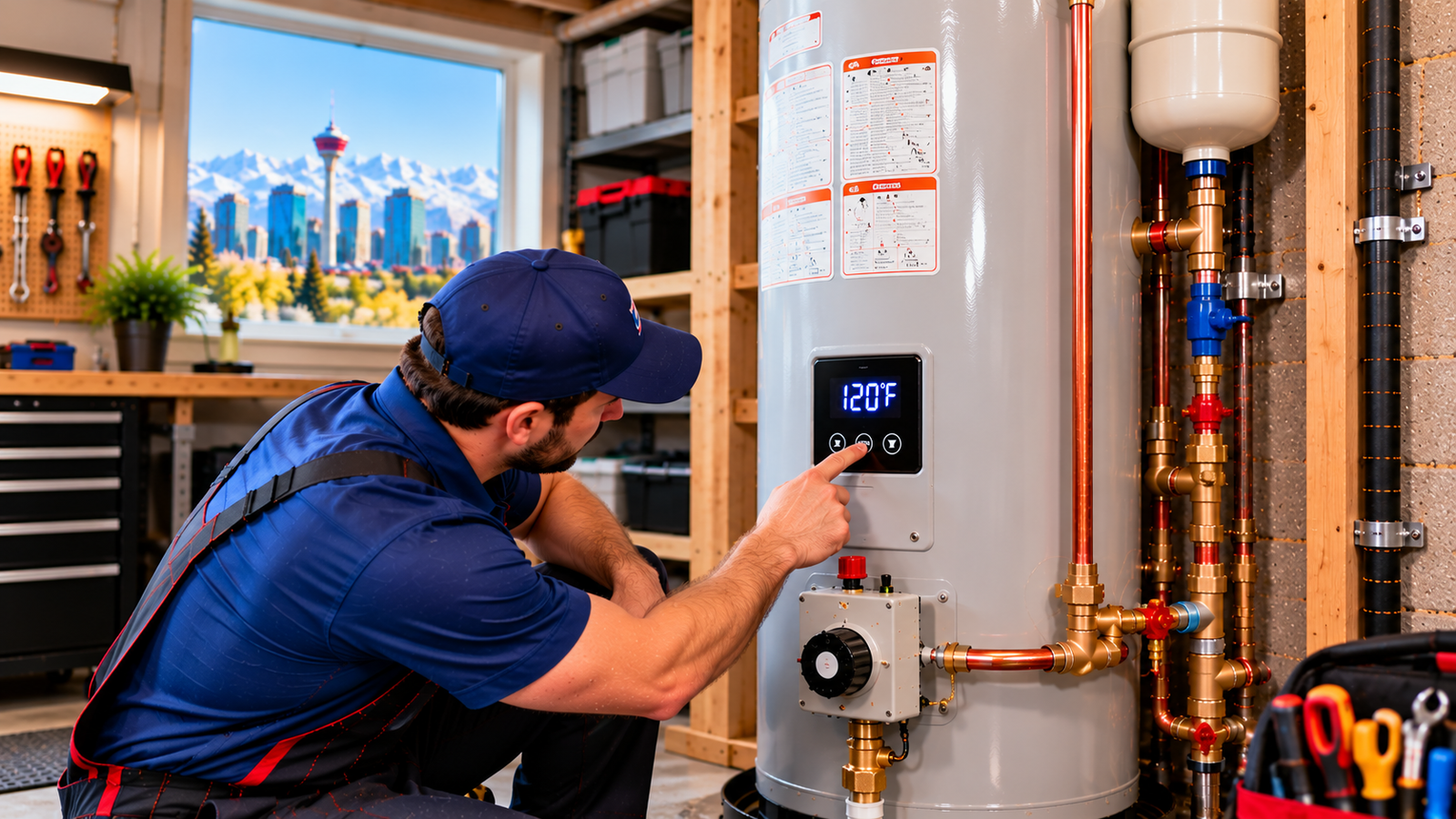
A professional assessment can review storage temperature, actual fixture delivery temperature, and the operation of any mixing or temperature-limiting devices.
The technician can also consider the water heater model, plumbing arrangement, and applicable local requirements.
This provides a more reliable assessment than relying on a thermostat dial alone.
Safety takeaway: The goal is not simply to make water hotter or cooler. Safe residential hot water systems balance bacterial-control measures in storage with appropriate protection against scalding at fixtures.
Additional local business information is available through this Calgary plumbing service location reference.
Request a residential water heater temperature inspection and adjustment estimate in Calgary in just a few clicks.
Get My Free Estimate
How Does Water Heater Temperature Affect Energy Use and Performance?
Water heater temperature affects the amount of energy required to heat water and, for storage tanks, the heat lost while water remains in the reservoir.
However, reducing the temperature is not always an appropriate energy-saving measure when bacterial-control and safety requirements must also be considered.
Does a Higher Temperature Increase Energy Consumption?
In general, maintaining a higher storage temperature increases the temperature difference between the water and surrounding air.
This can increase standby heat losses in storage heaters.
The actual effect depends on tank insulation, equipment efficiency, usage, and surrounding conditions.
Can Lowering the Temperature Save Money?
Reducing storage temperature can sometimes reduce energy consumption, but it should not be done without considering hot water safety and bacterial growth risks.
Energy savings also depend on the appliance and household consumption patterns.
A professional can recommend efficiency improvements that do not compromise appropriate temperature control.
Does Hotter Stored Water Last Longer?
In some storage systems, hotter water can be mixed with more cold water before reaching a suitable delivery temperature.
This may increase the effective amount of usable mixed hot water.
However, this approach requires correctly designed temperature-limiting controls and should not be used as a reason to raise settings indiscriminately.
How Do Calgary Winters Affect Water Heating?
Cold incoming water can increase the temperature rise required to produce domestic hot water.
For example, heating incoming water from 5°C to a storage temperature of 60°C requires a 55°C temperature increase.
This is an illustrative calculation, not a claim about Calgary’s current incoming water temperature.
Can Temperature Settings Cause Slow Recovery?
Water heater recovery depends on heating capacity, tank size, incoming water temperature, and demand.
Temperature settings can influence how the equipment operates, but slow recovery may also indicate sediment buildup or a faulty component.
Diagnosis is preferable to changing settings without understanding the cause.
Does Sediment Affect Water Heater Temperature?
Mineral deposits can affect heating performance in some storage water heaters.
Substantial sediment may contribute to unusual noises or reduced heat transfer, depending on equipment design.
However, sediment does not explain every temperature problem, and flushing will not repair defective controls.
For more information about maintenance intervals, read How Often Should a Water Heater Be Flushed?.
Do Tankless Water Heaters Need Different Temperature Settings?
Tankless systems heat water on demand rather than maintaining a large stored supply.
They may offer adjustable output temperatures, but safe fixture delivery remains essential.
The correct operating temperature depends on equipment design, manufacturer requirements, and the household plumbing system.
Can Tankless Water Heaters Produce Excessively Hot Water?
Yes. Tankless equipment can deliver water at temperatures capable of causing scalding if controls are improperly configured or malfunctioning.
Some models incorporate temperature regulation features, but these do not eliminate the need for correct installation and suitable fixture protection.
Professional assessment remains important when temperatures fluctuate unexpectedly.
What Is the Role of Pipe Insulation?
Insulating appropriate hot water piping can reduce heat loss as water travels through the plumbing system.
This may improve temperature consistency and reduce wasted heat without requiring unsafe storage temperature changes.
Insulation should be installed in accordance with applicable requirements and equipment clearances.
Does a Recirculation System Change the Calculation?
Hot water recirculation systems can reduce waiting time at distant fixtures, but they also introduce additional energy and temperature-management considerations.
Circulation patterns, insulation, controls, and bacterial-control requirements may influence system design.
A qualified plumber should evaluate these systems rather than relying on a single thermostat setting.
Why Do Some Faucets Feel Cooler Than Others?
Different fixtures may have different mixing arrangements, pipe lengths, or temperature-limiting devices.
A bathroom in a home in Copperfield may receive water at a different temperature from a nearby kitchen faucet.
Uneven temperatures should be evaluated in the context of the plumbing system.
How Can Homeowners Improve Efficiency Safely?
Appropriate maintenance, suitable pipe insulation, leak repairs, and efficient equipment selection can all support better water heating performance.
These measures may be more appropriate than simply reducing storage temperature.
The best combination depends on the home’s existing equipment and water usage.
Energy efficiency insight: A home in New Brighton with a well-insulated modern storage tank may have different energy characteristics from an older home in Lake Bonavista. Compare equipment condition, hot water usage, and heat losses before assuming a thermostat change will deliver meaningful savings.
Should Energy Savings Take Priority Over Safety?
No. Hot water storage and delivery temperatures should first satisfy applicable safety and health considerations.
Once the system is appropriately configured, homeowners can explore efficiency improvements that maintain safe operation.
Small energy savings do not justify increased scalding or bacterial-control risks.
Efficiency takeaway: Higher storage temperatures can increase standby heat loss, but reducing temperature without proper assessment may introduce health concerns. Focus on safe temperature control, efficient equipment, insulation, and maintenance rather than making unsupported thermostat adjustments.
Homeowners can also access company information through the Calgary Electrical and Plumbing shared Google business profile.
When Should Calgary Homeowners Have Water Heater Temperatures Checked?
Water heater temperature should be reviewed when equipment is installed, replaced, repaired, or begins delivering water inconsistently.
A professional assessment can help determine whether storage temperature, mixing controls, or another part of the plumbing system requires attention.
Schedule an Inspection After Water Heater Installation
A newly installed heater should be commissioned according to manufacturer instructions and applicable requirements.
This includes confirming appropriate operation and checking the intended hot water delivery arrangement.
Proper commissioning is especially important when a replacement heater differs from the previous model.
Have Temperatures Checked After Plumbing Modifications
Changes to water heaters, mixing valves, or fixture controls can affect delivered water temperature.
After relevant modifications, the system should be checked to confirm that its temperature-control arrangement remains appropriate.
Do not assume that a new component automatically produces the correct results without verification.
What If Your Shower Suddenly Becomes Too Hot?
Unexpected overheating should be treated as a potential safety concern.
A malfunctioning mixing valve, fixture control, thermostat, or another component may be responsible.
Avoid using the affected fixture until the cause is identified and corrected.
What If Hot Water Is Not Hot Enough?
Insufficient hot water may involve an undersized heater, heavy household demand, a faulty component, or a mixing-valve problem.
It may also reflect a temperature-control issue.
Increasing the thermostat without diagnosis can create scalding risks elsewhere in the plumbing system.
Can a Plumber Test Water Heater Temperature?
Yes. A qualified plumber can evaluate the system’s temperature-control arrangement and investigate inconsistent hot water delivery.
Depending on the installation, this may include assessing storage settings, fixture delivery temperatures, and relevant mixing devices.
Any adjustments should follow manufacturer instructions and applicable code requirements.
How Much Does a Water Heater Temperature Inspection Cost?
Costs depend on the equipment, diagnostic scope, accessibility, and whether repairs or replacement parts are required.
A basic temperature assessment may be less involved than diagnosing a malfunctioning control system or replacing a mixing valve.
The following figures are illustrative budgeting examples rather than verified current Calgary service prices.
| Service | Illustrative Cost (CAD) | Cost Considerations |
|---|---|---|
| Water heater temperature inspection | $100–$200+ | Diagnostic scope and equipment accessibility |
| Temperature-control assessment | $150–$300+ | Testing and adjustment requirements |
| Mixing valve repair or replacement | $250–$650+ | Valve type, materials, and labour |
| Complex system diagnosis | Quoted after assessment | Equipment condition and additional repairs |
Pricing disclaimer: These are illustrative, nonbinding CAD ranges, not confirmed Calgary averages or Calgary Electrical and Plumbing quotations. Actual costs vary with labour, parts, taxes, site conditions, and required work.
What Should You Ask During a Temperature Inspection?
- Is the water heater storage temperature appropriate for the system?
- Are fixture delivery temperatures within applicable requirements?
- Is a thermostatic mixing valve installed where needed?
- Are existing temperature-limiting devices functioning correctly?
- Could sediment or equipment faults explain inconsistent heating?
- Are any repairs or upgrades recommended for safer operation?
- What maintenance does the manufacturer require?
How Often Should Temperature Controls Be Inspected?
Inspection frequency depends on the equipment, manufacturer recommendations, and whether symptoms are present.
Temperature controls should also be checked after relevant repairs or modifications.
Homes with vulnerable occupants may benefit from particular attention to fixture-level scald protection.
Are Older Calgary Homes More Likely to Need Upgrades?
Older plumbing systems may have different temperature-control arrangements from newer installations.
However, age alone does not establish whether a system is unsafe or requires modification.
A professional inspection can determine whether existing controls remain suitable.
What About Newer Southeast Calgary Communities?
Homes in Seton, Mahogany, and Auburn Bay may contain modern water heating equipment and fixture controls, but installations still vary.
Even newer systems can experience thermostat problems, mixing-valve faults, or changes in performance.
Correct installation and ongoing maintenance remain important regardless of construction date.
Should You Replace a Water Heater With Temperature Problems?
Not necessarily. Some problems can be corrected by repairing a control, mixing valve, or other component.
Replacement may be more appropriate when the heater is leaking, severely corroded, or experiencing repeated failures.
A diagnosis helps determine whether repair or replacement offers better value.
How Can You Prepare for a Professional Assessment?
Record which fixtures are affected and whether the problem is constant or intermittent.
Note the water heater’s approximate age, model, recent repairs, and any unusual sounds or leaks.
These details can help identify whether the issue involves the heater or the wider plumbing system.
Where Can You Learn More About Water Heater Services?
Videos and online discussions may provide useful background, but they should not replace appliance-specific safety guidance.
For additional visual context, see this water heater-related video resource.
For broader platform discussions and home-maintenance content, the Tumblr dashboard provides access to the service, although its content should not be treated as a substitute for qualified plumbing advice.
Why Is Professional Temperature Control Important?
Residential water heating involves several connected concerns: storage temperature, bacterial control, scald prevention, equipment performance, and energy consumption.
Changing one setting can affect more than one of these factors.
A qualified plumber can evaluate the complete arrangement and recommend suitable adjustments or repairs.
Calgary homeowner recommendation: Whether your property is in Copperfield, Douglasdale, Riverbend, or Lake Bonavista, have unusually hot or inconsistent water investigated before changing thermostat settings. A correct diagnosis can identify whether the heater, mixing valve, or fixture controls need attention.
Final recommendation: For many Canadian residential storage systems, approximately 60°C is an important hot water storage target, while suitable controls reduce water temperature at fixtures. Professional assessment helps balance bacterial-control measures, scald prevention, comfort, and efficiency.
Request a residential water heater temperature inspection and adjustment estimate in Calgary in just a few clicks.
Get My Free Estimate
Choose a Water Heater Temperature That Prioritizes Safety
The best residential water heater temperature depends on how hot water is stored, controlled, and delivered. For many Canadian homes, maintaining stored water at approximately 60°C while using suitable scald protection provides an important starting point for professional assessment.
A local calgary plumber can evaluate your system and recommend appropriate temperature controls. Call Calgary Electrical and Plumbing at (403) 421-1991 to discuss residential water heater inspection and temperature-related plumbing concerns.
Frequently Asked Questions about Water Heater Temperature
What temperature should a residential water heater be set to in Calgary?
For many Canadian homes, approximately 60°C (140°F) is recommended for stored domestic hot water to help control Legionella bacteria. Appropriate mixing or temperature-limiting devices should reduce water delivered to fixtures. A qualified plumber should confirm the correct arrangement for your system and applicable requirements.
Is 60°C too hot for household tap water?
Water at 60°C can cause serious scalding and should not be delivered unprotected to household fixtures. Storage and delivery temperatures serve different purposes. Properly installed mixing or temperature-limiting devices can help provide safer water temperatures at showers, bathtubs, and other fixtures.
Can I set my water heater to 49°C to save energy?
Lowering storage temperature to 49°C (120°F) may reduce heat loss, but it can create bacterial-control concerns in some stored hot water systems. Do not change the setting without considering manufacturer instructions, plumbing requirements, and suitable scald protection. Professional assessment is recommended.
Why does my shower water get hotter than usual?
Unexpectedly hot shower water may result from a malfunctioning mixing valve, fixture control, thermostat, or another plumbing issue. Avoid using a fixture that delivers unpredictable or dangerously hot water. A qualified plumber can identify the cause and recommend appropriate repairs.
Do tankless water heaters need the same temperature setting as storage tanks?
Not necessarily. Tankless heaters produce hot water on demand and may have different control requirements from storage systems. Safe fixture delivery remains essential, regardless of heater type. Follow manufacturer instructions and have a qualified professional assess the appropriate operating temperature and protection devices.
Have unsafe or inconsistent hot water temperatures professionally assessed.
Call (403) 421-1991 Now
Contact Our Calgary Plumbing Team