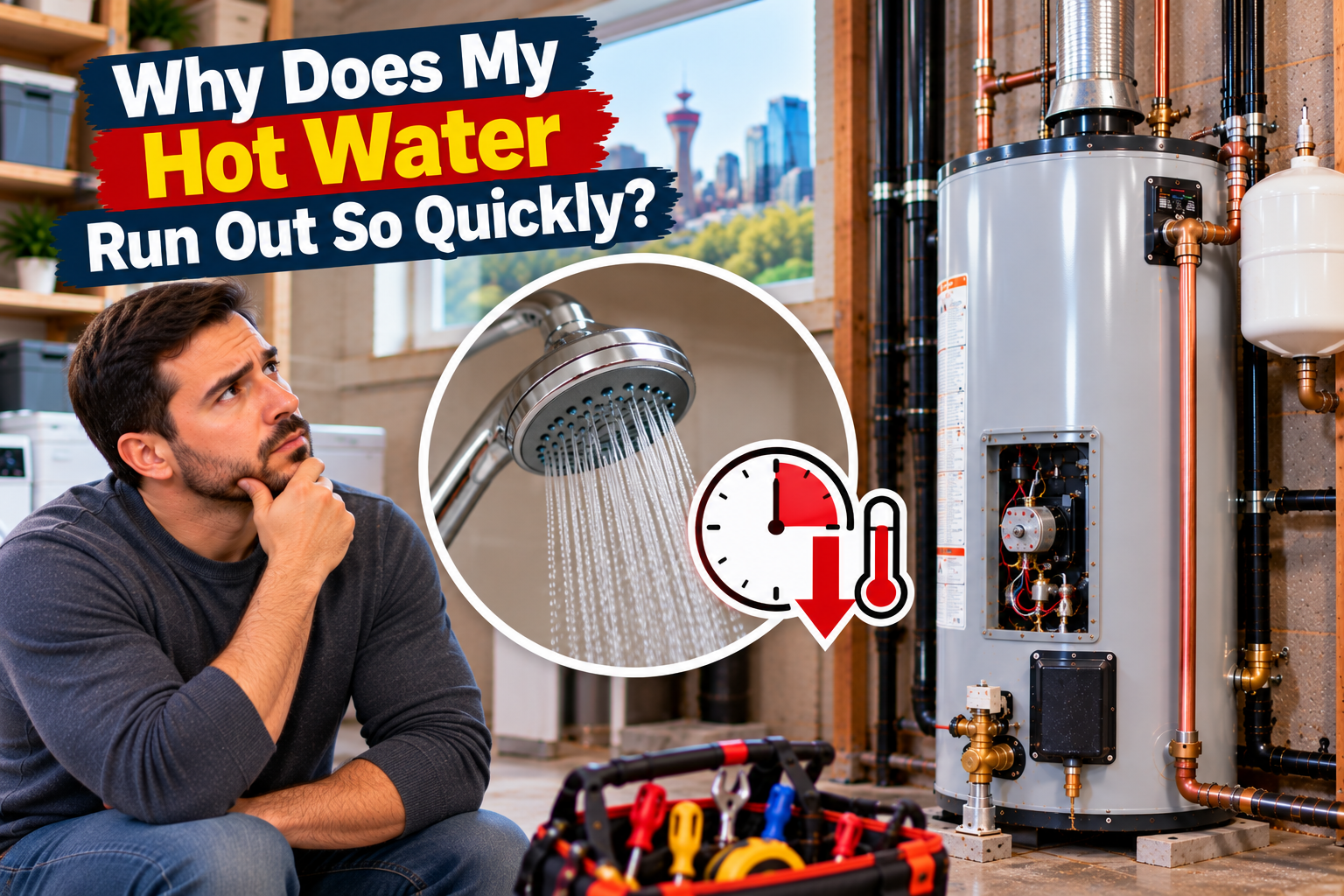

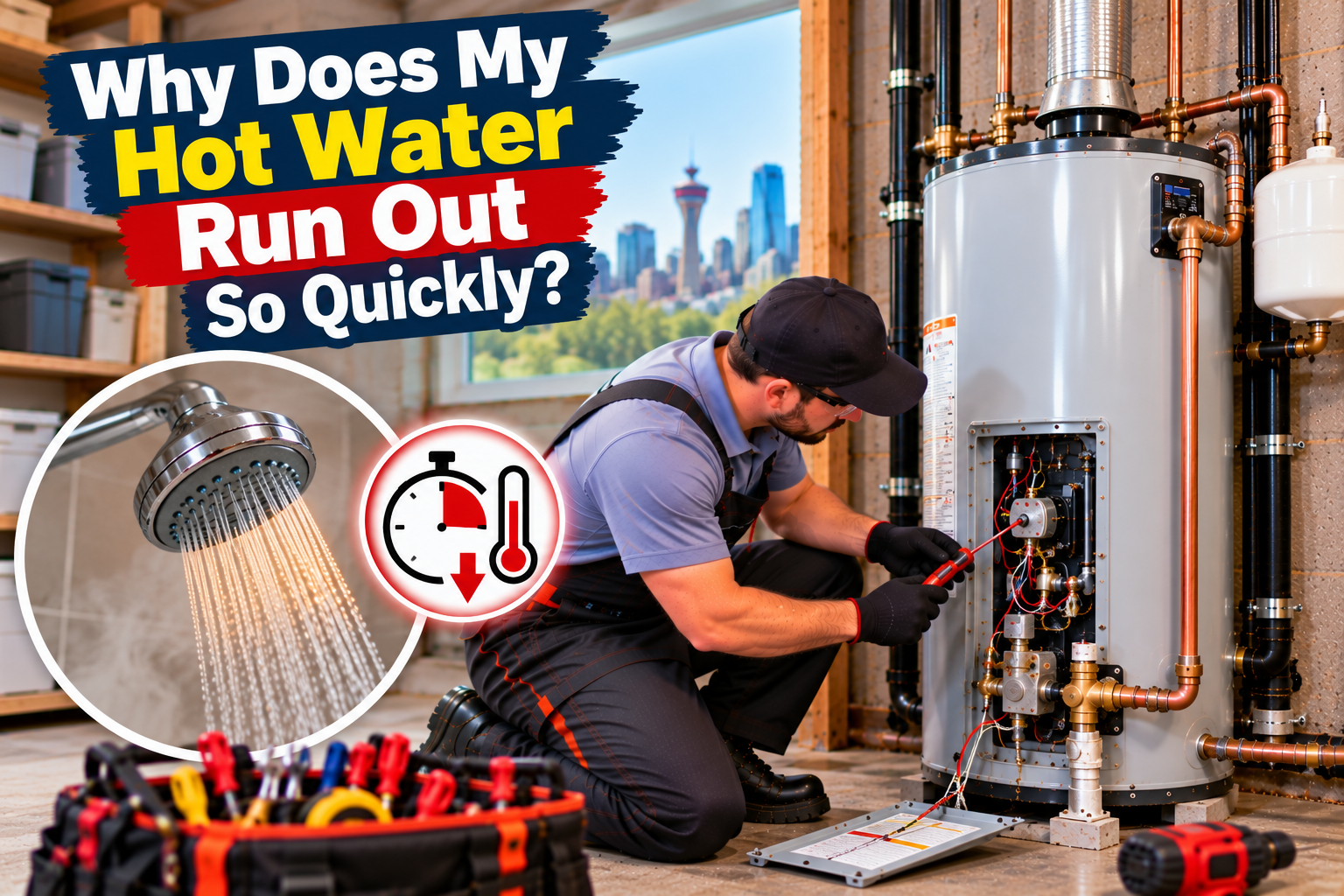
Why Does My Hot Water Run Out So Quickly? You might ask this after the shower suddenly turns cold, even though nobody has been using hot water for very long. For Calgary homeowners, a shrinking hot water supply can interrupt morning routines, laundry, and other everyday activities. The cause may be the water heater, household usage, or a plumbing component.
Homes in Southeast Calgary neighbourhoods such as Mahogany, Auburn Bay, Cranston, and McKenzie Towne have different water heating systems and household requirements. Understanding how the equipment operates is essential before deciding on a repair. Professional water heater and plumbing services in Calgary can help identify whether the problem involves heating performance, storage capacity, or another condition.
A water heater that once supported several showers may begin delivering noticeably less hot water because of a failed heating element, temperature-control problem, sediment accumulation, or changing household demand. This guide explains the warning signs, safe observations, practical solutions, and circumstances in which upgrading the equipment may be worthwhile.
Hot water may run out quickly because the heater is undersized, household demand has increased, a heating element or thermostat has failed, sediment has reduced performance, or a plumbing mixing problem is present. Identifying whether the issue affects every fixture helps determine the next step.
What Causes Hot Water to Run Out So Quickly in Calgary Homes?
When hot water runs out faster than it used to, the first question is whether the heater has lost performance or the household is using more hot water than the system can supply. Both situations are common, and they require different solutions.
Increased Household Hot Water Demand
One of the simplest explanations is that the household is using more hot water. Additional occupants, longer showers, frequent laundry loads, and simultaneous use of multiple fixtures can exhaust a conventional storage tank.
For example, a tank that comfortably served two residents may struggle when four people begin showering within the same hour. The appliance may still be working as designed, but its capacity no longer matches demand.
A Failed Electric Heating Element
Many electric storage water heaters use two heating elements. Depending on the system design, one element may help heat the upper portion of the tank while another contributes to heating the remaining water.
If an element fails, the heater may produce some hot water but recover slowly or deliver a smaller usable supply. This can make a shower turn cold sooner than expected.
A qualified technician can test the components and determine whether replacement is appropriate.
Thermostat or Temperature-Control Problems
Water heaters use temperature controls to regulate heating. A malfunctioning thermostat can interfere with the appliance’s ability to maintain the intended water temperature.
Symptoms may include lukewarm water, inconsistent performance, or longer recovery periods. These symptoms can overlap with heating-element problems, so diagnosis matters.
Sediment Accumulation Inside the Tank
Mineral deposits can accumulate inside conventional water heaters over time. Depending on the equipment and conditions, sediment may contribute to unusual noises, reduced heat transfer, and maintenance concerns.
Heavy accumulation may affect usable capacity or heating performance, but sediment should not automatically be blamed for every short hot water supply.
Manufacturer-approved maintenance may help certain conditions, although it cannot reverse corrosion or repair a failing tank.
A Damaged Dip Tube
In many storage water heaters, a dip tube directs incoming cold water toward the lower portion of the tank. This helps limit immediate mixing with the hottest stored water.
If the tube becomes damaged or disconnected, incoming cold water may mix closer to the hot water outlet, reducing the amount of consistently hot water available.
This is a component-specific issue that requires professional confirmation rather than guesswork.
Problems With Mixing Valves
Some plumbing systems use mixing valves to blend hot and cold water to a controlled delivery temperature. Individual showers and faucets may also contain mixing components.
A defective valve can produce unexpectedly cool water even when the heater itself is functioning.
If the problem occurs at only one shower, the fixture deserves investigation before the entire water heater is blamed.
An Aging Water Heater
As water heaters age, components may wear, efficiency can change, and maintenance requirements may increase. A system that once met household needs may become less effective if a heating component begins failing.
Age alone does not prove that replacement is necessary. The condition of the tank and the cause of reduced performance should guide the decision.
Cold Incoming Water During Calgary Winters
Calgary’s colder seasons can affect water heating demand. When incoming water is colder, the heater must add more heat to reach the desired temperature.
With storage systems, this can affect recovery time and the proportion of hot water needed at a shower mixing valve. Tankless heaters may also deliver less flow at a given outlet temperature when a greater temperature rise is required.
Important distinction: A heater that suddenly delivers less hot water may have a component fault. A heater that consistently runs out during heavy household use may simply lack sufficient capacity for current demand.
Homeowners seeking local company details can consult the Calgary Electrical and Plumbing Google Maps listing for business location information.
How Do Water Heater Size, Type, and Recovery Time Affect Hot Water?
The amount of hot water available depends on more than the number of litres in a tank. Equipment type, heating capacity, incoming water temperature, and simultaneous household demand all influence performance.
Storage Tank Capacity
Conventional water heaters store a fixed volume of heated water. Once hot water is drawn, incoming cold water replaces it and must be heated.
A tank’s nominal capacity is not the same as an unlimited supply of usable hot water. As water is drawn, the temperature and mixing conditions inside the tank change.
Two homes with similarly sized tanks may experience different results because of fixture flow rates and usage habits.
What Is Water Heater Recovery Time?
Recovery time refers to how quickly a heater can replenish its supply after hot water has been used. It depends on heating input, tank design, and the temperature rise required.
A system with adequate storage but slow recovery may perform well for the first shower and struggle with the next.
If recovery has noticeably slowed compared with previous years, a component or maintenance issue may be contributing.
What Is First-Hour Rating?
For many storage water heaters, the first-hour rating estimates how much hot water the appliance can deliver during an hour of operation under standardized conditions.
It considers both stored hot water and additional heating during that period. This makes it useful when comparing storage systems for households with concentrated morning demand.
Actual results still depend on temperature settings, incoming water conditions, and fixture usage.
Gas Versus Electric Storage Heaters
Gas and electric storage heaters can have different recovery characteristics depending on their heating input and design. Some gas models recover quickly, while certain electric models require more time to replenish heavily used hot water.
However, fuel type alone does not determine performance. Compare the actual specifications of the installed equipment.
Tankless Water Heater Capacity
Tankless water heaters do not rely on a large stored reserve. Instead, they heat water as it flows through the appliance.
They can provide continuous heating within their rated capacity, but that does not mean unlimited hot water at any flow rate.
If several showers or appliances operate simultaneously, the required flow and temperature rise may exceed the unit’s capacity.
Why Tankless Performance Changes in Winter
A tankless unit must raise incoming water from its starting temperature to the desired outlet temperature. Colder incoming water requires more heating energy per litre.
Consequently, a unit may support a lower simultaneous hot water flow during colder conditions than during warmer months.
Proper sizing should consider Calgary’s seasonal conditions rather than relying only on an advertised maximum flow rate.
Heat Pump Water Heater Recovery
Heat pump water heaters use electricity to transfer heat from surrounding air into stored water. Their operating characteristics differ from conventional resistance-heating systems.
Recovery performance can depend on ambient conditions, equipment settings, and whether supplementary heating is available.
Mechanical room suitability and household demand should be evaluated before choosing this technology.
Why Household Size Is Only Part of the Equation
The number of occupants is helpful when selecting a heater, but usage patterns can be just as important.
A smaller household with long showers and frequent laundry may use more hot water during peak periods than a larger household with staggered routines.
Good equipment selection considers how much hot water is needed at the busiest time, not merely the total used throughout the day.
Calgary sizing example: A household in Cranston with back-to-back morning showers may need a different storage and recovery combination from a household in Seton that spreads hot water use throughout the day. The correct solution depends on peak demand.
Could Fixture Flow Rates Be the Problem?
High-flow showerheads and multiple simultaneous fixtures can empty a storage tank faster. A high-flow shower uses more heated water per minute than a lower-flow fixture at the same temperature.
Before investing in a larger heater, it can be useful to understand the flow rates and operating patterns of the household’s fixtures.
What If Hot Water Never Lasted Long Enough?
If the supply has always been inadequate, the equipment may have been undersized from installation or the household’s expectations may exceed its design.
If the supply used to be sufficient and recently declined, a performance fault is more likely to deserve investigation.
This difference helps determine whether repair or capacity upgrades should be considered first.
For additional business information, see this Calgary plumbing service location reference.
Request a hot water system diagnosis and repair estimate in Calgary in just a few clicks.
Get My Free Estimate
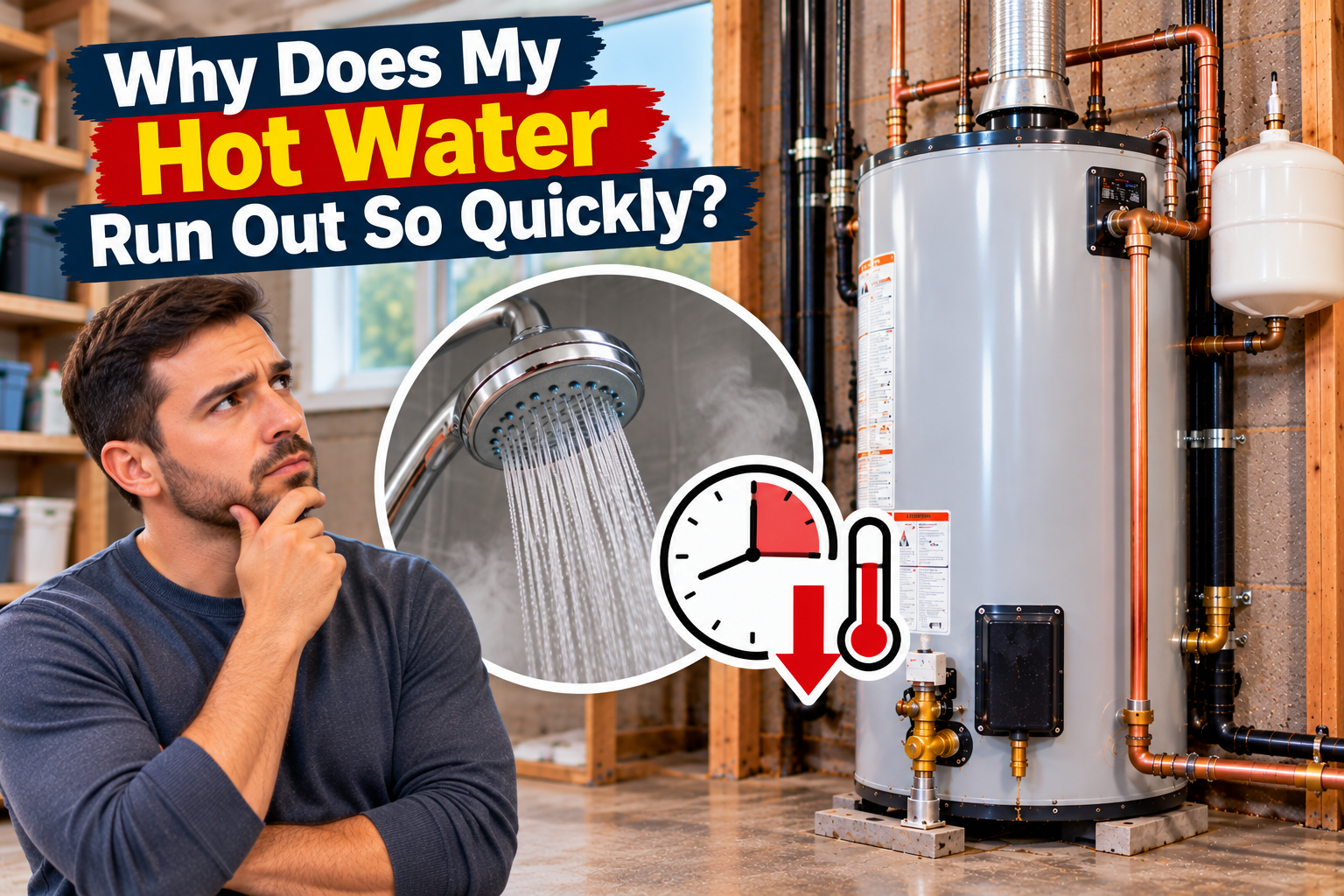
What Should You Check When Your Hot Water Runs Out Too Fast?
Before arranging major work, several safe observations can help narrow down the problem. These checks do not require opening the water heater, adjusting gas components, or handling electrical wiring.
Determine Whether the Problem Affects Every Fixture
Compare the hot water performance of different showers and faucets at separate times.
If every fixture receives a similarly short supply, the central water heating system or overall demand may be involved. If only one fixture becomes cold, a local mixing valve or fixture component could be responsible.
Notice When the Water Turns Cold
Does the water turn cold after one shower, after several consecutive showers, or only when laundry is running?
The timing provides valuable clues. A system that struggles only during simultaneous use may be reaching its capacity limit.
A sudden decline during ordinary use may point toward a component or performance problem.
Consider Recent Household Changes
Think about whether more people are using the home, shower durations have increased, or new appliances have been installed.
Changes in routine can increase peak hot water demand even when the heater remains in good condition.
Documenting these changes can help a plumber recommend an appropriately sized solution.
Allow for Normal Recovery
A storage water heater requires time to replenish its supply after significant use. The recovery period depends on the equipment’s heating capacity and the temperature of incoming water.
If hot water returns after a reasonable interval, the heater is producing heat, although its capacity or recovery performance may still need assessment.
Observe Changes in Water Temperature
Water that begins hot and gradually cools may indicate depleted storage or inadequate heating recovery.
Water that changes abruptly between hot and cold can suggest a different issue, including certain fixture mixing or tankless control conditions.
Neither pattern confirms a diagnosis by itself.
Look for Visible Leaks
Observe the area around the heater for signs of moisture, corrosion, or water accumulation.
Water around the appliance can originate from connections, valves, nearby piping, or the storage tank itself.
Keep away from wet electrical equipment and arrange professional assessment when leakage is suspected.
Record Unusual Equipment Noises
New popping, rumbling, or other operating noises may indicate a maintenance concern, although they are not enough to establish the cause.
Record when the sounds occur and whether hot water performance has changed at the same time.
A technician can assess whether sediment, heating operation, or another issue is relevant.
Check for Visible Error Messages
Some tankless and high-efficiency water heaters display status information or error codes.
Record the code and model number without removing equipment covers or altering internal settings.
This information can help a qualified technician interpret the fault using the manufacturer’s service documentation.
Avoid Increasing the Temperature as a Quick Fix
Raising the water heater temperature can increase scalding risk and may not correct the underlying cause of a short hot water supply.
Temperature settings and mixing arrangements should follow manufacturer guidance and applicable safety requirements.
If water temperature is inconsistent, seek an assessment rather than making repeated adjustments.
Safety first: Do not remove electrical covers, bypass temperature or pressure controls, modify gas connections, or attempt internal repairs. If you suspect a gas leak, leave the affected area and contact the gas utility’s emergency service from a safe location.
What Information Should You Give the Plumber?
- Whether the heater is gas, electric, tankless, or another type.
- Its approximate age and model, if available.
- How many showers or fixtures operate before the water cools.
- Whether the problem is recent or has always occurred.
- Whether hot water returns after a recovery period.
- Any visible leaks, unusual sounds, or error messages.
- Recent changes in household occupancy or water use.
Helpful observation: If the hot water shortage affects every fixture and has developed recently, equipment performance deserves investigation. If it happens only during heavy simultaneous use, system capacity may be the primary concern.
If your system has stopped heating entirely rather than simply running out quickly, read Why Is My Water Heater Not Producing Hot Water? for a closer look at heating-element, thermostat, ignition, and control faults.
Additional company information is available through the Calgary Electrical and Plumbing shared Google business listing.
How Can Calgary Homeowners Restore a Reliable Hot Water Supply?
The right solution depends on whether the problem involves faulty equipment, insufficient capacity, or inefficient household usage. Repairing a component may restore normal performance, while some homes benefit more from a carefully selected replacement system.
Repair Faulty Heating Components
If diagnosis identifies a defective heating element, thermostat, or other replaceable component, a targeted repair may restore normal heating.
This is often worth considering when the storage tank is in good condition and the repair cost is reasonable.
Qualified personnel should perform electrical, gas, and safety-control repairs.
Investigate Sediment and Maintenance Issues
Where sediment is contributing to poor performance, manufacturer-approved maintenance may help improve operation.
The appropriate service depends on the equipment and its condition. Maintenance procedures are not interchangeable across all water heater types.
Significant tank corrosion or structural deterioration cannot be corrected through routine cleaning.
Address Defective Mixing Components
If the heater produces adequate hot water but a particular fixture does not, the problem may involve a shower cartridge, mixing valve, or another plumbing component.
Correcting the fixture problem can restore comfortable water temperatures without replacing the water heater.
Reduce Simultaneous Hot Water Demand
Simple changes in scheduling may improve comfort when the heater is functioning correctly but demand exceeds capacity.
Spacing out showers, laundry, and other high-demand activities gives a storage system more time to recover.
This approach may be particularly useful when the shortage occurs only during a predictable morning or evening peak.
Review Showerhead and Fixture Flow Rates
High-flow fixtures consume stored hot water more quickly. Where appropriate, efficient fixtures can reduce demand while maintaining practical household comfort.
Actual savings depend on existing flow rates and how long fixtures are used.
Reducing unnecessary simultaneous flow may also help a tankless heater operate within its rated capacity.
Consider Whether the Tank Is Undersized
If the water heater is operating normally but consistently fails to meet household needs, an appropriately sized replacement may be worth considering.
Selection should account for peak usage, recovery capacity, and the number of fixtures likely to operate simultaneously.
Simply installing the largest available tank is not always the most efficient or economical choice.
Evaluate a Tankless Upgrade Carefully
A tankless heater can be an option for some households seeking continuous water heating within the equipment’s capacity.
However, conversion may require changes to venting, gas supply, electrical connections, or plumbing.
Calgary’s colder incoming water temperatures should be included in sizing calculations.
When Is Water Heater Replacement More Practical?
Replacement becomes more attractive when the storage tank leaks, major failures recur, or the cost of repair is high relative to a suitable new system.
It may also make sense when the household has permanently outgrown the existing heater’s capacity.
Age alone should not determine the decision; equipment condition and actual performance are more important.
What Could Repairs and Upgrades Cost?
Pricing depends on the equipment, fault, replacement parts, labour, and installation requirements. A minor component repair may be much less expensive than replacing the entire water heater.
| Service | Illustrative Cost (CAD) | What Affects the Price? |
|---|---|---|
| Water heater diagnostic assessment | $100–$250+ | Assessment scope, access, and provider charges |
| Minor component repair | $200–$500+ | Replacement part, equipment design, and labour |
| More involved water heater repair | $400–$1,000+ | Specialized parts and additional diagnostic work |
| Conventional storage-tank replacement | $1,500–$3,500+ | Equipment, removal, installation, and connections |
| Tankless water heater installation | $3,500–$7,500+ | Equipment and possible venting or utility upgrades |
Pricing disclaimer: These are broad, nonbinding CAD planning ranges, not verified current Calgary market averages or Calgary Electrical and Plumbing quotations. Actual prices may fall outside these ranges. Taxes, permits, and installation modifications may affect final costs.
How Should You Compare Repair and Replacement?
Ask for a confirmed diagnosis and a clear description of the proposed repair. Then compare that expense with the installed cost of a suitable replacement.
Consider warranty coverage, expected remaining service life, energy consumption, and whether the new equipment would resolve a capacity problem.
A lower upfront price is not always the best long-term value, but replacement is not automatically justified by a single repair.
Why Professional Sizing Matters
Choosing a new heater requires more than matching the capacity of the old tank. The household’s current needs may have changed, and different technologies are rated differently.
For storage heaters, first-hour performance and recovery are useful. For tankless equipment, simultaneous flow and required temperature rise are central considerations.
Correct sizing helps avoid both inadequate hot water and unnecessary equipment expense.
Does the Neighbourhood Affect the Solution?
Homes in Copperfield, New Brighton, and Seton may contain different water heating technologies from older properties in Riverbend, Douglasdale, or Lake Bonavista.
However, the neighbourhood does not determine the cause. Previous renovations, equipment age, household demand, and installation conditions matter more.
Can Preventive Maintenance Help?
Following the manufacturer’s maintenance recommendations can support safe operation and help identify developing faults.
Maintenance may involve professional inspection, checking serviceable components, or other equipment-specific work.
It cannot guarantee a particular lifespan, but it can provide useful information for planning repairs or replacement.
When Should You Arrange Professional Assessment?
Seek qualified assistance when hot water duration has suddenly declined, temperatures fluctuate unpredictably, the heater leaks, or the appliance repeatedly stops heating.
Professional assessment is also useful when the household needs more capacity and is considering a different equipment type.
Practical recommendation: Diagnose the existing heater before replacing it. Repair may restore a sound system, while an appropriately sized replacement can address persistent capacity limitations or significant equipment deterioration.
For company audio updates and additional service information, visit Calgary Electrical and Plumbing on SoundCloud.
Final takeaway: Reliable hot water depends on healthy heating components, sufficient recovery capacity, and a system matched to household demand. Identifying the actual limitation helps homeowners choose an appropriate repair, maintenance service, or equipment upgrade.
Request a hot water system diagnosis and repair estimate in Calgary in just a few clicks.
Get My Free Estimate
Enjoy a More Consistent Hot Water Supply in Calgary
Hot water that runs out too quickly can result from changing household demand, reduced heating performance, a faulty component, or equipment that no longer meets the home’s needs. The best solution begins with identifying the cause rather than immediately replacing the heater.
A local calgary plumber can assess the system and explain whether repair, maintenance, or replacement is appropriate. Call Calgary Electrical and Plumbing at (403) 421-1991 to discuss your hot water concerns.
Frequently Asked Questions about Hot Water Running Out Quickly
Why does my hot water run out after only one shower?
One shower may exhaust the available hot water if the tank is small, the showerhead has a high flow rate, or the heater is not recovering properly. A failed heating element, thermostat problem, or fixture mixing issue may also contribute. Diagnosis depends on the equipment and symptoms.
Can sediment buildup make hot water run out faster?
Sediment accumulation can affect heating performance and maintenance requirements in some storage water heaters. Heavy buildup may contribute to reduced usable capacity or slower recovery, depending on the system. However, a professional should confirm the cause before recommending cleaning or other service.
Why does my hot water run out faster during Calgary winters?
Colder incoming water requires more heating energy to reach the desired temperature. This can increase recovery demands for storage heaters and reduce the available flow from some tankless systems. Household usage patterns and equipment condition also affect how long hot water lasts.
Will installing a bigger hot water tank solve the problem?
A larger tank may help when household demand exceeds the existing heater’s capacity. However, it will not correct a defective thermostat, failed heating element, or faulty shower mixing valve. Proper diagnosis and equipment sizing should come before investing in a replacement.
When should I call a Calgary plumber about hot water running out quickly?
Arrange professional assessment when hot water duration suddenly decreases, the heater produces unusual noises, temperatures become inconsistent, or leakage appears. A plumber can investigate whether the cause involves equipment performance, plumbing components, or insufficient capacity and recommend an appropriate solution.
Don’t wait for the problem to get worse.
Call (403) 421-1991 Now
Contact Our Calgary Plumbing Team