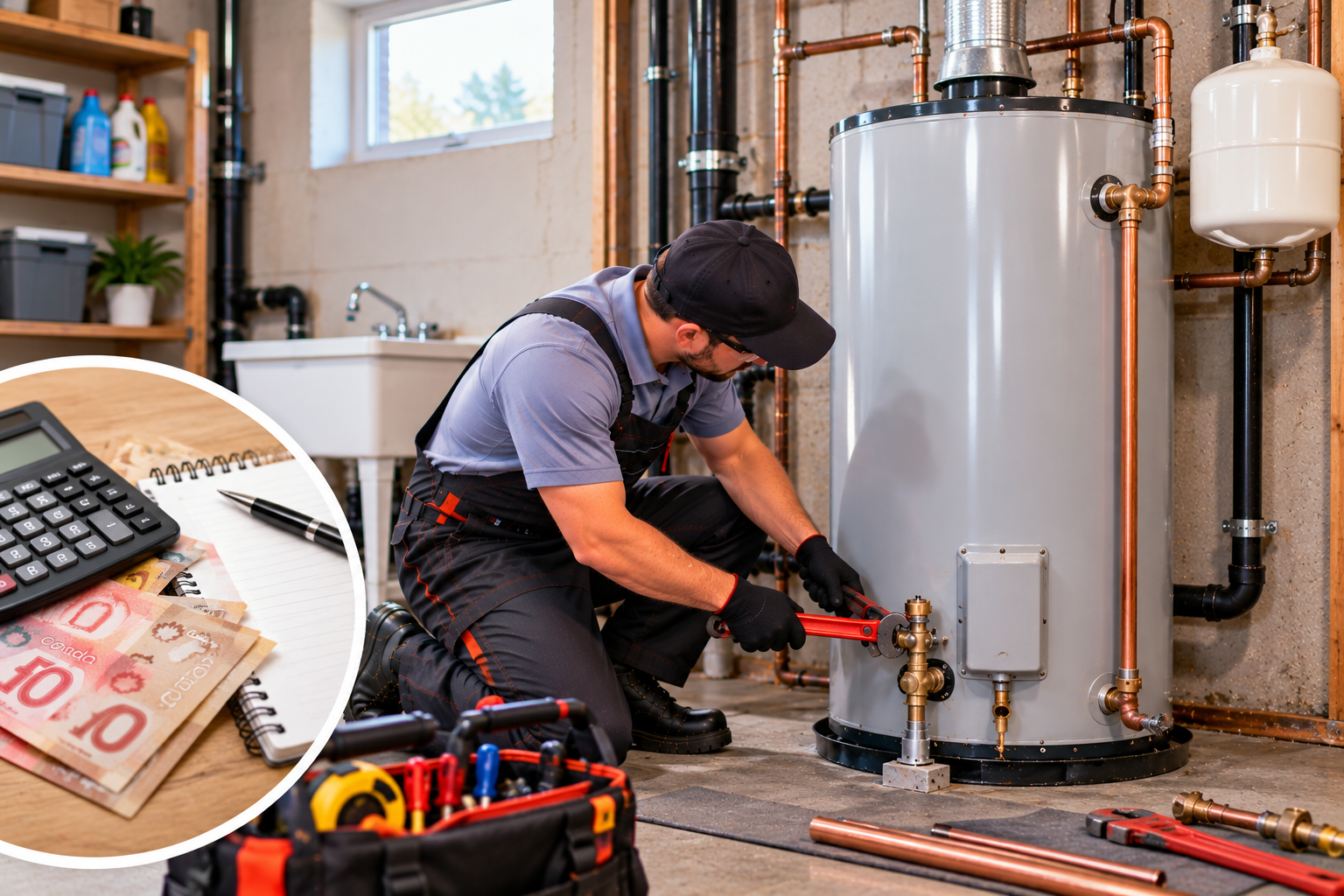

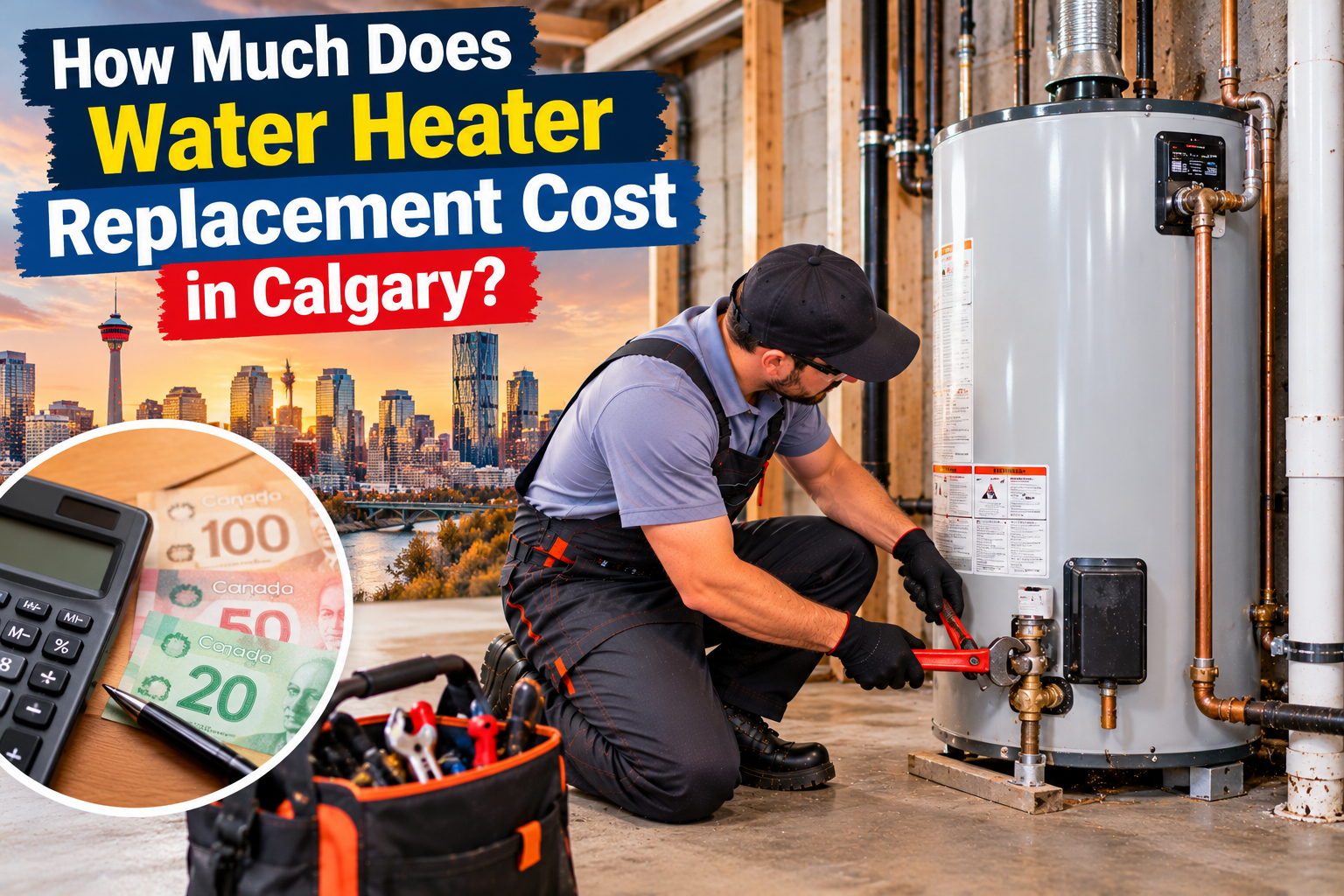
How Much Does Water Heater Replacement Cost in Calgary? If your hot water tank has started leaking, struggles to maintain water temperature, or is approaching the end of its useful life, understanding the likely replacement expense can help you plan. The final price depends on whether you choose a conventional storage tank, high-efficiency equipment, or a tankless system, as well as the complexity of the installation.
For homeowners in Southeast Calgary neighbourhoods such as Mahogany, Auburn Bay, Cranston, and McKenzie Towne, replacing a water heater often involves more than purchasing a new appliance. Professional assessment of the existing system, available space, fuel connections, and installation requirements can help determine the appropriate solution. Homeowners researching water heater replacement and professional plumbing services in Calgary should compare complete installed costs rather than equipment prices alone.
Some replacements are relatively straightforward, while others require modifications to venting, electrical service, gas connections, or plumbing. This guide explains practical budgeting ranges, the factors that influence pricing, the differences between water heater types, and how to evaluate whether repairing or replacing your existing system makes better financial sense.
Water heater replacement in Calgary may cost roughly $1,500–$3,500 for a conventional storage-tank installation, while high-efficiency and tankless systems can cost more. These are illustrative planning ranges, not verified company quotes. Actual prices depend on equipment, labour, venting, connections, permits, and installation complexity.
What Is the Average Cost of Water Heater Replacement in Calgary?
Water heater replacement prices vary according to the technology, storage capacity, efficiency rating, and installation conditions. A direct replacement of a conventional tank is often less complicated than converting an existing home to a different water heating system.
For budgeting purposes, homeowners can compare broad installed-cost ranges. These figures are illustrative Canadian-dollar estimates rather than confirmed Calgary Electrical and Plumbing rates or live supplier quotations.
Estimated Water Heater Replacement Prices in Calgary
| Water Heater Type | Illustrative Installed Cost (CAD) | Important Considerations |
|---|---|---|
| Conventional gas storage tank | $1,500–$3,500 | Capacity, venting, gas connections, removal and installation labour |
| Conventional electric storage tank | $1,200–$3,000 | Tank capacity, electrical supply, accessibility and plumbing connections |
| High-efficiency gas storage system | $2,500–$5,000+ | Efficiency rating, venting requirements, condensate handling and equipment selection |
| Gas tankless water heater | $3,500–$7,500+ | Gas supply capacity, venting, water quality, equipment sizing and installation changes |
| Heat pump water heater | $3,000–$6,500+ | Available space, electrical requirements, airflow, condensate management and climate suitability |
Pricing disclaimer: These broad planning ranges are not verified current Calgary market averages or company quotations. Actual installed prices may fall outside them. Taxes, permits, major upgrades, and unusual site conditions may change the total.
How Much Does a Standard Gas Water Heater Cost?
Conventional gas storage tanks remain a common replacement option for Calgary homes with existing natural gas connections.
A like-for-like replacement may require fewer modifications when the new unit is compatible with the current installation. However, changes in venting standards, appliance specifications, or existing equipment condition can increase the scope of work.
Homeowners should request an estimate that clearly identifies the equipment model, labour, removal, and any required upgrades.
What Does Electric Water Heater Replacement Cost?
Electric storage water heaters can be a practical option where suitable electrical service is available.
Installation costs depend on the tank capacity, existing circuit, connection requirements, and whether the replacement fits the available space.
A change from gas to electric heating may involve additional electrical work and should not be priced as a simple appliance swap.
Why Are Tankless Water Heaters More Expensive?
Tankless water heaters heat water as it flows through the unit rather than storing a large quantity in a conventional tank.
The equipment may cost more, and installation can involve changes to gas supply, venting, condensate drainage, or water connections.
Some households value the compact design and potential operating efficiencies, but actual savings depend on usage patterns, energy prices, and equipment performance.
Are High-Efficiency Water Heaters Worth the Additional Cost?
High-efficiency equipment may reduce energy consumption compared with certain older or less efficient systems.
However, higher purchase and installation costs must be considered alongside expected energy use, maintenance, and equipment lifespan.
A household with significant hot water demand may evaluate the economics differently from a smaller household with modest usage.
What About Heat Pump Water Heaters?
Heat pump water heaters transfer heat from surrounding air into stored water. Their efficiency can be attractive under suitable installation conditions.
They require appropriate space, airflow, temperature conditions, and condensate management.
In Calgary, installation location and winter operating conditions deserve careful consideration before selecting this technology.
Is the Equipment Price the Same as the Installed Price?
No. Retail equipment pricing usually does not represent the full cost of a professional replacement.
Installation may involve transportation, removal, plumbing connections, venting or electrical work, commissioning, and other requirements.
Comparing equipment-only prices with complete installed quotations can lead to misleading conclusions.
Cost takeaway: Conventional storage-tank replacements often involve lower initial costs than tankless or specialized high-efficiency systems. The final price depends on the specific equipment and installation requirements, not simply the water heater category.
For local company information, homeowners can consult the Calgary Electrical and Plumbing Google Maps business listing.
What Factors Affect Water Heater Installation Costs in Calgary?
Two homeowners choosing similar water heaters may receive different installation estimates because the existing plumbing and mechanical conditions are not identical.
Understanding the main cost factors helps explain what should be included in a professional quotation.
Water Heater Capacity and Household Demand
Storage-tank capacity is commonly described in litres or gallons, while tankless systems are selected according to flow rate and temperature-rise requirements.
A household with several bathrooms and simultaneous hot water demands may require different equipment from a smaller home.
Choosing equipment that is too small can create comfort problems, while unnecessary oversizing may increase upfront expense.
Natural Gas Versus Electric Connections
The existing fuel source can strongly influence installation costs.
Replacing a gas unit with a compatible gas unit may be simpler than changing technologies. Converting to an electric or heat pump system can require electrical assessment and potentially additional work.
Fuel conversions should be evaluated by appropriately qualified professionals.
Venting and Combustion Air Requirements
Gas water heaters require suitable venting arrangements based on the appliance design and applicable requirements.
High-efficiency or tankless units may need different vent materials or routes than the previous equipment.
Changes to venting can increase labour and material costs, particularly where access is difficult.
Electrical Upgrades
Electric and heat pump water heaters require an appropriate electrical supply.
The existing circuit, available capacity, and equipment specifications must be considered.
If upgrades are required, they can add costs beyond the water heater installation itself.
Installation Location and Accessibility
A water heater in an open utility room may be easier to replace than one located in a confined mechanical space.
Narrow stairways, finished basement areas, and limited access can complicate equipment removal and installation.
Additional labour may be necessary when moving the unit safely requires special handling.
Existing Plumbing Connections
Older connections, shutoff valves, piping arrangements, and fittings may need attention during replacement.
Some installations can reuse suitable existing connections, while others require changes to accommodate the new equipment.
These conditions should be identified during the initial assessment whenever possible.
Expansion Tanks and Pressure Considerations
Some plumbing systems may require additional components to manage thermal expansion or water pressure.
The need for such components depends on the system configuration and applicable requirements.
A qualified installer can determine whether the existing arrangement needs modification.
Old Water Heater Removal and Disposal
Removing the old appliance is part of many replacement projects, but disposal arrangements should be confirmed in the quotation.
The old tank may be heavy and contain residual water.
Homeowners should verify whether removal, transportation, and appropriate disposal are included in the stated price.
Permits, Inspections, and Code Compliance
Applicable permits and inspections depend on the type and scope of work.
Gas, electrical, and plumbing modifications may be subject to different requirements.
Before approving a project, ask the contractor to identify any required permits and clarify who is responsible for arranging them.
Emergency Versus Planned Replacement
Replacing a failed water heater unexpectedly can limit the time available to compare equipment and installation options.
After-hours service or urgent equipment availability may affect costs, depending on the contractor and circumstances.
Planning before complete failure can make it easier to review alternatives and obtain a detailed estimate.
How Much Can Unexpected Installation Work Add?
Additional work may include correcting unsuitable venting, replacing damaged connections, or upgrading electrical infrastructure.
The expense depends on what is discovered and the extent of the necessary modifications.
Rather than relying on a universal surcharge, homeowners should request itemized pricing for any newly identified work.
What Should Be Included in a Replacement Quote?
- Water heater manufacturer, model, capacity, and efficiency specifications.
- Equipment and installation labour costs.
- Removal and disposal of the existing unit.
- Required plumbing, gas, venting, or electrical modifications.
- Permit and inspection responsibilities, where applicable.
- Warranty details and any relevant exclusions.
- Applicable taxes and clearly identified additional charges.
Estimate comparison tip: Two quotations are only directly comparable when they cover equivalent equipment, installation work, permit responsibilities, removal, and warranty terms. A lower initial figure may exclude work included elsewhere.
Does Water Heater Technology Affect Long-Term Expenses?
Yes. Purchase price is only one part of ownership cost.
Energy consumption, maintenance, potential repairs, and equipment lifespan can influence the total amount spent over time.
For general background on different technologies, see this overview of water heating systems and methods.
Homeowners can also review this Calgary plumbing business location reference when researching local service information.
Request a water heater replacement estimate in Calgary in just a few clicks.
Get My Free Estimate
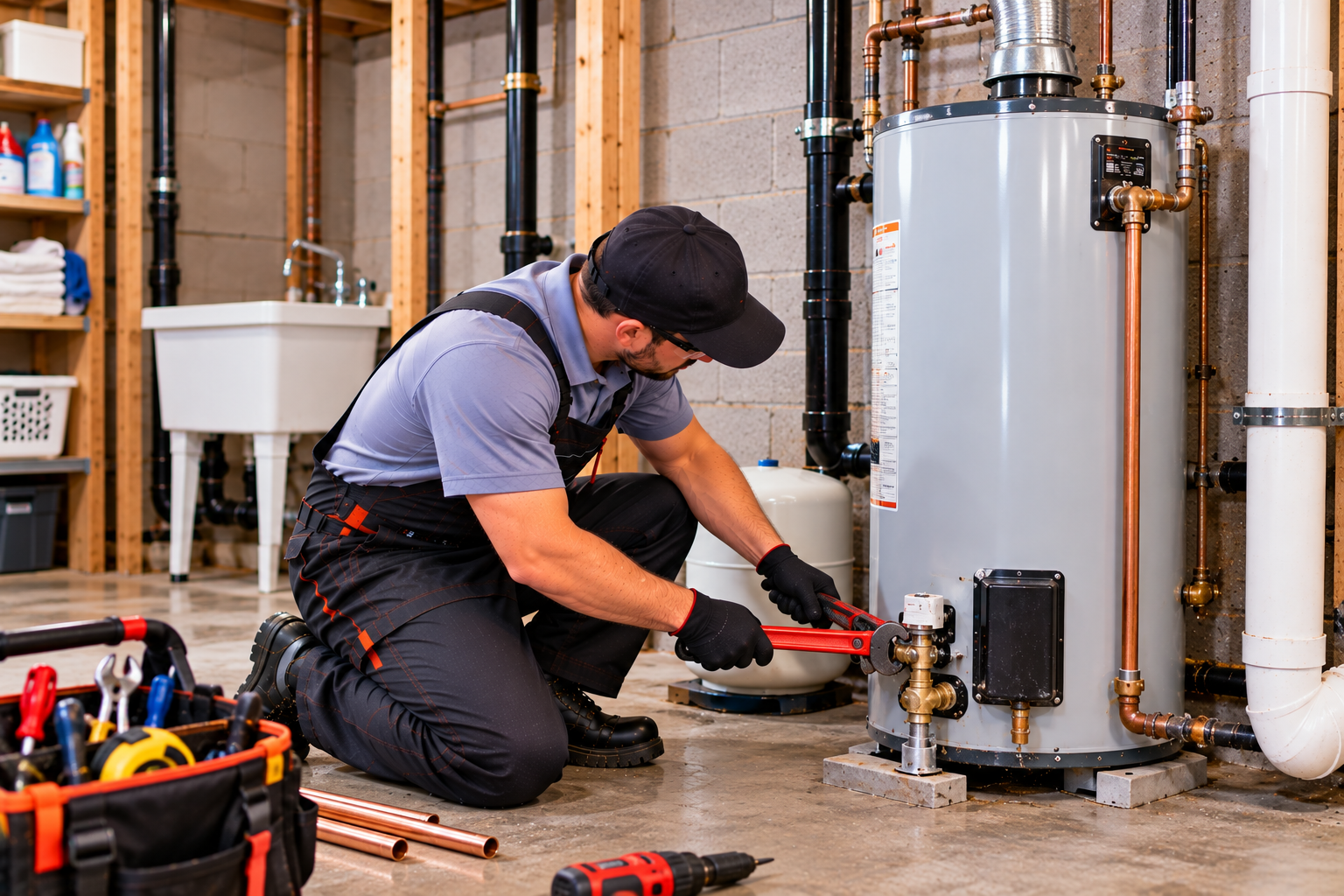
Should You Repair or Replace Your Existing Water Heater?
Replacing a water heater is not always necessary when a problem first appears.
Some faults involve replaceable components, while others indicate that the appliance is deteriorating or approaching the end of its service life.
Consider the Age of the Water Heater
Conventional storage water heaters often have a service life measured in roughly a decade, although actual performance varies with equipment quality, maintenance, and operating conditions.
Age alone does not determine whether replacement is necessary.
However, an older unit with recurring problems may justify evaluating replacement instead of another repair.
Check Whether the Tank Is Leaking
Water around a heater can come from different sources, including connections, valves, condensation, or the tank itself.
A leaking fitting may be repairable, while a compromised storage tank generally requires replacement.
Professional assessment is important before assuming that every puddle means the tank has failed.
Evaluate the Cost of Repeated Repairs
One modest repair may be reasonable for an otherwise functional water heater.
Repeated component failures can change the financial calculation, especially when the appliance is older.
Compare the cost of necessary repairs with the price, expected performance, and warranty of a suitable replacement.
Inconsistent Hot Water Temperature
Fluctuating water temperature can result from several causes, including heating components, controls, sediment, or system sizing.
Some issues may be repairable without replacing the entire unit.
Diagnosis helps determine whether the problem is limited to a component or reflects broader equipment deterioration.
Insufficient Hot Water Supply
If household demand has increased, the existing water heater may no longer provide adequate capacity.
Additional bathrooms, changing occupancy, and simultaneous hot water use can influence system requirements.
Replacement may provide an opportunity to select equipment better matched to the household’s actual needs.
Rust-Coloured Water and Corrosion
Discoloured hot water can have several possible causes, including conditions within the heater or connected plumbing.
Corrosion affecting the storage tank may indicate a serious problem.
A professional should investigate the source before determining whether repair or replacement is appropriate.
Unusual Noises From the Water Heater
Rumbling, popping, or other noises may occur in some storage water heaters.
Sediment accumulation and operating conditions can contribute to these sounds.
Noise alone does not prove that replacement is required, but persistent changes should be assessed alongside the unit’s age and performance.
Rising Energy Consumption
An inefficient or malfunctioning water heater may use more energy than expected.
However, changes in utility bills can also result from energy rates, weather, and household usage.
Equipment condition and operating efficiency should be evaluated before attributing higher costs solely to the water heater.
Is It Worth Repairing a Ten-Year-Old Water Heater?
The answer depends on the unit’s condition, repair requirements, and expected remaining life.
A minor replaceable component may justify repair, while a leaking storage tank usually makes replacement the practical option.
A professional assessment can help compare both choices without relying on age alone.
When Is Replacement the More Practical Choice?
Replacement may be appropriate when the tank itself is failing, repair costs are substantial, or repeated faults undermine reliability.
It may also be considered when the household needs different capacity or efficiency characteristics.
The decision should account for upfront expense, future operating costs, and expected service life.
| Condition | Repair May Be Appropriate | Replacement May Be Appropriate |
|---|---|---|
| Minor replaceable component fault | Often worth assessing | If broader deterioration is present |
| Storage tank leaking | Usually not a tank repair situation | Generally the practical option |
| Repeated breakdowns | If repair costs remain reasonable | When reliability and costs are concerns |
| Insufficient hot water capacity | If caused by a repairable fault | When equipment sizing no longer suits demand |
| Older but functioning system | Maintenance may be suitable | Consider planned replacement when justified |
Can a New Water Heater Improve Household Efficiency?
A replacement unit may offer improved efficiency compared with some older equipment.
Actual savings depend on the new model, previous equipment, energy source, hot water usage, and utility rates.
Efficiency claims should be evaluated using relevant product specifications rather than general assumptions.
Important safety note: Gas appliances, combustion venting, and electrical water heater connections can present serious hazards. Do not attempt fuel-line, venting, or electrical modifications without the required qualifications. Suspected gas leaks require following the gas utility’s emergency instructions.
How Can You Compare Repair and Replacement Quotes?
Ask for a clear explanation of the fault and the proposed work.
For repair, consider the cost and whether the underlying problem is likely to recur. For replacement, compare equipment specifications, installed cost, and warranty terms.
This approach provides a more useful basis for decision-making than comparing prices without context.
Repair-versus-replacement takeaway: Repair may be economical for a limited component failure, while a leaking tank, recurring breakdowns, or major deterioration can favour replacement. A diagnosis should come before the final decision.
Additional company details are available through the Calgary Electrical and Plumbing shared Google business reference.
How Can Calgary Homeowners Budget for Water Heater Replacement?
Water heater replacement is easier to plan when homeowners consider equipment costs, installation requirements, and future operating expenses together.
A detailed budget can also help avoid choosing equipment solely because it has the lowest advertised purchase price.
Start With an Assessment of the Existing System
Before selecting a replacement, identify the current heater type, capacity, fuel source, and installation location.
Existing venting, electrical supply, and plumbing connections may affect which replacement options are practical.
Professional assessment can help identify major cost factors before equipment is ordered.
Choose Capacity Based on Actual Household Needs
A larger water heater is not automatically the best choice.
Household size, simultaneous fixture use, bathing habits, and appliance demands should guide equipment selection.
Proper sizing can help balance comfort, installation expense, and ongoing energy use.
Compare Installed Prices Rather Than Retail Prices
Retail advertisements may highlight the appliance cost without accounting for professional installation.
When comparing options, consider the complete project scope, including removal, necessary connections, and any required modifications.
A comprehensive quote provides a more realistic picture of the investment.
Ask About Equipment Warranty Coverage
Water heaters may include manufacturer warranties with different terms and conditions.
Coverage can depend on registration, installation requirements, maintenance, and the type of failure.
Homeowners should also clarify any separate workmanship warranty offered by the installer.
Consider Long-Term Energy Costs
Higher-efficiency equipment may reduce energy use under suitable conditions, but the financial benefit depends on operating patterns and energy prices.
Compare expected annual energy consumption using relevant product data.
When evaluating a more expensive system, consider how long potential savings may take to offset the additional initial cost.
Plan for Future Maintenance
Different water heater technologies have different maintenance needs.
Some systems may require periodic inspection, flushing, filter servicing, or other manufacturer-recommended maintenance.
These costs should be considered alongside the initial purchase and installation expense.
Review Available Rebates Carefully
Energy-efficiency rebates and incentive programs can change over time.
Eligibility may depend on equipment specifications, installation dates, program funding, and other requirements.
Do not assume a rebate applies until the current program rules have been confirmed through the relevant provider.
Understand Potential Financing Costs
Some homeowners may consider financing a replacement rather than paying the entire amount upfront.
If financing is offered, compare interest rates, fees, repayment terms, and the total amount payable.
A manageable monthly payment does not necessarily mean the overall financing cost is low.
Consider Whether Renting or Buying Makes Sense
Water heater rental arrangements may include monthly payments and specific service provisions.
Buying typically involves a larger upfront expense but avoids some ongoing rental obligations.
Compare the total expected cost, contract terms, maintenance responsibilities, and cancellation conditions before deciding.
Do Not Delay a Known Tank Leak
A leaking storage tank may cause damage to flooring, walls, and nearby belongings.
If the leak is active, avoid unsafe conditions and arrange qualified assessment.
Delaying action can increase the extent of water damage, particularly in finished basement utility areas.
Does Your Calgary Neighbourhood Affect the Price?
Installation conditions generally matter more than the neighbourhood name.
Homes in Mahogany, Seton, Copperfield, and New Brighton may have different water heater configurations even when they were built around similar periods.
Similarly, established properties in Riverbend and Lake Bonavista may have undergone renovations that significantly change installation requirements.
Prepare Questions Before Requesting an Estimate
- What type and capacity of water heater best suit the household?
- Does the proposed price include equipment and installation?
- Will the existing venting, gas, electrical, or plumbing connections require changes?
- Are removal and disposal included?
- Who handles any required permits and inspections?
- What manufacturer and workmanship warranties apply?
- Are taxes and potential additional charges clearly identified?
- What maintenance will the replacement equipment require?
What Is the Best Way to Avoid Unexpected Replacement Costs?
Request a detailed quotation based on the actual installation conditions.
Ask the contractor to explain any work that is excluded or dependent on further inspection.
Clear communication about equipment selection, access, and required modifications helps reduce misunderstandings during the project.
Should You Replace a Working Water Heater Early?
Preventive replacement may be worth considering when an aging heater has a history of problems or a failure would create substantial disruption.
However, replacing a functioning appliance is not automatically the most economical choice.
Compare its current condition, expected remaining life, maintenance costs, and available replacement options before deciding.
Budgeting recommendation: Compare complete installed costs, evaluate equipment capacity and efficiency, review warranty terms, and confirm whether permits or infrastructure upgrades are necessary. The lowest equipment price is not always the lowest overall ownership cost.
Final cost takeaway: A realistic water heater replacement budget includes equipment, labour, installation modifications, removal, and possible compliance-related work. A property-specific estimate is the best way to establish the actual price.
Homeowners interested in company updates and service-related content can visit the Calgary Electrical and Plumbing Pinterest profile.
Request a water heater replacement estimate in Calgary in just a few clicks.
Get My Free Estimate
Make an Informed Water Heater Replacement Decision in Calgary
Water heater replacement costs depend on more than the price of a new tank. Equipment selection, installation complexity, existing connections, and necessary upgrades all influence the total investment. Comparing complete quotations helps homeowners understand the value of different replacement options.
Whether you are replacing a leaking storage tank or considering a more efficient system, a local calgary plumber can help evaluate the installation requirements. Call Calgary Electrical and Plumbing at (403) 421-1991 to discuss your water heater replacement needs.
Frequently Asked Questions about Water Heater Replacement Costs
How much does it cost to replace a 40-gallon water heater in Calgary?
A conventional 40-gallon storage water heater replacement may fall within a broad planning range of approximately $1,500–$3,500 installed, depending on fuel type and site conditions. This is not a verified company quote. Venting, connections, labour, permits, and equipment specifications affect the final price.
Is it cheaper to replace a gas or electric water heater in Calgary?
Electric storage water heaters can have lower initial equipment or installation costs in some situations, while gas models may offer different operating economics. The most economical choice depends on existing connections, utility rates, household demand, installation requirements, and the cost of any fuel conversion.
How much does tankless water heater installation cost in Calgary?
Tankless water heater installation may cost roughly $3,500–$7,500 or more as an illustrative planning range, not a confirmed quotation. Actual pricing depends on equipment capacity, gas supply, venting, water connections, installation complexity, and any required upgrades to the existing system.
Should I replace my water heater if it is more than ten years old?
Age is an important consideration but does not automatically require replacement. A functioning older unit may remain serviceable, while leaks, repeated failures, or major deterioration can make replacement more practical. Professional assessment helps compare repair costs with the benefits of new equipment.
Does a water heater replacement quote include installation and disposal?
Not every quotation includes the same services. Some prices cover equipment only, while others include installation labour, removal, disposal, and selected connections. Ask for an itemized estimate that identifies permits, required upgrades, taxes, warranty terms, and any potential additional charges.
Don’t wait for the problem to get worse.
Call (403) 421-1991 Now
Contact Our Calgary Plumbing Team