
Why Does My Toilet Gurgle When the Shower or Sink Drains? Imagine finishing your morning shower in a Calgary home and hearing a deep bubbling noise from the toilet. Nobody has flushed, yet the water in the bowl moves and makes an unusual sound.
In Southeast Calgary communities such as Mahogany, Auburn Bay, Cranston, and Copperfield, this problem can occur when bathroom fixtures share drainage connections. Understanding how Calgary residential plumbing and drain services investigate unusual drainage sounds can help homeowners recognize warning signs before a blockage becomes more disruptive.
A gurgling toilet does not automatically mean the fixture needs replacement. The cause may involve a partially blocked drain, restricted plumbing vent, or obstruction farther along the sewer system. The most useful clues are when the sound occurs and which other fixtures are affected.
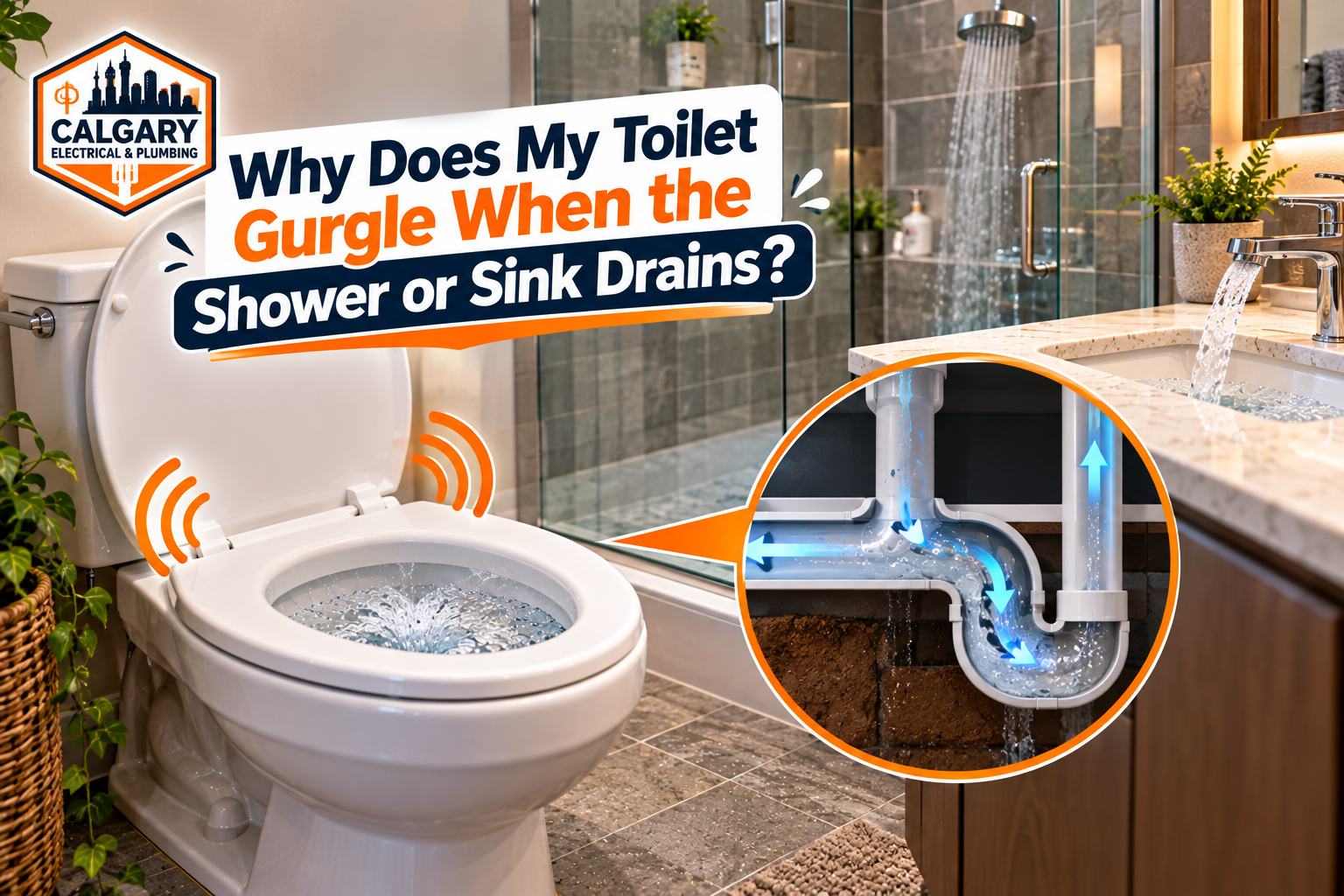
A toilet usually gurgles when the shower or sink drains because moving wastewater creates abnormal air pressure in connected pipes. Common causes include a partially blocked shared drain, restricted plumbing vent, or sewer-line obstruction. Repeated bubbling, slow drains, and wastewater backups indicate that professional inspection may be necessary.
Why Does a Toilet Gurgle When the Shower or Sink Drains?
Household plumbing relies on a balance between flowing wastewater and moving air. Drainpipes carry used water away, while plumbing vents help maintain suitable pressure and protect the water seals inside fixtures.
When wastewater encounters a restriction, air may be displaced through another connected fixture. The toilet bowl provides a visible water seal, so pressure changes can produce bubbling, movement, or a hollow gurgling sound.
How Does Air Pressure Create Toilet Gurgling?
Water moving through a drain occupies space that also contains air. A properly functioning drainage and vent system allows that air to move without disturbing nearby fixtures.
If a drain becomes partially obstructed, water may push air ahead of it or create negative pressure behind the moving flow. The resulting pressure difference can disturb the toilet’s water seal.
Positive pressure may force bubbles upward through the bowl. Negative pressure may draw water toward the drain, sometimes causing the bowl level to drop.
Plumbing insight: The gurgling noise does not necessarily originate inside the toilet. It may be the sound of air moving through the toilet because another fixture has disturbed pressure in a connected drainpipe.
Why Does the Toilet Bubble When the Shower Runs?
Showers discharge a continuous stream of water, which can expose a developing obstruction in a shared bathroom drain.
For example, a homeowner in Auburn Bay may notice the toilet bubbling after the shower has been running for several minutes. If the shower also empties slowly, the shared drainage connection deserves attention.
Hair, soap residue, and accumulated debris can gradually restrict the pipe. However, similar symptoms may occur when a vent is not functioning properly.
Why Does My Toilet Gurgle When I Empty the Bathroom Sink?
Bathroom sinks frequently connect to the same drainage network as nearby toilets and showers. Releasing a full basin of water sends a concentrated flow into the shared system.
In a McKenzie Towne bathroom, the toilet might remain quiet during ordinary handwashing but bubble when the sink stopper is removed.
This difference suggests that the volume and speed of water discharge influence the symptom. It does not identify the exact pipe section without further assessment.
Why Does the Toilet Water Level Rise or Fall?
Abnormal drainage pressure can change the amount of water sitting in the toilet bowl.
If air pressure pushes upward through the trap, the water may briefly rise or bubble. If negative pressure draws water away, the bowl level may fall.
A persistently low water seal can also allow unpleasant sewer odours into the room, making the problem more noticeable.
Can a Washing Machine Trigger Toilet Gurgling?
Yes. Washing machines release wastewater relatively quickly, especially during drain cycles. A restricted shared drain may struggle to accommodate that discharge.
In a Cranston basement, a toilet that gurgles whenever the laundry machine empties may indicate a restriction affecting the laundry and bathroom drainage connections.
If the nearby floor drain also becomes slow or begins backing up, the possibility of a larger downstream blockage increases.
Quick distinction: Gurgling triggered by one nearby fixture often points toward a shared branch drain or venting issue. Gurgling associated with several bathrooms, laundry discharge, and basement backups may indicate a restriction farther downstream.
Homeowners looking for local service information can review the Calgary Electrical and Plumbing business location or watch a related Calgary plumbing service video.
What Plumbing Problems Cause a Toilet to Bubble and Gurgle?
Several plumbing conditions can create the same bubbling sound. Some involve material accumulating inside pipes, while others relate to venting, pipe alignment, or sewer-line damage.
The correct repair depends on identifying the cause rather than assuming the toilet itself is defective.
Partially Blocked Bathroom Drainpipes
A partial obstruction is a common explanation for gurgling that occurs when another fixture drains.
Hair, soap deposits, paper, and other debris can narrow a drainage passage. Water may still pass through, but the restricted flow can disturb air pressure.
In Copperfield, a shower that has gradually become slower while the toilet begins bubbling may indicate a shared branch drain obstruction.
Blocked or Restricted Plumbing Vents
Plumbing vents allow air movement through the drainage system and help maintain appropriate pressure.
If a vent becomes restricted by debris or another obstruction, the system may struggle to balance pressure during wastewater discharge.
Some venting problems result from installation or configuration issues rather than material blocking the opening.
Because vent inspection may involve roof access, homeowners should leave elevated work to qualified professionals.
Main Sewer-Line Restrictions
A main sewer obstruction can affect several fixtures throughout a property.
If toilets gurgle when the washing machine runs, multiple drains empty slowly, or wastewater appears in a basement shower, the problem may extend beyond a single bathroom.
Our related guide explains when a toilet problem is actually a sewer-line problem and the symptoms that suggest a larger drainage restriction.
Tree Roots and Damaged Sewer Connections
Tree roots can enter sewer pipes through existing cracks or separated joints. Once inside, roots may trap debris and restrict wastewater movement.
Damaged, displaced, or sagging pipe sections can also allow material to accumulate.
In established neighbourhoods such as Lake Bonavista and Riverbend, older sewer connections may have different materials and conditions from newer installations. However, age alone does not confirm damage.
Improper Drainage Slope or Pipe Configuration
Drainage piping requires suitable installation and slope so wastewater and solids can move through the system.
Sections with inadequate slope may retain water and debris, while certain installation defects can contribute to recurring restrictions.
These problems may produce symptoms similar to an ordinary clog, but cleaning alone might not correct the underlying condition.
How Can You Tell a Toilet Clog From a Shared Drain Problem?
Likely Local Toilet Problem
Only one toilet flushes poorly, other fixtures operate normally, and the issue follows an obvious obstruction inside the toilet trap.
Possible Shared Drain Problem
The toilet bubbles when other fixtures drain, several drains become slow, or wastewater returns through a shower or basement floor drain.
These observations help narrow the investigation but are not a substitute for inspecting the connected plumbing.
Warning: If wastewater rises through a floor drain or shower, stop using fixtures connected to the affected system. Continuing to flush or run water may increase the backup and spread contamination.
Additional business information is available through the company’s professional Calgary plumbing profile and Google business listing information.
Request a gurgling toilet and drain inspection estimate in Calgary in just a few clicks.
Get My Free Estimate
How Do Plumbers Diagnose a Gurgling Toilet in Calgary?
Diagnosing toilet gurgling requires more than listening to the sound. A plumber considers the property’s drainage layout, the fixtures involved, and the conditions that trigger the problem.
The investigation may begin with accessible bathroom fixtures before extending to shared drains, venting, and the main sewer connection.
Identifying Which Fixtures Trigger the Noise
One of the most useful observations is when the gurgling occurs.
Does the toilet bubble only when the shower drains? Does it happen when the kitchen sink empties? Is the sound connected to laundry discharge?
For a homeowner in Seton, documenting these patterns can help the plumber identify the most likely shared pipe connection.
Checking Toilet and Drainage Performance
The plumber may inspect the toilet’s flushing behaviour, water level, visible connections, and nearby fixtures.
A toilet that flushes normally but bubbles when another fixture drains suggests a different problem from a toilet that cannot empty its own bowl.
Slow drainage, recurring clogs, and unusual odours provide additional diagnostic clues.
Investigating Shared Branch Drain Restrictions
Bathroom fixtures often connect through shared branch piping before joining larger drainage lines.
If the shower and toilet show related symptoms while other fixtures operate normally, the restriction may be within that shared branch.
Accessible cleanouts and appropriate drain-cleaning equipment can help locate or remove certain obstructions.
Evaluating the Plumbing Vent System
When symptoms suggest abnormal air pressure, the venting arrangement may require inspection.
A qualified plumber can assess accessible connections, evaluate the plumbing layout, and determine if additional vent investigation is necessary.
Vent restrictions should not be assumed simply because a toilet gurgles. Drain blockages can create similar pressure effects.
Using Sewer Camera Inspection Equipment
A sewer camera can help examine accessible drainage pipes when a downstream obstruction or structural defect is suspected.
Depending on visibility, the inspection may reveal heavy deposits, root intrusion, separated joints, standing water, or damaged pipe sections.
However, a camera may not provide a clear view through accumulated wastewater or debris. Cleaning may be required before the pipe can be evaluated properly.
Why Repeated Drain Cleaning May Not Solve the Problem
Removing debris may restore flow temporarily, but some restrictions return because the underlying pipe condition remains unchanged.
Root intrusion, poor pipe alignment, and damaged joints can continue collecting material after cleaning.
In a New Brighton home, repeated gurgling after previous drain-clearing attempts suggests that further investigation may be more useful than repeating the same treatment.
What Influences the Cost of a Plumbing Inspection?
Inspection costs depend on the complexity of the problem, access to piping, equipment required, and the extent of the drainage system involved.
A straightforward fixture assessment is a different scope of work from investigating a buried sewer-line defect.
- Fixture access: Easily accessible toilets and drains may require less preparation.
- Number of affected fixtures: Multiple problem areas can require a broader investigation.
- Pipe access: Available cleanouts influence inspection and cleaning methods.
- Equipment: Camera inspection and specialized drain-cleaning tools may affect the estimate.
- Pipe condition: Structural damage can require work beyond ordinary blockage removal.
Actual Calgary service costs should be based on an assessment of the property rather than an assumed price for every gurgling toilet.
Professional assessment: The purpose of diagnosis is to identify why the toilet reacts when another fixture drains. Once the affected pipe or vent is established, the repair can be selected according to the actual condition rather than guesswork.
How Can You Fix Toilet Gurgling and Prevent Drain Backups?
Stopping toilet gurgling requires correcting the drainage or venting condition responsible for the pressure changes.
Some problems involve removable debris. Others require repairs to plumbing vents, shared drains, or sewer connections.
Clear the Actual Drainage Obstruction
If a blockage is confirmed, the appropriate cleaning method depends on its location, the pipe material, and the nature of the obstruction.
Mechanical drain-cleaning equipment may remove suitable debris from accessible piping.
More extensive cleaning methods may be considered after the pipe condition has been assessed. Not every pipe is suitable for every cleaning technique.
Repair Restricted or Defective Venting
If the drainage system cannot maintain appropriate air pressure because of a venting issue, the vent problem must be addressed.
This may involve removing an obstruction or correcting a defective plumbing arrangement.
Roof access, specialized tools, and plumbing-code requirements make professional evaluation important.
Address Damaged Sewer Pipes
Where inspection identifies cracks, displaced joints, or sections with poor drainage slope, a pipe repair may be required.
Cleaning can sometimes restore temporary flow, but it cannot correct a collapsed or misaligned pipe.
The appropriate repair depends on the pipe’s location, accessibility, material, and overall condition.
Can a Toilet Plunger Stop Gurgling?
A plunger may help clear an ordinary obstruction inside the toilet trap.
However, if the toilet gurgles only when the shower or sink drains, the problem may lie beyond the toilet itself.
Repeated plunging will not correct a blocked plumbing vent or damaged sewer connection.
Should You Use Chemical Drain Cleaners?
Chemical drain cleaners are not a suitable general solution for unexplained toilet gurgling.
They may fail to reach the restriction, introduce handling hazards, and complicate later plumbing work.
Identifying the location and type of obstruction is a more useful starting point.
What Should You Do If the Toilet Starts Backing Up?
-
Stop adding wastewater.
Avoid flushing toilets, showering, running sinks, or operating appliances that discharge into the affected system. -
Keep the affected area clear.
Restrict access to wastewater, especially for children and pets. -
Watch for electrical hazards.
Do not enter flooded spaces where water may contact electrical outlets or equipment. -
Record the symptoms.
Note which fixtures are affected and when the gurgling or backup began. -
Arrange a plumbing assessment.
Explain that the toilet reacts to other fixtures so the shared drainage system can be investigated.
How Can Homeowners Reduce Future Drain Problems?
Everyday habits can reduce the amount of debris entering residential plumbing.
- Flush only toilet paper and human waste.
- Keep wipes, hygiene products, and foreign objects out of toilets.
- Use suitable drain strainers to catch hair in showers.
- Avoid pouring cooking grease into kitchen sinks.
- Investigate repeated slow drainage rather than ignoring it.
- Address known root intrusion or pipe damage when identified.
These practices can reduce avoidable obstructions but cannot repair structural pipe defects or incorrect vent installations.
When Should You Contact a Calgary Plumber?
Arrange an inspection when toilet gurgling becomes frequent, the shower or sink drains slowly, or the toilet bowl water level changes unexpectedly.
More urgent attention is appropriate if wastewater appears through a basement floor drain, multiple fixtures stop draining, or sewage odours accompany the problem.
For homeowners in Douglasdale, Riverbend, and surrounding Southeast Calgary communities, identifying the source early can help determine the appropriate repair before repeated backups occur.
Key takeaway: A gurgling toilet is usually a warning about how air and wastewater move through connected plumbing. Correcting the underlying drain or vent issue is more effective than treating the toilet as the problem without investigating the shared system.
Request a gurgling toilet and drain inspection estimate in Calgary in just a few clicks.
Get My Free Estimate
Don’t Ignore a Toilet That Gurgles When Other Drains Run
When a toilet bubbles as the shower or sink drains, the sound may indicate a shared drain restriction, inadequate venting, or a downstream sewer problem. Repeated gurgling, slow drainage, and unexpected changes in bowl water level deserve attention.
If the problem continues, speak with a local calgary plumber about an appropriate inspection. Call Calgary Electrical and Plumbing at (403) 421-1991 to discuss the symptoms and available service options.
Frequently Asked Questions about Gurgling Toilets
Why does my toilet gurgle when I drain the bathtub or shower?
The bathtub or shower may share drainage piping with the toilet. If that pipe is partially blocked or the venting is restricted, flowing water can disturb air pressure and cause bubbles in the toilet bowl. Repeated symptoms deserve a plumbing inspection.
Can a blocked plumbing vent cause my toilet to bubble?
Yes. A restricted plumbing vent can interfere with the air movement needed for normal drainage. Pressure changes may then disturb water in connected fixtures, including the toilet. However, partial drain blockages can create similar symptoms, so the cause should be confirmed.
Does a gurgling toilet mean my Calgary sewer line is blocked?
Not necessarily. Gurgling can result from a localized branch drain restriction, a venting problem, or a main sewer blockage. A sewer-line problem becomes more concerning when multiple fixtures drain slowly or wastewater returns through a lower drain.
Is it safe to keep using the shower when the toilet gurgles?
If the toilet only makes occasional sounds, the severity is uncertain. However, continued use can worsen an existing blockage. If drains are slow, wastewater rises, or several fixtures are affected, stop adding water and arrange an inspection before using the system again.
Can a plumber fix a gurgling toilet without replacing the toilet?
Often, yes. The toilet itself may be functioning normally while a connected drain or vent causes the noise. Cleaning an obstruction or correcting a venting issue may resolve the symptom. Replacement is generally considered only when the fixture has a separate defect.
Don’t wait for the problem to get worse.
Call (403) 421-1991 Now
Local Help Available 24/7 in Calgary